ABSENCE MAKES THE MAN GET MADDER

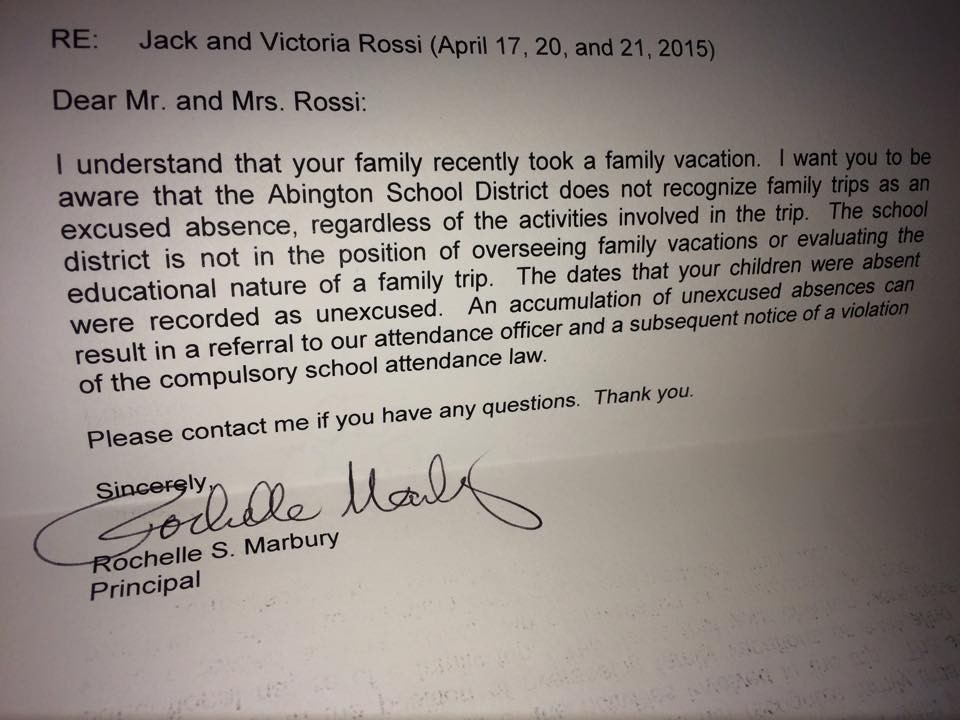
A father is reprimanded for taking his kids out of school and makes the news with his reply:

“Dear Mr. and Mrs. Rossi,” the letter says, “I understand your family recently took a family vacation. I want you to be aware that the Abington School District does not recognize family trips as an excused absence, regardless of the activities involved in the trip. The school district is not in the position of overseeing family vacations or evaluating the educational nature of a family trip. The dates that your children were absent were recorded as unexcused. An accumulation of unexcused absences can result in a referral to our attendance officer and a subsequent notice of a violation of the compulsory school attendance law.”

MICHAEL ROSSI’S RESPONSE TO SCHOOL:

Dear Madam Principal,

While I appreciate your concern for our children’s education, I can promise you they learned as much in the five days we were in Boston as they would in an entire year in school.

Our children had a once-in-a-lifetime experience, one that can’t be duplicated in a classroom or read in a book.
In the 3 days of school they missed (which consisted of standardized testing that they could take any time) they learned about dedication, commitment, love, perseverance, overcoming adversity, civic pride, patriotism, American history culinary arts and physical education.

They watched their father overcome, injury, bad weather, the death of a loved one and many other obstacles to achieve an important personal goal.

They also experienced first-hand the love and support of thousands of others cheering on people with a common goal.

At the marathon, they watched blind runners, runners with prosthetic limbs and debilitating diseases and people running to raise money for great causes run in the most prestigious and historic marathon in the world.

They also paid tribute to the victims of a senseless act of terrorism and learned that no matter what evil may occur, terrorists can not deter the American spirit.

These are things they won’t ever truly learn in the classroom.

In addition our children walked the Freedom Trail, visited the site of the Boston Tea Party, the Boston Massacre and the graves of several signers of the Declaration of Independence.

These are things they WILL learn in school a year or more from now. So in actuality our children are ahead of the game.

They also visited an aquarium, sampled great cuisine and spent many hours of physical activity walking and swimming.

We appreciate the efforts of the wonderful teachers and staff and cherish the education they are receiving at Rydal Elementary School. We truly love our school.

But I wouldn’t hesitate to pull them out of school again for an experience like the one they had this past week.
Thank you for your time.

Sincerely,
Michael Rossi, Father

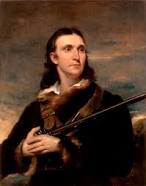
JOHN JAMES AUDUBON

Born AprilUnknown 26, 1785,  John James Audubon was birthed in what is now Haiti on his father’s sugar plantation. His birth name was Jean-Jaques, named after his father Jean who was a French privateer, commonly known as pirates. His father had the rank of Lieutenant in the French navy and his mother was a 27-year-old chambermaid from Les Touches, Brittany. His mother’s name was Jeanne Rabines and lived as a mistress with his father, Jean. She got a tropical disease and died on the island when her son was just a few months old.

Audubon grew up in France, but when he was 18 his father got him a false passport to escape the Napoleonic wars and the family moved to America. After the death of his mistress, his father had a number of children of mixed race with several native women. In 1789 his father sold part of his plantation in Saint-Domingue and purchased a 284-acre farm called Mill Grove, 20 miles from Philadelphia. African slaves greatly outnumbered the French colonists, so friends convinced Jean Audubon to return to France.

The children were raised in Couëron, near Nantes, France, by Audubon and his French wife Anne Moynet Audubon, whom he had married years before his time in Saint-Domingue. In 1794 they formally adopted both his natural children to regularize their legal status in France. They renamed the boy Jean-Jacques Fougère Audubon and the girl  Rose.

In France during the chaotic years of the French Revolution, Audubon grew up to be a handsome, gregarious man who played flute and violin, and learned to ride, fence and dance.

Audubon loved to walk and was a great walker. He loved roaming in the woods. He often returned home with birds’ eggs and nests and made crude drawings.

His father wanted his son to follow in his footsteps and tried to make a seaman of his son. When he was twelve, Audubon went to military school and became a cabin boy, but he found out that he was prone to seasickness and not fond of mathematics or navigation. After failing the officer’s qualification test, Audubon ended his fledgling naval career.

He was cheerfully back on solid ground and exploring the fields again, focusing on birds. He found some Phoebes nesting in a cave. As he had read that they returned to the same spot to nest every year, he wanted to test that idea. He sat in the cave with them and read a book for many days, until they were used to him and let him approach. Then he tied string to their legs to identify them. The next year,  he discovered that the same birds were back in the cave. It is the first known incident of banding birds.

Audubon fell in love with a woman named Lucy Bakewell. Her father objected to Audubon’s lack of career goals and insisted that he find a solid trade before marriage, so he opened a general store in Kentucky on the Ohio River. After that, John and Lucy were married.

During a visit to Philadelphia in 1812 following Congress’ declaration of war against Great Britain, Audubon became an American citizen and had to give up his French citizenship.

After his return to Kentucky, he found that rats had eaten his entire collection of more than 200 drawings. After weeks of depression, he finally took to the field again. He was determined to re-do his drawings to an even higher standard.

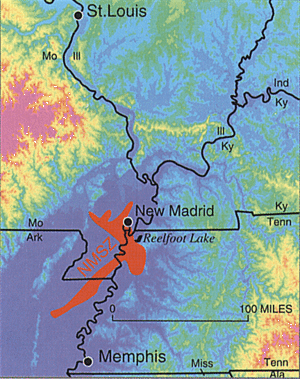
300px-NMSZBigAudubon was working in Missouri when the New Madrid earthquake struck in 1811. When Audubon reached his house, he was relieved to find no major damage, but the area was shaken by aftershocks for months.The quake is estimated to have been ranked from 8.4 to 8.8 on today’s Richter Scale of severity,. It was slightly stronger than the San Francisco earthquake of 1906.

Audubon wrote that while on horseback, he first believed the distant rumbling to be the sound of a tornado, “but the animal knew better than I what was forthcoming, and instead of going faster, so nearly stopped that I remarked he placed one foot after another on the ground with as much precaution as if walking on a smooth piece of ice. I thought he had suddenly foundered, and, speaking to him, was on point of dismounting and leading him, when he all of a sudden fell a-groaning piteously, hung his head, spread out his forelegs, as if to save himself from falling, and stood stock still, continuing to groan. I thought my horse was about to die, and would have sprung from his back had a minute more elapsed; but as that instant all the shrubs and trees began to move from their very roots, the ground rose and fell in successive furrows, like the ruffled water of a lake, and I became bewildered in my ideas, as I too plainly discovered, that all this awful commotion was the result of an earthquake. I had never witnessed anything of the kind before, although like every person, I knew earthquakes by description. But what is description compared to reality! Who can tell the sensations which I experienced when I found myself rocking, as it were, upon my horse, and with him moving to and fro like a child in a cradle, with the most imminent danger around me.”

He noted that as the earthquake retreated, “the air was filled with an extremely disagreeable sulphurous odor.”

The War of 1812 upset Audubon’s plans. He formed a partnership with Lucy’s brother and built up their trade in Henderson, Kentucky. Between 1812 and the Panic of 1819, times were good. Audubon bought land and slaves, founded a flour mill, and enjoyed his growing family.

After 1819, Audubon went bankrupt and was thrown into jail for debt. The little money he made was earned by drawing portraits, particularly death-bed sketches that were greatly in demand by country folk before photography.

He wrote, “[M]y heart was sorely heavy, for scarcely had I enough to keep my dear ones alive; and yet through these dark days I was being led to the development of the talents I loved.”

Audubon was a terrible business owner, and eventually he realized that his best chance for success lay in his birds after all.

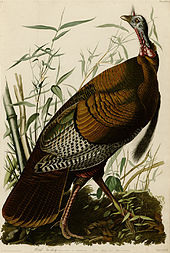
170px-1_Wild_TurkeyLucy became the main breadwinner by teaching children in their home, while her husband traveled all over the continent collecting specimens for his masterpiece, Birds of America (1838).  The book was two feet wide and three feet tall, with 435 life-sized hand-colored plates of birds.

It was very expensive to print such a book, so the book was financed by advance orders as well as commissioned paintings, exhibitions, and any furs that Audubon was able to trap and sell on his excursions.

His book was a success. One reviewer wrote: “All anxieties and fears which overshadowed his work in its beginning had passed away. The prophecies of kind but over prudent friends, who did not understand his self-sustaining energy, had proved untrue; the malicious hope of his enemies, for even the gentle lover of nature has enemies, had been disappointed; he had secured a commanding place in the respect and gratitude of men.”

AN UNKNOWN SPECIES BRED WITH OUR ANCESTORS


Spread_and_evolution_of_Denisovans

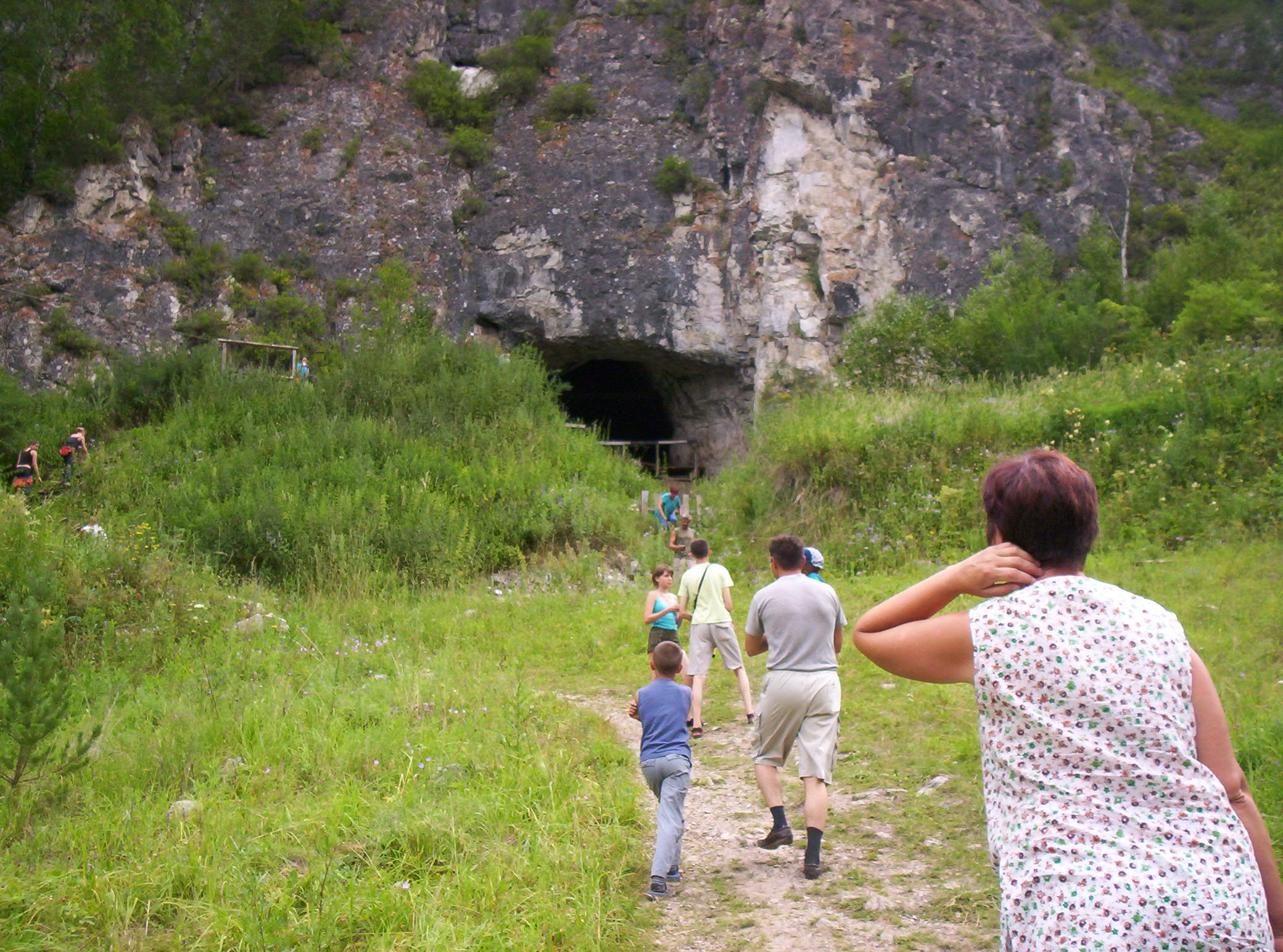
MORE THAN 40,000 YEARS AGO a sub-species humanoid lived in Siberia. DNA analysis shows that they are a distinct species from the Neanderthal and modern human. Denisova Cave in SIberia housed extinct breeds of humanoids, including both of the above.

In late 2013 a new study was revealed to the Royal Society in London, In the examination of the DNA of a finger fragment found in the cave, they found that one section of the genome seemed to come from a previously unknown species. The same genetic results were confirmed in two teeth found on the site.

As yet, who preceded these extinct species is a great mystery.

How long have intelligent humanoids lived on Earth? It is a question that is less solved than we thought. Perhaps even a million years? More?

Turist_den-peschera


Tourists in front of the Denisova Cave, where “X woman” was found

Further reading:

http://en.wikipedia.org/wiki/Denisovan
http://www.nature.com/news/mystery-humans-spiced-up-ancients-sex-lives-1.14196
http://www.newscientist.com/article/dn24603-mystery-human-species-emerges-from-denisovan-genome.html#.VO9hLLPF_xL

MISSED OPPORTUNITIES

Ken Finton's avatarKenneth Harper Finton

MISSED OPPORTUNITY

MIssed Opportunies by Kenneth Harper Finton ©2014

“We often miss opportunity because it’s dressed in overalls and looks like work.” — Thomas A. Edison

OPPORTUNITY KNOCKS ONCE?

Does opportunity only knock once? Leon Spinks said it was so. He said that “opportunity knocks only once. You never know if you’ll get another opportunity.” Leon knows about knocking. He was the boxer that defeated Mohammad Ali in February of 1978 in a fifteen round decision fight.

Nonetheless, opportunity presents itself often. Opportunity is a set of circumstances that makes it possible to do something.  Hopefully, this action is a creative act, but it could just as easily be destructive.

Opportunities are time sensitive. We have all missed many opportunities. Sometimes they slide by unrecognized. Sometimes we are not ready for them. Sometimes we choose to ignore them.

Whatever your secret desires, there are always ways to make them ripen.

“MAKE IT…

View original post 309 more words

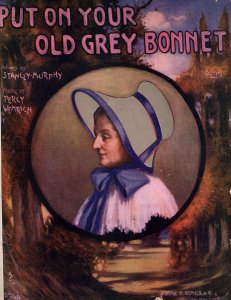
PUT ON YOUR OLD GRAY BONNET

ARCHIVAL RECORDING BY ARTHUR CLOUGH, 1909

Words by Stanley Murphy, Music by Percy Wenrich 1909


My grandfather used to sing this song back in the 1940s. It was old then as it was written in 1909. The words paint a world of stability where a couple married and spent their entire lives together a few miles from the very place they married and lived.

put_on_your_old_grey_bonnet

G                              A7

On the old farm house veranda sat old Silas and Miranda

D7               G

Thinking of the days gone by

A7

He said “Dearie, don’t be weary, you were always bright and cheery

D7                  G

but a tear dear dims your eyes”

D                  G         D                    G

She said “These are tears of gladness, they’re not tears of sadness,

A7                          D7

It was 50 years today that we were wed”

G                                      A7

And the old man’s eyes they brightened and his old stern heart it lightened

D7                G7

as he turned to her and said

[Chorus]

            C                         F

Put on your old grey bonnet, with the blue ribbon on it      

         C         D7            G7

and I’ll hitch old Dobbin to the shayhorsecarriageb

          C                         F

and we’ll ride to Dover through the fields of clover

       C      G7      C     (D7)

on our golden wedding day

G                              A7

It was in that same grey bonnet with the same blue ribbon on it

D7               G

in the same shay by his side

A7

that he drove her down to Dover through the same old fields of clover

D7         G

to be his happy bride

D                  G         D                    G

The birds were brightly singing, the old church bells were ringing

A7                          D7

as the passed by that old church where they were wed

G                                      A7

and at night while stars were gleaming the old couple lay there dreaming

D7                G7

dreaming of the words he said.

THE BIG ROCK CANDY MOUNTAIN

“The Big Rock Candy Mountain” was first recorded by Harry McClintock in 1928. Burl Ives recorded a popular version for children in 1949. It is a folk song about a tramp’s ideal home.

McClintock claimed to have written the song in 1895. His hobo name was  Haywire Mac. Some say the song was originally a song to lure children into the hobo way of life.

The words have changed over the years. An original verse is:

The punk rolled up his big blue eyes

And said to the jocker, “Sandy,

I’ve hiked and hiked and wandered too,

But I ain’t seen any candy.

I’ve hiked and hiked till my feet are sore

And I’ll be damned if I hike any more

To be buggered sore like a hobo’s whore

In the Big Rock Candy Mountains.

Big Rock Candy Mountain lyrics:

One evening as the sun went down and the jungle fire was burning

Down the track came a hobo hiking and he said boys I’m not turning

I’m headin for a land that’s far away beside the crystal fountains

So come with me we’ll go and see the Big Rock Candy Mountains

In the Big Rock Candy Mountains there’s a land that’s fair and bright

Where the handouts grow on bushes and you sleep out every night

Where the boxcars are all empty and the sun shines every day

On the birds and the bees and the cigarette trees

Where the lemonade springs where the bluebird sings

In the Big Rock Candy Mountains

In the Big Rock Candy Mountains all the cops have wooden legs

And the bulldogs all have rubber teeth and the hens lay soft boiled eggs

The farmer’s trees are full of fruit and the barns are full of hay

Oh, I’m bound to go where there ain’t no snow

Where the rain don’t fall and the wind don’t blow

In the Big Rock Candy Mountains

In the Big Rock Candy Mountains you never change your socks

And the little streams of alcohol come a-trickling down the rocks

The brakemen have to tip their hats and the railroad bulls are blind

There’s a lake of stew and of whiskey too

You can paddle all around ’em in a big canoe

In the Big Rock Candy Mountains

In the Big Rock Candy Mountains the jails are made of tin

And you can walk right out again as soon as you are in

There ain’t no short handled shovels, no axes saws or picks

I’m a goin to stay where you sleep all day

Where they hung the jerk that invented work

In the Big Rock Candy Mountains

I’ll see you all this coming fall in the Big Rock Candy Mountains.

WORLD’S HARDEST QUIZ

WORLD’S HARDEST QUIZ
Passing requires 4 correct answers

1) How long did the Hundred Years’ War last?
2) Which country makes Panama hats?
3) From which animal do we get catgut?
4) In which month do Russians celebrate the October Revolution?
5) What is a camel’s hair brush made of?
6) The Canary Islands in the Pacific are named after what animal?
7) What was King George VI’s first name?
8) What color is a purple finch?
9) Where are Chinese gooseberries from?
10) What is the color of the black box in a commercial airplane?

How much easier could this be?

ANSWERS TO THE QUIZ

Passing requires 4 correct answers
1) How long did the Hundred Years War last? 116 years
2) Which country makes Panama hats? Ecuador
3) From which animal do we get cat gut? Sheep and Horses
4) In which month do Russians celebrate the October Revolution? November
5) What is a camel’s hair brush made of? Squirrel fur
6) The Canary Islands in the Pacific are named after what animal? Dogs
7) What was King George VI’s first name? Albert
8) What color is a purple finch? Crimson
9) Where are Chinese gooseberries from? New Zealand
10) What is the color of the black box in a commercial airplane? Orange, of course.

How did you do?

GERMANWINGS FLIGHT 9525

By Kenneth Harper Finton ©2015

An imaginary trip into the mind of Andreas Lubitz

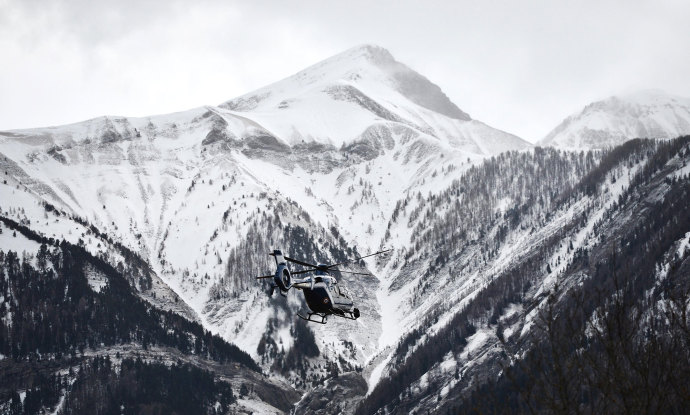
   A French helicopter departs for the site where Germanwings Flight 9525 crashed.                  CREDITPHOTOGRAPH BY MUSTAFA YALCIN/ANADOLU AGENCY/GETTY

A French helicopter departs for the site where Germanwings Flight 9525 crashed.              CREDITPHOTOGRAPH BY MUSTAFA YALCIN/ANADOLU AGENCY/GETTY

Tired of living, spurned in loving, deficit in compassion,

Andreas Lubitz and his crippled amygdala

Donned his smart uniform and climbed aboard the plane.

A pretty stewardess smiled at him,

Bid him a good morning as he passed.

She smelled of a musky perfume

That reminded him of the sex he often craved with her.

He found sex to be an animalistic and ludicrous practice.

Love had always been a dream that faded away to sorrow.

He returned to her a faceless smile without meaning.

He took his place in the cockpit beside Patrick, his pilot.

It was less that two hours to Dusseldorf from Barcelona.

Patrick was loquacious, almost collegiate in manner.

As they bantered back and forth, Patrick’s banal conversation

Bored Andreas to death. He could only fake a smile for reply.

Andreas thought about how he hated God for giving him life.

An aching desire for release from the prison of time

Had overcome him. A dull ache of depression swept over him

As he remembered all the hideous assaults he had endured.

It was as though he wore glasses that saw only

The evil of time and hid away the pleasant moments.

When Patrick left the cabin, Andreas pushed the button

To lock the door so that he would not have to bear him any longer.

Alone in the cabin, with only the sky in his eyes and the engine noise

In his ears, Andreas was at last alone with himself.

He hated his aloneness. “Everyone is suffering in their meaningless

Lives just like I am,” he thought. The future brings nothing

But more disappointment, times filled with melancholy,

Nights filled with helpless thoughts, days filled with foolish actions

That try to mitigate the absurdity of living a desperately miserable existence.

Dog eats dog, life eats life, panicked schools of fish swirling

In circles as the sharks attack the outer layers of their being.

The images consumed him. The irrelevance of his very being

And all those around him felt like the beating drum of a hated heartbeat.

Mushroom clouds raining death, pits with decapitated bodies killed

By fools who thought themselves righteous appeared in the gray sky

When he adjusted the course of the plane to fly at one hundred feet.

“It will soon be over,” he thought to himself. “I am finally on control.”

He heard a frantic knocking on the door as Patrick tried to gain the cabin

His gut tensed, his breath came hard and fast. He could hear

The hysterical screams of the passengers behind him.

No sympathy for their plight crossed Andreas mind.

“They are all going to die anyway,” he thought.

“Today is as good a day to die as any other. Today is better.

It will save them from through suffering their ignorant lives.”

Adrenaline rushed through Andreas veins as the mountain

Loomed before him. He felt like a soldier entering battle.

“It is a good day to die,” the voices around him exclaimed.

He remembered the stewardess with the sexy perfume

Who greeted him when he stepped onto the plane.

Her voice was among those screaming behind him.

“I will not fuck her,” he told himself. “She will not tempt

Anyone to fuck her now. I can make sure of that.”

There was power in the thought; power had always escaped him.

The remembered scent of her perfume hung in his nostrils.

His own breath came hard and deep as he thought about

Having sex with her. Death, he thought, would be like conception,

One timeless contracting orgasm would begin the journey

To another useless, meaningless and painful life.

Another contraction would snap the miserable body away from experience

And into the vast nothingness of the universe.

He could picture himself letting go after the shock of impact.

It would be his final orgasm, his final statement, his final action.

HOW TO WRITE GOOD

by Frank L. Visco

My several years6f9b0bd7-adc8-463c-8f16-0bf9bc250395 in the word  game have learnt me several rules:

  1. Avoid alliteration. Always.
  2. Prepositions are  not words to end sentences with.
  3. Avoid cliche like the plague. (They’re old  hat.)
  4. Employ the vernacular.
  5. Eschew ampersands & abbreviations, etc.
  6. Parenthetical remarks (however relevant) are unnecessary.
  7. It is wrong to ever split  an infinitive.
  8. Contractions aren’t necessary.
  9. Foreign words and phrases are not apropos.
  10. One should never generalize.
  11. Eliminate quotations. As  Ralph Waldo Emerson once said: “I hate quotations. Tell me what you know.”
  12. Comparisons are as bad as cliches.
  13. Don’t be redundant; don’t use more words than necessary; it’s.highly superfluous.
  14. Profanity sucks.
  15. Be more or less specific.
  16. Understatement is·always best
  17. Exaggeration is a billion times worse than understatement.
  18. One-word sentences? Eliminate.
  19. Analogies in writing are like feathers on a snake.
  20. The passive voice is to be avoided
  21. Go around the barn at high noon to avoid colloquialisms.
  22. Even if a  mixed metaphor sings,it should be derailed.
  23. Who needs rhetorical questions?

THE MESSIANIC INSTINCT

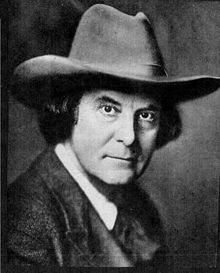
by Elbert Hubbard (1856-1915)
630c1a56-a194-4787-84f7-6c25aad9da8a

EDITORIAL NOTE: Originally, this essay was included in the Little Journey series printed in 1900 by The Roycrofter Press owned by Hubbard. Hubbard described himself as an anarchist formed in the same mold that forged Wallt Whitman, John Ruskin, Henry Thoreau and Leo Tolstoy and William Morris. I reprint these essays because people seem to think that they can learn nothing from people who wrote over a hundred years ago. Hubbard proves them wrong every time.

There was nothing of Jack Falstaff about Francis Schlatter, whose whitened bones were found amid the alkali dust of the desert, a few years ago—dead in an endeavor to do without meat and drink for forty days.

Schlatter purported, and believed, that he was the reincarnation of the Messiah. Letters were sent to him, addressed simply, “Jesus Christ, Denver, Colorado,” and he walked up to the General-Delivery window and asked for them with a confidence, we are told, that relieved the postmaster of a grave responsibility.

Schlatter was no mere ordinary pretender, working on the superstitions of shallow-pated people. He lived up to his belief—took no money, avoided notoriety when he could; and the proof of his sincerity lies in the fact that he died a victim to it.

Herbert Spencer has said all about the Messianic Instinct that there is to say, save this—the Messianic Instinct first had its germ in the heart of a woman. Every woman dreams of the coming of the Ideal Man—the man who will give her protection, even to giving up his life for her, and vouchsafe peace to her soul. I am told by a noted Bishop of the Catholic Church that many women who become nuns are prompted to take their vows solely through the occasion of an unrequited love. They become the bride of the Church and find their highest joy in following the will of Christ. He is their only Spouse and Master.

The terms of endearment one hears at prayer-meetings, “Blessed Jesus,” “Dear Jesus,” “Loving Jesus,” “Elder Brother,” “Patient, gentle Jesus,” etc., were first used by women in an ecstasy of religious transport. And the thought of Jesus as a loving, “personal Savior,” would die from the face of the earth did not women keep it alive. The religious nature and the sex nature are closely akin: no psychologist can tell where the one ends and the other begins.

There may be wooden women in the world, and of these I will not speak, but every strong, pulsing, feeling, thinking woman goes through life, seeking the Ideal Man. Whether she is married or single, rich or poor, old or young, every new man she meets is interesting to her, because she feels in some mysterious way that possibly he is the One.

Of course, I know that every good man, too, seeks the Ideal Woman—but that deserves another chapter.

The only woman in whose heart there is not the live, warm, Messianic Instinct is the wooden woman, and the one who believes she has already found him. But this latter is holding an illusion that soon vanishes with possession.

That pale, low-voiced, gentle and insane man, Francis Schlatter, was followed at times by troops of women. These women believed in him and loved him—in different ways, of course, and with passion varying according to temperament and the domestic environment already existing. To love deeply is a matter of propinquity and opportunity.

One woman, whom “The Healer” had cured of a lingering disease, loved this man with a wild, mad, absorbing passion. Chance gave her the opportunity. He came to her house, cold, hungry, homeless, sick. She fed him, warmed him, looked into his liquid eyes, sat at his feet and listened to his voice. She loved him—and partook of his every mental delusion.

This woman now waits and watches in her mountain home for his return. She knows the coyotes and buzzards picked the scant flesh from his starved frame, but she says: “He promised he would come back to me, and he will. I am waiting for him here.”

This woman writes me long letters from her solitude, telling me of her hopes and plans. Just why all the cranks in the United States should write me letters, I do not know, but they do—perhaps there is a sort o’ fellow-feeling. This woman may write letters to others, just as she does to me. Of this I do not know, but surely I would not thus make public the heart-tragedy told me in a private letter, were it not that the woman herself has printed a pamphlet, setting forth her faith and veiling only those things into which it is not our right to pry.

This Mary Magdalene believes her lover was the Chosen Son of God, and that the Father will reclothe the Son in a new garment of flesh and send him back to his beloved. So she watches and waits, and dresses herself to receive him, and at night places a lighted lantern in the window to guide the way.

She watches and waits.

Other women wait for footsteps that will never come, and listen for a voice that will never be heard. All round the world there is a sisterhood of such. Some, being wise, lose themselves in loving service to others—in useful work. But this woman, out in the wilds of New Mexico, hugs her sorrow to her heart, and feeds her passion by recounting it, and watches away the leaden hours, crying aloud to all who will listen: “He is not dead—he is not dead! he will come back to me! He promised it—he will come back to me! This long, dreary waiting is only a test of my loyalty and love! I will be patient, for he will come back to me! He will come back to me!”

This world would be a sorry place if most men conducted their lives on the Robert Burns plan. Burns was affectionate, tender, generous and kind; but he was not wise. He never saw the future, nor did he know that life is a sequence, and that if you do this, it is pretty sure to lead to that. His loves were largely of the earth.

Excess was a part of his wayward, undisciplined nature; and that constant tendency to put an enemy in his mouth to steal away his brains, bound him at last, hand and foot. His old age could never have been frosty, but kindly—it would have been babbling, irritable, senile, sickening. Death was kind and reaped him young. Sex was the rock on which Robert Burns split. He seemed to regard pleasure-seeking as the prime end of life, and in this he was not so very far removed from the prevalent “civilized” society notion of marriage. But it is a phantasmal idea, and makes a mock of marriage, serving the satirist his excuse.

To a great degree the race is yet barbaric, and as a people we fail utterly to touch the hem of the garment of Divinity. We have been mired in the superstition that sex is unclean, and therefore honesty and free expression in love matters have been tabued.

But the day will yet dawn when we will see that it takes two to generate thought; that there is the male man and the female man, and only where these two walk together hand in hand is there a perfect sanity and a perfect physical, moral and spiritual health.

We reach infinity through the love of one, and loving this one, we are in love with all. And this condition of mutual sympathy, trust, reverence, forbearance and gentleness that can exist between a man and a woman, gives the only hint of Heaven that mortals ever know. From the love of man for woman we guess the love of God, just as the scientist from a single bone constructs the skeleton—aye! and then clothes it with a complete garment.

In their love-affairs women are seldom wise, or men just. How should we expect them to be when but yesterday woman was a chattel and man a slave-owner? Woman won by diplomacy—that is to say, by trickery and untruth, and man had his way through force, and neither is quite willing to disarm. An amalgamated personality is the rare exception, because neither Church, State nor Society yet fully recognizes the fact that spiritual comradeship and the marriage of the mind constitute the only Divine mating. Doctor Blacklock once said that Robert Burns had eyes like the Christ. Women who looked into those wide-open, generous orbs lost their hearts in the liquid depths.

In the natures of Robert Burns and Francis Schlatter there was little in common; but their experiences were alike in this: they were beloved by women. Behind him Burns left a train of weeping women—a trail of broken hearts. And I can never think of him except as a mere youth—”Bobby Burns”—one who never came into man’s estate. In all his love-making he never seemed really to benefit any woman, nor did he avail himself of the many mental and spiritual excellencies of woman’s nature, absorbing them into his own. He only played a devil’s tattoo upon her emotions.

If Burns knew anything of the beauty and inspiration of a high and holy friendship between a thinking man and a thinking woman, with mutual aims, ideals and ambitions, he never disclosed it. The love of a man for a maid, or a maid for a man, can never last, unless these two mutually love a third something. Then, as they are traveling the same way, they may move forward hand in hand, mutually sustained. The marriage of the mind is the only compact that endures. I love you because you love the things that I love. That man alone is great who utilizes the blessings that God provides; and of these blessings no gift equals the gentle, trusting companionship of a good woman.

– See more at: https://scriggler.com/DetailPost/Opinion/6859#sthash.zAWPlw9c.dpuf