TIME’S PASSING

by Kenneth Harper Finton ©2015

Science-Museum-Exhibition-2

Remember how your hair blew in the wind

that night we kissed and dreamed of sins.

I asked you why your large dark eyes

stared with wonder at the sky.

When we were young, two kids in love,

the world itself was not enough.

I dreamed that we’d forever lay

together at the end of day.

Now that time has flickered by,

I’m sure you still go watch the sky.

Oh, I remember well these things,

but now I have forgot your name.

THE WRITER’S DILEMMA

by Kenneth Harper Finton ©2015

a2351c22-19ff-40c4-8852-cbf36ff8bda3 It is said that writers “write to be read.” Then painters paint to be seen, actors act to impress and singers sing to be heard. If this is the case–and most often it is–the newer writers of the world are setting themselves up for great disappointment. They will not find the audience that they did on the past. They will not achieve the fame that others did in the past. They will quite likely not enjoy the riches that others have had In the past. Technology and world Internet communications have obviously changed the world.

Though it has democratized the ability to be read and seen and heard, by doing so it has practically eliminated the institutions that originally supported and brought culture to the world. Some vestiges of the old system remain, but they are losing ground with each passing year. They have been replaced by myriads of smaller, more democratized platforms that do not pay, do not develop and do not guide.

Moguls still control what is printed and sold in local stores. They chose the music that is allowed to be bought at box stores, the movies that are shown and the art that is displayed in museums and fine art shows. The competition for such space is fierce. The rewards to the artists have been drastically reduced from that it was just thirty years ago. This leaves the would-be writer with a great dilemma. They feel that they have talent and should pursue an audience and readership, but the audience is slimmer and the finger of fate even more fickle than ever.

Only by applying a talent is the talent polished and sharpened. “Practice,” it is said, “makes perfect.”

Perfection, though, is a subjective judgment that should be left out of that axiom. Practice makes us more exceptional. It is a fact, though, that natural talents of all kinds need to be performed and utilized to get beyond the level of the commonplace. Writers now write blogs to keep their talents active and polished, but the readers of blogs are also a fickle lot. The individual blog does not really reach a substantial audience. Blogs and personal journals are worthy tools for a writer, as they can refer to them in the future, draw on them for ideas, and reference them for later promotion.

There are few, if any, works that cannot be made better by multiple rewrites. So coming back to what you did before is quite valuable for the future. Professional writing has not totally become extinct, but it is nearing that vanishing point. Professional writers are not free to write as their muse moves them, but are pressured to write what their superiors believe their readership wants to read. Even with access to statistics that determine what people are choosing to read, the writer is often no longer free to follow their muse and write from the heart if they want to increase their following.

Yet, writing from the heart and being true to your own voice is the only possible way to beat the odds. Only that will make you stand out in a crowd. Even if you write from the heart, your heart and voice must be very special, very unique and quite original. Your perceived persona must be likable, strong and quite different from the masses. The vast majority of us will never be that person. Chloe Thurlow recently spoke of  “the time before smart phones made the whole world a banal image and the photographer like the editor became a dinosaur.” https://www.facebook.com/chloe.thurlow.5?fref=ts

We have a changing dictum. As writers, we must write for ourselves to be original. We will probably never make any financial profit from these efforts. Few in history ever have. We may not even achieve any large readership no matter how hard we try. Everyone has an opinion to share, a broken heart to express, a love that they feel they must share with the world about. All lives are novels in the making. The only thing we can do is persist or quit.

Of course, if we quit, we never will have an audience. If we want an audience or a readership, our only alternative is to persist. To persist means to continue through depression and despair. It means we need to develop tools to combat and dispel our negative feelings. To persist means to struggle with the reality that we spend too much time doing things that we do not love in order to do what we do love. It is easier to be a baker or a cook or a carpenter. All such work is creative, but the requirement of pleasing more than a few is not essential in many occupations.

Artists always had to pay their dues. The fees are even higher these days. Inflation, you know.

CONGRATULATE YOURSELF


images-1


Congratulate yourself.

You made is through another year.

You lionized another birthday

And hoped for many more.


You dressed your transgressions in purple robes,

Tolerated the tolerable,

And dreamed another dream.


That person that you were last year

has passed on to become memory.

The person you are to be this year

is being contemplated as we speak.


I hope you made the proper number of mistakes

and hope to make a similar number this coming year.

Mistakes mean that we are doing something–

Perhaps something we have not done before.


Congratulate yourself.

You are known by your blunders,

Admired for your accuracy,

And vilified for your honesty,

As are we all.


Congratulate yourself.

Though time flew by, you persevered.

Though you did not do it all,

You chipped away at it.


Congratulate yourself.

Say, “Happy new year.”

Welcome to the land of beginning again.


Keep those thoughts positive,

Those acts causative,

The mind cognitive.


Do you like this thought?  Comment below.


HOLLY’S BAD DAY


by Kenneth harper Finton ©2014
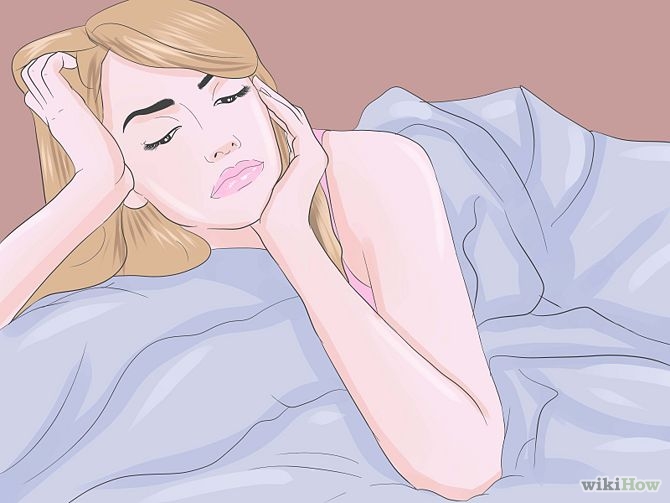
670px-Get-Over-a-Bad-Day-Step-1-Version-2

Her name is Holly.

Just because her name rhymes with jolly, does not mean that she was sunny and joyful on this fateful Sunday.

Most of the day, though, she was jolly.

It was Christmas Eve and Holly was at her best in that season, but she still managed to have a terrible day.

Her plans were innocent enough. She went to church on Sunday morning as was her custom, then picked up her kitten whom she had named Missy and went to the retirement home to visit her mother. The two went down to the cafeteria for lunch, leaving the kitten to play in her mother’s room.

It began to snow heavily. Holly smiled, as she was in full holiday spirit and the fresh snow made everyone smile. “We will have a white Christmas after all,” they laughed. Missy batted at the sock hanging on the Christmas tree and they spent a pleasant hour talking and watching the antics of the kitten.

Her mother gave Holly a Christmas present wrapped in red foil paper and she picked up the kitten to head for home. She could see her breath in the cold air. She placed the kitten in the old VW Beetle that she had restored, wiped the windows and carefully began the drive home.

Aha, you say … The roads were slick and she had an accident.

No, that is not the way it was.

She needed to fill up with gas, so she pulled into the convenience store and went inside to get a soft drink and potato chips. By the time she came back to the car, the snow had covered the windows again, so she took the brush and cleared away the snow. She stepped around the gas hose to clear the back window, then walked around the Beetle as she merrily brushed away.

Aha, you say. She slipped on the ice, fell and broke her hip. That is what caused her bad day.

No, that is not the way it was either.

She stamped her feet and got back in the car and pulled slowly away from the gas pump. She had not gone more than a few feet before she heard a metallic clunk from the rear of the car. “My God,” she thought, “I forgot to take the hose out of the tank and hang it on the pump.”

Aha, you say. The gas spilled out all over the ground and caught fire from a static spark she produced when she got out of the car. The entire pump threatened to explode.

No, that is not the way it was either. It was even worse.

The station was equipped with quick release safeties where the hose meets the pump. All that had happened was that the hose had come loose and dragged beside the car. There was not a dent in the Beetle not any damage to the hose. Not a drop of gas was released.

Holly arrived safely at home, placed the car in the garage and went into the house. She remembered that her mother had given her a present, but she had not taken it out of the car. She went to the garage to retrieve it, not aware that she was being followed.

Aha, you say. There was an intruder and he attacked her in the garage. She is about to become one of the twenty-five percent of the women that are molested sometime in their lifetime.

No, that is not what happened either. It was worse than that.

What can be worse than that, you ask?

She quickly got the present, shivered and shut the car door to hurry inside. The car door would not close. She opened it up to see what was keeping it open, but nothing was visible. She shut the door again and glanced down at the floor of the garage.

The kitten lay twisted in the floor, laying in her back, twitching a bit, but still purring.

Ouch, you say. I was not ready for that.

Neither was Holly. She ran to the house to get a towel, wrapped the kitten to keep it warm, called the emergency number at the pet hospital and rushed off to get help for the kitten.

The kitten did not make it to the hospital. It died purring on the seat beside her.

That is terrible, you say.

Yes, it is.

How do you think Holly felt? Self incriminated, a murderer of kittens.

Of course, she was sad. Of course, she wrung her hands and sighed.

Was it her negligence or the kitten’s curiosity? She had to think that it was a bit of both.

Is there a bright side to any of this?

There is a legend in a faraway country that every time a kitten dies a brand new human babe is born into the world. If this legend does not exist, it probably should. At times like this we need a little help from our imaginations. We dare not totally extinguish the spark of hope.

The kitten had short, but happy time while yet it lived.

This is a positive.

The kitten will not have to bear the pain of littering nor the shock of neutering. It will not have to spend countless hours on the window sill staring out the window and wishing to chase those birds on the grass.

This is a positive.

Let us leave it at that.


ALMOST FOREVER: a Christmas Story

by Kenneth Harper Finton ©2014

It was Christmas Eve.

Sarah was alone in her apartment.

Fred had left a week ago.

The holiday season had all the ingredients of a miserable experience.

Sarah has just turned forty-five.

She felt that her life has been spent giving a lot and not getting much back.

She wondered if that was her own fault.

“Am I deluding myself?” she asked. “Have I really given enough?”

Fred had told her she was arrogant just before he walked out the door. “You always think that you’re better than me,” he had said.

She had been accused of arrogance before Fred was around. Roger, her lover and dance director had complained of her air of superiority. She recognized there might be some truth to it.

However, the difference between arrogance and truth is often a fine line that depends on the delivery of the message.

Sarah had always known that she has much to relate and much to give. She had thoughts that ran deep–more than the average person wants to talk about. Most of her life she felt alone, even in a room filled with people.

She needs a real listener, but good listeners are all too few.

It has been a lifelong battle, this seeking for a real listener. It is a battle that she fought daily, yearly… almost forever.

Sarah was not the lovely young sexy thing that she used to be. Her youth had passed away, yet the essence of her still lived in spirit. Her maiden looks might have run away, but she was not truly bothered with this. What she now has–the experience and the wisdom–seems better to her than the ability to lead a young man around with the sexy sway of her hips as she could do in the past.

Would it not be for creaky joints and spots of aging on her thickened bark–would it not be for shortened breath and shorter days, she would feel but twenty.

Yet, for Sarah, twenty had been a horrid age where doubt and inexperience blended in a soupy pot of lust and indecision. It was a time of looking to others for direction, looking for companionship. Sarah was always looking to the outside for the answers, but now she realizes that answers most often lay within.

She had asked herself important questions for decades. She was beginning to realize that questions often have always had the answers written into them. The answers are simply the questions in reverse. By simply turning around the question, the answer became clear.

She had asked herself, “Who am I, really.”

The answer was, “Really, I am who.”

The question then became, then who is ‘who’?

It began to feel like an Abbot and Costello routine.

‘What’ is on first base, ‘when’ is on second and ‘who’ is on third.

She laughed at the thought.

She knew that to “I am who,” she must add “I am who… I want to be.”

If only she were what she wanted to be. She was not even certain what she wanted. The choice was too large and narrowing it down proved too difficult.

She had been a ballerina until she tore the cartilage in her knee.

Then she had teamed up with Fred and spent fifteen years waiting on his every whim and fancy.

At least it seemed that way.

Fred has been kind. He supported her writing and her reading habits.

But she was not what she wanted to be. She was used to having Fred around and his leaving had disrupted her life.

She wrote poetry and kept a journal of her thoughts and observations, but she had not done much to earn a living from wages in all her forty-five years.

It came back to bite her.

She regretted not moving on into a self-sufficient life. She regretted her dependencies, first upon her father, then upon her director lover, and then upon Fred after that terrible fall.

Sarah took to the Internet like Monarch to milkweed.

The people she knew locally, she knew only in passing—so she was prepared for the superficiality of the friends she could make online. They did not have to know all the details of her life. They were more interested in how she felt than her next door neighbor or even Fred.

She could pour out her life online and still omit the parts she did not want anyone to see. There was both communion and confession online while still presenting only the face she wanted to portray.

Technology made her feel more alone. It gave her voice, but the voice went out to strangers that she cannot see and feel.

Regardless, she persisted in this miasma.

Gradually, she grew used to the odors of indifference that surrounded her.

Sarah convinced herself that this is not her personal problem, but a sign of the times.

“People today are not as receptive and they used to be,” she thought.

Sarah knew that she really needed flesh and blood people in her life.

Someone to talk to on long drives to nowhere.

Someone to laugh with her when a comedian said something witty on television.

Someone to love beside herself.

Her emotional life had reached a dead-end.

She could not bear it for a moment longer.

The nature of matter is to unite after pressure—so, sure enough, the phone rang at that very moment.

It was Fred.

“I miss you, Sarah,” he said. “I took you for granted and I miss you very much.”

Sarah smiled to herself.

She could see a pass opening in the mental mountain that seemed impassable a moment before.

“I miss you too, Fred,” she whispered.

“It’s Christmas Eve,” Fred said. “Do you feel like I do tonight?”

She did not need to ask him how he felt. She could tell by the sound of his voice.

“Yes…  yes…  I do,” she stuttered.

“Can I come over?”

“I would love that,” she smiled, feeling twenty in her bones.

“Merry Christmas.”

“Merry Christmas.”

“See you soon.”

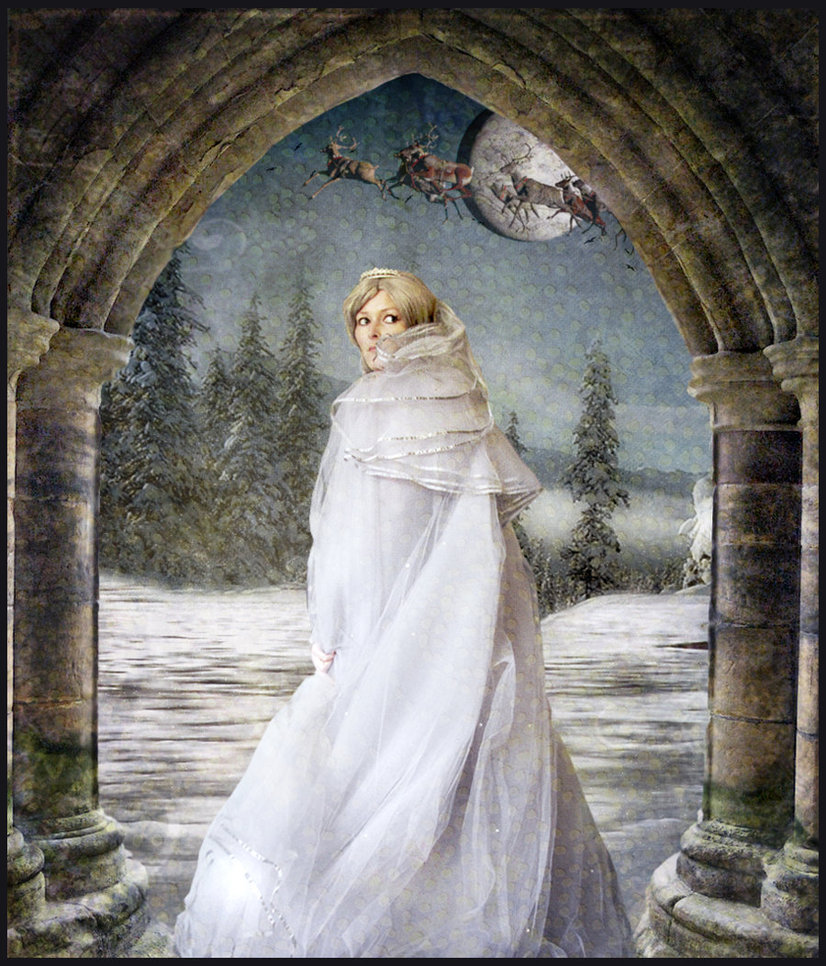
Christmas_Eve_by_violscraper

THE FOUNDATION FOR THE FURTHERING OF GLOBAL IGNORANCE

by Kenneth Harper Finton ©2014

images-2

My old grandpappy used say that “learnin’ is bad for a body. The more a body knows, the unhappier a body gets.”

Unfortunately, I did not take his advice, but I have yet to see any proof that he is wrong.

That is why I founded The Foundation for the Furthering of Global Ignorance.

Reading Ruins the Eyes

Reading is hellish on the eyeballs. We may not notice it for a while, but the words become increasingly out of focus and lines soon begin to dance before our eyes. The eyes will then begin to water and demand a good rubbing.

Reading Strengthens the Brain.

The natural state of the brain is mushy. The more we use it, the stronger it grows. We do not want to overburden or tax the brain, so we should replace reading and writing with movies and phone conversations.

Overworked brains need bigger heads and our heads are fixed in size and volume. We should not fill it the our brains with useless culture and relics from past thoughts. If these classic thoughts from the past had any value at all, these thoughts would reoccur to us, would they not?

Had I only paid attention to the old man, I could revel in even more ignorance than I already possess. Lucky for the present, most schools are not really teaching classic reading skills. They teach enough writing to sign your name and pass a driver’s license test.

images-1They don’t teach geography, so no one under 25 has any idea of where they are going. They no longer teach cursive, as it can be had in the fonts folder if one really needs it.

Reading Can Expand Your World

For those of us who like things exactly as they are, there is no worse threat that seeing what is on the other side of the hill. With new communications tools the universe is at our fingertips. We can make friends in Patagonia and buy stocks in Australia. We can be inspired by ideas from across the ages and the seas. The Internet may kill everything we have worked for thousands of years to achieve. Ignorance and class. I was once told Al Gore invented the Internet. I believe that he should be drawn and quartered.


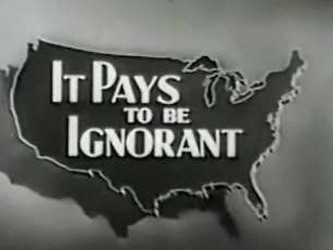
It_pays_to_be_ignorant_1949-showReading May Accidentally Change Your Station in Life

This reading of history and novels must be held in check. Through reading one is able to transcend their own station in life. They are emboldened to dream of other worlds and experience other lives. This, of course, is disruptive to the homogeneous society we seek to build. When the average person learns too much about how the world really works, they tend to either revolt or become integrated in the power structure. Stability is built by the ignorance of the masses.

Once one embraces ignorance, the world is a much simpler place.


images


CLAUS VS. CORPORATE PERSONHOOD

SANTA CLAUSE ACCUSED OF NOT TAKING PAY FOR DELIVERY FEES

by Kenneth Harper Finton ©2014


Santa Claus


Claus checked his ledgers in Quickbooks. It was not a task he enjoyed.

He fondly remembered the days when the smoke encircled his head like a wreath. He quit smoking a pipe a decade or two ago, but he still missed the pungent aroma of his tobacco. What he did not miss was the sore tongue and hacking cough he would often get.

When Christmas was taken over by the corporate gift manufacturers he had shaken his head and withdrawn in total disbelief.  “How could they corner the market on gifts so quickly,” Claus remembered saying.

He had long since had to retire much of his elf force. The elves just could not compete with the prices the corporations charged for general gifts of all shapes and sizes. Soon metal toys replaced his home-made-by-elfen-hands wooden toys.

As if that were not bad enough, the metal toys makers cut back on production and the plastic toy makers flooded the market with every size and shape of plastic toys that were conceivable. The oil cartel would not sell the oils for making plastics to the North Pole Charitable Organization, St. Nicholas, Proprietor.

For Claus, these were perilous times.

One day a group of corporate lawyers met with Claus to discuss the possibility of his contracting for delivery for their orders.

“We will allow you to charge a delivery fee,” they proposed. “It could be a very big deal for you. Remember, you are not getting any younger. Long term care is expensive and we can sell you insurance for that out of the money you charge for delivery of our goods.”

Claus had to think about that: a delivery fee for Santa. Extraordinary, to be sure, but in step with the times. Tradition breaking.  But these are times to try a person’s pocket book.

When he examined his ledger on Quickbooks, he could easily see that he had been running at a loss for almost five hundred years.  “Why, then,” he thought, “would I need long-term care insurance? These men must think me to be a sucker.”

“If they keep it up, the way it is going,” Claus thought, “then I may as well retire. They do not understand that the gifts were not what I delivered. I delivered the love that made the gifts, not the gifts themselves. It has always been so, as long as my spirit has been around. If love no longer makes the gifts, then my delivery is in vain.”

The corporate lawyers did not agree with Claus. “Love” they said, “was a personal thing and the corporations are personal, therefore what they made was made with love, as Clause has admitted that love is what he delivered to persons like the corporations.”

Clause could not quite follow their logic.

Of course, the debate ended up in court.

The parties were forced to define some kind of argument for a favorable judgment. Who had been injured? Who had been financially cheated? What was the duty, if any, for Claus?”

Claus argued that because he had been working gratis of his own free will, there was no loss at all.

The corporations argued that Claus could not have a monopoly on love giving, that they were entitled to give love as well and could do it better than an old white guy that does not appeal to the Muslim and the Buddhist nor the Hindu faiths, among many others. We, they claimed, have a far better market share in love giving that is good for the world economy as a whole.

The court ruled that corporations were better fitted to distribute love than The North Pole Charitable Organization, St. Nicholas, Proprietor.

Claus retired, forced out by world non-opinion and legal issues.

Due to his eternal nature, he still distributed his love where it is most needed.

Let us hope he is not ordered to cease and desist.


Originally published at https://scriggler.com/DetailPost/Story/6502

Ken at Scriggler: https://scriggler.com/Profile/ken_finton

See also: http://heliosliterature.com

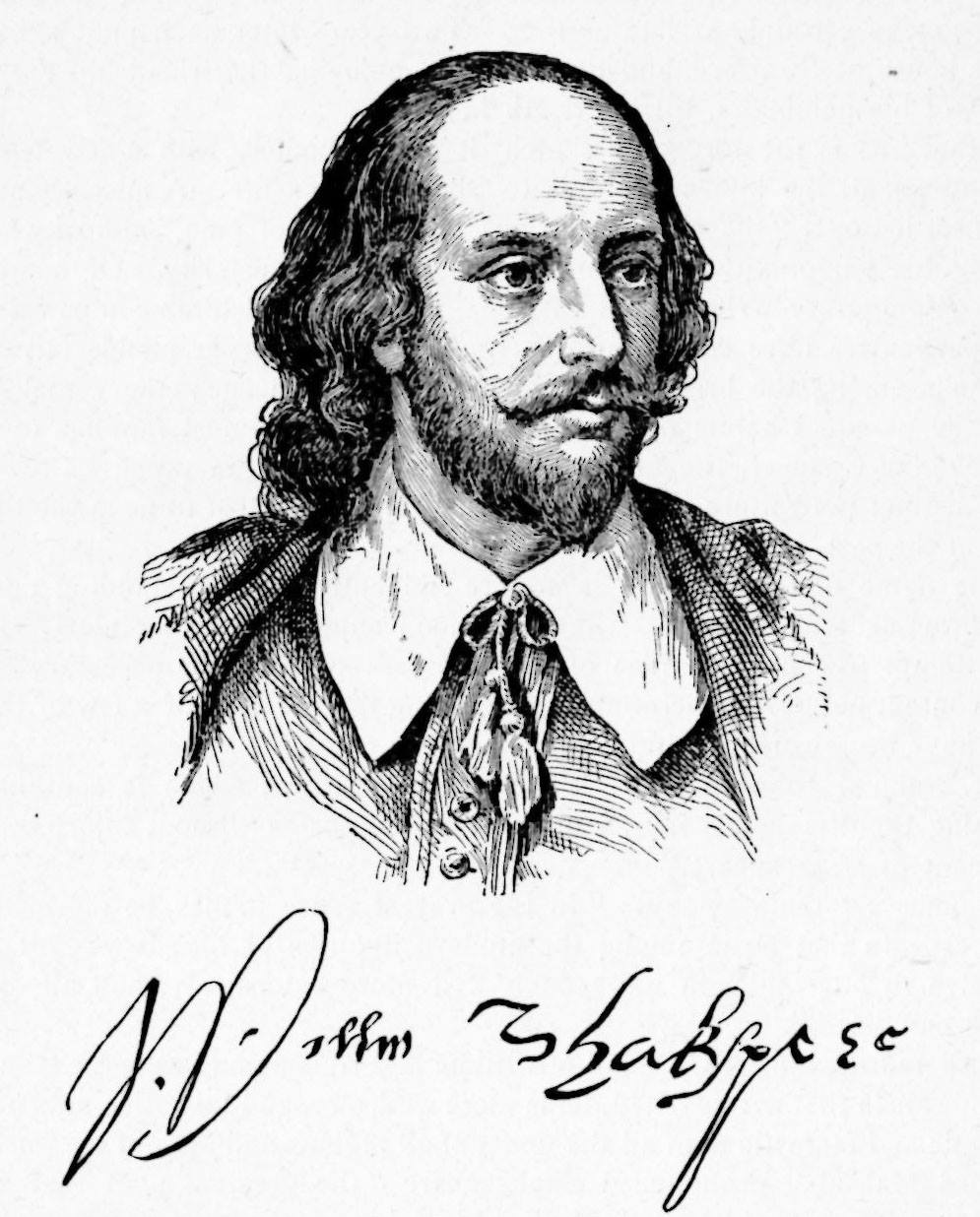
SHAKESPEARE’S SONNETS

by Kenneth Harper Finton ©2014

SHAKESPEARE

Shakespeare’s sonnets make me feel uncomfortable. It is clear that many people who claim to have impeccable taste really profess to love these sonnets. Since I cannot bring myself to love them, I have to admit that either my taste is not impeccable or I have truly missed something of great value. In other words, I am stupid.

A film maker in Denver has made all 154 of Shakespeare’s sonnets into short video movies starring local Denver actors.  Of course, it is a colossal bore. How could it not be so? William Shakespeare wrote some great plays, but his sonnets can put a Starbucks enthusiast to sleep in minutes.

It did not help that this Sonnet project used local actors that seemed to be unexperienced in Shakespearean theatre. I think, perchance, that nothing stands more amiss than a semi-talented actor spewing forth torrents of Shakespearean verbiage.

The first seventeen sonnets are brimming with advice to breed and propagate the species. Perhaps women liked this in Shakespeare’s day, but in a our crowded world with many women who choose to remain childless, these words cannot possibly fall on appreciable ears.

Example:

“From fairest creatures we desire increase

That thereby beauty’s Rose might never die

But as the riper should be time decease

His tender heir might bear his memory.”

Further, Shakespeare is obsessed with his own immortality. Even in one of the best of his sonnets, he holds himself and his verse up as immortal, bigger than nature itself,  more enduring that stone. Yes, his work has lasted for centuries, but I doubt seriously it will outlast stone.

XVII

Shall I compare thee to a Summers day?

Thou art more lovely and more temperate:

Rough windes do shake the darling buds of Maie,

And Sommers lease hath all too short a date:

Sometime too hot the eye of heaven shines,

And often is his gold complexion dimm’d,

And every faire from faire some-time declines,

By chance, or natures changing course untrim’d:

But thy eternall Sommer shall not fade,

Nor loose possession of that faire thou ow’st,

Nor shall death brag thou wandr’st in his shade,

When in eternall lines to time thou grow’st,

So long as men can breath or eyes can see,

So long lives this, and this gives life to thee.”

I read this and intuitively feel the wonderful play of words, but close examination destroys my capricious mood. What, I ask myself, is more lovely and more temperate than a summer’s day? I can think of nothing at all more lovely.  Maybe a cold beer with a pizza when you are very hungry. Surely, a summer’s day must be more lovely than this fantasy woman of whom he writes.

Yes, I agree, sometimes summer is too cursedly hot and these rough winds that shake these so-called darling buds of May also make me shiver in my shoes. But if I were to tell a girl that she was bound to decline as she ages, she would likely slap my ignominious face. And if I told her that her best chance at immortality lies in the fact that she was recorded in the lines of my poems, I would not be surprised if she hit me in the head with a lamp. I would deserve it, lout that I am.

We all struggle to decipher old Will’s bombastic style. The archaic English, quaint as it might be, hides a dude that spends a lot of time writing sappy verse about his relationship issues.

XXIX

When, in disgrace with fortune and men’s eyes,

I all alone beweep my outcast state

And trouble deaf heaven with my bootless cries

And look upon myself and curse my fate,

Wishing me like to one more rich in hope,

Featured like him, like him with friends possess’d,

Desiring this man’s art and that man’s scope,

With what I most enjoy contented least;

Yet in these thoughts myself almost despising,

Haply I think on thee, and then my state,

Like to the lark at break of day arising

From sullen earth, sings hymns at heaven’s gate;

For thy sweet love remember’d such wealth brings

That then I scorn to change my state with kings.

Modernized and un-sonneted, it might read:

Here I am, disgraced and poverty stricken, invisible to all.

Am I the only one to hear my cry, my outcast misery?

Even God will not listen to my loud complaints,

My shoeless feet propel me on a cursed path

And I can only dream about a richer life

With bosom friends and hopes of silver linings.

So I am left forlorn, devoid of art, bereft of talent.

I find myself despising what I am

Until I think these happy thoughts of you,

That lift me like the song of a lark that rises at sunrise

From this barren earth of mine to sing a hymn at heaven’s gate.

The sweet and gentle love that we once shared

Comes back into my memory again and brings such rebirth

That I would not trade this feeling for a crown.

I becomes apparent that Shakespeare was basically a lonely dreamer with not enough self esteem. Only his illusory fantasies about a perfect love brought him out of his depression and into a manic universe of his own making. Today they would say he had a bi-polar personality.

To me, Shakespeare was a greater play writer than he was a poet. His plays are filled with quotable quips that have peppered our speech for centuries.

Neither a borrower nor a lender be; for loan oft loses both itself and friend. -Hamlet

Life’s but a walking shadow, a poor player

That struts and frets his hour upon the stage

And then is heard no more: it is a tale

Told by an idiot, full of sound and fury,

Signifying nothing.  

-Macbeth

Yet, even the plays speak in a language that we do not speak. The urge to make them modern has been the fall of many a lame producer. They peel away the age of the setting and substitute the near present, but they leave the stilted words alone as though the Great Almighty made these utterances.

But Shakespeare – bless his pea-pickin’ little heart – gave good advice and this is where he transcends the ages and sparkles like a jewel.

“Better three hours too soon, than a minute too late.” (Many a dead man has made that discovery.)

“Good night, good night! Parting is such sweet sorrow.” (Though I struggle to find the sweetness in this pain.)

“There is nothing good or bad, but thinking makes it so.”  (You tell ‘em, Will. These fools think they’re cool.)

“A fool thinks himself to be wise, but a wise man knows himself to be a fool.” (Thinking makes this so as well.)

“Hell is empty and all the devils are here.” (Aye, said the Scotsman. And they are English to boot.)

“Cowards die many times before their death; the valiant never taste death but once.”  (Many an old soldier loathes that statement.)

“All the world’s a stage, and all the men and women merely players:” (Timothy Leary thought so.) But then he goes on: “They have their exits and their entrances; and one man in his time plays many parts, his acts being seven ages.”

(This started out great, but leaves me counting ages. Try as I may, I cannot get to seven ages. 1. Infancy, 2. Childhood, 3.Adolescence, 4. Maturity, 5. Middle-aged, and 6. Old.

That is the best I can do. Perhaps the seventh is Infirmity.


HOLLY’S BAD DAY


670px-Get-Over-a-Bad-Day-Step-1-Version-2


Her name is Holly.

Just because her name rhymes with jolly, does not mean that she was sunny and joyful on this fateful Sunday.

Most of the day, though, she was jolly.

It was  Christmas Eve and Holly was at her best in that season, but she still managed to have a terrible day.

Her plans were innocent enough. She went to church on Sunday morning as was her custom, then picked up her kitten whom she had named Missy and went to the retirement home to visit her mother. The two went down to the cafeteria for lunch, leaving the kitten to play in her mother’s room.

It began to snow heavily. Holly smiled, as she was in full holiday spirit and the fresh snow made everyone smile. “We will have a white Christmas after all,” they laughed. Missy batted at the sock hanging on the Christmas tree and they spent a pleasant hour talking and watching the antics of the kitten.

Her mother gave Holly a Christmas present wrapped in red foil paper and she picked up the kitten to head for home. She could see her breath in the cold air. She placed the kitten in the old VW Beetle that she had restored, wiped the windows and carefully began the drive home.

Aha, you say … The roads were slick and she had an accident.

No, that is not the way it was.

She needed to fill up with gas, so she pulled into the convenience store and went inside to get a soft drink and potato chips. By the time she came back to the car, the snow had covered the windows again, so she took the brush and cleared away the snow. She stepped around the gas hose to clear the back window, then walked around the Beetle as she merrily brushed away.

Aha, you say. She slipped on the ice, fell and broke her hip. That is what caused her bad day.

No, that is not the way it was either.

She stamped her feet and got back in the car and pulled slowly away from the gas pump. She had not gone more than a few feet before she heard a metallic clunk from the rear of the car. “My God,” she thought, “I forgot to take the hose out of the tank and hang it on the pump.”

Aha, you say.  The gas spilled out all over the ground and caught fire from a static spark she produced when she got out of the car. The entire pump threatened to explode.

No, that is not the way it was either. It was even worse.

The station was equipped with quick release safeties where the hose meets the pump. All that had happened was that the hose had come loose and dragged beside the car. There was not a dent in the Beetle not any damage to the hose. Not a drop of gas was released.

Holly arrived safely at home, placed the car in the garage and went into the house. She remembered that her mother had given her a present, but she had not taken it out of the car. She went to the garage to retrieve it, not aware that she was being followed.

Aha, you say. There was an intruder and he attacked her in the garage. She is about to become one of the twenty-five percent of the women that are molested sometime in their lifetime.

No, that is not what happened either. It was worse than that.

What can be worse than that, you ask?

She quickly got the present, shivered and shut the car door to hurry inside. The car door would not close. She opened it up to see what was keeping it open, but nothing was visible. She shut the door again and glanced down at the floor of the garage.

The kitten lay twisted in the floor, laying in her back, twitching a bit, but still purring.

Ouch, you say. I was not ready for that.

Neither was Holly. She ran to the house to get a towel, wrapped the kitten to keep it warm, called the emergency number at the pet hospital and rushed off to get help for the kitten.

The kitten did not make it to the hospital. It died purring on the seat beside her.

That is terrible, you say.

Yes, it is.

How do you think Holly felt? Self incriminated, a murderer of kittens.

Of course, she was sad.  Of course, she wrung her hands and sighed.

Was it her negligence or the kitten’s curiosity?  She had to think that it was a bit of both.

Is there a bright side to any of this?

There is a legend in a faraway country that every time a kitten dies a brand new human babe is born into the world. If this legend does not exist, it probably should. At times like this we need a little help from our imaginations. We dare not totally extinguish the spark of hope.

The kitten had short, but happy time while yet it lived.

This is a positive.

The kitten will not have to bear the pain of littering nor the shock of neutering. It will not have to spend countless hours on the window sill staring out the window and wishing to chase those birds on the grass.

This is a positive.

Let us leave it at that.

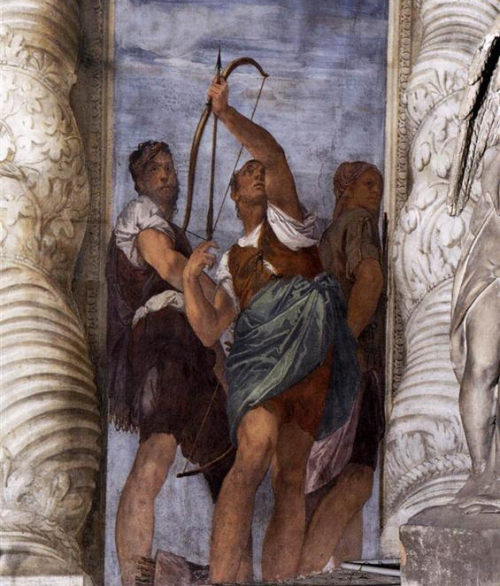
SO MANY ARROWS UNAIMED

Will Tigs's avatarHomo est Machina

three-archers-1558.jpg!HalfHD

So many arrows unaimed.
So many mountains unmoved.
So many lights unlit.
So many deeds undone.
So many words unsaid.
So many stories untold.
So many voices unheard.
So many questions unasked.
So many places unknown.
So many books unread.
So many sentences unwritten.
So many theories unproven.
So many minds unsettled.
So many paths untaken.
So many roads untraveled.
So many passions unruled.
So many emotions untamed.
So many ills uncured.
So many needs unmet.
So many hopes unchained.
So many souls unrested.
So many dreams unborn.
So many faces uncared.
So many heroes unnamed.
So many hearts unloved.

View original post