Source: THE PERPETUAL SEARCH FOR TRUTH
THE PERPETUAL SEARCH FOR TRUTH
Source: THE PERPETUAL SEARCH FOR TRUTH
Source: THE PERPETUAL SEARCH FOR TRUTH
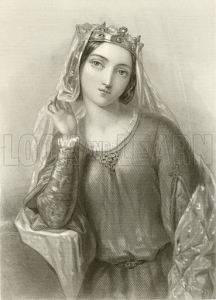
Queen Isabella was ripe for romance. She was a passionate woman in her late twenties, a striking beauty with plaited blonde hair. Furthermore, she had endured the loveless marriage with Edward since she was thirteen.
Roger de Mortimer, 8th Baron of Wigmore, was serving a life sentence in the Tower. His hair had grown long, his cheeks pale, and his eyes glowed with desperation. One glance at the handsome prisoner was enough to strike romantic interest in Isabella. It is not difficult to believe that the queen, her emotions stirred by the prisoner’s dark eyes, had made an opportunity to see him.
On the night of August 1 it was customary for the prison guards to celebrate the feast of St. Peter with food and drink. This time, the drink was drugged by the sub-lieutenant of the guards, Alspaye. When all the guards had fallen into a stupor, Mortimer dug…
View original post 1,374 more words

by Kenneth Harper Finton
Who in 1960 could imagine life in 2015? Those who did try to visualize the future were horrified by the novel 1984 and the dictatorial police state that it portrayed. For the generation that grew up in the shadow of nuclear war, their expectations for their own futures were cloudy and uncertain.
The turn of the each century has aways brought grave change to the American landscape and culture. The year 1700 brought to the world the seeds of revolution against monarchal tyranny and religious repression. 1800 heralded a new spirit of expansion into unknown lands with the promise of greater freedom for all than the world had ever known before. 1900 brought dreams of industrial expansion as the railroads opened up the western regions. Capitalists conceived of factories that could bring a better life to all and great profits for those whose dreams and ambitions…
View original post 1,666 more words
by Kenneth Harper Finton
She must have come out of the dark of the night, for I awoke one morning and simply found that she was there. Did I wake at all, or did I dream her into my life?
Whether a dream or a mystical succubus, she haunts me to this day. My loins ached for her. As I remember, her parents had been old-time friends of my parents. They stopped for a day to catch up on time that had been lost for a dozen years.
A lassie named Cassie, a vision of grace and elegance. Her very name was a rhyme that rolled off my hungry lips. Had I known where she went I would have crashed the gates of hell to find her, but she came and left like a storm that bent my soul in the winds. Could she still be lazing in the sun or is she standing in the midnight dark waiting on a day that never breaks.
I remember how her father smoked his pipe at breakfast on the day that they arrived. He told us about his work engineering new roads in the West. She said she never stayed the length of time necessary to call a place home. The last place that felt like home was on a desert far to the West among the cactus and the prairie pack rats that stole a birthstone from her dresser top.
Her brother Jess was my age, a tall boy with gangly legs, a wiry frame and short-cropped hair. His husky voice spewed out words fast as an auctioneer. I was sixteen and she was fifteen, every inch of her bursting with the enchanting charms that I desired so much.
In the afternoon the folks all went to town. Cassie and I climbed the creaking stairs to the attic and I brought out a tattered picture album. The thick black pages were loose and filled with dust. She ran back down the stairs and I followed, but she suddenly was gone.
I ran around the house calling out her name, opened a closet door and found her hiding there. She came out of hiding with a laugh and a smile that sent shivers down my spine. Our feet not even touching the ground, we flew straight to the sofa in the hall. She laughed musically and smiled breathlessly as told me that she had never felt like this before. We looked at pictures in the old album for an hour, her head bobbing toward my shoulder, her rounded hips touching my own sun-bronzed leg.
The hour passed as though time has stood still. The light streamed through the window and her hair fell softly down her neck, highlighted by the streaming of the sunlight.
We came upon a picture of a desert plain where steamrolled landscapes were pocked with time-eaten rocks that rose up from the bowels of the earth in grotesquely-shaped tormented forms. She said the the desert looked like that back home and spoke of roaming the sands at night looking up at the ancient stars embedded in a cold desert sky and wondered who her love was meant to be. Silently, she leaned her head my way until it came to rest against my arm. I felt like an angel had lost her cloud and came to rest upon my soul.
Our day was short, just seconds in an hour.
We walked the fence rows with the clinging vines and walked by some malformed trees that were cut long ago with stunted branches flaring up from the stumps. We followed the trail along the brook and sat down on the banks to watch the minnows stir a mist of mud along the bottom of the silver stream. As we edged our way along the hanging suspension bridge, she pretended that she was afraid of falling headlong down into the stream that churned cold over the green, moss-covered rocks.
We brought a picnic lunch and stopped between two pines that stood high on a knoll behind an abandoned house. The cloth she spread is still in place. The shaded spot was cooled by the evergreen and the rumpling, gentle breeze hummed a tune and whispered songs of love in the prickly needles of the pines. I looked into her perfect, loving face––her moist, light lips red as the blood of life.
I hardly dared to kiss her, but I did.
When we walked together back to the house, we knew our moment of separation was near. These precious moments we had shared would become just memories of what once was, something to cherisg while still young and fresh as Spring.
That night the raindrops splattered on the roof. I heard an engine start. a door slam shut, a car pull into the gravel drive and as the sound of the engine slowly disappeared and faded in the night. I knew that she had been swallowed up forever in that swollen mass of people and forgotten dreams. I felt a hollowness within. An emptiness that could never be filled enveloped me.
I promised that I would never forget this memory, this short time that was ours alone forever. For many nights thereafter I lay in awake in bed, wondering if somewhere in a western land, someone stands alone staring at the black and empty sky and wonders who her love was meant to be.
These words were written long ago. The day that stood out like a cat’s eyes at night was choked in the vastness of the days before and the greatness ofd the days to come. Until I found this story on an old trunk, my promise has been broken.
I forgot.
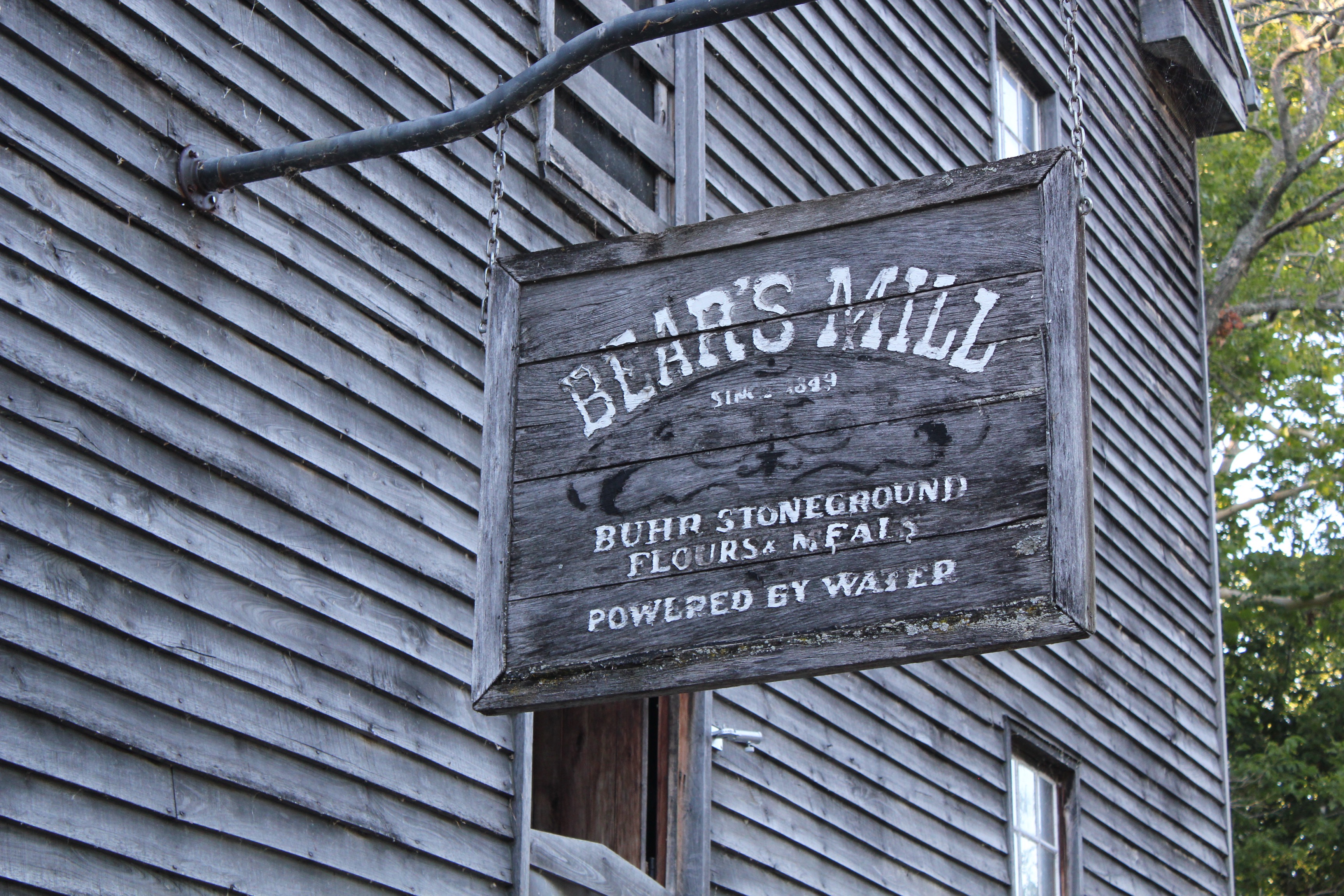
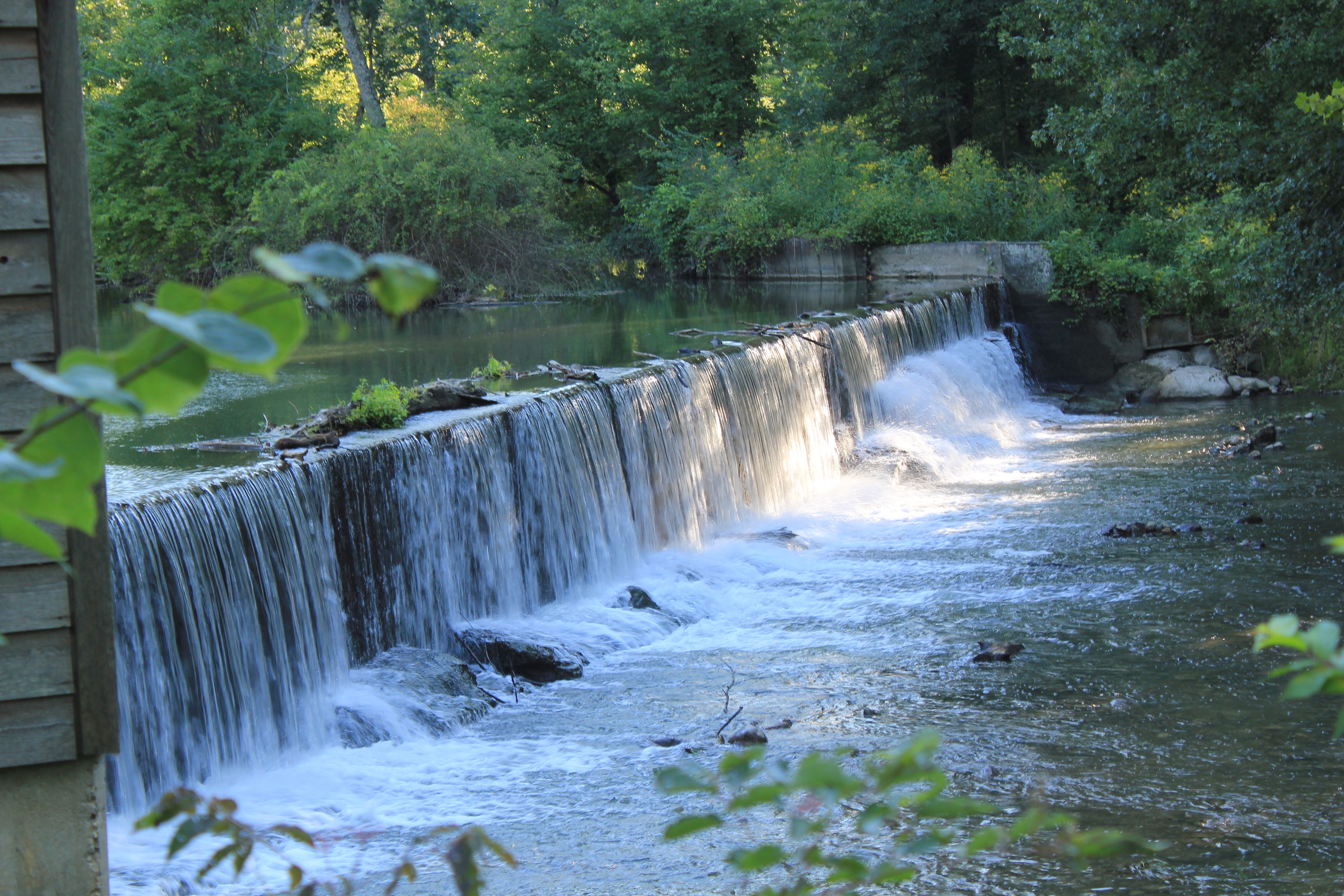
When I was a child I lived about twelve miles from Bear’s Mill. In the summer I would occasionally ride my bike down the gravel backroads that led from my home to the mill. I would spend some time sticking my hot feet in the cool waters and watching the waters fall hypnotically over the dam.
At that time, the mill was still a working mill run by a miller that got to know me and my bike from the frequent trips I made. I had one of the first thin-tired Schwinn bikes with three gears in the county. They were called English bikes at the time. The narrow tires made the bike hard to control on the graveled roads.
I know that 99.9% of the people will never get to Bear’s Mill. It matters little, as it is worth knowing about. That is why I write this. I will probably never get to the pyramids, but I still find them of great and abiding interest.
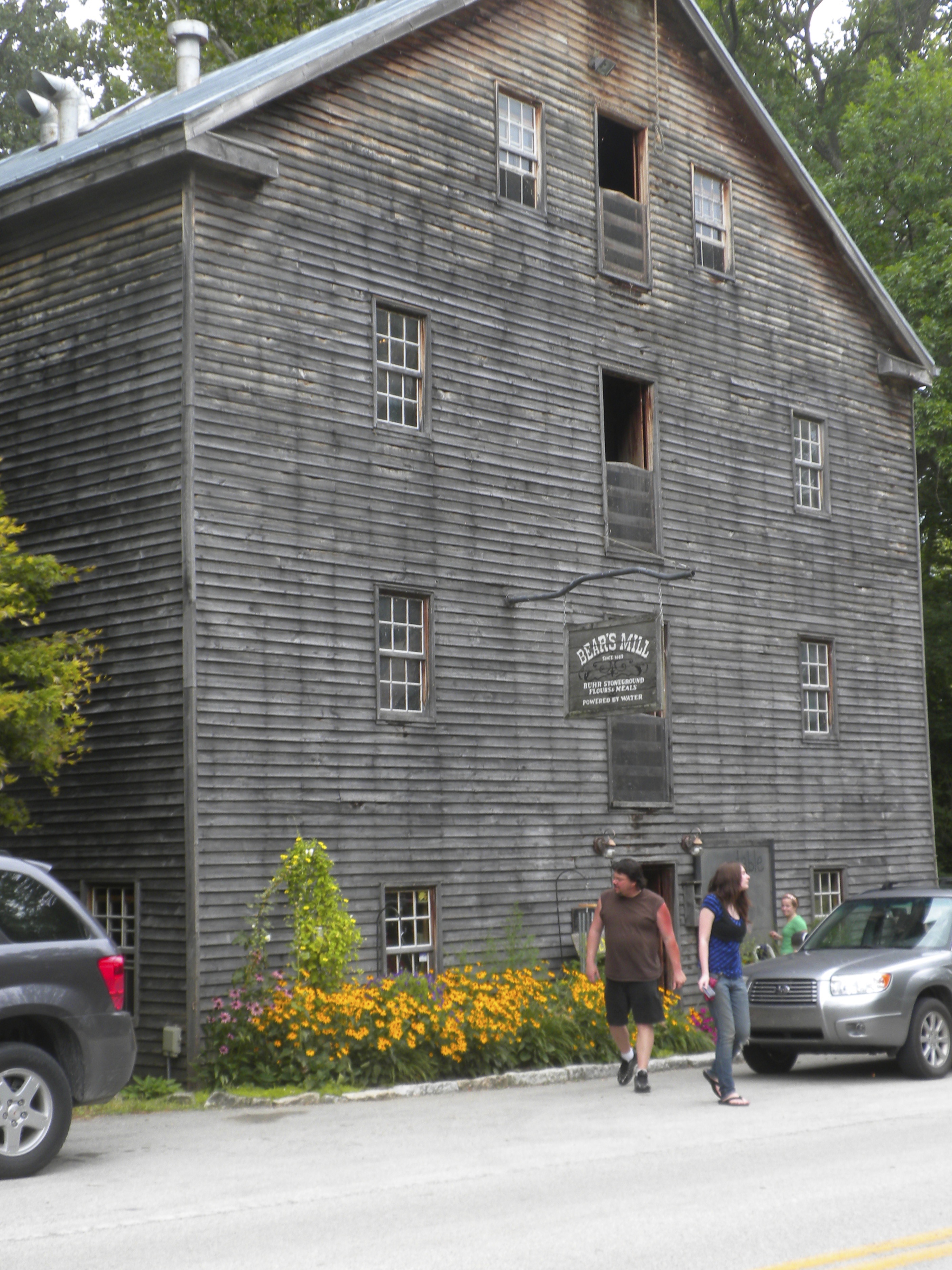
It is not that Bear’s Mill is one of the great wonders of the world that everyone needs to see. It is simply an historic grist mill in Darke County near Greenville, Ohio, the oldest existing industrial building in the county. It was built in 1849 after settlers had cut the trees out of the Ohio wilderness and grew crops on the newly cleared lands. Before it was put into operation it was purchased from Manning Hart, the builder and contractor, by Gabriel Baer. The stones used for grinding the grains were not hard enough, so Baer traveled to France to purchase high quality milling stones that fit his purpose. The original name was Baer’s Mill, but somehow along the way Bear’s Mill became the referred spelling.
The wood siding on the mill has been in place since 1849. It is a hardwood lap siding made from American Black Walnut and has served the building for over 165 years. In the 1970’s the miller retired and turned the mill over to a non-profit organization called Friends of Bear’s Mill. They still use the mill occasionally to grind a limited amount of grain. The bottom floor now contains a gift shop and an art gallery for local midwest artists to show their works. In 1975 the mill was placed on the National Register of Historic Places. It is both a museum for milling history and a stopping place for tourists who are as fascinated with the mill race and the dam as I was as a child.
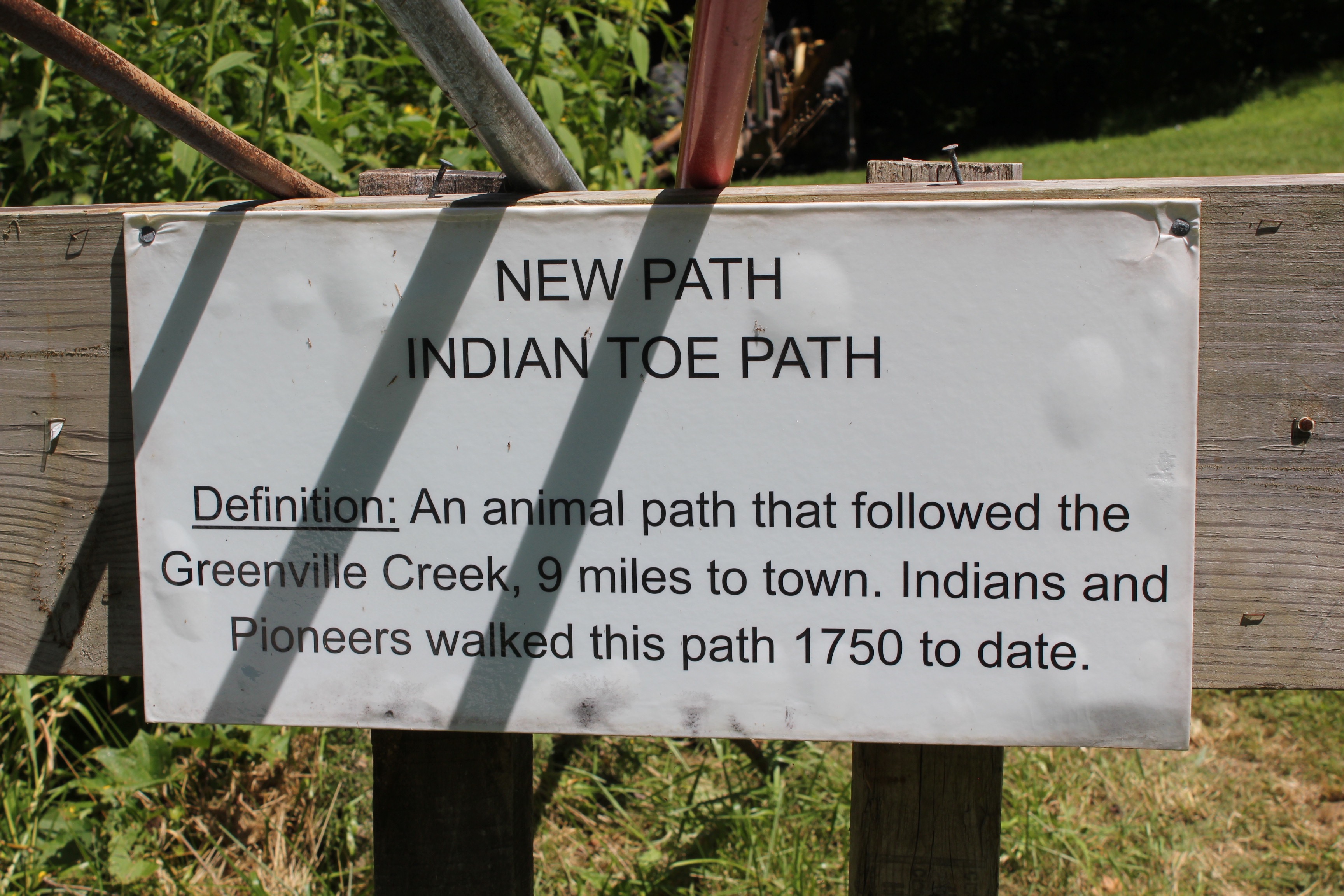
Remnants of the old Indian Toe Path run for half a mile along the creek. The visitors to the mill can take a mild, cooling walk in the summer sizzle where the pioneers and animals walked the hard nine miles to the settlement at old Fort Green Ville.
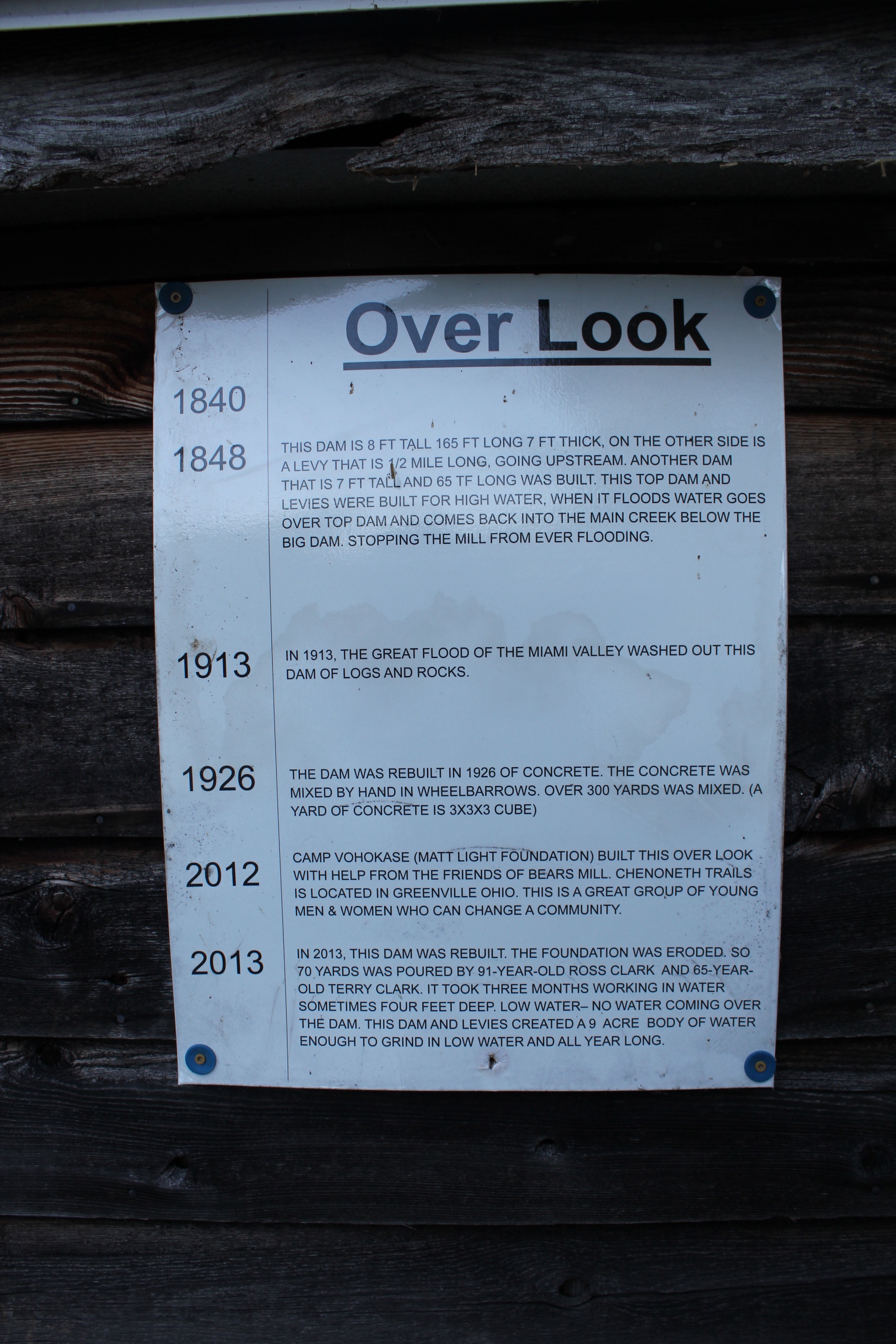
An overlook has been built along the creek by the ancient pathway where deer and panthers once roamed and fed.

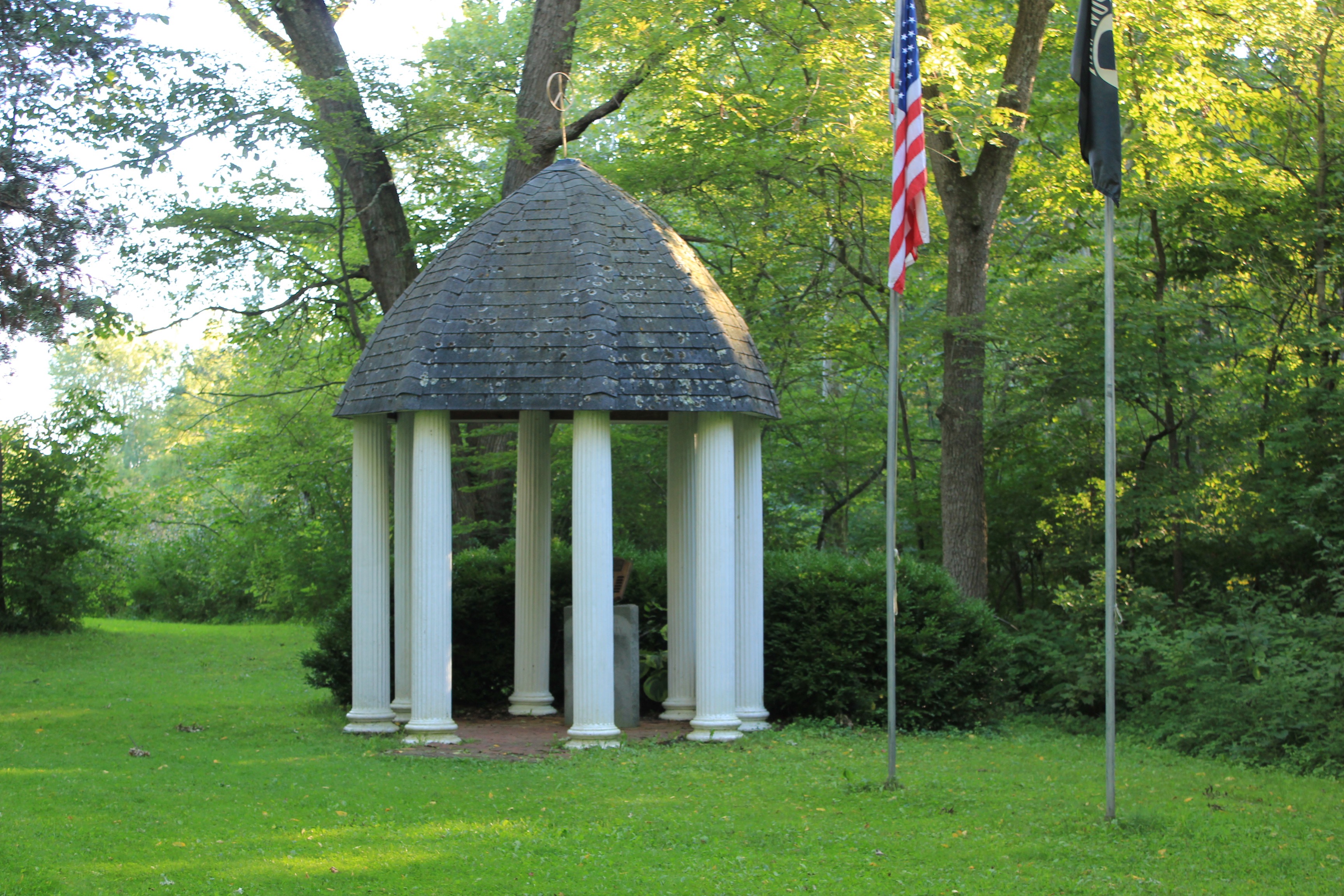
The steeple of the Darke County Courthouse failed and was replaced in the 1980’s. The old steeple was moved to Bear’s Mill to serve as a memorial to the Viet Nam veterans that died in that horrible war.
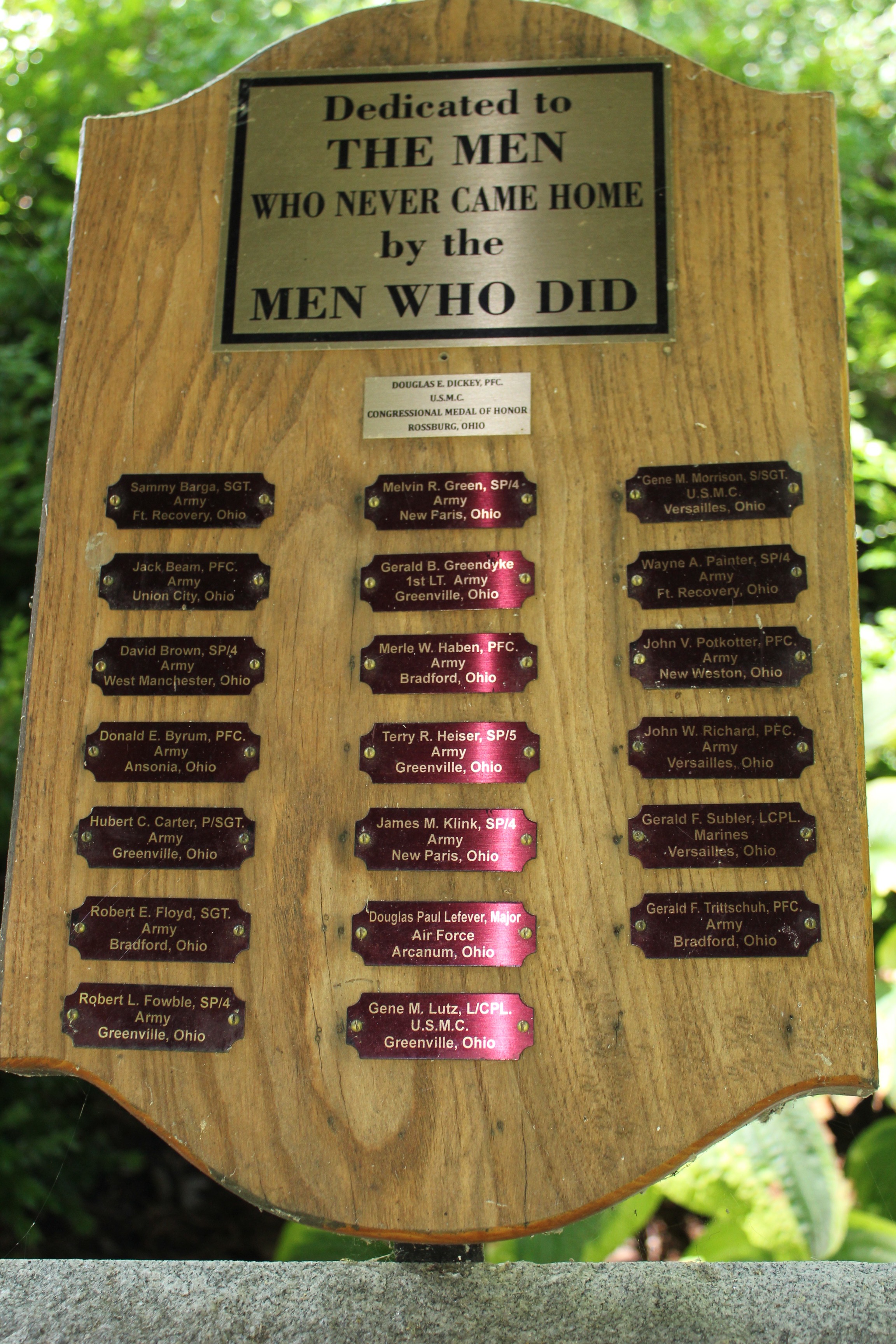
The names of the men who died are tagged on the plaque, including one classmate of mine, Gerry Greendyke who never made it home. My classmates and I owe a debt to Gerry and the others that we can never repay. He took our place in the war. He was the one that was killed while we went on to live our own lives. Some came home and many did not. So it is with wars and the young men who fight and die in them.
Away from the memorial, the woods along the creek remain as they have been for many thousands of years. A cleared path allows the visitors to walk unobstructed in the same spots as ancient mound builders walked ten thousand years ago when the ice sheets were melting and the rivers of Ohio took shape. The birds tweet and the young folk Twitter. And the water, as always, flows forever to the sea.
Click to make the water run on the video.
by Kenneth Harper Finton © 2015

“Did you see what Fred got me for my birthday,” Wilma said. “A brand new pink pistol.”
“You are planning to shoot someone,” Betty replied.
“No, I am not planning to do that.”
“Then what will you do with it?” Betty asked.
“Target practice, I guess. It’s small and fits my purse and hand.”
“Same thing,” Betty said.
 “What do you mean?” asked Wilma.
“Target practice is learning the skills for killing people.”
“Not to me. I enjoy it.”
“What do you think a pistol it for?” Betty asked. “A pistol is for killing people. They aren’t for hunting. Rifles are for hunting. Pistols are made just to kill people.”
“Or target practice,” Wilma reiterated.
“Targets are pretend people. Same difference.”
“Well, I don’t know. Fred got it for me to defend myself.”
 “Defend against what?” Betty asked.
“You never know. Maybe a wild animal might attack me or some big guy might come for me in a dark alley.”
“Here in little old Bedrock? This is the safest place I know. The major crimes are jaywalking and spitting on the sidewalk.”
“I could be visiting someplace dangerous and need it. There are lots of dangerous places.”
“You could just stay away from them,” replied Betty.
“But I want to be free to go any place I want,” Wilma said.
“So you will walk into a war zone with a little pink pistol for protection?”
“Maybe not a war zone. It doesn’t have to be a war zone. I could be hiking someplace and a big bear comes at me,” Wilma said.
“Do you know what happens if you shoot that bear? I hear that It is a felony to shoot a wild animal. Uncle Tex just arrested someone for shooting a bear on the trail and that man is looking at several years in jail and a big fine.”
“Well, suppose I am out at night and this rapist comes at me. At least I have my little pink pistol to protect myself.”
“Unless he grabs you before you get it out of your purse or takes it away from you. That is what happens most of the time.” Betty said.
“I would just have to be quicker,” Wilma replied.
“But how would you know he is a rapist until he actually grabs you and throws you down? By then it would be too late to dig for it in your purse.”
“That could happen,” Wilma agreed.
“Besides, I saw a video online once about people who had a pistol in their hands when someone attacked them and they could not pull the trigger. It is a big decision to pull a gun and shoot someone. When it comes right down to it most people freeze up and hesitate. That is how the bad guy gets the gun and takes it away.”
“I could pull the trigger,” Wilma said. “I am sure I could do that.”
“But how do you know what this guy intends to do? How do you recognize a rapist?”
“Maybe they gotta bad look on their face or move at me too quickly.”
“You would shoot someone for that? I don’t think so, Wilma.”
“They could have a knife or a gun that I could see.”
“Could a… would a … should a… there would not be time to react, Wilma.”
“Maybe not, but I would feel safer knowing my pink pistol is there,” Wilma said.
“Or you could do the sensible thing and not put yourself in such a position to start.”
“That is best,” Wilma agreed. “But I could wake up in the middle of the night when Fred is not there and hear someone in the house. I will have my little pink pistol to protect me.”
“You would go confront this intruder with your pistol and say, ‘Put your hands up?”
*Yes, I could do that.”
“I think you need lessons, Wilma. They could run from you or at you. Then you would have to decide whether to shoot or not. Do you think another person’s life is worth less than your own?”
“Well, that is not something I think about.”
“You’d better think about it,” Betty said. “What would Jesus do? What would Gandhi do? We already know that they would not want violence. They believed in civil disobedience, not violence.”
“Oh, Betty, you make it all so complicated.”
“It is complicated, Wilma. You have to think about the consequences of your actions.”
“Everyone has the right to defend themselves,” Wilma stated.
“Yes, they do and there are lots of ways to do that without a pistol in your hand. Pistols are for killing people. Do you know what pistols are mainly used for?”
“Targets?”
“Target practice is for killing. No, most gun deaths are from suicide. Two out of three gun people who die by guns are people who kill themselves.”
“I have heard that, but I am not a suicidal person. Besides, Fred tells me that I have a second amendment right to be armed.”
“To be armed for what, Wilma? Killing somebody?”
“Well, the government could get out of control and we would have to take back our right and our country.”
“With a little pink pistol against drones and tanks and bombs and the world’s best fighting forces?”
“You make it sound futile,” Wilma said,
“It is futile. Convincing people with words and actions are the best way.”
“How do you do that with a burglar or a rapist?”
“You gave to be creative, Wilma. Ask them about their favorite song. Ask them to sing it to you and join them in singing.”
“Oh, sure. I can see them stopping immediately and starting to sing.”
“People always need convincing. That’s the one talent you really are good at. Sing them a happy song and see what happens.”
“Ha! That’s a crock.” Wilma said.
“Maybe,” Betty said, “but being you is your best defense. If anyone gets to know you, they will like you and not want to harm you. That is better than shooting somebody.”
“But Fred gave me the pink pistol for my birthday,” Wilma said.
“Tell him you really do not like pink and do not want to shoot anyone, Wilma. That is true, isn’t it?”
“Hmmm,” Wilma replied, lost in thought.

BONUS SOUNDTRACK, “RUN, ROBIN, RUN”
What is a Photogravure?
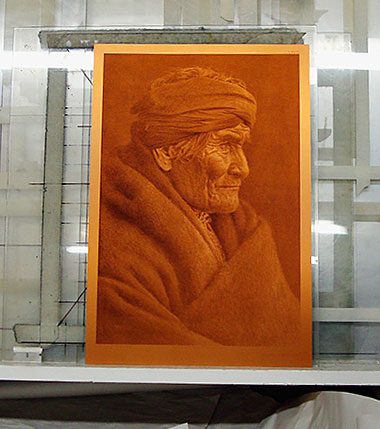
Paul Unks, of Denver, nicknamed Mountain Hawk, explains the craft of printing photogravures: “Developed in the 1850’s, an intaglio photogravure is produced through a complex painstaking hand-made process whereby the original photographic image is etched into a metal plate allowing the plate to hold ink. Then, oil based ink is carefully applied by hand onto the etched plate so that the ink is pushed down into the etched grooves of the plate that range in depth from deep (dark) to shallow (light). Once the printing plate is properly inked, high quality moistened paper is placed on the inked plate and then hand cranked in a press at 10,000 lbs of pressure causing the paper to squeeze down into the grooves of the plate. After the paper fibers have absorbed the ink, the paper is carefully peeled off the plate leaving the image deeply embossed into the paper…
View original post 1,466 more words
by Kenneth Harper Finton ©2015
 It is said that writers “write to be read.” Then painters paint to be seen, actors act to impress and singers sing to be heard. If this is the case–and most often it is–the newer writers of the world are setting themselves up for great disappointment. They will not find the audience that they did on the past. They will not achieve the fame that others did in the past. They will quite likely not enjoy the riches that others have had In the past. Technology and world Internet communications have obviously changed the world.
Though it has democratized the ability to be read and seen and heard, by doing so it has practically eliminated the institutions that originally supported and brought culture to the world. Some vestiges of the old system remain, but they are losing ground with each passing year. They have been…
View original post 661 more words
soundcloud.com/…/this-land-is-your-land-1
“This song is Copyrighted in U.S., under Seal of Copyright #154085, for a period of 28 years, and anybody caught singin’ it without our permission, will be mighty good friends of ourn, cause we don’t give a dern. Publish it. Write it. Sing it. Swing to it. Yodel it. We wrote it, that’s all we wanted to do.”
-Woody Guthrie
“WHEN WOODY GUTHRIE arrived in New York City he was known as “the Oklahoma cowboy.”
Guthrie was embraced by its leftist folk music community. For a time, he slept on a couch in Will Geer‘s apartment. Guthrie made his first recordings—several hours of conversation and songs recorded by the folklorist Alan Lomax for the Library of Congress—as well as an album, Dust Bowl Ballads, for Victor Records in Camden, New Jersey.
Guthrie was tired of the radio overplaying Irving Berlin‘s “God Bless America.” He thought the lyrics were unrealistic and complacent. Partly inspired by his experiences during a cross-country trip and his distaste for “God Bless America,” he wrote his most famous song, “This Land Is Your Land“, in February 1940; it was subtitled: “God Blessed America for Me.” The melody is adapted from an old gospel song, “Oh My Loving Brother.” This was best known as “When The World’s On Fire,” sung by the country group The Carter Family. Guthrie signed the manuscript with the comment, “All you can write is what you see, Woody G., N.Y., N.Y., N.Y.”
He protested against class inequality in the fourth and sixth verses:
As I went walking, I saw a sign there,
And on the sign there, It said “no trespassing.”
[In another version, the sign reads “Private Property”]
But on the other side, it didn’t say nothing!
That side was made for you and me.
In the squares of the city, In the shadow of a steeple;
By the relief office, I’d seen my people.
As they stood there hungry, I stood there asking,
Is this land made for you and me?
These verses were often omitted in subsequent recordings, sometimes by Guthrie. Although the song was written in 1940, it was four years before he recorded it for Moses Asch in April 1944. Sheet music was produced and given to schools by Howie Richmond sometime later.
EARLY LIFE:
Guthrie’s early life was no an easy road. His older sister, Clara, died in a coal oil fire from a heating stove when he was seven. His mother, Nora Belle, was institutionalized after setting a fire that severely burned Guthrie’s father.
In 1920, oil was discovered in Okemah, which led to a boom for a few years. Then the oil dried up, and the people of Okemah were, Guthrie said, “busted, disgusted, and not to be trusted.” His father quit the town for Texas, leaving 14-year-old Guthrie to play harmonica for sandwiches and coins on the streets of Okemah. His older brother, Roy, became the struggling family’s main source of support.
Woody’s father ended up in Pampa, Texas, and sent for his son.
When he was 19, Guthrie met and married his first wife, Mary Jennings, with whom he had three children, Gwendolyn, Sue, and Bill.[
With the advent of the Dust Bowl era, Guthrie left Texas, leaving Mary behind, and joined the thousands of Okies who were migrating to California looking for work. Many of his songs are concerned with the conditions faced by these working-class people.
in 1931, formed the Corn Cob Trio, and enjoyed his first taste of public success before succumbing to the realities of the Great Depression. He hitchhiked and freight-trained his way across several states, soaking up the stories of “dustbowl refugees” and refining his songwriting skills. In Los Angeles, he joined up with a woman named “Lefty Lou” and became popular with the relocated Okies living in cardboard and tin shelters.
He wrote his most famous song, “This Land is Your Land,” in New York City while living in a building for transients called Hanover House, at the corner of 43rd Street and Sixth Avenue, one block east of where the ball now falls on New Year’s Eve in Times Square.
He’d seen enough during his travels to know that for many Americans, there was nothing blessed about their lives. He wrote the song in 1940 but didn’t record it until 1944. It was published in 1945 in a mimeographed booklet with 10 other songs and some of Guthrie’s drawings. The booklet cost 25 cents
Sources: https://en.wikipedia.org/wiki/Woody_Guthrie, The Writer’s Almanac
THIS LAND IS YOUR LAND
(words and music by Woody Guthrie)
Chorus:
This land is your land, this land is my land
From California, to the New York Island
From the redwood forest, to the gulf stream waters
This land was made for you and me
As I was walking a ribbon of highway
I saw above me an endless skyway
I saw below me a golden valley
This land was made for you and me
Repeat Chorus
I’ve roamed and rambled and I’ve followed my footsteps
To the sparkling sands of her diamond deserts
And all around me a voice was sounding
This land was made for you and me
Repeat Chorus
The sun comes shining as I was strolling
The wheat fields waving and the dust clouds rolling
The fog was lifting a voice come chanting
This land was made for you and me
Repeat Chorus
As I was walkin’ – I saw a sign there
And that sign said – no tress passin’
But on the other side …. it didn’t say nothin!
Now that side was made for you and me!
Repeat Chorus
In the squares of the city – In the shadow of the steeple
Near the relief office – I see my people
And some are grumblin’ and some are wonderin’
If this land’s still made for you and me.
Repeat Chorus
©1956 (renewed 1984), 1958 (renewed 1986) and 1970 TRO-Ludlow Music, Inc. (BMI)
by Kenneth Harper Finton ©2015
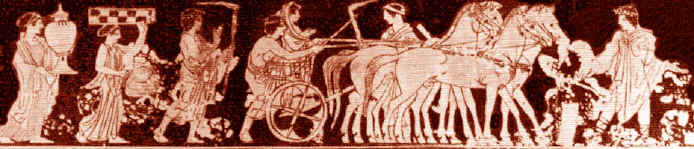
Demeter & Persephone
IN ANCIENT GREECE, all women were viewed as manifestations of the earth goddess. That is why ancient Greek fathers recited the words, “I give my daughter to you for the plowing of legitimate children,” when giving away their daughters. But the daughter was more on a permanent loan to her husband than his property. She had a dowry that had to be returned if they divorced.
Marriage as an institution is an ancient custom that predates recorded history. The Gods and Goddesses had husbands and wives in the minds of stone age societies. Marriage tradition was handed down orally long before writing was established.
Marriage is ultimately a contract and a strategic alliance between two individuals or families. This contract, unless temporary, is generally designed to provide financial aid, emotional stability and security to the people involved.
Some cultures practiced temporary and conditional marriages. The Celtic tribes practiced handfasting. The Gaelic scholar, Martin Martin, wrote: “It was an ancient custom in the Isles that a man take a maid as his wife and keep her for the space of a year without marrying her; and if she pleased him all the while, he married her at the end of the year and legitimatized her children; but if he did not love her, he returned her to her parents.”
Fixed-term marriages were popular in the Muslim community. Pre-Islamic Arabs practiced a form of temporary marriage that carries on today in the practice of Nikah Mut’ah, a fixed-term marriage contract.
THE ADVENT OF SAME-SEX MARRIAGES
“The first laws in modern times recognizing same-sex marriage were enacted during the first decade of the 21st century. As of March 2015, seventeen countries (Argentina, Belgium, Brazil, Canada, Denmark, France, Iceland, Luxembourg, the Netherlands, New Zealand, Norway, Portugal, South Africa, Spain, Sweden, the United Kingdom, and Uruguay) and several sub-national jurisdictions (parts of Mexico and a majority of the U.S. states) allow same-sex couples to marry. Finland has enacted a law to legalize same-sex marriage which will come into force in March 2017. Bills allowing legal recognition of same-sex marriage have been proposed, are pending, or have passed at least one legislative house in Austria, Australia, Chile, Germany, Ireland, Slovenia, Switzerland, Taiwan and Venezuela, as well as in the legislatures of several sub-national jurisdictions (parts of Australia, Mexico, and the United States).” -https://en.wikipedia.org/wiki/Marriage
Granting formal legal status to same-sex marriages is a relatively recent idea and practice, but there are mixed-sex couples in the history of ancient Greece. Generally, same-sex marriages in Greece were promiscuous, with the partners having the freedom to engage in sex with others. Though the Theodosian Code issued in 438 CE imposed heavy penalties on same-sex relationships, it is unclear how the law was enforced or ignored socially. Some areas in China, particularly the Fujian region, permitted same-sex unions.
With marriages in decline in the western world and the birth rate getting lower with each generation in developed countries, the social need to raise children has become optional in many millions of families.
A corollary to the contract of marriage is the rights of offspring if any. Our laws are now removed from the older social systems that sanctioned marriage primarily for property rights and the rights of the offspring.
THERE IS NO UNIVERSAL CUSTOM FOR MARRIAGE
There is no one universal custom for marriage now or in recorded history.
Early nomads in the middle east, where modern civilization arose, allowed a wife to have a tent of her own which she kept completely independent of her husband. The early Israelites kept this custom as well, as shown in the last book of Proverbs.
Polygamous and polyandrous societies are found in the Himalayan Mountains. Because land is scarce in the Himalayas all brothers were allowed to marry the same wife. This allowed the family land holdings to remain whole rather that be divided by heirs. If the lands were split, the families would have small plots that could not sustain family life.
In Europe, this division of the land into fragments was prevented through e the inheritance process. The elder inherited and the siblings lost out. Some of the disinherited went on to become celibate monks and priests.
MARRIAGE IN THE MID-20TH CENTURY
Notes and Queries (1951), an anthropological handbook, defined marriage as “a union between a man and a woman such that children born to the woman are the recognized legitimate offspring of both partners.” [Notes and Queries on Anthropology. Royal Anthropological Institute. 1951. p. 110.]
These ideas did not sit well with Kathleen Gaugh (1924-1990). Gaugh was a British anthropologist and a feminist. She noted that the Nuer people of Sudan allowed women to act as husbands under certain conditions. She suggested that instead of a man and a woman, the phrase should be modified to “a woman and one or more other persons.”
Gaugh studied polygamous societies such as the Nayar in India. In that society, the husband’s role was not conventional. Women had many lovers in this society. The lovers were the procreators. The father was an absentee non-resident. None of the men has any legal rights to the woman’s children. Gaugh was forced to abandon the idea of sexual access as a key element of marriage and define if in terms of the legitimacy of the offspring. She wrote: “a relationship established between a woman and one or more other persons, which provides a child born to the woman under circumstances not prohibited by the rules of relationship, is accorded full birth-status rights common to normal members of his society or social stratum.”
Economic anthropologist Duran Bell criticized the legitimacy-based definition. Some societies do not require legitimacy for children to have legal rights such as the right to property and inheritance.
Edmund Leach also thought Gough’s definition was too restrictive in terms of recognized legitimate offspring. He suggested that marriage be viewed in terms of the different types of rights it serves to establish.
In a 1955 article in Man, Leach argued that “no one definition of marriage applied to all cultures.”
He offered a list of ten rights associated with marriage, including sexual monopoly and rights with respect to children, with specific rights differing across cultures. Those rights, according to Leach, included:
1″ To establish a legal father of a woman’s children.
2 To establish a legal mother of a man’s children.
3 To give the husband a monopoly in the wife’s sexuality.
4 To give the wife a monopoly in the husband’s sexuality.
5 To give the husband partial or monopolistic rights to the wife’s domestic and other labour services.
6 To give the wife partial or monopolistic rights to the husband’s domestic and other labour services.
7 To give the husband partial or total control over property belonging or potentially accruing to the wife.
8 To give the wife partial or total control over property belonging or potentially accruing to the husband.
9 To establish a joint fund of property–a partnership–for the benefit of the children of the marriage.
10T o establish a socially significant ‘relationship of affinity’ between the husband and his wife’s brothers.” [Leach, Edmund (Dec 1955). “Polyandry, Inheritance and the Definition of Marriage,” Man 55 (12): 183.]
Duran Bell describes marriage as “a relationship between one or more men (male or female) in severalty to one or more women that provides those men with a demand-right of sexual access within a domestic group and identifies women who bear the obligation of yielding to the demands of those specific men.” [In a 1997 article in Current Anthropology.]
“Men in severalty,” means that Bell is referring to some societies where kin groups retain a right in a woman’s offspring even if her husband (a lineage member) is dead. This practice is also found in Levirate marriages, a marriage type in which the brother of a deceased man is obliged to marry his brother’s widow and the widow is obligated to marry her deceased husband’s brother. The type of marriage is a social attempt to provide for the offspring and provide for the spouse while salvaging inheritance rights for the children and maintaining a unified land holding.
In referring to “men (male or female),” Bell is referring to women within the lineage who may stand in as the “social fathers” of the wife’s children born of other lovers as in Nuer’s “Ghost marriage.”
In Sudan, a ghost marriage is a marriage where a deceased groom is replaced by his brother. The brother serves as a stand-in to the bride, and any resulting children are considered children of the deceased spouse. This unusual type of marriage is nearly exclusive to the Dinka (Jieng) and Nuer tribes of Southern Sudan, although instances of such marriages have also occurred in France.
Nuer women do not marry deceased men only to continue the man’s bloodline. In accordance to Nuer tradition, any wealth owned by the woman becomes the property of the man after the marriage. Thus, a wealthy woman may marry a deceased man to retain her wealth, instead of giving it up after marrying.
Among the Nuer, a ghost marriage is nearly as common as a marriage to a live man.
-https://en.wikipedia.org/wiki/Ghost_marriage_(Sudanese)
THE RIGHT TO SEXUAL ACCESS
The right to sexual access is one of the primary purposes of modern marriage. In most advanced countries, the woman’s right to refuse sexual contact is upheld legally. Marital rape, a common occurrence in the past, has become illegal in many countries, though proving the violation has often proven to be quite difficult.
Feminists often see marriage as an institution traditionally rooted in patriarchy. They often believe that it promotes male superiority and power over women. When men are designated to be the providers and the woman the caretaker, then women become the property of the male.
“In the US, studies have shown that, despite egalitarian ideals being common, less than half of respondents viewed their opposite-sex relationships as equal in power, with unequal relationships being more commonly dominated by the male partner. Studies also show that married couples find the highest level of satisfaction in egalitarian relationships and lowest levels of satisfaction in wife dominant relationships.” – Wikipedia
Traditional marriage imposes an obligation on the wife to be sexually available to her husband. It also demands that the husband provide material and financial support for the wife.
Feminists rebelled against the male bias in the institution of marriage. Social thinkers, men and women alike, pointed to the lack of choice that marriage gave to the woman. Bertrand Russell wrote in his book Marriage and Morals that: “Marriage is for woman the commonest mode of livelihood, and the total amount of undesired sex endured by women is probably greater in marriage than in prostitution.”
Angela Carter in Nights at the Circus wrote: “What is marriage but prostitution to one man instead of many?”
PEER MARRIAGE
In recent years, peer marriages have been receiving attention in quite a few western countries including Great Britain and the United States.
Shared earning/shared parenting marriage, also known as peer marriage, is a type of marriage where the partners at the outset of the marriage set it up in a manner of sharing responsibility for earning money, meeting the needs of children, chores, and recreation time in nearly equal fashion across these four domains. It refers to an intact family formed with relatively equal earning and parenting styles from its initiation.
Peer marriage is distinct from shared parenting, as well as the type of equal or co-parenting that father’s rights activists in the United States, the United Kingdom, and elsewhere seek after a divorce in the case of marriages, or unmarried pregnancies/childbirths, not set up in this fashion at the outset of the relationship or pregnancy.
A number of books have addressed various aspects of this type of marriage, including Equally Shared Parenting by Marc and Amy Vachon, The Four-Thirds Solution by Stanley Greenspan and Getting to 50/50 by Sharon Meers and Joanna Strober.
https://en.wikipedia.org/wiki/Shared_earningshared_parenting_marriage
LOVE AND MARRIAGE
“Love and Marriage” is a song with lyrics by Sammy Cahn and music by Jimmy Van Heusen. The idea epitomized the values of society through most of both centuries.
“Love and marriage, love and marriage, Go together like a horse and carriage. This, I tell you, brother. You can’t have one without the other.”
Despite the popularity and cleverness of the lyrics of the song, love is much deeper that the institution of marriage. Some believe it is a basic binding force found in the world’s very existence. The elementary prototype of love is similar to the attraction of atomic structures to one another. These structures form combinations that become something independent and different from that the atoms that combined to create it. Are these primitive examples of the force of love?
Love is seen everywhere in the natural world as adults pair and care for their mates and their young. Love is evident throughout nature. Love is bonding and it is seen in the binding that forms the very chemicals of life.
To me, love is accepting another as a part of oneself. Love is the inclusion of the other into the very fabric of everyday life. Love unites and draws together like iron fragments to the magnetic field. In human terms, love expands the isolated and alone self to include beings and objects from outside the self.
Love is felt not just for living things, but for actions and methods of performing actions. The world is built on attraction and love, caring and nurturing. The desire and urge to be more than we are alone is the driving force of evolutionary progress.
Love is thought by many to be the primary reason for existence itself, as primal awareness, discovered the other outside itself, reflected upon it, accepted it within itself, and gave birth to an entire universe. The idea is not so far removed from the ideas of the ancient Greeks and the stone age tribe dwellers.

 Kenneth Harper Finton