(A HUMANITARIAN REBUTTAL TO WORLD RACISM)
by Kenneth Harper Finton
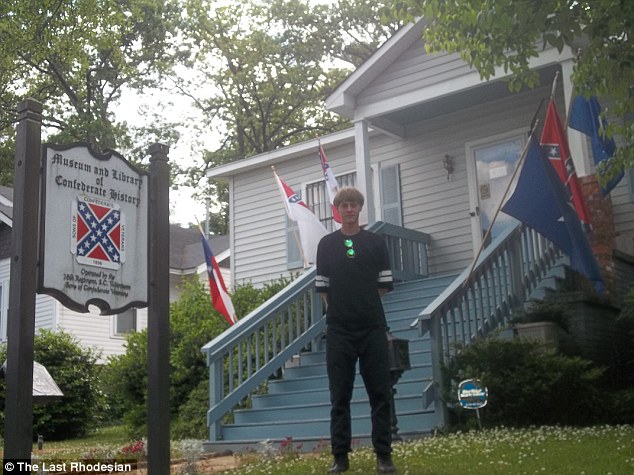
A manifesto written by Dylann Roof shortly before he murdered nine black people in Charleston, South Carolina is an important clue into the workings of his mind and the ideas that underlie a universal form of racism and ignorance that is destroying our very world.
Roof states:
‘“I was not raised in a racist home or environment. Living in the South, almost every White person has a small amount of racial awareness, simply beause of the numbers of negroes in this part of the country. But it is a superficial awareness. Growing up, in school, the White and black kids would make racial jokes toward each other, but all they were were jokes. Me and White friends would sometimes would watch things that would make us think that “blacks were the real racists” and other elementary thoughts like this, but there was no real understanding behind it.”
Millions of us were born and raised in this type of an environment. It is easy for whites who do not mingle and relate to black families on a daily basis to come to the conclusion that the blacks are the ‘real racists’. These whites never felt the stings of whips and slavery, the unequal treatment that the law afforded and allowed that still goes on every day. Far too many whites see the average black person as inferior. Many speak in the present tense and in a dialect that is not often used in white families. We are able to distinguish between blacks and whites from the sound of the voice alone in many cases.
Our parochial-styled schools are conservative and filled with narrow-minded ideas. They do little to dissuade the myth that blacks are inferior to whites.
Natural instinct and family practices from the time of the Stone Age inculcate us to believe that the Stranger is a Danger. Our defenses rise, the adrenaline flows. These hormones go to work when a Stranger comes among us. The stranger must earn trust and always remains a danger to the tribe.
The failure of our educational system is shown by the fact that society has not lifted us from our tribal perspective and fears. It is natural for predators to fear one another. By teaching us to be predators, our schools have failed to make us more human.
Roof writes:
“Black people are racially aware almost from birth, but White people on average dont think about race in their daily lives. And this is our problem. We need to and have to. Say you were to witness a dog being beat by a man. You are almost surely going to feel very sorry for that dog. But then say you were to witness a dog biting a man. You will most likely not feel the same pity you felt for the dog for the man. Why? Because dogs are lower than men. This same analogy applies to black and White relations. Even today, blacks are subconsciously viewed by White people are lower beings. They are held to a lower standard in general. This is why they are able to get away with things like obnoxious behavior in public. Because it is expected of them.”
Here, the disturbed young man has a valid point. White people often view blacks to be inferior. Much of it is subconscious. The Black Stranger is something to be feared. They are often better athletes and dancers and have a genetic sense of rhythm that is different from and more sensual than their white counterparts. Young white men are taught that black men have bigger penises and more sexual stamina. These thoughts lead directly to conflict, hatred and competitive loathing. Such teachings come alive through sports, porno sites, and adolescent angst. Thousands of teachers and parents have these mistaken viewpoints.
Roof writes:
“Modern history classes instill a subconscious White superiority complex in Whites and an inferiority complex in blacks. This White superiority complex that comes from learning of how we dominated other peoples is also part of the problem I have just mentioned. But of course I dont deny that we are in fact superior.”
The history we study WAS written by the white race. Dominance over what is perceived to be the lesser and lower forms of life is the heritage of Western civilization. “Have dominion over every living thing” is supposedly a truth mouthed by God himself. Manifest destiny is our righteous path. Damn and destroy all that stands in the way of it. We learn this in church. We learn this in schools. Parents teach their children to be racists and bigots quite naturally. Even that false God that America prays to backs them up. God is on our side. God loves our team. God will deliver us. We are one nation under God. In God we trust.
Roof writes:
“Integration has done nothing but bring Whites down to level of brute animals. The best example of this is obviously our school system. Now White parents are forced to move to the suburbs to send their children to “good schools”. But what constitutes a “good school”? The fact is that how good a school is considered directly corresponds to how White it is. I hate with a passion the whole idea of the suburbs. To me it represents nothing but scared White people running. Running because they are too weak, scared, and brainwashed to fight.”
Times have changed. The walled cities and castles were built for the protection of the worker populations. The peasants rushed to the fortress to defend their lord and by so doing protected themselves. As cities became smelly and dirty and crowded, the countryside became more appealing when the immediate threat of foreign domination ceased. The suburbs were built by venture capitalists to create new wealth from homes, roads, utility services and expanded business opportunities. The peasants were given a better sounding name–the Middle Class.
Roof says:
“Negroes have lower Iqs, lower impulse control, and higher testosterone levels in generals. These three things alone are a recipe for violent behavior.”
Science, of course, shows that none of this is true, but it is an illusion that has been perpetuated for far too long. The depth of his ignorance is shown by Roof’s statement: “For example when we learn about how George Washington carver was the first nigger smart enough to open a peanut.”
Our children obviously need a better education. They need to learn how to surf the Internet for accurate information and how to distinguish between fact and half truth. They need to learn respect for scientific studies and intellectual achievement. We do not teach them that. We have brought all this tragedy and stupidity on ourselves. America needs to get smarter and the dumbing down needs to stop. The old bigots may die off, but the young bigots are born again. We need to counter false religion and utter bullshit with real reason and creative thought. Unless we do, tomorrow will bring us another Dark Age.
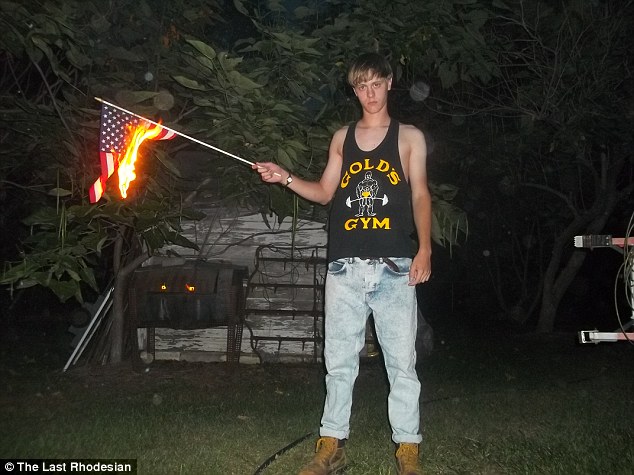
THE FULL TEXT OF DYLANN ROOF’S RANT AND LOGIC
http://talkingpointsmemo.com/muckraker/dylann-roof-manifesto-full-text
I was not raised in a racist home or environment. Living in the South, almost every White person has a small amount of racial awareness, simply beause of the numbers of negroes in this part of the country. But it is a superficial awareness. Growing up, in school, the White and black kids would make racial jokes toward each other, but all they were were jokes. Me and White friends would sometimes would watch things that would make us think that “blacks were the real racists” and other elementary thoughts like this, but there was no real understanding behind it.
The event that truly awakened me was the Trayvon Martin case. I kept hearing and seeing his name, and eventually I decided to look him up. I read the Wikipedia article and right away I was unable to understand what the big deal was. It was obvious that Zimmerman was in the right. But more importantly this prompted me to type in the words “black on White crime” into Google, and I have never been the same since that day. The first website I came to was the Council of Conservative Citizens. There were pages upon pages of these brutal black on White murders. I was in disbelief. At this moment I realized that something was very wrong. How could the news be blowing up the Trayvon Martin case while hundreds of these black on White murders got ignored?
From this point I researched deeper and found out what was happening in Europe. I saw that the same things were happening in England and France, and in all the other Western European countries. Again I found myself in disbelief. As an American we are taught to accept living in the melting pot, and black and other minorities have just as much right to be here as we do, since we are all immigrants. But Europe is the homeland of White people, and in many ways the situation is even worse there. From here I found out about the Jewish problem and other issues facing our race, and I can say today that I am completely racially aware.
Blacks
I think it is is fitting to start off with the group I have the most real life experience with, and the group that is the biggest problem for Americans.
Niggers are stupid and violent. At the same time they have the capacity to be very slick. Black people view everything through a racial lense. Thats what racial awareness is, its viewing everything that happens through a racial lense. They are always thinking about the fact that they are black. This is part of the reason they get offended so easily, and think that some thing are intended to be racist towards them, even when a White person wouldnt be thinking about race. The other reason is the Jewish agitation of the black race.
Black people are racially aware almost from birth, but White people on average dont think about race in their daily lives. And this is our problem. We need to and have to.
Say you were to witness a dog being beat by a man. You are almost surely going to feel very sorry for that dog. But then say you were to witness a dog biting a man. You will most likely not feel the same pity you felt for the dog for the man. Why? Because dogs are lower than men.
This same analogy applies to black and White relations. Even today, blacks are subconsciously viewed by White people are lower beings. They are held to a lower standard in general. This is why they are able to get away with things like obnoxious behavior in public. Because it is expected of them.
Modern history classes instill a subconscious White superiority complex in Whites and an inferiority complex in blacks. This White superiority complex that comes from learning of how we dominated other peoples is also part of the problem I have just mentioned. But of course I dont deny that we are in fact superior.
I wish with a passion that niggers were treated terribly throughout history by Whites, that every White person had an ancestor who owned slaves, that segregation was an evil an oppressive institution, and so on. Because if it was all it true, it would make it so much easier for me to accept our current situation. But it isnt true. None of it is. We are told to accept what is happening to us because of ancestors wrong doing, but it is all based on historical lies, exaggerations and myths. I have tried endlessly to think of reasons we deserve this, and I have only came back more irritated because there are no reasons.
Only a fourth to a third of people in the South owned even one slave. Yet every White person is treated as if they had a slave owning ancestor. This applies to in the states where slavery never existed, as well as people whose families immigrated after slavery was abolished. I have read hundreds of slaves narratives from my state. And almost all of them were positive. One sticks out in my mind where an old ex-slave recounted how the day his mistress died was one of the saddest days of his life. And in many of these narratives the slaves told of how their masters didnt even allowing whipping on his plantation.
Segregation was not a bad thing. It was a defensive measure. Segregation did not exist to hold back negroes. It existed to protect us from them. And I mean that in multiple ways. Not only did it protect us from having to interact with them, and from being physically harmed by them, but it protected us from being brought down to their level. Integration has done nothing but bring Whites down to level of brute animals. The best example of this is obviously our school system.
Now White parents are forced to move to the suburbs to send their children to “good schools”. But what constitutes a “good school”? The fact is that how good a school is considered directly corresponds to how White it is. I hate with a passion the whole idea of the suburbs. To me it represents nothing but scared White people running. Running because they are too weak, scared, and brainwashed to fight. Why should we have to flee the cities we created for the security of the suburbs? Why are the suburbs secure in the first place? Because they are White. The pathetic part is that these White people dont even admit to themselves why they are moving. They tell themselves it is for better schools or simply to live in a nicer neighborhood. But it is honestly just a way to escape niggers and other minorities.
But what about the White people that are left behind? What about the White children who, because of school zoning laws, are forced to go to a school that is 90 percent black? Do we really think that that White kid will be able to go one day without being picked on for being White, or called a “white boy”? And who is fighting for him? Who is fighting for these White people forced by economic circumstances to live among negroes? No one, but someone has to.
Here I would also like to touch on the idea of a Norhtwest Front. I think this idea is beyond stupid. Why should I for example, give up the beauty and history of my state to go to the Norhthwest? To me the whole idea just parralells the concept of White people running to the suburbs. The whole idea is pathetic and just another way to run from the problem without facing it.
Some people feel as though the South is beyond saving, that we have too many blacks here. To this I say look at history. The South had a higher ratio of blacks when we were holding them as slaves. Look at South Africa, and how such a small minority held the black in apartheid for years and years. Speaking of South Africa, if anyone thinks that think will eventually just change for the better, consider how in South Africa they have affirmative action for the black population that makes up 80 percent of the population.
It is far from being too late for America or Europe. I believe that even if we made up only 30 percent of the population we could take it back completely. But by no means should we wait any longer to take drastic action.
Anyone who thinks that White and black people look as different as we do on the outside, but are somehow magically the same on the inside, is delusional. How could our faces, skin, hair, and body structure all be different, but our brains be exactly the same? This is the nonsense we are led to believe.
Negroes have lower Iqs, lower impulse control, and higher testosterone levels in generals. These three things alone are a recipe for violent behavior. If a scientist publishes a paper on the differences between the races in Western Europe or Americans, he can expect to lose his job. There are personality traits within human families, and within different breeds of cats or dogs, so why not within the races?
A horse and a donkey can breed and make a mule, but they are still two completely different animals. Just because we can breed with the other races doesnt make us the same.
In a modern history class it is always emphasized that, when talking about “bad” things Whites have done in history, they were White. But when we lern about the numerous, almost countless wonderful things Whites have done, it is never pointed out that these people were White. Yet when we learn about anything important done by a black person in history, it is always pointed out repeatedly that they were black. For example when we learn about how George Washington carver was the first nigger smart enough to open a peanut.
On another subject I want to say this. Many White people feel as though they dont have a unique culture. The reason for this is that White culture is world culture. I dont mean that our culture is made up of other cultures, I mean that our culture has been adopted by everyone in the world. This makes us feel as though our culture isnt special or unique. Say for example that every business man in the world wore a kimono, that every skyscraper was in the shape of a pagoda, that every door was a sliding one, and that everyone ate every meal with chopsticks. This would probably make a Japanese man feel as though he had no unique traditional culture.
I have noticed a great disdain for race mixing White women within the White nationalists community, bordering on insanity it. These women are victims, and they can be saved. Stop.
Jews
Unlike many White naitonalists, I am of the opinion that the majority of American and European jews are White. In my opinion the issues with jews is not their blood, but their identity. I think that if we could somehow destroy the jewish identity, then they wouldnt cause much of a problem. The problem is that Jews look White, and in many cases are White, yet they see themselves as minorities. Just like niggers, most jews are always thinking about the fact that they are jewish. The other issue is that they network. If we could somehow turn every jew blue for 24 hours, I think there would be a mass awakening, because people would be able to see plainly what is going on.
I dont pretend to understand why jews do what they do. They are enigma.
Hispanics
Hispanics are obviously a huge problem for Americans. But there are good hispanics and bad hispanics. I remember while watching hispanic television stations, the shows and even the commercials were more White than our own. They have respect for White beauty, and a good portion of hispanics are White. It is a well known fact that White hispanics make up the elite of most hispanics countries. There is good White blood worht saving in Uruguay, Argentina, Chile and even Brasil.
But they are still our enemies.
East Asians
I have great respent for the East Asian races. Even if we were to go extinct they could carry something on. They are by nature very racist and could be great allies of the White race. I am not opposed at all to allies with the Northeast Asian races.
Patriotism
I hate the sight of the American flag. Modern American patriotism is an absolute joke. People pretending like they have something to be proud while White people are being murdered daily in the streets. Many veterans believe we owe them something for “protecting our way of life” or “protecting our freedom”. But im not sure what way of life they are talking about. How about we protect the White race and stop fighting for the jews. I will say this though, I myself would have rather lived in 1940’s American than Nazi Germany, and no this is not ignorance speaking, it is just my opinion. So I dont blame the veterans of any wars up until after Vietnam, because at least they had an American to be proud of and fight for.
An Explanation
To take a saying from a film, “I see all this stuff going on, and I dont see anyone doing anything about it. And it pisses me off.”. To take a saying from my favorite film, “Even if my life is worth less than a speck of dirt, I want to use it for the good of society.”.
I have no choice. I am not in the position to, alone, go into the ghetto and fight. I chose Charleston because it is most historic city in my state, and at one time had the highest ratio of blacks to Whites in the country. We have no skinheads, no real KKK, no one doing anything but talking on the internet. Well someone has to have the bravery to take it to the real world, and I guess that has to be me.
Unfortunately at the time of writing I am in a great hurry and some of my best thoughts, actually many of them have been to be left out and lost forever. But I believe enough great White minds are out there already.
Please forgive any typos, I didnt have time to check it.

 Meeting the other folk that are out to enjoy the day can be as important as the walk, as walkers abound at all times of the day, from wheelchair bound folk carrying oxygen to young mothers jogging with fat-wheeled baby carriages to take off the baby fat. When I was a child, baby carriages had thin rubber wheels and were pushed by sedate women with long summer dresses whose major purpose was to do some shopping or get the child outdoors. These days, healthy young women jog down the manicured sidewalks by the dozens, far outpacing my plodding and deliberate steps.
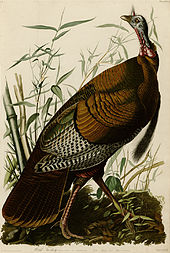 y precious possessions that were handed down from my parents was my father’s copy of Audubon’s Birds of America. My mother bought the great volume of paintings for my father for Christmas in 1942, three months after I was born. I often wondered how she afforded it, as she was living on her own while my father was drafted and serving in the army during World War II. I have used is for years to help identify birds that I come across, though many of these species are now rare or extinct. I have always been entranced with his paintings of birds and vividly remember the pictures of scary vultures and condors that so impressed me as a child.







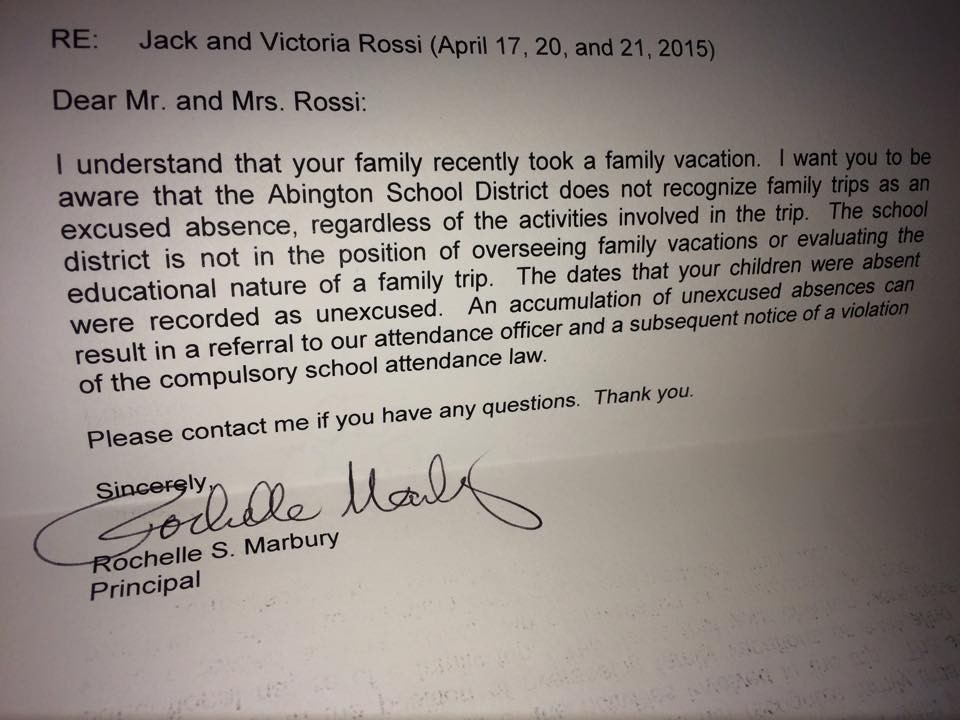 This picture of the principal’s letter was posted on Facebook:
 26, 1785, John James Audubon was birthed in what is now Haiti on his father’s sugar plantation. His birth name was Jean-Jaques, named after his father Jean who was a French privateer, commonly known as pirates. His father had the rank of Lieutenant in the French navy and his mother was a 27-year-old chambermaid from Les Touches, Brittany. His mother’s name was Jeanne Rabines and lived as a mistress with his father, Jean. She got a tropical disease and died on the island when her son was just a few months old.


 Kenneth Harper Finton