REQUIUM FOR A SCHOOL HOUSE

In September 2025, I permanently lost my childhood home. They tore down the hundred and fifty-year-old brick schoolhouse where my brother, my sister, and I were raised to adulthood.

When I was five, back in 1947, my father decided to buy a one-room brick school house to remodel and make it the family home. The schools were all consolidating into larger new facilities and the commissioners in Darke County, Ohio had decided to sell off all the old single-room school properties on the cheap. Dad paid less than $4000 for the almost two-acre acre site with all the buildings intact.

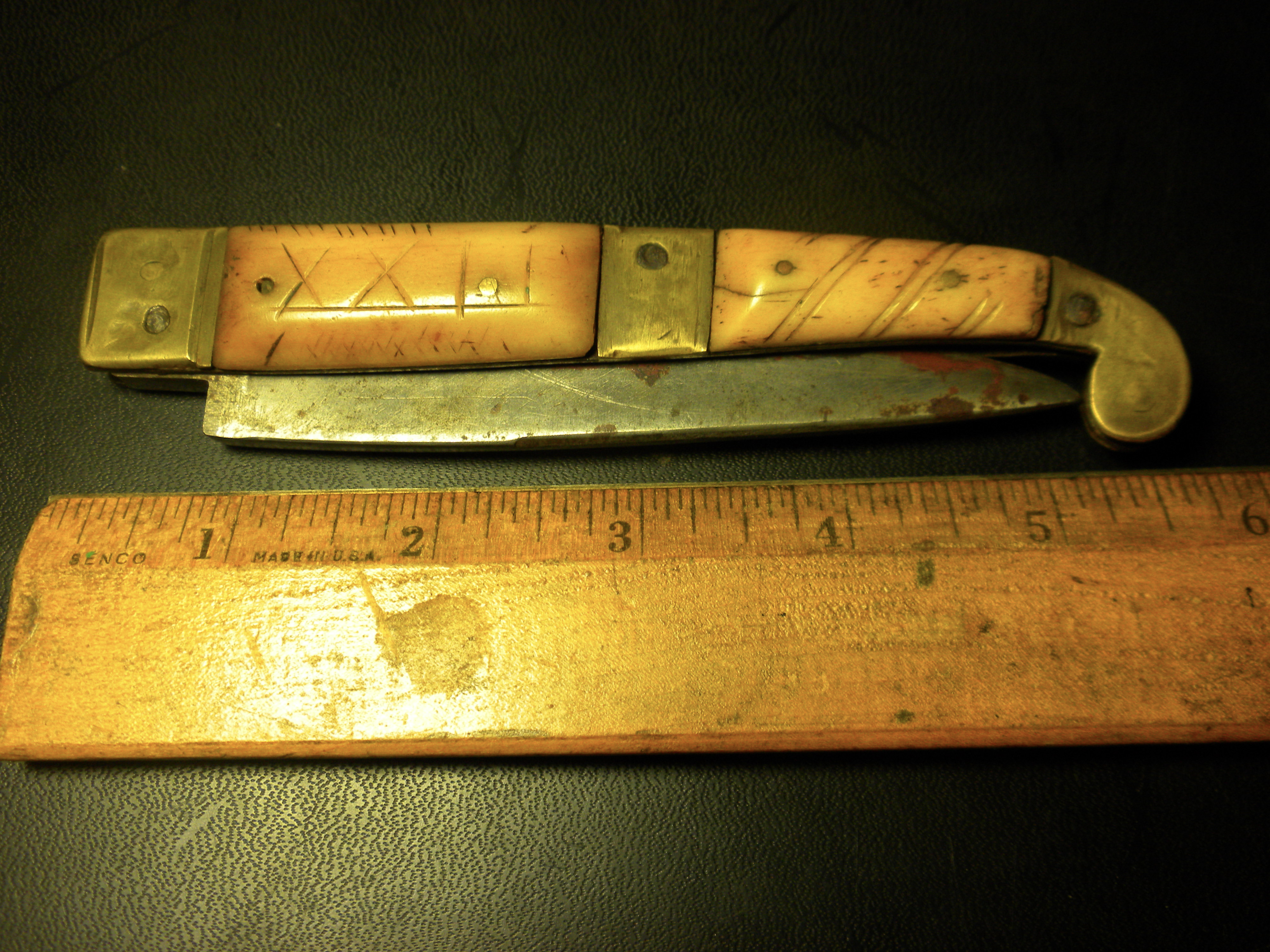
250 years ago, the roads where the school was built were little more than wilderness paths. Arthur St. Clair and Anthony Wayne both marched their troops past that intersection, which later became the school. I found an old one-handed knife in the garden that had been dropped by one of the soldiers back in the 1780s.
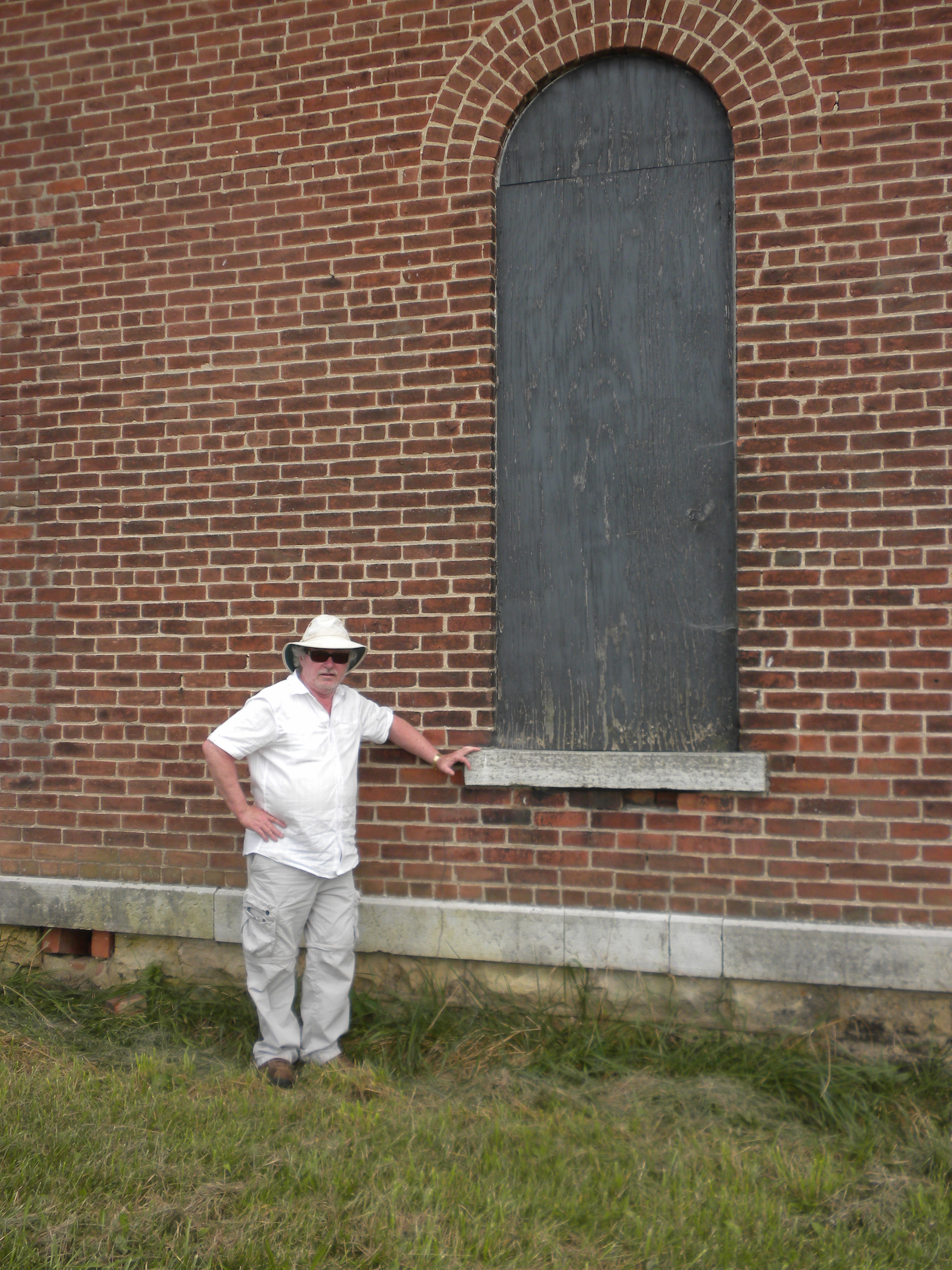
The first settlement in Darke County was made a mile west of the school on Boyd Hill near Boyd Creek. I was lucky enough to live on that very spot when I returned from New York City to Ohio for a few years.

A marvelous Victorian-styled Children’s Home had been built at the turn-of-the-century for the orphans and hard-pressed families of school age children. It stood just north of us until that too was torn down in the name of progress and efficiency. The big old buildings were hard to heat and used coal. The Children’s Home had its own school . It could easily be seen from our home. Some of the children there became my playmates for many years, 
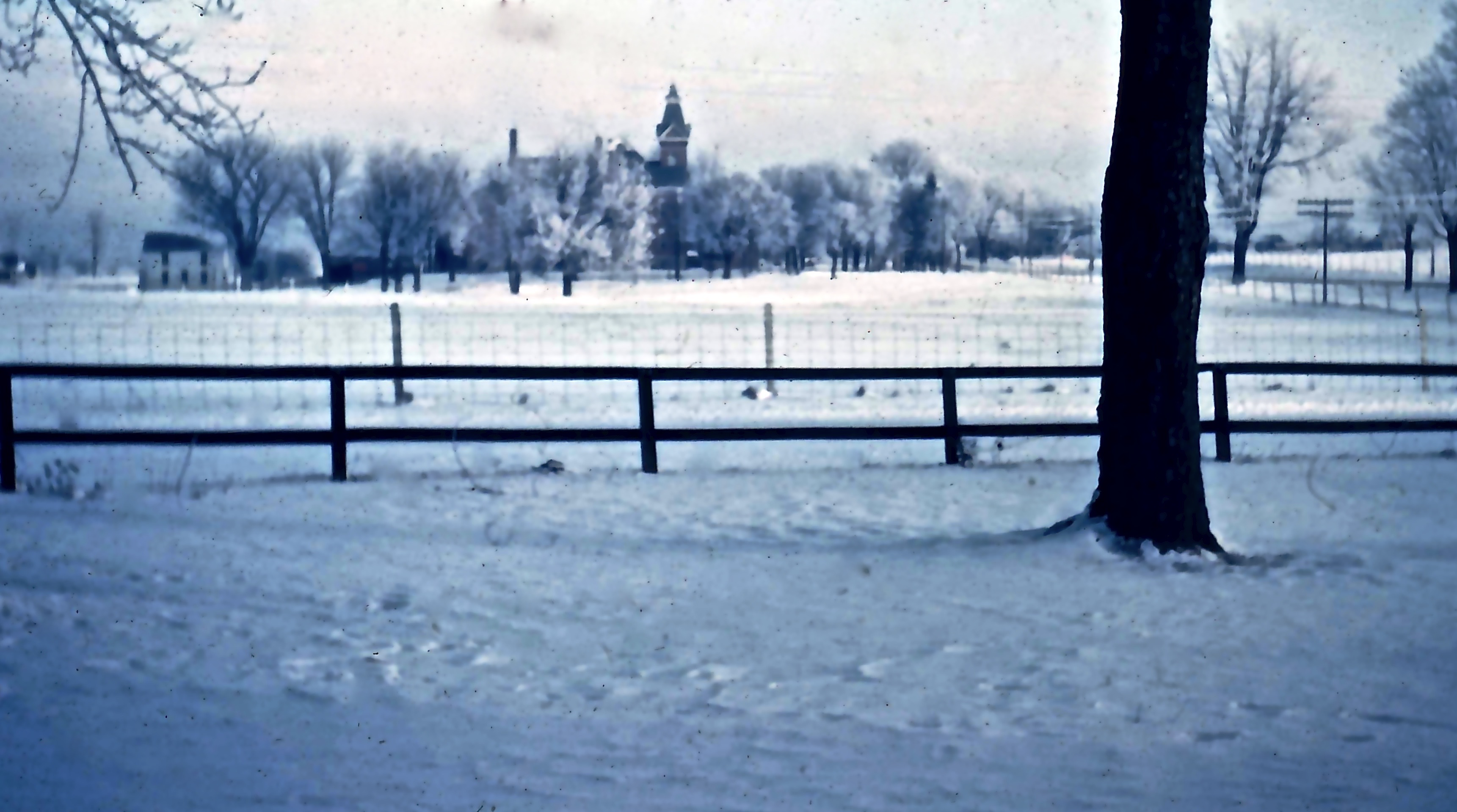
One day it was there. The next day, it was gone.
The children walked to school in the old days as there were no buses or cars.The schools were situated every few miles. Many had a belfry and a bell to summon the kids from the neighboring farms.

When we became the owners, three or four grand pianos had been stored inside the school. They had been taken from other local schools. All of them were in terrible shape and had seen severe weathering. One of the first things Dad did was to take them out and burn them after saving the lead weights. 

It seemed to me, though I was six, that burning these pianos was not a good thing. The pianos, like the school, had outlived their useful lives, but I could not understand that at that point. I had hardly any concept of time. Time was associated with functions like time to get up, time to go to bed. time to eat, and time to go.

The next unwanted objects to go were the inch-thick genuine slate blackboards placed on the north and south walls. They were carefully stacked near the two brick outhouses at the rear end of the lot. There was one privy for the boys and one for the girls. A path of cinders from the coal-fired stove led to the privies. As soon as the plumbing was installed, the outhouses were torn down. The old bricks were carefully stacked in patterns to keep them from collapsing. 

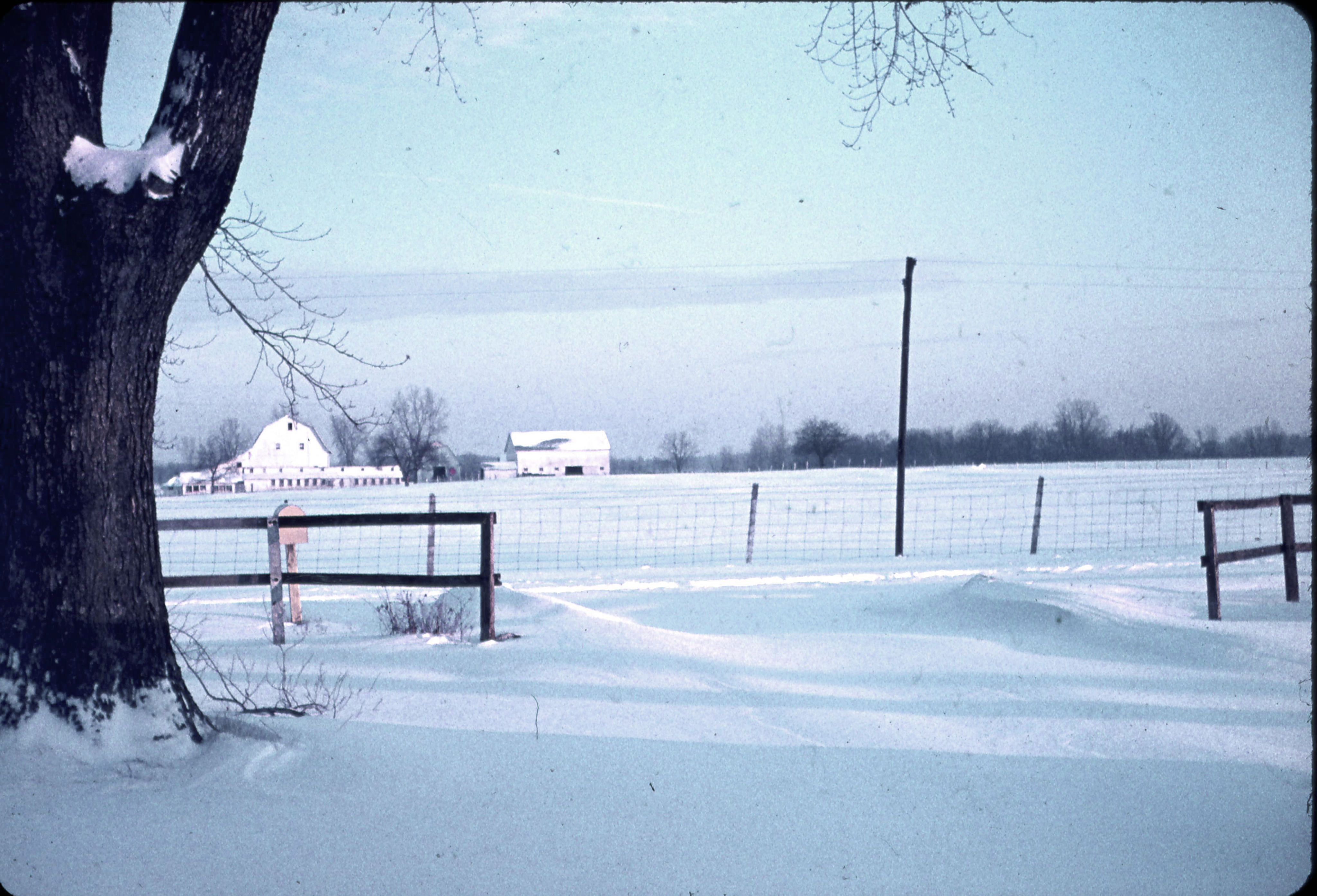
The yard was like a beautiful little park. The grass was a thick, hearty bluegrass. There was room for a large garden. The yard was surrounded on both road fronts with a two-rail wooden fence. A wooden coal and woodshed was on the north side. Three tall elm trees – whose branches began twenty feet off the ground – graced the property. One of these stately trees stood directly in the center. It was the first to fall from the Dutch Elm disease. 

Dad roped one of the tall elm branches for a twenty-foot rope swing. There were two buckeye trees, a shagbark hickory, two large oaks, and half a dozen maples trees, including at least one sugar maple that we sometimes tapped for syrup.

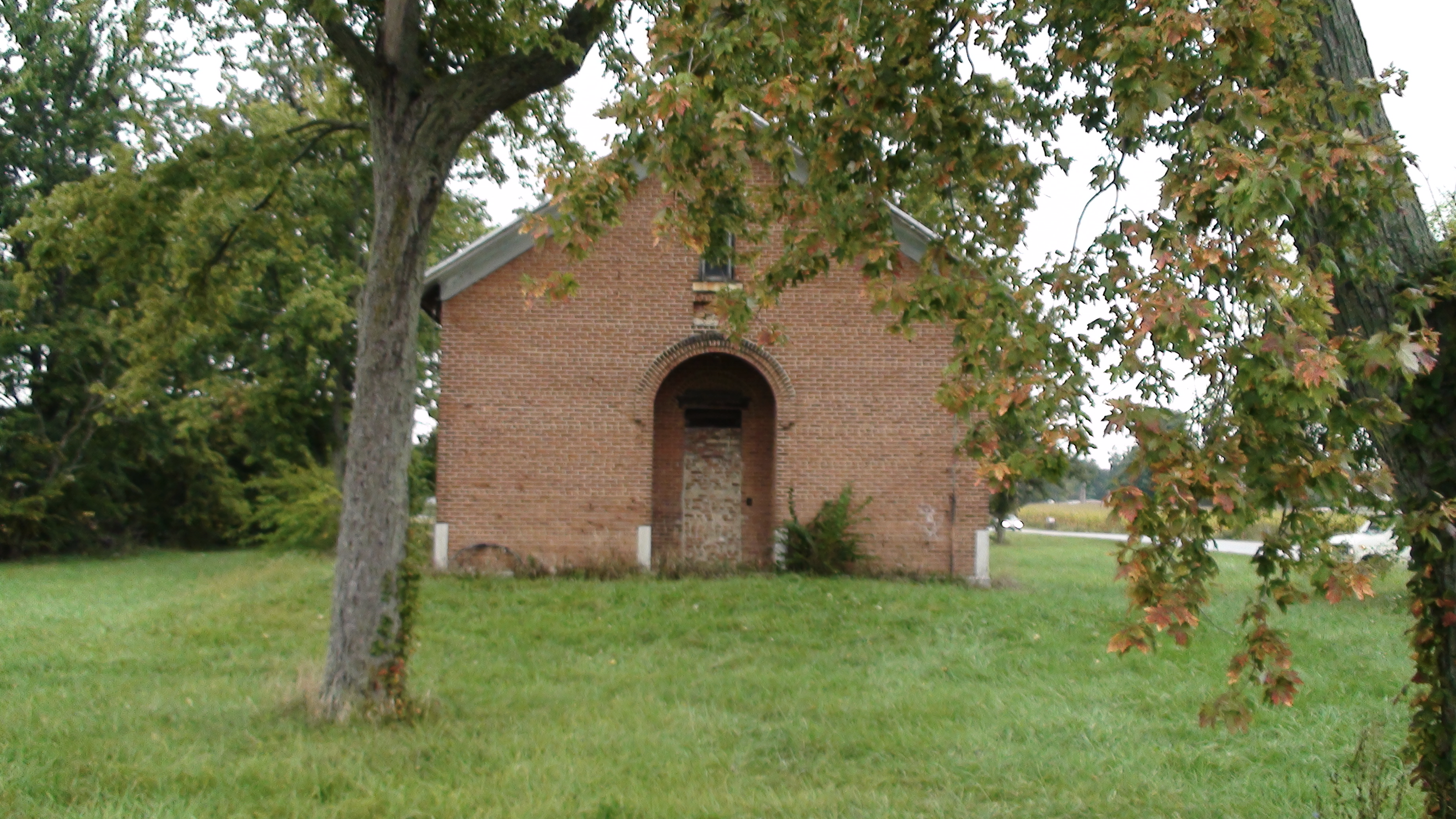
Above is a picture of another school about three miles east of our schoolhouse. This was called the Knick School and is presently owned by a coon hunting club. The construction of these buildings was much the same. Three-foot thick brick walls on a wedge-shaped limestone foundation that started eight feet deep. The interior walls were plastered with 14-foot high ceilings. All had a date plaque in the front, a recessed front door with the traditional rounded top windows, standing seam steel roofs, a wooden fence and a shed. The rafters were true 2×6 timbers and the ceilings were   2×12, all made from local hardwoods.    


Our schoolhouse was built in 1885. It was called the “Mannix” school because it was named after the locals who lived nearby. Jim and George Mannix were neighbors in the 50s. Their farms bordered on the schoolhouse property. Jim was a tall, thin bachelor farmer who helped care for Matt Rife. Jim owned and farmed the land Old Matt occupied. Matt could be seen walking along Highway 127 most every night. He seemed to walk to town daily. Matt lived in an unpainted rural shack with a barn behind painted with a “CHEW MAIL POUCH TOBACCO” ad. It was a Celina Road landmark. We often saw him in the dusk, wearing his gray overcoat and his Fedora, shuffling back home from town.

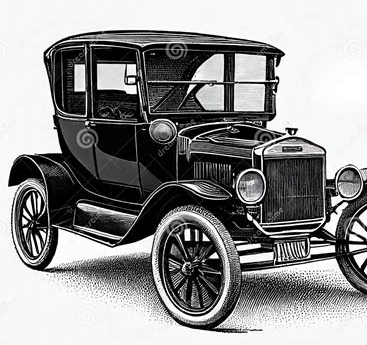
Half a mile to the east on the  Children’s Home-Bradford Road, our neighbor, Pete McVay, lived in a leaning old two-story log cabin that looked like it would fall over at any time. He and his brother had a store on Broadway. Pete drove back and forth daily in his black 1920s Model T Roadster.
Dad enlisted my Grandfather–a bricklayer and stone mason–to help with the brickwork and to drop the ceilings to eight feet. To do this, they ran joists over the long windows, bricked up a few windows, and the front door. This removed any possibility of a later historical renovation. 
I was not too upset about the loss of the front door, as this door was what introduced me to the concept of ugliness. The paint was scaly, twisted, gray lead paint that had been peeling off for years. The summer sun sharpened the image before my eyes, dust motes floated in the dusty air the smell of broken plaster invaded my nose––and I thought it was ugly––bad looking. I had never considered anything ugly before that.

Bonehead Allred, a cousin of my Dad’s, dug a false well  for the pumps and pipes and ran pipes to the house. Even as a first grader, I wondered why anyone would call him “Bonehead”. He seemed friendly and smart to me. This was my introduction to type-casting social shaming.

The plumbing went in, partitions went up. drywall was crucified on the furring strips. We moved in long before my father’s original vision for the place was complete. We did  have running water but the water heater had not been installed and the drywall was left unprimed. It seems like it took many years for Dad to get back into the remodeling mood. Much of the interior finish was left for me to do when I was old enough to do it.

Nevertheless, we made the place a comfortable home that lasted for thirty years. We still relied on an oil space heater. Winter mornings became a race to the stove to warm our clothing.

My mother never liked living there. It was a lot of work to care for the huge yard and gardens while still trying to finish the remodeling.

Friends visited and played croquet, badminton, and horseshoes in the great backyard.  I would return many holidays after I left home and bring my New York City and Chicago friends to a sumptuous dinner at the country kitchen. They always had a wonderful time.
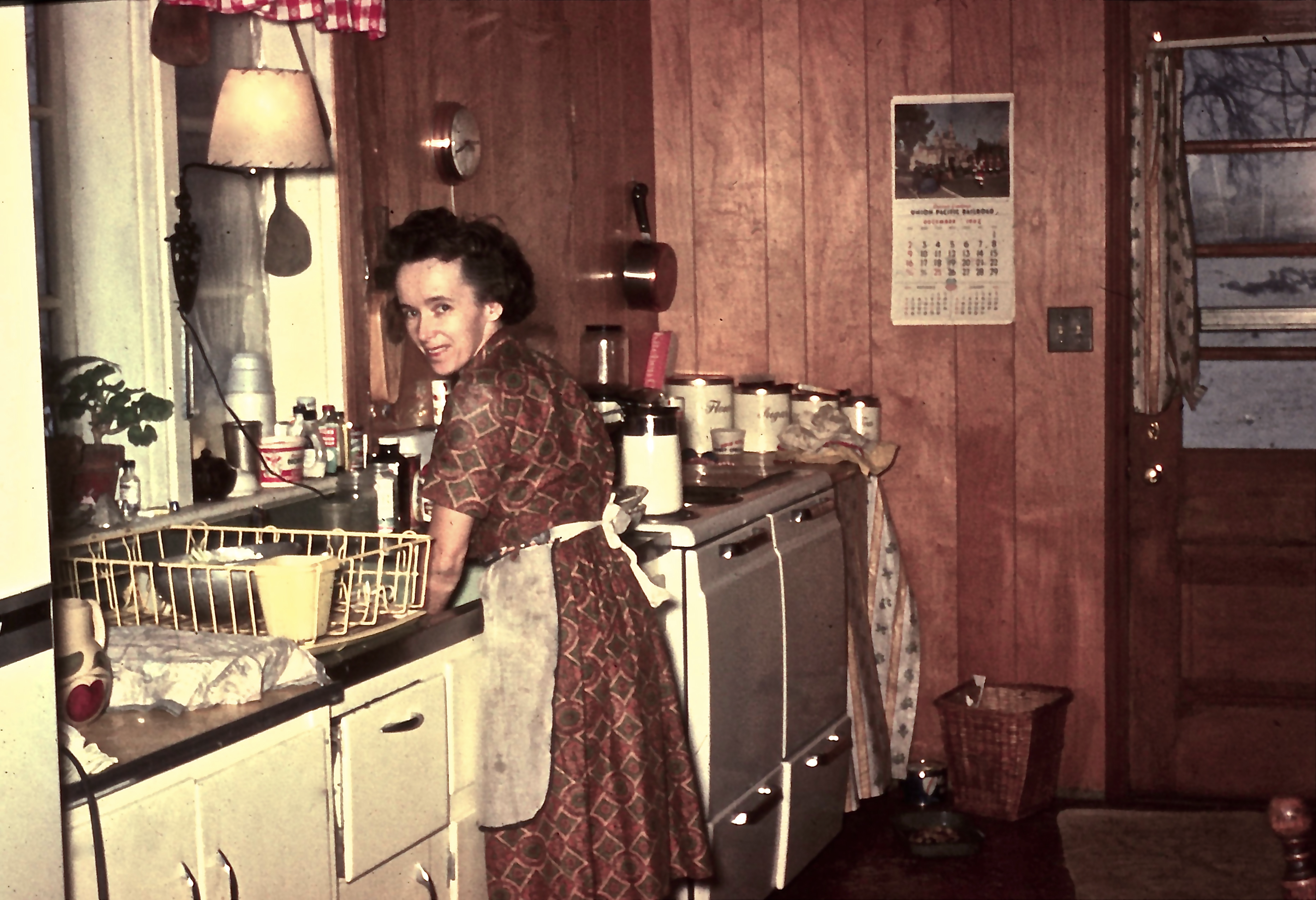
Dad finally realized he no longer had the energy to complete his vision and settled down to his historical research and cataloging old county cemeteries for posterity. My father died in 1974. My mother did not want to remain in Greenville. She sold the household items and antiques at a big estate sale in the backyard and moved to Denver, Colorado. Her sister had inherited her father-in-law’s home. It was empty and ready for Mom to occupy and start a new life.

The schoolhouse sat empty for twenty years while the family established Colorado as their new home. Finally, my mother decided to sell it. A real estate agent bought the land and let it sit empty for another twenty years. 

I had hopes it cold be saved, It would be a fine museum. Others thought so as well. Time ran out as it tends to do on all. In late September of 2025, they tore the building down.  

I knew it would happen, but I couldn’t live there or save it. Ten years before I had written a poem about what I envisioned.

“They are tearing down 

my childhood home today,” 

he said, wishing instead 

he were already dead.

“I should not watch. 

It is a sad thing to see,” 

he thought, thinking softly of the past, 

wishing it could forever last.

“I wish I could have done more to save it,” 

he mused, feeling the blues

as it oozed from the news.

“I ate watermelon at the kitchen table, 

sweet as summer’s breath,” he said, 

tasting the juice that his mind reproduced.

“We had many a memory in that house,”

 he understated,

watching as his 

reality was castrated.

“I wonder it I was happier

 back then than now,”

 he exclaimed, unashamed 

that he had no fame. 

“Probably not,” he said to himself, 

knowing he had not mastered laughter 

in the face of disaster.

“Some folk’s homes become museums,”

he pondered as his thoughts wandered. “

I was never that important,” 

he concluded, as he brooded.


The old trees were destroyed. The site was leveled like a parking lot. Now I feel even more regret. We live in an era where greed dominates, and the past, for many, is simply a quaint memory easily forgotten. Progress is shiny and new. The past continues to age as it deteriorates with time. The old school will join the great heap of forgotten histories and stories unremembered, as will we all. 
LOVE AND MARRIAGE, THEN AND NOW

by Kenneth Harper Finton ©2015

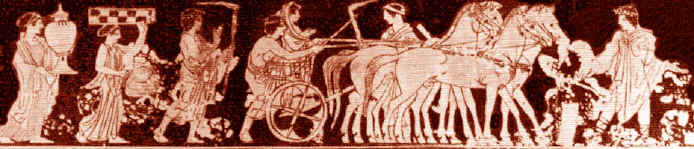
Demeter & Persephone IN ANCIENT GREECE, all women were viewed as manifestations of the earth goddess. That is why ancient Greek fathers recited the words, “I give my daughter to you for the plowing of legitimate children,” when giving away their daughters. But the daughter was more on permanent loan to her husband than his property. She had a dowry that had to be returned if they divorced.

                                                        Demeter & Persephone

IN ANCIENT GREECE, all women were viewed as manifestations of the earth goddess. That is why ancient Greek fathers recited the words, “I give my daughter to you for the plowing of legitimate children,” when giving away their daughters. But the daughter was more on a permanent loan to her husband than his property. She had a dowry that had to be returned if they divorced.

Marriage as an institution is an ancient custom that predates recorded history. The Gods and Goddesses had husbands and wives in the minds of stone age societies. Marriage tradition was handed down orally long before writing was established.

Marriage is ultimately a contract and a strategic alliance between two individuals or families. This contract, unless temporary, is generally designed to provide financial aid, emotional stability and security to the people involved.

Some cultures practiced temporary and conditional marriages. The Celtic tribes practiced handfasting. The Gaelic scholar, Martin Martin, wrote: “It was an ancient custom in the Isles that a man take a maid as his wife and keep her for the space of a year without marrying her; and if she pleased him all the while, he married her at the end of the year and legitimatized her children; but if he did not love her, he returned her to her parents.”

Fixed-term marriages were popular in the Muslim community. Pre-Islamic Arabs practiced a form of temporary marriage that carries on today in the practice of Nikah Mut’ah, a fixed-term marriage contract.

THE ADVENT OF SAME-SEX MARRIAGES

“The first laws in modern times recognizing same-sex marriage were enacted during the first decade of the 21st century. As of March 2015, seventeen countries (Argentina, Belgium, Brazil, Canada, Denmark, France, Iceland, Luxembourg, the Netherlands, New Zealand, Norway, Portugal, South Africa, Spain, Sweden, the United Kingdom, and Uruguay) and several sub-national jurisdictions (parts of Mexico and a majority of the U.S. states) allow same-sex couples to marry. Finland has enacted a law to legalize same-sex marriage which will come into force in March 2017. Bills allowing legal recognition of same-sex marriage have been proposed, are pending, or have passed at least one legislative house in Austria, Australia, Chile, Germany, Ireland, Slovenia, Switzerland, Taiwan and Venezuela, as well as in the legislatures of several sub-national jurisdictions (parts of Australia, Mexico, and the United States).”  -https://en.wikipedia.org/wiki/Marriage

Granting formal legal status to same-sex marriages is a relatively recent idea and practice, but there are mixed-sex couples in the history of ancient Greece. Generally, same-sex marriages in Greece were promiscuous, with the partners having the freedom to engage in sex with others. Though the Theodosian Code issued in 438 CE imposed heavy penalties on same-sex relationships, it is unclear how the law was enforced or ignored socially. Some areas in China, particularly the Fujian region, permitted same-sex unions.

With marriages in decline in the western world and the birth rate getting lower with each generation in developed countries, the social need to raise children has become optional in many millions of families.

A corollary to the contract of marriage is the rights of offspring if any. Our laws are now removed from the older social systems that sanctioned marriage primarily for property rights and the rights of the offspring.

THERE IS NO UNIVERSAL CUSTOM FOR MARRIAGE 

There is no one universal custom for marriage now or in recorded history.

Early nomads in the middle east, where modern civilization arose, allowed a wife to have a tent of her own which she kept completely independent of her husband. The early Israelites kept this custom as well, as shown in the last book of Proverbs.

Polygamous and polyandrous societies are found in the Himalayan Mountains. Because land is scarce in the Himalayas all brothers were allowed to marry the same wife. This allowed the family land holdings to remain whole rather that be divided by heirs. If the lands were split, the families would have small plots that could not sustain family life.

In Europe, this division of the land into fragments was prevented through e the inheritance  process. The elder inherited and the siblings lost out. Some of the disinherited went on to become celibate monks and priests.

MARRIAGE IN THE MID-20TH CENTURY

Notes and Queries (1951), an anthropological handbook, defined marriage as “a union between a man and a woman such that children born to the woman are the recognized legitimate offspring of both partners.” [Notes and Queries on Anthropology. Royal Anthropological Institute. 1951. p. 110.]

These ideas did not sit well with Kathleen Gaugh (1924-1990). Gaugh was a British anthropologist and a feminist. She noted that the Nuer people of Sudan allowed women to act as husbands under certain conditions. She suggested that instead of a man and a woman, the phrase should be modified to “a woman and one or more other persons.”

Gaugh studied polygamous societies such as the Nayar in India. In that society, the husband’s role was not conventional. Women had many lovers in this society. The lovers were the procreators. The father was an absentee non-resident. None of the men has any legal rights to the woman’s children. Gaugh was forced to abandon the idea of sexual access as a key element of marriage and define if in terms of the legitimacy of the offspring.  She wrote: “a relationship established between a woman and one or more other persons, which provides a child born to the woman under circumstances not prohibited by the rules of relationship, is accorded full birth-status rights common to normal members of his society or social stratum.”

Economic anthropologist Duran Bell criticized the legitimacy-based definition. Some societies do not require legitimacy for children to have legal rights such as the right to property and inheritance.

Edmund Leach also thought Gough’s definition was too restrictive in terms of recognized legitimate offspring.  He suggested that marriage be viewed in terms of the different types of rights it serves to establish.

In a 1955 article in Man, Leach argued that “no one definition of marriage applied to all cultures.”

He offered a list of ten rights associated with marriage, including sexual monopoly and rights with respect to children, with specific rights differing across cultures. Those rights, according to Leach, included:

1″  To establish a legal father of a woman’s children.

2   To establish a legal mother of a man’s children.

3   To give the husband a monopoly in the wife’s sexuality.

4   To give the wife a monopoly in the husband’s sexuality.

5   To give the husband partial or monopolistic rights to the wife’s domestic and other labour services.

6   To give the wife partial or monopolistic rights to the husband’s domestic and other labour services.

7   To give the husband partial or total control over property belonging or potentially accruing to the wife.

8   To give the wife partial or total control over property belonging or potentially accruing to the husband.

9   To establish a joint fund of property–a partnership–for the benefit of the children of the marriage.

10T   o establish a socially significant ‘relationship of affinity’ between the husband and his wife’s brothers.”    [Leach, Edmund (Dec 1955). “Polyandry, Inheritance and the Definition of Marriage,” Man 55 (12): 183.]

Duran Bell describes marriage as “a relationship between one or more men (male or female) in severalty to one or more women that provides those men with a demand-right of sexual access within a domestic group and identifies women who bear the obligation of yielding to the demands of those specific men.”  [In a 1997 article in Current Anthropology.]

“Men in severalty,” means that Bell is referring to some societies where kin groups retain a right in a woman’s offspring even if her husband (a lineage member) is dead. This practice is also found in Levirate marriages, a marriage type in which the brother of a deceased man is obliged to marry his brother’s widow and the widow is obligated to marry her deceased husband’s brother. The type of marriage is a social attempt to provide for the offspring and provide for the spouse while salvaging inheritance rights for the children and maintaining a unified land holding.

In referring to “men (male or female),” Bell is referring to women within the lineage who may stand in as the “social fathers” of the wife’s children born of other lovers as in Nuer’s “Ghost marriage.”

In Sudan, a ghost marriage is a marriage where a deceased groom is replaced by his brother. The brother serves as a stand-in to the bride, and any resulting children are considered children of the deceased spouse. This unusual type of marriage is nearly exclusive to the Dinka (Jieng) and Nuer tribes of Southern Sudan, although instances of such marriages have also occurred in France.

Nuer women do not marry deceased men only to continue the man’s bloodline. In accordance to Nuer tradition, any wealth owned by the woman becomes the property of the man after the marriage. Thus, a wealthy woman may marry a deceased man to retain her wealth, instead of giving it up after marrying. 

Among the Nuer, a ghost marriage is nearly as common as a marriage to a live man.

-https://en.wikipedia.org/wiki/Ghost_marriage_(Sudanese)

THE RIGHT TO SEXUAL ACCESS 

The right to sexual access is one of the primary purposes of modern marriage. In most advanced countries, the woman’s right to refuse sexual contact is upheld legally. Marital rape, a common occurrence in the past, has become illegal in many countries, though proving the violation has often proven to be quite difficult.

Feminists often see marriage as an institution traditionally rooted in patriarchy. They often believe that it promotes male superiority and power over women. When men are designated to be the providers and the woman the caretaker, then women become the property of the male.

In the US, studies have shown that, despite egalitarian ideals being common, less than half of respondents viewed their opposite-sex relationships as equal in power, with unequal relationships being more commonly dominated by the male partner. Studies also show that married couples find the highest level of satisfaction in egalitarian relationships and lowest levels of satisfaction in wife dominant relationships.” – Wikipedia

Traditional marriage imposes an obligation on the wife to be sexually available to her husband. It also demands that the husband provide material and financial support for the wife.

Feminists rebelled against the male bias in the institution of marriage. Social thinkers, men and women alike, pointed to the lack of choice that marriage gave to the woman. Bertrand Russell wrote in his book Marriage and Morals that: “Marriage is for woman the commonest mode of livelihood, and the total amount of undesired sex endured by women is probably greater in marriage than in prostitution.”

Angela Carter in Nights at the Circus wrote: “What is marriage but prostitution to one man instead of many?”

PEER MARRIAGE

In recent years, peer marriages have been receiving attention in quite a few western countries including Great Britain and the United States.

Shared earning/shared parenting marriage, also known as peer marriage, is a type of marriage where the partners at the outset of the marriage set it up in a manner of sharing responsibility for earning money, meeting the needs of children, chores, and recreation time in nearly equal fashion across these four domains. It refers to an intact family formed with relatively equal earning and parenting styles from its initiation. 

Peer marriage is distinct from shared parenting, as well as the type of equal or co-parenting that father’s rights activists in the United States, the United Kingdom, and elsewhere seek after a divorce in the case of marriages, or unmarried pregnancies/childbirths, not set up in this fashion at the outset of the relationship or pregnancy.

A number of books have addressed various aspects of this type of marriage, including Equally Shared Parenting by Marc and Amy Vachon, The Four-Thirds Solution by Stanley Greenspan and Getting to 50/50 by Sharon Meers and Joanna Strober.

https://en.wikipedia.org/wiki/Shared_earningshared_parenting_marriage

LOVE AND MARRIAGE

“Love and Marriage” is a song with lyrics by Sammy Cahn and music by Jimmy Van Heusen. The idea epitomized the values of society through most of both centuries.

“Love and marriage, love and marriage, Go together like a horse and carriage. This, I tell you, brother. You can’t have one without the other.”

Despite the popularity and cleverness of the lyrics of the song, love is much deeper that the institution of marriage. Some believe it is a basic binding force found in the world’s very existence. The elementary prototype of love is similar to the attraction of atomic structures to one another. These structures form combinations that become something independent and different from that the atoms that combined to create it. Are these primitive examples of the force of love?

Love is seen everywhere in the natural world as adults pair and care for their mates and their young. Love is evident throughout nature. Love is bonding and it is seen in the binding that forms the very chemicals of life.

To me, love is accepting another as a part of oneself. Love is the inclusion of the other into the very fabric of everyday life. Love unites and draws together like iron fragments to the magnetic field. In human terms, love expands the isolated and alone self to include beings and objects from outside the self.

Love is felt not just for living things, but for actions and methods of performing actions. The world is built on attraction and love, caring and nurturing. The desire and urge to be more than we are alone is the driving force of evolutionary progress.

Love is thought by many to be the primary reason for existence itself, as primal awareness, discovered the other outside itself, reflected upon it, accepted it within itself, and gave birth to an entire universe. The idea is not so far removed from the ideas of the ancient Greeks and the stone age tribe dwellers.

CLAUS VS. CORPORATE PERSONHOOD

SANTA CLAUSE ACCUSED OF NOT TAKING PAY FOR DELIVERY FEES

by Kenneth Harper Finton ©2014


Santa Claus


Claus checked his ledgers in Quickbooks. It was not a task he enjoyed.

He fondly remembered the days when the smoke encircled his head like a wreath. He quit smoking a pipe a decade or two ago, but he still missed the pungent aroma of his tobacco. What he did not miss was the sore tongue and hacking cough he would often get.

When Christmas was taken over by the corporate gift manufacturers he had shaken his head and withdrawn in total disbelief.  “How could they corner the market on gifts so quickly,” Claus remembered saying.

He had long since had to retire much of his elf force. The elves just could not compete with the prices the corporations charged for general gifts of all shapes and sizes. Soon metal toys replaced his home-made-by-elfen-hands wooden toys.

As if that were not bad enough, the metal toys makers cut back on production and the plastic toy makers flooded the market with every size and shape of plastic toys that were conceivable. The oil cartel would not sell the oils for making plastics to the North Pole Charitable Organization, St. Nicholas, Proprietor.

For Claus, these were perilous times.

One day a group of corporate lawyers met with Claus to discuss the possibility of his contracting for delivery for their orders.

“We will allow you to charge a delivery fee,” they proposed. “It could be a very big deal for you. Remember, you are not getting any younger. Long term care is expensive and we can sell you insurance for that out of the money you charge for delivery of our goods.”

Claus had to think about that: a delivery fee for Santa. Extraordinary, to be sure, but in step with the times. Tradition breaking.  But these are times to try a person’s pocket book.

When he examined his ledger on Quickbooks, he could easily see that he had been running at a loss for almost five hundred years.  “Why, then,” he thought, “would I need long-term care insurance? These men must think me to be a sucker.”

“If they keep it up, the way it is going,” Claus thought, “then I may as well retire. They do not understand that the gifts were not what I delivered. I delivered the love that made the gifts, not the gifts themselves. It has always been so, as long as my spirit has been around. If love no longer makes the gifts, then my delivery is in vain.”

The corporate lawyers did not agree with Claus. “Love” they said, “was a personal thing and the corporations are personal, therefore what they made was made with love, as Clause has admitted that love is what he delivered to persons like the corporations.”

Clause could not quite follow their logic.

Of course, the debate ended up in court.

The parties were forced to define some kind of argument for a favorable judgment. Who had been injured? Who had been financially cheated? What was the duty, if any, for Claus?”

Claus argued that because he had been working gratis of his own free will, there was no loss at all.

The corporations argued that Claus could not have a monopoly on love giving, that they were entitled to give love as well and could do it better than an old white guy that does not appeal to the Muslim and the Buddhist nor the Hindu faiths, among many others. We, they claimed, have a far better market share in love giving that is good for the world economy as a whole.

The court ruled that corporations were better fitted to distribute love than The North Pole Charitable Organization, St. Nicholas, Proprietor.

Claus retired, forced out by world non-opinion and legal issues.

Due to his eternal nature, he still distributed his love where it is most needed.

Let us hope he is not ordered to cease and desist.


Originally published at https://scriggler.com/DetailPost/Story/6502

Ken at Scriggler: https://scriggler.com/Profile/ken_finton

See also: http://heliosliterature.com