FROM WHENCE COMETH THE SONG – 1963, the fateful month of November

Monday – Nov. 4, 1963 

Last Tuesday I drove to Columbus to dig up some jobs. I found one advertised in the student paper at CSU and Sheri and I looked into it. I found that Hootenanny, the ABC Saturday night show, probably isn’t coming to Ohio State after all. Also, I looked in the phone directory f’or entertainment management agencies and found one that looked promising. I went over to the agent, who had the unlikely name of Howdy Gorman. He said he’d set up an audition at a TV station f’or us. The audition was tonight. We got the job f’or Saturday at the Fort Hayes Hotel, Presidential Suite, entertaining some drunken foot doctors and made another sixty bucks. This evening Dad drove Billy to Columbus, picked up Sheri, and then went to Howdy Gorman’s office. We followed him over to the TV station (Columbus Channel 10). 

Gorman had brought two groups for the audition. The show is called “Gather Round,” leans rather heavily toward folk. It is being aired once a month. Starting, in December they expect to air it weekly on Friday night.We went through a f’ew songs. They had told us that it was an informal audition without a mike, etc. They then wanted me to introduce a song, so I introduced Darlin’ Corey. They thought we were very good. There was another entertainment manager f’rom a nightclub called “The Gloria” there to hear the audition. Gorman said he was killing several birds with one shot by auditioning us f’or several jobs at once. Anyhow, our audition was successful and they thought that we did an excellent job.


Then came the other group. They brought along their manager and a public address system and they let them use it. The result was that they seemed more professional than we had seemed, because they introduced their numbers and didn’t adhere to the informal setup.


Live and learn. I don ‘t know the result of’ the audition yet. We had some fine comments, but it seemed as though the talk .liraS about the other group rather than ours. Even Gorman gathered around the other group’s manager. The TV man said that he wants to put us on the air and he will be getting ahold of Gorman. I don’t know anything about the nightclub. What’ll come of it,  I don’t know. I’ve got to talk with Gorman again Saturday and see what’s cooking.  Anyhow, this Gorman says he has recording contacts and can do us up right. He’s a very short little man, probably five one or two, with sandy hair and mustache. Things will either stand still or move fast now that we are pushing ourselves. 

Nov. 11, 1963 – Sunday

Dick T. is home on furlough. Friday night we went to Dayton so that he could hear the Osborne Brothers. Clark Crites, the Lemon Tree’s new manager, had called on Thursday and wanted us to see him. He had a job lined up and wants to, act as a sort of’ agent f’or jobs that come through the Lemon Tree, getting the usual ten per cent. 

We went to Dayton to tell Sheri’s folks, then went over to the Lemon Tree to see Clark. He was tied up with another man in the office and couldn’t see us right then. We sat through a set of the Canadian folksinger, Cedric Smith, then scooted down to the Bitter End––which is the new name for Charlie’s Bar––to hear the Osborne Brothers. After their set was over it was back to the Lemon Tree to see Clark. I found that Clark had just gone down to the Bitter End to see us. After that came a comedy of errors. We went back down to see Clark and found that he had just gone back to the Lemon Tree to meet us. We went Back to the Lemon Tree and found that he had just left to meet us at the Bitter End.

There we sat at the Lemon Tree waiting for him to come. There he sat at the Bitter End waiting for us to come back. Half an hour later, the phone rang: “Are they still there?” he asked. When told yes he said, “Keep them there, I’ll be right up.” 

Finally we get together and talked over business matters, then went back down to hear the Osborne Brothers finish up another set. Both Sonny and Benny Birchfield were in great moods tonight and we talked with them for a long time. 

Saturday, Billy and I took Dick to Columbus with us. It was the first time he got to hear the trio perform. It was nothing special, really, just an afternoon practice session in a cemetery, then Sheri’s dorm room, and an evening practice. Sheri got me a date for tonight and one for Dick too. Gayle was Dick’s date, the same girl who dated Fred the other week. 

Sheri’s been feeding me a lot of information about a roommate of hers that wants but a tall, good-looking, rich man. She sounded rather like a snob from the conversation about her. Once, when I called Sheri, she answered the phone. From her voice I could tell she was overly sophisticated and perhaps a bit oily. Well, suddenly, it seems, she turned an about face. She had heard us practice, though I’ve never met her, and she read my story “The Fantasy of Fowler’s Hill” last week. Sheri was shocked when she started questioning her about me and even more shocked when she asked her to set up a date with me. In fact, she was flabbergasted. The girl’s name is Joan. I was sure she was in for a boring evening and I was certain she was not my type. Finally, in the afternoon, we met. She’s a very pretty girl and looks much like I pictured her as looking––tall, well-groomed and collegiate. In the evening we drove around town and stopped at a bar which was crowded to capacity. We had tried several other places offering entertainment, but we ended up back up near the campus. The bars are filled with students on Saturday night.We bought a pizza next door and then got some beer to go from the bar and headed out in the country to eat. 

I found a nice little spot of a not-to-traveled road where we had a beer, ate and talked. Joan and I got along surprisingly well. Conversation seemed strained at times and things did not flow naturally, but all in all it was a fairly well-matched date. I didn’t go out of my way to impress her. I just joked along and acted like the hick that I really am––dropping the “g”on “goin'” and speaking in the normal Darke County dialect that sometimes makes me feel out of place in collegiate crowds. It’s not that my speech is a real dialect or that I do not express myself well. I really, I do. But the folks around Greenville do have a distinct midwestern twang in their speech. 

We were sitting at a deserted barnyard eating our pizza and almost ready to leave when a cop pulled up. He asked to see my driver’s license and asked what I was doing there, then told us that we were on private property and had to move on. 

Back in Columbus, heading to the dorm, we found a little park that looked rather inviting in the night. Everyone hopped out of the car and walked over to a lagoon that spouted water from a fountain in the center. When we got back in the car another cop saw us coming out of the park and the same damned procedure started all over again. It was against the law to be in the park that time of night. I was not happy about the interference. Why, then, have the fountain running? I thought, but I said nothing. I have learned that being overly civil near people who are armed is more often the best choice.

We all slept in a moth-eaten hotel on High Street––not the girls, just the fellows––and Sunday afternoon we met again and went off for another drive. We went to the art museum and walked through the halls into the velvet draped rooms viewing both the mediocre canvases and some masterpieces like Renoir and Monet. We took a drive through the city and went to the park that we had seen in last night’s moonlight––only this time it was lawful. I took them for a beautiful country drive by the Columbus Zoo, tried to get into the closed Olentangy Caverns, then drove for miles along a scenic little road that followed the stark autumn banks of the Olentangy. We passed an old stone mill that looked like it belonged in a page from European history, made of stone, now deserted with a little damn up creek and finally the observatory.
The time was spent talking and joking and taking in the autumn beauty. Dick had the time of his life and said that he would remember that afternoon for years to come. I don’t believe I will forget it either. Joan became very congenial and looked very pretty. 

Everything has been at a standstill for quite some time in my romantic existence. I believe I could be ready for romance myself. We parted company at 7:00. Joan made me promise to write her and send me some other stories. I promised that I would. Dick will probably never see Gayle again, but he will remember her. All in all it was a very pleasant, well-remembered weekend. I didn’t fall in love, but I feel as though I somehow made happiness possible somewhere––and it’s a good feeling. 

Friday – Nov. 15, 1963 

Mom and Dad’s twenty-second anniversary was today. In celebration, they did something that they would not usually think of doing––they went to the Bitter End to hear the Osborne Brothers. The boys were very friendly this evening and talked quite a bit. While Sheri, Billy, Mel, Dick, and I went down to the Tree, Mom and Dad sat and talked with Sonny and Benny Birchfield. It was a pleasant evening. Sonny said that if we wold give him a tape he would take it with him and try to get us some jobs so we decided to get a very good tape made on professional equipment. 

Sunday – Nov. 17, 1963

Yesterday it was practice. Dick went down to Dayton with us. We spent the night at Stein’s then came back to Greenville to make a tape at WDRK . 

We wrestled in the lawn and practiced in the park, then at 3:15 went out to WDRK to make the tape. The tape turned out very, very well. We have never heard ourselves on professional equipment, except perhaps on TV that one time. Then TV show qualitywas bad and the songs were not our best at that time, but we’ve improved so much since then. We were very pleased with the sound and patted one another’s backs for an hour. Sheri gave me a letter from Joan that she wrote to me just after receiving mine. Sheri said that Joan would be up next weekend. I also got called back from layoff at Corning for one week.

Thursday – Nov. 21, 1963 

I’ve been dumping cullet and hating every moment at Corning all this week. The job was only temporary. It gripes my soul to think that they can take or leave me at their discretion and I have to abide by their goddamn whims. I wrote a little letter to Joan this week expressing my views about this factory system of ours. Sometimes I think that it is a detriment to progress, rather than the aid it is usually considered to be. How many men––like me––are pushed and pulled by forces greater than they can fight, placed in degrading jobs, their potential wasted, their lives and happiness decaying around them. How many men have committed mental suicide while working the grind day in and day out, having no escape without the risk of losing everything––their family, their income, and the little joy they manage to reap out of their barren existence? 

Automation is taking over at Corning. Automation is taking over everywhere. They will be laying practically everyone off within the next few years. The bastards are getting by with it. They keep a man in chains economically, then turn him loose and knock him on the ground without fight, and without hope. 

Friday – November 22,1963

November 22,1963 

Some days you wish had never been,

That time be whisked away like dust

And a day that drips with grief be taken back, 

The hourglass started once again anew.    

This gloomy, drizzling day was such a day. 

The rain’s no longer rain, but falling tears. 

My heart is aching and my soul is sick.

I’ve cried out, cursed, and sorrow shudders in me.

There is no room for eloquence inside, only grief.

Today, a hand I’ve never shaken,

A face I’ve never touched,

A friend I’ve never met

Was cut down on the streets of Dallas, Texas.

A bullet through the brain that ruled the nation

And stilled the heart that loved

An undeserving world. 

Words do not tell the story well.

I shuddered when just three short years ago

The nomination turned from Stevenson to him.

And then with magic and determination

He fought his way through prejudice

To win and saddle greatness.

I longed for his success

And when it came,

His triumph was mine.

He caught a nation’s fancy 

With his mellow voice and new ideas.

He brought youth and life and color   

When things were rather stale and needed spice

Now his youthful smile will never age

His thick, brown hair will never thin.

A hundred years ago another man was shot

And another man named Johnson took his place.

There must have been an emptiness then as now

As fires dimmed and died in human hearts.

Words fail me.

I could not feel more desolate and grieved.

I could not feel more shocked or numbed with sorrow.

You and I, he never knew by name,

But yet he cleared a way through tangled webs

That we might see the clouds with silver lining 

And watch tomorrow’s light shine even brighter.

Friday – Nov 22, 1963

This is how I feel and how I will always remember feeling this tragic, horrible weekend. It is completely unbelievable. I will wake up tomorrow and find that it has been a bad dream. I was working when I heard the news, sitting in the cafeteria on my two o’clock break. A couple of fellows were talking about a ten thousand dollar reward. One said to the other, “I’d even turn you in if you had a ten thousand dollars reward on your head.” The other said, “I’d wait till it was twenty-thousand.” 

There was more talk about a reward. “Who the hell’s got a tag on his head?” I asked. “What’s this reward talk about?” 

“Somebody shot President Kennedy this afternoon,” someone said. 

They told me more about it, more or less jokingly. Some took it seriously. Some wouldn’t believe it. News trickled in. Actually, he was dead when I had first heard that he had been shot. I went back to work. After thinking about it, I finally decided that I must go home. I could not work any longer.

I asked the foreman to take the rest of the day off, but he refused to give me leave. Hurt and angry, I decided to quit the job and vowed never to work in another factory as long as I lived.

The car radio warmed tip just as I was leaving the parking lot. The first words I heard were “The late President Kennedy, who died in Parkland Hospital.” 

I drove on home, numbed, glassy-eyed, full of hate for a man who could do such a despicable, twisted thing.

Joan and Sheri were coming up from Columbus. Billy and I went on to Dayton, even though I knew I would be very poor company this evening. Together we got away from the tragedy the best we could. I called to make certain the concert was cancelled for tomorrow night. I could not entertain and do a good job. I have no feeling for it now. It is as though my father had died, for Kennedy was so personal a president to me. His youth and good looks made me like him from the start, then his speeches full of glowing phrases and ideas took possession of me. I became a staunch supporter, even though I really didn’t want him to win the nomination three years ago. He became a symbol to the American youth, that age was not a barrier and the world was ready for a young man’s ideas. He and his family captivated the news media and publicity poured into print and photographs. 

Life came to the country with Jack and Jackie––their touch football, the clannishness, their youth, their vigor, the rocking chair and stories that the press delighted in printing. 

When I think back about leaving the church where I used to be active and somewhat associated, I find that many of the clashes that came between me and the other members was my supporting of Kennedy and their opposite assurance that Kennedy was the devil’s instrument who would lead the way to the world’s end. It was this incongruity of faith with reality that made me stand and consider. I realized how little their minds were. My mind had expanded. I fully comprehended the fanaticism on the religious right, but I thought it was mere zealousness. It was logical to me for a time, but facts created a crumbling at the base of faith and I realized that it was not for me. I learned a bit about reasoning and I’m not sorry for my experience, but somehow, even though Kennedy himself, was enshrouded in the darkness of the Roman Catholic Church, he made me think. Perhaps because of him I have turned away from the religious. People used to call me Kennedy at work because my hair is so much like his. There was an identification for me that I suppose will never be felt with any other president. This free-style poem that I wrote is the only way I can think of even beginning to express my emotions.

Joan and I talked in the evening. We kissed and she gave me a letter she had written about how she thought that we were so much alike. I read it thoroughly and agreed, but knew through her actions that she feared me and there was something more unsaid.

Saturday – November 23, 1963

I awoke this morning and it was still true. Yesterday was reality after all. It was not a bad dream. President Kennedy is as dead as Caesar or Alexander the Great. All I can see is his cheerful grin and the way his hair blew as he stood before the television cameras speaking in some windy place.

I went to Dayton this afternoon. Billy and I got in late and Dad refused to let Billy go out of the house. I went alone. Mo was there with Joan and Sheri. We played our tapes and I made a tape with Mo, backing him with my guitar while he played the banjo.

We went down to the bus station to get Billy around 6:00. I had told him to catch the bus, but he was not there and Sheri was disappointed. She gave me a letter to read that she has written last night about her being in love with Billy. Sheri has a scheming mind. She’s been introducing me to girls and trying to get my attention hooked by someone else. Joan has possibly fallen in love with me without any pushing on Sheri’s part. Now Sheri thinks she’s ready for bolder steps with my younger brother. 

I don’t give a damn about it. I’m afraid that the trio just won’t make it because of other things. Billy is doing so poorly in school and he’s so young.  Dad won’t let him have any of the freedoms, that I’m accustomed to having, and rightly so. There would be travel, travel, and more travel if we should ever make it big, and I don’t think it would work out at all with Billy. 

I’m sure that Sheri would fly away too if it weren’t for him. Besides, he is necessary to the existence of the trio. He makes it sound rounded and full, we harmonize extremely well as brothers, and his guitar playing goes hand in hand with mine since we grew musical in the same time and atmosphere. I’m so uncertain of the future right now. There’s little reason to be optimistic despite our great sound.

We did do a set later at the Lemon Tree coffee house. Dad brought Billy down to the Lemon Tree later in the evening. It was the best set we ever did there, and everyone was very impressed with the strides we’d taken since they last heard us.

Sunday – November 24, 1963

Lee Oswald, the assassin of President Kennedy, was shot to death over nationwide television today as they were transferring him to the county jail. The secrets of the assassination probably went to the grave with him. The murderer is being held in custody. No one could have foretold correctly the events of this weekend one week. It still feels impossible, as though it couldn’t really be happening.

Today the President’s body lies in state and mourners pass by. I had wanted to go to Washington so badly, but my money from the last week of work hasn’t come in yet. Yesterday, Kennedy lay in state at the East room of White House. After a moving, beautiful transfer by caisson to the Capitol––shown very poignantly on TV––he was placed in the rotunda for the nation to view. TV has suspended all commercial announcements and entertainment programs and have been giving minute by minute, hour by hour coverage since the news that the shot was fired on Saturday.

Once again I was in Dayton. Joan told me something today that made me understand her so much better. She and I can talk and be frank with one another. When she seemed to shy away from my kisses I told her that she was going to have to delve into her subconscious to find out she had a ‘kissing complex’. Her letter to me was delivered a few day’s ago. She had mentioned a date that she had had a week before she met me. She was with a boy who wanted to touch her before she had been able to know or like him. After our first kisses she said that she was trying to make up her mind whether or not her image of me had been broken down. She (in the letter) had referred to that part in my short story, “The Fantasy of Fowler’s Hill”, where I wrote: “I thought about the movie I had seen the night before, a tale of simpler days… when romance bloomed slowly and a simple kiss was almost a proposal. Sometimes I would long to go back in those days.”

I knew something was bothering her. She wanted to let herself go and enjoy herself, but could not for some reason. She is a very shy, quiet sort of person, very unusual for a very attractive girl. And then the answer came. She told me that when she was young her uncle had taken advantage of her, and that this had gone on for years. Finally, possibly in her early teens, she realized what was happening, and now the heartbreak and the remembrance of him is with her whenever she is around men. 

I can really feel for her plight, I can really understand her feelings when we kiss. After she told me as much as she wished to tell at the time she relaxed and we kissed again while she responded more warmly. She is a lonely person. If it be in my power to ease that loneliness… so be it.

Monday – Nov. 25, 1963

 Now he belongs to the earth.

Business is stopped. The nation mourned and watched the funeral. I watched with full attention at Sheri’s house until the actual funeral ceremonies were being performed in the cathedral. The Catholic ritual with it’s mumbo jumbo of Latin and changing of vestments was too much for my anti-ritualistic soul to bear. 

I took the girls and Mo back to Columbus where we stopped while I went in to see our agent, Howdy Gorman. I gave him one of the tapes we made and he’s going to talk with some record companies during the week. Maybe something will come of it, maybe nothing. 

We took a country drive and then I took the girls back to the campus. The folks want to go to Nashville to visit my great Aunt over the Thanksgiving holidays. Joan has invited me to supper Saturday night at her home in Cincinnati. I probably will go with the folks, although I would like to see Joan’s family. I think that they must be pretty well-to-do, as her father is a construction engineer and travels extensively in Latin and South America. Her mother teaches Home Economics in a Cincinnati High School.
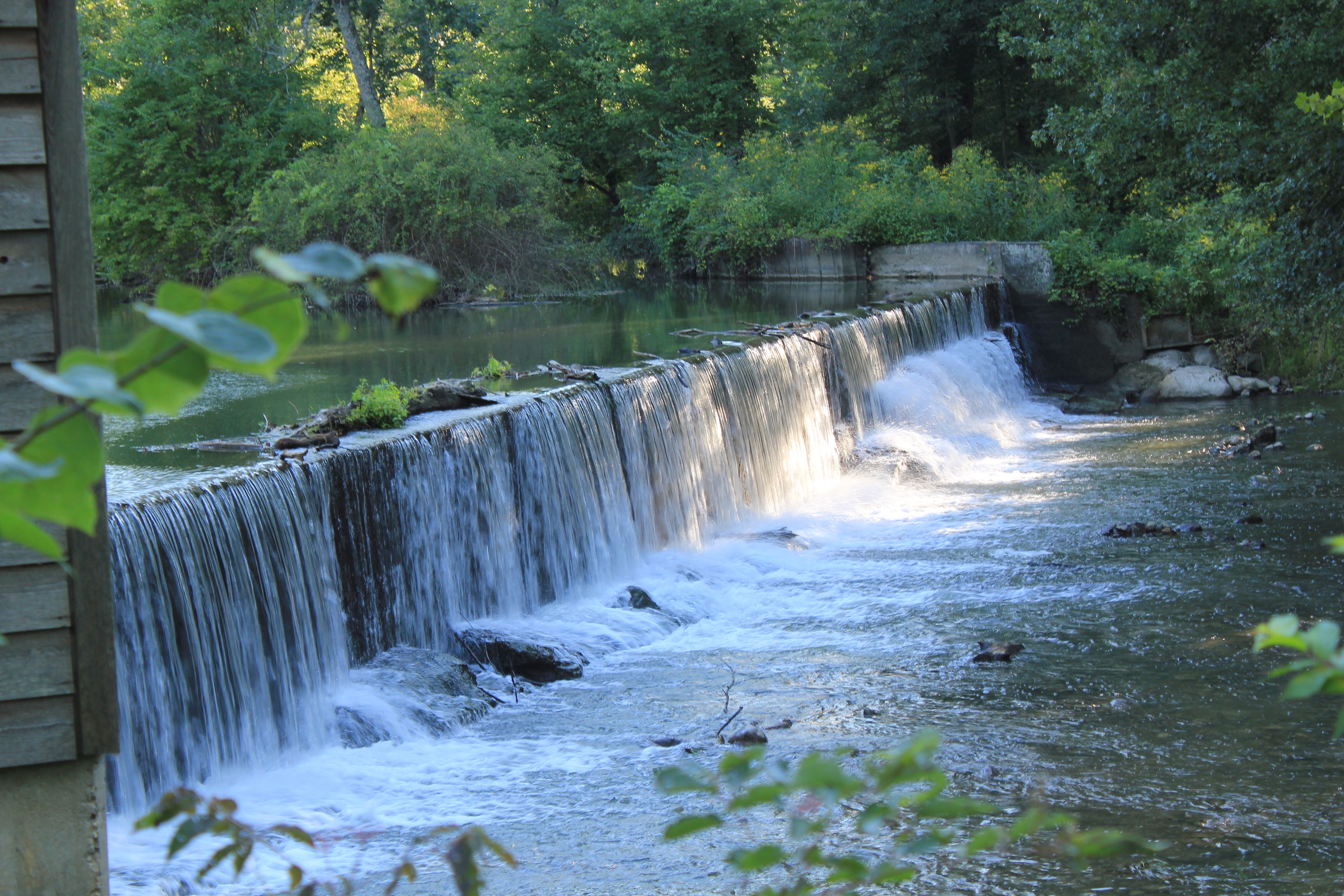
BEAR’S MILL

IMG_2398

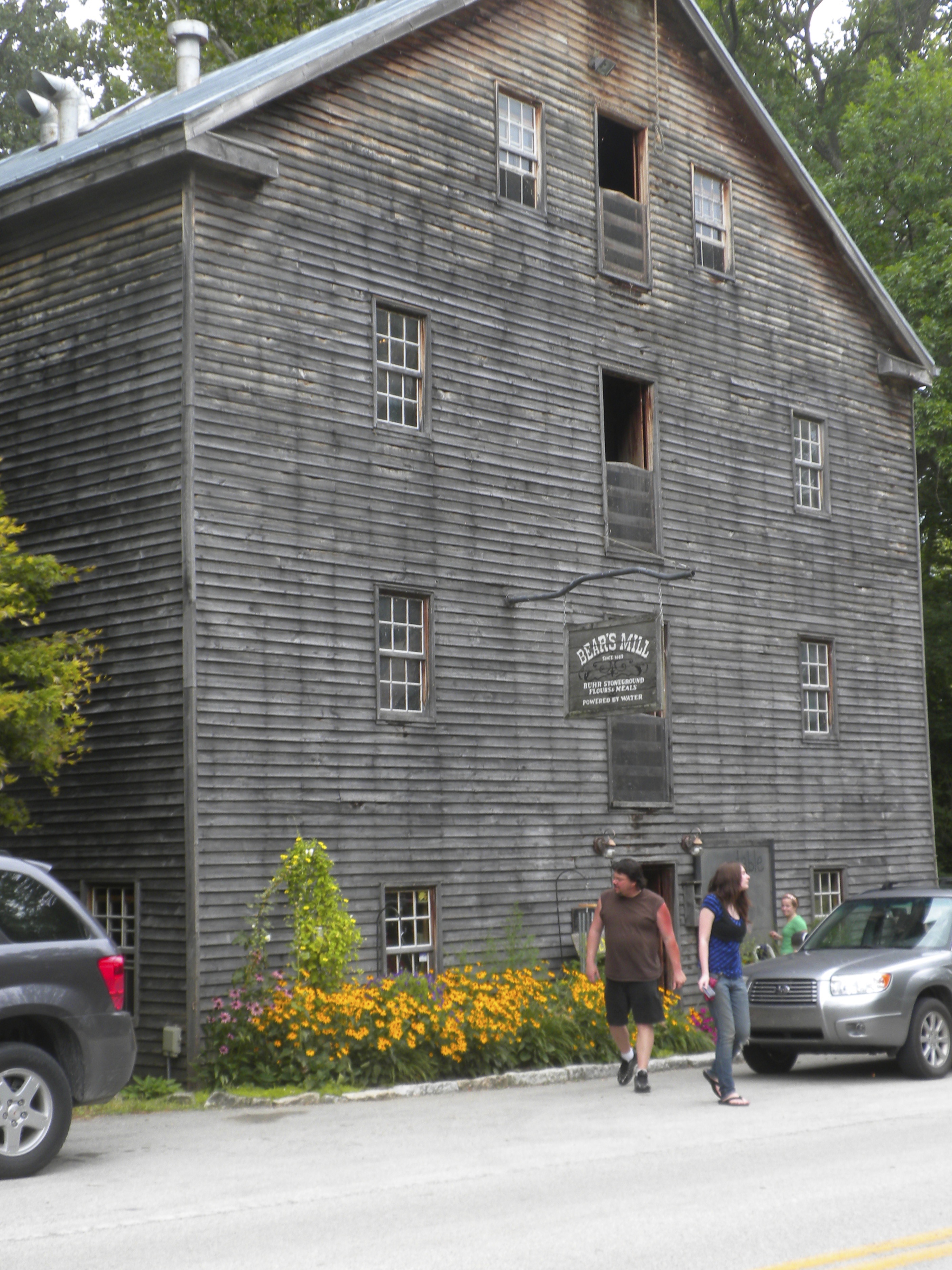
When I was a child I lived about twelve miles from Bear’s Mill. In the  summer I would occasionally ride my bike down the gravel backroads that led from my home to the mill. I would spend some time sticking my hot feet in the  cool waters and watching the waters fall hypnotically over the dam.

IMG_2403

At that time, the mill was still a working mill run by a miller that got to know me and my bike from the frequent trips I made. I had one of the first thin-tired Schwinn bikes with three gears in the county. They were called English bikes at the time. The narrow tires made the bike hard to control on the graveled roads.

I know that 99.9% of the people will never get to Bear’s Mill. It matters little, as it is worth knowing about. That is why I write this. I will probably never get to the pyramids, but I still find them of great and abiding interest.

BEAR'S MILL

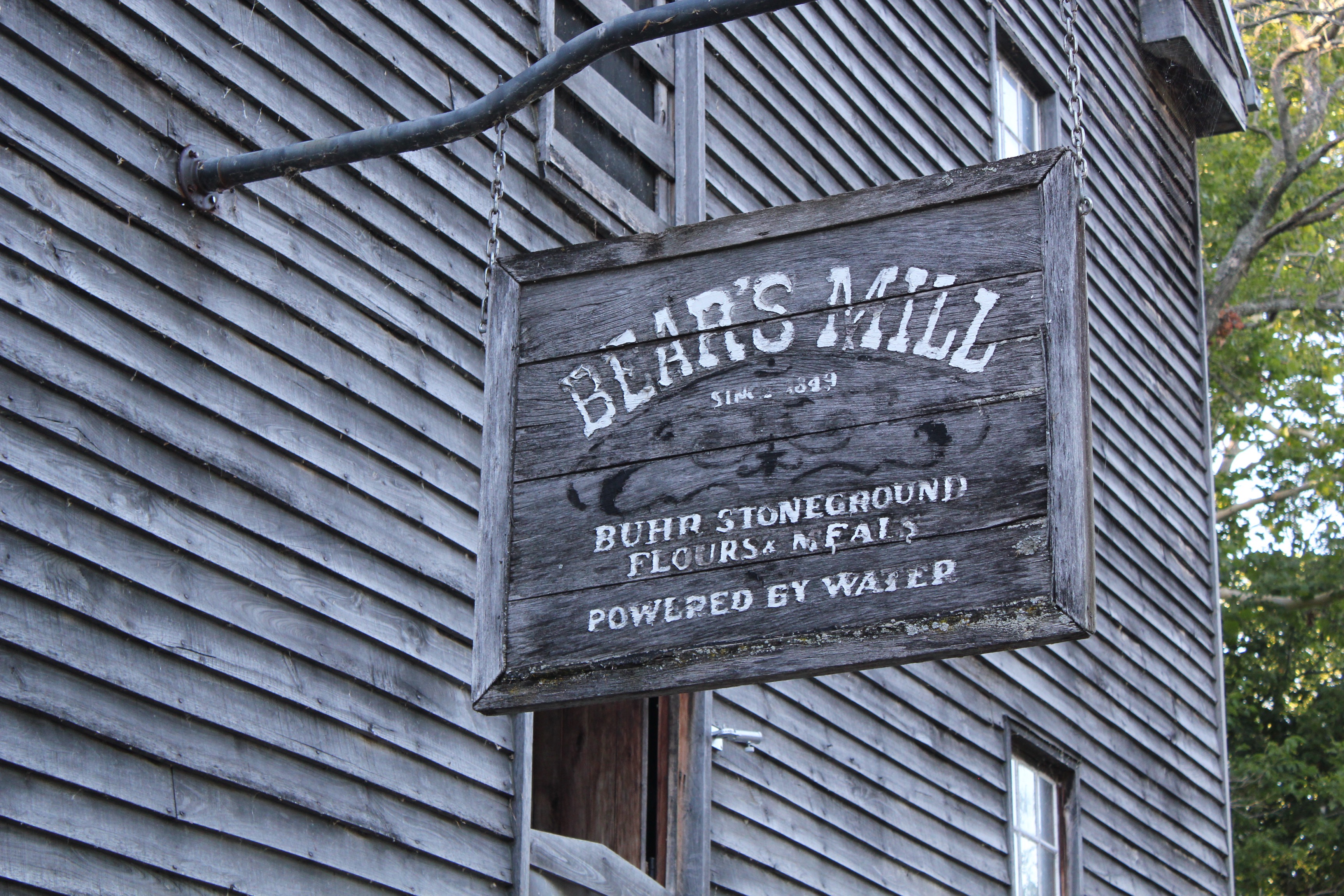
It is not that Bear’s Mill is one of the great wonders of the world that everyone needs to see. It is simply an historic grist mill in Darke County near Greenville, Ohio, the oldest existing industrial building in the county. It was built in 1849 after settlers had cut the trees out of the Ohio wilderness and grew crops on the newly cleared lands. Before it was put into operation it was purchased from Manning Hart, the builder and contractor, by Gabriel Baer. The stones used for grinding the grains were not hard enough, so Baer traveled to France to purchase high quality milling stones that fit his purpose. The original name was Baer’s Mill, but somehow along the way Bear’s Mill became the referred spelling.

The wood siding on the mill has been in place since 1849. It is a hardwood lap siding made from American Black Walnut and has served the building for over 165 years. In the 1970’s the miller retired and turned the mill over to a non-profit organization called Friends of Bear’s Mill. They still use the mill occasionally to grind a limited amount of grain. The bottom floor now contains a gift shop and an art gallery for local midwest artists to show their works. In 1975 the mill was placed on the National Register of Historic Places. It is both a museum for milling history and a stopping place for tourists who are as fascinated with the mill race and the dam as I was as  a child.

IMG_2425

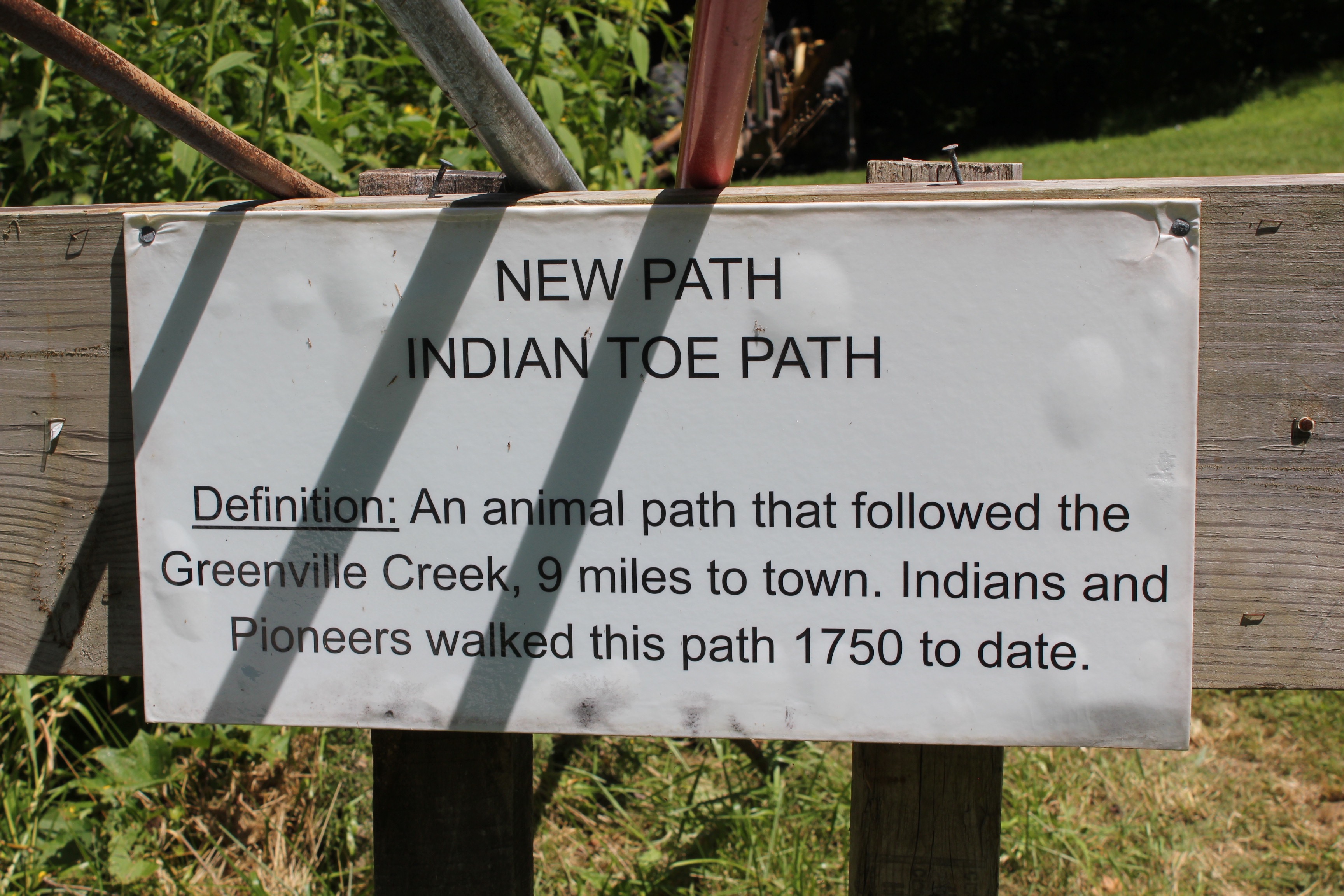
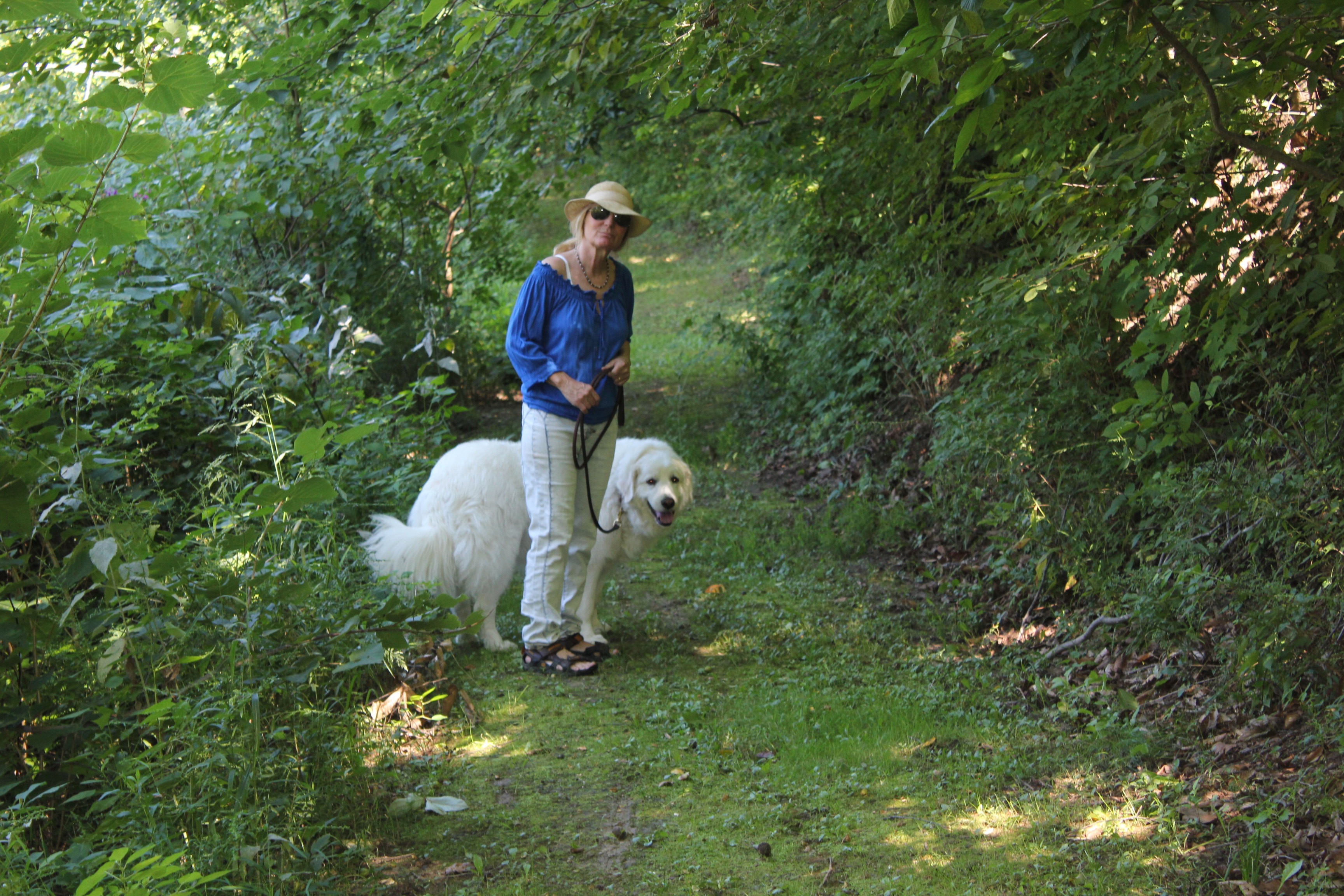
Remnants of the old Indian Toe Path run for half a mile along the creek. The visitors to the mill can take a mild, cooling walk in the summer sizzle where the pioneers and animals walked the hard nine miles to  the settlement at old Fort Green Ville.

IMG_2407

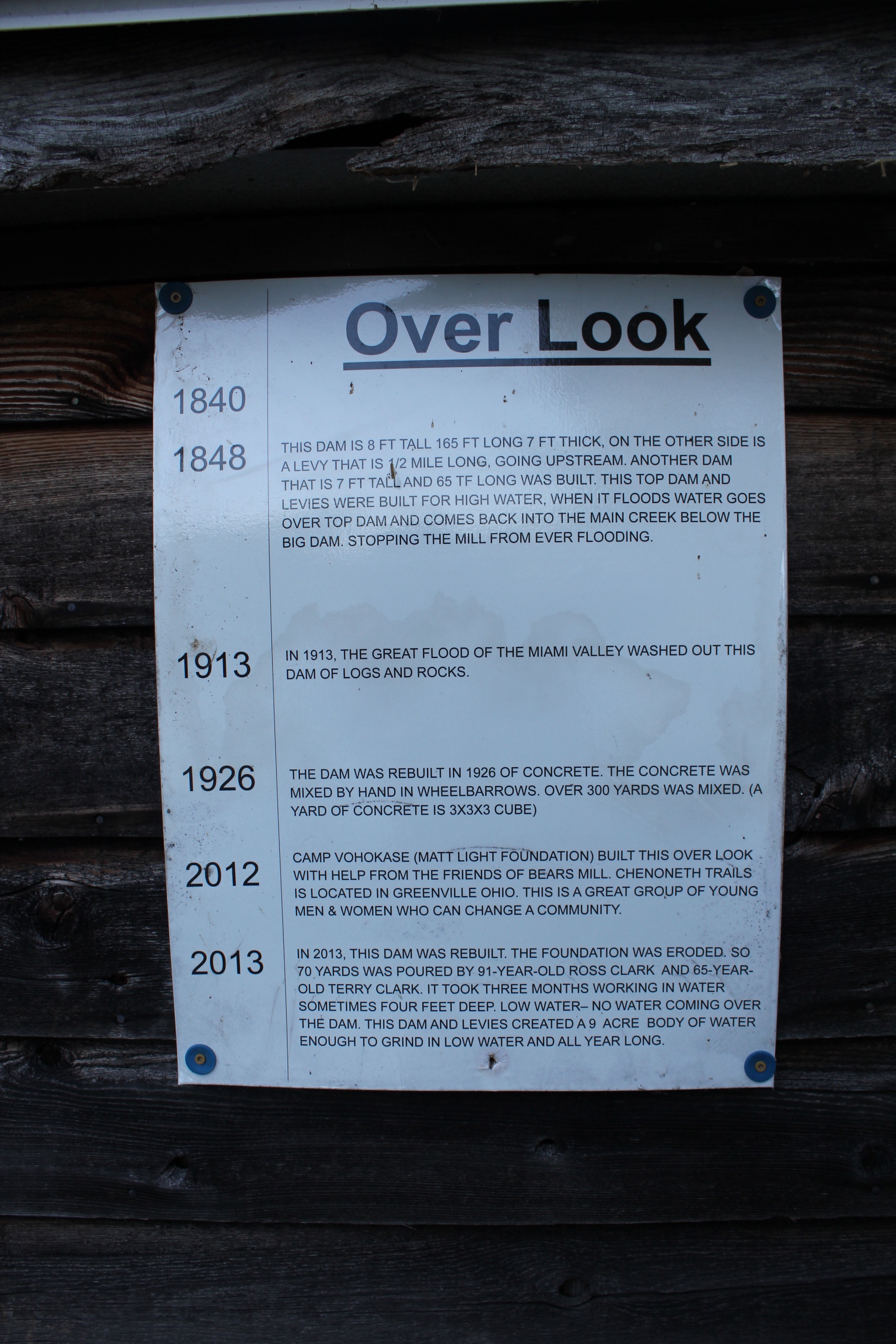
An overlook has been built along the creek by the ancient pathway where deer and panthers once roamed and fed.

IMG_2408

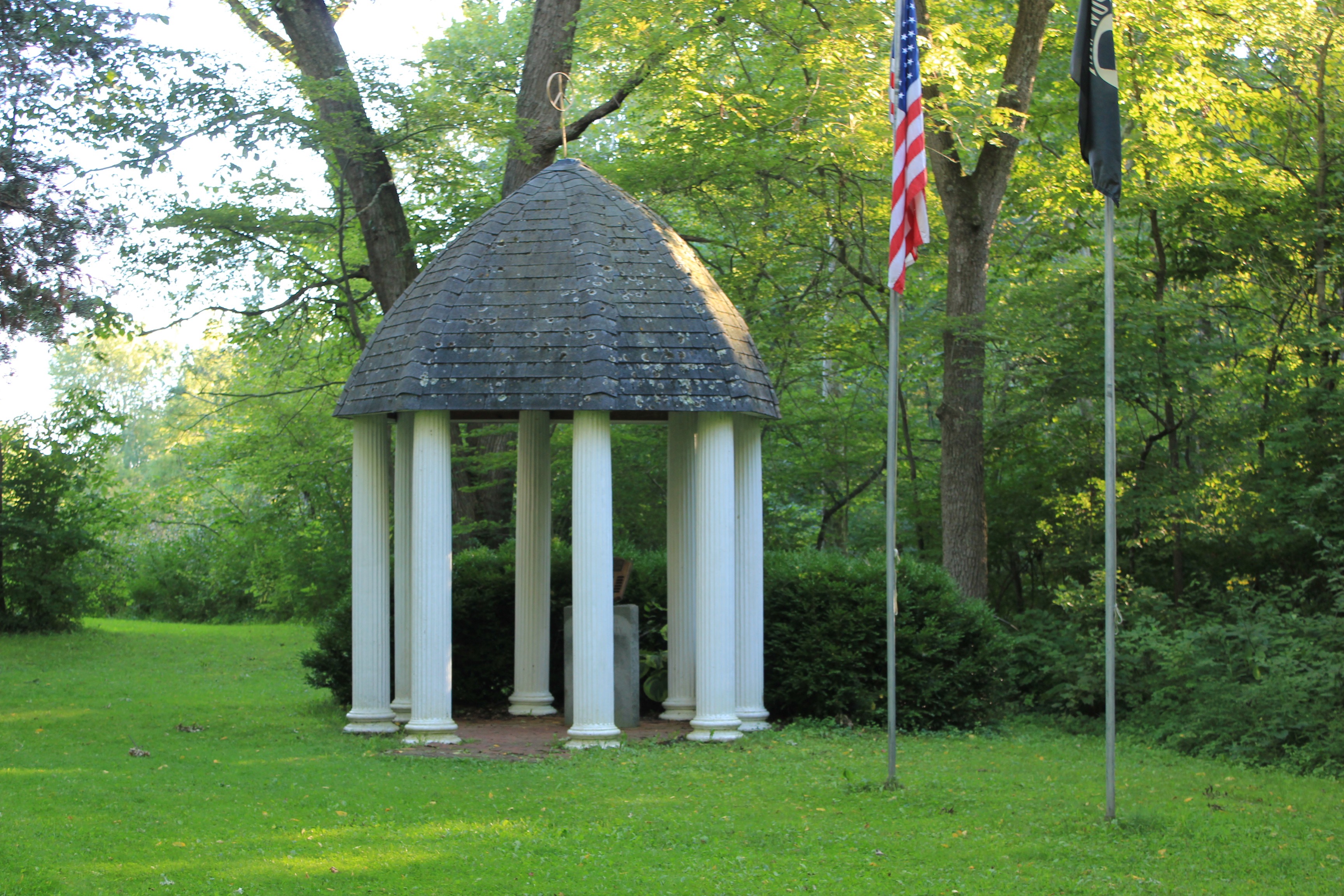
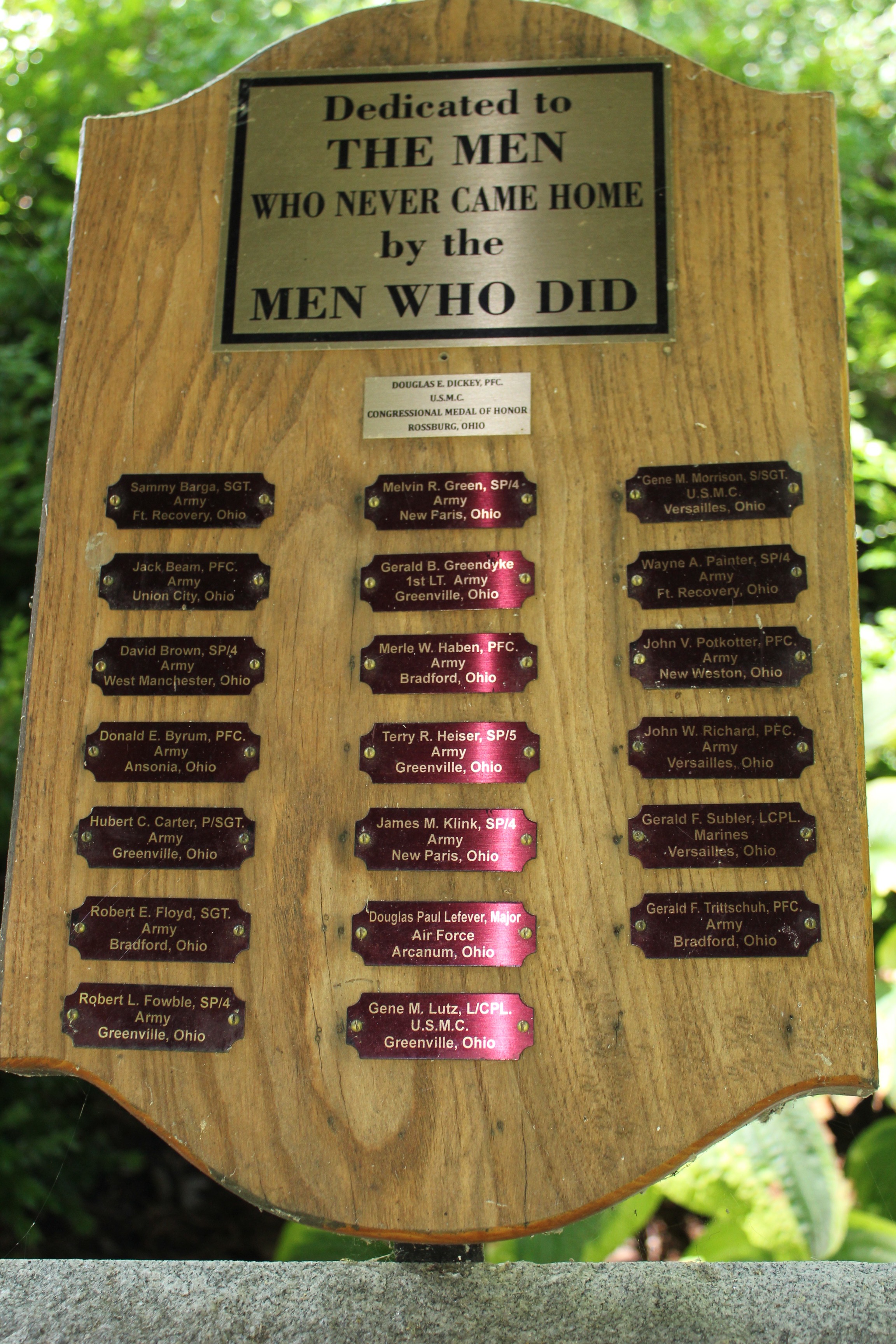
The steeple of the Darke County Courthouse failed and was replaced in the 1980’s. The old steeple was moved to Bear’s Mill to serve as a memorial to the Viet Nam veterans that died in that horrible war.

IMG_2401

The names of the men who died are tagged on the plaque, including one classmate of mine, Gerry Greendyke who never made it home. My classmates and I owe a debt to Gerry and the others that we can never repay. He took our place in the war. He was the one that was killed while we went on to live our own lives. Some came home and many did not. So it is with wars and the young men who fight and die in them.

IMG_2401.1

Away from the memorial, the  woods along the creek remain as they have been for many thousands of years. A cleared path allows the visitors to walk unobstructed in the same spots as ancient mound builders walked ten thousand years ago when the ice sheets were melting and the rivers of Ohio took shape. The birds tweet and the young folk Twitter. And the water, as always, flows forever to the sea.

IMG_2424

Click to make the water run on the video.

THE MYSTERY OF FOWLER’S HILL

THE MYSTERY OF FOWLER’S HILL

© 2014 Kenneth Harper Finton


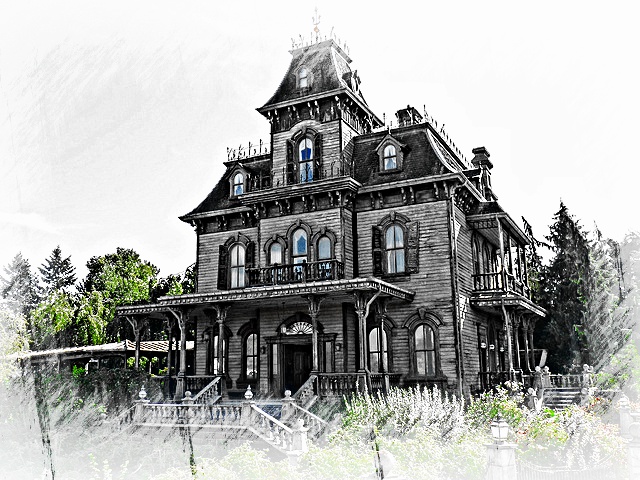
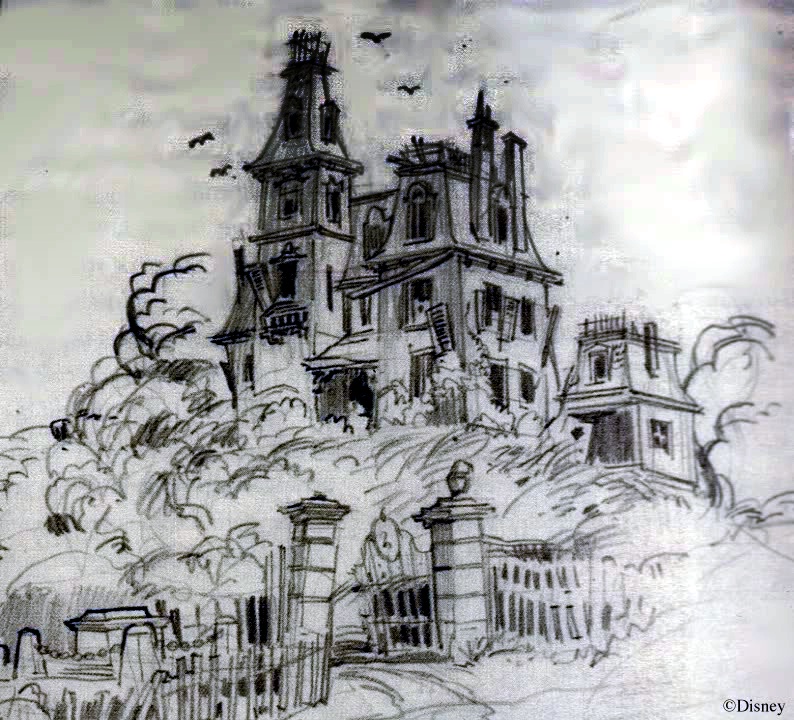
HOUSETake a boy of ten, a pleasant, smudge-faced little boy with dangling arms and freckles spotted rampant on his nose. He is wearing a red and white striped polo shirt––cool enough to eat. Then take a lonely old house on a windswept hill that looks down upon the main street of a small Ohio town like a melancholy illustration from a picture book of horrors. Then add to this an old woman existing in her lonely life by threadbare strands of memory. Lump the scene together. Let is simmer with the passing of time, with clocks that run backwards and a love that ebbs away to pity.

Thirty years ago, I was that boy of ten standing in the mist at the foot of Fowler’s Hill. I was about to earn my first dollar delivering papers on Sunday mornings. My route started at the dispatch office where we picked up our stacks of stack of folded papers still smelling of fresh ink. My first customer was to be Old Lady Fowler who lived alone, always cloaked in the old weathered house that stood atop the town’s highest hill.

Fowler’s Hill had been Mount Milly’s chief landmark for as long as anyone could remember. Mount Milly’s founding father, Jacob Fowler, declared the hill his sanctuary, but when the early settlers nestled in at the foot of the hill, their tentacles reached for the slopes, Jacob Fowler fenced the entire hill with a six foot wall of stone, two feet wide. The only entrances were a large wrought iron gate on the east side and steps dropping down into Mount Milly on the west side.

halloween colorings (15)In the early days of Fowler’s Hill, the house blazed with lights and horse-drawn carriages labored up the narrow brick lane to the Fowler mansion. Every Saturday night music and the sounds of laughter could be heard floating from the open windows and down into the town. Pretty girls escorted by tall, sinewy young men sat on the white benches at the top of the hill looking down upon the lights of Mount Milly, entranced with the town’s haunting reflections.

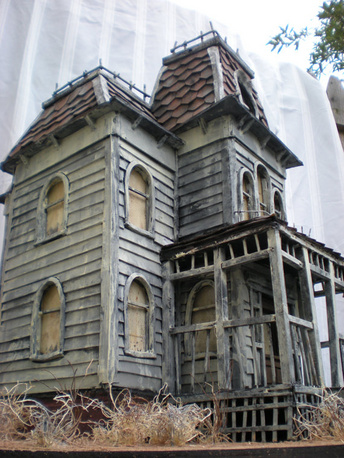
When I was ten, the house was only a ghost of its memories. It stood windblown and weathered at the top of the hill. The house was the object of derision, as the people in Mount Milly laughed about how old man Fowler’s fortunes had turned after the 1928 crash. But the house itself stood unsmiling on the hilltop, staring down like some dark shade of gloom––unpainted, rotting, without expression. Scolding mothers threatened to take their wayward children to Old Lady Fowler for punishment. There, the prisoner of the hill, Old Lady Fowler, had shut herself into her hilltop estate, never to walk the streets again.

Thirty years ago, I stood at the bottom of the hill, my body braced against the weight of my paper bag, trying to muster up the courage to climb those time-eaten steps and carefully place the Sunday paper on the porch.

I tried not to look at the house as I climbed the steps. One glimpse and I could be hypnotized by the unblinking, long windows that stared at me and seemed to whisper: “Come up, my boy. Come to Fowler’s Hill.” As I climbed the steps, the house whispered in my ears and the air around me carried hushed strains of maniacal laughter. My spine was rigid, my knees unbending. I threw the paper on the porch and started running down the steps three at a time until I was safe at last on the streets of Mount Milly and the whispers of the house were drowned in the sounds of my panting breath.

Every Sunday morning I had to deliver the paper. As I became accustomed to climbing the steps and returning without being minced and placed as a seasoning in a blueberry pie. I gradually lost my fear of Fowler’s Hill.

For six months I delivered the papers to the old porch. Before I knew it, snow was blowing and sifting through closed shutters and white flakes were freezing to my eye lashes. The week before Christmas, I climbed the steps once again to place the paper on the porch. The sky was gray and the streets at the foot of the hill were drifted closed. Automobiles had stopped everywhere and had been abandoned where they stalled.

I dropped the paper in the snow and turned to leave hen behind me I heard the creaking of a door and whipped around with my fists clenched. A woman in her early thirties stood in the doorway holding an old sweater closed at her throat with her hand as the wind whipped her hair.

“Boy,” she said, “would you like to warm up?”

“No thank you,” I replied.

“What’s your name, boy?”

“Hugh Christie.”

“I have a Christmas treat for you,” she said. “Come in here and warm yourself before you catch your death.”

I stepped inside and the door closed behind me, sealing me in. The house was dark and needed airing. The room was large and dusty, but I remember thinking that it must have been a beautiful home long ago.

The woman looked down on me restlessly and I felt as though I ware caught in a web. “Isn’t Mrs. Fowler here?” I asked. “I didn’t know anyone else lived here.”

The woman didn’t answer. She stood there smiling liquidly and devouring with her eyes. The clock on the mantel read seven-thirty. Really, I have to go,” I said. “I have to deliver the rest of my papers.”

“Wait, please. I’ll get you a cup of chocolate and your present. You’ll feel better with a little fortification against the cold.”

She walked toward the hallway and turned again toward me. “Please, don’t go away. I’ll be right back.”

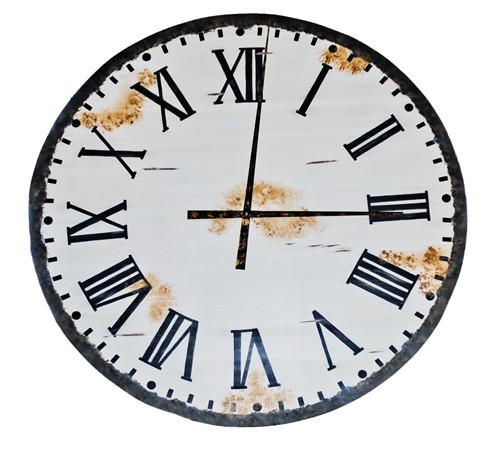
I sat oh a chair and counted the minutes as they passed by. The mantel clock read seven-fifteen. But it had been seven-thirty when I looked at it before. I rubbed my eyes and looked again––still seven-fifteen.

The woman returned with a present and two steaming cups of hot chocolate on a tray. The present was bulky and wrapped in yellowed newspaper, probably one that I had delivered to her door.  “I’m sorry I had no proper wrapping,” the woman smiled, “but a gift is a gift no matter what it comes in. Here, open it.”

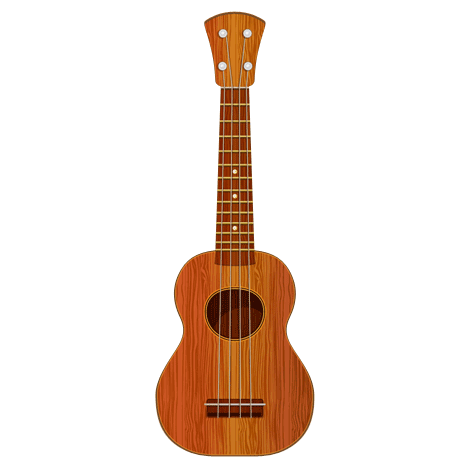
ukeleleI tore the paper off and a little instrument was laid bare before me. It looked like a used little wooden guitar. The veneer along the fretboard was worn away. I was very disappointed.

“Thank you,” I said. “It’s very fine. What is it?”

The woman laughed. “It’s a ukulele, a musical instrument from Hawaii. Do you play any instruments, Hugh?”

My negative answer was not altogether truthful. At the time, my parents were forcing me to take piano lessons from Professor Gray each Saturday morning.

“I’ll show you how to play it,” she said. “Here, drink your chocolate.”

She sat down on the floor beside me, took the instrument into her hands and began to play. As she played, she sang in a sweet melodic voice: “Drink to me only with thine eyes and I will pledge with mine.” She sang softly, her fingers strumming across the strings.

Suddenly, she jumped up. “I can’t keep you any longer,” she said. “Your other customers will be complaining. It’s nearly seven o’clock.”

But it should be eight o’clock!  I looked at the mantle clock again. “It’s five ‘til seven,” I said, “but t was nearly seven-thirty when I cam in here.”

The woman looked at me with her twinkling eyes. “Can you keep a secret? A wonderful, wonderful secret?”

“Of course,” I said.

“In here,” she said, “time runs backwards.”

clock1_2I became frightened. Perhaps Old Lady Fowler had cast a spell on me. I didn’t really believe in spells, but I felt a strange and sickening feeling inside, as though my soul had a toothache.She bent her head to kiss me and I scooted from the chair with the uke in my hands and flew down the steps as fast as my feet would carry me. The snow was blowing and behind me the house was laughing again. My foot slipped on the ice. I braced my body, but the movement threw me down on the steps, rolling me over and over again against the jabbing rocks until at last I was still and faint. The last thing I remember was someone’s feet standing beside me, caked with heavy snow, and after that came blackness.

My career as a paperboy stopped then and there. I lay in bed with a plaster cast on my leg, my arm in a sling and bandage trapped around my head. While I was recuperating from my fall, another boy got the job.

As the years went by, I stopped thinking about my visit to the Fowler place and passed the unrealities off as childhood fancies. Time and life went on and I was caught up in the process of growing up. My voice deepened and I began to look at the girls.

High school came and went and after that one year of college. There was a war in Europe and the Far East. During my first semester of college, Japan bombed Pearl Harbor and I heeded the call of my country.

I didn’t get back home until December of 1945. My brother Jerry was shipped home one week later and buried with honor in Mount Milly Cemetery. I took a summer job in a small factory that made buttons of all shapes and sizes.

At that time, Fowler’s Hill was the farthest thing from my mind. I wanted to finish my education and then move to the city where my life could take on an entirely different meaning. I lived at home with my parents, grieved the loss of my brother with them, then waited patiently for the school year to start.

What was it that took me to the attic that evening? Was I looking for something––the croquette set? an old jacket? a sponge for washing the car? It makes no difference. It was nearly fifteen years ago.

This I do remember. The attic stairs creaked under my weight. I remember how, when I was young, the attic used to terrify me. Every shadow was a ghoul, some fiendish intruder waiting to attack and sink blood-red fangs into the back of my neck.

The attic smelled dusty. Unshaded lights hung from bare wires. They cast harsh shadows on the dusty debris of useless things. I opened an old trunk at random and sifted through the piles of mothballed clothing and tattered pennants. I looked at my old school papers that dated back to kindergarten. I had done well in the early school years and I enjoyed looking at the large red A’s that were scrawled across the top of the pages. I hadn’t done so well in high school and college was a bit worse.

My searching hands came upon the ukulele. The sound box was split open and the broken strings were hanging uselessly against the frets. I hadn’t seen it since the day 1 fell down the steps to the foot of Fowler’s Hill. It must have been broken have in the fall.

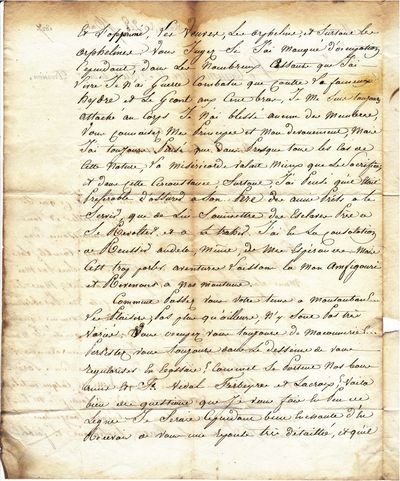
I lifted the split weed of the sound box, attempted to fit it together, and found some old letters on the inside––letters cracked and yellowed with age, the paper stained brown in spots and punched with small holes where some invading insect had raped the sanctity of their content. I pulled the letters through the split in the wood and looked at the handwriting––the clear strokes of an old steel pen. It was the handwriting of another time and era.  My eyes focused in the dim starkness of the light as I looked at the signature. It was from a girl named Elizabeth Merrill and was dated December 21, 1870:

“I cannot express my gratitude for your compliance with my request better than with an immediate reply, and for this purpose, retired at an early hour. I am now sitting in my room by a cheerful and while thus engaged forget the old lettersdistance that separates us. I now duly praise the privilege of writing and I am quite content in solitude when occasionally remembered with a letter from absent friends. We have commenced a correspondence, Polly, that I hope will not to be interrupted. In order to fully enjoy such intercourse, there should be a mutual understanding, which I think it not wanting. I am fickle––somewhat disposed to the dark side. During such times I will tell you that naught awaits us but toil and care and trouble; that happiness is only apparent, not real, that our fond hopes will terminate in disappointment. In my next letter, I may be in good spirits––expatiate upon the mingled sweets of life. This fickleness may in part arise from an indulging fancy to roam too much, to build castles in the air, and form bright schemes which can never be realized. My time almost exclusively occupied with domestic affairs and my mind is necessarily diverted into a different channel which will, perhaps, correct the evil spoken of. And here I will confess that I am quite vain of my skill in the art of baking bread and some other branches of housework to which I have never attended until recently, though they are all important. My too indulgent mother, considering only the ease of her child, neglected some parts very essential to the education of females, however it is not yet too late to learn. But enough of myself. The clock warns me of the hour to retire, though I would willingly forego my usual nest and spend the night conversing with you.

“I find that I am hardly intelligible and have made so many mistakes of every kind, but I am confident that you will not read with a critic’s eye. I hope to see you soon––may possibly come up next Sunday to attend your play-party. Do write soon and tell me about the folks. Give my love to June. I do wish she’d write, even if she will not come to see me. Tell Grace I would fill my next page to her, but really have not the time. Give my respects to your father and mother and remember me to all who deign to inquire after.”

The letter ended. It was signed, “Your affectionate friend, Elizabeth Merrill.”

My eyes jumped over the letter. I could picture the girl sitting by the fire––young, pretty, witty, with eyes that sparkled and a smile that gleamed when she laughed. It was written in 1870. The girl would be dead by now, or perhaps just ancient and withered away. All that remained of the girl was the letters that I held in my hand.

I began reading the second letter: “Dear Polly, I cannot tell much how I rejoiced when I read your kind letter. I sometimes thought you had partially forgotten me, but at the same time, I blamed myself for not writing more often. But I assure you, it was nothing but a spirit of procrastination that hindered me. O this spirit of procrastination. What shall we do with it? We must certainly take up our crop, walk the narrow path of self-denial, and quit the work of putting off until tomorrow what can be done today, or I fear it will very much hinder our usefulness in this world. But I am beginning to think that we have had enough of forgetting each other. Let us have no more of it––for why should we be so jealous as to think that we can bury our friendship or the recollections of past pleasures in the dusky shades of oblivion. I think that if friendships can prove lasting in this life, ours should. It was first formed in the schoolroom and since has increased and strengthened in various ways. And I hope that while we are traveling through this dreary clime, we will be a benefit to each other in preparing for something better. Yes, for if I never see your face again, I feel that I can receive benefit from your letters. And, dear Polly, do write often and give me instruction and direction in everything down to anthography and etymology. Yes, do not hesitate for a moment to tell me of my faults and let us both try to have our attention directed to something useful, that we might fulfill the purposes for which we were created, that we may live to the glory of God and the good of mankind. And when we come to bid this world adieu, will it not be sweet then retrospecting our lives? Human life is at best a chequered scene; sorrows and joys follow each other in quick succession. Man comes upon the stage of action and is hurried on with the velocity of time to try the realities of another world.

“And, my dear Polly, while we sojourn in this world of uncertainty (if you allow me the expression) let us not disturb our minds with vain hopes and fears, but depend securely upon Fate to deal with us the way he thinks best. Let us do our duty and we can be sure that all things will work out for the greater good. If we could do that, even pain itself would be sweet, and disappointments pleasures of Fate. We are both in the flowery paths of youth and neither of us have been called upon to suffer much affliction of any kind, but we know what may befall us; therefore, let us come boldly to the throne of grace to help us in time of need.

“We have had quite a revival of religion six miles from where we live (as you no doubt notice from the tone of this letter). I expect we will have a good time at the camp meeting commencing the sixth day of September. Can you not come and go to the meeting with us? I was very much disappointed when I learned that you had been as far as Grayling without coming to Huntington to see me. You were mistaken when you supposed that Doctor Brown was a beau of mine, for I assure you that the good doctor talks as much of Miss Polly as he does of Miss Elizabeth. I have not seen him lately, but will venture to give his respects to you––for I know if he were here he would send them. I am glad to hear that you stand superior to the passions of love, for I anticipate much pleasure in future correspondence with you, and if were to get in the vortex of (what shall I call it?) I fear my pleasures would be at an end.

“But I must bid you good night. Write soon––I would like to receive a letter from you every month. And now, farewell. May the Lord bless us both. Your affectionate friend, Elizabeth Merrill.”

I smiled inwardly and folded the letters. I thought about a movie I had seen the night before, a tale of simpler days just before the Civil War when romance bloomed slowly and a simply kiss was almost a proposal. Sometimes I would long to be back in those days, but I know that had I lived then I would see things in different light. But still, the longing is there. It is easy to fall in love with the past, but much harder and much more practical to fall in love with the present.

Why were those letters lying all these years in the soundbox of my ukulele? I lifted the wood and peered in once again. Flattened on the bottom was yet another note announcing the engagement of Elizabeth Merrill to Jacob Fowler of Mount Milly.

My heart skipped a beat, for now it all made sense. The letters had been written by Old Lady Fowler. I thought of Fowler Place and my strange visit fourteen years before. All the unanswered questions of my childhood suddenly came down upon me. Who was the woman who gave me the ukulele? Why had no one seen Old Lady Fowler since her husband died in 1908. Is the old lady still living in that morbid mausoleum at the top of the hill?

I decided to take the letters to the house to find out. I didn’t know that I would regret that decision for the rest of my life.

I stopped my car at the foot of Fowler’s Hill and watched the final glow of the sun fall away into the west. The Fowler Place stood high above me in windswept desolation. If there was ever a light in the house, it always burned low, for the house was black against the very darkness and the moon shining behind it exaggerated the strangest of feeling––half terror and half wonder.  I felt for the letters in my pocket. Try as I would, I could not reconcile the girl of the letters with Old Lady Fowler.

HOUSE LATER1 began the climb up the great stairway that led up the rock-plagued slope, pausing every few seconds as something bristled inside me and remembering the fall down these very steps when 1 was ten.

I stepped onto the porch. The floorboards creaked underfoot and a chill ran through my spine like a slow incision of cold. I began to wish that I hadn’t come, but I was there and there was nothing to do but go through with it. I rapped gently on the door, vaguely hoping that no one would hear.

I could hear the sounds of a Victrola coming from inside the house––soft, tinny sounds that registered in my ears like queer and ancient music. I could see a faint light burning deep within the house.

The curtains parted at the left window, then closed and swayed back and forth until they stilled. I pounded on the door until the flesh of my fist became sore, but still she didn’t come. I was afraid that she might come and I would see … what? A dusty pile of wrinkles and stale clothing? a cancerous face? a mass of oozing flesh that would undulate through the door and cover me over with death?

1 pounded hard on the door.’’ Mrs. Fowler,” I called. “It’s Hugh Christie. I have something for you. A delivery.” I was yelling and my voice was high-pitched and shaky.

1 waited for a while, but could hear nothing but the birds of the night and the sounds from the street below. I looked out over the town––my town––and it seemed very beautiful here on this hill.

Suddenly I heard the lock snap and the door opened just a crack. Someone … something … whispered: “Little Hugh Christie, the newsboy?”

“Not little,” I said, not oven knowing to whom I was speaking. I’m twenty-four now.”

There was no reply.”1 have something for you, Mrs, Fowler.”

I took the letters from my pocket and unfolded them. They crackled in the night. “You wrote those a long time ago.”

The door opened and jay mouth dropped open in surprise. I blinked my eyes and looked again … at the pretty girl in a yellow dress whose eyes sparkled like little flecks of gold in a sea of tawny hair.

“Hugh,” she smiled, “won’t you come in?”

I followed her into the living room and although fourteen years had passed since my Christmas visit, the room seemed as familiar as the freckles on the back of my hand. The sofa still sat upon the faded rug and the clock on the mantle still ticked away, each second younger than the one before it. Inside the house there was a calm, the like of which I had never experienced before. Suddenly I was cut away from the past and my mind went blank to the future. Neither time nor reason mattered. Life stood still and there was only a time called now.

“You are Elizabeth?” I asked.

“Yes, very much so,” she smiled. “Oh, what have we here?”  She bounded youthfully to my side, her eyes glancing down at the letters in my hand.

“I found these letters in the sound box of my ukulele,” I said. My voice sounded strange, as though it had come from someone else. My mouth moved, but I felt as though 1 had no control over my speech.

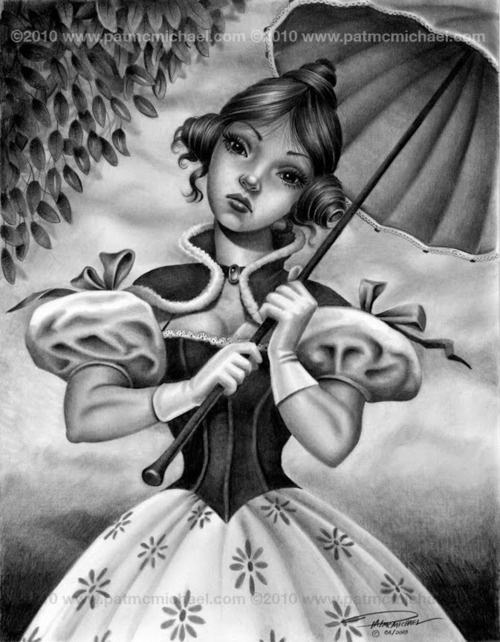
GIRL WITH PARASOL“The ukelele,” she said. “How strange. I had almost forgotten about that. Shall we go where the lighting is better, or shall we stand here in a dimly lit corner? No, don’t answer that. Let’s go into the library.”

She sat on a divan beside the plush leather-covered volumes of  Dickens’ works and glanced at the letters while I stood with dangling arms and rubber legs. “Where arc my manners?” she laughed, looking up. “Please, have a seat.”

Thinking back, I wonder why I didn’t question the unreasonable atmosphere and the mysterious clash of time, but I sat there thinking only of the present, taking everything as it was without question. It seemed the perfectly natural thing to do.

She read through the letters silently, lipping the words sensuously with flicks of the tongue, smiling now and then as out of nowhere long-shattered and forgotten dreams appeared again. I watched the heave and fall of her bosom, the merry sparkle of her eyes, the crisp, wet brightness of her smile.

She let the letters fall into her lap and her eyes turned sad. “This girl was young, so young. Eighteen at the time, just as I am now, and yet we are two entirely different girls, two separate beings with the same body. Isn’t it strange?” With a flicking gesture of her arm, she paused. “The girl who wrote the letters was so full of life, so hopeful, bubbling with happiness at times,”

“And what about the girl of today?” I asked.

She smiled again. “You wouldn’t want to hear about the girl of today. She is a lonely girl who has lived too long and yet not long enough. It’s a shame, really. The girl who wrote these letters never really got to know what she wanted most to know.”

“Do you want to talk about it?” I asked.

She laughed lightly like a bell. I will always remember the tinkling sounds of her laughter. “Once I was old, but now I am young. But, please, let’s not talk about it. We have so little time.”

So little time. But why? I wanted everything just as it was to the end of eternity. I wanted to sit forever on the leather-covered couch, young to the end of time in that strange old house atop Fowler’a Hill. I was entranced with her haunting, mournful beauty.

images-2She got up from the couch. “Thank you for bringing the letters, Hugh, but you must not stay but only a few stolen moments at a time. You must not fall into the pattern.”

“What pattern? The pattern of staying young? I would like to stay young until the end of time.”

“No,” she said. “It doesn’t work that way. Please, come quickly.”

I grabbed her arm at the door. “Elizabeth, does it have to end like this? Just a visit in the night and then nothing?”

“In this house there are no endings,” she said, “only beginnings. I only wish it had an ending, for beginnings can be so terrible.”

“The handsome prince always rescues the lovely princess from the Black Knight’s hilltop castle and they both live happily ever after.”

“A fairy tale,” she smiled. “Please, Hugh, you must go. The sun is setting.”

I turned to catch a glimpse of a sunset that I had already seen.

“Please, Hugh, you must go,” she said.

She placed her hands on my shoulders and I stroked the tawny softness of her hair. “I’ll be back,” 1 said. She smiled and lifted her head. A final, lingering kiss aid it was over. She stepped inside the house and left me staring into the bleak wooden patterns of the tightly closed door.

Safe at home the reality hit me in the face with a thousand unanswered questions. I wanted to check birth and death records. I wanted to be armed with indisputable facts that would explain the mystery of Fowler’s Hill. I drove into Huntington and looked through the courthouse records and found that Elisabeth Fowler, née Merrill, was born August 1, 1852.

Her words ran through my mind.  “We have so little time … once I was old but now I am young.”  I drove back to Mount Milly and found the marriage records of Elisabeth Merrill and Jacob Fowler, September 15, 1871. Jacob Fowler’s death certificate read July 15, 1908. The marriage had produced no children.

I remembered that Christmas when 1 was ten and Elisabeth, then in her thirties, playing the ukulele. I remembered her words … “Can you keep a wonderful, wonderful secret? Time runs backwards here.”

Sometimes a man cannot understand what he knows to be true. The astronomer cannot comprehend the infinity that he surveys, the minister cannot explain the God of whom he preaches. I was armed with records, statements, and certificates that proved beyond a doubt that Elizabeth should be ninety-four. Time runs backwards here was my unreasonable, but only conclusion.

I sat down with pad and paper to explain the unexplainable. Elizabeth had been old. At some point in her life, time had turned around. She was born in 1852. She was now eighteen in 1956. In 1908, the year her husband died, at the age of fifty-six, Elizabeth began to grow younger,

I could not picture Elizabeth as a fully matured woman. I saw only the girl who haunted my dreams, a girl with laughing lips and tawny hair from out of the past and into the future … a princess in a hilltop tomb waiting for her knight in to rescue her. As quickly as the old century fades into the new, I had fallen impulsively, irrationally in love.

Mount Milly is a little town, but large enough to boast or complain (whichever was the prevailing mood) of one pawn shop on Beech Street. There I found a ukulele much like the one Elizabeth had given me. I had it wrapped and took it to Fowler’s Hill.

An unseasonable cold spell had settled over Mount Milly during the night. The drizzling drops of rain spotted my package as I walked up the steps. I crossed the creaking porch where only the night before I had kissed a fantasy of beauty and watched two sunsets fade into darkness.

“Elizabeth,” 1 said, pounding on the door, “open up. I’ve got a surprise for you.” No one answered. I tried to

I waited but there was no answer. I tried to open the door, but it was locked. “Hey, you with the strawberry lips, open up. I’ve got a surprise for you.”

Still, no one answered. She didn’t want me. I laid the package by the door and went home. The next day it was gone.

GATE ABD HOUSEI returned to Fowler’s Hill many times after that, but the door was always locked and my pounding went unheeded. September arrived and I went back to college. During Thanksgiving vacation I talked with Mr. Snider at Snider’s General Store who delivered the food and other necessities to the house. He said that he still received a weekly cheek and the groceries were always gone when he stacked the weekly supply on the back porch. There seemed only one conclusion. I was not wanted on Fowler’s Hill.

Again the years rolled by, faster than I’d like to think, and gradually I erased Elizabeth Merrill from my mind. I finished college and went to work for the Mount Milly Gazette, the little paper where I now hold an editorial position. I married Jan Paxton, a girl from Cincinnati. We now live in the newer section of Mount Milly and our contacts with Mount Milly’s older side are rare. I work downtown and pass Fowler’s Hill every day of the week, but I stopped glancing up at the house years ago … until two weeks ago, on Sunday, when Jan was making pizza pie and needed some anchovies and Parmesan cheese. I shopped around at all the little stores that were open Sundays and found the cheese, but no one stocked anchovies. I cursed the blue laws, then thought about Mr. Snider’s store across town.

I hadn’t seen Mr, Snider in fifteen years and was surprised to find him looking so old and tired. “Well, Mr. Snider,” I said. “you’re looking great. You haven’t aged a bit.”

“Hello, Hugh,” he replied. “It’s been a long time.”

“It is a small town, Mr. Snider. It’s a wonder that we don’t run into one another more often.”

“Well, I don’t go out much anymore, Hugh. I had a heart attack three years ago this month and it left me out of sorts.”

Now that he mentioned it, 1 could see that half of his mouth was drawn up. “I’m sorry to hear that,” I said. “Times gets us all. Just look at me.” I pulled my hat off to allow him to see my receding hair line.

Mr. Snider laughed. “Hell, that’s the limit. And you had the thickest head of hair I’ve ever seen.”

“Say, Mr. Snider, I need some anchovies. Jan’s making a pizza. Do you stock them?”

“Anchovy paste.”

“It’s not the same, is it?”

“No, but I think it would do.”

“Hell, I’ll try the paste then.”

“Right back there. Center aisle.”

I took the anchovy paste from the shelf and laid it on the counter. “Will that be all then, Hugh?”

I guess that’s about it, really. I already have the cheese.”

“Say, Hugh, I’ve got something for you here someplace. Up until a few months ago I was delivering up to Old Lady Fowler, then I got a note saying not to leave my stuff anymore. The old lady must have changed stores.

My heartbeat quickened at the mention of her name.  He continued: “You know the old lady must be near a hundred and ten by now. Ita a real wonder that she’s still around. A real wonder. Here tell she’s got a nurse, though.”

I chuckled. The old lady has a nurse. It was only a rumor that I started myself when Mount Milly’s conscientious (snoopy) citizens decided that Elizabeth was getting too old to care for herself and wanted to bring her down from her hilltop and place her in the Old Folk’s Home.

“Well, anyway,” Mr. Snider said, “I was delivering up there one week and went up to the back porch like always and found an envelope had dropped down in a crack in the floorboards. Funny thing was that it had your name on it.”

“Could I see it, please?” My stomach tightened.

“Sure, I think I’ve got it around here some place. Let me see now …” He bent under the counter and shuffled some boxes and soon came up with a dirty white and crumpled envelope. “Looks like the old lady mighta wrote it,” he said. “The writing’s awful shaky and cramped.”

I tore the letter open: “Dearest Hugh, Can you ever find the room in your heart to forgive me, but I could not let you fall into the living death that this house brings upon me. You see, as time passes, I grow younger and now I can hardly hold this pen in hand. My mind is strong and alert, but I can scarcely care for myself. I now have the body of a four-year-old …”

YOUNG GIRL I crashed ay fist onto the counter. How ridiculously stupid of me to think of her as living in perpetual youth. She would grow younger until she finally returned to the fetus or died of not being able to care for herself. What a horrible burden she must have had while waiting for disintegration back into the womb.

I ran out of the store, but I don’t remember running. I thought I heard Mr. Snider behind me saying something, but I ran down the street to the house on Fowler’s Hill, the letter still crumpled in my hand.

I hammered on the locked door.  “Elizabeth, open up. Elizabeth, please, Elizabeth, in the name of God, let me in.” There was no answer. I backed off and hurled myself against the door, but bounced back like a rubber ball. I stood rubbing my aching shoulder, my head spinning from the impact. I tore a board loose from the porch, smashed a window, and with a flourishing twist of my feet, hurled myself into the house.

The room stunk of must. Dust cluttered the furniture. The clock on the mantle, unwound, had stopped at half past five. I ran from room to room calling out her name, but the only answer was the mournful echo of my voice bouncing back and reverberating from room to room. “Elizabeth, answer me,” I screamed.

BONESI ran into the library and stopped short. At my feet lay a pile of tattered clothing and the white bones of a child with dusty strands of tawny hair. I drew back from the bundle and collapsed on the floor, tears streaming down my cheeks, curses flowing from my lips. I jumped, to my feet and ran around the house like an avenging demon, kicking at the furniture, tearing paper and drapes from the walls. I kicked open a closet door and found a gallon jug filled with fuel oil and hurled, it with all my might against the wall. The glass jug splattered and the dank, fetid fumes filled the air.

I pulled a pack of matches from my pocket and struck the entire book. I held it while the flames’ flickered against my fingers until I was certain it would not go out, then threw it at the broken jug. The flames spread slowly and I watched while they licked up the walls and ground the furniture.

I ran into the living room. The ukulele that I had given her was standing upright in a chair. I tucked it under my arm and ran out of the house down the back way, cursing, spitting on the ground.

My hand began to throb where the matches had flared against the skin, I stood at the bottom of the hill with my imageshead against the high stone wall. The house was not yet in flames. I returned to Snider’s General Store and drove back to the hill in my car. By now the flames were seeping out the windows and a crowd of on lookers had gathered at the foot of the hill. The more daring began to climb towards the burning mansion.

I watched the fire engines arrive and the house belch flames. The roof collapsed and the heavy stream of water from the fire hose turned to useless steam that rose above the house and fell on the spectators.

The house was still burning when 1 drove home. By morning the house and all its horror would be ashes upon the earth.

I stepped into my home wiping my stain cheeks with a handkerchief, the ukulele under my arm.

“Did you get the stuff for the pizza?” Jan asked.

“No,” I said. “I forgot.”’

“Oh, Hugh. You’d forget anything. What’s the uke for?”

“To keep me from forgetting,” I said.

Jan looked at me blankly and walked back out to the kitchen.