by Kenneth Harper Finton
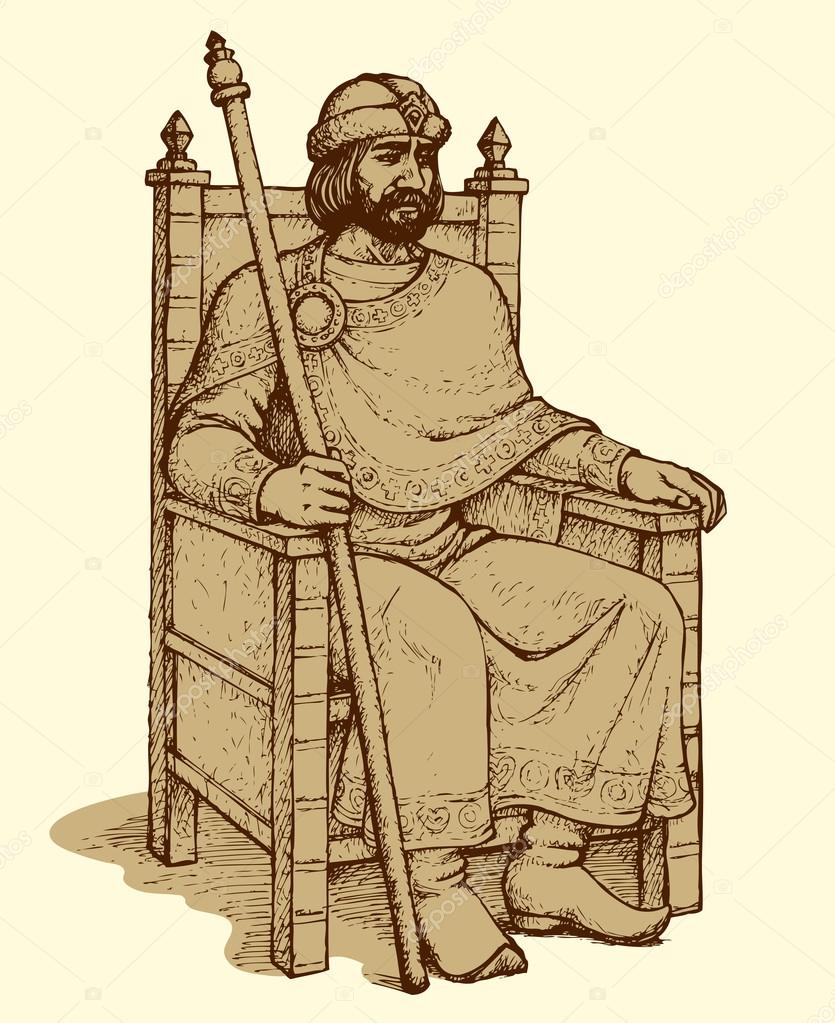
Most people honestly believe that we have left the feudal system behind us, though I cannot imagine why they believe this. They are correct only in the respect that the economics have changed and feudalism was not just one system, but many different systems in many different places.
We no longer have kings; we have presidents and prime ministers. These rulers are often elected to office, yet the system is set up so that the same principal families still rule the vast majority of the wealth in the world. Democratization has diminished the power of the elite, but only superficially. Lower classes may now join the elite in principle, but that is not something new, as rising from the ranks has been accepted for millennia.
We are still a world of lords and ladies. We still call our owners of land “landlords.” Lenders administer over the estates, both directly and with agents acting in their behalf. The sheriff still handles the land disputes and tenant problems. The vast majority of apartment dwellers and tenants of commercial buildings are still peasants, though we refuse to call them such. Their living conditions have improved dramatically, but their rights and social status have improved little.
Most of us are at the mercy of our respective lords for employment, a human condition equal to the right to work the land. Those of us who are self-employed enjoy a freeman status, often mixed with the duties of the lord. The retailers around us are still shopkeepers, but the trend is toward a mass merchandising economy that reduces the status of the in- dependent retailer to a managerial occupation, more akin to being man-servant to the lord. That lord, in turn, owes allegiance to a higher duke. Eventually, the money flows back to the lenders, who maintain a form of control through governmental policy and free market control.
Those of us who are talented or highly educated have become the modern versions of scholars and artists. Endowments from governmental and private sources still allow the caretakers of the wealth to control the direction of research and artistic expression.
We have a tendency to create kings and queens whenever the position is vacant. We refer to John Wayne as “the Duke”, giving his imaginary roles a place in our reality that was once taken by a noble warrior or knight.
The fact that he never lived any of his screen exploit does not diminish our need to believe in such a hero. The need for heroes is innately human, as ancient as the race itself.
Likewise, the need for kings and queens is a human condition. If the political system does not bring them forth, we crown heroes, actors, athletes, and entertainers. For a brief time in the early 1960’s, America had three kings––John Kennedy, Martin Luther King and Elvis Presley. All had varying degrees of popularity and none were popular to all the population, but there is little point in denying that they were treated and referred to as “kings”. Everyone who lived in the 1960’s remembers Camelot.
The very act of enthronement changes the person who ascends the throne. Responsibility is a heavy cloak that wears the one who wears it. People of strong vision and personality, people capable of setting a course for the future, have always been plentiful. Each of us play our own role in this drama each day of our lives. Yet, great world shapers are swept by the tides of the time. Their importance is judged by future standards, in the light of yet another time.
Historical novels, romances, and science fiction combine to tell us that our human condition is essentially the same in any age. Jean Aul points to the basic humanity of the tribes soon after the Ice Age in her novels about “Earth’s Children”, Robert Heinlein divides parallel universes with different time lines where the details of historical events can differ in each universe. Other dreamers project their fantasies far into the future, but the basic humanity of the characters differs little from the projected future, to the present, back again to the ice-age brother.
Our self consciousness itself, in itself, sets were us apart from any other living thing, we all do little but pass time in many different ways. This flowering makes us individual, each one of us passing time differently, creating many diverse and individual legacies in our wakes. Thus, we create riches and distinctions, and these creations lead us to then illusory belief that we are important.
Our nature requires us to feel that we are important, despite massive evidence to the contrary. Each of is feel that we are right. Each of us need a positive self image to function in the world, even those of us who have committed heinous acts. We find ways to rationalize and excuse out behaviors to hat we may accept ourselves.
We stratify like rocks. We cling to one another. We combine like chemical reaction to produce yet another wonder. We build out neighborhoods like natural elements pooling into deposits. We seek out status like liquid gold pressed into veins.
The judgments of one era may be reprehensible to another. When we socially ban slavery and then continue to discriminate against the new class, we create a large class of the disenfranchised. We seem to often trade one form of slavery for another. We condemn genocide and the political systems that have used it, but we are often helpless to prevent its recurrence.
The passing of power and the combining of age are seldom smooth transitions. We see small examples of this in the conflict of the generations. Nature devises adolescent rebellion and discontent so that the species may propagate in different locales.We, like the beavers who build the dams, pride ourselves for learning to tame and harness the forces or nature. We prosper when we make nature work for our own ends. Often, we think of ourselves as a species that has risen above nature to a position of empowerment and control, but more and more we are learning that these are only the delusions of a lesser god.
In fact, we are rooted in nature and we are but a small part of it. Our cities have become a part of the natural landscape. Our smog has become a part of the environment. Our polluted waters have become a part of the natural setting, and our mastery over other forms of life has changed the ecosystem. We are possessed by nature and have, in turn, changes our possessor.
 Kenneth Harper Finton
No other animals exhibit the hierarchical power structure we repeatedly create. Is there really any other way to operate at such sophistication and scale without it?
LikeLike
Still people everywhere are aware to their basic rights. Even in absolutely dictatorships. Civil disasters brought civil rights laws. What we need is to be free and with basic rights to have protected good life. Everyone including nature by a constitution.
LikeLike