“You Ain’t Goin’ Nowhere” by Bob Dylan

  • The likely influence on this song was Dylan’s 1967 motorcycle accident, which severely limited his mobility. The song was recorded in the basement of a house where members of The Band lived, and played with Dylan while he experimented with new sounds. The Basement Tapes album was not officially released until 1975, but the songs were circulated and this one drew the attention of The Byrds, who released it on their 1968 album Sweetheart of the Rodeo. (thanks, Tom – Marble Falls, AR)
  • The Byrds released “You Ain’t Going Nowhere” as the first single off the album peaking at #45 in the US and #74 in the UK.


“You Ain’t Goin’ Nowhere”

-Bob Dylan

Clouds so swift
Rain won’t lift
Gate won’t close
Railings froze
Get your mind of wintertime
You ain’t goin’ nowhere
Whoo-ee ride me high
Tomorrow’s the day
My bride’s gonna come
Oh, oh, are we gonna fly
Down in the easy chair !I don’t care
How many letters they sent
Morning came and morning went
Pick up your money
And pack up your tent
You ain’t goin’ nowhere
Whoo-ee ride me high
Tomorrow’s the day
My bride’s gonna come
Oh, oh, are we gonna fly
Down in the easy chair !

Buy me a flute
And a gun that shoots
Tailgates some substitutes
Strap yourself
To the tree with roots
You ain’t goin’ nowhere
Whoo-ee ride me high
Tomorrow’s the day
My bride’s gonna come
Oh, oh, are we gonna fly
Down in the easy chair !Genghis Khan
He could not keep
All his kings
Supplied with sleep
We’ll climb that hill no matter how steep
When we come up to it
Whoo-ee ride me high
Tomorrow’s the day
My bride’s gonna come
Oh, oh, are we gonna fly
Down in the easy chair !

“My Back Pages” – Bob Dylan

My Back Pages” is a song written by Bob Dylan and included on his 1964 album Another Side of Bob Dylan. It is stylistically similar to his earlier folk protest songs and features Dylan’s voice with an acoustic guitar accompaniment. However, its lyrics—in particular the refrain “Ah, but I was so much older then/I’m younger than that now”—have been interpreted as a rejection of Dylan’s earlier personal and political idealism, illustrating his growing disillusionment with the 1960’s folk protest movement with which he was associated, and his desire to move in a new direction. Although Dylan wrote the song in 1964, he did not perform it live until 1978.

Bob Dylan wrote “My Back Pages” in 1964 as one of the last songs—perhaps the last song—composed for his Another Side of Bob Dylan album.[1] He recorded it on June 9, 1964, under the working title of “Ancient Memories”, the last song committed to tape for the album.[1] The song was partly based on the traditional folk song “Young But Growing[1] and has a mournful melody similar to that of “The Lonesome Death of Hattie Carroll” from Dylan’s previous album, The Times They Are a-Changin’.[2] As with the other songs on Another Side, Dylan is the sole musician on “My Back Pages” and plays in a style similar to his previous protest songs, with a sneering, rough-edged voice and a hard-strumming acoustic guitar accompaniment.[3][4]

In the song’s lyrics, Dylan criticizes himself for having been certain that he knew everything and apologizes for his previous political preaching, noting that he has become his own enemy “in the instant that I preach.”[2][5][6] Dylan questions whether one can really distinguish between right and wrong, and even questions the desirability of the principle of equality.[7] The lyrics also signal Dylan’s disillusionment with the 1960s protest movement and his intention to abandon protest songwriting.[5][6][8] The song effectively analogizes the protest movement to the establishment it is trying to overturn,[4] concluding with the refrain:

Ah, but I was so much older then
I’m younger than that now

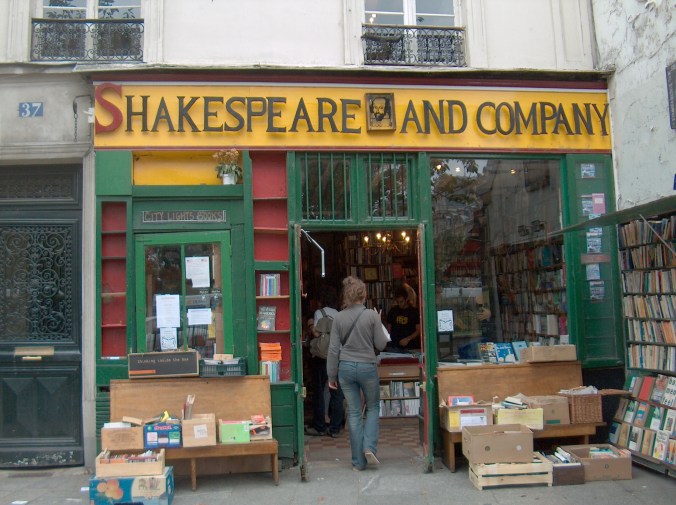
TWO PARIS BOOKSTORES CALLED SHAKESPEARE AND COMPANY


Book Store

Photo by Ken Finton -October 2004, Paris


SHAKESPEARE AND COMPANY: THE BOOKSTORE THAT KEEPS PROGRESSIVE LITERATURE ALIVE

This ramshackle bookstore in Paris has kept the beat of history. 

The store was the center of Anglo-American literary culture and modernism in Paris until World War II.  Writers and artists of the “Lost Generation,” including Ernest Hemingway, Ezra Pound, F. Scott Fitzgerald, Gertrude Stein, George Antheil and Man Ray, among others, spent a great deal of time there. The shop was nicknamed “Stratford-on-Odéon” by James Joyce, who used it as his office.

Shakespeare and Company is the name of two independent bookstores that have existed on Paris’s Left BankSOURCE: 

The first was opened by Sylvia Beach on November 19, 1919, at 8 rue Dupuytren, before moving to larger premises at 12 rue de l’Odéon in the 6th arrondissement in 1922.[1] During the 1920s, Beach’s shop was a gathering place for many then-aspiring young writers such as Ezra Pound, Ernest Hemingway, James Joyce and Ford Madox Ford.[1] It closed in 1940 during the German occupation of Paris and never re-opened.[2] 
 

Beach8Small

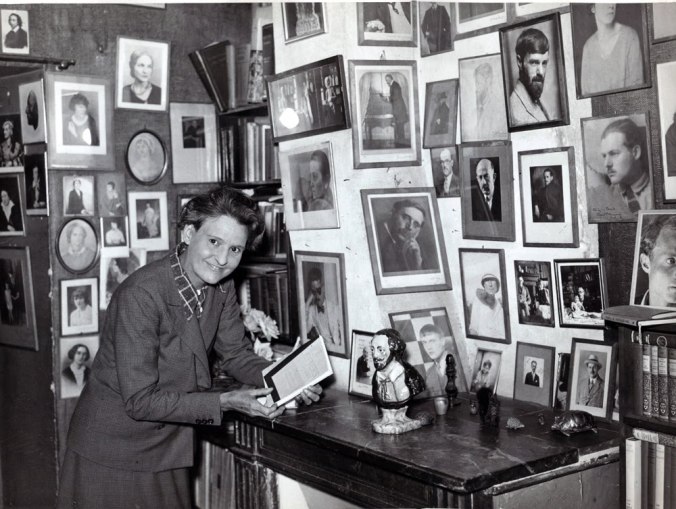
Sylvia Beach at the original Paris store

The second is situated at 37 rue de la Bûcherie, in the 5th arrondissement. Opened in 1951 by George Whitman, it was originally named “Le Mistral”, but was renamed to “Shakespeare and Company” in 1964 in tribute to Sylvia Beach’s store.[3] Today, it serves both as a regular bookstore, a second-hand books store, and as a reading library, specializing in English-language literature.[4] The shop has become a popular tourist attraction,[4][5] and was featured in the Richard Linklater film Before Sunset, and in Woody Allen‘s Midnight in Paris.[6]

Sylvia Beach, the founder, was an American expatriate from New Jersey. She established Shakespeare and Company in 1919 at 8 rue Dupuytren. The store functioned as a lending library as well as a bookstore.[7] In 1921, Beach moved it to a larger location at 12 rue de l’Odéon, where it remained until 1940.[1] During this period, the store was the center of Anglo-American literary culture and modernism in Paris. Writers and artists of the “Lost Generation,” including Ernest Hemingway, Ezra Pound, F. Scott Fitzgerald, Gertrude Stein, George Antheil and Man Ray, among others, spent a great deal of time there, and the shop was nicknamed “Stratford-on-Odéon” by James Joyce, who used it as his office.[8]

The books sold were considered high quality, reflected from Beach’s own taste. Hemingway mentions and writes about the denizens found about the store in A Moveable Feast.

Patrons could buy or borrow books like D. H. Lawrence’s controversial Lady Chatterley’s Lover, which had been banned in Britain and the United States.

Beach published Joyce’s controversial book Ulysses in 1922. It, too, was banned in the United States and Britain. Later editions were also published under the Shakespeare and Company imprint.[9] She also encouraged the publication in 1923, and sold copies of Hemingway’s first book, Three Stories and Ten Poems.[10]
Shakespeare_and_Company_bookshop

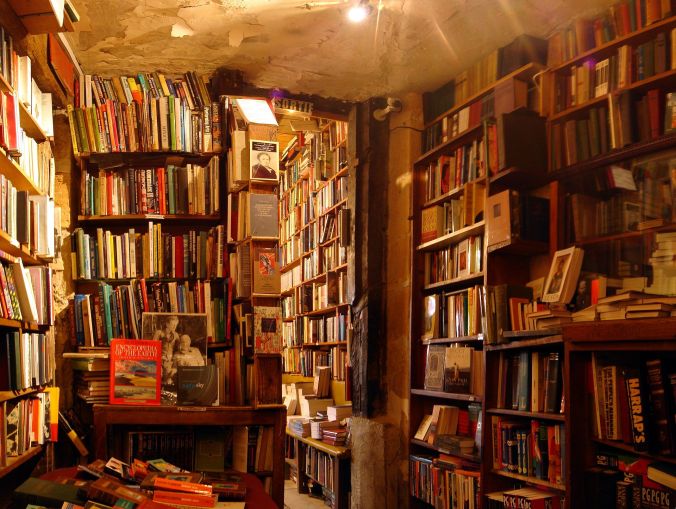
Interior of original store

The original Shakespeare and Company closed on 14 June 1940, during the German occupation of France in World War II.[2] It has been suggested that it may have been ordered shut because Beach denied a German officer the last copy of Joyce’s Finnegans Wake.[11] When the war ended, Hemingway “personally liberated” the store, but it never re-opened.[12]

George Whitman’s Bookstore

In 1951, another English-language bookstore was opened on Paris’s Left Bank by American ex-serviceman George Whitman, under the name of Le Mistral. Its premises, the site of a 16th-century monastery,[13] are at 37 rue de la Bûcherie, near Place Saint-Michel, just steps from the Seine, Notre Dame and the Île de la Cité.[13] Much like Shakespeare and Company, the store became the focal point of literary culture in bohemian Paris, and was frequented by many Beat Generation writers including Allen Ginsberg, Gregory Corso, and William S. Burroughs.[13] Whitman modeled his shop after Sylvia Beach’s and, in 1958 while dining with George, she publicly  announced that she was handing the name to him for his bookshop.[14]

In 1964, after Sylvia Beach’s death, Whitman renamed his store “Shakespeare and Company” in tribute to the original, describing the name as “a novel in three words”.[3] He called the venture “a socialist utopia masquerading as a bookstore”.[15] Customers have included the likes of Henry Miller, Anaïs Nin, and Richard Wright. The bookstore has sleeping facilities and Whitman claimed that as many as 40,000 people have slept there over the years.[15]

 

whitman's store

Store exterior in 1950s

From 1978-1981, a group of American and Canadian expatriates ran a literary journal out of the upstairs library, called Paris Voices. The journal published young writers such as Welsh poet Tony Curtis and Irish playwright and novelist Sebastian Barry. The editor-in-chief was Kenneth R. Timmerman and the editorial team included Canadian Antanas Sileika, among others. Timmerman became a novelist and political writer in the USA and Sileika a Canadian novelist. The journal hosted readings that attracted aspiring literary travelers as well as a scattering of voices from the past such as Beat poet Ted Joans and journalist Jack Belden.
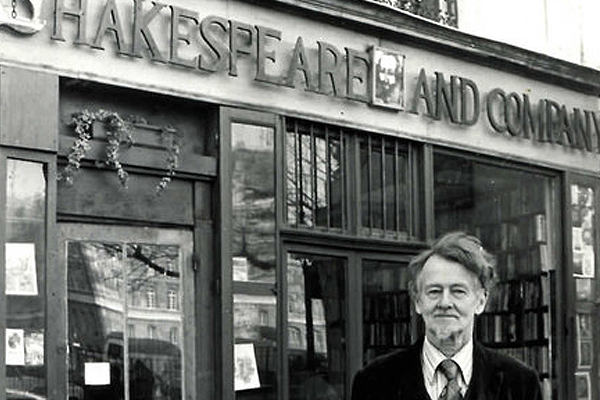
whitman_rect

George Whitman at his store

Awarded the Officier de l’Ordre des Arts et des Lettres in 2006, one of France’s highest cultural honors,[16] George Whitman died at the age of 98 on 14 December 2011.[17] His daughter Sylvia Beach Whitman, named after Sylvia Beach, joined him at the bookstore in 2006 after living for 10 years in London and Edinburgh with her mother. She began revamping the store and the rooms for writers. The marketing plan included sponsored events along with university students invited as writer-in-residence.[16] She now runs the store in the same manner as her father, allowing young writers to live and work there.[18] Regular activities are Sunday tea, poetry readings and writers’ meetings.[18] In 2008 she founded FestivalandCo, a literary festival held biennially at the shop and which has hosted Paul Auster, Siri Hustvedt, Jeanette Winterson, Jung Chang and Marjane Satrapi.[19][18] She appeared in the Paris episodes of The Late Late Show with Craig Ferguson which aired on 1 August 2011.[4][20][21]

The bookstore was a sanctuary for some twenty of its customers during the November 2015 Paris attacks.[22][23]

The four Shakespeare and Company bookstores in New York City, which opened starting in 1981, are not affiliated with the Paris store.


THE NEW OWNER OF SHAKESPEARE AND COMPANY

http://www.francetoday.com/articles/2012/05/20/shakespeare_company_turning_the_page.html

SHAKESPEARE & COMPANY: TURNING THE PAGE

by Kate McBride

May 20, 2012
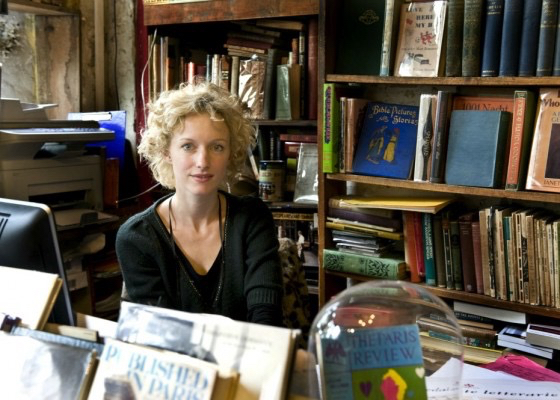
 

SYVIA BEACH WHITMAN

Sylvia Beach Whitman after taking over her father’s store in 2011.


The view from the front window of the ramshackle bookstore looks out past a few trees to the river Seine and beyond to Notre Dame, towering high on the Ile de la Cité. No. 37 rue de la Bûcherie is home to Shakespeare & Company, a Parisian writers’ and readers’ institution whose longtime owner, American-born George Whitman, lived in a third-floor apartment above the shop until his death last December. Before George, the neighborhood, one of the oldest in Paris, was occupied by a monaster

According to George, the name and the spirit of Shakespeare & Company were given to him in 1958 by Sylvia Beach, the owner of the original Paris bookstore of that name. Opened in 1919, Beach’s store moved to 12 rue de l’Odéon in 1921, where it became the center of Anglo-American literary life in Paris, a favorite haunt of Hemingway, Fitzgerald, Gertrude Stein, James Joyce and many others. Forced to close the store during World War II, Beach never reopened it.

Several years later Beach announced she would pass on the name (and spirit) during a reading by Lawrence Durrell at the bookstore George Whitman had opened in 1951, at the time called Le Mistral.

Beach and Whitman shared a belief in operating their businesses as lending libraries as well as retail bookshops, providing a place for authors and poets to congregate and present their work, and even a place for them to sleep and eat. Beach died in 1962. According to Whitman, in her will she left a number of books from her private collection to him, and the legal rights to the name Shakespeare & Company. When his only daughter was born in 1981, Whitman named her Sylvia Beach Whitman—when you meet Sylvia Beach II today, it feels as though nothing has changed within the literary landscape of Paris.

Whitman was married once, briefly, to Sylvia’s mother, Felicity Leng. Sylvia grew up mostly in England, and attended University College London. Almost ten years ago, at the age of 22, she assumed management of her father’s business and revitalized what had become an endangered institution.

According to George, in anticipation of his death, developers were trying to buy every apartment they could in the bookstore’s building. Their intention was to turn the building into condominium apartments that could boast a view of Notre Dame. Sylvia Whitman now owns the bookstore space and several other apartments in the building, including the one on the third floor. She purchased another space next door in 2009 and, rumor has it, a café may open there. The developers are in retreat for the moment.

My photographer husband James and I were newcomers to Whitman’s Shakespeare & Company on our first visit in the winter of 2003. James asked George about the possibility of shooting his portrait but, said George, the timing wasn’t right—he was busy tending the till. On subsequent visits, he was either asleep, grumpy or out somewhere. In February of 2007 we happened to see him leaning out the third-floor window, looking across at Notre Dame. James took a quick snap to record the lucky moment and tried to satisfy his desire to photograph George by shooting other inhabitants of the bookstore including Jonathan, a brainy young kid from Ireland who would soon be on his way to study at Oxford after living at “S & Co” for a time.

Hotel Tumbleweed

People still live at the store today. Moments after closing time at 11 pm, the residents move piles of books aside and sleep on makeshift beds that double as book display platforms during the day. Under Sylvia’s management, the tradition continues at the “Hotel Tumbleweed”, George’s nickname for the overnight operations.

The general rule is that you are allowed to sleep in the store if you are a writer, though we understood from George that he sometimes stretched the term to include musicians, artists and young women. The first step toward entry was to show George your manuscript, write a short autobiography and, if he approved, you were in rent-free, in exchange for working the check-out desk, re-shelving books, cleaning and errand-running.

When we first met Sylvia, she told us she was intent on keeping the eclectically cluttered place intact, except for some welcome changes including regular cleaning, the opening of the normally closed “collectibles” branch next door and the installation of a cash register to replace the disconcerting rounding off that occurred due to sales being tallied in someone’s head. (To note, the rounding off was always down to keep customers happy.) Today paying with a credit card is perfectly acceptable. Sylvia also reluctantly gave in to the city’s mandate to replace the rickety staircase that led to the second floor lending library and children’s area with one that met city building codes.

A Moses Moment

On a visit to Paris in 2008, James and I made our usual stop at S & Co to get the weather report on George. Shooting a portrait that morning was a no-go, but Sylvia suggested we try coming back after lunch. We returned around 2:30, with our young friend Josh along to help, just in time to see Sylvia leading George into the stairwell for his daily journey up the three winding flights. When she returned to the store, James asked her what she thought about the possibility of taking some pictures, and she said, “Sure, give it a try, the door’s open, just go on in”.

James was reluctant to open George’s door when he didn’t answer to our knock, but in we went, introducing ourselves. George responded by asking James “Have I read you?”, making the assumption he was a writer. James said “No, but I’d like to shoot you”. George rose to his feet from his small bench-like perch, where he was working on a plate of leftover chicken kept warm by a metal-can contraption placed over a Bunsen burner. He proclaimed in a commanding voice: “OK, let’s get it over with! Should I change?” He was wearing a baggy pair of pajamas. We agreed that, “No, it’s not necessary,” and helped George settle in at the front window alcove, where a small table and two chairs neatly fit.

George seemed happy to be having his photo taken, gazing out the window toward Notre Dame, chin held high, looking like Moses with his electrified hair and deep grooves in his face. We almost expected him to bellow out the Ten Commandments—although, we imagined, George might sport his own unique version, including “Read a book a day”. Minutes into the shoot he generously told us, “You can sleep here if you want”. Later, Jemma, one of the bookstore attendants we’d come to know, said she thought he was probably speaking only to me, not James and Josh.

I considered my chance to sleep in the bed where, George claimed, “the poet Lawrence Ferlinghetti sleeps when he visits every year”. I asked George if Larry Ferly (as Julia Child claimed he was called when she met him in 1948) was planning a trip over any day soon. “Yes, next month,” he said. “We’re having a contest to see who can outlive the other and I’m winning.”

Twinkling eye

George was five years older than Ferlinghetti. The two nurtured a number of connections between their respective bookstores. Ferlinghetti’s City Lights in San Francisco opened in 1953, two years after S & Co. At the time, S & Co was still Le Mistral, named, said George, in honor of “the first girl I ever fell in love with”, whom he met shortly after he arrived in Paris in 1948 to study at the Sorbonne on the G.I. Bill. A book series published by Ferlinghetti’s City Lights is carried at S & Co, and the staff at both refer to themselves as “sister bookstores”. Ginsberg and other beat poets performed often at S & Co starting in the early 1960s. Not long ago, Ferlinghetti read from a new collection of his work to a standing-room-only crowd that spilled out into the street.

With the portrait of George in the can and the light fading, we sensed his energy for the camera was exhausted so we packed up and left, promising to come back soon. Downstairs, Sylvia seemed happy that it had finally worked out. We asked about her plans for the bookstore and she told us she intended to turn her attention to publishing, once the computer system was running smoothly and the inventory completed. We bought a first UK hardcover edition of James Thurber’s Further Fables For Our Time from the collectibles section.

Subsequent shoots found George more and more often confined to his apartment but still spirited in conversation. On one visit, we brought our daughter Madison and her friend Nettika. Living up to his reputation, George was immediately drawn to the young women. In an interview with the British newspaper The Independent he was once quoted as saying, “I created this bookstore like a man would write a novel. And the girls who come in here are coming into a novel.” George informed us with a twinkle in his eye, that “the day I turn 100, I’m retiring”.

Remarkably, George almost made it to age 100, falling just two years short when he died on December 14, 2011, two days after his 98th birthday. He spent his last days at home, surrounded by photos of his friends, with his black dog Colette and his white cat Kitty by his side. Regal in exquisite deep purple silk pajamas, he sat propped up against red and lavender pillows covered by a paisley quilt, with his daughter close by providing all the happiness he could want. She read to him daily, satisfying his voracious desire to read “a book a day”—a recommendation he made to all the inhabitants of Hotel Tumbleweed. From his third floor retreat, George could listen to the voices of new authors reading their works, musicians playing their original music and the bells of Notre Dame wafting in. He is buried in Père Lachaise cemetery.

Under Sylvia, Shakespeare & Company’s renaissance is now in full swing. Readings, workshops and music events are regularly scheduled. She’s launched S & Co’s Paris Literary Prize, a €10,000 award for a novella by an unpublished author. And since 2003, four glittering festivals have begun to attract galaxies of international literary stars back to Shakespeare’s little shop on the Seine.

37 rue de la Bûcherie, 5th, 01.43.25.40.93. 

www.shakespeareandcompany.com

Turning the Page was originally published in the April 2012 issue of France Today

IS CHLORAMINE IN YOUR TAP WATER?

-Compiled by Kenneth Harper Finton

corroded pipe

A corroded pipe, as a result of chloramine,  leaches lead and other materials into the water.

The water crisis in Flint, Michigan has illuminated a potential nationwide crisis, as the chemicals that they used corroded the pipes was chloramine which leached lead out of the old pipes and caused an emergency situation in Flint. But Flint is not the only city that uses this dangerous chemical. One in five Americans are bathing with and drinking water polluted intentionally with chloramine. SOURCE

Before Flint, there was a lead scare in Washington, D.C. in 2004. The city’s tap water contained as much as 30 times the acceptable levels of lead. The explanation for that increase is that Washington’s water treatment facilities began disinfecting water with chloramine instead of chlorine. Chloramine is the compound  that causes the pipes to leach lead into the water supply. It is a compound of chlorine and ammonia that is easier to handle and much more stable than chlorine. It is also cheaper. Chloramine is now used in about 20% of the American drinking water systems.

Chloramide Nation

Refrigerator filters, pitcher (carafe) filters, and faucet attachment filters do not work with chloramine. They deteriorate at a rapid rate and due to their lack of contact time, cannot effectively remove dissolved lead, or chloramine and its toxic byproducts from your tap water. SOURCE:

In January 2011, NPR ran an exposé on the water treatments systems across the United States.

Sometimes solving one problem leads to even more serious problems. Chlorine is used to disinfect our drinking water by killing the living organisms from the water. It has been used for over a century but it leaves toxic by-products.

 “…One of the biggest unintended consequences of adding chlorine to water was that it reacts with some of the organic matter in the water to produce carcinogenic by-products,” says David Sedlak, of the Department of Civil and Environmental Engineering at the University of California, Berkeley.

Reports from several sources, including the Science Journal, report “The Chlorine Dilemma,” have shown that chloramine also has significant risks.

Chloramine does not produce the same by-products as chlorine. It does produce its own toxins, including chemicals called nitrosamines.

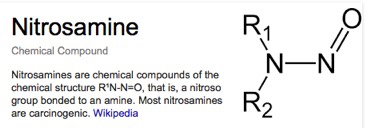
Nitrosamone Nitrosamines are chemical compounds of the chemical structure R¹N-N=O, that is, a nitroso group bonded to an amine. Most nitrosamines are carcinogenic. Wikipedia

 

CHLORAMINE – WHAT IS IT AND HOW DO YOU REMOVE IT?

If desired, chloramine and ammonia can be completely removed from the water by boiling; however, it will take 20 minutes of gentle boil to do that. Just a short boil of water to prepare tea or coffee removes about 30% of chloramine. Conversely, chlorine was not as consistently removed by boiling in SFPUC tests. Jun 29, 2013

Chloramine is a compound of chlorine and ammonia and is fast becoming a familiar substance in our water. It is being used in place of chlorine to disinfect city water in over 22% of American municipal water treatment facilities and the number is growing.

Here is what you must know about chloramine and the problems associated with it:

  • Mixing chlorine and ammonia results is a dangerous chemical called monochloramine. It is a toxic nerve gas and is very irritating to the skin and mucous membranes. This is what is being used in municipal water systems to disinfect the water we use to drink, bathe, shower, and cook.
  • Chloramine does not dissipate from water like chlorine does. If you let chlorinated water sit for 30-60 minutes, it will dissipate from the standing water (though it will still leave behind toxic byproducts and VOCs). When you shower, chlorine and chloramine both release into the air and you inhale it, causing irritation the lungs, throat, and eyes. People who suffer from asthma, upper respiratory issues, and cystic fibrosis cannot afford to be inhaling these chemicals.
  • Chloramine has been linked to several health concerns, including gastrointestinal irritation and skin disorders (i.e. eczema, dermatitis, psoriasis). Those who shower and bathe in filtered water exhibit relief from these issues.
  • Chloramine produces by-products known as nitrosodimethylamines (NDMA’s) that may be more carcinogenic than their predecessors (nitrates/nitrites).
  • Chloramine cannot be removed by typical water treatment technique. All sink attachment gadgets, refrigerator filters, and pitcher filters are useless for filtering out chloramines. Chloramine requires special filtration media.
  • Chloramine can cause genetic damage in mammals, including human beings (keep reading below for more information).

In addition, a study conducted by the University of Illinois in 2004 demonstrates that a by-product of the chloramination of drinking water known as iodoacids (eye-o-doe-acids) may be the most toxic ever found in drinking water. The concern is the genetic damage they can cause in mammals (including humans) that drink chloraminated water, but also the fact that these dangerous chemicals are being released back into the environment where fish, wildlife, and the food chain can be harmed.

Like chlorine, chloramine is designed to kill pathogenic organisms by penetrating their cell walls and membranes and disrupting their metabolism. Chloramines are much slower to react so they are not as effective. Unlike chlorine, they do not evaporate from water, nor are they removed by typical water treatment techniques. The only resolution is to move somewhere else, drill your own well, or get an effective filter made specifically for removing chloramine from your drinking and showering water.

Ascorbic acid and sodium ascorbate completely neutralize both chlorine and chloramine, but degrade in a day or two, which makes them usable only for short-term applications. SFPUC determined that 1000 mg of Vitamin C tablets, crushed and mixed in with bath water, completely remove chloramine in a medium-size bathtub without significantly depressing pH.

Chloramine is more difficult to remove from drinking water than chlorine. Chlorine is easily removed from water just by boiling, which means that there will be no chlorine in hot drinks like tea or coffee, nor in cooked food. However, unlike chlorine, chloramine is not fully removed by boiling water, and carbon filters are not good at removing chloramine either.

Fortunately, there is a very simple method to remove chloramine from drinking water: just by adding vitamin C. SOURCE

You only need a very small amount of vitamin C to completely neutralize the chloramine in your drinking water: around 10 mg (0.01 grams) of vitamin C will neutralize all the chloramine in one liter of water.


WHAT DOES THE EPA SAY ABOUT CHLORAMINES?

Chloramine

Recently San Francisco Public Utility Commision (SFPUC) changed from using free chlorine to chloramine in its drinking water transmission pipes. Some people are concerned for possible public health implications and for reported effects on fish and amphibians.

Using chloramine to disinfect drinking water is a common standard practice among drinking water utilities. A number of utilities have made this switch from chlorine to chloramines to enhance water safety and compliance with drinking water health standards. For example, the East Bay Municipal Utility District (EBMUD), which serves drinking water to customers in parts of the greater San Francisco Bay area, switched from chlorine to using chloramine in February, 1998.

Background information on chloramines

Chlorine has been safely used for more than 100 years for disinfection of drinking water to protect public health from diseases which are caused by bacteria, viruses and other disease causing organisms. Chloramines, the monochloramine form in particular, have also been used as a disinfectant since the 1930’s. Chloramines are produced by combining chlorine and ammonia. While obviously toxic at high levels, neither pose health concerns to humans at the levels used for drinking water disinfection.

Chloramines are weaker disinfectants than chlorine, but are more stable, thus extending disinfectant benefits throughout a water utility’s distribution system. They are not used as the primary disinfectant for your water. Chloramines are used for maintaining a disinfectant residual in the distribution system so that disinfected drinking water is kept safe. Chloramine can also provide the following benefits:

•Since chloramines are not as reactive as chlorine with organic material in water, they produce substantially lower concentrations of disinfection byproducts in the distribution system. Some disinfection byproducts, such as the trihalomethanes (THMs) and haloacetic acids (HAAs), may have adverse health effects at high levels. These disinfection byproducts are closely regulated by EPA. EPA recently reduced the allowable Maximum Contaminant Levels for total THMs to 80 ug/L and now limit HAAs to 60 ug/L. The use of chlorine and chloramines is also regulated by the EPA. We have Maximum Residual Disinfectant Levels of 4.0 mg/L for both these disinfectants. However, our concern is not from their toxicity, but to assure adequate control of the disinfection byproducts.

•Because the chloramine residual is more stable and longer lasting than free chlorine, it provides better protection against bacterial regrowth in systems with large storage tanks and dead-end water mains.

•Chloramine, like chlorine, is effective in controlling biofilm, which is a slime coating in the pipe caused by bacteria. Controlling biofilms also tends to reduce coliform bacteria concentrations and biofilm-induced corrosion of pipes.

•Because chloramine does not tend to react with organic compounds, many systems will experience less incidence of taste and odor complaints when using chloramine.

Other concerns with chloramines in drinking water

Chloramines, like chlorine, are toxic to fish and amphibians at levels used for drinking water. Unlike chlorine, chloramines do not rapidly dissipate on standing. Neither do they dissipate by boiling. Fish owners must neutralize or remove chloramines from water used in aquariums or ponds. Treatment products are readily available at aquarium supply stores. Chloramines react with certain types of rubber hoses and gaskets, such as those on washing machines and hot water heaters. Black or greasy particles may appear as these materials degrade. Replacement materials are commonly available at hardware and plumber supply stores.


WHAT IS THE TRUTH ABOUT CHLORAMINE IN TAP WATER?


Erin Brockovich

Chloramination of Drinking Water 

by Erin Brockovich

October 2010

Water utilities across the country are changing the way they treat our drinking water. They’re switching from chlorine, the primary disinfectant used in drinking water systems for over a hundred years, to the alternative disinfectant chloramine at an alarming rate. But are they making a sound, informed decision? What are the health effects? Where are the studies to help us understand the impacts to our health and infrastructure?

The fact of the matter is chloramines are a terrible mistake. While utility companies often use chloramines as a matter of convenience, there are far safer alternatives. As a world-leading nation, we have to stop cutting corners where our health and safety are at stake.

Historically, drinking water disinfection with chlorine has been extremely successful in addressing bacterial and viral contamination. It has virtually wiped out waterborne diseases like typhoid fever, cholera, and dysentery. However, chlorine disinfection may also cause health risks. When chlorine is added to the water, it not only kills bacteria and viruses, but it also reacts with other chemicals dissolved in the water to form new compounds, known as disinfection byproducts. Some of these byproducts, such as trihalomethanes, are thought to cause cancer and pose other long-term health risks.

Chloramine, on the other hand, is a combination of chlorine and ammonia. While chlorine dissipates and evaporates into the air relatively quickly, chloramine is more stable and will last longer in the water system. The goal is to provide increased protection from bacterial contamination. Chloramine also happens to be the cheapest and easiest of the options available to water utilities. Yet even though the use of chloramine is convenient, it may not be safe.

Studies indicate chloramine causes more rapid deterioration of the municipal infrastructure and degradation of valves and fittings. In water systems that still use lead pipes or components, this causes lead and other metals to leach into drinking water and out of faucets and showerheads. The chemicals themselves may not cost much, but we can’t afford their consequences.

On top of all these infrastructure and health problems associated with chloramine use, there is growing evidence that chloramine forms toxic byproducts as it disinfects. This also occurs with the use of chlorine, but recent studies indicate the formation of toxic byproducts in drinking water may be higher when utilities use chloramines. These studies also indicate that chloramine causes more dangerous byproducts than other treatment alternatives, such as ozone or chlorine dioxide.

Disinfection byproducts are created when the compounds used for disinfecting drinking water react with natural organic matter, bromide, or iodide. Research shows that the byproducts are highly toxic to mammalian cells like ours, and they’re known to affect cells’ genetic material, which can cause mutation or cancer. In studies, some of these byproducts, such as iodoacetic acid, have been shown to cause developmental abnormalities in mouse embryos. Other byproducts of chloramine use include the highly toxic human carcinogens hydrazine and N-nitrosodimethylamine (NDMA). Hydrazine is the primary ingredient in rocket fuel and is extremely toxic at very low levels in drinking water. NDMA is also a chemical used in the manufacture of rocket fuels. Both chemicals are a result of the chloramine’s combination of ammonia and chlorine, a potentially deadly cocktail.

Amazingly, it’s not even clear that chloramine’s benefits are worth these risks. Chloramine is 200 times less effective than chlorine in killing e-coli bacteria, rotaviruses, and polio.

How many times do we have to hear water utilities complain that the EPA is making them adopt chloramines? This is not the truth. Time and time again, water utilities shift the blame from themselves and take the easy way out, pointing to some higher authority as responsible.

These utility companies are blaming chloramines adoption on the EPA Stage I and Stage II Disinfectants and Disinfection By-Products Rule (DBPR), which has been actively negotiated since 1992. These rules tighten drinking water regulations, requiring utilities to provide their customers with cleaner, safer drinking water. To support the science behind these regulations, well over $100 million in research has been conducted to better define the risks from microbial pathogens and disinfection byproducts.

The Stage II DBPR and the Long Term Enhanced Surface Water Treatment Rule are the second phase of rules required by Congress. Set to take effect in 2012, these rules strengthen protection against microbial contaminants and aim to reduce dangerous disinfection byproducts. The rule targets water systems with the greatest risk and builds incrementally on existing rules. Under the Stage II DBPR, systems will conduct an evaluation of their distribution systems to identify the locations with high disinfection byproduct concentrations. These locations will then be used as the sampling sites for Stage II DBPR compliance monitoring.

Utility companies are concerned that these new regulations are too expensive. To cut costs, many are choosing to adopt chloramine treatment. It’s the cheapest way of meeting the EPA’s new regulations, but it’s one of the most dangerous ways of getting the job done.

There are several alternatives recommended by the EPA that do not involve adding more chemicals to our drinking water. All of the alternatives involve removing organic contaminants through enhanced coagulation or sedimentation, filtration, or carbon adsorption. Within those three areas of treatment, there are scores of readily available, real-world applicable options. Alternative disinfectants, such as ozone and chlorine dioxide, are better, but they too can cause the formation of other byproducts. All this demonstrates the need to effectively remove the bad stuff in our drinking water rather than trying to merely treat it with chemicals.

Collectively, we can stop the poisoning of our drinking water supplies. Speak up, and tell your water utilities, state officials, and the EPA, “We are informed, we understand the issue, and we do not want you to continue contaminating our water supplies.”  Cite the Cincinnati’s experience with granular activated carbon (GAC) as an alternative.

In December 1978, Richard Miller became director of Greater Cincinnati Water Works, home to the EPA Research Center and Office of Administration and Resources Management. Miller spearheaded the creation and implementation of a vision that would provide Water Works customers with the high-quality water they desired at a price they could afford. In 1992, he implemented a post-filtration granular activated carbon process, which essentially vacuumed up the dangerous contaminants in water. Using this process, Miller eliminated the need to sully Cincinnati’s water with chlorine, chloramine, or any other dangerous chemicals.

Eighteen years later, Mr. Miller explains, “It is better to remove contaminants by adsorption with GAC instead of adding chemicals that might have unintended consequences. Science is continually identifying additional chemicals in the drinking water supply, often in minute concentrations. While evidence may be lacking that many may pose no significant threat to public health, removing them as an additional benefit of treatment for other purposes is advantageous.”


SEE THE SLIDESHOW ON THE DANGERS OF CHLORAMINE

slide show.png

CITIES USINBG CHLORAMINES

Does Your City Use Chlorine or Chloramines? Check the list at: http://dudegrows.com/watercheck/

WHEN NUMBERS ARE OVERWHELMING

0verchoice

Success in this world has always been a numbers game. Even in the hunter/gatherer times, a person’s success was measured by the successful number of kills in the hunt or the number of berries and fruits gathered. It was a simple life, measured by simple numbers.

The numbers and the complexity of everything today are simply staggering. Computers were invented to handle data, but the human brain shorts out with data overload. Technology has provided us with immense opportunities and choices, but it has serious negative drawbacks as well. It does not give us the time to look at these choices carefully.

How many deodorants do we need to keep our underarms from smelling natural?

How many books do we need to entertain ourselves and make us think?

How many movies must we see before we realize that Hollywood storylines are not real for us and piss our precious hours away?

How many dumb songs must we hear before we come across one that speaks to our inner being?

How many TV channels are necessary to inform and entertain us?

We often suffer from too many choices. Over choice brings with it its own form of anxiety. Having too many options drains a person mentally. We cannot process the information. It can lead to a paralysis of will and can lead to a rejection of making serious choices at all. It is easier to give up on reading than to keep up with books, easier to stop watching TV dramas than keep up with endless serials. Over choice leads to dissatisfaction with the choices that we do make because we feel forced into them unprepared.

The term “over choice” was invented by Alvin Toffler in his 1970 book Future Shock. It seems as though Alvin had it right. The future has arrived and it is surely shocking. There is too much of everything except opportunity. Seizing an opportunity depends upon making the right choices, but when there are too many of them, we can miss the opportunity when it arises because we have grown numb and confused.

Just because there are six million books to read and many hundreds of new movies made each year does not mean that we have to read them all or see them all. We decrease our freedom to choose when we have to spend too much time making choices. We kill our desire to grow and learn when we over-research every little thing.

Back in Lake Wobegon, according to Garrison Keillor, the life of choice is to make do with what we have. The motto is: “It is good enough.”

Balance has always been nature’s key to survival. A species cannot use up all its resources and still survive. When organisms proliferate to such an extent that they deplete all their resources, they die of starvation. As a species, we face that same dilemma. Unbridled greed and capitalistic emphasis on corporate profits destroy the resources of our very planet.

More often than not, extreme variety in choice is not a boon for all. Business models are beginning to realize this. People do not want a thousand colors of paint. The Glidden company reduced their pallet from 1000 to 282 and sold even more paint. Reducing competing brands and narrowing choices have become commonplace in the business.

Shopping less, cutting down on consumerism, and learning to curate that which we let into our lives has become the goal of many in this century.

The green movement campaigns for us to live more simply. Choosing to have less in a world of more seems to be the new dream and course of life for the millennials. Living simply has become the mantra of many who have long been forced to make too many choices.

The problem with that is that truly simplifying your life often requires making too many choices.


NOTHING

PHONE LIGHT

©2016 Kenneth Harper Finton

meditation-sleep-deprivation-gadgets-techniques-tips

Her elegant face was lit

by the soft light of her smartphone.

She sat alone on the bar stool on Valentine’s Day

searching for someone or something

she felt she lacked.

Rock music pulsed around her,

but she was not aware of it.

Romance had eluded her.

Why this pretty girl sat alone

in the dim, noisy bar,

her face illuminated by

the white scream of technology,

is unknown.

Perhaps she expected a companion.

Perhaps she was calling check on them.

Perhaps she was catching up on distant friends

she has never met who lived hundreds of miles away.

Like two fish in a dark sea,

she sat on her stool and he passed her by,

not confident enough to disturb her isolation,

too shy to generate an inquisitive introduction.

It’s Up to Me

Poem from “LABORS OF LOVE” about the loneliness of tasks when suddenly living alone again.


It’s up to me to pay the rent.

It’s up to me to fix the dents.

It’s up to me to clean the house.

It’s up to me to catch the mouse.

It’s up to me to fix my food.

It’s up to me to chop the wood.

It’s up to me to feel the plants.

It’s up to me to mend my pants.

It’s up to me to drive the truck.

It’s up to me to make my luck.

It’s up to me to mend my socks.

It’s up to me to set the clocks.

It’s up to me to clear my head.

It’s up to me to make the bed.

It’s up to me to make a wish.

It’s up to me to wash my dish.

It’s up to me to rub my ache.

It’s up to me which road to take.

It’s up to me to make my mind.

It’s up to me to schedule time.

So much to do, so little time.

How do you do? It’s up to you.


http://www.amazon.com/dp/B01B3C4414

– See more at: https://scriggler.com/DetailPost/Poetry/27489#sthash.C5K14em2.dpuf


Dimensions: Building Blocks of the Universe

Einstein recognized four dimensions, length, width, height and space-time. Since our eyes only see three in three dimensions (they cannot see space and time) comprehending the additional dimensions is both difficult and theoretical. Modern scientific theories call for at least ten dimensions, possibly as many as twenty-six or even an infinite number of dimensions. Though there is little agreement among scientists as to the natures of the additional dimensions, they are confident that there are more than four. Ancient Vedic texts speak of sixty-four dimensions long before modern science and mathematics was envisioned.


In zero dimension there are no measurements, but the zero also contains the point or the dot. It is the zero  point. No numbers are needed to identify its position. The point is infinite in that it is present everywhere at once with no time, spacial measurements or observation needed. Zero dimension is thus infinite, as is the first dimension of the point.

Whywecannotseegod0.png

The first dimension gives birth to the line. The line contains an infinite number of points. The line is symbolic of the future. The awareness inherent in the zero dimension creates a symbolic future, that forms a trajectory. Two dots are needed to define a line. Any other of the infinite dots on that line can be located on that line using one number. We can observe the distance to the second dot to the zero dot by using the distance between them as a unit of measurement. On a ruler, the first dots can be at 0 and the second dot is at some measurable length from the 0.

The second dimension is the plane. It contains an infinite number of straight lines. The second dimension represents the present or the now. We need two numbers to identify a point on a plane. Mathematicians call these the ‘x’ and the ‘y’ axis. The illustration represents four dots connected on a plane.

6-dimensions-of-user-interface-design-1st-dimension-a-line-length

The third dimension is where energy observes itself and congeals into matter. This is the plane where thought and mind comes into play. To understand this, we need to realize that thought and mind are universal entities, not simply products of organic nervous systems. We need to understand that awareness and the unconscious mental processes are essential to the manifestation of actuality itself.

The third dimension is the plane where awareness observes the flatness of the first two dimensions and projects it into objects and events. In the third dimension, three numbers determine the distance of an object in space. These are usually called ‘x,’ ‘y’ and’ z’. The third dimension is observed from above the plane. The operating word here is ‘observed’. Without the unconscious awareness observing an object from above, there can be no third dimension and no object to observe.

3 dimension

The fourth dimension is space-time. This is the dimension that we live within. Four numbers are needed to place an object in space-time. Three of these numbers set the position in space, and one of the numbers give duration for setting the time. We live in a four dimensional world. The fourth dimension is the gateway to universal formation. Space-time is the unification of time and space as a four-dimensional continuum as in Minkowski space, the mathematical setting for special relativity.

Simple4C

The fifth dimension is where possibility begins. The fifth dimension begins the building of universal imagination. Images-in-action appear in this dimension, as unconscious awareness begins to imagine other possibilities and other possible events and different potential worlds.

A five-dimensional space is a space with five dimensions. If interpreted physically, that is one more than the usual three spatial dimensions and the fourth dimension of time used in relativitistic physics. It is an abstract which occurs frequently in mathematics, where it is a  legitimate construct. In physics and mathematics, a sequence of N numbers can be understood to represent a location in an N-dimensional space.  The geometry of the fifth dimension studies the invariant properties of such space-time, as we move within it, expressed in formal equations.

See: http://www.huffingtonpost.co.uk/henryk-frystacki-phd/discovery-of-the-fifth-dimension_b_2858709.html

Mixed_by_La_Truffe_-_4th_Dimension.gif

Six-dimensional space is any space that has six dimensions, that is, six degrees of freedom, and that needs six pieces of data, or coordinates, to specify a location in this space. There are an infinite number of  these, but those of most interest are simpler ones that model some aspect of the environment. Of particular interest is six-dimensional Euclidean space, in which 6-polytopes and the 5-sphere are constructed. Six-dimensional elliptical space and hyperbolic spaces are also studied, with constant positive and negative curvature.

See: https://en.wikipedia.org/wiki/Six-dimensional_space

6Cube-QuasiCrystal

Beyond the fifth dimension, dimensions are imperceptible to our senses. They are highly theoretical, mathematical in nature.  That is to say, equations can describe them but we cannot see them.

The existence of extra dimensions is explained using the Calabi-Yau manifold, in which all the intrinsic properties of elementary particles are hidden. If the extra dimensions are compacted, then the extra six dimensions must be in the form of a Calabi–Yau manifold (shown below). While imperceptible as far as our senses are concerned, they would have governed the formation of the universe from the very beginning. Hence why scientists believe that peering back through time, using telescopes to spot light from the early universe (i.e., billions of years ago), they might be able to see how the existence of these additional dimensions could have influenced the evolution of the cosmos.

CalabiYau5

Seven-dimensional space in mathematics, is a sequence of n real numbers can be understood as a location in ndimensional space. When n = 7, the set of all such locations is called 7-dimensional space. Often such a space is studied as a vector space, without any notion of distance. Seven-dimensional Euclidean space is seven-dimensional space equipped with a Euclidean metric, which is defined by the dot product.

More generally, the term may refer to a seven-dimensional vector space over any field, such as a seven-dimensional complex vector space, which has 14 real dimensions. It may also refer to a seven-dimensional manifold such as a 7-sphere, or a variety of other geometric constructions.

Seven-dimensional spaces have a number of special properties, many of them related to the octonions. An especially distinctive property is that a cross product can be defined only in three or seven dimensions. This is related to Hurwitz’s theorem, which prohibits the existence of algebraic structures like the quaternions and octonions in dimensions other than 2, 4, and 8. The first exotic spheres ever discovered were seven-dimensional.

See: https://en.wikipedia.org/wiki/Seven-dimensional_space

Another theory about the seventh dimension is that it grants access to the possible planes that start with different initial conditions and other points in space-time than our own. A point in the seventh dimension consists of all the possible worlds that start with the different initial conditions from our own space-time and leads to all the possible endings to which such an initial condition can possibly go. In the fifth and sixth dimensions, the initial conditions were the same as our own space-time and subsequent actions and events were different. In the seventh dimension everything is different from the very beginning of time.

See: http://www.universetoday.com/48619/a-universe-of-10-dimensions/

Eight dimensional space, in mathematics, is a sequence of n real numbers can be understood as a location in ndimensional space. When n = 8,  the set of all such locations is called 8-dimensional space.

Often such spaces are studied as vector spaces, without any notion of distance. Eight-dimensional Euclidean space is eight-dimensional space equipped with a Euclidean metric, which is defined by the dot product.

Generally the term may refer to an eight-dimensional vector space over any field, such as an eight-dimensional complex vector space, which has 16 real dimensions. It may also refer to an eight-dimensional manifold such as an 8-sphere, or a variety of other geometric constructions. See: https://en.wikipedia.org/wiki/Eight-dimensional_space

The ninth dimension contains all the possible universes and histories whether or not they shared the same starting point in space-time. The ninth dimension includes all the possible laws of physics and initial conditions.

The tenth dimension is the point in which everything possible and imaginable is contained. It contains the history and records of all that has ever existed.

See: http://www.universetoday.com/48619/a-universe-of-10-dimensions/


THIS BOOK IS FREE  FROM AMAZON

The above is a sample chapter from the book Nothing Is Real: A metaphor for greater ideas. Not all the chapters are this complex and obtuse. The majority of the essays and articles are written in easy to understand prose. Free samples available and no cost review copies are available upon request from the author.

NOTHING COVER

Infinity precipitates all things. Nothing  becomes real, though nothing is real. Once experience begins there is no stopping it. Once movement defines space and contains enough duration to be felt, an entire universe is born.

http://www.amazon.com/dp/B01AU3C3CY

http://www.amazon.co.uk/Nothing-Real-metaphor-greater-ideas-ebook/dp/B01AU3C3CY/ref=sr_1_1?s=digital-text&ie=UTF8&qid=1454095060&sr=1-1&keywords=nothing+is+real

http://www.smashwords.com/books/view/609430

https://itunes.apple.com/us/book/nothing-is-real/id1076006346?mt=11

CLAUS VS. CORPORATE PERSONHOOD

Santa Claus

Claus checked his ledgers in Quickbooks. It was not a task he enjoyed.

He fondly remembered the days when the smoke encircled his head like a wreath. He quit smoking a pipe a decade or two ago, but he still missed the pungent aroma of his tobacco. What he did not miss was the sore tongue and hacking cough he would often get.

When Christmas was taken over by the corporate gift manufacturers he had shaken his head and withdrawn in total disbelief.  “How could they corner the market on gifts so quickly,” Claus remembered saying.

He had long since had to retire much of his elf force. The elves just could not compete with the prices the corporations charged for general gifts of all shapes and sizes. Soon metal toys replaced his home-made-by-elfen-hands wooden toys.

As if that were not bad enough, the metal toys makers cut back on production and the plastic toy makers flooded the market with every size and shape of plastic toys that were conceivable. The oil cartel would not sell the oils for making plastics to the North Pole Charitable Organization, St. Nicholas, Proprietor.

For Claus, these were perilous times.

One day a group of corporate lawyers met with Claus to discuss the possibility of his contracting for delivery for their orders.

“We will allow you to charge a delivery fee,” they proposed. “It could be a very big deal for you. Remember, you are not getting any younger. Long term care is expensive and we can sell you insurance for that out of the money you charge for delivery of our goods.”

Claus had to think about that: a delivery fee for Santa. Extraordinary, to be sure, but in step with the times. Tradition breaking.  But these are times to try a person’s pocket book.

When he examined his ledger on Quickbooks, he could easily see that he had been running at a loss for almost five hundred years.  “Why, then,” he thought, “would I need long-term care insurance? These men must think me to be a sucker.”

“If they keep it up, the way it is going,” Claus thought, “then I may as well retire. They do not understand that the gifts were not what I delivered. I delivered the love that made the gifts, not the gifts themselves. It has always been so, as long as my spirit has been around. If love no longer makes the gifts, then my delivery is in vain.”

The corporate lawyers did not agree with Claus. “Love” they said, “was a personal thing and the corporations are personal, therefore what they made was made with love, as Clause has admitted that love is what he delivered to persons like the corporations.”

Clause could not quite follow their logic.

Of course, the debate ended up in court.

The parties were forced to define some kind of argument for a favorable judgment. Who had been injured? Who had been financially cheated? What was the duty, if any, for Claus?”

Claus argued that because he had been working gratis of his own free will, there was no loss at all.

The corporations argued that Claus could not have a monopoly on love giving, that they were entitled to give love as well and could do it better than an old white guy that does not appeal to the Muslim and the Buddhist nor the Hindu faiths, among many others. We, they claimed, have a far better market share in love giving that is good for the world economy as a whole.

The court ruled that corporations were better fitted to distribute love than The North Pole Charitable Organization, St. Nicholas, Proprietor.

Claus retired, forced out by world non-opinion and legal issues.

Due to his eternal nature, he still distributed his love where it is most needed.

Let us hope he is not ordered to cease and desist.

THE MISCARRIAGE

by Kenneth Harper Finton ©2015

songs1

Cassie’s seventeen-year-old son, Rob, left home with his dog Ozzie more than three weeks ago. The dog was picked up by the dog catcher and taken to the pound. Rob had not said a word about it. When Rob finally called the pound, he found that the dog had been terminated.

Cassie was very upset, blaming Mark at first for letting Rob take the dog away. Mark was not happy either. It made him very sad, especially as Cassie said, “That should not have happened. That situation should not have been allowed to exist.”

In principle, Mark agreed with her sentiments. Life was at stake, yet something more as well. Rob made no effort to talk with his parents about the dog. He had failed to make arrangements for a possible home for the dog. Rob had quit several jobs and had not worked more than a day since he’d been back. He spent his time dreaming of making it quickly in the world without preliminaries, hanging out with his friends and drinking.

It was his dog and it was his decision. It was not a decision his parents could control. In fact, they had very little, if any, influence on Rob since he had been back. The past few months had been filled with stress and worry about whether or not they were doing all they could to help straighten out Rob’s life. They truly wanted things to work out for the best, but the stress told heavily on both of them–showing up as bowel trouble in Mark, a lack of ability to sleep in Cassie, and trouble keeping their minds on their tasks. There was an unaccustomed tiredness in their steps and an inability to enjoy their time and work.

Mark felt very bad about the dog. He wished there had been another alternative. He wished he had interfered and found another home for the dog. Yet, wishing changes little, and he doubted that much would have changed had he been able to live the past month over again.

They arose that morning with Cassie feeling quite ill. She threw up before noon. They were to have left for the mountains by four o’clock yesterday but were delayed with the news Ozzie the dog’s death. Instead, they talked to Rob for a while and went to check the pound in case an error was made, but the pound was closed.

While getting supplies for the trip, Cassie picked up a pregnancy test. When they returned home, the results were positive. Both of them were flabbergasted. They had not used birth control for more than ten years. They talked about having a baby four or five years ago, but since they thought it was not possible, they never took it further. Suddenly, a new, life-changing reality knocked on the door.

The weekend was spent getting used to the shock that they were to have a new family member. They were invited to a hot springs resort by Roy Frank and his wife Nancy when they stopped over at their home in Coal Creek Canyon to give them some copies of the wedding videos that Adam had made early last month. Roy is a chiropractor, Nancy a nurse. Roy plays bass, harp, guitar, and drums. Mark had been getting together with Roy to play music for the parties that he has been throwing.

They finally rolled out of town about four P.M. and drove down to the mineral hot springs just north of Alamosa in the San Luis Valley.

The hot springs are only open to the general public during the week. They sell memberships, limited to around five hundred yearly. Members can have guests on the weekends. Roy had been a member for a number of years and was often raving about the place, so Mark and Cassie decided to check it out. Though their minds were not entirely on relaxing that weekend, they managed to do so anyway.

It was cold and snowing Friday when they left. A bit of the chill had filtered far south, but the temperature was moderate and quite a few people were at the resort despite the chill. Mark and Cassie soaked in the main pool that first night for several hours. It was the closest of the two hot pools, the other being a twenty-minute walk up a steep mountain trail to the spring headwaters. The upper pool is generally warmer than the lower pools. The resort had accommodations, some of them free with admittance fees, others available at a small charge of $10 per night. There were also camping facilities spread in secluded spots about the mountainside. There was a hostel with a common gathering room, an Olympic-size pool with hot spring water and a fine sauna that had a cool brook running through it pool for dipping when the heat got too hot to bear. Bathing suits are optional, as there were no changing rooms at the hillside pools. Most of the members opted for that privilege, though it was not a nudist colony. Most of the members were old hippies who had become successful or affluent enough to afford the dues. They gathered often and partied like the old days.

Mark and Cassie stayed Friday through Monday. Perhaps they were not quite the enjoyable company they might have been, but they still had a good time. Much of the time their thoughts centered on the pregnancy and what they should do differently. They were unprepared. They had no insurance, little savings, and a lot of doubts about their ability to begin another round of child raising after all this time.

By Christmas, Cassie was four months pregnant. Right after Christmas, they went to the hospital for an ultrasound. The baby could be seen swimming around, moving quite a bit. It looked rather alien in the video monitor, skeletal features, strange colors, and a visible heart. “We’ll call her Demi if she is a girl and Frank if he is a boy,” Cassie said, her eyes a-twinkle. “We’ll name it after your grandparents.”

Two weeks later, on a clear, cool day with Colorado blue hanging in the heavens, they felt productive and well. Cassie had a routine appointment for a prenatal exam. Mark was writing as Cassie came in the door. The sun was seating itself behind the mountains. Outside, the air grew chill.

“Well, how’d it go?” Mark asked.

“Not well,” she spoke. She had a cry in her voice. Her mascara was smeared around her eyes. “They can’t hear the baby’s heartbeat.”

“What!”  Mark lunged forward. “Oh, nooooooo.”

Quickly, they dashed to the emergency room. Suddenly, the day turned cold, the night descended and hideous terrors lurked in the shadows. A nurse ran another heartbeat test, amplified for all to hear. Cassie lay awkwardly on the table, the stethoscope grinding out noises like an amateur disc jockey trying to find the groove. Between the grinds, Mark listened carefully for the pump-pump-pump thump of a living heart. He wanted to hear the sounds of life, but his ears were rewarded only with the cold sounds of silence.

Mark felt like a soldier in a foxhole. Part of him wanted to say, “Prime Mover, if you’ve got anything on the ball at all, you’ll let me hear something but this silence.” Like the soldier in the foxhole, he heard only the sounds of battle as the microphone head scraped against cloth.

A portable ultrasound was wheeled in the room. It soon confirmed the silence of the heartbeat. The only movement was Cassie’s. The baby was dead. It had been dead for a week. Mark could see it in the monitor. It was so strange––this moving, big-headed life form he had seen in negative just two weeks ago lay motionless. The heart that had pulsed so strong was stilled.

Suddenly, new ghouls appeared on the horizon. The baby had to come out. Cassie was carrying death within her. That bastard was much to close. Could more be lost to this hopeless battle? Could it be that Mark alone could return from this quick journey, return to a life changed, a self in pain and transition?

Shudder that thought and chill the moment.

But the moment recurs.

The mind–left to itself–thinks of itself, fantasizes the worst while hoping for the best, searches for expert opinion, and, in finding it, mistrusts it once again to hoe those fields of sorrow and despair. Like a bad dream, a nightmare waking, you need to shake it from you like dust from the rug. Rise up you blackened thoughts. Come quickly and rise to a positive acceptance, even while knowing the inevitable is always nigh.

Powerful drugs were administered to induce labor. Cassie began to shake like the leaves of an aspen, every muscle trembling without ceasing.

It went on.

The vomiting began. The pain in the stomach was not really tolerable, but tolerate she must. Her body heaved a sheet of pain––an electric, hurting spasm.

Adam’s throat hurt. His senses numbed.

In a close room, a woman screamed and moaned awfully. The remoteness of her pain, her unseen face, made tolerable the noise. Then the screaming ceased, she cried, “My God, he’s born.”  And moments later, a baby’s wailing cry.

Somehow it seemed right–in this specter of death, new life announcing itself … and, yet, for Mark and Cassie, how strange and how sad.

An attendant shot Cassie with a painkiller. Her trembling slowly stopped as she fell into a restless sleep to fight the demons within her.

By three o’clock in the morning, her water broke.

Mark had slipped off into the night, lit the furnace in the camper and plopped fully clothed on the icy blankets, pulling a comfort over and succumbing to the exhaustion felt inside. Gwen, a close friend of Cassie’s, stood on bedside watch.

At 5:30 Mark was awakened by Gwen, out of breath, running, “Come quick! It’s over. The baby came out.”

It was quick. Feeling the need to urinate, Cassie had the nurse bring the bedpan and began the final contraction as Gwen ran for the truck.

A young, lithe woman doctor with long brown trusses who attended the delivery stated the facts:

1. It was a girl. 500 grams. Two pounds.

2. Said infant was well formed and pretty.

3. Said fetus had been dead a week.

4. Death occurred from the separation of the placenta from the uterus wall. (The umbilical cord, the lifeline to the mother’s womb, was loosed and scarred. Smooth on the end as a leather shoe).

5. That which caused this to happen is now and forever unknown.

Pictures were to be taken. Footprints were made. Certificates had to be filled. Arrangements were made.

And did they want to see her?

Yes.

They brought her to Mark and Cassie in a pink blanket. She was very small, perhaps seven inches long. Her skin was brownish blue and dark from the moist entombment in the black and bloody fluids.

Her face seemed covered partially by a veil, a beautiful woman’s face, well shaped and delicate, closed eyes that never saw the light of day.

“Oh, my,” Cassie said, “Oh, my.”

Visions of that face in negative, alive and kicking on the monitor of the ultrasound haunted Mark, came back to him in vivid color. This was the shape he had seen before, the colors reversed and not as brilliant.

Mark’s thoughts ran back to his grandmother, Demores, who was born smothered in a veil and went on to live a life of eighty years and bring much joy and creativity into this world. This Demi, her own namesake, was born only to the waters of the womb.

Be that as it is … was … perhaps will be again.

No pain upon this infant, no troubled thoughts nor learning. A mass of flesh and bone, sinew and nerve without experience?

Perhaps.

And yet a woman’s face was there, unfamiliar … strange, enchanted.

Mark and Cassie spoke of wasting a name on one that had no life. But there was little choice. This was little Demi.

She only had her name.

They could not take it from her.

After a few hours rest, Cassie responded as well as possible. She was up and walking soon. They moved her out of maternity to a private room with a lovely view of the city and the mountains. They had time then to rest their jangled nerves. Later they could make new plans.

The plan was to bury her homestead style in a crude pine box that Mark would make himself. They wanted to take her to a high mountain valley and place her down beneath the western sky.

Red tape got in the way. The hospital would only release the body to a funeral home. The funeral home had to provide the state with a certificate of burial. Instead, they chose cremation and the burial of the ashes at a sight of their choosing at some later date. Above the grave, a carved board would read:

Demores Walker, born 1992, died 1992.

Never had a fucking chance.


FOR MORE IN THIS SERIES SEE: https://kennethharperfinton.me/2014/10/10/from-whence-cometh-the-song-1/