Comic Book Philosophy



Comic Book Philosophy
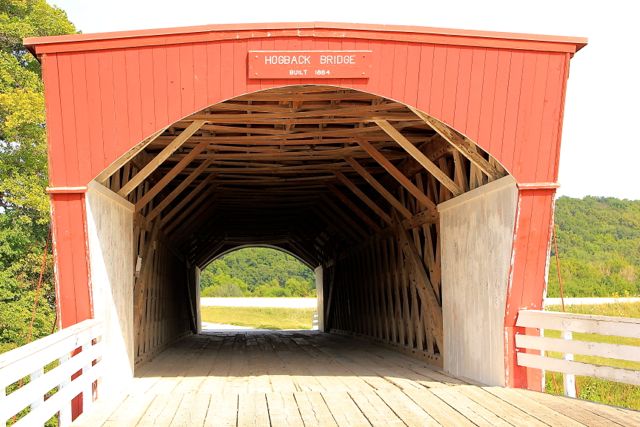
The book by Robert James Waller and the movie starring Clint Eastwood and Meryl Steep has turned the sleepy Iowa town of Winterset, Iowa into a year-round attraction.
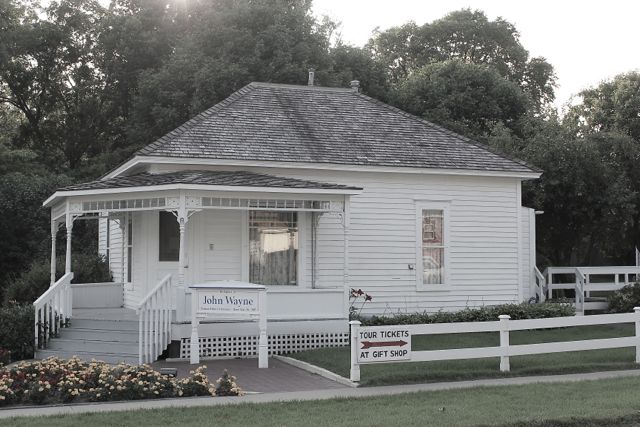
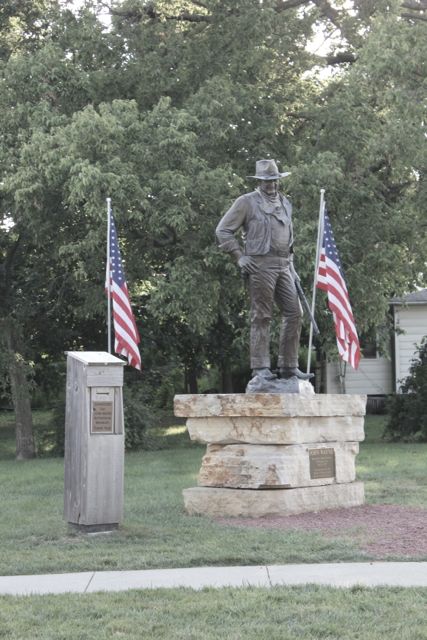
Even before the book was written, the town prided itself on being the birthplace and home of John Wayne. An entire block is now devoted to his memory and one of the main streets has been renamed John Wayne Boulevard.
People come to see the bridges, but they are really interested in the fictional romance dreamed up by Waller and played exquisitely by Eastwood and Streep. The same women that would condemn their neighbor’s infidelity and shoot their husbands for staring at a young woman come in droves to worship at the spot where Francesca and the cuckolding Robert Kincaid fell into a romantic swoon and gave an added meaning to their lonely lives by finding love on a hot summer day.
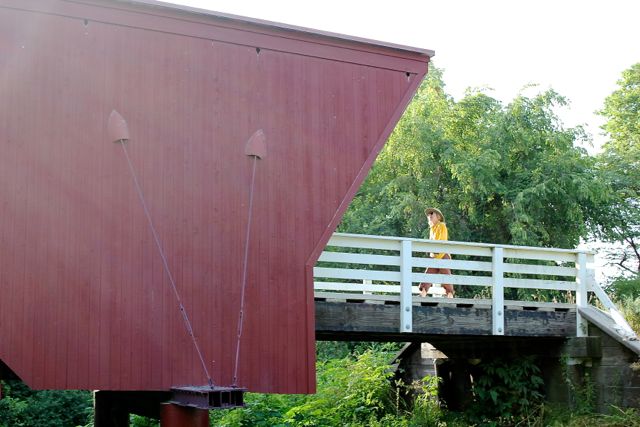
Francesca is a woman who holds strong to the country values of keeping her family together. She meets the masculine, free-spirited Kincaid. He is a photographer for National Geographic whose assignment is to photograph the covered bridges. Unable to locate these bridges, he stops at the farm where Francesca lives. Her husband and two children were away at the state fair for a week. After guiding Kincaid to a nearby bridge, she invites him in for ice tea. Within a day, they shed their clothes and inhibitions to commence a four-day romance that the two will never forget. It all feels so natural and so right as they talk of things that Madison County people never talk about. Reality melts in the summer heat and their instant infatuation blooms into a deep love as fast as the quick brown fox can jump over the slow lazy dog.
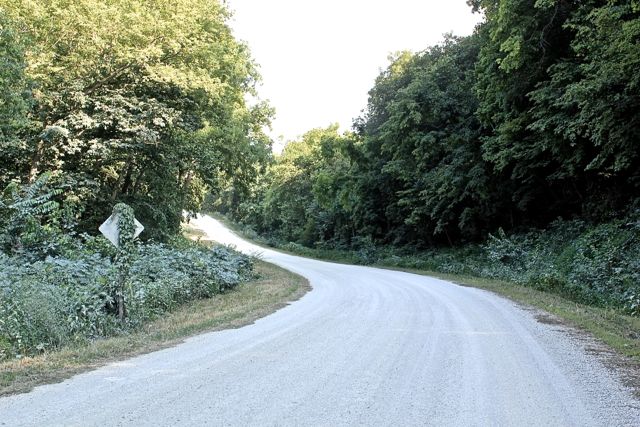
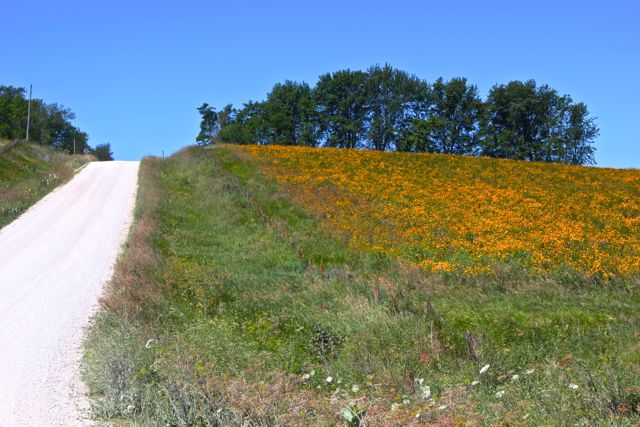
It is understandable that Kincaid had trouble finding the bridges. They are located miles apart and all over the county––down winding gravel roads that leave a white coat of limey dust over all surfaces. Madison County is still a pictorial vision of the 1960s yet today. The rolling hills, the gravel country roads, the semi-pristine hardwood forests salute the past, as do the well-kept farms still owned by individual farmers.
The story of their romance had a bittersweet ending. After four days, Francesca decides that she will end the affair and stay with her husband and family. It is raining as she drives away with her husband in the pickup. When they pull up behind Kincaid’s truck, it is all she can do not to bolt from the truck and run off to a new life of unimagined adventures. After some years, Kincaid dies and sends his ashes and prized possessions back to Francesca, who keeps them hidden from everyone. They are not found by the family until Francesca herself passes on. The two children, now adults, are made aware of the passionate affair and have to deal with it in their own way.
The people who visit these bridges leave their marks behind them. They too search for romance. Lonely teens call out publicly for sex. Couples leave their calling cards on the timbers and the painted boards at the bridge entries.
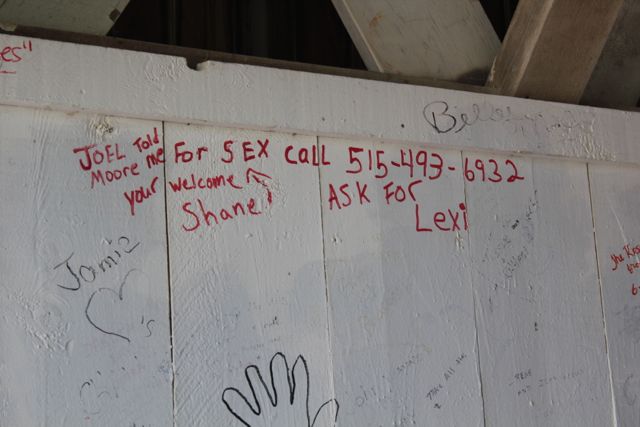
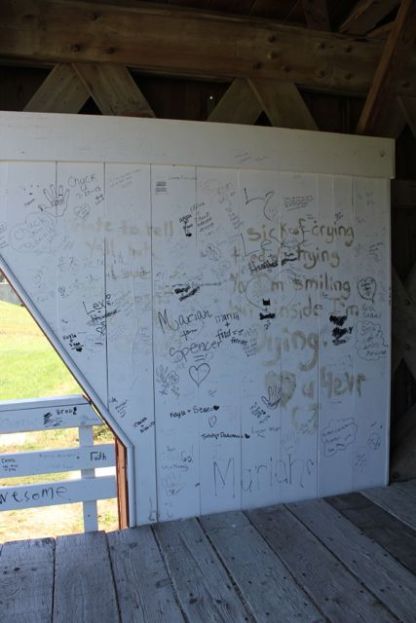
The bridges have been maintained and rebuilt in the 1990s. The rustic work of long-dead carpenters can still be admired and written on by passers-by through the age. The bridges of Madison County still stand as a testimony to the artful lives of rural America in the 19th century. The story of the romance between Francesca and Kincaid also represents a change in American values. These tourists who come to visit do not condemn them. There is no scarlet letter “A” written on Francesca’s memory, Though the story is fiction, the romance is as real in the minds of the visitors as the bridges that brought them together. People do understand and relate to one another. Compassion has not died out completely. People still believe in the power of love to transform.
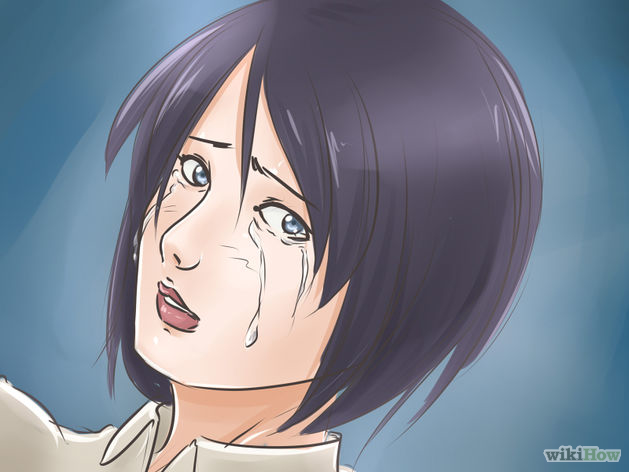
Rejection is often more painful than physical wounds and physical pain. It affects our entire state of being. Rejection can linger and fester like an infected wound. Even mild rejections can send us into feelings of isolation and wound our sense of self-worth. Brain scans show that the very same areas of the brain are activated during feelings of rejection as those areas that experience real physical pain.
Rejection has deep roots. Even in early human history, our survival depended upon inclusion in the social structure of the tribe. Rejection and ostracism could easily result in death. Our brains evolved to feel rejection in our pain receptors.
D espite the many thousands of years of human experience, modern humans still live in tribes. We tend to call these tribes families and groups. But they are tribes nonetheless. Our brains developed an early warning system so that rejections felt painful enough to make us change our behavior before total ostracism could occur.
We learn early that rejection is a fact of life and we must learn to deal with it. We learn that rejection comes in different degrees of severity and from many different sources. However, even mild rejection can cause chain reactions of memories and painful experiences to recur in the psyche.
Rejections destabilize us. Belonging is our most precious asset and rejection causes us to lose the urge to belong. We withdraw. In severe cases, we can become angry. We can feel the need to strike back – sometimes going as far as mass shootings, aggression, or self-destruction.
Through my illness I learned rejection. I was written off. That was the moment I thought, Okay, game on. No prisoners. Everybody’s going down. – Lance Armstrong
Re jection causes self-doubt. It is a blow to our self-esteem. Yet, if you think about it, a runaway sense of self-esteem is not something to be desired. Social living requires that we temper our self-esteem. Rejection is a tool to keep our expectations and feelings of self-worth in check and balanced. Feelings of rejection do not respond to reason. We either pick ourselves or others apart looking for reasons for rejection. Perhaps we will find a real fault we need to correct and perhaps we will imagine a fault that does not really exist and make it real. Rejection lowers our intelligence and our ability to think clearly. That we will ponder the reasons for rejection is a foregone conclusion: that we will come up with a reasonable solution is not.
 Rejection is a universal problem for everyone. Marilyn Monroe said, “Sometimes I feel my whole life has been one big rejection.” We all know where that led.
Billy Joel said, “I really wish I was less of a thinking man and more of a fool not afraid of rejection.”
B ob Dylan said, “The world don’t need any more songs… as a matter of fact, if nobody wrote any songs from this day on, the world ain’t gonna suffer for it. Nobody cares.” I am not certain when Dylan said this, but it had to be during some period when he felt rejected. What he says is both true and false. True, the world does not need any more songs. There are already masterpieces enough for any occasion. But it is false that the world is not going to suffer from the lack of new songs. Songs write and reflect the essence of an era.
The history of our lives is our journey through rejection and acceptance. Some of us are far more adept at recovery and recreation than others. Michael York said, “I think that you have to believe in your destiny; that you will succeed. You will meet a lot of rejection and it is not always a straight path. There will be detours––so enjoy the view.”
Writers, musicians, and artists are old hands at dealing with rejection, yet every rejection is different and every move that we must make to overcome the associated emotions of rejection and pain are unique to the moment.
Taking time to process the rejection is essential. Big rejections do not go away easily. All rejections have a cumulative effect on us. Perhaps only time itself will resolve the problem. Talking with trusted friends helps, so long as we do not do it incessantly. Wallowing in misery is never good. When we find ourselves doing that, we need to do something else.
Airing our feelings of  rejection on the Internet is counterproductive. People do not want to hear about our emotional distress. Besides, the Internet never forgets and we will be stuck with our poor attitudes for much longer than we think. Your next boss or your next lover might get a bad opinion of the way you handle problems. The quicker we deal with rejection and move on, the happier we will be. Most rejections are not personal, so we do not need to make them personal. Knowing when to quit is hard, but essential. Some goals that we set for ourselves are bound to be unrealistic. We have millions of goals in a lifetime. Most of them are unrealistic. With time and the help of others around us, we learn to know the difference and teach ourselves to lead balanced lives. We need to realize that we give out rejection as much as we receive it. Giving a person a specific reason for rejection not only makes them feel better, but we are better people for having this ability.
If we cannot get rid of our feelings of rejection, can we treat it like pain and take medications for it? Functional magnetic resonance tests show that people who take acetaminophen daily for three weeks have less pain-related activity in their brains than people on placebos. Daily doses of acetaminophen, it seems, can cure some rejection pains.

