IS THERE VALUE TO PRAYER?

by Kenneth Harper Finton ©2014

41b1e853-cf63-4829-b0cc-c38b9e6632f9


Those who believe that a personal God has a special will – a will greater than our own – think that God can hear their prayers and possibly be made to care enough about the situation enough to give them an answer.

Those who see no evidence at all that prayers are answered say, “No, the only people who care are those in your individual circle. God, if there is such a thing, has nothing to do with it.”

Then there are those in the middle who are not positive deep within that there is a divine being with a will for humanity. Just in case there is, they subscribe to a moral code written by some religion of combination of religions.

Prayer is interpreted differently by all the above.

Some see prayer as kneeling down beside the bed or before some vivid image. They fold and clasp their hands and give thanks or asking for blessings. Some make a habit of holding hands around the table as reciting some rote blessing that passes through us like an ineffective TV commercial.

But it this really prayer?

prayer definition

prayer

pre(ə)r/

noun

noun: prayer; plural noun: prayers

  1. a solemn request for help or expression of thanks addressed to God or an object of worship.”I’ll say a prayer for him”
  1. synonyms:
  1. invocationintercessiondevotionarchaicorison “the priest’s murmured prayers”

2.

  • a religious service, especially a regular one, at which people gather in order to pray together.”500 people were detained as they attended Friday prayers”
  • an earnest hope or wish.”it is our prayer that the current progress on human rights will be sustained”


Of all those definitions, I like the third the best: an earnest hope or wish. There is something about hope that foretells and defines the future. There is something about thanks that defines and appreciates the present.

Appreciating the present is the key ingredient of happiness.

The way be can do this is to take a small break in our routine and consciously be thankful for those good things that brought us to this moment and respectful to the bad things that also brought us to this moment.

Our present contains all the good things that have happened as well as the bad. Nature provides the bad things to keep us moving and progressing. What matters is the nature of the movement forward. Focusing on the good we want to accomplish will keep us on a chipper and more productive path.

These efforts need not public, as they are in essence a private thing. Prayer does not even have to be called prayer to be effective. Call it meditation … call is a cigarette break … call it a pause to reflect … call it reevaluation. It is all the same thing if the objective is to bring good will and happiness into the future.


Thanks for reading. Follow me at:

www.kennethharperfinton.com

THE MARE’S NEST

1. Mare’s nest: a complex and difficult situation; a muddle

2. an illusory discovery such as “the mares next of perfect safety”

songs1

©2017 Kenneth Harper Finton

THE MARE’S NEST

When I’m good, I’m very good, but when I’m bad, I’m better.” -Mae West

   The child and the boy that Adam used to be was so foreign to him now. Looking over pages that he wrote years ago, Adam barely recognized his former self as the person who wrote them.

   Adam came from a conservative and opinionated small town in rural Ohio. Those who lived in his little town often claimed it was God’s country. Adam supposed that it might be good for the spirit to be content and proud of your community. God’s country seemed to be a stretch, though. So many wonderful spots in the world better fit that description.

   Life seemed to be so much more idyllic and simple then. Yet, it seems to Adam that this warmer view one has toward the past is never the case. Faded memories—the exclusive warm selections of chosen recollections—give the illusion that daily life was richer in the past than in the present. This is the mare’s nest. We are born in illusion and live most of our lives in a delusional fantasy with the blessings and approval of those who surround us.

II

   Religion and conservative politics were the mainstays of community belief when Adam was being raised. He was brought up to believe in things that were not real, but Adam had a problem with these beliefs. To suspend rational thought and dive into the unproven waters of belief was much easier when Adam was a child.

   Adam’s parents were good to him. They did everything they were supposed to do with a minimum of complaints and resentment. They were neither rich nor poor, neither too conservative nor too liberal.

   These were the days when a mother was expected to stay home and raise the children. The father was expected to bring in a paycheck and support the family. Yet, even then, the very ground of these expectations was trembling.World War II had shown women that they could manage without a man in charge. The experience of hundreds of thousands of years had proven to be false. The seeds of personal independence had taken root in even the most dependent of women. A new world was being born before Adam’s eyes. Only a very few seemed to realize that this was so.

III

Social taboos confuse men and women alike. A natural curiosity about the difference between men and women develops early in life. Adam remembered when he was four and took the train from Ohio to Colorado to visit his grandmother. He had little experience with the female sex. His curiosity got the best of him. His grandmother lived next to a family that had a daughter Adam’s age. She was deliciously blonde, wore a taffeta dress, and smelled of Ivory Soap. Adams’s play was often defined by guns and cowboys, trains, and fortifications. Society wanted him to grow up to be a good soldier. He was trained to defend his family and national interests while little Susie played with dolls and tea parties. It was the normal thing.

Adam had no idea who thought it up, but one warm afternoon they decided to explore one another’s bodies. Adam had no sister, so he was very curious to see what lay beneath that taffeta dress. “I’ll show you mine if you show me yours,” he said.

She was every bit as curious as Adam. They went behind the shade of a weeping willow and she pulled up her dress. She wore white panties that were different from Adam’s jockey shorts. She eagerly pulled her panties down and Adam saw a vagina for the first time in his young life. How wonderful it looked to him—almost puffy and so very different from what he possessed. She took her hands and pulled the labial folds apart so that Adam could see the inside. He could see little curds of a cheese-like substance.

“I get that, too,” he said.

“Let me see,” she replied.

His penis quickly grew stiffer and larger. He pulled down his pants and showed her what he meant. Adam had never been circumcised, so he pulled back the foreskin and exposed the same little white curds that she had proudly displayed. “Do you want to touch it?” she asked.

“Maybe.”

“Well, you either do or you don’t,” she said.

“Yeah, I guess I do,” he said.

“Then go ahead. Touch me. I like it when I rub it right here. You can try if you want.”

Adam took his index finger and rubbed her there. It felt very good and he had a tight feeling come into his groin, the same feeling he had when he climbed a rope.

“See,” she said. “This is fun. Do you want to kiss it?”

“Not really,” he said. “Boys don’t kiss girls.”

“Yes, they do,” she said, “my Daddy does that to my Mom.”

“Well—what if I just touch it.”

“That’s okay, but I want to know what it feels like to be kissed down there.”

“How do you know your Dad does that?”

“I’ve seen them do it when they don’t know I can see them.”

“Oh,” I said. “My Dad doesn’t do that.”

“How do you know?” she said. “I bet he does. Then he takes his thing and he puts it into her and they wrestle around on the bed.”

“Why?” Adam asked.

“I don’t know,” she replied.

A voice from the house could be heard calling her name. “That’s my mother,” she said. “I gotta go.”

She pulled up her panties and ran off to the house. Adam had the feeling that he was in deep trouble. Something told him that he was not supposed to do that with her. Suddenly, he felt panicked.

He crawled up an apple tree as far as his limbs and legs could take him, Sure enough, within ten minutes his mother’s voice could be heard in the distance. “Get in here this moment,” she said. “Susie’s mother told me what you did.”

“What did I do?” he asked, knowing full well that he was in deeper territory that he had never before explored.

“You damned well know what you did,” mother said. “You were bad.”

Adam was totally embarrassed. His head hung low. If he were a dog, he surely would have put his tail between his legs.

* * *

Though childhood lasted more than a dozen years, Adam’s recollections of it seemed to reduce it to a few weeks. Almost all of it was learning and play and Adam loved both equally.

He had the best of many worlds. He lived on a couple of acres in the country, but his family was still close enough to ride his bike to town. Adam attended the city schools. He could ride his bike to visit friends and he could explore the creeks and wooded lands that surrounded his home. He felt so very much alive and so very happy to be.

Later, he would versify these feelings:

The Veils of Time

How often down these gravel roads my bike and I would roam.
Downhill like the lightning flash, up with winded moans …
Mapping streams and woods about me, finding spots where no one came.
Africa could be no stranger than the place in my dreamscape.

Ghosts of dead forgotten Indians, birch canoes and forest game,
hidden in the brambles forest, there beside the fields of grain.
Tadpoles swam among the minnows, dragonflies would dart and play.
Water bugs and prickly nettles, part of each midsummer’s day.

As it was in the beginning, so remain these things today,
in the places man’s forsaken, wilderness, ten feet away.
From a child’s imagination, pterodactyl seeks his prey.
Ages past still live forever when the veil of time is raised.

IV

Adam was always in love. Girls were so pretty and different from the boys with whom he camped and hiked. Their skin was more clear, their hair so long and shining, their dresses rustling and clean smelling. Their grace seemed like music in motion.

Every day was a new adventure. Every person Adam met filled him with curiosity. Everything he learned about the land and customs around him filled with satisfaction. He has never experienced the like since.

In kindergarten, he met Mary with her striking long brown pigtails. Mary owned a pony. Even though she lived in town, she kept the pony in a shed back by the alley. Since cowboys and horses are inseparable and Adam was a young cowboy, she attracted him much as moths seek out the flame. Mary came to visit Adam often. When she could not come to see him, he rode to town on his bike to see her.

Mary and Adam never made experiments and explorations such as he had with his grandmother’s neighbor some years before. Neither the need, the desire or the curiosity ever arose. She made certain of that. Once when Adam had hitched a ride with her on the back of her bike, he reached up to hold onto the seat and she told him, “Watch where you put your hands.”

Her words, though, had the opposite effect. It called attention to her khaki-clad shorts that loosely held her shapely buttocks. Adam wanted to put his hands around her and hang on for life. To this day, Adam is left to wonder if that is what she wanted as well.

There was a television show in the afternoon in the 1950s that featured people being married before the camera. The bride, dressed in white and lovely as a sunrise, came slowly walking down the aisle to her betrothed. Mary and Adam would secretly watch it and play out the parts in front of the TV. He would spend many a lonesome night snuggled with his pillow and dreaming that the long length of her lay warm beside him.

Of her, Adam was later to write:

My love, she wore a gingham dress.
She wore her hair in braids.
Far too young for sweet caress,
our love was heaven made.

We spent a thousand idle hours
together in our dreams,
We wandered near the ancient oaks
and napped beside the stream.

I thought we might be married there,
and then, when time be lost,
side by side, eternally,
we’d rest beneath a cross.

But childhood washes from us all,
and dreams seek other fancies.
Soon she walked with someone else,
this lovely, freckled lassie.

Sure enough, I moved away
to seek some higher labor,
and to this day I’ve not returned
nor seen my long-lost neighbors.

When finally this childish love
grew up and found some others,
I know when I lay down to rest,
they’re one with one another.

Follow me at kennethharperfinton.com

IF I WERE A FLY

Unknown

If I were a fly, I’d land on the dung like all of my friends had already done.

If I were a fly, I’d crawl up a wall and carefully gather the secrets of all,

then publish my finds on an Internet site

– like my brothers and sisters that crawl through the night.


← Back

Thank you for your response. ✨

I LOST MY PENIS TODAY


k3906829

I lost my penis today. Somewhere in Penisylvania, I think.

I must have bent over and it fell out.

Frankly, I am lost without it.

I am a writer and I use it all the time.

It was a very special penis or I would simply go replace it.

I have tried using a peniscil instead, but I can’t keep it sharp like my fountain penis.

What to do? I could write on my laptop, I guess, but something is wrong with my spell check.
Every time I press a ‘p’, then an ‘e’, then an ‘n’ it adds an ‘is’.
This will not do. It is especially disconcerting when writing to my penis pal.
If I write much more, I might be sent to a penisal colony of a penisitentiary.
Further words from me will be penisding on solving this problem.

Thanks for reading.
Follow me at:

← Back

Thank you for your response. ✨

IN THIS I CAN FIND SOLACE


SUNSET


As sunset burns pink and red and orange

across a floating sky of sheepish clouds,

It heralds the darkness of the night itself.

The brilliance of the day has given me a joy of being

that slips away now with the setting sun.

Night comes and dimness falls upon the spirit.

Yet for a moment in that sunset,

the light becomes pure and magenta, so lovely.

It seems testimony enough that the day had value.

The Night gives birth to the blues.

The Night reminds us that all is changing,

How useless it seems to mourn this passing.

The bloom of youth fades.

The boundless energy of childhood play

becomes productive adult work.

So it is with autumn.

As the days grow shorter,

the winds blow colder.

The brilliant light of summer fades

and kindles the flames of burning colors

in the very leaves of time.

I cannot help but be struck by its beauty.

I leave until tomorrow that which is yet undone.

I gladly leave the planting to the Spring.

For Winter is now coming fast,

And Winter wants to kill us.

If Winter cannot kill us, it will slow us down.

We take the thrift of our days

And spend it getting through the night …

Getting through the Winter.

They are much the same, the Night and the Winter.

That same natural pattern of building and destruction

Is the theme of both.

It comes together in the Fall.

It comes together before the Night

To see it, I have only to look.

There is a balance in those autumn days.

There is a signal in those twilight moments.

Forget about the past and let the future be.

Let the now be incredible and lovely,

A laughing child is a bell to an undistracted mind,

I hear the music. I hear the bell. I feel the balance.

Tomorrow will carry joy for some and grief for others.

I know that well. The Winter will take us into Spring.

It is forever that way. In this I can find solace.

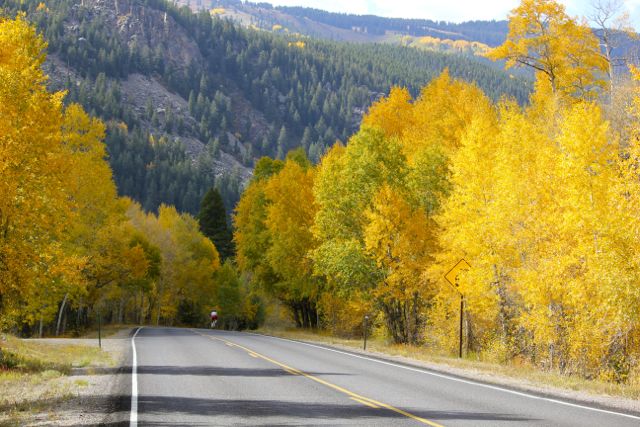
 FALL ASPENS

Photos by the author


Thanks for reading.  Follow me at:

          http://www.kennethharperfinton.com

← Back

Thank you for your response. ✨

WORDS


© 2014 Kenneth Harper Finton

LYRICS — THE MUSIC IS ABOVE, THE LYRICS BELOW IT,  AND THE STORY BELOW THAT.
Continue reading

WE THE LIVING

September 11, 2001 holds ugly memories for us.  Songs were written about that day, keeping with the old tradition of commemorating important events in song and verse.

This song celebrates the survivors, not the dead. Drink up to their memory, it says, and go on about your life.

WE THE LIVING © 2014 Kenneth Harper Finton

          D                         Bm         Em                    F#m
On a clear September morning, it happened without warning:
 G                            F#m            Em              A
two flights left from Boston to Los Angeles on time,
      D              Bm              Em                F#m
It was so unexpected; both planes were redirected.
         G                   F#m        Bm       G                    F#m      Bm
The skyjackers had  gained control; death was their unspoken goal.
G                      F#m    Bm         G                      Bm / / / Bm / / /
The passengers would never know …  never would know why.
        G                D                    F#m             G
So here’s to the living, for the dead will never know.
Em                D             E                      A
We, we the living, are left to choose the road.
         G                 D                 F#m                 G
And here’s to the safety  of the world they left behind …
         Em                 D                A                    D       Bm  / / / Bm / / /
and here’s to the making of a better world in time.
       D                 Bm              Em                     F#m
In that most fatal hour, both planes hit the twin towers,
           G                   F#m            Em                  A
Where fifty thousand people went about their daily lives.
D                              Bm            Em                      F#m
All who watched were humbled as both great towers crumbled,
   G                           F#m    Bm            G                     F#m     Bm
Smoke and dust filled up the sky, as thousands of good people died.
G                      F#m     Bm             G                Bm /  /  / BM /  /  /
All that’s left for you and I …  is uncertainty and woe.
        G                D                 F#m                 G
So here’s to the living, for the dead will never know.
Em                D             E                       A
We, we the living, are left to choose the road.
         G                   D                     F#m           G
And here’s to the safety  of the world they left behind …
         Em                 D                A                 D
and here’s to the making of a better world in time.


REPEAT LAST TWO LINES AND OUT

PURCHASE WITH PAYPAL https://www.soundclick.com/paypal/default.cfm?bandID=266571&albumID=18656

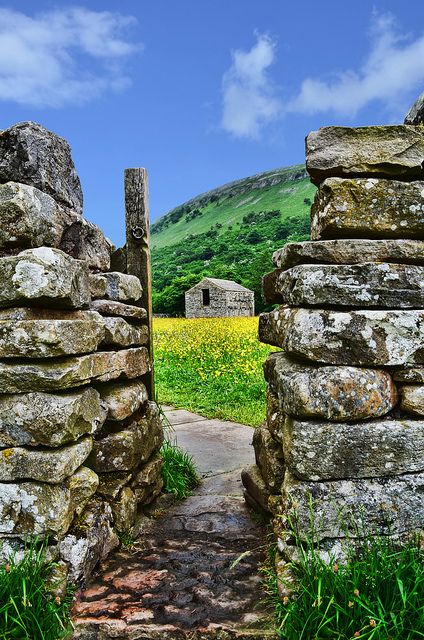
 GRANDFATHER’S WALL

gate

©2014 Kenneth Harper Finton

(from the book “FROM WHENCE COMETH THE SONG”, coming in 2015)

“Ma,” he said, “I’m coming to a wall,”

and our eyes fell open in surprise

for the cracking voice had now been still a year.

My Grandpa’d been an active man in life,

but age had grasped his arm

and tied him down and dragged him

into bed without a mind while speech

had been denied him this long while.

His crumpled, trembling form had lain so still

sheathed between two rusty yellow sheets.

His body gasped for breath and when he’d move

he’d twist from side to side and back again

like car wheels spinning helplessly in snow.

His eyes were bloody veins with specks of dust

through slits in fleshy lids; his mouth would part

and whimper while his mottled body twitched

and shook like horse’s flanks in summer’s heat.

A thin and almost concrete upper lip

concealed the stain of his tobacco teeth.

His mouth seemed almost bound with baling wire

that muffled and suppressed his final speech.

Grandma sat beside him on a chair,

her bony hands were nestling in her lap.

Her head cocked like a scrutinizing wren

listening for a word that he might speak.

She’d no fear of death, for she had visions

befitting one born smothered in a veil;

Her thin lips pressed together when she heard

his cracking voice call out to her for help.

“Ma,” he said, “I’m here and there’s a wall

that’s made of stone so high I cannot see,

and on my side there1s nothing but a woods

that’s dark and thick with thorns and knotted trees.

The land beside the wall is very good.

I’d get a crop if only I could plow.”

Grandma’s eyes now blacked and filled with tears:

“Henry, listen close to what I say;

you follow ’long that wall now (do you hear?)

and pretty soon you’ll come upon a gate

that’s rusty as it’s not been used in years.”

“I’m afraid.”

    “Now, hush, don’t be that way.

The gate won’t harm you and you’ll just pass through.”

“Ma, will you please stop that talk,” said Pa.

“It won’t do any good to scare him now.”

“I’m comfort to him, son. He knows his time.

A man needs comfort at a time life this.”

“Well, what is all this bull about a wall?

And why’s he talking now after a year

Of whimpering just things that make no sense?”

“And who are we to know the ways of God?”

“Ma,” he cried, “it’s there. I see the gate.”

His body twitched and rolled from side to side.

I’m pulling, Ma. It’s opening, I think.

It’s made of steel and heavy as a barn.”

“Here, hold my hand,” she said, “don’t be afraid.”

Pa rushed up to the foot of Grandpa’s bed;

My heartbeat clapped like thunder in my head …

and them we heard the sounds, the squealing scrape

of rusty hinges opening on a gate.

My father looked at me and at him.

and Grandma sat there smiling toward the bed.

The gate squeaked open while a wash of air

cold as the winter’s breath swept through the room.

And then the gate banged shut, the cold breeze left,

and Grandpa stopped his twitching and was dead.

QUEEN ISABELLA, THE SHE-WOLF OF ENGLAND


Isabella of Angouleme, queen of king John

 Queen Isabella was ripe for romance. She was a passionate woman in her late twenties, a striking beauty with plaited blonde hair. Furthermore, she had endured the loveless marriage with Edward since she was thirteen.

Roger de Mortimer, 8th Baron of Wigmore, was serving a life sentence in the Tower. His hair had grown long, his cheeks pale, and his eyes glowed with desperation. One glance at the handsome prisoner was enough to strike romantic interest in Isabella. It is not difficult to believe that the queen, her emotions stirred by the prisoner’s dark eyes, had made an opportunity to see him.

On the night of August 1 it was customary for the prison guards to celebrate the feast of St. Peter with food and drink. This time, the drink was drugged by the sub-lieutenant of the guards, Alspaye. When all the guards had fallen into a stupor, Mortimer dug a hole in the side of his cell. Accompanied by Alspaye, Mortimer made his way over the walls with a rope ladder. They rode through the night, pausing only to change horses and sailed directly to the French court where Isabella’s brother, Charles the Fair now reigned.

The next year, after overhauling her wardrobe Isabella sailed for France. A parade through the streets of Paris was held in her honor. She was probably the most beautiful sight the people of Paris had ever seen, her billowing black satin gown spread over a magnificent steed, her white boots firm in the gilded stirrups, her blonde hair flowing free and clasped with bands of jeweled gold. The French proudly cheered and commented on what a fool Edward must be to let such a gem waste away. When she entered her brother’s court, she looked into the eyes of Charles’ guest, Roger de Mortimer. The two fell hopelessly in love at first glance.

It soon was apparent that all was a well laid plan by Isabella. Charles had demanded that Edward come to France to pay homage as his vassal if he were to be allowed to keep Aquitaine and Ponthieu. The Dispensors counseled Edward to stay home, saying it would be unwise of him to leave the kingdom. Isabella had come up with the counter suggestion that she go in his stead, thus making an excuse for her to return to France. Once in France, she refused to return, complaining bitterly of her treatment by Edward and claiming her very life was threatened by Hugh the Dispensor. She wrote her husband and suggested that he confer the title of Duke of Aquitaine upon their son Prince Edward and send him to pay homage to Charles. With the consent of the Dispensors, Prince Edward joined his mother in France.

Meanwhile, in her love affair with Roger de Mortimer, Isabella threw caution to the wind. Her behavior became so indiscreet that one of the bishops that accompanied young Edward to France decided that Edward must know the truth. He stole away and back to England despite Isabella’s attempt to block his departure.

Edward, for his part, handled the situation well. He was told that Mortimer was the reason the queen stayed in France. He wrote letters to Isabella, attempting to persuade her back, but defended his precious Dispensors and made no promise to change. He referred to her enemy, Hugh Dispensor, as his loving Nephew Hugh. “Come back on my terms,” he wrote, “and I will forgive you.”

Finally, with no response from Isabella, Edward sent copies of all the letters he had written to Isabella to both her brother Charles and the pope. The pope was furious over Isabella’s adulterous conduct and demanded of Charles that he send his sister back to Edward or face the excommunication of the entire nation. Charles told his sister that the time had come for her to leave. Robert of Artois came to Isabella in the middle of the night and told her that her brother planned to hand them over to Edward the next day. In the middle of the night the two lovers made their way to Normandy and out of the reach of both kings.

Isabella conducted a campaign through western Europe seeking support for her enterprise. She became the most charming woman the courts of Europe had ever seen, subtly dressed in a new fashion of very full skirts, and tight bodice. Every knight she met seemed to fall in love with her. Her following grew like a rolling snowball. Mor- timer, for his part, followed meekly in the background and the rumors that surrounded the pair began to subside with the queens sudden rise to prominence and discretion.

After a stormy passage over the Channel, Isabella and her small army of mercenaries and foreign knights arrived on English soil. A few young knights set about making a shack for their fair damsel to spend the night. They used some wreckage found on the beach and four carpets. The queen beamed to them a weary smile of gratitude.

55025_edward-ii_mdFor Edward, the question was what to do. He knew that the people of London loved Isabella, yet he expected them to rally to their king. A compromise was reached with the mayor. No foreign troops would be allowed into London, but no Londoner would venture further than a mile from the city limits.

Edward needed more than this. He decided to push further west where he thought the citizens would be more faithful to him. He left the Tower in the hands of Hugh’s wife, Alianore, and left for Bristol. The people of London immediately dropped their stance of neutrality and rallied behind Isabella. The bishop who had brought the news of her affair to the king was dragged through the streets and beheaded. Alianore, fearing for her life, abandoned the tower to the mobs.

For Edward, the question was what to do. He knew that the people of London loved Isabella, yet he expected them to rally to their king. A compromise was reached with the mayor. No foreign troops would be allowed into London, but no Londoner would venture further than a mile from the city limits.

Baron after baron joined Isabella as she marched toward London at the head of her troops. The king found nowhere to hide and none to support him. Bristol was filled with fervor for the queen and they surrendered the castle at once. The senior Dispensor was given over to Isabella. He was taken out and hanged on the spot. After running for several months, the king was caught on November 16 with the sorry remnants of his party, including Hugh the Dispensor. Nephew Hugh was taken to Bristol and surrendered to the queen.

imagesThe queen began her triumphant march to London. Hugh was made to ride a sway- backed, mangy, small horse. He refused to eat or drink and became steadily weaker. Not to be robbed of her revenge the queen halted the procession to try him at Hereford. His sentence read:

“Hugh, all the good people of the kingdom, great and small, rich and poor, by common assent, do award that you are found as a thief and therefore shall be hanged, and are found as a traitor, and therefore shall be drawn and quartered; and that you have been outlawed by the king and by common consent, and returned to the court without warrant, you shall be beheaded; and for that you abetted and procured discord between king and queen, and others of the realm, you shal be embowelled and your bowels burned; and so go to your judgment attainted, wicked traitor.”

Hugh was dressed in a black gown, a crown of nettles placed on his head, and the prescribed sentence was carried out before the queen.

Isabella was welcomed back to London by cheering mobs. Women threw flowers in her path. She was hailed as the savior of England. Edward was summoned and forced to abdicate the throne in favor of his eldest son, Edward III, the fair-haired, handsome son of his mother. Isabella had expected to reign as regent, but her plans were foiled when a council was appointed to rule in her stead. Isabella was bitterly disappointed.

Eventually, Isabella, blinded with her love for Mortimer, was to make some great mistakes. She decided to be regent after all, with or without the consent of counsel. Mortimer rose in position much like Hugh the Dispensor.

Edward was imprisoned, and some months later three men held him down in the middle of the night while another burned his inner organs out with a heated iron. The red-hot iron was inserted through the anus so as not to mark the body and make it appear as though he had died of natural causes. Edward’s screams were heard throughout the castle for many hours. People nearby placed their pillows over their heads to drive away the sickening sounds.

Thus ended the reign of Edward II, King of England, and the life of Hugh the Dispensor.

– From the book FROM TRIBES TO NATIONS, by Kenneth Harper Finton

On Amazon

TRIBES


APOSTLES OF GLORY

images

©2014 Kenneth Harper Finton

Warning: This is a story from 1961. It contains words and actions that can easily offend. It is a slice of time that was typical to most every small city in America. In the sixties, real estate brokers purposely brought blacks into all white neighborhoods to drive the prices down so they could get a bargain price for the homes, then sell to blacks that were hungry for homes of their own in a decent neighborhood, The practice was called “blockbusting”. Though it was illegal, the real estate agents made a common practice of telling the people in a neighborhood that members of a different race were moving into the neighborhood. It would depress and deflate the value of their property. The agents then sold the devalued homes to the minority group and gained a huge profit. 


Across the street in the cool of dusk it came, absorbed in the dirty air with the fumes from the refinery, the exhaust vapors and the laundry lint. A song in the twilight, a gentle ballad of people forgotten except in song – sung with the grace and feeling of a girl who has known life and the odious emotions of men.

Harry Johnson sat at the table sipping his coffee as the song slipped through the open window to his ears. He called to his wife with the voice of a bear, but entwined with the song it was the voice of a lamb. He didn’t notice the coffee stained table and the barren floor, the curtainless window and the peeling paint. He listened to the song, each painful note slapping his ears, the melancholy words playing on his upper lip.

His wife Marge was a big-hipped woman and the floorboards creaked as she entered the kitchen. “What now?” she asked.

Harry Johnson looked at his wife – her hair, once wind-swept lovely – was done up in a twisted knot, her face, once painted up with care, ashy and melted. 

“That song.” he said. “Where does that song come from?” he asked, pointing to the window. 

“How should I know? Am I supposed to he a mind reader or something?”

“It sounds like it comes from across the street,” Harry said.

“Might be. I heard we were getting new neighbors. It’s about time, too. It hasn’t been rented since the Talberts moved out.”

“Listen to the song,” he said. She listened with a wrinkle in her brow as the song blew in the window window with the sounds of passing cars, listened until it stopped and the sounds of the street were the only sounds.

“She’s got a good voice,” Harry said.

“She must be young,” his wife said. “No more than fifteen, l’d say.”

“It sure carries,” Harry said. “All the way over here from across to street and it sounded like she might have been sitting here at our own table.” 

“You could have bought that house, you know,” Marge said. “How would you like to be raised up in this place like Carolyn? How would you like it if you didn’t have a yard or trees or a house where you could stretch out and live? You could have given us something decent to live in for once. You could have bought that house, Harry.”

Harry’s face reflected thoughts and longings that ran deeper than his mind. “I know,” he said in a husky voice.

The cool of the evening was streaming in the window. “It’s probably the night that makes her voice carry,” Marge said, sensing Harry’s feelings. “Voices carry along towards night.”

“That must be it,” Harry said.

But now the song is gone and Harry notices the coffee-stained table and the drabness of the room. He was glad that it was Friday. 

“Tonight’s bowling night,” he said. “Where’s my ball?” 

“In the closet.”

Harry knew that the ball was in the closet. He always know where it was, yet every Friday evening be would ask, “Where’s my ball, for that was the way he asked if he could go bowling; and every Friday evening Marge would say, “In the closet,” for that was the way she would tell him he could go.

He went to the closet and picked up the brown canvas bag that felt heavy and worn in his big hands. He slipped on his jacket, for the night air would be cool. After he was gone he looked back at his apartment from the shadowed street, then looked over at the house across the street – the house he should have bought. It felt good to be away from the apartment. 

* * *

Harry Johnson saw his three friends waiting for him at the intersection. There was no use catching a bus for is was only seven blocks to the bowling lanes and it certainly was a fine night. 

He was glad to get away, glad to leave the apartment. He had always felt like a prisoner there with the dingy rooms and the burdensome voices and the evening when there was no peace. He would have bought the house across the street, but the neighborhood was becoming shabby and Harry was afraid he would lose if he invested.

“Hello, Harry.” 

“We’ve been waiting.” 

“Hello, Art, Dick. Joe.” 

They walked down the street toward the lanes. Art Richard was a tall man, half a cracker thin. He held his hands against his sharp and jutting chin. “Hear the news?” he asked. 

“What news?” 

“About the new neighbors.” 

“Across the street?” Harry asked. 

“Oh, you know then.” 

“Know what?” 

“They’re niggers.”

Harry looked hard at the tall man with the sharp chin and a mouth that spoke lies. “That’s nothin’   to joke about,” he said. 

Their strides quickened as though they wanted to leave a place where dirt and scum flowed into the gutter. “Moved in today,” Dick Marcus said. “A whole family of them.The nigger’s got a wife and two kids.” 

“It can’t be,” Harry said. 

“The whole neighborhood will go next.” Art Richards said, “I saw it happen over on 42nd Street. One nigger moved in and the rest started to come. It won’t be safe to step outside if we let them stay.”

“That’s a fact,” Dick Marcus said.

“We can’t let them get away with it. We gotta drive them out.”

“The way I look at it, we don’t have any choice,” Dick Marcus said. “We have our families to protect. Don’t you think so, Harry?”

Harry was thinking of a little Negro girl with a dark face, a song floating from clipped white teeth into the dark of night. “Sure,” he said. “Sure. It’s the only way.” 

None of the men bowled well that night. There were plans to make and wrongs to right. As the balls spun down the alleys and the pins clattered and the beer foamed in their throats, they talked.

After the match they stopped at the bar. Their voices stilled and they were silent. The bartender’s bald head glistened with as he asked them what was wrong. Still, they were silent.

Then they walked down the street. The night air was getting cooler. Art Richards pulled the zipper on his jacket clear up to his pointed chin, but the chill stayed in his spine. The city was enveloped with a hush that could only be surpassed by the silence that hung over a little town called Bethlehem, so far away and so many centuries ago. With the silence came a fear that that sliced the night.

Harry Johnson felt the fear, felt it crawling is his spine, felt it twisting is his stomach, felt its  macerations in his knees.

“Isn’t anyone going to do it?” he yelled. “Here, should I throw the first stone?” 

He picked up a stone from the deep, silt-filled gutter and hurled it with all his might. The crash of breaking glass slapped his ears. He dropped his arms and his mouth hung open wide. Suddenly, everyone was throwing rocks and stones end shouting curses, yet the house stayed dark and quiet. The air was heavy with an oppressive blackness. 

After it as all over, Harry Johnson stood at his kitchen window in his underwear looking out across the street at to house that he should have bought. He saw the yawning blackness and the broken panes, noticed that there was one window still unbroken, one window reflecting the twisting flames of the burning cross.

-2-

Tomorrow morning came as tomorrow mornings have a habit of doing. The untried light from the liquid sun found four men standing at a bus stop, waiting. Thee refinery was to run overtime today. The four men men were happy to make some extra money for themselves and their families.

Art Richards whispered – for he didn’t want the world to hear, “We sure got them last night, didn’t we?”

No one said a word.

“They had it comin’. Just wait ’til tonight if they’re still there.” 

“I don’t know if I want to do it again,”Joe Gantner said. 

“For Chrissake,” Harry said. “You don’t want your kids to grow up with a nigger for a neighbor, do you?”  

The words came out of Harry’s mouth, but he did not know why. 

“No, but still…” 

“Still hell,” Art Richards said. “We’ve got to get rid of them, that’s all.”

The bus came out of the morning and the four men went to work.

That evening after the factories closed and the men poured out like ants from their threatened castle. Harry Johnson sat over his supper of meat and potatoes, but he only picked at his food.

“Did you hear what happened to our new neighbors, Daddy?” Carolyn Johnson asked.

“Yes, I heard.”

“It serves them right,” Carolyn said. “Imagine the gall of them moving into an all white neighborhood. They have a daughter my age, too. How creepy!”

“That’s enough,” Harry snapped. “I don’t want to hear any more about it.”

He looked up at his wife’s face and saw the smirk on her lips. She knew.

After the last cup of coffee had been downed, after the dishes had been cleaned away to the sink and Harry Johnson was left alone with the falling sun, the song began. It was the same song, but ever so more haunting than before, scratching on the window, begging to penetrate the walls and bound into the heart.

He got up from the table and went to the window. Nothing seemed important except the song, for the song was life and life was important. But after the song ended, Harry felt the emptiness that he had felt before, for the song had lifted him to places he had never been before.

He went into the bedroom and took off his dirty work clothes and threw them on the bed on top of the sheets that looked like dirty handkerchiefs. He tried not to think.

“Going out?” his wife asked, as he walked toward the door. 

Harry shook his head.

“Do you want your bowling hall?” 

“No, I don’t want my bowling ball.

He opened the door, but behind him were words: “Harry?” He turned around. “Harry, be careful.” The look in her eye said ‘be careful’ and the sound of his heels on the steps rang out in his mind like a solemn chorus whispering the words ‘be careful’. 

Dick Marcus was already at the bar. They sat at a little table in a darkened corner and nobody saw them. In an hour there were six of them. They were Art’s friends. Harry didn’t care to know them.

He sat fingering his drink, but finally drank it. It felt good and warm in a hollow stomach. He had another and another, then another until he was dizzy and weak and nothing mattered anymore – not the blacks across the street, not the apartment, not his wife or daughter of the house across the street. 

Nothing.

It was nearly midnight when they walked back, the six of them. They thought they were an army. Six thousand strong they might have been and they could not have felt stronger of more fearless. They walked down the street on this Saturday night with Sunday morning a haze in a crystal ball. They walked under the stars that were blinking in the sky, under the moon that was an ocean moon like the ones that Harry had known and loved on a battleship is the South Pacific so may centuries ago.

Then they were is front of the house with the shattered glass. “Hey, you in there. Hey, niggers,” Art yelled, the liquor warm in his stomach. “Hey, you goddamned black-eyed son-of-a-bitch. We’re gonna get you. We’ll come back ’til you’re gone! You hear that niggers. Until you’re gone. Every goddamn night ’til you’re gone. We’re gonna get you, niggers.”

“Get their car,” yelled one of Art’s friends. “Get these black sons-a-bitches.”

The little army ran to the old, shabby car. One of Art’s friends drew a hammer and the glass was smashed. The tires were cut end the six were able to turn it on its side so that it lay dead with its tires spinning.

Somone had phoned the police and they heard the sirens cutting into their backs as the big black man and his daughter came running from the house.

“Get away,” the man yelled. “Get away from my car. Get away from my house.” 

“You black-eyed son-of-a-bitch,” yelled one of Art’s friends. “You black scum of the street, we’ll show you.” Four of them grabbed the big man and left him bleeding on the walk. 

“Get away from Poppa,” yelled the girl, pulling on Art. “Get away!” 

A fist to the face sent her reeling on the walk, her night dress was up to her waist. 

“Get her.” screamed the night. “Take her away,” but no one could tell who was doing the yelling. Harry saw two of them pick up to girl and run down the street under the street light and into to dark. “Run, you fools. Can’t you hear the cops?”

They ran into to alley and up to block. The sirens stopped, but the red lights flashed and shone orange upon to house across the street.

3

Harry awoke to to rattling of coffee in the percolator and to pungent odor of frying bacon. He could hear the floorboards creak as his wife walked over to to bed. “Harry?”

“Yeah, I’m awake.”

“Get up. You’ll be late for church.” 

“Huh?” 

“Get up. It’s Sunday morning.”

He opened his ayes and looked into the face of his wife, the ashen face with wrinkles he had never seen before. 

“I don’t want to go to church,” Harry said and closed his eyes. He could feel her staring at him and he opened them again.

“The girl, Harry. What about the girl?” There were tears in his wife’s eyes.

“What about her?” 

“What did they do to her?”

“Oh, hell, I don’t know. There were these two friends of Art’s. 1 don’t know.” 

“They raped her, didn’t they, Harry?” she said. Her voice was coarse and cracked. 

“I don’t know.” 

“I’ll bet they didn’t stop there, Harry.” 

“I don’t know.” He saw the tears stream down her cheeks and reached up to brush then away with the back of his hand. “Do you really think I ought to go?”

“Where?” 

“To church.”

“Sure,” she said. “Oh God, yes. Oh, Harry…”

Harry stood at the window and looked down upon the street before he put on his woolen suit and the snap-on bow tie. He saw the broken glass and the blood on the walk, the peeling paint and the broken shrubs.

He thought of a song, a song in the dusk and the voice of a maiden ringing out like a bell in the twilight – a voice that made him forget. He looked around the room that was more dismal than it. had ever been before and he knew that he would never forget again.

Not ever.