AN ESSAY ON THOUGHT

By Kenneth Harper Finton ©2015, 2022)

THOUGHTS

-KH Finton (2015)

Unconscious thought needs no brain to advertise its presence.

Thought brings to light a spark, impulsive waves that create space

and burns their way through time to start the clock of matter.

Living movements are preceded by thought.

All life thinks, as life is thought made manifest in form.

All of nature thinks, as all of nature is ruled by physical laws.

We see it in the movement of the wind,

We see it in the birthing of desire,

We see it in the crackling of a fire.

Even the cosmos is a living, breathing being

that looks endlessly to propagate and create

and sifts through infinity itself to find its better half.


Our self-centered, self-reflecting species has come to believe that we are the only thing that thinks. Despite the fact that plants seek the sun and tendrils wind their way up and down, despite the fact that insects show intelligence and microbes show awareness, our limited definition of thought has hidden the truth of the world from us. We have equated our brains with our intelligence and our nervous system with our thoughts. It has not occurred to us that thought precedes essence, that the spark of thought ignited the entire big bang that we theorized made the universe itself.

All movement is preceded by thought. It is thought that causes movement. Without movement, we can have no space nor time, or existence. We can experience the truth of this statement within our own selves. In order to do something, we must first contemplate and think about it–even if the thought is unconscious thought.

What is thought? We must define the words to be clear:

The word thought comes from Old English þoht, or geþoht, from the stem of þencan “to conceive of in the mind, consider.” [Harper, Douglas. “Etymology of Though.” Online Etymology Dictionary.]

Noesis (n.)

1820, from Greek noesis “intelligence, thought,” from noein “to have mental perception,” from noos “mind, thought.”

Mind (n.)

late 12c., from Old English gemynd “memory, remembrance, state of being remembered; thought, purpose; conscious mind, intellect, intention,” Proto-Germanic ga-mundiz (cognates: Gothic muns “thought,” munan “to think;” Old Norse minni “mind;” German Minne (archaic) “love,” originally “memory, loving memory”), from PIE root *men- (1) “think, remember, have one’s mind aroused,” with derivatives referring to qualities of mind or states of thought (cognates: Sanskrit matih “thought,” munih “sage, seer;” Greek memona “I yearn,” mania “madness,” mantis “one who divines, prophet, seer;” Latin mens “mind, understanding, reason,” memini “I remember,” mentio “remembrance;” Lithuanian mintis “thought, idea,” Old Church Slavonic mineti “to believe, think,” Russian pamjat “memory”). The meaning of “mental faculty” is mid-14c. “Memory,” one of the oldest senses, now is almost obsolete except in old expressions such as bear in mind, call to mind. Mind’s eye “remembrance” is early 15c. Phrase time out of mind is attested from early 15c. To pay no mind “disregard” is recorded from 1916, American English dialect. To have half a mind to “to have one’s mind half made up to (do something)” is recorded from 1726. Mind-reading is from 1882.

Thought has been linked with the mind since the beginning of language and human communications. Consciousness is also related to the mind, as consciousness is the state of being aware of one’s own existence.

Our physicists envision a singular spot of infinitely dense particles with indescribable temperatures where all particles once congregated in unfathomable density before exploding in the big bang.

Have we failed to comprehend that it was the spark of thought that preceded the observed reality of existence and started the interconnected chains of experience that became our universe?

Experience

[ik-speer-ee-uh ns]

noun

1.   a particular instance of personally encountering or undergoing something:

2.   the process or fact of personally observing, encountering, or undergoing something:

3.    the observing, encountering, or undergoing of things generally as they occur in the course of time:

4.    knowledge or practical wisdom gained from what one has observed, encountered, or undergone:

5.    Philosophy. The totality of the cognitions given by perception; all that is perceived, understood, and remembered.

Prehension

[The term “prehension” indicates that the perceiver actually incorporates aspects of the perceived thing into itself. The term is meant to indicate a kind of perception that can be conscious or unconscious, applying to people as well as electrons.]

The march of time and space begins with prehensions of attraction and repulsion as elemental waves and particles recognize themselves and react. The reality of our world is not made of fundamental bits of matter that exist independently of one another as many believe. Reality is composed of the intermingled and entangled chains of events that make up experience.

These prehensions are felt in the most elemental of particles and waves. Particles and waves are the palpable recorded experience of thought in different states of energy and organization.

Awareness: the basis of existence

noun: awareness; plural noun: awarenesses

knowledge or perception of a situation or fact.

Awareness precedes perceptions or perceptions would not exist.

In order to have prehensions and conceptions, we must have an awareness that can recognize these senses. We prove this in our own existence. If we did not have both a conscious and an unconscious mind, we would know nothing and be nothing.

per·cep·tion

pərˈsepSH(ə)n/

noun: perception; plural noun: perceptions

the ability to see, hear or become aware of something through the senses.

It is that original awareness, the primal state, that creates the process of consciousness. If it were not present, there would be no registry or history of existence at all. The process of consciousness is the history of existence. We continually concoct existence out of nothing in every frame of time that we create.

Awareness is the precursor of consciousness. Consciousness is not a thing, but a process of self-objectification that constantly creates the world anew each moment. Through thought, awareness becomes conscious and organizes matter into being.

noun: consciousness

The state of being awake and aware of one’s surroundings. The awareness or perception of something by a person. 

plural noun: consciousnesses: The fact of awareness by the mind of itself and the world.

Feel·ing

noun

noun: feeling; plural noun: feelings

the capacity to experience the sense of touch. The sensation of touching or being touched by a particular thing.

Per·cep·tion

noun: perception; plural noun: perceptions

the ability to see, hear, or become aware of something through the senses.

Perceptions are feelings that have come to consciousness and made self-aware.

The most elementary of things experience the sense of touch. If it did not, it would not react to or be influenced by another object. Without a rudimentary sense of self, an object would never know or be influenced by another. This sense need not be intellectual, but as simple as gravitational attraction and repulsion.

All remembrance is of the mind.

Perceptions are coded into matter with chemical compounds made from elemental particles and waves, then stored, and organized into related conceptions by thought. This is the process of experience.

Thought is the eternal spark that interprets the electrical pulses and links chemical changes.

Actions are organized thoughts made manifest, as thought becomes material by recording temporal changes upon material particles and chemicals. It constantly changes the universe within us and around us.

It is all a part of an eternal process where fundamental awareness creates and projects experience so that the world as we know it might exist and continue in this existential experience. 

Existence is a process, not a goal nor an end. The external world is composed of sound and light, mediums that are in essence vibratory. The elements themselves are not solid but composed of matter whose ultimate material nature is also vibratory.

Perhaps in its purest state, virgin awareness is void of experience and thought. That is easy to picture if we try to remember the time before we were born. It is void of space and time and particles and waves. Thought is the spark that creates all matter and all space and all time. All existence began as realized thoughts as the one reflected upon the other and objects were born.

Thought created the history of existence. Realized thoughts actually change the substance of matter. Matter itself is the record of thought having passed through points in space and time and imprinted the record of its passage on particles and elements, creating temporal events that become recorded experiences.


Albert Einstein did not believe in an Abrahamic God but assented to the laws of nature in the way Spinoza had done centuries before. He believed that order, not chaos, was the rule of the universe.

He once said that he did not believe that God played dice with the universe.


“I want to know how God created this world. I am not interested in this or that phenomenon, in the spectrum of this or that element. I want to know His thoughts; the rest are details.” – Albert Einstein

Einstein also said: “Reality is merely an illusion, albeit a very persistent one.”


“A human being is part of the whole called by us universe, a part limited in time and space. We experience ourselves, our thoughts and feelings as something separate from the rest. A kind of optical delusion of consciousness. This delusion is a kind of prison for us, restricting us to our personal desires and to affection for a few persons nearest to us. Our task must be to free ourselves from the prison by widening our circle of compassion to embrace all living creatures and the whole of nature in its beauty…We shall require a substantially new manner of thinking if mankind is to survive.”

– Albert Einstein
BEING AND NOTHINGNESS: THE ONTOLOGY OF THE VOID

By Kenneth Harper Finton

My friend Tim believes that the universe is infinite. If you could travel in a straight line forever, you would see nothing but stars and dust with galaxies, clusters, and planets so far beyond our sense’s ability to perceive that we could never find an end. It keeps on going forever. Even if matter is not present, Tim believes that space goes on forever. That is his picture of an infinite universe. 

The problem with this image is that it is impossible to know. If energy cannot be newly created or destroyed (according to the 1st Law of Thermodynamics), then energy simply changes form. There would not be enough room in eternity to have infinite matter unless the universe is also infinite. Objects like the universe have a place in space and time. Therefore, both space and the universe must be finite. When the universe expands, everything is bigger and farther apart. In an eternity, the whole of finite matter that composes all objects would be so large as to be totally separated from one another. 

So what is the universe expanding into?

That which is beyond the boundary of the universe is often called “voidness”. It is not anything. It is not in time and space. Voidness can be infinite because there is nothing there at all. You cannot travel there because it is not there. You cannot see it because it is invisible. Voidness is not simply the stillness of quantum fields without movement. Voidness is the infinity of nothingness, the original state of non-existence. 

But is there something that can be eternally held in the nothingness of the void? Can the void hold potentiality? Potentiality is not something real––not something that exists. It has no definite time and occupies no space. In this case, potentiality is the invisible seed of something that can possibly exist.

If the void is capable of holding potentiality (as I assume must be the case), then it must have the ability to store both the potentiality of energy and the potentiality of alertness and awareness. Both are essential components of world formation. The Merriam-Webster Dictionary defines potential as “existing in possibility, capable of development into actuality.” See https://www.merriam-webster.com/dictionary/potential.

Potentiality is not actuality. It need not be in time and space. It can, like the void, be infinite. From the beginning, in order to start the unveiling of a universe, potential energy must exist within the void. This potentiality of the void would take up no time nor occupy any space because neither space nor time exists in the non-dimensional. Further, if the void can hold potential energy, then it can hold potential awareness and the potential intellect of the natural mind. The void’s potential information can serve as a two-dimensional blueprint for the unveiling of a universe.

We must then suspect that awareness and energy have their origin in the void. They do not exist there, but the potential to exist must be harbored in the void. 

There are four fundamental necessities for the universe to exist––a space to exist within, energy in some form, and the systems with the ability to be aware of change and information. With these fundamentals, the void has the ability to bring the universe into existence. An excitation (perhaps a cosmic movement) in the potential eternal energy of the void creates the zero-dimension, a dimension similar to the void––in that it is outside space and time––but unlike the void in that the newly-released energy becomes kinetic instead of potential and is perceived by the potential for awareness in the void. Movement, like the released energy that creates a thought, creates a zero-dimension that is infinite and unique in that it sprang from the void by actuating the void’s potentiality.

Is it any wonder then, that this voidness would be interpreted as God by our ancestors, both remote and recent? The void has the property of holding the potential to activate nature itself with the potential energy and awareness that is somehow stored within it. 

Tim’s wife also believes in an expanding universe that grows faster and faster as objects speed away from one another. If you ask her what the universe is expanding into, the answer is that “the universe is all there is. Nothing exists without it. It keeps getting bigger. It is not expanding into anything because there is nothing in which to expand.” 

That is precisely my point… at the remote end of the universe is the void, just as in the remote beginning. Space expands and grows because there is nothing to enclose it. Our local space reflects he void in using emptiness as a carrier for existence. Without the void of the valley there would be no hill or mountains. Without the void in the pot, there is no container.

The good thing about the void is that it can be anything you want it to be. It can be God, Buddha, Allah, Jupiter, or Ra the Sun God. It can be the Tao, the heavens, Nirvana, or altered consciousness. What is created can be nature, reality, illusion, Maya, or something in between. All existence springs from the void of non-existence and the realized potential it has wrought.

AWARENESS

by Kenneth Harper Finton

How do children develop a sense of self?

Before we can have a world, we need events. To have events we need an observer. To have an observation we need awareness of an object or an event. The essential quality for observation or interaction is to have awareness of an object. Observers are generally thought of as being people, but they can also be a system. An observer is a person or a system that observes. An interaction is an observation. It is part of the cognitive universe.

Alertness is triggered by perceptive awareness. Awareness is then the first cause because it is responsible for recognizing objects and events. Objects and events exist in time and space. In the two-dimensional plane, objects are flat, like drawings. They can barely be distinguished from their backgrounds. Awareness, certainly, appears in three-dimensional realities, as the third dimension is a conceptual dimension; three dimensions have to be seen from above conceptually.

Life is awareness, and awareness is life. Perception comes in myriad forms and degrees. It is present in all living things. It is present as prehension and in inanimate things. When organized, awareness becomes consciousness. All things are formed from the eternal and non-material awareness, which has always been present, as the eternal now is ever-present. This is where the concept of the cognizant universe is most evident. If there were to have been an evolutionary path through the birthing of elements in stars, there had to be an observer.

When a change occurs in the dimensional universe, it is recorded physically by changes in the matter of the universe. [Rock hits a rock, and forms a crater. Cut your toe, feel the pain, see the injury.] Every event occurs at a specific point in time and space. Spacetime is a recording device in which every event, no matter how large or small, is recorded.

Matter behaves like both a particle and a wave. Matter is the temporal recording medium of physical change. Events are coded physically and stored to form our mental experience. The dimensional process of thought and alert awareness constantly creates our consciousness in the present moment.

FOUR DIMENSIONS

By Kenneth Harper Finton

FOUR DIMENSIONS 

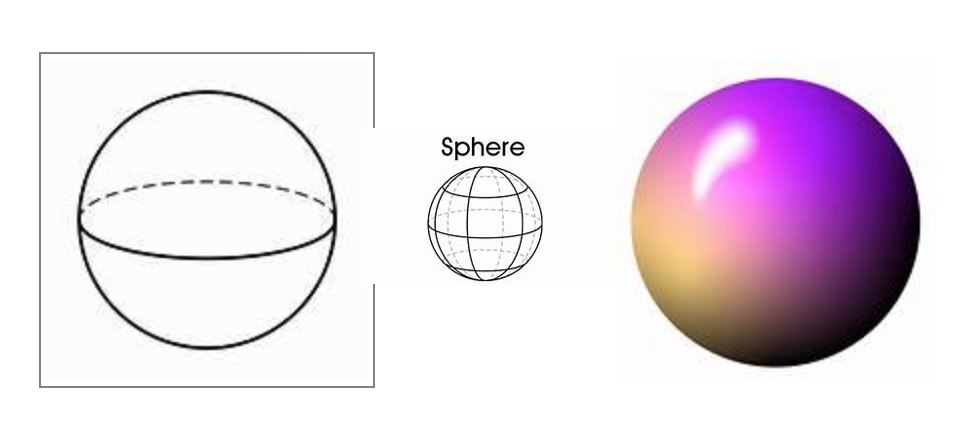
It takes both cognition and information processing for dimensions to come into view. To see something in three dimensions, one has to view from outside and above the apparent dimensions. A circle on a plane—like a drawing on paper—does not appear as a sphere until viewed from above the plane. The added property of the height, added to the width and length, creates an object in space that becomes manifest in three dimensions, where height, width, and length are experienced.

The third dimension requires conscious awareness in that it must be seen from above the plane to become an independent object. Two-dimensional objects are not distinguished from their background until they are observed from above the plane.

Duration is not only an element of time but an element of length. “Length” commonly refers to physical size, as in the length, width, and depth of an object. Duration measures the time period, but the term length is also used to define a period of time as in: “How long have you been waiting?”

ZERO DIMENSION

Being equals existence. Nothing cannot exist because nothing has no being. Nothing was always a human conception, not a natural fact. The Arabian people, the Babylonians, and the Mayans all developed the concept of zero.

The ideas of infinities and endless eternities are foreign to human thought. To believe that one can travel on forever and never see the edge of the universe feels intuitively preposterous. To think that time goes on infinitely forward and eternally backward is an awkward conception. We all have a hard time coming to terms with infinity. The idea that space is infinite means that infinitely huge sections of space can never be seen. What would be the point in that? We always need a point on which to anchor.

The same holds true for the universe. All things in space and time have beginnings and ends. They are finite. Yet, because the finite exists, there must be that which is not finite. It is called the infinite. The ‘undefined’ is an even better term.

The same is true of nothing. Nothing is the opposite of existence in its ‘non-existence’.

Yet, nothing exists. It also does not exist. Or is it in a ‘superposition’ where it is both?

The reason infinity can go on forever is that there is nothing there at all. Without time and space, there are no things… nothing.

If the infinite does not exist in time and space, does it exist at all? Is there a geometric plane above time and space where awareness can experience no time and no space and still be aware?

I believe the answer to that is, yes. There is the point… the universal point, the invisible center of every circle in the universe. That point is one-dimensional because it is all there is – just one single point that contains the entire universe. No matter how large or small this point is thought to be, it is still all there is, and it is the center of everything everywhere.

We can only speculate about the original point and how the physical world emerges from this superpositioned point that is every place and at the center of everything. The infinite includes the finite, the indefinite, and all that exists. 

I think it is imperative to come to terms with infinity. We need to understand that which is beyond time and space. It is the apparent source of existence and the physical universe. We cannot get away from a first cause that came from nothing. For explanation, some turn to the idea of an eternal universe. Yet, that theory cannot take wing and fly as a conception in the temporal world where all begins and ends. Even if energy is fundamental, the question remains: “From what did it spring?”  Is energy eternal? Did it come from nothing?

The zero-dimension must be indefinite. It cannot be more than a point or it would be two-dimensional. It cannot be less than a point, or it would have no existence. As such, the indefinite holds everything within it, including the finite. Dimensional views do not limit the indefinite. The indefinite has no reason to distinguish between the realms of physical and mental being, for they are molded as one.

Consciousness creates the idea of time and then measures its duration. We need to understand that the realization of our world is both a mental conception and a physical reality. The world around us has myriad viewpoints that change as our consciousness moves through the now. The person I call myself is but a collection of memories, hereditary information, experiences, learning, emotions, and patterns of thinking. We are here in the now because this is the only place for us to be. We cannot be in the past or the future except in mental processes. The physicality of our existence changes as the mental universe changes. Being in the now is a conscious and continuous mental state.

Perception organizes sensory information, interpreting physical stimuli, such as light and sound, to construct a coherent experience of objects and events. Our self-consciousness creates the dichotomy between cognitive being and physical being. They are two separate states of perceptive awareness. Each is equally welcome, and both have their own dimensional viewpoints, complete duplicates of one another, except that one is coded into the physical state and the other into the cognitive state. The informational data of the universe is coded in the mental aspect (2-D). It is part of the indefinite, while, through entanglement, the data is physically encoded in the temporal world of physicality.

We are always in the middle. We create the ideas of time, motion, and eternity and project them into a timeless era where they do not belong. Timelessness must exist, though we can barely imagine it. Experience, we deduce, cannot be had without events in time. How, then, can timelessness be possible?

It is possible because the now is always present. To be present in the now requires no thought or action at all. It simply is. Physical change occurs in time, but time is not the cause of the change. It is the movement of the mind that organizes sensory information, interpreting physical stimuli, such as light and sound, to construct a coherent experience of objects and events awareness through the eternal line of the electric now that creates change. Change is a movement that, when measured, becomes time. But it is the conscious awareness that is doing the movement. It is the awareness that creates the change we call movement. The physical counterpoint of awareness is pressure, the force responsible for all physical movement.

We can surmise that the tool called mathematics springs from a natural source because the universe exhibits mathematical precision and patterns from the very start. Perhaps human minds create mathematics, but the muse is Nature itself. Mathematics and equations are commonly used to define what physical changes can produce. 

In order to be useful, knowledge and information must be stored. Genetics and the nervous system are where we store our personal data. I think that the totality of this information and experience is stored mentally in the second dimension and physically in the third. The infinite plane of the second dimension is similar to a universal soft drive that records all reality perpetually. Alas, this can probably never be proved, but it makes for great hope. It would answer the question as to why the universe destroys and recreates its parts. 

Knowledge and experience form our four-dimensional viewpoints. Modern viewpoints revolve around the physical aspects of the mind. These scientific interpretations often hold that the mind is roughly identical to the brain and is reducible to physical phenomena such as the firing of neurons and the chemical encodings of memory. 

Yet, we did not always think in this manner. Throughout the age of human reasoning, the mind has been connected to the psyche. The term “soul” is often used synonymously with the psyche, which includes the totality of the human mind, both the conscious and unconscious elements. The soul has long been thought to be the immortal aspect of the human condition, a ghostly spirit where the personality and moral compass reside.

Carl Jung used the words ‘soul’ and ‘psyche’ as they are the same word in the German language. Of this he wrote: “I have been compelled, in my investigations into the structure of the unconscious, to make a conceptual distinction between soul and psyche. By psyche, I understand the totality of all psychic processes, conscious as well as unconscious. By soul, on the other hand, I understand a clearly demarcated functional complex that can best be described as a “personality”. (Jung, 1971: Def. 48 par. 797)

In a universe paired with a mental aspect and a physical aspect, would the realities in each pair be different? The first dimension of the one point would be the same in both, but the second dimension of the two points–which becomes connected to form a line–would be different. It is through this difference that they come to be independent entities. If one point is infinite and the other is temporal, then the world line of the eternal second dimension would be a straight line to infinity in the mental state. Meanwhile, the world line of the finite point would curve and eventually return to its own starting point, creating an orbit—a geometric figure. It would be temporal and physical because it had a beginning and an ending.

Infinity is not one thing. Even infinity must be paired to its opposite, the finite. Infinity simply has no beginning or end. There can be many infinities in a larger infinity because small infinities, like endless numbers, take up no space at all and are not in time.

Objects exist beyond my personal awareness—such as the place I dwell, the people I know, and the universe I inhabit. They too exist in the now. They are a product of consciousness, but they cannot be of my consciousness alone. They are in the consciousness of all. 

We all have a similar basic vision of the world around us. A common sharing of conscious knowledge between existing entities and objects obviously occurs––though most of nature works through an unconscious mental process. Our conceptions reside in the mental state and deal directly with the infinite process of energy transformation and electrical connections. This mental state has to be of universal proportion, just as the physical state is of universal proportion.

When we realize that objective awareness is essential for the very existence of objects, we come to understand the unity of all. We are all objects. We are mental conceptions, dreams molded together in the one universe that provides adventure, knowledge, and experience for all through the interactions of its individual parts.

ME TOO AND ME

by Kenneth Harper Finton

171017_DX_MeToo.jpg.CROP.promo-xlarge2

Like most any white male born on the 40’s and raised in a rural midwestern town, I was raised with racist and chauvinistic people all around me. There were no black people in the old home town. I never had a chance to relate to any other influence until I left the nest and joined the larger nation around me.

Though women were almost sacred to me, it was not long before I was accused of chauvinism as well. Whether or not this destroyed my first marriage is an open question. It did not help. I entered marriage with the idea based on what was about me—that a woman’s role was to cook and do most of the cleaning. Men took care of the outside and women took care of the inside. That’s what my mother and their mothers did. It was that way everywhere for all I knew. There was little experience to be had about any alternative life styles. The TV shows of the time reinforced this mindset.

When you are living alone, you have to do everything. I did some cooking, some sloppy cleaning, and either went to the corner laundry or dropped my clothes at the cleaners. But that did not change the mindset that formed when I was young. My expectations for my marriage were much more traditional than I like to recall.  By myself, I eat in restaurants, sleep in motels or small efficiencies and take my wash to the laundry masters. These were my preferences. Living with others required compromise.

Born male, I could only guess at the female mindset.  I was not at ease with sex and dating for many years. I finally pecked my way out of that smothering egg long after those around me.

Women were elevated to goddess status in many stone-age cultures. Carvings and stoneworks of the Donna reflect the respect some stone-age peoples had for their women. The Abrahamic and Islamic religions did not glorify, but enslaved women as male possessions.  Through most civilized society, women were treated as chattel.

Chivalry supposedly reinstated women as objects of affection that needed protection but cast women in the role of delicate objects, fragile creatures who needed protection. Likely, this applied more to high-bred women of wealth or nobility, than the milkmaid or the tavern servers.

Unlike the generations before me, I came of sexual age after The Pill.  Unlike generations after me, my encounters came before AIDS. A short span in the 60’s and early 70’s turns out to be one of time’s few social reprieves for active sexual freedom. Single young men and women were hungry for sexual pleasure and the deep-rooted desire for stable companionship, but we soon found that people often mix like oil and water. Paradise is sweet and sour.

It does not take men long to realize that the woman is the great decider about physical contact. Those men who respected others also respected their wishes. Some—who had no real respect for themselves or others—tried to force themselves on women.

Most people have no tolerance for sexual predators. Using and abusing power (be it physical or economic) to force sexual favors has been wrong for a long time. Many men in powerful positions felt they had a right to demand sexual favors from subordinates.

Community leader and organizer, Tarana Burke, founded the “ME TOO” movement in 2006 to help sexual harassment victims and survivors to cope.

By late 2017 the movement has taken on social-changing roles as women came out to expose their unwilling experiences with people of power. However, not everyone was on board that ship. Catherine Deneuve, the famous 74-year-old French movie actress, denounced the movement in an open letter in France’s LeMonde. She claimed “legitimate protests against the sexual violence that women are subject to, particularly in their professional lives, had turned into a witch hunt.”

“Rape is a crime” she wrote, “but trying to seduce someone, even persistently or clumsily, is not—nor is men being gentlemanly a macho attack. Men have been punished summarily, forced out of their jobs when all they did was touch someone’s knee or try to steal a kiss.”

Street harassment is a form of sexual harassment that comprises unwanted comments, wolf-whistles, cat-calling, and other actions by strangers in public areas, according to Google.  And to think, just a few years back that was the common practice of hard-hatted males on break when a pretty woman walked by.

So what are men to do now? Ask if she’s comfortable. Phrase your words with more care. Think about sexist jokes before you relate them and you will likely not repeat them.

“Whether we know it or not, whether we allow ourselves to admit it or not, every man has a list of times that he has violated a woman’s boundaries. Men are raised in a society that teaches boys that they are entitled to have access to women’s bodies. You may not be drugging women’s drinks in a nightclub, you may not be stalking sex workers in a van, but you have probably pressured someone sexually more than once in your life. The game teaches men to assume that women want what we want. The game teaches women that they are supposed to want what men want. Men benefit from this, women do not, but the game is rigged to hurt everyone. The only way to end that cycle is to reject the game itself.”   -Indigo Nai on Facebook, 10/17/17

THE BIG BANG EXPOSED

by Kenneth Harper Finton, ©2017, 2025

big bang

At least three popular competing theories address the origin of the Universe. One is that God created the Universe from nothing for life to exist. The other theory eliminates God and claims that the Universe has always existed. Another is the Big Bang Theory, which is also a creation story.

Which myth, if any, is correct?

If God created the Universe, then who created God? That is the question even  small tots ask. If God always existed, why did it take an eternity to create a Universe?  That which predated existence has always been an unknown and intriguing  mystery. Many books have been written on the subject. If the Universe itself is eternal and expands, then why has it not expanded  completely beyond our view in the eternity that has already passed?

Current data points to an origin of the Universe more than 20 billion years ago. The current creation myth is the misnamed Big Bang Theory, misnamed because it is sound that causes a bang. Sound needs something through which to travel to be heard. There is no sound in the vacuum of space. Sound also needs a sense of hearing. Since none of these things were present for the Big Bang, we have to conclude that the Big Bang had no sound at all. It was neither a bang nor was it big.

The reason it was not big is simple. The Big Bang would have been everywhere because that is all that existed. The singularity from which it came was supposedly an infinitely dense single-dimensional point. Being unstable, we are told, it exploded violently. Newer versions of the same concept stress extreme density and inflation as the cause, not a singularity.

Despite the anthropic descriptions we hear about universal theories, the appearance of infinite energy instantly occurred, without a sense of time, without a sense of space. The place it occurred had to be everywhere as that was all there was. Before that, no universe existed.

Existence is a strange and heady subject. To exist means to have objective reality or being, It means being present in a particular situation or place. The word ‘exist’ was not even coined until the 17th-century and was likely an abbreviation of existence.

But if no universe existed before the Big Bang, then what was there? What was in its place when there was no place? Nothing? But nothing cannot exist because it has no being. The ‘it’ we seek cannot be anything physical.

Whatever we might think is was, it did not exist because without objects it had no objective reality. An observer and an object for the observer to perceive is essential to objective reality. No thing can be present in a particular space or time without an object and an observer. With no time or space into which a reality could be actuated, space would need to be created instantaneously for energy to have a place to go when it was released. The Big Bang explanation posits the expansion of the universe from a infinitely dense point. Space came into being as radiating energy found dimensions to inhabit. Time emerged and came into being as this energy expanded outward in all directions, creating virtual fields and bringing to the observer a sense of duration in time. The universe was born through the interaction of energies that became particles.

And what of this observer?

What is the observer? Observers are generally thought of as being people, but they can also be a system or an interaction. The property of perceptive awareness is essential for observation. Perceptive awareness must actually precede the observation as an awareness needs to be present for an observation to be recorded. The property of perceptive awareness comes before time, comes before space, and comes before the universe. Perception without objects is impossible. Objects without perception are impossible as well. The ability to perceive must be present before anything can perceived. In this case, that which perceived was the interaction itself. Interactions do not need brains or nerve systems in order to be perceived. The action itself contains perception. Perception and awareness ar essential elements of the universe.

Assuming the Big Bang occurred, that which was initially released by the Big Bang would be an unformed primal energy. Radiated energy is measured by the frequency of its vibrational waveforms. Primal energy has no vibrational components as there is no measure of time.  The first step to physical actuality occurs with the emergence of time and space.

Realities are actuated when the infinite becomes finite. When a dimensional limitation is placed upon primal energy, vibrational fields emerge. These patterns repeat through eternity. They are precursors to the sense of time. The observing system can identify the frequency of these vibrations as an entity or substance.

Dimensions are points of view and require a mental component. This component is perceptive awareness that becomes consciousness as it seeks order and becomes aware of its own being. It awakens from its great sleep, dreams of its own experience, and posits its own being into conceptual existence. Only then can nature begin the evolutionary process of universe building.

Seen from an infinite point, there is no time nor space in the lower dimensions. Everything existent is a part of an eternal now.

Virtual radiation transforms into increasingly complex forms of light energy—like photons and cosmic rays—which vibrate in diverse patterns and frequencies as new dimensions are added to the primordial soup. The information experienced is encoded into what must be a cosmic imagination to become a physical actuality. The universe contains physical being and mental being as well. The two worlds are inseparable.

Before spin and mass comes to exist, bosons—which have no spin nor mass—crystalize into the elemental hydrogen and helium as they pass through a universal  field which adds the spin and mass and begins the processes that form the great clouds of dense gases which fills the primitive universe. New senses evolve and come into existence. All the while, this new universe remains connected to the eternal source from which it was formed. Each new sense creates a different dimensional reality and adds additional limitations upon this eternal perceptive ability.

We know nothing of these natural processes at the time of our birth. Our personal selves are a very tiny part of the subconscious process that nature develops. Our growth as a person follows the hereditary patterns laid out in our DNA. We are not conscious of that which was behind our appearance in the universe. Perceptive awareness precedes consciousness and is locked in the misty visions of our personal identities. Our lives are similar to coming into the world in the middle of a motion picture we have never seen, except that we write the plot through our own free choices with the help and the hindrances of all the other playwrights that come to influence us.

We expand and extend our universe through consciousness. It is not that distant galaxies and black holes have no a priori existence of their own. They have an existence outside ourselves. The moon is present whether we see it or not. Our consciousness is like a moving snapshot of a moment in the now, different for everyone and every thing.

LESSONS LEARNED FROM THE MILKWEED


milkweed pod

Nature obviously has its own thoughts and ideas. Most of our own brilliant inventions are derived from observing nature in action. A simple walking through the fall landscape can bring us face-to-face with the brilliance of nature’s thoughts if we take the time to notice them.

Milkweed is the only food of the caterpillar for Monarch butterflies. It is an important 7459399-a-monarch-butterfly-on-a-milkweed-plantsource of nectar for bees and wasps and butterflies alike. How they propagate is not only worthy of our attention, but could be an essential clue to understanding the mind of nature itself.

The little brown seeds are enmeshed in light filaments of silky white hairs called coma that blow away in the wind to disperse and propagate new generations of the milkweed family.

Such revolutionary method for propagation has to develop from an idea in the mind of nature. Somehow, a genetic blueprint for this form of reproduction is developed and slowly revised over time. Due to the complexity of the parts of the plants involved, it makes sense to think of this natural process as an idea that is carefully nurtured and carried out by some natural thought pattern that regulates and develops the botanical universe. The common dandelion has a similar method of asexual reproductions the flowers turn to spore The offspring that grow from this method are genetically identical to the parent plant.

This milkweed floss is hollow and coated with wax, making very good for insulation properties.During World War II, milkweed floss was collected as a substitute for kapok. The milk in the milkweed contains 1 to 2% latex, but has not been widely used as a source for rubber of paint because other sources are more prevalent. The fibers are used to clean u oil spills. (Milkweed touted as oil-spill super-sucker — with butterfly benefits”. cbc.ca. 2 December 2014.)

Milkweed in the Asciepias species is the only food for the caterpillar of the Monarch butterfly. Preserving and growing milkweed is essential for the continuation of this beautiful insect.

Milkweed-in-seed2

GRAVITY SUCKS

Gravity scksSome years back, I believed that people  grew old and died because they became ill and their bodies deteriorated. As I age myself, I wonder if that is so. Could it be that people pass on because the world about them changes so much that they no longer feel attached to it? Can a person evolve to the point where withdrawing from the world seems the best logical choice? Does this changing of the world about us affect our consciousness and then our health? Does life culminate in the desire to no longer desire? Is death the natural end because we lose the desire and will to persist? Or is the will to persist yanked from us despite our rage against the darkness of the unknown night.

What is true for one might not be true for another. The sheer variety of humanity and the vast complexity of nature creates a different world for each entity that lives within it.

Inequality is everywhere because inequality is essential for movement. Inequality is gravity. It is that weak force that binds things together, feet to the earth and planets to the stars, friends to friends.

Each individual life is a cosmos unto itself.

As a young man, I easily saw the truth in the unity of all being but saw also that the world is a game of one-upsmanship. People compete to produce winners and losers. The world around us is stratified, socially and economically.

Social inequality is a constant, but nature demands a balance for stability. The highs must not be too high and the lows must not be too low.  When things are too far out of balance, they explode and gravity is overcome.

Gravity is the result of inequality. When things are equal, there is no push nor pull.

Each side of the equation is different, but the equality creates the balance.

For most of us living on Earth, there is nothing as fine as the era in time in which we now live. How could this not be so, when this time is all we have? Are we not practical? We cannot live in another era.

Yet, eras change, and change brings new actors to the stage, new athletes to the field. Soon enough, we barely know the rules of the game because it has changed so much.

We spend our lives speaking our lines and doing our work. We seek what makes us feel good—through pleasures, work, pastimes, and relationships. It becomes the driving factor that motivates and moves us.

It is movement that produces the gravity that keeps us centered enough to survive. We—like our Earth, our Sun, and our Galaxy—must evolve and revolve as we orbit around something much bigger than us. Heinlein wrote: “Love is that condition in which the happiness of another person is essential to your own.” Love is one of the gravitational anchors that hold us in place.

Health does get worse with time and wear. Physical strength does deteriorate. Passion itself takes a tumble with age. We know this is so. Yet, our fast-changing world can become so unfamiliar that we can easily become those Strangers in a Strange Land that we heard or read about years ago.

Heinlein’s character said: “Thinking doesn’t pay. It just makes you discontented with what you see around you.”  Time passes and consciousness is overloaded with evaluations and judgments made by past choices. It becomes harder to distinguish the winner from the loser when you know each all too well. We can become confused or dismayed about the directions our society and nations are going.

“Thou art god, I am god. All that groks is god,” Heinlein wrote.

Grok may be the only English word that is derived from a fictional Martian language. “Grok” was introduced in Robert A. Heinlein’s 1961 science fiction novel Stranger in a Strange Land. It means to understand fully and intuitively with empathy of intuition. It is hard to grow old and not see the reality of these observations. “Random chance is not a sufficient explanation of the Universe—in fact, random chance is not sufficient to explain random chance; the pot cannot hold itself.”

Everything living has a blind instinct to survive built into its system.

“The only religious opinion I feel sure of is this: self-awareness is not just a bunch of amino acids bumping together.”

― Robert A. HeinleinStranger in a Strange Land

MELANIA, YOU LOVE HIM, RIGHT?

Melania, you love him, right? Some advice from Garrison Keillor

First Lady Melania Trump listens as President Donald Trump speaks during a meeting with administration officials on the opioid addiction crisis at the Trump National Golf Club in Bedminster, N.J., on Tuesday. Nicholas Kamm, AFP/Getty Images


My wife has gone East for a couple weeks and now there is nobody to say, “You’re not wearing that tie with that shirt, are you?” Nobody to point discreetly at her left nostril and hand me a tissue. Nobody to remind me of the name of that woman with the glasses (Liz) whom I ought to know — I told my wife, “Her and me went to school together” so that she’d have the satisfaction of saying “She and I.” “No,” I said, “I don’t think you went to our school.”

It’s a comedy routine when she’s around and now it’s a lonely monk in his cell, quill pen in hand, making illuminated letters and living in darkness.

At this very moment, if you want to know the truth, the big crisis in my life is the fact that my iPhone has accidentally upgraded itself and I don’t know how to downgrade it except by hurling it into the river. My wife would know how to fix this.

Some genius at Apple designed it and now I need a password to make each call or text and the texting screen is odd. Instead of a simple “Send,” there is a row of icons. I press one and colored balloons float up in the background, I try another and the phone offers me a choice of cartoons to accompany the text — a ferocious gorilla in a cage, Snow White, a galloping horse — which must be big fun for 5-year-olds but I’m 75 and I don’t need balloons to accompany my texts, and meanwhile the thing keeps asking for my Apple ID verification, which I do not have. This hellish idiocy descended on me suddenly; evidently I clicked on a “Yes” I shouldn’t have clicked on. My wife would know how to do a reset. I’d like to reset the phone with a ball-peen hammer.

Man was not made to live alone. My friend Frank came to visit who has been divorced for a couple years and I sat and took issue with him on about half of what he had to say which required me to lean farther to the right than I care to lean but I did it for his own good and he was grateful for the opposition. He’s been alone for a long time, living on love and sympathy, and he needed the boost to self-esteem that comes from someone telling you you’re full of prune juice.

This is the American way. Those whom we love, we needle. Better honest skepticism than false piety.

One person can’t do it all. I pretty much handle foreign policy issues in our home because I am not inhibited by ignorance, whereas my wife handles science, technology and the arts. She reads science articles in the paper and explains them to me. She tends the plants in the yard and knows their names. She is well-versed on social convention and has sound opinions about music, books and design. The marriage operates on a delicate system of checks and balances. I say, “Let’s put a ping-pong table in the living room” and she says, “After I’m gone,” and so we don’t.

Everyone needs a truth-teller in his or her life and truth-tellers are becoming rare. It’s the Age of Sensitivity when we’re made to feel that we should be validating each other and not telling someone that his fly is open. Which brings me to the point of this column (“And about time,” I can hear her say).

Melania — do you mind if I call you Melania? — I assume that you love this guy. I don’t, even though Scripture tells me to. A bully and a braggart who is also a liar and somewhat clueless might be lovable if he were a cabdriver, but not a president. But you do, so fine. You owe it to him to tell him, “Darling, you’re making an ass of yourself. For the sake of your family, stop.” Would you let the man run around in a headdress of flamingo feathers singing the song about each and every highway and byway and not in a shy way with his trousers around his ankles? No, you wouldn’t. But that’s what’s happening now.

You married a New York Democrat and now you’re married to Aaron Slick from Punkin Crick. Make him stop. If you can’t tell him face to face, try Twitter. A short punchy message will get his attention. Something like, “You are dumb enough to be twins. Shut up and be beautiful.”


Garrison Keillor is an author, entertainer and former host of “A Prairie Home Companion.”

FATHER TIME AND ME

0a3c24f939593641194c46a7a7511aac--star-david-time-travel


by Kenneth HarperFinton

Born squawking with a curious furrow in my brow, I had no choice in the matter of my birth. Later, I was to learn I had been born into a large country and into an even larger universe that I am still learning to comprehend.

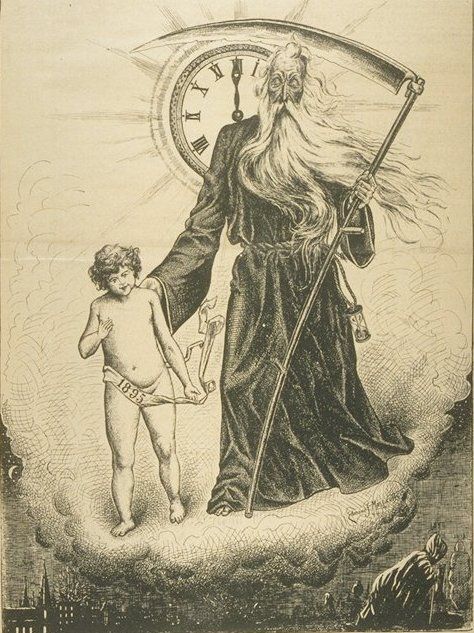
When I was eight I had an abdominal operation and was placed under either. I still remember the vision I had under the influence of the drug. I was running from Father Time who chased me with thunderbolts shooting from his fingertips as he yelled, “Stop, stop! You are ahead of time. Stop!”

It was a powerful vision that is vivid to this day.

How strange this world is to the young:  I was born to be myself and not someone else. This is odd enough but it was even odder to come to conception here in this time instead of somewhere else in another time. Everything was such a mystery. I truly wanted to solve the mystery. I felt this could well be my calling.

It did not take long to discover this fact: everyone is stuck in themselves, the same as I am. Everyone has their own little universe where they are the king or the queen.

Sometimes while I was in a playful mood, I asked myself, “If you could be somebody else, who would that be?”

When I ran through the history of people I have met or known, I could not choose to be any of them. There was no one I might want to be more  than myself, male or female. It’s inconceivable I could be someone other than myself unless I was play-acting the part. Since I have to be me, I might as well make the most of the situation, I decided.

I took a while to understand why I arrived to be a player in this era. I surmised that it had to do with time and consciousness, something science cannot yet explain. It is so easy to miss this vital connection: the now is ever present, just as awareness is always present.

Is this a mere coincidence? Is the now not a measure of time?

The now is not measurable at all, but a micro fraction of an instant where the past changes into the future. The only thing solely contained in the now is our awareness. Consciousness remembers the past and imagines the future, but always does so in the now.

I came to this realization at a young age and caused myself great confusion. Did this mean the world is a mental construction?

For a while, I considered the possibility that the universe is actually a vision which comes alive in the intellect. This was a problematic idea. The mind itself is a mystery. How could the mind be only a product of flesh and blood, neural connections, when nature obviously had a mind which did not need a nervous system?

We are the centers of our worlds, yet nature has carried out its miracles for billions of years without the help of human consciousness through an unconscious process of evolutionary experiments. This has likely been the case since time began.

The colors we see are wavelengths of light. The mind learns to recognize these as different colors. About me, the people I knew had their own personal mindsets. They were different and separate from my own thoughts, though they used much of the same information I used to make their own world view. The primary difference between us is the type and quantity of the information we process both in the mind and the body.

Throughout our lives, the now remains stationary. It is not time that moves, but consciousness. Awareness is always being transformed through experiences, interactions, and observations. If time were to move, what would be the speed of time? If time flowed, what would be the volume of the flow?

No fixed universal clock can measure the flow or speed of time. Time is relative to dimensions, not to a fixed standard. With no way to measure the speed of time, no method can be devised to measure the speed of the now. The now has no speed at all, nor can it move.  The rational thing to conclude is that time does not flow and the now does not move. Instead, consciousness changes.

This was a huge revelation.

-Kenneth Harper Finton

June 8, 2017