THE MESSIANIC INSTINCT

by Elbert Hubbard (1856-1915)

630c1a56-a194-4787-84f7-6c25aad9da8a

EDITORIAL NOTE: Originally, this essay was included in the Little Journey series printed in 1900 by The Roycrofter Press owned by Hubbard. Hubbard described himself as an anarchist formed in the same mold that forged Wallt Whitman, John Ruskin, Henry Thoreau and Leo Tolstoy and William Morris. I reprint these essays because people seem to think that they can learn nothing from people who wrote over a hundred years ago. Hubbard proves them wrong every time.

There was nothing of Jack Falstaff about Francis Schlatter, whose whitened bones were found amid the alkali dust of the desert, a few years ago—dead in an endeavor to do without meat and drink for forty days.

Schlatter purported, and believed, that he was the reincarnation of the Messiah. Letters were sent to him, addressed simply, “Jesus Christ, Denver, Colorado,” and he walked up to the General-Delivery window and asked for them with a confidence, we are told, that relieved the postmaster of a grave responsibility.

Schlatter was no mere ordinary pretender, working on the superstitions of shallow-pated people. He lived up to his belief—took no money, avoided notoriety when he could; and the proof of his sincerity lies in the fact that he died a victim to it.

Herbert Spencer has said all about the Messianic Instinct that there is to say, save this—the Messianic Instinct first had its germ in the heart of a woman. Every woman dreams of the coming of the Ideal Man—the man who will give her protection, even to giving up his life for her, and vouchsafe peace to her soul. I am told by a noted Bishop of the Catholic Church that many women who become nuns are prompted to take their vows solely through the occasion of an unrequited love. They become the bride of the Church and find their highest joy in following the will of Christ. He is their only Spouse and Master.

The terms of endearment one hears at prayer-meetings, “Blessed Jesus,” “Dear Jesus,” “Loving Jesus,” “Elder Brother,” “Patient, gentle Jesus,” etc., were first used by women in an ecstasy of religious transport. And the thought of Jesus as a loving, “personal Savior,” would die from the face of the earth did not women keep it alive. The religious nature and the sex nature are closely akin: no psychologist can tell where the one ends and the other begins.

There may be wooden women in the world, and of these I will not speak, but every strong, pulsing, feeling, thinking woman goes through life, seeking the Ideal Man. Whether she is married or single, rich or poor, old or young, every new man she meets is interesting to her, because she feels in some mysterious way that possibly he is the One.

Of course, I know that every good man, too, seeks the Ideal Woman—but that deserves another chapter.

The only woman in whose heart there is not the live, warm, Messianic Instinct is the wooden woman, and the one who believes she has already found him. But this latter is holding an illusion that soon vanishes with possession.

That pale, low-voiced, gentle and insane man, Francis Schlatter, was followed at times by troops of women. These women believed in him and loved him—in different ways, of course, and with passion varying according to temperament and the domestic environment already existing. To love deeply is a matter of propinquity and opportunity.

One woman, whom “The Healer” had cured of a lingering disease, loved this man with a wild, mad, absorbing passion. Chance gave her the opportunity. He came to her house, cold, hungry, homeless, sick. She fed him, warmed him, looked into his liquid eyes, sat at his feet and listened to his voice. She loved him—and partook of his every mental delusion.

This woman now waits and watches in her mountain home for his return. She knows the coyotes and buzzards picked the scant flesh from his starved frame, but she says: “He promised he would come back to me, and he will. I am waiting for him here.”

This woman writes me long letters from her solitude, telling me of her hopes and plans. Just why all the cranks in the United States should write me letters, I do not know, but they do—perhaps there is a sort o’ fellow-feeling. This woman may write letters to others, just as she does to me. Of this I do not know, but surely I would not thus make public the heart-tragedy told me in a private letter, were it not that the woman herself has printed a pamphlet, setting forth her faith and veiling only those things into which it is not our right to pry.

This Mary Magdalene believes her lover was the Chosen Son of God, and that the Father will reclothe the Son in a new garment of flesh and send him back to his beloved. So she watches and waits, and dresses herself to receive him, and at night places a lighted lantern in the window to guide the way.

She watches and waits.

Other women wait for footsteps that will never come, and listen for a voice that will never be heard. All round the world there is a sisterhood of such. Some, being wise, lose themselves in loving service to others—in useful work. But this woman, out in the wilds of New Mexico, hugs her sorrow to her heart, and feeds her passion by recounting it, and watches away the leaden hours, crying aloud to all who will listen: “He is not dead—he is not dead! he will come back to me! He promised it—he will come back to me! This long, dreary waiting is only a test of my loyalty and love! I will be patient, for he will come back to me! He will come back to me!”

This world would be a sorry place if most men conducted their lives on the Robert Burns plan. Burns was affectionate, tender, generous and kind; but he was not wise. He never saw the future, nor did he know that life is a sequence, and that if you do this, it is pretty sure to lead to that. His loves were largely of the earth.

Excess was a part of his wayward, undisciplined nature; and that constant tendency to put an enemy in his mouth to steal away his brains, bound him at last, hand and foot. His old age could never have been frosty, but kindly—it would have been babbling, irritable, senile, sickening. Death was kind and reaped him young. Sex was the rock on which Robert Burns split. He seemed to regard pleasure-seeking as the prime end of life, and in this he was not so very far removed from the prevalent “civilized” society notion of marriage. But it is a phantasmal idea, and makes a mock of marriage, serving the satirist his excuse.

To a great degree the race is yet barbaric, and as a people we fail utterly to touch the hem of the garment of Divinity. We have been mired in the superstition that sex is unclean, and therefore honesty and free expression in love matters have been tabued.

But the day will yet dawn when we will see that it takes two to generate thought; that there is the male man and the female man, and only where these two walk together hand in hand is there a perfect sanity and a perfect physical, moral and spiritual health.

We reach infinity through the love of one, and loving this one, we are in love with all. And this condition of mutual sympathy, trust, reverence, forbearance and gentleness that can exist between a man and a woman, gives the only hint of Heaven that mortals ever know. From the love of man for woman we guess the love of God, just as the scientist from a single bone constructs the skeleton—aye! and then clothes it with a complete garment.

In their love-affairs women are seldom wise, or men just. How should we expect them to be when but yesterday woman was a chattel and man a slave-owner? Woman won by diplomacy—that is to say, by trickery and untruth, and man had his way through force, and neither is quite willing to disarm. An amalgamated personality is the rare exception, because neither Church, State nor Society yet fully recognizes the fact that spiritual comradeship and the marriage of the mind constitute the only Divine mating. Doctor Blacklock once said that Robert Burns had eyes like the Christ. Women who looked into those wide-open, generous orbs lost their hearts in the liquid depths.

In the natures of Robert Burns and Francis Schlatter there was little in common; but their experiences were alike in this: they were beloved by women. Behind him Burns left a train of weeping women—a trail of broken hearts. And I can never think of him except as a mere youth—”Bobby Burns”—one who never came into man’s estate. In all his love-making he never seemed really to benefit any woman, nor did he avail himself of the many mental and spiritual excellencies of woman’s nature, absorbing them into his own. He only played a devil’s tattoo upon her emotions.

If Burns knew anything of the beauty and inspiration of a high and holy friendship between a thinking man and a thinking woman, with mutual aims, ideals and ambitions, he never disclosed it. The love of a man for a maid, or a maid for a man, can never last, unless these two mutually love a third something. Then, as they are traveling the same way, they may move forward hand in hand, mutually sustained. The marriage of the mind is the only compact that endures. I love you because you love the things that I love. That man alone is great who utilizes the blessings that God provides; and of these blessings no gift equals the gentle, trusting companionship of a good woman.

– See more at: https://scriggler.com/DetailPost/Opinion/6859#sthash.zAWPlw9c.dpuf

BOB DYLAN’S SPEECH FOR THE GRAMMY’S 2015

UnknownI’m glad for my songs to be honored like this. But you know, they didn’t get here by themselves. It’s been a long road and it’s taken a lot of doing. These songs of mine, they’re like mystery stories, the kind that Shakespeare saw when he was growing up. I think you could trace what I do back that far. They were on the fringes then, and I think they’re on the fringes now. And they sound like they’ve been on the hard ground.

I should mention a few people along the way who brought this about. I know I should mention John Hammond, great talent scout for Columbia Records. He signed me to that label when I was nobody. It took a lot of faith to do that, and he took a lot of ridicule, but he was his own man and he was courageous. And for that, I’m eternally grateful. The last person he discovered before me was Aretha Franklin, and before that Count Basie, Billie Holiday and a whole lot of other artists. All noncommercial artists.

Trends did not interest John, and I was very noncommercial but he stayed with me. He believed in my talent and that’s all that mattered. I can’t thank him enough for that. Lou Levy runs Leeds Music, and they published my earliest songs, but I didn’t stay there too long.

Levy himself, he went back a long ways. He signed me to that company and recorded my songs and I sang them into a tape recorder. He told me outright, there was no precedent for what I was doing, that I was either before my time or behind it. And if I brought him a song like “Stardust,” he’d turn it down because it would be too late.

He told me that if I was before my time — and he didn’t really know that for sure — but if it was happening and if it was true, the public would usually take three to five years to catch up — so be prepared. And that did happen. The trouble was, when the public did catch up I was already three to five years beyond that, so it kind of complicated it. But he was encouraging, and he didn’t judge me, and I’ll always remember him for that.

Artie Mogull at Witmark Music signed me next to his company, and he told me to just keep writing songs no matter what, that I might be on to something. Well, he too stood behind me, and he could never wait to see what I’d give him next. I didn’t even think of myself as a songwriter before then. I’ll always be grateful for him also for that attitude.

I also have to mention some of the early artists who recorded my songs very, very early, without having to be asked. Just something they felt about them that was right for them. I’ve got to say thank you to Peter, Paul and Mary, who I knew all separately before they ever became a group. I didn’t even think of myself as writing songs for others to sing but it was starting to happen and it couldn’t have happened to, or with, a better group.

They took a song of mine that had been recorded before that was buried on one of my records and turned it into a hit song. Not the way I would have done it — they straightened it out. But since then hundreds of people have recorded it and I don’t think that would have happened if it wasn’t for them. They definitely started something for me.

The Byrds, the Turtles, Sonny & Cher — they made some of my songs Top 10 hits but I wasn’t a pop songwriter and I really didn’t want to be that, but it was good that it happened. Their versions of songs were like commercials, but I didn’t really mind that because 50 years later my songs were being used in the commercials. So that was good too. I was glad it happened, and I was glad they’d done it.

Purvis Staples and the Staple Singers — long before they were on Stax they were on Epic and they were one of my favorite groups of all time. I met them all in ’62 or ’63. They heard my songs live and Purvis wanted to record three or four of them and he did with the Staples Singers. They were the type of artists that I wanted recording my songs.

Nina Simone. I used to cross paths with her in New York City in the Village Gate nightclub. These were the artists I looked up to. She recorded some of my songs that she [inaudible] to me. She was an overwhelming artist, piano player and singer. Very strong woman, very outspoken. That she was recording my songs validated everything that I was about.

Oh, and can’t forget Jimi Hendrix. I actually saw Jimi Hendrix perform when he was in a band called Jimmy James and the Blue Flames — something like that. And Jimi didn’t even sing. He was just the guitar player. He took some small songs of mine that nobody paid any attention to and pumped them up into the outer limits of the stratosphere and turned them all into classics. I have to thank Jimi, too. I wish he was here.

Johnny Cash recorded some of my songs early on, too, up in about ’63, when he was all skin and bones. He traveled long, he traveled hard, but he was a hero of mine. I heard many of his songs growing up. I knew them better than I knew my own. “Big River,” “I Walk the Line.”

“How high’s the water, Mama?” I wrote “It’s Alright Ma (I’m Only Bleeding)” with that song reverberating inside my head. I still ask, “How high is the water, mama?” Johnny was an intense character. And he saw that people were putting me down playing electric music, and he posted letters to magazines scolding people, telling them to shut up and let him sing.

In Johnny Cash’s world — hardcore Southern drama — that kind of thing didn’t exist. Nobody told anybody what to sing or what not to sing. They just didn’t do that kind of thing. I’m always going to thank him for that. Johnny Cash was a giant of a man, the man in black. And I’ll always cherish the friendship we had until the day there is no more days.

Oh, and I’d be remiss if I didn’t mention Joan Baez. She was the queen of folk music then and now. She took a liking to my songs and brought me with her to play concerts, where she had crowds of thousands of people enthralled with her beauty and voice.

People would say, “What are you doing with that ragtag scrubby little waif?” And she’d tell everybody in no uncertain terms, “Now you better be quiet and listen to the songs.” We even played a few of them together. Joan Baez is as tough-minded as they come. Love. And she’s a free, independent spirit. Nobody can tell her what to do if she doesn’t want to do it. I learned a lot of things from her. A woman with devastating honesty. And for her kind of love and devotion, I could never pay that back.

These songs didn’t come out of thin air. I didn’t just make them up out of whole cloth. Contrary to what Lou Levy said, there was a precedent. It all came out of traditional music: traditional folk music, traditional rock ‘n’ roll and traditional big-band swing orchestra music.

I learned lyrics and how to write them from listening to folk songs. And I played them, and I met other people that played them back when nobody was doing it. Sang nothing but these folk songs, and they gave me the code for everything that’s fair game, that everything belongs to everyone.

For three or four years all I listened to were folk standards. I went to sleep singing folk songs. I sang them everywhere, clubs, parties, bars, coffeehouses, fields, festivals. And I met other singers along the way who did the same thing and we just learned songs from each other. I could learn one song and sing it next in an hour if I’d heard it just once.

If you sang “John Henry” as many times as me — “John Henry was a steel-driving man / Died with a hammer in his hand / John Henry said a man ain’t nothin’ but a man / Before I let that steam drill drive me down / I’ll die with that hammer in my hand.”

If you had sung that song as many times as I did, you’d have written “How many roads must a man walk down?” too.

Big Bill Broonzy had a song called “Key to the Highway.” “I’ve got a key to the highway / I’m booked and I’m bound to go / Gonna leave here runnin’ because walking is most too slow.” I sang that a lot. If you sing that a lot, you just might write,

Georgia Sam he had a bloody nose Welfare Department they wouldn’t give him no clothes He asked poor Howard where can I go Howard said there’s only one place I know Sam said tell me quick man I got to run Howard just pointed with his gun And said that way down on Highway 61

You’d have written that too if you’d sang “Key to the Highway” as much as me.

“Ain’t no use sit ‘n cry / You’ll be an angel by and by / Sail away, ladies, sail away.” “I’m sailing away my own true love.” “Boots of Spanish Leather” — Sheryl Crow just sung that.

“Roll the cotton down, aw, yeah, roll the cotton down / Ten dollars a day is a white man’s pay / A dollar a day is the black man’s pay / Roll the cotton down.” If you sang that song as many times as me, you’d be writing “I ain’t gonna work on Maggie’s farm no more,” too.

I sang a lot of “come all you” songs. There’s plenty of them. There’s way too many to be counted. “Come along boys and listen to my tale / Tell you of my trouble on the old Chisholm Trail.” Or, “Come all ye good people, listen while I tell / the fate of Floyd Collins a lad we all know well / The fate of Floyd Collins, a lad we all know well.”

“Come all ye fair and tender ladies / Take warning how you court your men / They’re like a star on a summer morning / They first appear and then they’re gone again.” “If you’ll gather ’round, people / A story I will tell / ‘Bout Pretty Boy Floyd, an outlaw / Oklahoma knew him well.”

If you sung all these “come all ye” songs all the time, you’d be writing, “Come gather ’round people where ever you roam, admit that the waters around you have grown / Accept that soon you’ll be drenched to the bone / If your time to you is worth saving / And you better start swimming or you’ll sink like a stone / The times they are a-changing.”

You’d have written them too. There’s nothing secret about it. You just do it subliminally and unconsciously, because that’s all enough, and that’s all I sang. That was all that was dear to me. They were the only kinds of songs that made sense.

“When you go down to Deep Ellum keep your money in your socks / Women in Deep Ellum put you on the rocks.” Sing that song for a while and you just might come up with, “When you’re lost in the rain in Juarez and it’s Easter time too / And your gravity fails and negativity don’t pull you through / Don’t put on any airs / When you’re down on Rue Morgue Avenue / They got some hungry women there / And they really make a mess outta you.”

All these songs are connected. Don’t be fooled. I just opened up a different door in a different kind of way. It’s just different, saying the same thing. I didn’t think it was anything out of the ordinary.

Well you know, I just thought I was doing something natural, but right from the start, my songs were divisive for some reason. They divided people. I never knew why. Some got angered, others loved them. Didn’t know why my songs had detractors and supporters. A strange environment to have to throw your songs into, but I did it anyway.

Last thing I thought of was who cared about what song I was writing. I was just writing them. I didn’t think I was doing anything different. I thought I was just extending the line. Maybe a little bit unruly, but I was just elaborating on situations. Maybe hard to pin down, but so what? A lot of people are hard to pin down. You’ve just got to bear it. I didn’t really care what Lieber and Stoller thought of my songs.

They didn’t like ‘em, but Doc Pomus did. That was all right that they didn’t like ‘em, because I never liked their songs either. “Yakety yak, don’t talk back.” “Charlie Brown is a clown,” “Baby I’m a hog for you.” Novelty songs. They weren’t saying anything serious. Doc’s songs, they were better. “This Magic Moment.” “Lonely Avenue.” Save the Last Dance for Me.

Those songs broke my heart. I figured I’d rather have his blessings any day than theirs.

Ahmet Ertegun didn’t think much of my songs, but Sam Phillips did. Ahmet founded Atlantic Records. He produced some great records: Ray Charles, Ray Brown, just to name a few.

There were some great records in there, no question about it. But Sam Phillips, he recorded Elvis and Jerry Lee, Carl Perkins and Johnny Cash. Radical eyes that shook the very essence of humanity. Revolution in style and scope. Heavy shape and color. Radical to the bone. Songs that cut you to the bone. Renegades in all degrees, doing songs that would never decay, and still resound to this day. Oh, yeah, I’d rather have Sam Phillips’ blessing any day.

Merle Haggard didn’t even think much of my songs. I know he didn’t. He didn’t say that to me, but I know [inaudible]. Buck Owens did, and he recorded some of my early songs. Merle Haggard — “Mama Tried,” “The Bottle Let Me Down,” “I’m a Lonesome Fugitive.” I can’t imagine Waylon Jennings singing “The Bottle Let Me Down.”

“Together Again”? That’s Buck Owens, and that trumps anything coming out of Bakersfield. Buck Owens and Merle Haggard? If you have to have somebody’s blessing — you figure it out.

Oh, yeah. Critics have been giving me a hard time since Day One. Critics say I can’t sing. I croak. Sound like a frog. Why don’t critics say that same thing about Tom Waits? Critics say my voice is shot. That I have no voice. What don’t they say those things about Leonard Cohen? Why do I get special treatment? Critics say I can’t carry a tune and I talk my way through a song. Really? I’ve never heard that said about Lou Reed. Why does he get to go scot-free?

What have I done to deserve this special attention? No vocal range? When’s the last time you heard Dr. John? Why don’t you say that about him? Slur my words, got no diction. Have you people ever listened to Charley Patton or Robert Johnson, Muddy Waters. Talk about slurred words and no diction. [Inaudible] doesn’t even matter.

“Why me, Lord?” I would say that to myself.

Critics say I mangle my melodies, render my songs unrecognizable. Oh, really? Let me tell you something. I was at a boxing match a few years ago seeing Floyd Mayweather fight a Puerto Rican guy. And the Puerto Rican national anthem, somebody sang it and it was beautiful. It was heartfelt and it was moving.

After that it was time for our national anthem. And a very popular soul-singing sister was chosen to sing. She sang every note — that exists, and some that don’t exist. Talk about mangling a melody. You take a one-syllable word and make it last for 15 minutes? She was doing vocal gymnastics like she was on a trapeze act. But to me it was not funny.

Where were the critics? Mangling lyrics? Mangling a melody? Mangling a treasured song? No, I get the blame. But I don’t really think I do that. I just think critics say I do.

Sam Cooke said this when told he had a beautiful voice: He said, “Well that’s very kind of you, but voices ought not to be measured by how pretty they are. Instead they matter only if they convince you that they are telling the truth.” Think about that the next time you [inaudible].

Times always change. They really do. And you have to always be ready for something that’s coming along and you never expected it. Way back when, I was in Nashville making some records and I read this article, a Tom T. Hall interview. Tom T. Hall, he was bitching about some kind of new song, and he couldn’t understand what these new kinds of songs that were coming in were about.

Now Tom, he was one of the most preeminent songwriters of the time in Nashville. A lot of people were recording his songs and he himself even did it. But he was all in a fuss about James Taylor, a song James had called “Country Road.” Tom was going off in this interview — “But James don’t say nothing about a country road. He’s just says how you can feel it on the country road. I don’t understand that.”

Now some might say Tom is a great songwriter. I’m not going to doubt that. At the time he was doing this interview I was actually listening to a song of his on the radio.

It was called “I Love.” I was listening to it in a recording studio, and he was talking about all the things he loves, an everyman kind of song, trying to connect with people. Trying to make you think that he’s just like you and you’re just like him. We all love the same things, and we’re all in this together. Tom loves little baby ducks, slow- moving trains and rain. He loves old pickup trucks and little country streams. Sleeping without dreams. Bourbon in a glass. Coffee in a cup. Tomatoes on the vine, and onions.

Now listen, I’m not ever going to disparage another songwriter. I’m not going to do that. I’m not saying it’s a bad song. I’m just saying it might be a little overcooked. But, you know, it was in the top 10 anyway. Tom and a few other writers had the whole Nashville scene sewed up in a box. If you wanted to record a song and get it in the top 10 you had to go to them, and Tom was one of the top guys. They were all very comfortable, doing their thing.

This was about the time that Willie Nelson picked up and moved to Texas. About the same time. He’s still in Texas. Everything was very copacetic. Everything was all right until — until — Kristofferson came to town. Oh, they ain’t seen anybody like him. He came into town like a wildcat, flew his helicopter into Johnny Cash’s backyard like a typical songwriter. And he went for the throat. “Sunday Morning Coming Down.”

Well, I woke up Sunday morning With no way to hold my head that didn’t hurt. And the beer I had for breakfast wasn’t bad So I had one more for dessert Then I fumbled through my closet Found my cleanest dirty shirt Then I washed my face and combed my hair And stumbled down the stairs to meet the day.

You can look at Nashville pre-Kris and post-Kris, because he changed everything. That one song ruined Tom T. Hall’s poker parties. It might have sent him to the crazy house. God forbid he ever heard any of my songs.

You walk into the room With your pencil in your hand You see somebody naked You say, “Who is that man?” You try so hard But you don’t understand Just what you’re gonna say When you get home You know something is happening here But you don’t know what it is Do you, Mister Jones?

If “Sunday Morning Coming Down” rattled Tom’s cage, sent him into the looney bin, my song surely would have made him blow his brains out, right there in the minivan. Hopefully he didn’t hear it.

I just released an album of standards, all the songs usually done by Michael Buble, Harry Connick Jr., maybe Brian Wilson’s done a couple, Linda Ronstadt done ‘em. But the reviews of their records are different than the reviews of my record.

In their reviews no one says anything. In my reviews, [inaudible] they’ve got to look under every stone when it comes to me. They’ve got to mention all the songwriters’ names. Well that’s OK with me. After all, they’re great songwriters and these are standards. I’ve seen the reviews come in, and they’ll mention all the songwriters in half the review, as if everybody knows them. Nobody’s heard of them, not in this time, anyway. Buddy Kaye, Cy Coleman, Carolyn Leigh, to name a few.

But, you know, I’m glad they mention their names, and you know what? I’m glad they got their names in the press. It might have taken some time to do it, but they’re finally there. I can only wonder why it took so long. My only regret is that they’re not here to see it.

Traditional rock ‘n’ roll, we’re talking about that. It’s all about rhythm. Johnny Cash said it best: “Get rhythm. Get rhythm when you get the blues.” Very few rock ‘n’ roll bands today play with rhythm. They don’t know what it is. Rock ‘n’ roll is a combination of blues, and it’s a strange thing made up of two parts. A lot of people don’t know this, but the blues, which is an American music, is not what you think it is. It’s a combination of Arabic violins and Strauss waltzes working it out. But it’s true.

The other half of rock ‘n’ roll has got to be hillbilly. And that’s a derogatory term, but it ought not to be. That’s a term that includes the Delmore Bros., Stanley Bros., Roscoe Holcomb, Clarence Ashley … groups like that. Moonshiners gone berserk. Fast cars on dirt roads. That’s the kind of combination that makes up rock ‘n’ roll, and it can’t be cooked up in a science laboratory or a studio.

You have to have the right kind of rhythm to play this kind of music. If you can’t hardly play the blues, how do you [inaudible] those other two kinds of music in there? You can fake it, but you can’t really do it.

Critics have made a career out of accusing me of having a career of confounding expectations. Really? Because that’s all I do. That’s how I think about it. Confounding expectations.

“What do you do for a living, man?” “Oh, I confound expectations.”

You’re going to get a job, the man says, “What do you do?” “Oh, confound expectations.: And the man says, “Well, we already have that spot filled. Call us back. Or don’t call us, we’ll call you.” Confounding expectations. What does that mean? ‘Why me, Lord? I’d confound them, but I don’t know how to do it.’

The Blackwood Bros. have been talking to me about making a record together. That might confound expectations, but it shouldn’t. Of course it would be a gospel album. I don’t think it would be anything out of the ordinary for me. Not a bit. One of the songs I’m thinking about singing is “Stand By Me” by the Blackwood Brothers. Not “Stand By Me” the pop song. No. The real “Stand By Me.” The real one goes like this:

When the storm of life is raging / Stand by me / When the storm of life is raging / Stand by me / When the world is tossing me / Like a ship upon the sea / Thou who rulest wind and water / Stand by me

In the midst of tribulation / Stand by me / In the midst of tribulation / Stand by me / When the hosts of hell assail / And my strength begins to fail / Thou who never lost a battle / Stand by me

In the midst of faults and failures / Stand by me / In the midst of faults and failures / Stand by me / When I do the best I can / And my friends don’t understand / Thou who knowest all about me / Stand by me

That’s the song. I like it better than the pop song. If I record one by that name, that’s going to be the one. I’m also thinking of recording a song, not on that album, though: “Oh Lord, Please Don’t Let Me Be Misunderstood.”

Anyway, why me, Lord. What did I do?

Anyway, I’m proud to be here tonight for MusiCares. I’m honored to have all these artists singing my songs. There’s nothing like that. Great artists. [applause, inaudible]. They’re all singing the truth, and you can hear it in their voices.

I’m proud to be here tonight for MusiCares. I think a lot of this organization. They’ve helped many people. Many musicians who have contributed a lot to our culture. I’d like to personally thank them for what they did for a friend of mine, Billy Lee Riley. A friend of mine who they helped for six years when he was down and couldn’t work. Billy was a son of rock ‘n’ roll, obviously.

He was a true original. He did it all: He played, he sang, he wrote. He would have been a bigger star but Jerry Lee came along. And you know what happens when someone like that comes along. You just don’t stand a chance.

So Billy became what is known in the industry — a condescending term, by the way — as a one-hit wonder. But sometimes, just sometimes, once in a while, a one-hit wonder can make a more powerful impact than a recording star who’s got 20 or 30 hits behind him. And Billy’s hit song was called “Red Hot,” and it was red hot. It could blast you out of your skull and make you feel happy about it. Change your life.

He did it with style and grace. You won’t find him in the Rock and Roll Hall of Fame. He’s not there. Metallica is. Abba is. Mamas and the Papas — I know they’re in there. Jefferson Airplane, Alice Cooper, Steely Dan — I’ve got nothing against them. Soft rock, hard rock, psychedelic pop. I got nothing against any of that stuff, but after all, it is called the Rock and Roll Hall of Fame. Billy Lee Riley is not there. Yet.

I’d see him a couple times a year and we’d always spent time together and he was on a rockabilly festival nostalgia circuit, and we’d cross paths now and again. We’d always spend time together. He was a hero of mine. I’d heard “Red Hot.” I must have been only 15 or 16 when I did and it’s impressed me to this day.

I never grow tired of listening to it. Never got tired of watching Billy Lee perform, either. We spent time together just talking and playing into the night. He was a deep, truthful man. He wasn’t bitter or nostalgic. He just accepted it. He knew where he had come from and he was content with who he was.

And then one day he got sick. And like my friend John Mellencamp would sing — because John sang some truth today — one day you get sick and you don’t get better. That’s from a song of his called “Life is Short Even on Its Longest Days.” It’s one of the better songs of the last few years, actually. I ain’t lying.

And I ain’t lying when I tell you that MusiCares paid for my friend’s doctor bills, and helped him to get spending money. They were able to at least make his life comfortable, tolerable to the end. That is something that can’t be repaid. Any organization that would do that would have to have my blessing.

I’m going to get out of here now. I’m going to put an egg in my shoe and beat it. I probably left out a lot of people and said too much about some. But that’s OK. Like the spiritual song, ‘I’m still just crossing over Jordan too.’ Let’s hope we meet again. Sometime. And we will, if, like Hank Williams said, “the good Lord willing and the creek don’t rise.”

THE SCUNTHORPE PROBLEM: UNINTENDED CONSEQUENCES

by Kenneth Harper Finton ©2015 elk-jumping-fence

 “Give me land, lots of land with the sunny skies above, Don’t fence me in.”

 – Cole Porter

   Riding in the car on Route 287, the lead elk jumped a fence leaving the others struggling alone on the other side. Fences isolate and entrap while they pretend to protect and defend.

   “Good fences make good neighbors,” Robert Frost has said, as though building a wall around yourself is desirable and morally essential.

   It brought to mind the day I returned to the country from New York City and took my old dog for a walk in the woods. We came to a fence and I lifted  Lassie up over the fence, but she had gained weight and was heavier than I remembered. She struggled free, caught her back leg in the wire and hung there upside down and yelping. I ran off to the nearest neighbor to borrow some wire cutters, but while I was cutting the leg free, the frightened old girl bit me several times. They were painful punctures on the hand that later swelled and ached like a bad tooth.

   Until the last one hundred and years life ran free upon the Earth. Then we built the fences and the roads and divided the herds as though we had the inalienable right to do so. After all, are we not the cream of living things, the tamers of nature, the universe itself come to intelligence and great power. Does not ancient and misguided scripture give us power and dominion over all the living things? “Be fruitful and multiply, and fill the earth, and subdue it; and rule over the fish of the sea and over the birds of the sky and over every living thing that moves on the earth.” Genesis 1:27.

slide-elk-calf-caught

   Our freeways have separated the species. They are giant fences that imprison and subdue the beasts of the wild and halt their natural evolution. Our fences are created to provide us with a food supply and keep the victims we choose safe for tomorrow’s meals.

700x467xwildlife-corridor.png.pagespeed.ic.uAXffYWNV0xVRQ3Sees-.jpg

Unintended Consequences

Our world is full of unintended consequences. The Scunthorpe problem is named from an attempt to protect people from exposure to the obscene by filtering out strings of letters that spelled what the censors considered to be key strings of letters. As a result, people on Scunthorpe, England could not use the web of look up a local business because the word cunt was in the town’s name. We can solve our Scunthorpe problems, but it costs money that people would rather use for other things.

   Little can be done on the lonely byways where fencing is mandatory and the animals are left to their own devices. Not even Vegan ideas can solve such problems, as wild herds are not used for our primary food supplies. Outdated, obsolete moral codes are responsible for many problems that could easily be solved if only people used reason instead of faith and knowledge instead of dogma.

   The prohibition era in the United States was intended to control the liquor traffic and protect the public against alcoholism, but it drove the trade underground and the profits into the hands of mobsters. The same has occurred with the war on drugs.

   Abstinence-only sex education has been shown to increase teenage pregnancy rates, rather than reduce them. Compared to either comprehensive sex education or no sex education at all, it has been shown to be ineffective. [Kohler, Pamela; Manhart, Lisa; Lafferty, William (April 2008). “Abstinence-Only and Comprehensive Sex Education and the Initiation of Sexual Activity and Teen Pregnancy”, Journal of Adolescent Health.]

   It seems reasonable to require that children be constrained by car seats to prevent injury in case of accidents, but air bags killed many kids. So we decide that moving children to the back seats in rear-facing seats was a solution, but there was a great increase in children being forgotten and left to suffer in overheated cars as a result. Robert K. Merton listed five possible causes of unanticipated consequences in 1996. [Merton, Robert K (1996). “On Social Structure and Science”. The University of Chicago Press.]

  1. Ignorance, making it impossible to anticipate everything, thereby leading to incomplete analysis
  2. Errors in analysis of the problem or following habits that worked in the past but may not apply to the current situation
  3. Immediate interests overriding long-term interests
  4. Basic values which may require or prohibit certain actions even if the long-term result might be unfavorable (these long-term consequences may eventually cause changes in basic values)
  5. Self-defeating prophecy, or, the fear of some consequence which drives people to find solutions before the problem occurs, thus the non-occurrence of the problem is not anticipated.

Unintended consequences write the stories of our lives. The world about us is immensely complex. Solving problems create other problems that take their place. The best we can do is be willing to change the basic values that prevent us from creating and maintaining a better world for all.

SEX DRIVE

Unknown-1

Sex Drive

© 2014-2017 Ken Finton

Do men have a greater desire for sex than women?

Many studies have been done to compare the sexual appetites of men and women. How many of them have any value for us as individuals?

Probably none, because as individuals we vary greatly. Not one of us is a typical cross sample because typical samples do not exist. Statistics are mathematical averages like the average temperature in a given month.

I can only tell you of my appetites. I know nothing of yours.

I can bear witness to the fact that sex is a driving force in adolescent years and reduces in importance with time and age. They say this is partially caused by a decrease in testosterone output as men age. Obviously, nature has not objected to this decrease. It seems to be a natural and inherited process that leads some to a more focused use of their time and effort.

Scientists will tell you that is due to a hormone they call ‘testosterone’. The blood level of this hormone is seven to eight time higher than in a woman.

When given this hormone, “At the higher dose, the percentages of women who had sexual fantasies, masturbated, or engaged in sexual intercourse at least once a week increased two to three times from baseline.” [The New England Journal of Medicine, September 7, 2000.]

This then shows that a high sex drive is a product of male hormonal levels?

Maybe not. The tests were conducted on women who had hysterectomies and hormonal disorders.

I can tell you this. I have desired thousands more women than women have desired me. That is the primary difference between male and female appetites.

It does not take that much to set a man off on the road to desire. It is a path he has followed all his life.

Women Are More Selective

It is likely an ancient biological trait that enabled the choice of stronger, more dependable mates for the procreation of the family group,

That is why there is a battle of the sexes. That is why many men feel rejected, lose self-confidence, then settle for less desirable women. This balance populates the world.

Though men may exercise their sexual desire every day—even every few hours—that does not mean that they act upon it.

Affairs are complicated. They can be quite frightening. Affairs have as many implications as there are individuals involved. Affairs are uncertain and can often be time-consuming. Consenting individuals that have not been truthful in their motives to either themselves or their partners make the grist for the massive amounts of pulp fiction that washes over our social oceans.

Woman are only fertile for a short time each month. In order for the human race to persist, the man needs to be ready for sex when this occurs. What better way could nature devise than for a man to be ready than to give the males a bigger dose of carnal longing?

Who Leads the Seduction? 

The woman must be willing—unless physically forced. Inhibitions can also affect willingness. The fact that so many of us walk the earth is a clear sign that most women are not that inhibited at least some of the time. By responding to a man’s advances, the woman is not the victim of carnal desire, but a willing participant and the primary instigator of the sexual contact.

Do I hear a nay-not-so in the distance?

Then think about it. Without an agreement, conjugal acts are deemed vile. The agreement for conjugal relations is sealed by the woman.

Do Men Tire of Their Partners?

There is the story of the farmer whose spouse was starving for sexual attention. She reminded him of the prize bull that they kept penned. “Old Ben” has no trouble satisfying the cows whenever he is called upon for service,” she says.

“But not with the same cow,” was her husband’s reply.

Although sexual familiarity becomes routine, most men do not use that as an excuse for frequent affairs. These affairs require work. Many men are too lazy to have an affair. These affairs may require change. Comfortable people generally like to keep things the way they are. These affairs require much energy, and the body has only so much of that to give.

On the whole, one would think that a man and a woman’s sex drive should be about equal. Once procreation is removed from the picture, the woman might even have a stronger drive than the man. The big difference is the woman’s ability to say “Yes.”

Men cannot sexually perform repeatedly as women can. This difference in biology can be used to show that women can have an even greater sexual appetite than men. Visions and tales of profligate women abound. These stories put the braggadocio of the world’s playboys to shame.

The Roman Empress Theodora would take on thirty slaves at a time to make certain that she was properly served. According to Procopius, she used all three of her body openings and lamented not having a fourth of a fifth that could be filled.

messalina2

Pliny the Elder told us of Messalina, wife of Claudius, cousin to Nero and Caligula. She was one of the most promiscuous women in Rome. She competed with a prostitute to see who could have sex with the most men in a single night. Messalina won the contest.

Women generally bear the burden of conception as long as they live. This does not have to be so for men. They can hop on their horses and ride off into the sunset.  So can women, but it does not happen nearly as often.

Women develop an ability to please and be of service that few men can ever possess. So we have cultures where woman are born and raised to please and men are born and raised to be pleased.

None of us made this world. We were born into it. We have to deal with it as we can. We learn to change what we can—provided we have the will to do so. Comfort decreases the will for change. Discomfort increases it.

Sexual appetites are as important to us as food itself—men and woman alike—provided they are healthy both mentally and physically. For some, it seems a shame that society perverts these ancient longings for the sake of social perpetuity and family structure, yet nature has many species that have the same sexual preference and mate for life.

We use sex as a tool in many ways. We learn at an early age to exploit sexual energy.

Advertisements flood us with promises of sexual gratification. Movies and books fill us up with fantasies and stories that we might have never known, had we not been semi-literate moviegoers and seekers of the mysterious unknown.

Pornography is a depression-proof business. Prostitutes, they say, are practitioners of the world’s oldest profession. Where prostitution is legal, sex crimes are much rarer.

So it seems that whether men have a stronger sex drive than women is not an important question at all. Every woman is different. Every man has his own private longings and dreams.

All of which brings us back to where we began, as does any cycle of life.

We should be thankful that this is so.

THE WRITER’S DILEMMA

by Kenneth Harper Finton ©2015

a2351c22-19ff-40c4-8852-cbf36ff8bda3 It is said that writers “write to be read.” Then painters paint to be seen, actors act to impress and singers sing to be heard. If this is the case–and most often it is–the newer writers of the world are setting themselves up for great disappointment. They will not find the audience that they did on the past. They will not achieve the fame that others did in the past. They will quite likely not enjoy the riches that others have had In the past. Technology and world Internet communications have obviously changed the world.

Though it has democratized the ability to be read and seen and heard, by doing so it has practically eliminated the institutions that originally supported and brought culture to the world. Some vestiges of the old system remain, but they are losing ground with each passing year. They have been replaced by myriads of smaller, more democratized platforms that do not pay, do not develop and do not guide.

Moguls still control what is printed and sold in local stores. They chose the music that is allowed to be bought at box stores, the movies that are shown and the art that is displayed in museums and fine art shows. The competition for such space is fierce. The rewards to the artists have been drastically reduced from that it was just thirty years ago. This leaves the would-be writer with a great dilemma. They feel that they have talent and should pursue an audience and readership, but the audience is slimmer and the finger of fate even more fickle than ever.

Only by applying a talent is the talent polished and sharpened. “Practice,” it is said, “makes perfect.”

Perfection, though, is a subjective judgment that should be left out of that axiom. Practice makes us more exceptional. It is a fact, though, that natural talents of all kinds need to be performed and utilized to get beyond the level of the commonplace. Writers now write blogs to keep their talents active and polished, but the readers of blogs are also a fickle lot. The individual blog does not really reach a substantial audience. Blogs and personal journals are worthy tools for a writer, as they can refer to them in the future, draw on them for ideas, and reference them for later promotion.

There are few, if any, works that cannot be made better by multiple rewrites. So coming back to what you did before is quite valuable for the future. Professional writing has not totally become extinct, but it is nearing that vanishing point. Professional writers are not free to write as their muse moves them, but are pressured to write what their superiors believe their readership wants to read. Even with access to statistics that determine what people are choosing to read, the writer is often no longer free to follow their muse and write from the heart if they want to increase their following.

Yet, writing from the heart and being true to your own voice is the only possible way to beat the odds. Only that will make you stand out in a crowd. Even if you write from the heart, your heart and voice must be very special, very unique and quite original. Your perceived persona must be likable, strong and quite different from the masses. The vast majority of us will never be that person. Chloe Thurlow recently spoke of  “the time before smart phones made the whole world a banal image and the photographer like the editor became a dinosaur.” https://www.facebook.com/chloe.thurlow.5?fref=ts

We have a changing dictum. As writers, we must write for ourselves to be original. We will probably never make any financial profit from these efforts. Few in history ever have. We may not even achieve any large readership no matter how hard we try. Everyone has an opinion to share, a broken heart to express, a love that they feel they must share with the world about. All lives are novels in the making. The only thing we can do is persist or quit.

Of course, if we quit, we never will have an audience. If we want an audience or a readership, our only alternative is to persist. To persist means to continue through depression and despair. It means we need to develop tools to combat and dispel our negative feelings. To persist means to struggle with the reality that we spend too much time doing things that we do not love in order to do what we do love. It is easier to be a baker or a cook or a carpenter. All such work is creative, but the requirement of pleasing more than a few is not essential in many occupations.

Artists always had to pay their dues. The fees are even higher these days. Inflation, you know.

THE FOUNDATION FOR THE FURTHERING OF GLOBAL IGNORANCE

by Kenneth Harper Finton ©2014

images-2

My old grandpappy used say that “learnin’ is bad for a body. The more a body knows, the unhappier a body gets.”

Unfortunately, I did not take his advice, but I have yet to see any proof that he is wrong.

That is why I founded The Foundation for the Furthering of Global Ignorance.

Reading Ruins the Eyes

Reading is hellish on the eyeballs. We may not notice it for a while, but the words become increasingly out of focus and lines soon begin to dance before our eyes. The eyes will then begin to water and demand a good rubbing.

Reading Strengthens the Brain.

The natural state of the brain is mushy. The more we use it, the stronger it grows. We do not want to overburden or tax the brain, so we should replace reading and writing with movies and phone conversations.

Overworked brains need bigger heads and our heads are fixed in size and volume. We should not fill it the our brains with useless culture and relics from past thoughts. If these classic thoughts from the past had any value at all, these thoughts would reoccur to us, would they not?

Had I only paid attention to the old man, I could revel in even more ignorance than I already possess. Lucky for the present, most schools are not really teaching classic reading skills. They teach enough writing to sign your name and pass a driver’s license test.

images-1They don’t teach geography, so no one under 25 has any idea of where they are going. They no longer teach cursive, as it can be had in the fonts folder if one really needs it.

Reading Can Expand Your World

For those of us who like things exactly as they are, there is no worse threat that seeing what is on the other side of the hill. With new communications tools the universe is at our fingertips. We can make friends in Patagonia and buy stocks in Australia. We can be inspired by ideas from across the ages and the seas. The Internet may kill everything we have worked for thousands of years to achieve. Ignorance and class. I was once told Al Gore invented the Internet. I believe that he should be drawn and quartered.


It_pays_to_be_ignorant_1949-showReading May Accidentally Change Your Station in Life

This reading of history and novels must be held in check. Through reading one is able to transcend their own station in life. They are emboldened to dream of other worlds and experience other lives. This, of course, is disruptive to the homogeneous society we seek to build. When the average person learns too much about how the world really works, they tend to either revolt or become integrated in the power structure. Stability is built by the ignorance of the masses.

Once one embraces ignorance, the world is a much simpler place.


images


CLAUS VS. CORPORATE PERSONHOOD

SANTA CLAUSE ACCUSED OF NOT TAKING PAY FOR DELIVERY FEES

by Kenneth Harper Finton ©2014


Santa Claus


Claus checked his ledgers in Quickbooks. It was not a task he enjoyed.

He fondly remembered the days when the smoke encircled his head like a wreath. He quit smoking a pipe a decade or two ago, but he still missed the pungent aroma of his tobacco. What he did not miss was the sore tongue and hacking cough he would often get.

When Christmas was taken over by the corporate gift manufacturers he had shaken his head and withdrawn in total disbelief.  “How could they corner the market on gifts so quickly,” Claus remembered saying.

He had long since had to retire much of his elf force. The elves just could not compete with the prices the corporations charged for general gifts of all shapes and sizes. Soon metal toys replaced his home-made-by-elfen-hands wooden toys.

As if that were not bad enough, the metal toys makers cut back on production and the plastic toy makers flooded the market with every size and shape of plastic toys that were conceivable. The oil cartel would not sell the oils for making plastics to the North Pole Charitable Organization, St. Nicholas, Proprietor.

For Claus, these were perilous times.

One day a group of corporate lawyers met with Claus to discuss the possibility of his contracting for delivery for their orders.

“We will allow you to charge a delivery fee,” they proposed. “It could be a very big deal for you. Remember, you are not getting any younger. Long term care is expensive and we can sell you insurance for that out of the money you charge for delivery of our goods.”

Claus had to think about that: a delivery fee for Santa. Extraordinary, to be sure, but in step with the times. Tradition breaking.  But these are times to try a person’s pocket book.

When he examined his ledger on Quickbooks, he could easily see that he had been running at a loss for almost five hundred years.  “Why, then,” he thought, “would I need long-term care insurance? These men must think me to be a sucker.”

“If they keep it up, the way it is going,” Claus thought, “then I may as well retire. They do not understand that the gifts were not what I delivered. I delivered the love that made the gifts, not the gifts themselves. It has always been so, as long as my spirit has been around. If love no longer makes the gifts, then my delivery is in vain.”

The corporate lawyers did not agree with Claus. “Love” they said, “was a personal thing and the corporations are personal, therefore what they made was made with love, as Clause has admitted that love is what he delivered to persons like the corporations.”

Clause could not quite follow their logic.

Of course, the debate ended up in court.

The parties were forced to define some kind of argument for a favorable judgment. Who had been injured? Who had been financially cheated? What was the duty, if any, for Claus?”

Claus argued that because he had been working gratis of his own free will, there was no loss at all.

The corporations argued that Claus could not have a monopoly on love giving, that they were entitled to give love as well and could do it better than an old white guy that does not appeal to the Muslim and the Buddhist nor the Hindu faiths, among many others. We, they claimed, have a far better market share in love giving that is good for the world economy as a whole.

The court ruled that corporations were better fitted to distribute love than The North Pole Charitable Organization, St. Nicholas, Proprietor.

Claus retired, forced out by world non-opinion and legal issues.

Due to his eternal nature, he still distributed his love where it is most needed.

Let us hope he is not ordered to cease and desist.


Originally published at https://scriggler.com/DetailPost/Story/6502

Ken at Scriggler: https://scriggler.com/Profile/ken_finton

See also: http://heliosliterature.com

SHAKESPEARE’S SONNETS

by Kenneth Harper Finton ©2014

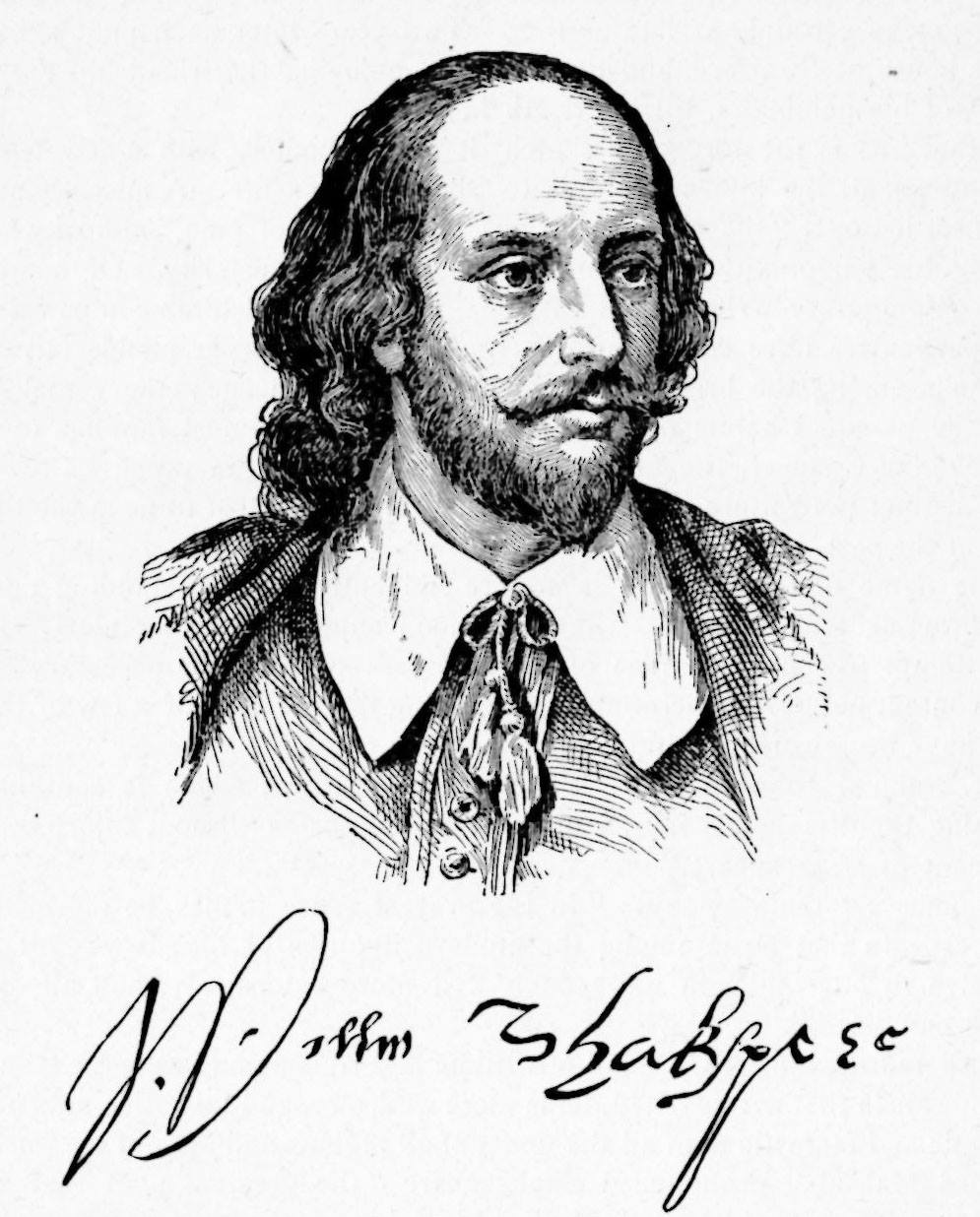
SHAKESPEARE

Shakespeare’s sonnets make me feel uncomfortable. It is clear that many people who claim to have impeccable taste really profess to love these sonnets. Since I cannot bring myself to love them, I have to admit that either my taste is not impeccable or I have truly missed something of great value. In other words, I am stupid.

A film maker in Denver has made all 154 of Shakespeare’s sonnets into short video movies starring local Denver actors.  Of course, it is a colossal bore. How could it not be so? William Shakespeare wrote some great plays, but his sonnets can put a Starbucks enthusiast to sleep in minutes.

It did not help that this Sonnet project used local actors that seemed to be unexperienced in Shakespearean theatre. I think, perchance, that nothing stands more amiss than a semi-talented actor spewing forth torrents of Shakespearean verbiage.

The first seventeen sonnets are brimming with advice to breed and propagate the species. Perhaps women liked this in Shakespeare’s day, but in a our crowded world with many women who choose to remain childless, these words cannot possibly fall on appreciable ears.

Example:

“From fairest creatures we desire increase

That thereby beauty’s Rose might never die

But as the riper should be time decease

His tender heir might bear his memory.”

Further, Shakespeare is obsessed with his own immortality. Even in one of the best of his sonnets, he holds himself and his verse up as immortal, bigger than nature itself,  more enduring that stone. Yes, his work has lasted for centuries, but I doubt seriously it will outlast stone.

XVII

Shall I compare thee to a Summers day?

Thou art more lovely and more temperate:

Rough windes do shake the darling buds of Maie,

And Sommers lease hath all too short a date:

Sometime too hot the eye of heaven shines,

And often is his gold complexion dimm’d,

And every faire from faire some-time declines,

By chance, or natures changing course untrim’d:

But thy eternall Sommer shall not fade,

Nor loose possession of that faire thou ow’st,

Nor shall death brag thou wandr’st in his shade,

When in eternall lines to time thou grow’st,

So long as men can breath or eyes can see,

So long lives this, and this gives life to thee.”

I read this and intuitively feel the wonderful play of words, but close examination destroys my capricious mood. What, I ask myself, is more lovely and more temperate than a summer’s day? I can think of nothing at all more lovely.  Maybe a cold beer with a pizza when you are very hungry. Surely, a summer’s day must be more lovely than this fantasy woman of whom he writes.

Yes, I agree, sometimes summer is too cursedly hot and these rough winds that shake these so-called darling buds of May also make me shiver in my shoes. But if I were to tell a girl that she was bound to decline as she ages, she would likely slap my ignominious face. And if I told her that her best chance at immortality lies in the fact that she was recorded in the lines of my poems, I would not be surprised if she hit me in the head with a lamp. I would deserve it, lout that I am.

We all struggle to decipher old Will’s bombastic style. The archaic English, quaint as it might be, hides a dude that spends a lot of time writing sappy verse about his relationship issues.

XXIX

When, in disgrace with fortune and men’s eyes,

I all alone beweep my outcast state

And trouble deaf heaven with my bootless cries

And look upon myself and curse my fate,

Wishing me like to one more rich in hope,

Featured like him, like him with friends possess’d,

Desiring this man’s art and that man’s scope,

With what I most enjoy contented least;

Yet in these thoughts myself almost despising,

Haply I think on thee, and then my state,

Like to the lark at break of day arising

From sullen earth, sings hymns at heaven’s gate;

For thy sweet love remember’d such wealth brings

That then I scorn to change my state with kings.

Modernized and un-sonneted, it might read:

Here I am, disgraced and poverty stricken, invisible to all.

Am I the only one to hear my cry, my outcast misery?

Even God will not listen to my loud complaints,

My shoeless feet propel me on a cursed path

And I can only dream about a richer life

With bosom friends and hopes of silver linings.

So I am left forlorn, devoid of art, bereft of talent.

I find myself despising what I am

Until I think these happy thoughts of you,

That lift me like the song of a lark that rises at sunrise

From this barren earth of mine to sing a hymn at heaven’s gate.

The sweet and gentle love that we once shared

Comes back into my memory again and brings such rebirth

That I would not trade this feeling for a crown.

I becomes apparent that Shakespeare was basically a lonely dreamer with not enough self esteem. Only his illusory fantasies about a perfect love brought him out of his depression and into a manic universe of his own making. Today they would say he had a bi-polar personality.

To me, Shakespeare was a greater play writer than he was a poet. His plays are filled with quotable quips that have peppered our speech for centuries.

Neither a borrower nor a lender be; for loan oft loses both itself and friend. -Hamlet

Life’s but a walking shadow, a poor player

That struts and frets his hour upon the stage

And then is heard no more: it is a tale

Told by an idiot, full of sound and fury,

Signifying nothing.  

-Macbeth

Yet, even the plays speak in a language that we do not speak. The urge to make them modern has been the fall of many a lame producer. They peel away the age of the setting and substitute the near present, but they leave the stilted words alone as though the Great Almighty made these utterances.

But Shakespeare – bless his pea-pickin’ little heart – gave good advice and this is where he transcends the ages and sparkles like a jewel.

“Better three hours too soon, than a minute too late.” (Many a dead man has made that discovery.)

“Good night, good night! Parting is such sweet sorrow.” (Though I struggle to find the sweetness in this pain.)

“There is nothing good or bad, but thinking makes it so.”  (You tell ‘em, Will. These fools think they’re cool.)

“A fool thinks himself to be wise, but a wise man knows himself to be a fool.” (Thinking makes this so as well.)

“Hell is empty and all the devils are here.” (Aye, said the Scotsman. And they are English to boot.)

“Cowards die many times before their death; the valiant never taste death but once.”  (Many an old soldier loathes that statement.)

“All the world’s a stage, and all the men and women merely players:” (Timothy Leary thought so.) But then he goes on: “They have their exits and their entrances; and one man in his time plays many parts, his acts being seven ages.”

(This started out great, but leaves me counting ages. Try as I may, I cannot get to seven ages. 1. Infancy, 2. Childhood, 3.Adolescence, 4. Maturity, 5. Middle-aged, and 6. Old.

That is the best I can do. Perhaps the seventh is Infirmity.


THE PRICE OF ADMISSION by F. Scott Fitzgerald

A LETTER FROM F. SCOTT FITZGERALD:

6184299387_262482da77_o

Left: Image of Zelda published in Metropolitan Magazine in June 1922, accompanying her piece “Eulogy of a Flapper”. Right: A study of F. Scott Fitzgerald by Gordon Bryant, published in Shadowland magazine in 1921. – See more at: http://publicdomainreview.org/2011/09/26/a-few-words-about-f-scott-fitzgerald/#sthash.BvnI9yhu.dpuf


(Source: F. Scott Fitzgerald: A Life in Letters; Image: F. Scott Fitzgerald.)


In 1938 the world was preparing for World War II. Fitzgerald lived in Culver City, California and was about to lose his very lucrative $1,250 per week contract with MGM as a screenwriter for the movies. On the 9th of November, 1938, a young woman named Frances Trumbell, sent the famous writer a story for review. That same night Germany looted and burned 7,500 Jewish businesses on “the night of broken class.” The young woman, a sophomore at Radcliffe University, wanted feedback from Fitzgerald. Fitsgerald was not impressed, though he said her writing was “smooth and agreeable and some of the pages are very apt and charming.”

History does not record how the young woman reacted to his letter. We can only imagine that she abandoned further attempt to become a writer when he said, “it doesn’t seem worthwhile to analyze why this story isn’t salable.”


November 9, 1938

Dear Frances:

I’ve read the story carefully and, Frances, I’m afraid the price for doing professional work is a good deal higher than you are prepared to pay at present. You’ve got to sell your heart, your strongest reactions, not the little minor things that only touch you lightly, the little experiences that you might tell at dinner. This is especially true when you begin to write, when you have not yet developed the tricks of interesting people on paper, when you have none of the technique which it takes time to learn. When, in short, you have only your emotions to sell.

This is the experience of all writers. It was necessary for Dickens to put into Oliver Twist the child’s passionate resentment at being abused and starved that had haunted his whole childhood. Ernest Hemingway’s first stories “In Our Time” went right down to the bottom of all that he had ever felt and known. In “This Side of Paradise” I wrote about a love affair that was still bleeding as fresh as the skin wound on a haemophile.

The amateur, seeing how the professional having learned all that he’ll ever learn about writing can take a trivial thing such as the most superficial reactions of three uncharacterized girls and make it witty and charming—the amateur thinks he or she can do the same. But the amateur can only realize his ability to transfer his emotions to another person by some such desperate and radical expedient as tearing your first tragic love story out of your heart and putting it on pages for people to see.

That, anyhow, is the price of admission. Whether you are prepared to pay it or, whether it coincides or conflicts with your attitude on what is “nice” is something for you to decide. But literature, even light literature, will accept nothing less from the neophyte. It is one of those professions that wants the “works.” You wouldn’t be interested in a soldier who was only a little brave.

In the light of this, it doesn’t seem worth while to analyze why this story isn’t saleable but I am too fond of you to kid you along about it, as one tends to do at my age. If you ever decide to tell your stories, no one would be more interested than,

Your old friend,

F. Scott Fitzgerald

P.S. I might say that the writing is smooth and agreeable and some of the pages very apt and charming. You have talent—which is the equivalent of a soldier having the right physical qualifications for entering West Point.


SUPPORTING WRITERS AND THEIR WORK

3b205f2a-2940-424b-aa9a-872a23e9f9a3


ANOTHER ONE BITES THE DUST

This month we lost another outlet for writers of short fiction and poetry. Pithy Pages has closed their doors. Writers, of course, need readers but unless readers support the writers by buying their works, contributing to their continued efforts, and commenting on their blog pages, then the accomplished writers will be driven to other ways of communication of will give up their efforts entirely. The publishers at Pithy Pages have gracefully allowed me to reprint their final comments on their short-lived project.


From the Publishers of Pithy Pages For Erudite Readers


This is our last issue  and quite frankly we think it is unfortunate. We have had a wonderful time reading the many, many stories submitted by a wide range of authors. One of the most difficult things any publisher must do is select a few stories for publication from the many received. The authors we have published have proven to be as gracious as they are talented, making our relationships with them both pleasurable and satisfying.

The fact that we have enjoyed our foray into the publishing world begs the question: Why are we ending our publication? The quick and easy answer is that our publishers and editors are talented writers and avid readers, but lousy business people. The longer answer is a bit more complicated.

In their role as authors, our staff members are constantly writing and submitting their works to a variety of venues for publication. When a publisher accepts their work, they would like to be paid a decent rate.

Unfortunately there are fewer and fewer publishers who will (or can) pay a good rate, making competition among authors fierce for the few spots available. Why is that so?

Publishers too, would like to be paid for their time and effort. To do this each publisher must decide to work as a profit or non-profit company. Pithy Pages chose the former because our publishers believe that the literary public, rather than government or some wealthy foundation, should support the publication of the short fiction they read or write. That being said, there are two ways to generate revenue from a publication: subscription fees and/or advertising. We tried both with dismal results. It turns out that there is more interest in writing short fiction than in reading it. It seems that the only people left to support the publication of short fiction are the authors working in the genre. Unfortunately, short fiction authors are under the incorrect assumption that people are lining up to read their work … They should be (it is really, really good) but they’re not, preferring the latest full-length novel (now showing as a movie).

Without direct and active intervention of the writers of short fiction the genre will continue to be a quaint, underpaid, and unappreciated art form. We, therefore, offer the following solution. Every author and aspiring author of short fiction should set aside ten dollars a week to support the publications of short fiction. When this is done, publishers will be able to sell enough subscriptions to stay in business and to continue to offer a decent payday for those authors selected. When those same authors encourage their friends and family to subscribe or advertise in short fiction publications, pay to authors will increase … as will the number of publications. Eventually, short fiction will rebound as a genre to everyone’s benefit.

One good thing has come out of our experience with publishing. Our staff has vowed to subscribe to the magazines they submit items to. … not because they think they will necessarily be published, but because they understand that the health of the short fiction publication market must be maintained or our genre will go the way of the dodo bird. We hope that you will consider taking the same pledge. Together we can keep short fiction alive and viable as a reading and writing choice.

The Publishers and Editors of Pithy Pages For Erudite Readers