“This song is Copyrighted in U.S., under Seal of Copyright #154085, for a period of 28 years, and anybody caught singin’ it without our permission, will be mighty good friends of ourn, cause we don’t give a dern. Publish it. Write it. Sing it. Swing to it. Yodel it. We wrote it, that’s all we wanted to do.”
-Woody Guthrie
“WHEN WOODY GUTHRIE arrived in New York City he was known as “the Oklahoma cowboy.”
Guthrie was tired of the radio overplaying Irving Berlin‘s “God Bless America.” He thought the lyrics were unrealistic and complacent. Partly inspired by his experiences during a cross-country trip and his distaste for “God Bless America,” he wrote his most famous song, “This Land Is Your Land“, in February 1940; it was subtitled: “God Blessed America for Me.” The melody is adapted from an old gospel song, “Oh My Loving Brother.” This was best known as “When The World’s On Fire,” sung by the country group The Carter Family. Guthrie signed the manuscript with the comment, “All you can write is what you see, Woody G., N.Y., N.Y., N.Y.”
He protested against class inequality in the fourth and sixth verses:
As I went walking, I saw a sign there,
And on the sign there, It said “no trespassing.”
[In another version, the sign reads “Private Property”]
But on the other side, it didn’t say nothing!
That side was made for you and me.
In the squares of the city, In the shadow of a steeple;
By the relief office, I’d seen my people.
As they stood there hungry, I stood there asking,
Is this land made for you and me?
These verses were often omitted in subsequent recordings, sometimes by Guthrie. Although the song was written in 1940, it was four years before he recorded it for Moses Asch in April 1944. Sheet music was produced and given to schools by Howie Richmond sometime later.
EARLY LIFE:
Guthrie’s early life was no an easy road. His older sister, Clara, died in a coal oil fire from a heating stove when he was seven. His mother, Nora Belle, was institutionalized after setting a fire that severely burned Guthrie’s father.
In 1920, oil was discovered in Okemah, which led to a boom for a few years. Then the oil dried up, and the people of Okemah were, Guthrie said, “busted, disgusted, and not to be trusted.” His father quit the town for Texas, leaving 14-year-old Guthrie to play harmonica for sandwiches and coins on the streets of Okemah. His older brother, Roy, became the struggling family’s main source of support.
Woody’s father ended up in Pampa, Texas, and sent for his son.
When he was 19, Guthrie met and married his first wife, Mary Jennings, with whom he had three children, Gwendolyn, Sue, and Bill.[
With the advent of the Dust Bowl era, Guthrie left Texas, leaving Mary behind, and joined the thousands of Okies who were migrating to California looking for work. Many of his songs are concerned with the conditions faced by these working-class people.
in 1931, formed the Corn Cob Trio, and enjoyed his first taste of public success before succumbing to the realities of the Great Depression. He hitchhiked and freight-trained his way across several states, soaking up the stories of “dustbowl refugees” and refining his songwriting skills. In Los Angeles, he joined up with a woman named “Lefty Lou” and became popular with the relocated Okies living in cardboard and tin shelters.
He wrote his most famous song, “This Land is Your Land,” in New York City while living in a building for transients called Hanover House, at the corner of 43rd Street and Sixth Avenue, one block east of where the ball now falls on New Year’s Eve in Times Square.
He’d seen enough during his travels to know that for many Americans, there was nothing blessed about their lives. He wrote the song in 1940 but didn’t record it until 1944. It was published in 1945 in a mimeographed booklet with 10 other songs and some of Guthrie’s drawings. The booklet cost 25 cents
Sources: https://en.wikipedia.org/wiki/Woody_Guthrie, The Writer’s Almanac
THIS LAND IS YOUR LAND
(words and music by Woody Guthrie)
Chorus:
This land is your land, this land is my land
From California, to the New York Island
From the redwood forest, to the gulf stream waters
This land was made for you and me
As I was walking a ribbon of highway
I saw above me an endless skyway
I saw below me a golden valley
This land was made for you and me
Repeat Chorus
I’ve roamed and rambled and I’ve followed my footsteps
To the sparkling sands of her diamond deserts
And all around me a voice was sounding
This land was made for you and me
Repeat Chorus
The sun comes shining as I was strolling
The wheat fields waving and the dust clouds rolling
The fog was lifting a voice come chanting
This land was made for you and me
Repeat Chorus
As I was walkin’ – I saw a sign there
And that sign said – no tress passin’
But on the other side …. it didn’t say nothin!
Now that side was made for you and me!
Repeat Chorus
In the squares of the city – In the shadow of the steeple
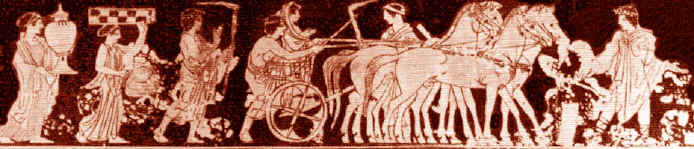
IN ANCIENT GREECE, all women were viewed as manifestations of the earth goddess. That is why ancient Greek fathers recited the words, “I give my daughter to you for the plowing of legitimate children,” when giving away their daughters. But the daughter was more on a permanent loan to her husband than his property. She had a dowry that had to be returned if they divorced.
Marriage as an institution is an ancient custom that predates recorded history. The Gods and Goddesses had husbands and wives in the minds of stone age societies. Marriage tradition was handed down orally long before writing was established.
Marriage is ultimately a contract and a strategic alliance between two individuals or families. This contract, unless temporary, is generally designed to provide financial aid, emotional stability and security to the people involved.
Some cultures practiced temporary and conditional marriages. The Celtic tribes practiced handfasting. The Gaelic scholar, Martin Martin, wrote: “It was an ancient custom in the Isles that a man take a maid as his wife and keep her for the space of a year without marrying her; and if she pleased him all the while, he married her at the end of the year and legitimatized her children; but if he did not love her, he returned her to her parents.”
Fixed-term marriages were popular in the Muslim community. Pre-Islamic Arabs practiced a form of temporary marriage that carries on today in the practice of Nikah Mut’ah, a fixed-term marriage contract.
THE ADVENT OF SAME-SEX MARRIAGES
“The first laws in modern times recognizing same-sex marriage were enacted during the first decade of the 21st century. As of March 2015, seventeen countries (Argentina, Belgium, Brazil, Canada, Denmark, France, Iceland, Luxembourg, the Netherlands, New Zealand, Norway, Portugal, South Africa, Spain, Sweden, the United Kingdom, and Uruguay) and several sub-national jurisdictions (parts of Mexico and a majority of the U.S. states) allow same-sex couples to marry. Finland has enacted a law to legalize same-sex marriage which will come into force in March 2017. Bills allowing legal recognition of same-sex marriage have been proposed, are pending, or have passed at least one legislative house in Austria, Australia, Chile, Germany, Ireland, Slovenia, Switzerland, Taiwan and Venezuela, as well as in the legislatures of several sub-national jurisdictions (parts of Australia, Mexico, and the United States).” -https://en.wikipedia.org/wiki/Marriage
Granting formal legal status to same-sex marriages is a relatively recent idea and practice, but there are mixed-sex couples in the history of ancient Greece. Generally, same-sex marriages in Greece were promiscuous, with the partners having the freedom to engage in sex with others. Though the Theodosian Code issued in 438 CE imposed heavy penalties on same-sex relationships, it is unclear how the law was enforced or ignored socially. Some areas in China, particularly the Fujian region, permitted same-sex unions.
With marriages in decline in the western world and the birth rate getting lower with each generation in developed countries, the social need to raise children has become optional in many millions of families.
A corollary to the contract of marriage is the rights of offspring if any. Our laws are now removed from the older social systems that sanctioned marriage primarily for property rights and the rights of the offspring.
THERE IS NO UNIVERSAL CUSTOM FOR MARRIAGE
There is no one universal custom for marriage now or in recorded history.
Early nomads in the middle east, where modern civilization arose, allowed a wife to have a tent of her own which she kept completely independent of her husband. The early Israelites kept this custom as well, as shown in the last book of Proverbs.
Polygamous and polyandrous societies are found in the Himalayan Mountains. Because land is scarce in the Himalayas all brothers were allowed to marry the same wife. This allowed the family land holdings to remain whole rather that be divided by heirs. If the lands were split, the families would have small plots that could not sustain family life.
In Europe, this division of the land into fragments was prevented through e the inheritance process. The elder inherited and the siblings lost out. Some of the disinherited went on to become celibate monks and priests.
MARRIAGE IN THE MID-20TH CENTURY
Notes and Queries (1951), an anthropological handbook, defined marriage as “a union between a man and a woman such that children born to the woman are the recognized legitimate offspring of both partners.” [Notes and Queries on Anthropology. Royal Anthropological Institute. 1951. p. 110.]
These ideas did not sit well with Kathleen Gaugh (1924-1990). Gaugh was a British anthropologist and a feminist. She noted that the Nuer people of Sudan allowed women to act as husbands under certain conditions. She suggested that instead of a man and a woman, the phrase should be modified to “a woman and one or more other persons.”
Gaugh studied polygamous societies such as the Nayar in India. In that society, the husband’s role was not conventional. Women had many lovers in this society. The lovers were the procreators. The father was an absentee non-resident. None of the men has any legal rights to the woman’s children. Gaugh was forced to abandon the idea of sexual access as a key element of marriage and define if in terms of the legitimacy of the offspring. She wrote: “a relationship established between a woman and one or more other persons, which provides a child born to the woman under circumstances not prohibited by the rules of relationship, is accorded full birth-status rights common to normal members of his society or social stratum.”
Economic anthropologist Duran Bell criticized the legitimacy-based definition. Some societies do not require legitimacy for children to have legal rights such as the right to property and inheritance.
Edmund Leach also thought Gough’s definition was too restrictive in terms of recognized legitimate offspring. He suggested that marriage be viewed in terms of the different types of rights it serves to establish.
In a 1955 article in Man, Leach argued that “no one definition of marriage applied to all cultures.”
He offered a list of ten rights associated with marriage, including sexual monopoly and rights with respect to children, with specific rights differing across cultures. Those rights, according to Leach, included:
1″ To establish a legal father of a woman’s children.
2 To establish a legal mother of a man’s children.
3 To give the husband a monopoly in the wife’s sexuality.
4 To give the wife a monopoly in the husband’s sexuality.
5 To give the husband partial or monopolistic rights to the wife’s domestic and other labour services.
6 To give the wife partial or monopolistic rights to the husband’s domestic and other labour services.
7 To give the husband partial or total control over property belonging or potentially accruing to the wife.
8 To give the wife partial or total control over property belonging or potentially accruing to the husband.
9 To establish a joint fund of property–a partnership–for the benefit of the children of the marriage.
10T o establish a socially significant ‘relationship of affinity’ between the husband and his wife’s brothers.”[Leach, Edmund (Dec 1955). “Polyandry, Inheritance and the Definition of Marriage,” Man55 (12): 183.]
Duran Bell describes marriage as “a relationship between one or more men (male or female) in severalty to one or more women that provides those men with a demand-right of sexual access within a domestic group and identifies women who bear the obligation of yielding to the demands of those specific men.” [In a 1997 article in Current Anthropology.]
“Men in severalty,” means that Bell is referring to some societies where kin groups retain a right in a woman’s offspring even if her husband (a lineage member) is dead. This practice is also found in Levirate marriages, a marriage type in which the brother of a deceased man is obliged to marry his brother’s widow and the widow is obligated to marry her deceased husband’s brother. The type of marriage is a social attempt to provide for the offspring and provide for the spouse while salvaging inheritance rights for the children and maintaining a unified land holding.
In referring to “men (male or female),” Bell is referring to women within the lineage who may stand in as the “social fathers” of the wife’s children born of other lovers as in Nuer’s “Ghost marriage.”
In Sudan, a ghost marriage is a marriage where a deceased groom is replaced by his brother. The brother serves as a stand-in to the bride, and any resulting children are considered children of the deceased spouse. This unusual type of marriage is nearly exclusive to the Dinka (Jieng) and Nuer tribes of Southern Sudan, although instances of such marriages have also occurred in France.
Nuer women do not marry deceased men only to continue the man’s bloodline. In accordance to Nuer tradition, any wealth owned by the woman becomes the property of the man after the marriage. Thus, a wealthy woman may marry a deceased man to retain her wealth, instead of giving it up after marrying.
Among the Nuer, a ghost marriage is nearly as common as a marriage to a live man.
The right to sexual access is one of the primary purposes of modern marriage. In most advanced countries, the woman’s right to refuse sexual contact is upheld legally. Marital rape, a common occurrence in the past, has become illegal in many countries, though proving the violation has often proven to be quite difficult.
Feminists often see marriage as an institution traditionally rooted in patriarchy. They often believe that it promotes male superiority and power over women. When men are designated to be the providers and the woman the caretaker, then women become the property of the male.
“In the US, studies have shown that, despite egalitarian ideals being common, less than half of respondents viewed their opposite-sex relationships as equal in power, with unequal relationships being more commonly dominated by the male partner.Studies also show that married couples find the highest level of satisfaction in egalitarian relationships and lowest levels of satisfaction in wife dominant relationships.” – Wikipedia
Traditional marriage imposes an obligation on the wife to be sexually available to her husband. It also demands that the husband provide material and financial support for the wife.
Feminists rebelled against the male bias in the institution of marriage. Social thinkers, men and women alike, pointed to the lack of choice that marriage gave to the woman. Bertrand Russell wrote in his book Marriage and Morals that: “Marriage is for woman the commonest mode of livelihood, and the total amount of undesired sex endured by women is probably greater in marriage than in prostitution.”
In recent years, peer marriages have been receiving attention in quite a few western countries including Great Britain and the United States.
Shared earning/shared parenting marriage, also known as peer marriage, is a type of marriage where the partners at the outset of the marriage set it up in a manner of sharing responsibility for earning money, meeting the needs of children, chores, and recreation time in nearly equal fashion across these four domains. It refers to an intact family formed with relatively equal earning and parenting styles from its initiation.
Peer marriage is distinct from shared parenting, as well as the type of equal or co-parenting that father’s rights activists in the United States, the United Kingdom, and elsewhere seek after a divorce in the case of marriages, or unmarried pregnancies/childbirths, not set up in this fashion at the outset of the relationship or pregnancy.
A number of books have addressed various aspects of this type of marriage, including Equally Shared Parenting by Marc and Amy Vachon, The Four-Thirds Solution by Stanley Greenspan and Getting to 50/50 by Sharon Meers and Joanna Strober.
“Love and Marriage” is a song with lyrics by Sammy Cahn and music by Jimmy Van Heusen. The idea epitomized the values of society through most of both centuries.
“Love and marriage, love and marriage, Go together like a horse and carriage. This, I tell you, brother. You can’t have one without the other.”
Despite the popularity and cleverness of the lyrics of the song, love is much deeper that the institution of marriage. Some believe it is a basic binding force found in the world’s very existence. The elementary prototype of love is similar to the attraction of atomic structures to one another. These structures form combinations that become something independent and different from that the atoms that combined to create it. Are these primitive examples of the force of love?
Love is seen everywhere in the natural world as adults pair and care for their mates and their young. Love is evident throughout nature. Love is bonding and it is seen in the binding that forms the very chemicals of life.
To me, love is accepting another as a part of oneself. Love is the inclusion of the other into the very fabric of everyday life. Love unites and draws together like iron fragments to the magnetic field. In human terms, love expands the isolated and alone self to include beings and objects from outside the self.
Love is felt not just for living things, but for actions and methods of performing actions. The world is built on attraction and love, caring and nurturing. The desire and urge to be more than we are alone is the driving force of evolutionary progress.
Love is thought by many to be the primary reason for existence itself, as primal awareness, discovered the other outside itself, reflected upon it, accepted it within itself, and gave birth to an entire universe. The idea is not so far removed from the ideas of the ancient Greeks and the stone age tribe dwellers.
by Kenneth Harper Finton I am counting my blessings today, one of which is the ability to walk around a nearby lake that is also a bird preserve. The lake is called Berkeley Lake. It lies right off I70 in Denver, just before disappearing into the great Rocky Mountains. Not only do I get needed daily exercise, but I make some ‘fine feathered friends” along the way … not so much close friends, but acquaintances that help to brighten the day. Meeting the other folk that are out to enjoy the day can be as important as the walk, as walkers abound at all times of the day, from wheelchair bound folk carrying oxygen to young mothers jogging with fat-wheeled baby carriages to take off the baby fat. When I was a child, baby carriages had thin rubber wheels and were pushed by sedate women with long summer dresses whose major purpose was to do some shopping or get the child outdoors. These days, healthy young women jog down the manicured sidewalks by the dozens, far outpacing my plodding and deliberate steps.
Regular hikers at our lake include Harry, a white-bearded, fit man who has lived in the neighborhood since childhood and walks around the lake four or five times every day. He knows all about the birds, the eagles that nest there and the history of the lake since the early 1920s.
One of my precious possessions that were handed down from my parents was my father’s copy of Audubon’s Birds of America. My mother bought the great volume of paintings for my father for Christmas in 1942, three months after I was born. I often wondered how she afforded it, as she was living on her own while my father was drafted and serving in the army during World War II. I have used is for years to help identify birds that I come across, though many of these species are now rare or extinct. I have always been entranced with his paintings of birds and vividly remember the pictures of scary vultures and condors that so impressed me as a child. https://kennethharperfinton.me/2015/04/26/john-james-audubon/
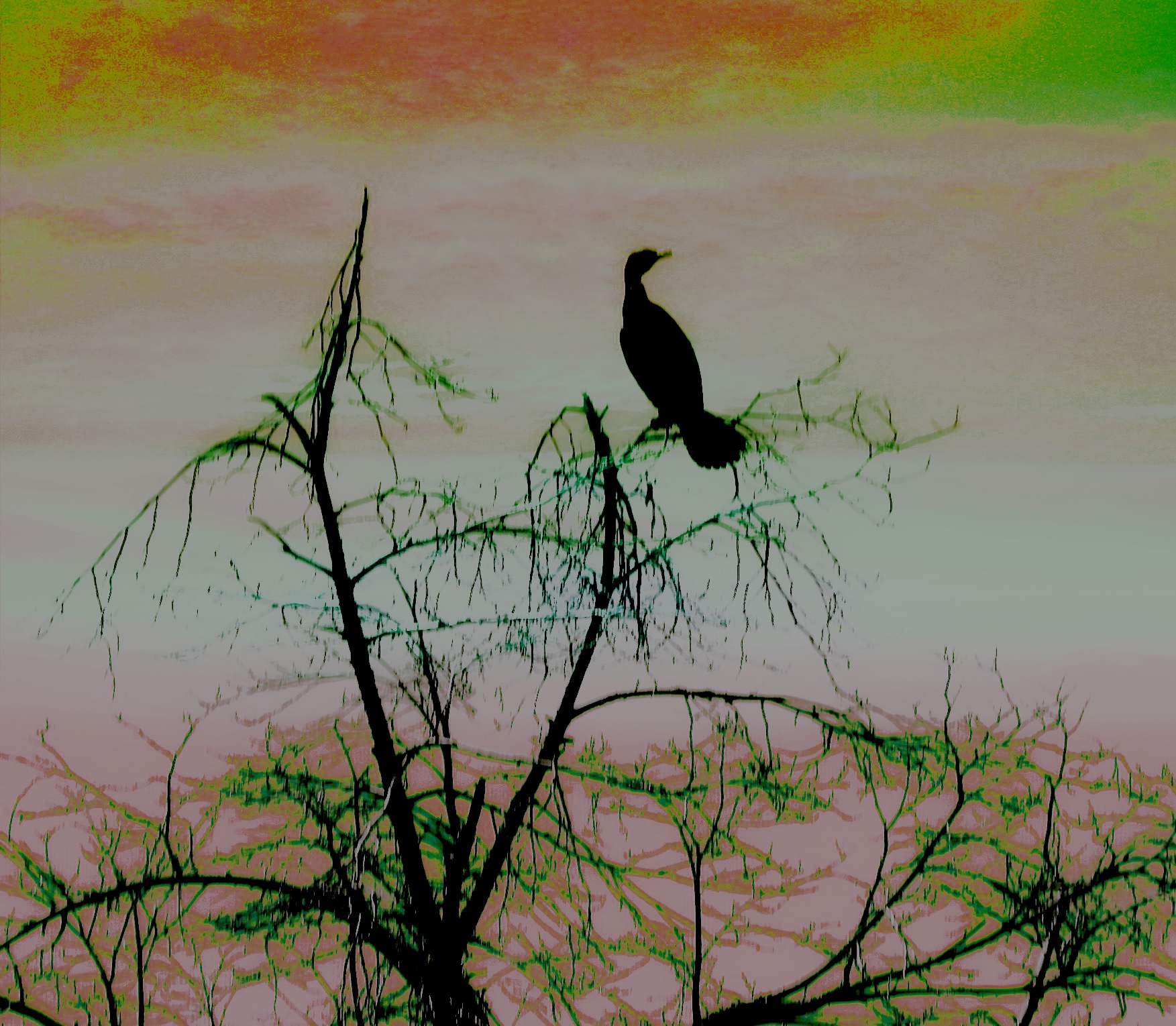
THE DOUBLE CRESTED-CORMORANT
The lake has attracted many species of ducks and geese since the City of Denver drained and remodeled it a few years back. One bird friend has become quite close this spring. I did not know the name of the bird and dubbed it a long-neck goose. Shades of Chantilly Lace, I am sure. For weeks he stood guard over his next on top of a nearby tree. He seemed to be in his tree every time we walked the lake for many weeks. I learned that the bird was a double-crested cormorant. Cormorants and Shags are medium to large seabirds that are found all over the world. Their ancestors were fresh water birds. Though their feet are webbed, they can perch high in trees. They are related to pelicans. Cormorants are diving birds that can dive to as much as 45 meters in search of fish and eels and water snakes. After their dives, they spread their wings to dry, as their feathers are not as waterproof as a duck of a goose. They have an ungainly hooked beak and have been at war with fishermen for centuries, as they compete for the fish in the area.
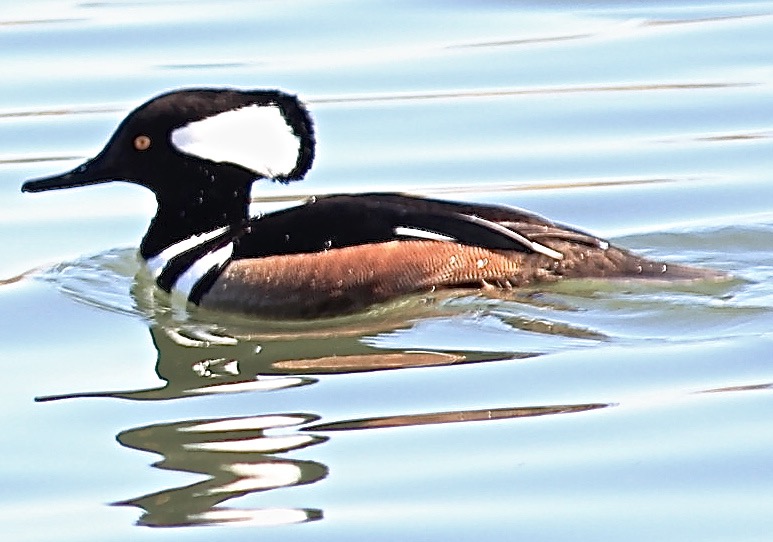
THE HOODED MERGANSER
One of the more impressive and lesser known ducks is the secretive Hooded Merganser. “Hooded” is an understatement for this little duck, also called a Crested Merganser. Adult males are beautiful with sharp black-and-white patterns set off by chestnut flanks. Females have their own distinctive elegance drawn from their from their cinnamon crest.
In the winter, the birds nest in holes left in trees like squirrels, but they move to fresh water lakes in the spring and summer while they hatch their broods.
Hooded Mergansers are fairly common in Colorado on small ponds and rivers. They dive for fish, crayfish and other food, seizing it with their thin, serrated bills.
Though they nest in tree cavities, the ducklings leave the nest with a precocious leap to the forest floor when they are only one-day old. Hooded Mergansers are the smallest of the three Merganser species found in the United States.
Males and females of the Hooded Merganser live in monogamous pairs. They remain together until the female has selected a nesting place and completed the laying her clutch. After that, the male leaves the female to incubate and care for the brood. Females will actively seek out cavities in dead trees or artificial nest boxes such as those provided for wood ducks.They prefer cavities four to fifteen feet off the ground. Breeding occurs anytime between the end of February and the end of June, depending on the region.
The female will lay a clutch of seven to fifteen eggs but only begins incubation when the last egg has been laid. This insures synchronous hatching, so all the ducklings are consequently the same size. This evolutionary trait facilitates efficient parental care. During incubation, the female may lose anywhere from 8% to 16% of her body weight.
Like most waterfowl, Hooded Merganser hatchlings are precocial. They usually leave the nest within twenty-four hours after they hatch. Once they leave the nest, the young are immediately capable of diving and foraging, but they often remain with the female for warmth and protection The Mergansers are descended from a species of ancient ducks from the Late Pleistocene era. The exact relationship between the ancient birds and the modern species is unknown.
THE AMERICAN WHITE PELICAN
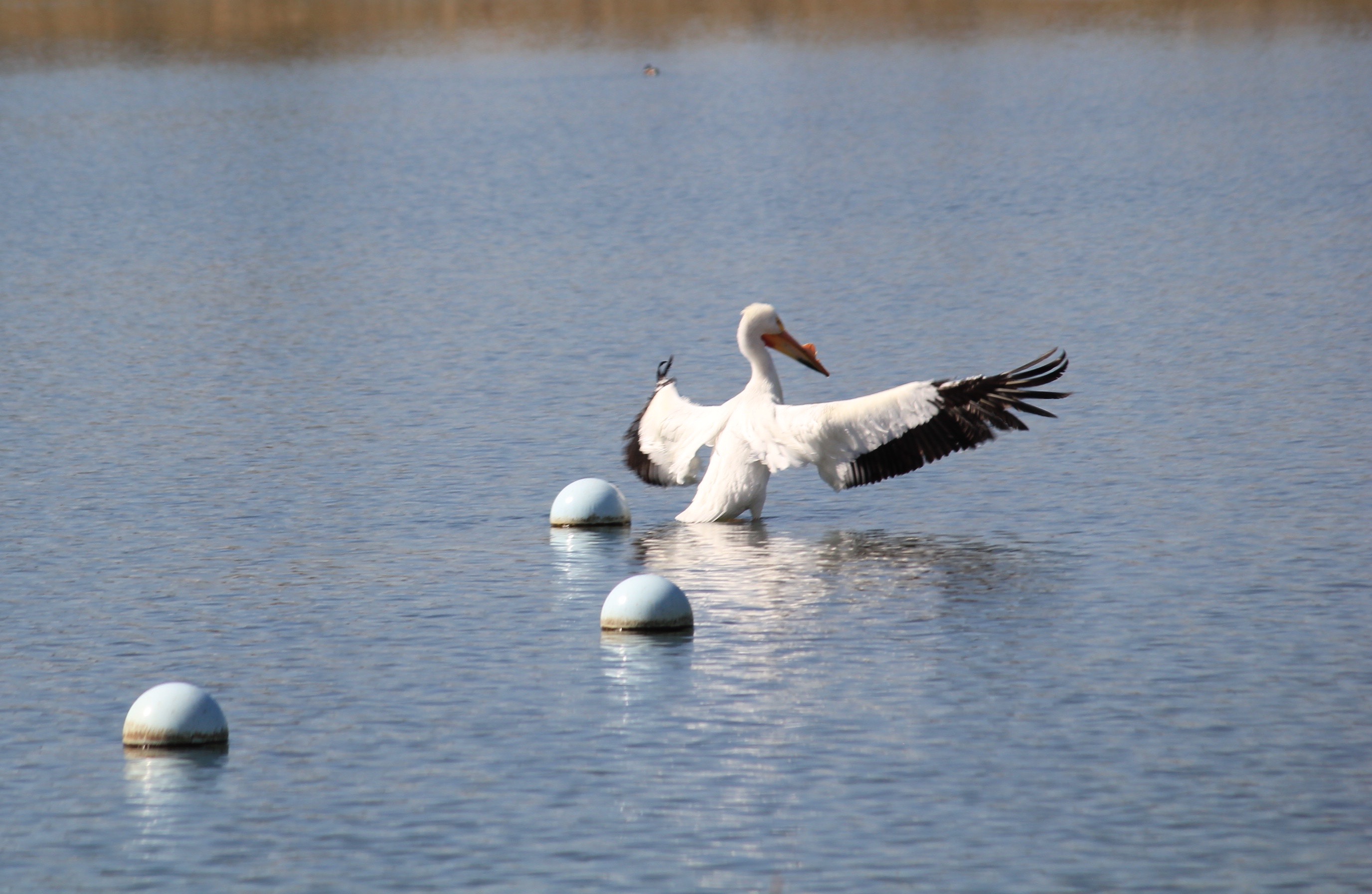
Since 1960, Colorado is also home to the American White Pelican, a huge, lovely bird with black feathers on the tip of their wings and a nine-foot wingspread. They are also found at Berkeley Lake. If you have never seen a White Pelican, you will be amazed when you finally see one. They fly like gliders in formation and land with a precision that would make the Air Force proud. Most of them die before leaving the nest, but if they survive that first year they can have a twenty year life span. They now breed in Colorado in the spring and summer and move to the southern coasts when winter comes.
THE MALLARDS
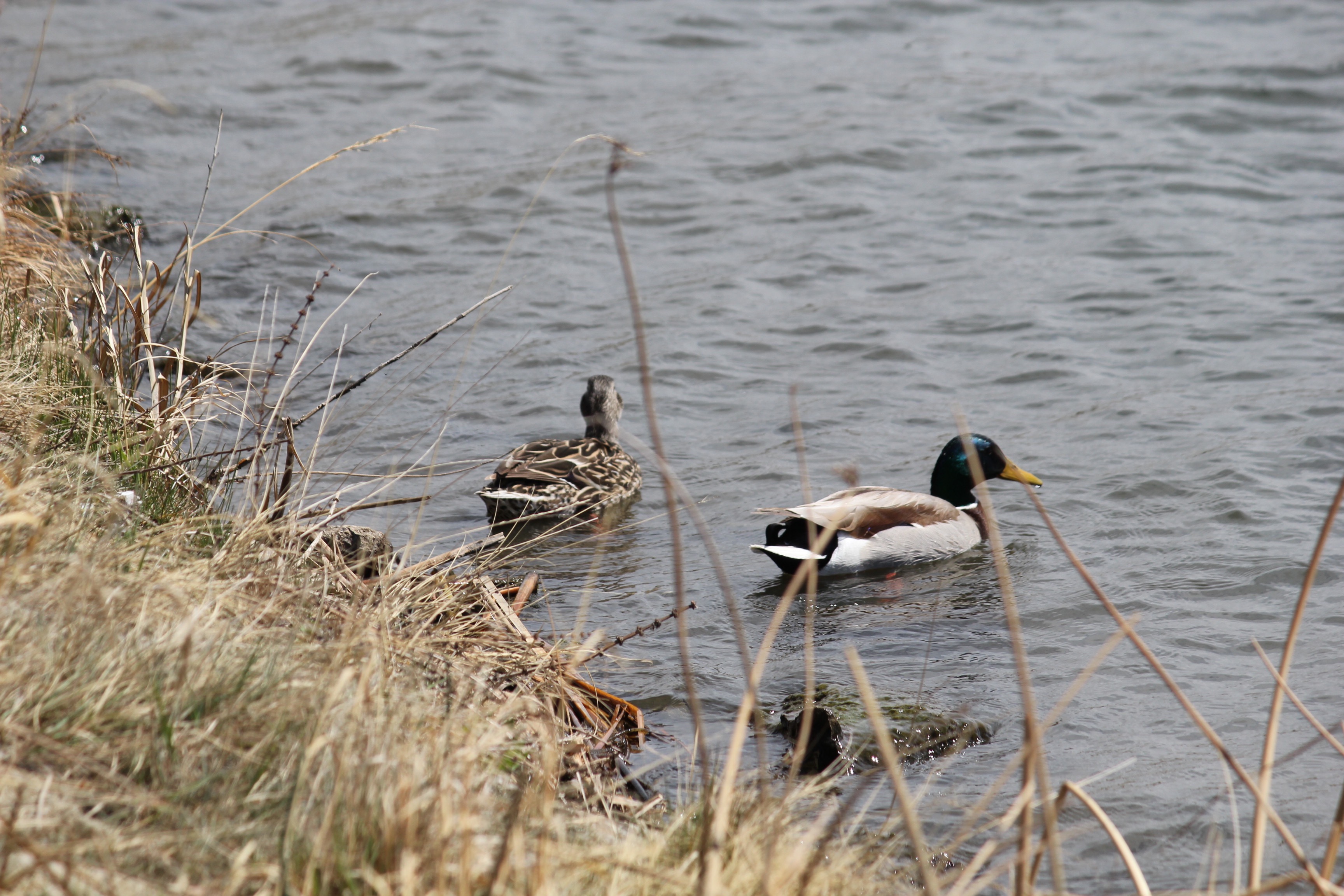
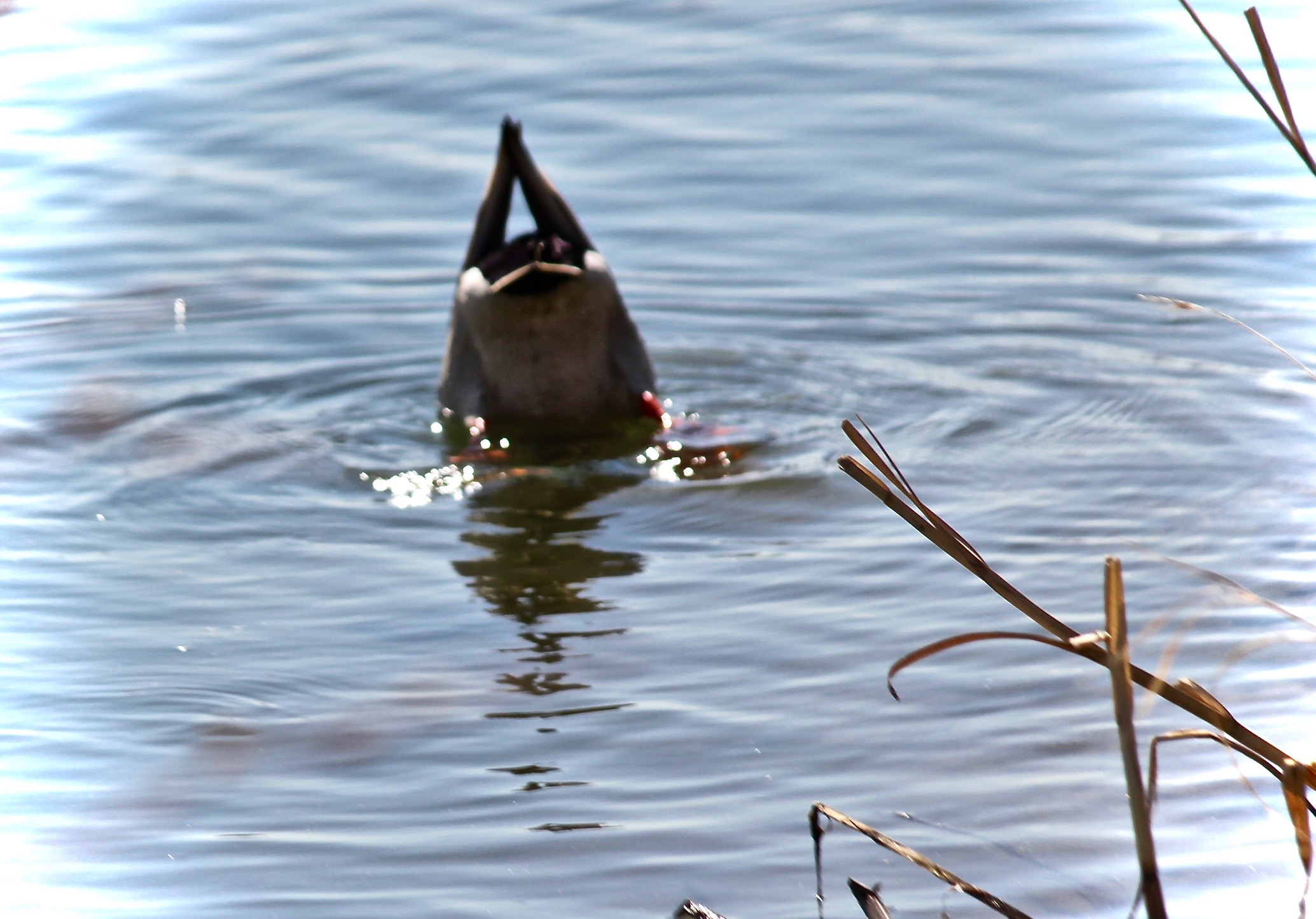
Mallards are plentiful in local lakes. They are dabbling ducks that do not dive, but stand on their heads, butts in the air, to nibble on water plants, insects and roots. The males have a glossy green head, a ring of white feathers on the neck and gray areas on the wings. They males are called Drakes. The females have brown-speckled plumage. They form pairs in the fall that lasts until the female lays the eggs in the spring. Then the male often leaves and forms bonds with other males and lets the female raise the brood until the molting season in June.
Mallards are gregarious birds that love to flock together in groups called ‘sords’. The male will forcibly mate with other females, especially if she has lost her mate. Male Mallards remain sexually potent most of the year. When they pair off with mating partners, often one or several drakes are left out. This lonely group of adolescent ducks sometimes targets an isolated female duck, even if she is of a different species, then they chase and peck at her until she weakens. At this point the males take turns copulating with the female.
On 5 June 1995 an adult male Mallard collided with the glass façade of the Natuurmuseum Rotterdam and died. Another drake Mallard raped the corpse almost continuously for seventy-five minutes. The author of a paper on this occurrence disturbed the scene and secured the dead duck. Dissection showed that the rape victim was of the male sex. It is concluded that the Mallards were engaged in an ‘Attempted Rape Flight’ that resulted in the first described case of homosexual necrophilia in the Mallard.
Mallards are the ancestors to most domestic ducks.
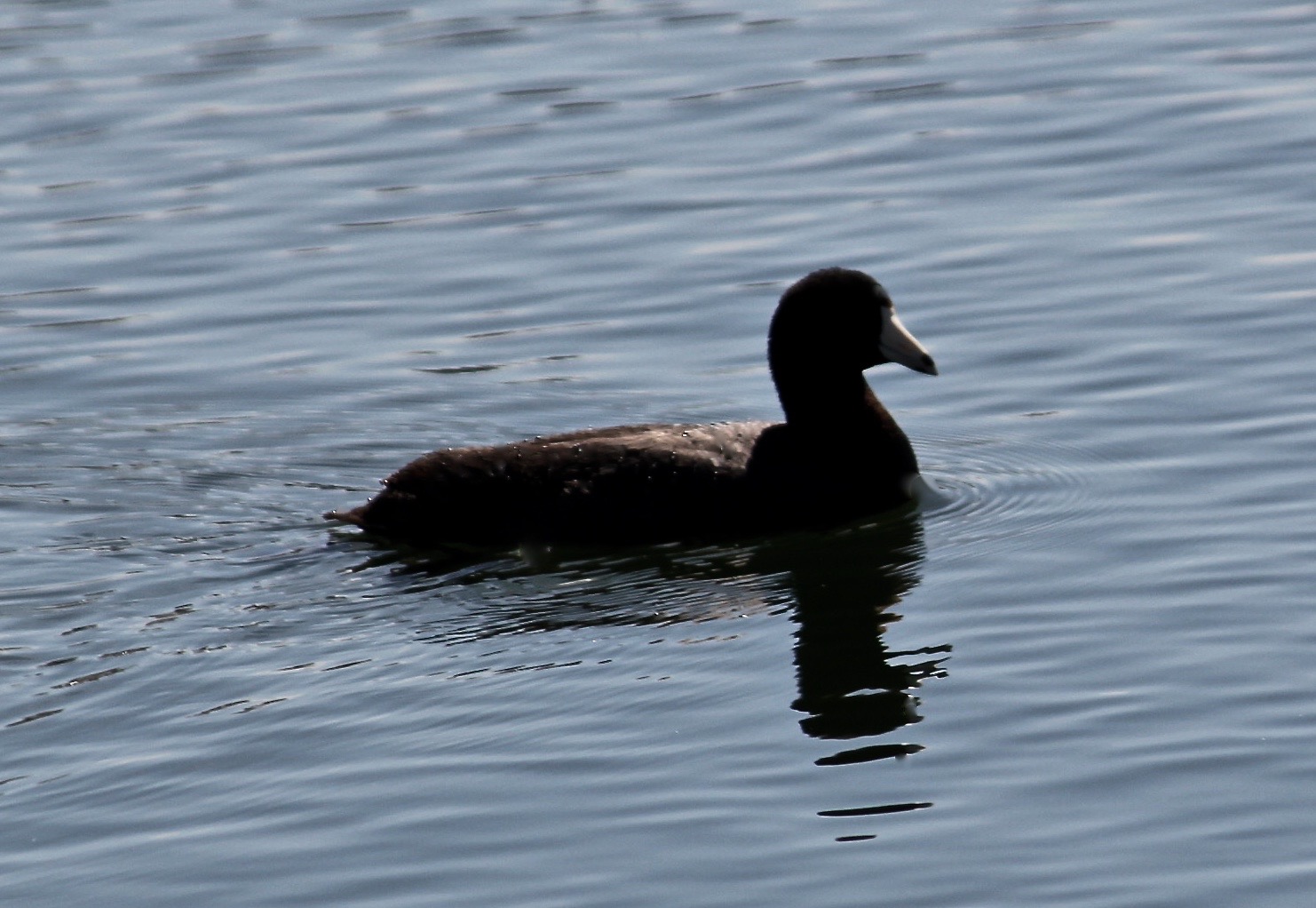
YOU OLD COOT
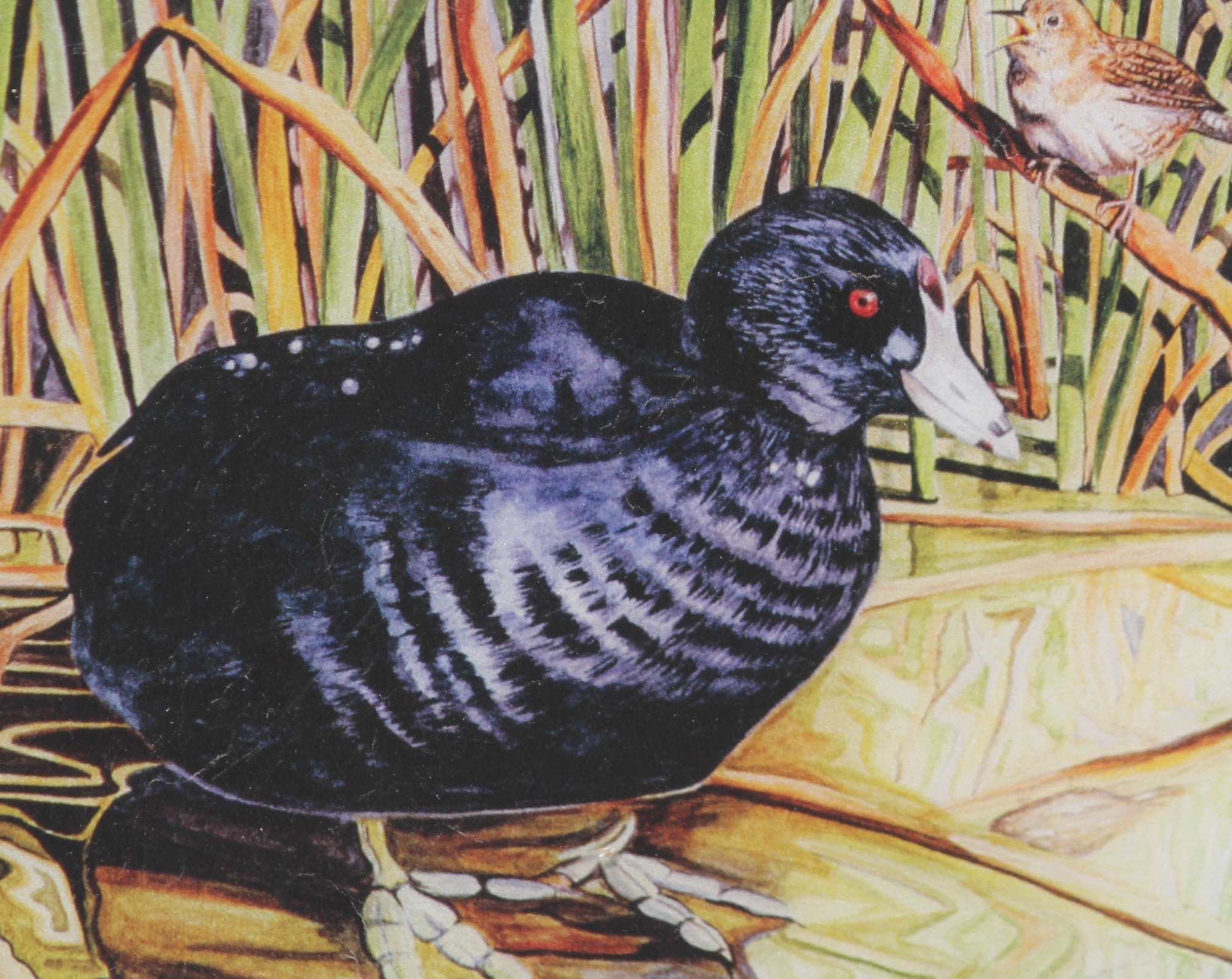
Coots are plentiful at our lake. The American coot is also known as a mud hen. Though commonly thought to be ducks, American Coots belong to a distinct order called Rallidae. Coots do not have the webbed feet of ducks, but sport broad, lobed scales on their lower legs and toes that fold back with each step to facilitate walking on dry land. Groups of coots are called covers or rafts.
The oldest known coot lived to be 22 years old.
The American Coot is a migratory bird that occupies most of North America. It lives in the Pacific and southwestern United States and Mexico year-round and occupies more northeastern regions during the summer breeding season. In the winter they can be found as far south as Panama.
The Coot mating season occurs during May and June if they have enough territory. Coots are monogamous throughout their life. The American Coot typically has long courtship periods. This courtship period is characterized by billing, bowing, and nibbling. Billing is the touching of bills between the male and females. Males generally initiate the billing. As the pair bond becomes more evident, both males and females will initiate billing only with each other and not other males or females.
After a pair bond is decided, the mating pair looks for a territory to build a nest. A pair bond becomes permanent when a nesting territory is secured. First the male chases the female. Then, the female moves to the display platform and squats with her head under the water. The male then mounts the female, using his claws and wings to balance on the female’s back while the she brings her head above the water. Sex for the coot usually takes no longer than two seconds, thus the expression, “You old Coot.”
Coots generally build floating nests. The female lays 8–12 eggs per clutch. Females and males have similar appearances, but they can be distinguished during aggressive displays by the larger head plumage on the male.
American Voots eat primarily algae and other aquatic plants but also animals (both vertebrates and invertebrates) when available.
The American Coot has a mixed reproductive strategy. The female practices a form of brood parasitism, a common alternative reproductive method in some birds. When a parasitic female lays her egg in a host female’s nest, the host female lays about two eggs per day. Host females may recognize parasitic eggs when the egg deposition pattern deviates from the traditional one egg per day pattern. The occurrence of brood parasitism may be influenced by the body size of the potential parasitic female relative to the potential host female. Parasitic females are generally larger than their host counterparts, but on average, there is no size difference between the parasite and the host.
The American Coot, unlike other parasitized species, has the ability to recognize and reject conspecific parasitic chicks from their brood. Parents aggressively reject parasite chicks by pecking them vigorously, drowning them or preventing them from entering the nest. They learn to recognize their own chicks by imprinting on cues from the first chick that hatches. The first-hatched chick is a reference to which parents discriminate between later-hatched chicks. Chicks that do not match the imprinted cues are then recognized as parasite chicks and are rejected. Hunters generally avoid killing American Coots because their meat is not as sought after as that of ducks.
Much research has been done on the breeding habits of American coots.
THE CANADIAN GEESE
Non-migratory Canadian Goose populations are on the rise. They are a species that is frequently found on golf courses, in parking lots and urban parks. Owing to its adaptability to human-altered areas, it has become the most common waterfowl species in North America. In many areas Canadian Geese are now regarded as pests by humans. They pollute beaches and leave their staining feces in many an unwelcome place. An extended hunting season, deploying noise makers, and hazing by dogs have been used in an attempt to disrupt flocks.
The Canadian goose is a large, wild species with a black head and neck, white patches on the face. It has a brown body and beautiful markings. It was originally a native to the arctic and temperate regions of the far north, but through migration it has reached into northern Europe as well. Like most geese, the Canadian goose is primarily herbivorous and normally migratory; it tends to be found on or close to fresh water.
These birds are extremely successful at living in areas that humans have altered greatly. Because Canadian geese have been able to establish breeding colonies in urban and cultivated areas, which provide food and few natural predators, they are well known as a common park species. Their success has led to them being considered a pests. Their destruction of crops, their constant honking noise, their copious droppings and aggressive territorial behavior – along with their and their nasty habit of begging for food – has made them unwelcome in many areas.
Canada geese are also among the most commonly hunted waterfowl in North America.
By the early 20th century, over-hunting and loss of habitat in the late 19th century and early 20th century had resulted in a serious decline in the numbers of this bird in its native range. The giant Canadian Goose subspecies was believed to be extinct in the 1950s, In 1962, a small flock was discovered wintering in Rochester, Minnesota by Harold Hanson of the Illinois Natural History Survey.
During the second year of their lives, Canada geese find a mate. They are monogamous. Most couples stay together all of their lives. If one dies, the other may find a new mate. The female lays from two to nine eggs with an average of five per clutch. Both parents protect the nest while the eggs incubate, but the female spends more time at the nest than the male.
Two years ago, I knew little about ducks and geese. With camera in hand and a love of nature in my heart, I began to gain a new appreciation of the birds that populate our world. According to some estimates, there are about ten thousand different species of birds on Earth presently. Total populations for birds number about two to four hundred billion birds living today, excluding domestic chickens and turkeys.
This is much less than in past ages. We have lost about 500 species since 1500 and 129 known species have become extinct. This is bad news for the planet, as birds help to pollinate crops and destroy pests. Scavenger birds clean uop the landscape and help with the decomposition of organic materials. Their decline even helps diseases to spread in human populations.
Estimates are that there are ten billion birds in the United States in the spring and twenty billion in the fall.
Winter and hunters kill about ten billion birds in the United States per year.
The American Bird Conservancy estimates that cats kill around two hundred million birds per year in the US alone.
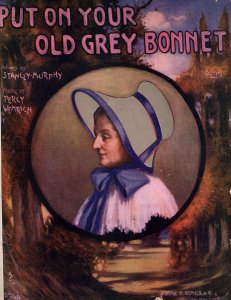
Words by Stanley Murphy, Music by Percy Wenrich 1909
My grandfather used to sing this song back in the 1940s. It was old then as it was written in 1909. The words paint a world of stability where a couple married and spent their entire lives together a few miles from the very place they married and lived.
G A7
On the old farm house veranda sat old Silas and Miranda
D7 G
Thinking of the days gone by
A7
He said “Dearie, don’t be weary, you were always bright and cheery
D7 G
but a tear dear dims your eyes”
D G D G
She said “These are tears of gladness, they’re not tears of sadness,
A7 D7
It was 50 years today that we were wed”
G A7
And the old man’s eyes they brightened and his old stern heart it lightened
D7 G7
as he turned to her and said
[Chorus]
C F
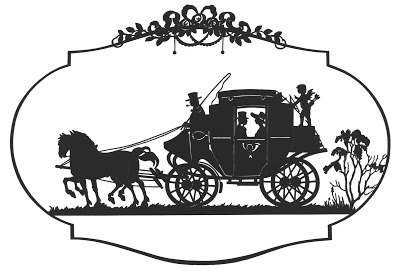
Put on your old grey bonnet, with the blue ribbon on it
C D7 G7
and I’ll hitch old Dobbin to the shay
C F
and we’ll ride to Dover through the fields of clover
C G7 C (D7)
on our golden wedding day
G A7
It was in that same grey bonnet with the same blue ribbon on it
D7 G
in the same shay by his side
A7
that he drove her down to Dover through the same old fields of clover
D7 G
to be his happy bride
D G D G
The birds were brightly singing, the old church bells were ringing
A7 D7
as the passed by that old church where they were wed
G A7
and at night while stars were gleaming the old couple lay there dreaming
“The Big Rock Candy Mountain” was first recorded by Harry McClintock in 1928. Burl Ives recorded a popular version for children in 1949. It is a folk song about a tramp’s ideal home.
McClintock claimed to have written the song in 1895. His hobo name was Haywire Mac. Some say the song was originally a song to lure children into the hobo way of life.
The words have changed over the years. An original verse is:
The punk rolled up his big blue eyes
And said to the jocker, “Sandy,
I’ve hiked and hiked and wandered too,
But I ain’t seen any candy.
I’ve hiked and hiked till my feet are sore
And I’ll be damned if I hike any more
To be buggered sore like a hobo’s whore
In the Big Rock Candy Mountains.”
Big Rock Candy Mountain lyrics:
One evening as the sun went down and the jungle fire was burning
Down the track came a hobo hiking and he said boys I’m not turning
I’m headin for a land that’s far away beside the crystal fountains
So come with me we’ll go and see the Big Rock Candy Mountains
In the Big Rock Candy Mountains there’s a land that’s fair and bright
Where the handouts grow on bushes and you sleep out every night
Where the boxcars are all empty and the sun shines every day
On the birds and the bees and the cigarette trees
Where the lemonade springs where the bluebird sings
In the Big Rock Candy Mountains
In the Big Rock Candy Mountains all the cops have wooden legs
And the bulldogs all have rubber teeth and the hens lay soft boiled eggs
The farmer’s trees are full of fruit and the barns are full of hay
Oh, I’m bound to go where there ain’t no snow
Where the rain don’t fall and the wind don’t blow
In the Big Rock Candy Mountains
In the Big Rock Candy Mountains you never change your socks
And the little streams of alcohol come a-trickling down the rocks
The brakemen have to tip their hats and the railroad bulls are blind
There’s a lake of stew and of whiskey too
You can paddle all around ’em in a big canoe
In the Big Rock Candy Mountains
In the Big Rock Candy Mountains the jails are made of tin
And you can walk right out again as soon as you are in
There ain’t no short handled shovels, no axes saws or picks
I’m a goin to stay where you sleep all day
Where they hung the jerk that invented work
In the Big Rock Candy Mountains
I’ll see you all this coming fall in the Big Rock Candy Mountains.
My old grandpappy used say that “learnin’ is bad for a body. The more a body knows, the unhappier a body gets.”
Unfortunately, I did not take his advice, but I have yet to see any proof that he is wrong.
That is why I founded The Foundation for the Furthering of Global Ignorance.
Reading Ruins the Eyes
Reading is hellish on the eyeballs. We may not notice it for a while, but the words become increasingly out of focus and lines soon begin to dance before our eyes. The eyes will then begin to water and demand a good rubbing.
Reading Strengthens the Brain.
The natural state of the brain is mushy. The more we use it, the stronger it grows. We do not want to overburden or tax the brain, so we should replace reading and writing with movies and phone conversations.
Overworked brains need bigger heads and our heads are fixed in size and volume. We should not fill it the our brains with useless culture and relics from past thoughts. If these classic thoughts from the past had any value at all, these thoughts would reoccur to us, would they not?
Had I only paid attention to the old man, I could revel in even more ignorance than I already possess. Lucky for the present, most schools are not really teaching classic reading skills. They teach enough writing to sign your name and pass a driver’s license test.
They don’t teach geography, so no one under 25 has any idea of where they are going. They no longer teach cursive, as it can be had in the fonts folder if one really needs it.
Reading Can Expand Your World
For those of us who like things exactly as they are, there is no worse threat that seeing what is on the other side of the hill. With new communications tools the universe is at our fingertips. We can make friends in Patagonia and buy stocks in Australia. We can be inspired by ideas from across the ages and the seas. The Internet may kill everything we have worked for thousands of years to achieve. Ignorance and class. I was once told Al Gore invented the Internet. I believe that he should be drawn and quartered.
Reading May Accidentally Change Your Station in Life
This reading of history and novels must be held in check. Through reading one is able to transcend their own station in life. They are emboldened to dream of other worlds and experience other lives. This, of course, is disruptive to the homogeneous society we seek to build. When the average person learns too much about how the world really works, they tend to either revolt or become integrated in the power structure. Stability is built by the ignorance of the masses.
Once one embraces ignorance, the world is a much simpler place.

 Meeting the other folk that are out to enjoy the day can be as important as the walk, as walkers abound at all times of the day, from wheelchair bound folk carrying oxygen to young mothers jogging with fat-wheeled baby carriages to take off the baby fat. When I was a child, baby carriages had thin rubber wheels and were pushed by sedate women with long summer dresses whose major purpose was to do some shopping or get the child outdoors. These days, healthy young women jog down the manicured sidewalks by the dozens, far outpacing my plodding and deliberate steps.
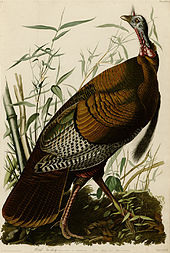 y precious possessions that were handed down from my parents was my father’s copy of Audubon’s Birds of America. My mother bought the great volume of paintings for my father for Christmas in 1942, three months after I was born. I often wondered how she afforded it, as she was living on her own while my father was drafted and serving in the army during World War II. I have used is for years to help identify birds that I come across, though many of these species are now rare or extinct. I have always been entranced with his paintings of birds and vividly remember the pictures of scary vultures and condors that so impressed me as a child.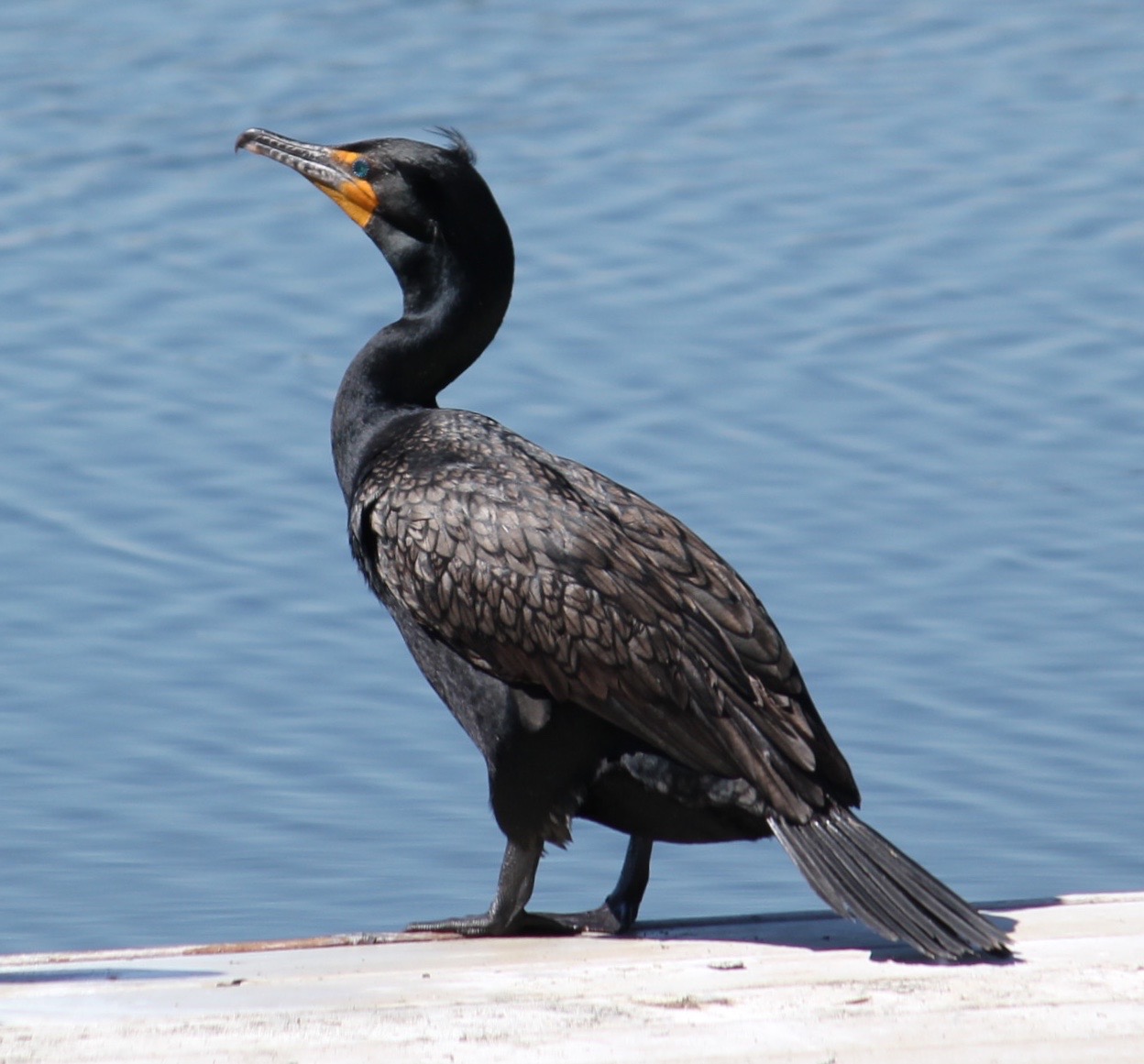






 Kenneth Harper Finton