by Kenneth Harper Finton ©2014
In the Old West, the first thing the dusty lone stranger did when he got to the muddy streets of the town was clean up a bit and go the saloon. He wanted a drink and companionship. There among the spittoons below the brass railed bar, he could look in the mirror behind the bar and view the buxom ladies who were quite willing to take him upstairs and make love for a reasonable fee.
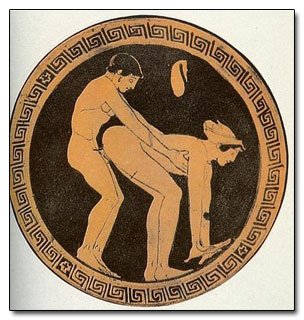
Prostitution has been recognized and controlled by law for thousands of years. Sumerian records from 2400 BC speaks of kar, the term for a prostitute as a bona fide profession. The code of Hammurabi, in 1780 B.C. Specifically refers to the rights of prostitutes. “179. If a “sister of a god,” or a prostitute, receive a gift from her father, and a deed in which it has been explicitly stated that she may dispose of it as she pleases, and give her complete disposition thereof: if then her father die, then she may leave her property to whomsoever she pleases. Her brothers can raise no claim thereto.”
Theodora, the wife of Justinian, was co-ruler of the Eastern Roman Empire. It is said that she took to harlotry like a duck takes to water. Procopius said that she gave her youth to anyone she met in utter abandonment,” then went on to describe her sexual exploits in detail.
Newsweek published an article in 2011 called “The Growing Demand for Prostitution.” It stated that “Surprisingly little is known about the age-old practice of buying sex, long assumed to be inevitable. No one even knows what proportion of the male population does it; estimates range from 16 percent to 80 percent.”
There are studies and statistics, however, In Cambodia, a whopping 60 to 80% of the men pay for sex. In the United States it falls to 15 to 20%. In Holland, where prostitution is legal and licensed by the government, the percentage is just a little higher that in the United States. In Japan, it is tacitly understood that a business man has the right to join with his associates in a visit to the red light district.
Many Muslims the practice Muta, a temporary marriage contract where the man pays a woman for sexual favors.
There are almost as many reasons for paying for sex as there are occurrences. Many women think that the only reason men pay is because they are too homely or anti-social to strike up a sexual relationship with another.
Some men point to the cost effectiveness of hiring a woman. They bring no emotional baggage to the table, they say. Others seek out what they cannot get at home in their married relationships. For obvious reasons, men in higher income groups spend more on sex than those who struggle to make ends meet.
My own experience, being a part of that 100% that make the male population, is quite limited. I will not go into it now, but I might write a story about this unforgettable experience in the future.
That being said, the energy expended sexual release must have some psychic value and bring some type of change to the life of the participants. One cannot expend energy without changing something. Whether that energy is released for pay or for free, something in nature changes.
Is anything free in nature? Since everything has a value in the human experience, then everything has a price. Even the act of breathing is a form of using energy, but we need to breath if we are to continue living. Breathing is the price of living for us and the cost of breathing is measured in aging.
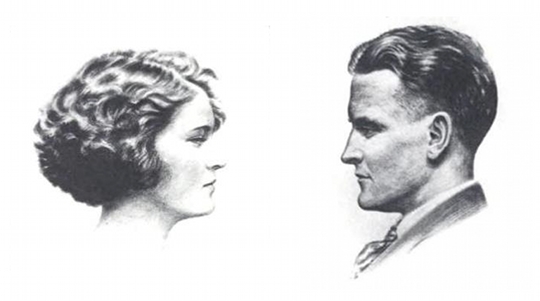




 espite the many thousands of years of human experience, modern humans still live in tribes. We tend to call these tribes families and groups. But they are tribes nonetheless. Our brains developed an early warning system so that rejections felt painful enough to make us change our behavior before total ostracism could occur.
 jection causes self-doubt. It is a blow to our self-esteem. Yet, if you think about it, a runaway sense of self-esteem is not something to be desired. Social living requires that we temper our self-esteem. Rejection is a tool to keep our expectations and feelings of self-worth in check and balanced. Feelings of rejection do not respond to reason. We either pick ourselves or others apart looking for reasons for rejection. Perhaps we will find a real fault we need to correct and perhaps we will imagine a fault that does not really exist and make it real. Rejection lowers our intelligence and our ability to think clearly. That we will ponder the reasons for rejection is a foregone conclusion: that we will come up with a reasonable solution is not.
 Rejection is a universal problem for everyone. Marilyn Monroe said, “Sometimes I feel my whole life has been one big rejection.” We all know where that led.
 ob Dylan said, “The world don’t need any more songs… as a matter of fact, if nobody wrote any songs from this day on, the world ain’t gonna suffer for it. Nobody cares.” I am not certain when Dylan said this, but it had to be during some period when he felt rejected. What he says is both true and false. True, the world does not need any more songs. There are already masterpieces enough for any occasion. But it is false that the world is not going to suffer from the lack of new songs. Songs write and reflect the essence of an era.
 rejection on the Internet is counterproductive. People do not want to hear about our emotional distress. Besides, the Internet never forgets and we will be stuck with our poor attitudes for much longer than we think. Your next boss or your next lover might get a bad opinion of the way you handle problems. The quicker we deal with rejection and move on, the happier we will be. Most rejections are not personal, so we do not need to make them personal. Knowing when to quit is hard, but essential. Some goals that we set for ourselves are bound to be unrealistic. We have millions of goals in a lifetime. Most of them are unrealistic. With time and the help of others around us, we learn to know the difference and teach ourselves to lead balanced lives. We need to realize that we give out rejection as much as we receive it. Giving a person a specific reason for rejection not only makes them feel better, but we are better people for having this ability.
 Kenneth Harper Finton