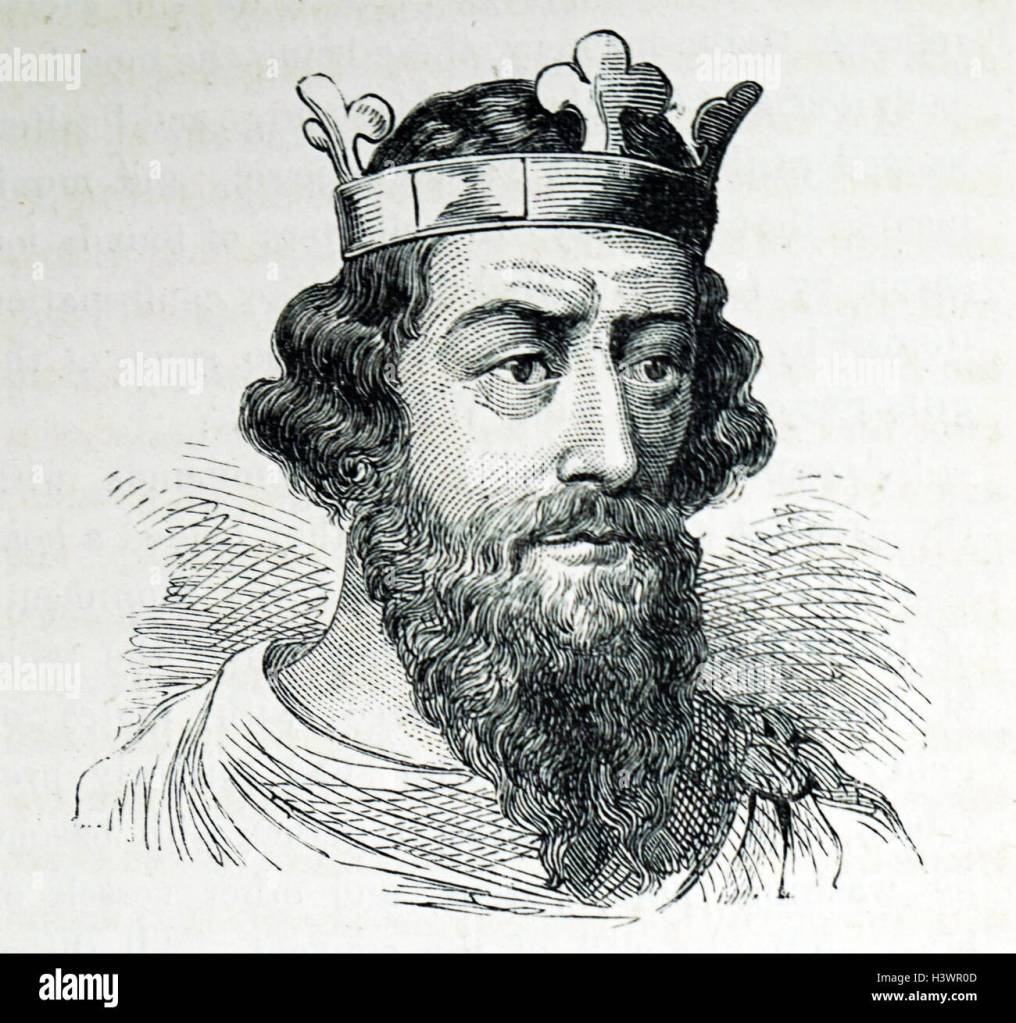
The Legacy of Alfred the Great: A Study of Leadership

Chapter 27: From Tribes to Nations, by Kenneth Harper Finton

ALFRED THE GREAT

Alfred, the fifth son of his father, Æthelwulf, was a child of unusual talent and bearing. He was a handsome lad, prematurely an adult from his earliest days. At the age of five, Alfred was sent off to Rome . There, Leo IV confirmed him and hallowed him as “king”. This was most unusual, since at the time Alfred had three living brothers older than he in line for succession. 

At age fourteen, the lovely Judith became the second wife of Alfred’s father, Æthelwulf. When he died two years later, she shocked the country by marrying her stepson, Æthelbald, who was Alfred’s brother. Upon his death, after a very short reign, she returned to France.and, in 862, married Baldwin I [Iron Arm], Count of Flanders.
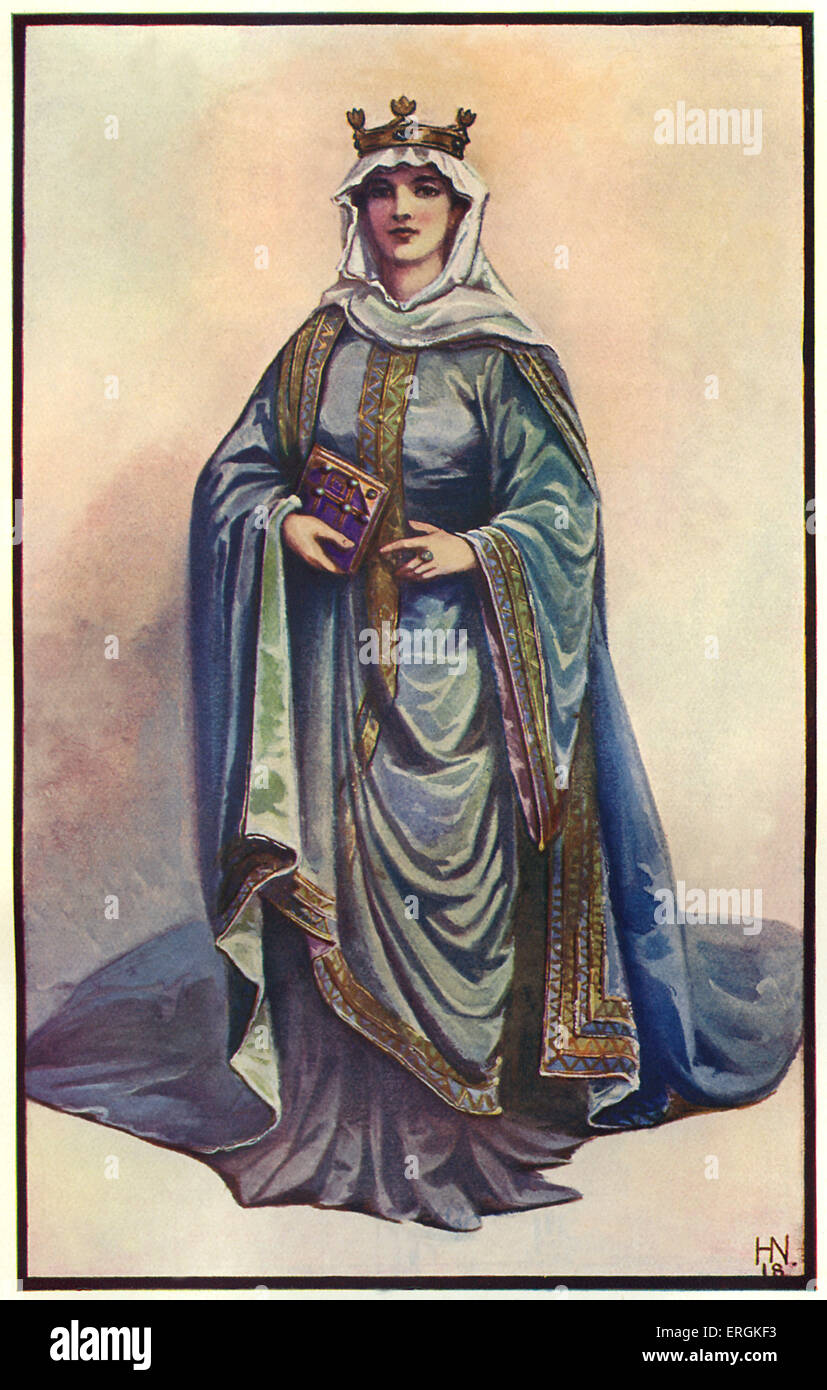
Queen Judith

During this time with hid mother in France, Alfred’s playmates were Charles, the boy king of Aquitaine, and his sister Judith, both children of Charles the Bald, Holy Roman Emperor and grandson of Charlemagne.

Again in 855 Alfred went to Rome with his father, possibly to secure some titles that were to be bestowed upon him. Two years later, his father died. Alfred’s older brother Æthelbald took the throne, followed shortly thereafter by Æthelbert who ruled until 866. Alfred the Great married Elsywyth of Mercia in 868. Elsywyth was born in 848 in Wantage, Berkshire, the daughter of Æthelred Mucil, who died on the 22nd of October of 899.

The Danes had occupied London and their army had been fortified at Reading. London was not the capital and bustling city of later years, but a town in the Kingdom of Mercia. From these points, the Danes moved forward and met the West Saxons on the Berkshire downs in January of 871. Here was fought the important Battle of Ashdown.

Though he was warned that the battle must be joined, Alfred’s brother Æthelred, the King, tarried for hours in his prayers. According to Bishop Asser, who left an account of Alfred’s life: “seeing the heathen had come quickly on the field and were ready for battle… [Alfred] could bear the attacks of the enemy no longer, and he had to choose between withdrawing altogether or beginning the battle without waiting for his brother. At last, like a wild boar, he led the Christian forces boldly against the army of the enemy… in spite of the fact that the King had not yet arrived.”

The battle lasted through the day. The King finally joined Alfred in the field. At last the Danes gave way and retreated, pursued by the Saxon forces until the whole length and breadth of the Berkshire downs [Ashdown] was filled with their corpses. One of the Viking kings and five of his jarls were found among the slain.

Though this battle did not break the back of the Danes, it takes its place in history for the significance of the issue. Had the West Saxons lost, all England would have fallen before the Danes. The victory restored the confidence of the West Saxons and gave Alfred the fame and support necessary to continue his resistance. When brother Æthelred died later that year, there was no debate as to whom his successor would be. At twenty-four, Alfred was King.

The Danes were strongly reinforced from overseas. Six or seven battles were fought and the Danes held their ground. The “summer armies” were difficult to beat and Alfred’s forces were whittled down through desertion and death. Alfred decided to come to terms while he still had an army left.

A treaty was signed whereby the Danes would make peace if the Saxons retreated and paid tribute. Alfred did so and enjoyed five years to consolidate his defenses and power. What led the Danes to make such a treaty is unknown, but a change had come over the Northmen. Those who had for centuries invaded and plundered had begun to take up the land. The sailors had turned soldier, the soldier turned yeoman. It was not that they wanted peace. They still desired all of England, but Alfred’s stubborn group had taken its toll. For now, they were content to settle the lands they already held.

Five years later Alfred’s truce ended. The Danes, under Guthrum, had developed a plan to take Wessex. Alfred sought peace and offered to pay a tribute for it. The Danes took the gold and swore they would keep the peace, but suddenly they seized Exeter.

Alfred and his troops were after them, but found them in a fortress where they could not be touched awaiting reinforcement. They lay siege for a month as the fortress ran low on supplies. The Danes finally decided to break away from the fortress by sea and sent more than a hundred longships to their rescue.

In those days, people believed that the weather was ruled by God and Alfred was fortunate to have God on his side. A dense fog followed by a frightening storm came over the sea. A hundred and twenty Viking ships were sunk and more than five thousand of the perjured Danes died before the storm’s onslaught. Alfred, watching safely from the shore, found the Danes in the mood for another treaty. This, they kept for five months.

In January of 878, Alfred’s fortunes reversed. While his army celebrated the Twelfth Night, the Danes swooped down on them in the dark, killing many. Most of his army fled to their individual homes and Alfred was left with a handful of officers and personal attendants, forced to take refuge in the swamps and forests of Somerset.

For some months he lived as did Robin Hood many centuries later. Here, Alfred found security in his wilderness retreat.

One day it was so cold that the waters were frozen underfoot. Alfred’s attendant shad gone out to find food  enough to feed them for the day while Alfred stayed alone in the royal hut with his mother-in-law, Eadburga. The King always carried a writing tablet along with the Book of Psalms by David. 

A poor man appeared suddenly at the door begging for bread. Alfred, in his usual manner, received the stranger as a brother and called upon Eadburga to give him food. She replied that there was only one loaf of bread and a little wine left in the pitcher, but Alfred insisted that he be given what was left. Alfred then fell asleep while reading. He dreamed that St. Cuthbert stood before him and said he had taken the form of the beggar. He told Alfred that God had noted his afflictions and assured him that his fortune was about to change.

When Alfred awoke, the beggar was not to be seen. The loaf of bread remained whole and the pitcher of wine was filled to the brim. Alfred recounted his dream to his mother-in-law. She said that she too had fallen asleep and had the same dream. While they still talked of the amazing event, the attendants returned with enough fish and fowl to feed an army.

Toward the end of Lent, the Danes attacked one of Alfred’s strongholds on Exmoor. According to Hodgson: “…in besetting it they thought the King’s thanes would soon give way to hunger and thirst… since the fortress had no supply of water. The Christians, before they endured any such distress, by the inspiration of heaven judged itto be better either to suffer death or to gain the victory. Accordingly at day-break they suddenly rushed forth against the heathen, and in the first attack they laid low most of the enemy, including their king. A few only escaped by flight to their ships.”

Eight hundred Danes were killed that day. Among the spoils of victory, the Saxons captured the sacred flag of the Vikings called “The Raven”. This enchanted banner whose lifelike bird fluttered in the wind was said to have been woven in one day by three daughters of Ragnar Lodbrok. According to Hodgkin: “…in every battle in which that banner went before them the raven in the middle of the design seemed to flutter as though it were alive if they were to have the victory.”

On this day, the wind did not blow and the raven hung lifelessly in its silken folds. News of this defeat was quick to spread. When Alfred heard of it he left his hideout and once again raised a call for arms. News that he was alive and well excited the masses and the warriors returned in great number. Soon, Alfred was again marching in front of a grand army.

They met the Danes on the downs at Æthandun, now called Eddington, and fought the culminating battle of all Alfred’s wars. Everything was at stake. Both sides dismounted their horses. The shield walls formed and the two armies clashed for hours with sword and axe. The Danes were routed and Guthrum found himself entrapped in his own camp. Desperate, he begged for peace, offering to give Alfred as many hostages as he desired if he would let him leave these lands forever.

Alfred, however, had other designs with a more farsighted point of view. He meant to make a lasting peace with the Danish king. They were in his power. He could have starved or slaughtered them to a man. Instead, he received Guthrum into his camp, entertained him for twelve days, convinced him to be baptized to the Christian faith, and called him his on. Realizing that East Anglia (a small territory north of London) was a Danish province, Alfred offered to divide the land with him so that both could share in the glory of the new nation.

“The sublime power to rise above the whole force of circumstances, to remain unbiased by the extremes of victory or defeat, to persevere in the teeth of disaster, to greet returning fortune with a cool eye, to have faith in men after repeated betrayals, raises Alfred far above the turmoil of barbaric wars to his pinnacle of deathless glory.”  -Winston Churchill

Fourteen years of peace were to follow. Alfred began the gargantuan task of reorganizing his lands and brought culture back to his island nation. He restored London, rebuilt the walls and started the town on the road toward becoming the capital city. He reorganized the “fyrd”, dividing the peasantry into two classes which rotated service in forty day increments. Now the soldiers would not desert on long campaigns, knowing that someone was there to care for his lands and that he could return home and do the same shortly.

Next, Alfred’s attention turned toward the sea. He made great departures from the norms in ship design, building much larger vessels that rode higher and steadier than the others. His work was premature only due to the fact that the big ships were beyond the skill of the inexperienced  seamen to handle.

He founded schools and universities and caused translations of great works to be made in the English language. Until his time the English had only written songs and epic poems. Alfred began the Anglo-Saxon Chronicle to compile the history of the land, and English prose was born.

The Laws of Alfred, continually added to by his successors, eventually grew into the English Common Law. Alfred’s Book of Laws or Dooms attempted to blend the Mosaic code with Christian ethics and Old Germanic principles. “Do unto others as you would that they should do  unto you”, became in Alfred’s words: “What ye will that other men should not do to you, that do ye not to other men. By bearing this precept in mind a judge can do justice to all men. He needs no other law books. Let him think of himself as the plaintiff and consider what judgment would satisfy him.”

He gathered scholars about him. He used every spare hour he could to read. He also listened to books read by others. He carried with him a little handbook, constantly pausing to write down thoughts as they occurred to him. The singers in the court found Alfred to be a fellow troubadour. He loved to gather the old songs of his people. He taught these songs to his children. The children that he raised proved to be the most able leaders of their time.

Alfred drew up plans for buildings. He took care of the affairs of his court. Alfred instructed craftsmen in their workings with gold. He would pause in his travels to converse with strangers. He taught even the falconers and dog breeders new things about their business. It seemed there was little in the world of ideas with which he was not more than adequately familiar.

He spent many an hour soothing his depressions with the music of the Psalms. He wrote: “Desirest thou power? Thou shalt never obtain it without sorrows–sorrows from strange folk, and yet keener sorrows from thine own kindred… hardship and sorrow, not a king but would wish to be without these if he could. But I know that he cannot.”

Alfred took the time to translate books into English himself. Yet, he was more than just a translator. He was an editor for his people, omitting this, expanding upon that, changing the whole design of English literature.

One final war was Alfred’s lot. The Vikings had invaded France, sailing up and down the rivers with every device of war known to man. They laid siege on Paris; they invaded Germany. The Danes seemed to fan out in all directions. However, they faced resistance on too many fronts. It was more than they could handle. Once again Viking ships looked toward England. Guthrum died in 891, keeping peace with Alfred to his last breath, but with his death, Guthrum’s Peace ended. The next year, a hostile armada of two hundred and fifty Viking ships arrived. They landed at the edge of the forests near Appledore. A second force of eighty ships sailed up the Thames. Kent was to be attacked from two sides.

Alfred had prepared the country well. Food and wealth had been gathered again. Additionally, Alfred’s twenty-two year old son, Edward, had become an able commander. He could lead his father’s forces in the field. Alfred avoided war for several years. He preferred to pay some Danegeld to Haesten, the Viking king. This payment was for promises of peace. Alfred also convinced Haesten to have both his sons baptized as Christians.

In 893, a third force arrived and attacked Exeter. Young Prince Edward routed the raiders. He sent them swimming up the Thames for their lives. The Danes had fortified themselves below London. Edward and his brother-in-law, Æthelred, raised a strong army in London, then fell upon the Danes at Benfleet. According to the Anglo-Saxon Chronicle: they “put the army to flight, stormed the fort, and took all that was therewithin, goods as wells as women and children,  and brought them all to London.”

Among the hostages were the Danish leader’s wife and two sons. Alfred sent Haesten’s wife back to him on humanitarian principles, an act unheard of and highly criticized for many years.

“As for the two sons, they had been baptized; he [Alfred] was Godfather to one of them, and Æthelred of Mercia to the other. They were therefore Christian brethren, and the King protected them from the consequences of their father’s wrongful war. People in the ninth century found it very hard to understand this behavior. During that time, the kingdom was fighting desperately against brutal marauders. However, this is one of the reasons why in the after-time the King is called ‘Alfred the Great’. The war went on, but so far as the records show Haesten never fought again. It may be that mercy and chivalry were not in vain.” -Winston Churchill

“So long as I have lived,” Alfred said, as death closed in upon him, “I have striven to live worthily.”
ANNE BOLEYN’S LETTER TO HENRY VIII

TRIBES

Anne Boleyn Letters

This is the letter that Anne Boleyn wrote to Henry VIII from the Tower of London, after her arrest. It is said to have been found in Thomas Cromwell’s belongings which probably means that it never made it into the hands of the King:-

Anne Boleyn in the Tower” Sir, your Grace’s displeasure, and my Imprisonment are Things so strange unto me, as what to Write, or what to Excuse, I am altogether ignorant; whereas you sent unto me (willing me to confess a Truth, and so obtain your Favour) by such a one, whom you know to be my ancient and professed Enemy; I no sooner received the Message by him, than I rightly conceived your Meaning; and if, as you say, confessing Truth indeed may procure my safety, I shall with all Willingness and Duty perform your Command.

But let not your Grace ever imagine that your poor Wife will ever be brought to acknowledge a Fault, where not so much as Thought thereof proceeded. And to speak a truth, never Prince had Wife more Loyal in all Duty, and in all true Affection, than you have found in Anne Boleyn, with which Name and Place could willingly have contented my self, as if God, and your Grace’s Pleasure had been so pleased. Neither did I at any time so far force my self in my Exaltation, or received Queenship, but that I always looked for such an Alteration as now I find; for the ground of my preferment being on no surer Foundation than your Grace’s Fancy, the least Alteration, I knew, was fit and sufficient to draw that Fancy to some other subject.

You have chosen me, from a low Estate, to be your Queen and Companion, far beyond my Desert or Desire. If then you found me worthy of such Honour, Good your Grace, let not any light Fancy, or bad Counsel of mine Enemies, withdraw your Princely Favour from me; neither let that Stain, that unworthy Stain of a Disloyal Heart towards your good Grace, ever cast so foul a Blot on your most Dutiful Wife, and the Infant Princess your Daughter:

Try me, good King, but let me have a Lawful Trial, and let not my sworn Enemies sit as my Accusers and Judges; yes, let me receive an open Trial, for my Truth shall fear no open shame; then shall you see, either mine Innocency cleared, your Suspicion and Conscience satisfied, the Ignominy and Slander of the World stopped, or my Guilt openly declared. So that whatsoever God or you may determine of me, your Grace may be freed from an open Censure; and mine Offence being so lawfully proved, your Grace is at liberty, both before God and Man, not only to execute worthy Punishment on me as an unlawful Wife, but to follow your Affection already settled on that party, for whose sake I am now as I am, whose Name I could some good while since have pointed unto: Your Grace being not ignorant of my Suspicion therein.

But if you have already determined of me, and that not only my Death, but an Infamous Slander must bring you the enjoying of your desired Happiness; then I desire of God, that he will pardon your great Sin therein, and likewise mine Enemies, the Instruments thereof; that he will not call you to a strict Account for your unprincely and cruel usage of me, at his General Judgement-Seat, where both you and my self must shortly appear, and in whose Judgement, I doubt not, (whatsover the World may think of me) mine Innocence shall be openly known, and sufficiently cleared.

My last and only Request shall be, That my self may only bear the Burthen of your Grace’s Displeasure, and that it may not touch the Innocent Souls of those poor Gentlemen, who (as I understand) are likewise in strait Imprisonment for my sake. If ever I have found favour in your Sight; if ever the Name of Anne Boleyn hath been pleasing to your Ears, then let me obtain this Request; and I will so leave to trouble your Grace any further, with mine earnest Prayers to the Trinity to have your Grace in his good keeping, and to direct you in all your Actions.

Your most Loyal and ever Faithful Wife, Anne Boleyn
From my doleful Prison the Tower, this 6th of May.


John West is one of my ancestors. John’s brother, Lord Thomas West, 3rd Lord De La Warr [Delaware], was the first Colonial Governor of Virginia from 1610 to 1611. John and brother Thomas were grandsons of William West, 1st Baron Delaware. Their grandmother, Catherine Carey, was a niece of Queen Ann Boleyn and first cousin to Queen Elizabeth.

On this May 2, 1536, Anne Boleyn, the second wife of England’s King Henry VIII, was arrested for high treason, adultery, and incest. She was intelligent and outspoken, and had educated opinions about politics and religious reform and came to the court of Henry VIII when she was 20 years old, to serve as lady-in-waiting to Queen Catherine of Aragon. She soon caught the eye of the king. For seven years he wooed her, and for seven years she put him off. He managed to get his first marriage annulled by breaking with the pope and declaring himself head of the Church of England and then Anne Boleyn consented to marry him.

Their early months of marriage were happy ones, and their first child, Elizabeth, was born in 1533. Anne had several miscarriages after that, and she never gave Henry the son he so desperately wanted, so he accused her of every capital offense he could think of: numerous affairs, incest with her brother, plotting his murder, and witchcraft. She was convicted and sentenced to death. The only mercy he showed her was in ordering that she be beheaded by a sword, rather than a common axe.


John West

********************************

Lord Thomas West m 19 Nov 1571 Ann Knollys

b 9 Jul 1557 Wherewell, Hampshire, England d 1601/02

[See addendum Lord Thomas West, Chapter 15, page 99]

Ann Knollys

********************************

Sir Francis Knollys Catherine Carey

b 1514

d 1601 d 1569

[See addendum Sir Francis Knollys, Chapter 16, page 101]

Catherine Carey

*********************************

Sir William Carey 1 m 4 Feb 1520 Mary Boleyn

Mary was sister to Anne Boleyn and cousin to Queen Elizabeth. Before her marriage to Sir William Carey, Mary was briefly mistress to King Henry VIII. After William Carey’s death, his sister-in-law, Anne Boleyn was appointed administrator of his estate by Henry VIII. She was given charge of his children as well, despite the fact that Mary was still alive and a grandfather and an uncle still lived who were quite capable of the task.2

Mary Boleyn Henry VIII

1 The descendants of Mary Boleyn, the sister of Queen Anne Boleyn, are now regarded as most likely the descendants of Henry VIII, not of William Cary, Mary’s husband. It was considered very bad form for a man to have sexual relations with his wife while he was being cuckolded by the King, so Catherine was likely the daughter of Henry VIII.

2   Encyclopedia Britannica

Mary Boleyn

**********************************

Sir Thomas Boleyn Elizabeth Howard

Thomas Boleyn, through his mother, Margaret Butler, had some claim to the Butler titles, one English and one Irish, but because of the Civil War between the Lancasters and the Yorks, these were the subject of dispute.

Mary’s sister Anne Boleyn was not a beautiful woman, but her charms led her to Henry. Her intention was to be Queen of England, but Henry’s marriage to Catherine stood in the way. Henry finally divorced his first wife and married Anne in January of 1533. The exact date is not known. Anne was a weak, petty woman with little in the way of stable character. In September of 1533 she gave birth to Elizabeth, later to become queen.

Anne fell into disfavor and was accused of having many court lovers. Her reputed lovers were executed one by one, and Anne was finally confined to the tower. On her way to the chopping block she protested her innocence. The case against her has never been proved. She regarded the prospect of her own death with levity, laughing heartily as she put her hands about her own neck and praised the skills of the executioner. The day after Anne was beheaded, Henry married Jane Seymour.


“ANNIE GET YOUR GUN” IN RETROSPECT

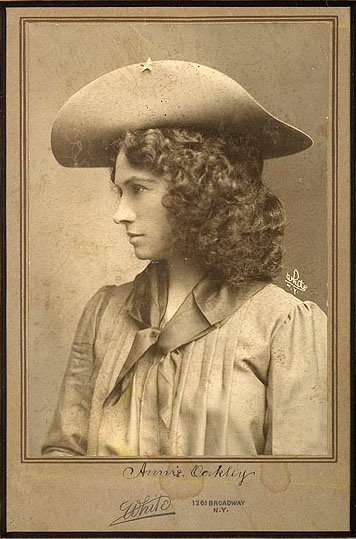
ao-photo1

The musical “Annie Get Your Gun” has a interesting and turbulent history. The idea for the musical occurred to Dorothy Fields, the daughter of a Polish immigrant named Lew Fields who worked in vaudeville and became a respected and successful Broadway producer.

Dorothy Fields was a lyricist who wrote the words to such songs as “I Can’t Give You Anything But Love” and “The Sunny Side of the Street” with composer Jimmy McHugh.

Her work with Jerome Kern produced the successful song “Lovely to Look At.” They worked together again on “The Way You Look Tonight: which earned an Academy Award for best original song in 1936.

In 1935, the movie “Annie Oakley” starring Barbara Stanwyck came out based on the story by Dorothy Fields’ brother, Joseph Fields. Soon Dorothy became interested in seeing Annie’s story become a musical that would star her friend Ethel Merman. Mike Todd turned her script down, so she approached Richard Rogers and Oscar Hammerstein II who were freshly invigorated with the success of their musical “Oklahoma” . Rogers and Hammerstein had decided to become producers of both their own works and the works of others. They agreed to produce the musical and asked Jerome Stern to create the music. Dorothy Fields would do the lyrics and she would write the book with her brother Joseph who would later write “Gentlemen Prefer Blondes” and “The Flower Drum Song”, among many other famous screenplays.

This selection began the rocky path that eventually led to “Annie Get Your Gun”. Kern collapsed from a stroke and died in 1945. Rogers and Hammerstein had to replace Kern, so they asked Irving Berlin to step in and take over the play. Knowing that Irving Berlin wrote both the music and words, Dorothy Fields stepped down as lyricist, but Berlin was not certain that he could write the songs that had to fit into a specific scene in the show. Oscar Hammerstein convinced him to try anyway, so Berlin came back with the songs “Doin’ What Comes Naturally”, “You Can’t Get a Man With a Gun” and “There’s No Business Like Show Business.”  Berlin mistakenly did not think that Richard Rogers liked the show business song and dropped it from the libretto. However, during the development of the show, the song was added back and has become a timeless classic.

Ethel Merman played Annie on Broadway and in three years missed only three performances.

The musical was a great hit, It started on Broadway in 1946 and ran for 1147 performances. It had more hits songs than any other Broadway play and was Irving Berlin’s greatest success.

When the time came to make a movie of “Annie Get Your Gun”, Dorothy’s friend Ethel Merman was not even considered for the movie by MGM. Though Doris Day and Judy Canova wanted the part, MGM wanted Judy Garland for the lead role. MGM producer Arthur Freed had paid $650,000 to Irving Berlin for the movie rights just to cast Garland into the title role. Garland shot some scenes as the lead actress, so MGM thought they could bring in an unknown to play Frank Butler. Both John Raitt and Howard Keel auditioned for the role, but Keen got the part. The director, Busby Berkeley insisted that Keel ride his horse on the set over a slick floor, and on the second day of shooting, Keel broke his leg while they were shooting by falling off his horse on the set. They had to shoot close-ups of Keel and Judy Garland was offended that the unknown actor was getting so much attention. Judy was having severe problems with drugs and alcohol addictions as well. Freed eventually fired Busby and brought in Charles Walters who had successfully directed Garland in “Easter Parade”. Judy Garland was convinced that she could not get the performance right after watching the rushes. She could not conquer her addictions nor get to the set on time. MGM felt they had no choice but to fire her. Since Garland was a superstar at the time, firing her was something no one expected. Garland went into a mental hospital and the movie was put on hold.

To add to the confusion, Frank Morgan (the Wizard in “The Wizard of Oz”) was playing Buffalo Bill. He suddenly died in the middle of the film. Only a few shots could be saved from the production. George Sydney suddenly replaced Charles Walters as the director by orders from MGM. They basically had to start all over again with the film, this time with Betty Hutton in the lead role.

The movie had good box office success, but Betty Hutton did not get the best of reviews when compared to the original Broadway role played by Ethel Merman. A dispute between the Irving Berlin estate and MGM kept the film out of circulation from 1973 to 2000. By that time. Merman’s performance was history and Hutton was accepted. A new production with Bernadette Peters and Reba McIntire brought Annie back to a new generation.

The hit songs generated by “Annie Get Your Gun” are quite staggering. Few musicals, have come close to the mass appeal of the songs in this production.

YOU CAN’T GET A MAN WITH A GUN

Written by Irving Berlin

Performed by Betty Hutton

DOIN’ WHAT COMES NATUR’LLY

Written by Irving Berlin

Performed by Betty Hutton

I’M AN INDIAN TOO

Written by Irving Berlin

Performed by Betty Hutton

I GOT THE SUN IN THE MORNING

Written by Irving Berlin

Performed by Betty Hutton

ANYTHING YOU CAN DO

Written by Irving Berlin

Performed by Betty Hutton and Howard Keel

THEY SAY IT’S WONDERFUL

Written by Irving Berlin

Performed by Betty Hutton and Howard Keel

THERE’S NO BUSINESS LIKE SHOW BUSINESS

Written by Irving Berlin

Performed by Ensemble

COLONEL BUFFALO BILL

Written by Irving Berlin

Performed by Chorus

MY DEFENSES ARE DOWN

Written by Irving Berlin

Performed by Howard Keel

THE GIRL THAT I MARRY

Written by Irving Berlin

Performed by Howard Keel

FAMOUS LAST WORDS

wow

Supposedly, both Steve Jobs and Bo Diddley’s last words were “Wow.”

Just before Humphrey Bogart died, his wife, Lauren Bacall, had to leave the house to go pick up the kids. “Goodbye, Kid, hurry back,” Bogart said. Maybe that was not the same as “Here’s looking at you, Kid,” but it is as close as he ever to got.

Grouch Marx quipped his way to the grave. His last words were: “This is no way to live.”

Some people get apologetic when they die. “I have offended God and mankind because my work did not reach the quality it should have,” said Leonardo da Vinci. The great artist must have died in a quite depressed mood.

Johnny Ace, an early rhythm and blues singer, died in 1954. He was playing with a pistol between sets and his last words were: “I’ll show you that it won’t shoot.”

Nostradamus predicted all the way to the grave. When he went to bed, he said, Tomorrow, at sunrise, I shall no longer be here.” And he was correct.

Few people are as classy as Marie Antoinette. On her way to the guillotine, she stepped on the door of the executioner and said, “Pardonnez-moi, monsieur.”

Everyone wants their final words to be memorable. Charles Gussman was an announcer and a writer who wrote the pilot episode for Days of Our Lives. He has always wanted his final words to be poignant and memorable, so his daughter reminded him of that as he lay on his death bed. Gussman removed his oxygen mask and with his best announcing voice exclaimed: “And now a final word from our sponsor.”

Every one who dies has last words. Most of us do not think about what they might be. I had no idea what mine might be. A big buck deer charged my car several weeks ago. I did not see him until he was about five feet from the car. I swerved and missed him, but I said, “Holy Shit,” as the image passed by my peripheral vision.

Since I say that often when I am shocked by events, I would not be surprised if they were my final words someday. It seems fitting enough: ‘Holy shit.”


The reference book Last Words of Notable People by William B. Brahms has more than 3500 famous last words.

THE FIRST WOMAN CANDIDATE FOR U.S. PRESIDENT: VICTORIA WOODHULL

Major Source: https://en.wikipedia.org/wiki/Victoria_Woodhull

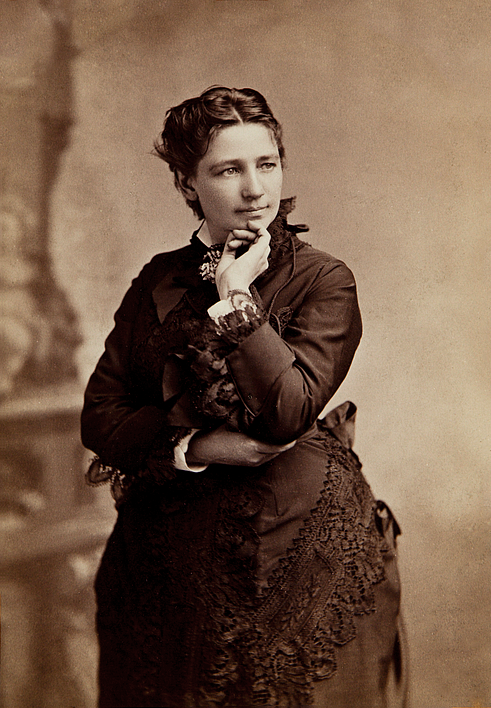
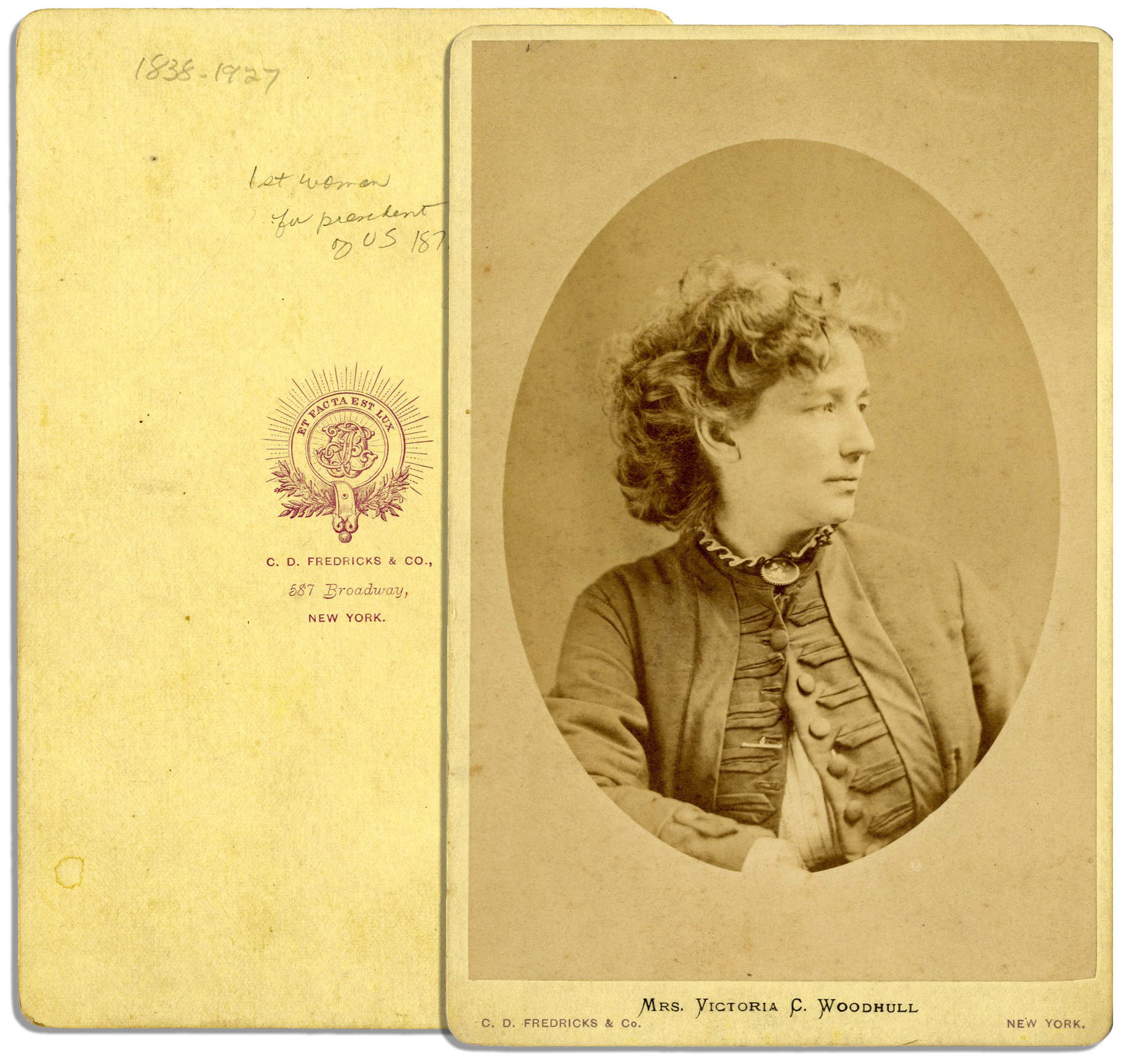
Victoria-Woodhull-by-CD-Fredericks,-c1870

Victoria Woodhull by CD Fredericks. circa 1870


Victoria Woodhull was the first woman to run for President of the United States in 1872. An activist for women’s rights and labor reforms, Woodhull was also an advocate of free love. She believed women should be free to to marry, divorce, and bear children without government interference.

Woodhull was politically active in the early 1870s, when she was nominated as the first woman candidate for the United States presidency, for which she is best known.

Woodhull was the 1872 candidate for the Equal Rights Party, who supported women’s suffrage and equal rights. She was arrested on obscenity charges a few days before the election, for publishing an account of the alleged adulterous affair between the prominent minister Henry Ward Beecher and Elizabeth Tilton. This bit of red meat added to the sensational coverage of her candidacy. Though she was on the ticket, she did not receive any electoral votes, and there is conflicting evidence about popular votes.


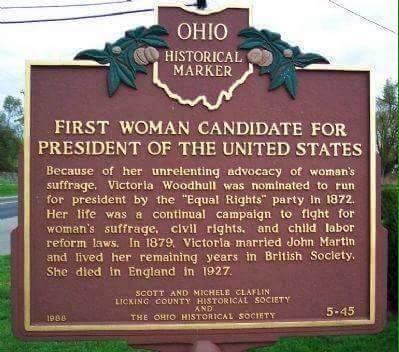
LICKING CO, OH SIGN WOODHULL

Licking County, Ohio Historical Sign

EARLY LIFE AND EDUCATION

Born Victoria California Claflin, she was the seventh of ten children (six of whom survived to maturity),in the rural frontier town of Homer, Licking County, Ohio.

“Her mother, Roxanna “Roxy” Hummel Claflin, was illegitimate and illiterate. She had become a follower of the Austrian mystic Franz Mesmer and the new spiritualist movement. Her father, Reuben “Old Buck” Buckman Claflin,  was a con man and snake oil salesman. He came from an impoverished branch of the Massachusetts-based Scots-American Claflin family, semi-distant cousins to Governor William Claflin. -Wikipedia

When seven years old, Victoria was accused of burning down a cupola.

She was beaten, starved and sexually abused by her father when still very young.

She believed in spiritualism – she referred to “Banquo’s Ghost” from Shakespeare‘s Macbeth – because it gave her belief in a better life. She said that she was guided in 1868 by Demosthenes to what symbolism to use supporting her theories of Free Love.

By age 11, Woodhull had only three years of formal education, but her teachers found her to be extremely intelligent. She was forced to leave school and home with her family when her father, after having “insured it heavily,” burned the family’s rotting gristmill. When he tried to get compensated by insurance, his arson and fraud were discovered; he was run off by a group of town vigilantes.  The town held a “benefit” to raise funds to pay for the rest of the family’s departure from Ohio.

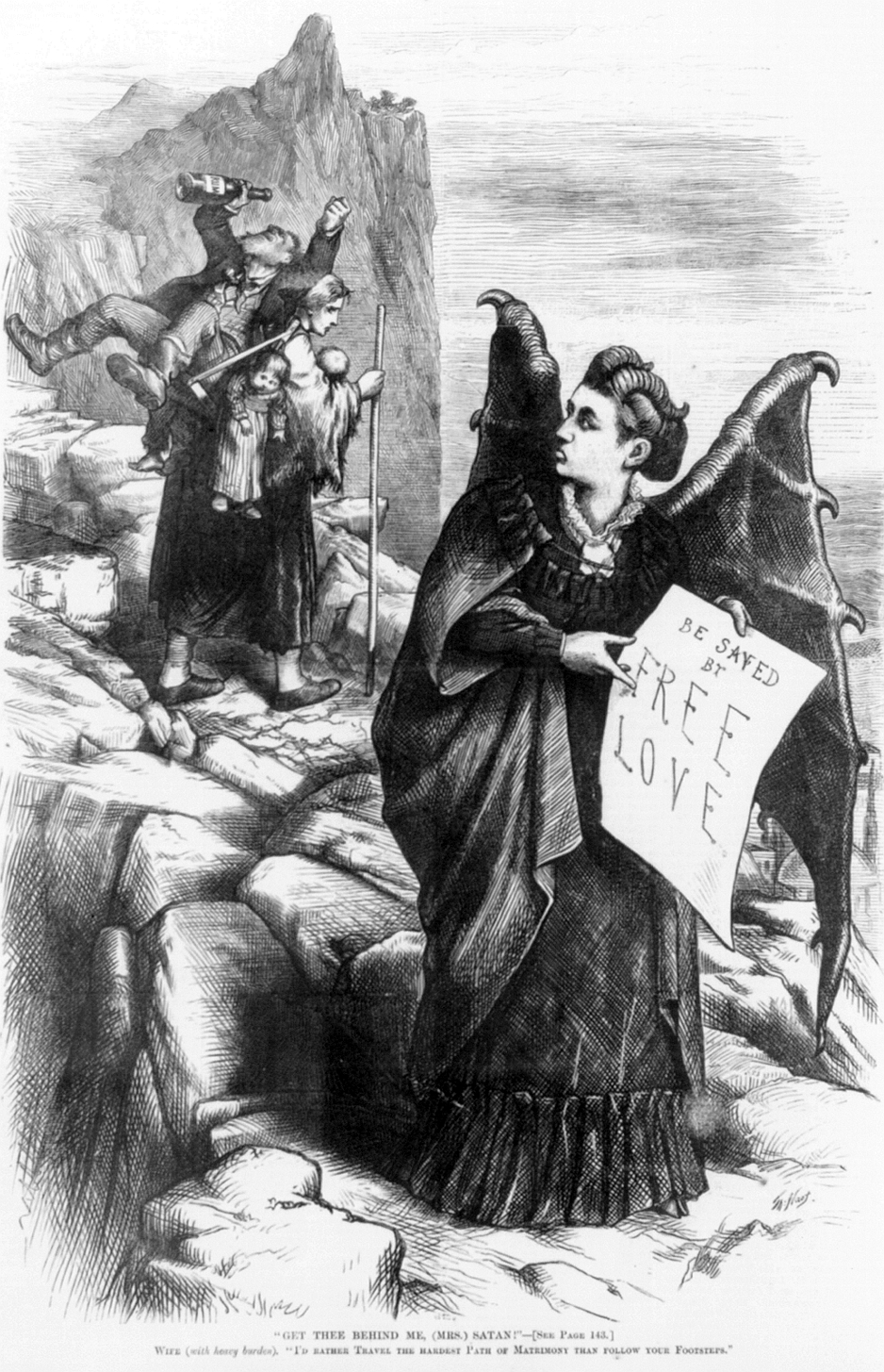
FREE LOVE  

Victoria_Woodhull_caricature_by_Thomas_Nast_1872

VICTORIA WOODHULL caricature by Thomas Nash, 1872.

Woodhull’s support of free love likely started after she discovered the infidelity of her first husband Canning Woodall. Shortly after their marriage she learned that her new husband was an alcoholic and a womanizer.

Women who married in the United States during the 19th century were bound to their unions, even if loveless, with few options to escape. Divorce was limited by law and considered socially scandalous. Women who divorced were stigmatized and often ostracized by society. Victoria Woodhull concluded that women should have the choice to leave unbearable marriages.

Woodhull believed in monogamous relationships, although she also said she had the right to change her mind: the choice to make love or not was in every case the woman’s choice (since this would place her in an equal status to the man, who had the capacity to rape and physically overcome a woman, whereas a woman did not have that capacity with respect to a man).[17]

Woodhull said: “To woman, by nature, belongs the right of sexual determination. When the instinct is aroused in her, then and then only should commerce follow. When woman rises from sexual slavery to sexual freedom, into the ownership and control of her sexual organs, and man is obliged to respect this freedom, then will this instinct become pure and holy; then will woman be raised from the iniquity and morbidness in which she now wallows for existence, and the intensity and glory of her creative functions be increased a hundred-fold . . .”

In this same speech, which became known as the “Steinway speech,” delivered on Monday, November 20, 1871 in Steinway Hall, New York City, Woodhull said of free love: “Yes, I am a Free Lover. I have an inalienable, constitutional and natural right to love whom I may, to love as long or as short a period as I can; to change that love every day if I please, and with that right neither you nor any law you can frame have any right to interfere.”

Woodhull railed ag

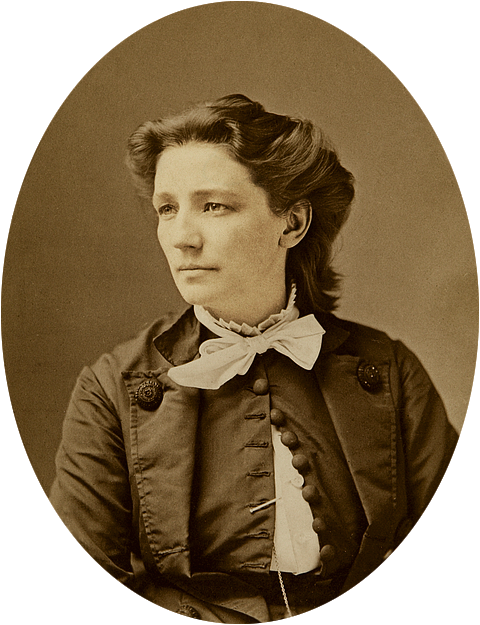
Victoria-Woodhull-by-Bradley-&-Rulofson

Victoria Woodhull by Bradley and Rulofson

ainst the hypocrisy of society’s tolerating married men who had mistresses and engaged in other sexual dalliances. In 1872, Woodhull publicly criticized well-known clergyman Henry Ward Beecher for adultery. Beecher was known to have had an affair with his parishioner, Elizabeth Tilton, who had confessed to it, and the scandal was covered nationally. Woodhull was prosecuted on obscenity charges for sending accounts of the affair through the federal mails, and was briefly jailed. This added to sensational coverage during her campaign that fall for the United States presidency.


PRESIDENTIAL CANDIDATE 

Woodhull announced her candidacy for President by writing a letter to the editor of the New York Herald on April 2, 1870.

Woodhull was nominated for President of the United States by the newly formed Equal Rights Party on May 10, 1872, at Apollo Hall, New York City. A year earlier, she had announced her intention to run. Also in 1871, she spoke publicly against the government being composed only of men; she proposed developing a new constitution and a new government. Her nomination was ratified at the convention on June 6, 1872. They nominated the former slave and abolitionist leader Frederick Douglass for Vice President. He did not attend the convention and never acknowledged the nomination. He served as a presidential elector in the United States Electoral College for the State of New York. This made her the first woman candidate.

While many historians and authors agree that Woohull was the first woman to run for President of the United States, some have questioned that priority given issues with the legality of her run. They disagree with classifying it as a true candidacy because she was younger than the constitutionally m

Victoria_Woodhull_by_Mathew_Brady_c1870

Victoria Woodhull by Mathew Brady, c1870

andated age of 35. However, election coverage by contemporary newspapers does not suggest age was a significant issue. The presidential inauguration was in March 1873. Woodhull’s 35th birthday was in September 1873.

Woodhull’s campaign was also notable for the nomination of Frederick Douglass, although he did not take part in it. His nomination stirred up controversy about the mixing of whites and blacks in public life and fears of miscegenation (especially as he had married a much younger white woman after his first wife died).

Frederick Douglass, the famed civil rights activist, was nominated to be her vice president, though he never acknowledged or accepted the nomination publicly. But while historians look back as Woodhull’s nomination as an historic first, her long-shot candidacy caused her serious trouble as soon as the nominating convention was over, Richman and Freemark report.

“As a result of the notoriety of the nomination, Woodhull was evicted from her home and she had some trouble making ends meet,” [biographer Amanda] Frisken tells [reporters Joe] Richman and [Samara] Freemark. Woodhull’s family was forced to sleep in her brokerage office for a period of time, as New York landlords were unwilling to rent to her, Kate Havelin writes in her book, Victoria Woodhull: Fearless Feminist. Woodhull’s 11-year-old daughter, Zula, meanwhile, had to leave her school as other parents didn’t want Zula to influence their children.

The Equal Rights Party hoped to use the nominations to reunite suffragists with African-American civil rights activists, as the exclusion of female suffrage from the Fifteenth Amendment two years earlier had caused a substantial rift between the groups
Having been vilified in the media for her support of free love, Woodhull devoted an issue of Woodhull & Claflin’s Weekly (November 2, 1872) to an alleged adulterous affair between Elizabeth Tilton and Reverend Henry Ward Beecher, a prominent Protestant minister in New York (he supported female suffrage but had lectured against free love in his sermons). Woodhull published the article to highlight what she saw as a sexual double-standard between men and women.

JAILED BEFORE CONVENTION

That same day, a few days before the presidential election, U.S. Federal Marshals arrested Woodhull, her second husband Colonel James Blood, and her sister Tennie C. Claflin on charges of “publishing an obscene newspaper” because of the content of this issue.[32] The sisters were held in the Ludlow Street Jail for the next month, a place normally reserved for civil offenses, but which contained more hardened criminals as well.

The arrest was arranged by Anthony Comstock, the self-appointed moral defender of the nation at the time. Opponents raised questions about censorship and government persecution. The three were acquitted on a technicality six months later, but the arrest prevented Woodhull from attempting to vote during the 1872 presidential election. With the publication of the scandal, Theodore Tilton, the husband of Elizabeth, sued Beecher for “alienation of affection.” The trial in 1875 was sensationalized across the nation, and eventually resulted in a hung jury.

Woodhull again tried to gain nominations for the presidency in 1884 and 1892. Newspapers reported that her 1892 attempt culminated in her nomination by the “National Woman Suffragists’ Nominating Convention” on 21 September. Mary L. Stowe of California was nominated as the candidate for vice president. The convention was held at Willard’s Hotel in Boonville, New York, and Anna M. Parker was its president. Some woman’s suffrage organizations repudiated the nominations, however, claiming that the nominating committee was unauthorized. Woodhull was quoted as saying that she was “destined” by “prophecy” to be elected president of the United States in the upcoming election.

VIEWS ON ABORTION AND EUGENICS

Her opposition to abortion is frequently cited by opponents of abortion when writing about first wave feminism. The most common Woodhull quotations cited by opponents of abortion are:  “the rights of children as individuals begin while yet they remain the fetus.”

“Every woman knows that if she were free, she would never bear an unwished-for child, nor think of murdering one before its birth.” 

One of her articles on abortion not often cited by opponents of abortion is from the September 23, 1871 issue of the Woodhull & Claflin’s Weekly. She wrote: “Abortion is only a symptom of a more deep-seated disorder of the social state. It cannot be put down by law… Is there, then, no remedy for all this bad state of things? None, I solemnly believe; none, by means of repression and law. I believe there is no other remedy possible but freedom in the social sphere.”

Woodhull also promoted eugenics which was popular in the early 20th century prior to World War II. Her interest in eugenics might have been motivated by the profound intellectual impairment of her son. She advocated, among other things, sex education, “marrying well,” and pre-natal care as a way to bear healthier children and to prevent mental and physical disease. Her writings demonstrate views closer to those of the anarchist eugenists, rather than the coercive eugenists like Sir Francis Galton.

In 2006, publisher Michael W. Perry claimed in his book “Lady Eugenist” that Woodhull supported the forcible sterilization of those she considered unfit to breed. He based his claim on a New York Times article from 1927 in which she concurred with the ruling of the case Buck v. Bell. Whether the article accurately stated her views or not, it stands in stark contrast to her earlier works in which she advocated social freedom and opposed government interference in matters of love and marriage.

Other women, including Belva Lockwood, have launched runs for the presidency since, but nearly a century passed between Woodhull’s run and the first woman to vie for the nomination of a major party. Maine Sen. Margaret Chase Smith tried in vain for the Republican nomination in 1964; New York Rep. Shirley Chisholm tried for the Democratic nomination in 1972, as did Rep. Patsy Mink from Hawaii. In more recent years, Colorado Rep. Patricia Schroeder, cabinet secretary and later North Carolina Sen. Elizabeth Dole, Illinois Sen. Carol Moseley Braun, and Minnesota Rep. Michele Bachman would compete for the nomination of the Republican or Democratic parties. It is, when one thinks about it, astonishing that a woman, in a country in which women are the majority of voters, has never been the nominee of either major party. And in 2016, with some 20 competitors for the Republican nomination, all but one—extreme long shot Carly Fiorina—are men.

Read more: http://www.politico.com/magazine/story/2015/04/victoria-woodhull-first-woman-presidential-candidate-116828#ixzz4FxD3FuAS

ADDITIONAL SOURCES:

Felsenthal, Carol. “The Strange Tale of the First Woman to Run for President.” Politico.   5 April 2015.

Greenspan, Jesse: “9 Things You Should Know About Victoria Woodhull.”

History.   23 September 2013.

LaGanga, Maria L: “Women Who Ran Before Hillary Clinton: ‘I Cannot Vote, But I Can Be Voted For.'” The Guardian. 8 June 2016.

Lewis, Danny: “Victoria Woodhull Ran for President Before Women Had the Right to Vote.” Smithsonian SmartNews. 10 May 2016.

REFERENCES:

1 Kemp, Bill (2016-11-15). “‘Free love’ advocate Victoria Woodhull excited Bloomington”. The Pantagraph. Retrieved 2016-04-13.

The Revolution, a weekly newspaper founded by Susan B. Anthony and Elizabeth Cady Stanton, had begun publication two years earlier in 1868.

Goldsmith, Barbara (1998). Other Powers. Alfred A. Knopf. p. 20. ISBN 0394555368.

1850 federal census, Licking, Ohio; Series M432, Roll 703, Page 437; father listed as Buckman, brothers incorrectly transcribed as Hubern (Hubert) and Malven (Melvin).

Wight, Charles Henry, Genealogy of the Claflin Family, 1661–1898. New York: Press of William Green. 1903. passim (use index)

Gabriel, Mary (1998). Notorious Victoria. Algonquin Books of Chapel Hill. p. 12. ISBN 1-56512-132-5.

“Ohio, County Marriages, 1789-2013, index and images, FamilySearch “Marriage records 1849-1854 vol 5 > image 273 of 334; county courthouses, Ohio”. familysearch.org. Retrieved 2015-06-09.

Underhill, Lois Beachy (1996). The Woman Who Ran for President: The Many Lives of Victoria Woodhull. Penguin Books. p. 24. ISBN 0-14-025638-5.

“Woodhull, Zula Maude”. Who’s Who. 59: 1930. 1907.

Dubois and Dumenil, //Through Women’s Eyes: An American History with Documents//. (Bedford; St. Martin’s, 2012)

Andrea Dworkin (1987). Intercourse,Chapter 7: “Occupation/Collaboration”.

“And the truth shall make you free.” A speech on the principles of social freedom, delivered in Steinway hall, Nov. 20, 1871, by Victoria C. Woodhull, pub. Woodhull & Claflin, NY, NY 1871. [1]

Speech is discussed and linked to also in Shearer, Mary L. “Abandoned Woman? A Review of the Evidence.” http://www.victoria-woodhull.com/prostitute.htm

DuBois and Dumenil. //Through Women’s Eyes: An American History with Documents//. (Bedford; St Martin’s, 2012)

Shearer, Mary L. “Frequently Asked Questions about Victoria Woodhull.” http://www.victoria-woodhull.com/faq.htm#who

Constitutional equality. To the Hon. the Judiciary committee of the Senate and the House of representatives of the Congress of the United States … Most respectfully submitted. Victoria C. Woodhull. Dated New York, January 2, 1871

Susan Kullmann, “Legal Contender… Victoria C. Woodhull, First Woman to Run for President”. Accessed 2009.05.29.

Messer-Kruse, Timothy (1998). The Yankee International: Marxism and the American Reform Tradition, 1848–1876. pp. 2–4.

“Notes on the “American split””. May 28, 1872. Retrieved 2010-08-05.

A Lecture on Constitutional Equality, also known as The Great Secession Speech, speech to Woman’s Suffrage Convention, New York, May 11, 1871, excerpt quoted in Gabriel, Mary, Notorious Victoria: The Life of Victoria Woodhull, Uncensored (Chapel Hill, N.Car.: Algonquin Books of Chapel Hill, 1st ed. 1998 (ISBN 1-56512-132-5)), pp. 86–87 & n. [13] (author Mary Gabriel journalist, Reuters News Service). Also excerpted, differently, in Underhill, Lois Beachy, The Woman Who Ran for President: The Many Lives of Victoria Woodhull (Bridgehampton, N.Y.: Bridge Works, 1st ed. 1995 (ISBN 1-882593-10-3)), pp. 125–126 & unnumbered n.

“Arrest of Victoria Woodhull, Tennie C. Claflin and Col. Blood. They are Charged with Publishing an Obscene Newspaper.”. New York Times. November 3, 1872. Retrieved 2008-06-27. “The agent of the Society for the Suppression of Obscene Literature, yesterday morning, appeared before United States Commissioner Osborn and asked for a warrant for the arrest of Mrs. Victoria C. Woodhull and Miss Tennie …”

Woodhull & Claflin’s Weekly (1870)

Wheeling, West Virginia Evening Standard (1875)

“Victoria Martin, Suffragist, Dies. Nominated for President of the United States as Mrs. Woodhull in 1872. Leader of Many Causes. Had Fostered Anglo-American Friendship Since She Became Wife of a Britisher …”. New York Times. June 11, 1927. Retrieved 2008-06-27.