Tired of living, spurned in loving, deficit in compassion, Andreas Lubitz and his crippled amygdala donned his smart uniform and climbed aboard the plane.
A pretty stewardess smiled at him, bid him a good morning as he passed. She smelled of a musky perfume. That reminded him of the sex he often craved with her.
He found sex to be an animalistic and ludicrous practice. Love had always been a dream that faded away to sorrow. He returned to her a faceless smile without meaning.
He took his place in the cockpit beside Patrick, his pilot. It was less that two hours to Dusseldorf from Barcelona. Patrick was loquacious, almost collegiate in manner.
As they bantered back and forth, Patrick’s banal conversation bored Andreas to death. He could only fake a smile for reply.
Andreas thought about how he hated God for giving him life. An aching desire for release from the prison of time had overcome him. A dull ache of depression swept over him as he remembered all the hideous assaults he had endured.
It was as though he wore glasses that saw only the evil of time and hid away the pleasant moments.
When Patrick left the cabin, Andreas pushed the button to lock the door so that he would not have to bear him any longer.
Alone in the cabin, with only the sky in his eyes and the engine noise in his ears, Andreas was at last alone with himself. He hated his aloneness. “Everyone is suffering in their meaningless lives just like I am,” he thought. The future brings nothing but more disappointment, times filled with melancholy, nights filled with helpless thoughts, days filled with foolish actions that try to mitigate the absurdity of living a desperately miserable existence. Dog eats dog, life eats life, panicked schools of fish swirling in circles as the sharks attack the outer layers of their being.
The images consumed him. The irrelevance of his very being and all those around him felt like the beating drum of a hated heartbeat Mushroom clouds raining death, pits with decapitated bodies killed by fools who thought themselves righteous appeared in the gray sky when he adjusted the course of the plane to fly at one hundred feet.
“It will soon be over,” he thought to himself. “I am finally on control.”
He heard a frantic knocking on the door as Patrick tried to gain the cabin. His gut tensed, his breath came hard and fast. He could hear the hysterical screams of the passengers behind him.
No sympathy for their plight crossed Andreas mind. “They are all going to die anyway,” he thought. “Today is as good a day to die as any other. Today is better. It will save them from through suffering their ignorant lives.”
Adrenaline rushed through Andreas veins as the mountain loomed before him and the nose of the aircraft. He felt like a soldier entering battle.
“It is a good day to die,” the voices around him exclaimed.
He remembered the stewardess with the sexy perfume who greeted him when he stepped onto the plane. Her voice was among those screaming behind him. “I will not fuck her,” he told himself. “She will not tempt anyone to fuck her now. I can make sure of that.”
There was power in the thought; power had always escaped him.
The remembered scent of her perfume hung in his nostrils. His own breath came hard and deep as he thought about having sex with her. Death, he thought, would be like conception, a one timeless contracting orgasm would begin the journey to another useless, meaningless and painful life. Another contraction would snap the miserable body away from experience and into the vast nothingness of the universe.
He could picture himself letting go after the shock of impact. It would be his final orgasm, his final statement, his final action.
Last Tuesday I drove to Columbus to dig up some jobs. I found one advertised in the student paper at CSU and Sheri and I looked into it. I found that Hootenanny, the ABC Saturday night show, probably isn’t coming to Ohio State after all. Also, I looked in the phone directory f’or entertainment management agencies and found one that looked promising. I went over to the agent, who had the unlikely name of Howdy Gorman. He said he’d set up an audition at a TV station f’or us. The audition was tonight. We got the job f’or Saturday at the Fort Hayes Hotel, Presidential Suite, entertaining some drunken foot doctors and made another sixty bucks. This evening Dad drove Billy to Columbus, picked up Sheri, and then went to Howdy Gorman’s office. We followed him over to the TV station (Columbus Channel 10).
Gorman had brought two groups for the audition. The show is called “Gather Round,” leans rather heavily toward folk. It is being aired once a month. Starting, in December they expect to air it weekly on Friday night.We went through a f’ew songs. They had told us that it was an informal audition without a mike, etc. They then wanted me to introduce a song, so I introduced Darlin’ Corey. They thought we were very good. There was another entertainment manager f’rom a nightclub called “The Gloria” there to hear the audition. Gorman said he was killing several birds with one shot by auditioning us f’or several jobs at once. Anyhow, our audition was successful and they thought that we did an excellent job.
Then came the other group. They brought along their manager and a public address system and they let them use it. The result was that they seemed more professional than we had seemed, because they introduced their numbers and didn’t adhere to the informal setup.
Live and learn. I don ‘t know the result of’ the audition yet. We had some fine comments, but it seemed as though the talk .liraS about the other group rather than ours. Even Gorman gathered around the other group’s manager. The TV man said that he wants to put us on the air and he will be getting ahold of Gorman. I don’t know anything about the nightclub. What’ll come of it, I don’t know. I’ve got to talk with Gorman again Saturday and see what’s cooking. Anyhow, this Gorman says he has recording contacts and can do us up right. He’s a very short little man, probably five one or two, with sandy hair and mustache. Things will either stand still or move fast now that we are pushing ourselves.
Nov. 11, 1963 – Sunday
Dick T. is home on furlough. Friday night we went to Dayton so that he could hear the Osborne Brothers. Clark Crites, the Lemon Tree’s new manager, had called on Thursday and wanted us to see him. He had a job lined up and wants to, act as a sort of’ agent f’or jobs that come through the Lemon Tree, getting the usual ten per cent.
We went to Dayton to tell Sheri’s folks, then went over to the Lemon Tree to see Clark. He was tied up with another man in the office and couldn’t see us right then. We sat through a set of the Canadian folksinger, Cedric Smith, then scooted down to the Bitter End––which is the new name for Charlie’s Bar––to hear the Osborne Brothers. After their set was over it was back to the Lemon Tree to see Clark. I found that Clark had just gone down to the Bitter End to see us. After that came a comedy of errors. We went back down to see Clark and found that he had just gone back to the Lemon Tree to meet us. We went Back to the Lemon Tree and found that he had just left to meet us at the Bitter End.
There we sat at the Lemon Tree waiting for him to come. There he sat at the Bitter End waiting for us to come back. Half an hour later, the phone rang: “Are they still there?” he asked. When told yes he said, “Keep them there, I’ll be right up.”
Finally we get together and talked over business matters, then went back down to hear the Osborne Brothers finish up another set. Both Sonny and Benny Birchfield were in great moods tonight and we talked with them for a long time.
Saturday, Billy and I took Dick to Columbus with us. It was the first time he got to hear the trio perform. It was nothing special, really, just an afternoon practice session in a cemetery, then Sheri’s dorm room, and an evening practice. Sheri got me a date for tonight and one for Dick too. Gayle was Dick’s date, the same girl who dated Fred the other week.
Sheri’s been feeding me a lot of information about a roommate of hers that wants but a tall, good-looking, rich man. She sounded rather like a snob from the conversation about her. Once, when I called Sheri, she answered the phone. From her voice I could tell she was overly sophisticated and perhaps a bit oily. Well, suddenly, it seems, she turned an about face. She had heard us practice, though I’ve never met her, and she read my story “The Fantasy of Fowler’s Hill” last week. Sheri was shocked when she started questioning her about me and even more shocked when she asked her to set up a date with me. In fact, she was flabbergasted. The girl’s name is Joan. I was sure she was in for a boring evening and I was certain she was not my type. Finally, in the afternoon, we met. She’s a very pretty girl and looks much like I pictured her as looking––tall, well-groomed and collegiate. In the evening we drove around town and stopped at a bar which was crowded to capacity. We had tried several other places offering entertainment, but we ended up back up near the campus. The bars are filled with students on Saturday night.We bought a pizza next door and then got some beer to go from the bar and headed out in the country to eat.
I found a nice little spot of a not-to-traveled road where we had a beer, ate and talked. Joan and I got along surprisingly well. Conversation seemed strained at times and things did not flow naturally, but all in all it was a fairly well-matched date. I didn’t go out of my way to impress her. I just joked along and acted like the hick that I really am––dropping the “g”on “goin'” and speaking in the normal Darke County dialect that sometimes makes me feel out of place in collegiate crowds. It’s not that my speech is a real dialect or that I do not express myself well. I really, I do. But the folks around Greenville do have a distinct midwestern twang in their speech.
We were sitting at a deserted barnyard eating our pizza and almost ready to leave when a cop pulled up. He asked to see my driver’s license and asked what I was doing there, then told us that we were on private property and had to move on.
Back in Columbus, heading to the dorm, we found a little park that looked rather inviting in the night. Everyone hopped out of the car and walked over to a lagoon that spouted water from a fountain in the center. When we got back in the car another cop saw us coming out of the park and the same damned procedure started all over again. It was against the law to be in the park that time of night. I was not happy about the interference. Why, then, have the fountain running? I thought, but I said nothing. I have learned that being overly civil near people who are armed is more often the best choice.
We all slept in a moth-eaten hotel on High Street––not the girls, just the fellows––and Sunday afternoon we met again and went off for another drive. We went to the art museum and walked through the halls into the velvet draped rooms viewing both the mediocre canvases and some masterpieces like Renoir and Monet. We took a drive through the city and went to the park that we had seen in last night’s moonlight––only this time it was lawful. I took them for a beautiful country drive by the Columbus Zoo, tried to get into the closed Olentangy Caverns, then drove for miles along a scenic little road that followed the stark autumn banks of the Olentangy. We passed an old stone mill that looked like it belonged in a page from European history, made of stone, now deserted with a little damn up creek and finally the observatory. The time was spent talking and joking and taking in the autumn beauty. Dick had the time of his life and said that he would remember that afternoon for years to come. I don’t believe I will forget it either. Joan became very congenial and looked very pretty.
Everything has been at a standstill for quite some time in my romantic existence. I believe I could be ready for romance myself. We parted company at 7:00. Joan made me promise to write her and send me some other stories. I promised that I would. Dick will probably never see Gayle again, but he will remember her. All in all it was a very pleasant, well-remembered weekend. I didn’t fall in love, but I feel as though I somehow made happiness possible somewhere––and it’s a good feeling.
Friday – Nov. 15, 1963
Mom and Dad’s twenty-second anniversary was today. In celebration, they did something that they would not usually think of doing––they went to the Bitter End to hear the Osborne Brothers. The boys were very friendly this evening and talked quite a bit. While Sheri, Billy, Mel, Dick, and I went down to the Tree, Mom and Dad sat and talked with Sonny and Benny Birchfield. It was a pleasant evening. Sonny said that if we wold give him a tape he would take it with him and try to get us some jobs so we decided to get a very good tape made on professional equipment.
Sunday – Nov. 17, 1963
Yesterday it was practice. Dick went down to Dayton with us. We spent the night at Stein’s then came back to Greenville to make a tape at WDRK .
We wrestled in the lawn and practiced in the park, then at 3:15 went out to WDRK to make the tape. The tape turned out very, very well. We have never heard ourselves on professional equipment, except perhaps on TV that one time. Then TV show qualitywas bad and the songs were not our best at that time, but we’ve improved so much since then. We were very pleased with the sound and patted one another’s backs for an hour. Sheri gave me a letter from Joan that she wrote to me just after receiving mine. Sheri said that Joan would be up next weekend. I also got called back from layoff at Corning for one week.
Thursday – Nov. 21, 1963
I’ve been dumping cullet and hating every moment at Corning all this week. The job was only temporary. It gripes my soul to think that they can take or leave me at their discretion and I have to abide by their goddamn whims. I wrote a little letter to Joan this week expressing my views about this factory system of ours. Sometimes I think that it is a detriment to progress, rather than the aid it is usually considered to be. How many men––like me––are pushed and pulled by forces greater than they can fight, placed in degrading jobs, their potential wasted, their lives and happiness decaying around them. How many men have committed mental suicide while working the grind day in and day out, having no escape without the risk of losing everything––their family, their income, and the little joy they manage to reap out of their barren existence?
Automation is taking over at Corning. Automation is taking over everywhere. They will be laying practically everyone off within the next few years. The bastards are getting by with it. They keep a man in chains economically, then turn him loose and knock him on the ground without fight, and without hope.
Friday – November 22,1963
November 22,1963
Some days you wish had never been,
That time be whisked away like dust
And a day that drips with grief be taken back,
The hourglass started once again anew.
This gloomy, drizzling day was such a day.
The rain’s no longer rain, but falling tears.
My heart is aching and my soul is sick.
I’ve cried out, cursed, and sorrow shudders in me.
There is no room for eloquence inside, only grief.
Today, a hand I’ve never shaken,
A face I’ve never touched,
A friend I’ve never met
Was cut down on the streets of Dallas, Texas.
A bullet through the brain that ruled the nation
And stilled the heart that loved
An undeserving world.
Words do not tell the story well.
I shuddered when just three short years ago
The nomination turned from Stevenson to him.
And then with magic and determination
He fought his way through prejudice
To win and saddle greatness.
I longed for his success
And when it came,
His triumph was mine.
He caught a nation’s fancy
With his mellow voice and new ideas.
He brought youth and life and color
When things were rather stale and needed spice
Now his youthful smile will never age
His thick, brown hair will never thin.
A hundred years ago another man was shot
And another man named Johnson took his place.
There must have been an emptiness then as now
As fires dimmed and died in human hearts.
Words fail me.
I could not feel more desolate and grieved.
I could not feel more shocked or numbed with sorrow.
You and I, he never knew by name,
But yet he cleared a way through tangled webs
That we might see the clouds with silver lining
And watch tomorrow’s light shine even brighter.
Friday – Nov 22, 1963
This is how I feel and how I will always remember feeling this tragic, horrible weekend. It is completely unbelievable. I will wake up tomorrow and find that it has been a bad dream. I was working when I heard the news, sitting in the cafeteria on my two o’clock break. A couple of fellows were talking about a ten thousand dollar reward. One said to the other, “I’d even turn you in if you had a ten thousand dollars reward on your head.” The other said, “I’d wait till it was twenty-thousand.”
There was more talk about a reward. “Who the hell’s got a tag on his head?” I asked. “What’s this reward talk about?”
“Somebody shot President Kennedy this afternoon,” someone said.
They told me more about it, more or less jokingly. Some took it seriously. Some wouldn’t believe it. News trickled in. Actually, he was dead when I had first heard that he had been shot. I went back to work. After thinking about it, I finally decided that I must go home. I could not work any longer.
I asked the foreman to take the rest of the day off, but he refused to give me leave. Hurt and angry, I decided to quit the job and vowed never to work in another factory as long as I lived.
The car radio warmed tip just as I was leaving the parking lot. The first words I heard were “The late President Kennedy, who died in Parkland Hospital.”
I drove on home, numbed, glassy-eyed, full of hate for a man who could do such a despicable, twisted thing.
Joan and Sheri were coming up from Columbus. Billy and I went on to Dayton, even though I knew I would be very poor company this evening. Together we got away from the tragedy the best we could. I called to make certain the concert was cancelled for tomorrow night. I could not entertain and do a good job. I have no feeling for it now. It is as though my father had died, for Kennedy was so personal a president to me. His youth and good looks made me like him from the start, then his speeches full of glowing phrases and ideas took possession of me. I became a staunch supporter, even though I really didn’t want him to win the nomination three years ago. He became a symbol to the American youth, that age was not a barrier and the world was ready for a young man’s ideas. He and his family captivated the news media and publicity poured into print and photographs.
Life came to the country with Jack and Jackie––their touch football, the clannishness, their youth, their vigor, the rocking chair and stories that the press delighted in printing.
When I think back about leaving the church where I used to be active and somewhat associated, I find that many of the clashes that came between me and the other members was my supporting of Kennedy and their opposite assurance that Kennedy was the devil’s instrument who would lead the way to the world’s end. It was this incongruity of faith with reality that made me stand and consider. I realized how little their minds were. My mind had expanded. I fully comprehended the fanaticism on the religious right, but I thought it was mere zealousness. It was logical to me for a time, but facts created a crumbling at the base of faith and I realized that it was not for me. I learned a bit about reasoning and I’m not sorry for my experience, but somehow, even though Kennedy himself, was enshrouded in the darkness of the Roman Catholic Church, he made me think. Perhaps because of him I have turned away from the religious. People used to call me Kennedy at work because my hair is so much like his. There was an identification for me that I suppose will never be felt with any other president. This free-style poem that I wrote is the only way I can think of even beginning to express my emotions.
Joan and I talked in the evening. We kissed and she gave me a letter she had written about how she thought that we were so much alike. I read it thoroughly and agreed, but knew through her actions that she feared me and there was something more unsaid.
Saturday – November 23, 1963
I awoke this morning and it was still true. Yesterday was reality after all. It was not a bad dream. President Kennedy is as dead as Caesar or Alexander the Great. All I can see is his cheerful grin and the way his hair blew as he stood before the television cameras speaking in some windy place.
I went to Dayton this afternoon. Billy and I got in late and Dad refused to let Billy go out of the house. I went alone. Mo was there with Joan and Sheri. We played our tapes and I made a tape with Mo, backing him with my guitar while he played the banjo.
We went down to the bus station to get Billy around 6:00. I had told him to catch the bus, but he was not there and Sheri was disappointed. She gave me a letter to read that she has written last night about her being in love with Billy. Sheri has a scheming mind. She’s been introducing me to girls and trying to get my attention hooked by someone else. Joan has possibly fallen in love with me without any pushing on Sheri’s part. Now Sheri thinks she’s ready for bolder steps with my younger brother.
I don’t give a damn about it. I’m afraid that the trio just won’t make it because of other things. Billy is doing so poorly in school and he’s so young. Dad won’t let him have any of the freedoms, that I’m accustomed to having, and rightly so. There would be travel, travel, and more travel if we should ever make it big, and I don’t think it would work out at all with Billy.
I’m sure that Sheri would fly away too if it weren’t for him. Besides, he is necessary to the existence of the trio. He makes it sound rounded and full, we harmonize extremely well as brothers, and his guitar playing goes hand in hand with mine since we grew musical in the same time and atmosphere. I’m so uncertain of the future right now. There’s little reason to be optimistic despite our great sound.
We did do a set later at the Lemon Tree coffee house. Dad brought Billy down to the Lemon Tree later in the evening. It was the best set we ever did there, and everyone was very impressed with the strides we’d taken since they last heard us.
Sunday – November 24, 1963
Lee Oswald, the assassin of President Kennedy, was shot to death over nationwide television today as they were transferring him to the county jail. The secrets of the assassination probably went to the grave with him. The murderer is being held in custody. No one could have foretold correctly the events of this weekend one week. It still feels impossible, as though it couldn’t really be happening.
Today the President’s body lies in state and mourners pass by. I had wanted to go to Washington so badly, but my money from the last week of work hasn’t come in yet. Yesterday, Kennedy lay in state at the East room of White House. After a moving, beautiful transfer by caisson to the Capitol––shown very poignantly on TV––he was placed in the rotunda for the nation to view. TV has suspended all commercial announcements and entertainment programs and have been giving minute by minute, hour by hour coverage since the news that the shot was fired on Saturday.
Once again I was in Dayton. Joan told me something today that made me understand her so much better. She and I can talk and be frank with one another. When she seemed to shy away from my kisses I told her that she was going to have to delve into her subconscious to find out she had a ‘kissing complex’. Her letter to me was delivered a few day’s ago. She had mentioned a date that she had had a week before she met me. She was with a boy who wanted to touch her before she had been able to know or like him. After our first kisses she said that she was trying to make up her mind whether or not her image of me had been broken down. She (in the letter) had referred to that part in my short story, “The Fantasy of Fowler’s Hill”, where I wrote: “I thought about the movie I had seen the night before, a tale of simpler days… when romance bloomed slowly and a simple kiss was almost a proposal. Sometimes I would long to go back in those days.”
I knew something was bothering her. She wanted to let herself go and enjoy herself, but could not for some reason. She is a very shy, quiet sort of person, very unusual for a very attractive girl. And then the answer came. She told me that when she was young her uncle had taken advantage of her, and that this had gone on for years. Finally, possibly in her early teens, she realized what was happening, and now the heartbreak and the remembrance of him is with her whenever she is around men.
I can really feel for her plight, I can really understand her feelings when we kiss. After she told me as much as she wished to tell at the time she relaxed and we kissed again while she responded more warmly. She is a lonely person. If it be in my power to ease that loneliness… so be it.
Monday – Nov. 25, 1963
Now he belongs to the earth.
Business is stopped. The nation mourned and watched the funeral. I watched with full attention at Sheri’s house until the actual funeral ceremonies were being performed in the cathedral. The Catholic ritual with it’s mumbo jumbo of Latin and changing of vestments was too much for my anti-ritualistic soul to bear.
I took the girls and Mo back to Columbus where we stopped while I went in to see our agent, Howdy Gorman. I gave him one of the tapes we made and he’s going to talk with some record companies during the week. Maybe something will come of it, maybe nothing.
We took a country drive and then I took the girls back to the campus. The folks want to go to Nashville to visit my great Aunt over the Thanksgiving holidays. Joan has invited me to supper Saturday night at her home in Cincinnati. I probably will go with the folks, although I would like to see Joan’s family. I think that they must be pretty well-to-do, as her father is a construction engineer and travels extensively in Latin and South America. Her mother teaches Home Economics in a Cincinnati High School.
Walking with a friend in the dark is better than walking alone in the light. -Helen Keller
Written in diary or journal form, this is a coming of age story set in Ohio in the early sixties. It follows a young writer who wants to make a name for himself and his search for love and companionship during the folk music craze in the early 1960’s.
Friday – May 10, 1963
I got my little article on the California trip called “Hard Traveling” back from the Plymouth Traveler. They said it was most interesting, but that they do not use unsolicited manuscripts. Their stories are written on assignment––usually by one man. I got another letter from Rogue magazine. I sent them. “Apostles of Glory” over a year ago, and it never made it up to the top. The letter was from Frank Robinson, the editor. He said he came across the cover letter in his files, with the manuscript. He said that if I would care to resubmit it to him directly he would read it and give me an evaluation. So I’ll rewrite it and get it in as soon as possible. I’ll start on it this afternoon. I mailed the novel off to Bobbs-Merrill. I still have two short stories out––one to Ladies Home Journal and another to the New Yorker. I expect nothing of either one.
Saturday – May 11, 1963
I went back to working at Corning Glass Works on the line. I may not be doing much for Corning, but I’m keeping the men in good spirits. Today, for example, I had a few seconds to let my imagination run away, and thus got to wondering what it would feel like to find a body in the skid of pads that we count and sit up on the line. Larry K., a new fellow, my age, helped me sit up a skid while Bruce I., another new fellow, was in eating lunch. I colored a handkerchief with red crayon until it looked like blood and stuffed it in my mouth, then I crawled in the skid and they papered me with pads until only the “bloody” head, the rolled back eyes, and the twisted arm showed. Bruce came out from the cafeteria and opened the pads. He turned as white as a goats hind end and slammed the lid back shut, “Get the bander, quick,” he said. “Hurry, get the bander. He didn’t know why he wanted the bander afterwards. I guess he thought that the safest thing to do was to, seal me up. It shocked the old crapola right down into his jockey shorts.
May 22, 1963 – Wednesday
Last night I sang again at the Lemon Tree Coffeehouse in Dayton, Ohio. I was met with a very warm response from the audience.
Today, I wrote a letter to Shirley that I must include, because it expresses my feelings so vividly. I met her when I attended an assembly of Jehovah’s Witnesses at the urging of my parents a year ago. She expected that I would share her views without question, but that never happened.
Dear Shirley,
It looks like you’ve blacklisted me again. I’ve owed you this letter for the longest time, but I’ve really, honest-to-God, truthfully, been too busy to sit down and think this letter out.
I’m back in Greenville again, stuck in the pits of Darke County. In my present mood, the name seems very appropriate. My novel is in Indianapolis with the Bobbs-Merrill Publishing Company. I’ll have to run over to talk with the editor’s one of these days. I’ll try to stop by and see you when I go through, if you want me to. Its best to break with the past completely if you decide to go the way you seem to want to go.
I just want to give you a piece of’ advice. To make it not sound like advice, I’ll sort of paraphrase it: Once upon a time there was a pile of’ wood stacked high by a woodsman. This was no ordinary woodpile. The chunks of wood could converse with one another freely.
Out of the entire woodpile there were only ten chunks of wood who looked forward to the day when they could be carried into the house and burned in the wood-burning stove. They spent all their time talking about how it would be a grand privilege to spread the warmth from their own burning over the house and make it warm. One day their time came. A man carried them into the house and they were laid in the fire. The fire began to burn. It felt very good to be in the fire. They could feel their heat pouring out, and the pieces of wood just couldn’t have been any happier.
Then a strange thing happened, the fate that befalls every chunk of wood destined to be burned in a fire. They turned to ash. They were no longer useful. Their time was very short-lived. They could no longer talk with one another, no longer live for the day when their heat would warm the very heart of the house. They ware dead, burned out.
It’s easy to want to fall in with new found friends in a new found faith, but you’ve got to be careful that you•re not the one that’s stuck in the furnace fires, because after that you’re nothing. In other words, it is awfully easy to burn yourself out. Afterwards, you wonder how you could be so stupid.
It is not that I am burned out, but fanaticism cannot last.
I quickly jumped out of the fire. The fire is not the main message. The message is this: don’t go hog-wild on fanaticism. If you ever had any desires for other experiences in your life, then let time pass. On some depressed day when you are longing deep in your heart for things that you’ve let slip by, then the things that you once longed for aren’t the only things that have slipped through your fingers. Life itself has slipped by, too, and that, in is the capital sin.
I’m not taking about religion, but fanaticism. There is a big difference. Fanaticism can also be called zeal to a certain extent, it all depends on which side of the fence you’re on. I’m not trying to pull you, away from what you believe. I am asking you to think.
As for dating boys outside your active congregation, much as I hate to admit it, you’re right. Few are virginal, though they delude others into thinking that a sensual thought is the farthest thing from their mind. So many of the religious boys are practiced deceivers. They go away to get drunk, but they get drunk just the same. They step behind the barn to light cigarettes, but they light them just the same. They travel great distances to crawl in the backseat with that cute little thing they keep in the back of their minds.
The more I travel, the more I found great people. I long ago came to the conclusion that if God were going to judge all these people as sinners and condemn them to a death that knows no end, then that God was an unfit God, that should not be worshiped at all.
With that conclusion my religious world came tumbling down around my ears. The primary doctrine was shattered and all the other building blocks had no where else to go but down. How can you buy as a primary fact that there is going to be an Armageddon and everyone who is not one of Jehovah’s Witnesses will perish in an everlasting death? I think it is preposterous.
I have another philosophy, one of my own making. I don’t suppose you want to hear it, but if you ever do, I’ll tell you bout it. It’s not so abstract, just logical.
Write to me if you will. Preach to me if you must. Love, Ken
May 23, 1963 – Thursday
Last night I was in another fight. Ronnie S. and I had a little entanglement in the locker room. It all started when he playfully, I thought, tapped the back of my knees while I was walking in the restroom. I acted as though I were going to boot him in the ass and missed purposely. He got mad because I tried to kick him but I didn’t even lift my leg hard. He can dish it, but he cannot take it. He’s one of those. When I went into the locker room, he started a little scuffle. I called him a son-of-a-bitch and he really flew off the handle. We broke it off in time so we didn’t get fired, as they can fire you on the spot for fighting in the plant.
We had our annual beer game at work today, the hot end against the cold end. Our team, the cold end, won. I didn’t do much. I didn’t bat in any runs, but I did catch a ball to make an out. I’m a lousy ball player. I was the catcher, because I can’t do anything else. I’ve never played ball and don’t really care for it, but that game was fun. We went out to the motorcycle club and drank beer afterwards, sixteen gallons–a gallon apiece. I staggered home about four in the afternoon and threw up all the beer. There was no hangover after I vomited, but I did dream.
I dreamed that we had a field day at work and some of the foremen, my shift boss among them, and the workers went out for a walk along Greenville Creek. Though the creek is small most of the time, the creek was roaring and wide, the way they seem to be in dreams. There was a suspension bridge that went halfway across, then turned into a log.
I don’t remember too well, but I know that one of the foremen said that you can tell what kind of a worker a man is by how dirty he gets his pants. He was proud of the fact that his pants were always stained.
My foreman was not around to hear this statement. He always wears clean pants. Later, I asked him if he was a lousy worker because he had on clean pants. Then I found out that things had turned around in his mind. Lousy workers wore dirty pants now. Anyway, a fight ensued with one of the bosses and I was told not to come to work anymore. That suited me fine.
We had a party in some dimly lit dance hall and I was dancing with John G.’s wife. She had a great figure but her face was all puffed up and wrinkled. John sat at the table playing cards while I played with his wife. If there were some sort of’ a conclusion to the dream or any lesson to be learned from it, I immediately forget what it was.
Saturday – May 25th, 1963
I went down to Covington, Kentucky for a folk festival that was held in DeVoe Park. It’s a beautiful park, but the folk festival wasn’t much. It was roped off so you had to pay a dollar to get close.
They performed in a bandshell to a sparse audience that sat in the grass and tried to keep from rolling off the hills. The region is almost mountainous. I took Darlene and my brother Billy with me. We went for a drive along the banks of the Ohio, then came home about nine. We did get to see John Jacob Niles, the Appalachian folk singer. He’s quite old now and there is not a lot of energy left in him, but he was certainly the best of the group.
They had a swarming crowd of old men and women who usually sit on their mountain cabin steps and sing without accompaniment. “Ethnic singers” is the term. Anyway, they were quite good, but Billy and I could have torn the place apart if we had been performing.
Tuesday – May28,1963
I am singing at the Lemon Tree on Tuesdays now instead of Thursdays. It works out better that way. I don’t really warm up f’or quite a while when I perform. It is not until the third set, that I really start belting songs out. I get a little better every week, I think.
Anyway, after I had finished a set, Sheri, one of the waitresses, called me over and said somebody wanted to see me at table three. I walked over, and there was a really beautiful girl sitting there. “You wanted to see me?” I asked.
“Yes,” she said. “I’ve never been here before. What is your name ?”
I told her, and asked for hers. It was Elle Tiara, or something like that. I forget. She said to call her Rickie, so I did. “This place is fascinating,” she said.
Everything worth seeing was the lobby where some ingenious pictures were being shone by a UD student. I tried to show her the artwork, but she grabbed hold of my arm and went from one image to another without looking.
She had kicked off her high heel shoes because she was taller than me with them on. “Are there any more?” she asked. I showed, her another room. She just glanced at the art.
“Fascinating,” she said, “Simply fascinating.”
We went back to the table, hidden in the dimness. The lights from the kerosene pots were the only light.
“Do you drive?” she asked.
“Yes”
“Did you drive tonight?”
“Yes?”
“I was going to ask if you would take, me home.”
Her words came out so shyly, so blushingly. Could it be that she has never tried to pick up anyone before and was trying for the first time tonight? I told her I would be happy to take her home.
She wanted to leave as soon as I finished my last set. Her words were clipped and strange, but when she wanted something it drove into you like the blade of a dull knife. The only word I can get her to use was “fascinating.” I had a hard time keeping the conversation rolling. She was the strangest mixture of shyness and downright audacity that I have ever come across. Her manners stiff, her speech, was shy, but she was the type to get what she wanted. It turned out that she was a junior last year and will be a senior next year at Belmont High. That is a bit young for me, as I am twenty.
Her father, she relayed, is a sot. She wants to be an actress. She wants to write a novel, “something that when a person reads it and knows me, they will see me in it, with all my emotions. They will know my emotions and the loneliness that make me what I am.”
She was one of the loneliest girls I have ever met. I took her to the car. She wanted to drive, so I let her. I wanted to help her find herself. I didn’t mention a date, but she took it for granted that we had a date Saturday night when she said I’ll see you Saturday.
“If you don’t mind riding around in my little Studebaker,” I said. The car belonged to my Father and I did not have it yet, but I hoped I’ll get it use of it for the weekend. She said she would meet me at the Lemon Tree Saturday night. I rather doubt that she will. She drove home and circled a block twice, then got out at the corner. I didn’t see where she lived.
There was not much to do at the Lemon Tree during set breaks but talk with the patrons. There is one fellow there named Dave Whitcomb. He played the guitar well, both flamenco and blues style, but he’s a little odd.
I overheard a conversation about him, not with him. “Dave can really play the guitar. How long has he been playing?”
“About two years.”
“He learned all that in two years?”
“He doesn’t do anything else but pluck.”
“No job or anything?”
“No, he’s sort of a bum.”
“What does he do when he doesn’t play the guitar?”
“He makes sandals out of old tires. He ties them to his feet with baling string.”
“Sandals? Out of old tires? God! How many pairs has he made?”
“Just one. And it took him three months to make those. You can hear him walking down the hall every time he comes in here. Squish, squish, squish.”
The kids from Antioch college hang out at The Lemon Tree. Many college men have solid opinions on everything, especially about subjects they know nothing about. I listened as one compared the ages of man to the seasons: “The spring of childhood comes of age insummer, between the ages of twentyand forty, then the fall, between forty and eighty, then winter between eighty and… oh, hell, I’ve got the dates all screwed up somewhere.”
On Robert Frost: “His poetry is like a balloon bursting in the sky. “Now how in the hell can you describe Robert Frost’s poetry as a ballon bursting in the sky?On and on the endlessly stupid, ridiculous, corny, and blatantly pointless conversations roll on like a baboons bursting from the sky.
I met a fellow that just rode in from Montana on a bicycle. He’s from Greenville and his name is Ray Mac. I called him up today because I heard that he’s planning to go all the way around the world on the bike. I have the same plans, although I have doubts as to making it all the way. He thinks he’l1make it back around May 1965. The winter would be sent somewhere in France or Germany. We’re going to get together and make some more plans.
Saturday – June 1,1963
I went to the Lemon Tree tonight, hoping that the girl I met Tuesday would be there. She was not there so, I sat around with a few members of the “in-group” and talked. I drove by Cleveland and Rosamond Streets where I let the girl off last Saturday, but couldn’t see her. I didn’t really expect to see her.
Tuesday – June 4,1963
I kissed goodbye to thejob at the Lemon Tree. I’ve been pre-empted––starting next week––by Adam and Alan. It was getting tiresome anyway––and that’s not sour grapes. It can really be a grind. I have to sing whether I’m in the mood or not. To put on a good performance, you’ve got to be in the mood.
I took Ray Mac with me to Dayton. We were together this afternoon making plans for the around the world bicycle trip. Right now the plans are to leave for Halifax Nova Scotia around August the first, or before, money and financial responsibility permitting. From there we will try to hire out on a ship for Ireland or England, or buy the cheapest passage on a cattle boat––even if we have to sleep with the cows. We’ll tour England, Ireland, Scotland, Holland, Belgium, then spend the winter in Germany. There are supposed to be a lot of jobs open in Germany, and all you have to do is take one. We’ll see. It’s definitely set.
Wednesday – June 5th, 1963
I had one of those pleasant surprises today. I sat down to write what I thought would be a short story that I would never finish, just practice exercises in writing, and my thoughts suddenly congealed. The story had a purpose, thick with plot, and turned out to be very entertaining. I called it “Somebody Down There Don’t Want You.”
Tommy, the light-skinned negro manager or the Lemon Tree, committed suicide back in April. The other night, one of my Lemon Tree friends told me a little more about it. Tommy was a great guy, really. He had a heart full of love and it often overflowed. He worked in Yellow Springs, possibly a teacher; I forget. One thing about Tommy, though… he couldn’t understand why people could hate him just because he was black. Tommy had time for everyone. He had his own domestic troubles, but he would listen to the troubles of the college kids that came in and help them out when they needed it.
Tommy was having an affair with a white woman. Her husband found out and threatened to ruin him. His wife received harassing telephone calls. His children were almost run down in the street. This probably wouldn’t have happened to a white man, not in this torturous way. A white man could have fought his battle with the irate husband, but a black man had to suffer. A black had committed the unforgivable. Harassments became worse and his life became unstable. They found him Tommy had a bullet through his head.
Suicide, they said. I wonder.
June 14, 1963
I had my teeth cleaned at the dentist’s office today. First they jabbed at the tartar with a pick, then they swabbed bleach on them, then polished them with a drill and different drill heads, Now I have a little work to be done and they will be healthy as can be.
Billy and I walked back to the cliffs, today… the ones where I used to play years ago. Then they were granite western walls and the creek was a clear mountain stream. They never were much, just banks of eroded dirt on pitiful slow flow of water, but they used to be my haven. The place has changed like all things do in time. The clear open spot, where we pitched our tents at the place we called Camp Cat Tail, was now grown up with stunted willows and shrubs. The whole place is turning into a young forest. The old trees have fallen and died. The creek is practically dry and runs in a thick trickle. I can remember the old times back there vividly. I remember the knotted American Elm that looked like illustrations of the muscles of a man’s arm, the spot where we used to swim beside the fallen log that had bridged the creek. All was gone. The swimming hole is dry, the log bridge had rotted away and lay chucked along the opposite bank. The cliffs were just dirt mounds that have finally eroded away.
The place makes me think of James Whitcomb Riley’s poem, “The Old Swimmin’ Hole,” which has always been one of my favorites. It is on of the most nostalgically beautiful poems ever written. Today, as I walked through this place where my memories abound, I remembered the innocence of my childhood. I lit a cigarette and remembered the time when I ran the length and breadth of those fields, across the creek and up the cliffs and darted between the thorn trees, playing some silly game of childhood.
The only person who smoked then was my father. Only fathers smoked. It was something almost sacred and only for men. Now, I sit in the open air and tarnish my lungs. The air I used to breath was pure. Now it is mixed with cigarette smoke and fallout. I remember how I used to take my bike back into woods and lifted it across fences. When the going was too rough, for a bike, I would travel on foot until the brambles became too high and the sun too hot. Then I would turn once again homeward, having gone perhaps half a mile. Now I am about to embark on a trip around the world on that same bicycle. I marveled at how perspectives change.
I suppose I should write things I think about in my life in order to remember from time to time before they all fade away. That is why I keep a journal.
It seems to me that all a man’s life is spent crawling through a tunnel. There is nothing but the future ahead of him and the past behind him. A man can look ahead and judge what is going to be before him, but when he is in the tunnel it is too narrow to turn around. All he can do is turn his head and in some contorted way, look back upon the land he has already crawled by. He cannot turn around. He can glimpse the past, but the farther he gets along the tunnel, the more distance and time separates him from the beginning and the less he remembers the first few feet that were his childhood.
A short story, “Death Stalks at Sunset,” my first and worst writing attempt, was written from memories of this land I am living on.
We lived in a remodeled one-room schoolhouse surrounded by huge trees about two miles from Greenville. Dad had brought in a chicken coop and sat it in a corner. I called it my cabin. The folks called it “The Playhouse,” a term which irked me to no end. I spent many hours and many nights out there on my little cot. I had a desk and candles for light that I sat in tin cans I had split to hold the candles. I wrote by candlelight. Anything I could scribble, I scribbled. I wrote for the love of writing, the desire to put my words on paper. I kept diaries and secret codes, but the main thing, the enjoyment, was the actual process of writing.
I had a little wood burning stove there in my cabin. We would hold patrol meetings for Boy Scouts there. I was active in scouting and it was my chief enjoyment. I loved camping, hiking, and the outdoors. I would sit back by my campfire alone, or perhaps with a friend, and think, “Ah, this is the life.” There could be nothing better than living this way. I have enjoyed practically every minute of my life. The more I am away from the pressures that this dehumanizing civilization puts on us, the happier I am. The life of a nomad, a wanderer, that is my chosen existence. Roots––I need and roots I have. Here athome, my family and friends, they are my roots, but unlike a tree, I enjoy breaking away from my roots, then coming back and resting once again for a while.
Sunday, June 16, 1963
I had a little more trouble at work. We have one fellow named George Y., who is what you might call a company man, even though he works on the lines and makes the same amount and does the same thing as I do. Anything that’s not done in strict accordance with the rules annoys him. He thinks he is a second foreman. Everybody laughs it off most of the time.
Tonight his little walls sort of came tumbling down. He’s a young fellow, about twenty-one, my age approximately, my size––but heavier. I was working a line that used four hole cardboard pads that the seal beam reflectors are placed on. We are having trouble getting enough of these pads. We put them on a skid called a pallet pack and them wrap them with cardboard wrap-a-rounds. The skids then come back to the factory in the same way, unless they happen to be out, then we have to dump them and break the boxes down, which makes an already hard line three times as hard. Last night, once again, we ran out of the skids of 4-hole pads and would have had to dump boxes. A train had come in during the day and some four-hole pads were on the train, but they hadn’t bean unloaded because it was Sunday and the men who do the loading and unloading did not work today. Instead of working my ass off dumping boxes, I sneaked into the car and pulled down the cross members so I could pull the skids out as I needed them with the lift truck. We had one truck driver on duty on our shift. I had to keep out of sight of both he and the foreman, because I was stepping on somebody else’s job. Really, it made no difference, and the foreman would not have minded anyhow, but it being just a little shady pissed George off.
Later in 1 the evening, after I had snitched enough skids of pads to get his goat, he told the truck driver what I was doing. The truck driver got mad. If I would have been him, I couldn’t have cared less, but he cared and told me so. I told him I didn’t give a shit, then found out that old Georgie boy had squealed. I went up and gave him hell on the spot. I told him, among other things, that in my book a squealer is lower than spit on the sidewalk. George is a pugnacious bastard and wanted to fight on the spot, but I kept it down with words. Everybody else joined in with me telling George about his shortcomings. This was the chance we’d all bean waiting for, and old Georgie boy finally got his payback.
June 18, 1963 – Tuesday
It is a shit life, now that I’m back at Corning. I will be happy to get back on the road, away from this ridiculous life of make a buck spend a buck .
I had this dream last night. I walked into a department store. It seemed as though it were in Dayton. I went down to the basement on the stairwell and at the foot of the stairs was a sales counter. Behind it were shelves stocked with shirts. A pretty girl in a blue dress was working boon the counter. She wasn’t beautiful, but she appealed to me from the first moment I saw her––her sparkling smile, her firm, small-breasted figure, her rounded butt and the graceful curve of the spine rounding into the buttocks. She was beautiful to my eyes and I fell in love with her then and there. I had to get acquainted.
I went back and forth between floors several times and each time I descended the stairwell I felt that I floated into the smiling heaven of her charms. I asked her name she held up a little white card, her name printed on it in large letters, the word “Mrs.” preceding the name. She was so young, so beautiful, and so married.
“Mrs.?” I mouthed the words. I loved her. She shook her head and sadly sighed. “It makes no difference,” I said. “My love is pure and cannot be ruined.” I took my identification tag that had been tied around my neck with a piece of rawhide and placed it around her neck. She smiled and kissed me and it led to a lot more of the same. We had intercourse.
Later, her husband,a short, pudgy man showed up. Her husband had a fierce temper and immediately saw my raw leather strap hanging around her delicate neck. She pleaded to me with frantic eyes. Her husbands eyes smoldered behind great globs of whiteness.
With empty heart, I took the strap from around her neck and told her that I would buy it, pretending that I had been testing it out to see how it would look on another girl. The husband calmed down and he left, but my love went on and on and I awoke in the light go morning still loving, still wanting.
June 24, 1963 – Monday
Saturday, I did some chores around home and Ray and I booked passage on the Queen Mary for August 22nd.
Next weekend I am supposed to sell my car. The folks will be gone. I am alone all this week. I don’t know how I’ll manage stuck out here without a car, but I guess I’ll will someway. I’ll try to have the bike fixed and running, but I doubt very much if I can do it. Dad took all the tools with him.
I left with the folks last Saturday for a weekend of camping in eastern Ohio. We tried to make it all the way to Atwood Lake, but didn’t leave until around four o’clock, so around ten we decided it would be best to stop at something closer. We chose a place called “Clear Fork Creek” or “Pleasant Hill, Park,” something like that.
We had a nice little weekend, then packed up in the morning and started off to Interstate Route 71. The folks went one direction, toward Cleveland and a New England vacation, and I went another direction, towards home.
It was near the Clear Fork River, but I think the camp was called Pleasant Hill State Park, They used both names. It was a very pretty place for Ohio. It’s near Mansfield, with all the rolling, eye-pleasing hills. I played the guitar several times on Sunday. The campers around me enjoyed it.
There was another camp across the gulley where I saw a man strumming a guitar when we first arrived. Late Sunday, a. man and woman were trying desperately to move a picnic table across the gulley. Dad and I gave them a hand and struck up an acquaintance. After that we were invited over to have a little guitar strumming session.
Saturday night I had a dream and awoke remembering it. I wrote it down immediately so that I would not forget it. I remember what happened to that last dream I recorded, the one about the girl in the department store and my giving her my identification tag. I had lost most of the content by not recording it immediately.
I awakened thinking how beautiful and complete that dream was and how fine a short story it would make in itself, because it was so realistic and complete. It was not flighty as this dream I’m about to record is. The dream of Saturday night was episodical and turned time and landmarks around as it jumped from location to location. The other, the dream of the girl, was like a page from real life.
This is the dream as I recorded it when I awoke Saturday night: I am walking along the streets of Greenville to get a job. I go down the main street past all the stores. There is a place that when you look at it from a distance, it is behind Dottie’s––a barn out east of town where our school bus used to turn around––but when you close in on it, you are walking down Greenville’s main thoroughfare. The street turns unexpectedly and you see mixed up four places from many places, like Cleveland and Lake Erie, Greenville ‘s downtown, Dottie’s barn, and other buildings, which I have seen but cannot place.
I go into the tall brick building and up the elevator. The door opens and I step, over to the only door in sight, just to the right down the hallway. I ring and go into where the receptionist sits, looking very much like the girl I dreamed of that was working in the department store.
I am taken to a man in a blazing-white shirt who is to be my boss.
“I’ll show you where you are going to work,” he said. “Go find the building down Broadway and see it rising new and shining against the lake.”
When I got there, it was no longer a lake, but a sea––an ocean that is swelling turbulently and threatening to wash the buildings away.
I take the folks up an elevator to a hall with a single doorway, but it is locked and no one is inside.
Pfft.
We are riding now in the dark on big fast bicycles like the one’s we have had at home, only bigger and faster. We are going up state route 121 near Dick T’s home. Just before we get to his house we come to two long, imposing structures that look like a Catholic convent that has been deserted. The buildings are jacked up, supported by rafters and ready to move. It is dark and it feels as though no one is around, so I decide to go over to the buildings and steal some building materials. I filled the baskets on our bicycles with materials. The air is filled with suspense and the terror of getting caught. A thousand eyes are peering all around me as I scramble back to the road with my illicit gain. Mom and Dad are anxiously waiting. I throw the materials that I stole into the baskets just as the lights of a car arcs over the brim of the hill behind us. We must ride fast. We will be caught. Hurry.
So we roll down the road, pedaling as fast as the tires will spin. We outran the car and somehow go far, beyond our house. Dad and I are ahead of Mom and stopped on the roadway. Mom comes up behind us too fast and rushes by with a hiss of the brakes. She plummets across a ditch and is thrown over the handlebars headfirst into a wire fence. I hurry over to her and hold her up. She is scared and crying, but unhurt. For that I am thankful.
Pfft
We are riding in the car going towards Dottie’s barn. “I’ll show you where I’m going to work,” I say. I felt I had said this before. They pay no attention to me and go on talking. What I am saying is idiotic. We are almost there. Just behind the barn is this new office building where I’m going to work.” I say. “You can see the lake behind it.” They look at me as though I am a madman. We are in view of the barn now and only the barn is there. The buildings and the lake have disappeared.
“It’s not there,”I cry. “It’s just not there!”
“Of course not,” Dad says. “There has never been a lake or buildings around here.”
“I must have been dreaming,”I laughed. “I’m not really cracking up. I had a dream that was so real that I thought it was really there.” At that point, I had dreamed that I was dreaming and I was aware of it.
Pfft.
I am riding home on my bicycle in the dark of the night. I can see my house ahead of me in the open countryside. People are milling around, flying kites of fire that light up the sky like lightning bugs. The fire kites drop into the field and the people––evil people with breath like gasoline fumes––are everywhere, behind every rock and tree.
I am afraid but I go on home because it is my duty. The people are scattered over our lawn and house watching my approach into the shadowy dark outside. The light is on.
Pfft:
I put my bike up against the wall and step outside. Suddenly, it is no longer night, but day and the sun is shining bright. Children are playing, tagging along at my heels, tormenting me with words.
“You know Richard?” they ask.
“Yes, I know Richard.”
“He says he owns this place and you have to leave.”
“I won’t leave.”
“Then you will be his slave. We are all his slaves.
“Richard also says you are a chicken.”
“Richard is a God?” I ask. “Where is Richard?”
A little boy pipes up: “Lying on a blanket worshipping his father, the Sun.”
People are watching.
Pfft.
I approach this despicable despot, Richard, whom I have never seen. The people are cowering in fear of him. To my surprise, Richard is a boy of fifteen. “You are Richard,” I say. “I am not afraid of you.”
“Seize him,” he says.
“Wait!” I call. His eyes begin to show fear. A wire trash incinerator was next to us. I pointed toward the incinerator. “You belong in there,” I say.
“No,” he says. “I’ll leave. Please.” I pick him up by the scruff and the seat of his pants and throw him headlong into the burning garbage. The people cheer and laugh and evils float away one by one, until they disappeared altogether.
I’m having one of many bluer days today, though not as blue as others have been and not so blue as the weekend will probably be. I imagine that this weekend will be pretty lonely. I am going to sell my car.
By Saturday, I’ll probably be without transportation of any sort, unless I get the motorbike up and running well. It’ll be strange and lonely without a car, but I guess I’ll have to get used to it. The folks are gone on vacation. I just this moment had a call from Dad saying he was all right and in New York State. They were atNiagara Falls yesterday.
The blueness of today comes not so much from lack of companionship or the family, but lack of female companionship. I stopped by to talk with Herb tonight. It’s the first I’ve seen him in months. He has broken up with Laura and is going with another girl in town. He doesn’t have much trouble getting dates and he can get some pretty decent looking girls.
As for me… if I do get a date, I screw something up somewhere along the line. I’ve never really had a girl fall in love with me. Herb has had several that have for him. The girls I want don’t care for me.
I get looks on the sidewalk. My personality isn’t exactly repugnant. Yet, I always strike out. Clara is always busy. Darlene, we just do not seem to mesh. That blonde that I dated once about seven months ago, Jewel, wouldn’t see me after we had that one date. I don’t really know what the trouble is. Shirley and I are quits, for sure, but that’s because of religion, among other things.
Herb is his usual affable self, but he’s a bit of a braggadocio and completely content to slave away in Greenville to pay for a brand new car he’s thinking of buying. He’s always telling about what a success he is with the women.
That’s something I like to keep to myself. I think it is obnoxious to talk of it.
I got a letter from the Anne Elmo Agency in New York. She says she’ll be glad to look at my novel and help with manuscripts about around-the-world experiences, but that sending her short stories is out. There is no market for short stories these days.
Anyway, I’ve got an agent, maybe.
Sunday – June 30,1963
I knew this would be one of my blue weekends. This blueness, as usual, stems from girls, or rather, the lack of them. This time it was Darlene that gave me the run-around. After all the kissing and petting that we’ve done, I thought she was in love with me, but she is without her class ring and she had a date this evening. It was her date that got to me. The guy was a skinny, fowl-mouthed, trashy-looking bastard. I wouldn’t want to be seen with him, but it looks as though she is going steady with him. I am not in love with her and I don’t want to marry her, but she wants to get married. The very fact that she spurns me for a guy like that nauseates me.
I am now at home in the process of getting drunk. I would think that somewhere, someone in this damn world would be able to love me. I do my best when I have a date. We have fun. I am loving enough. Even if I don’t love Darlene, I really think that she should love me. I know that’s sexist and unfair, but that’s how I feel. I am no where near ready for marriage.
Russene was the sophisticated type with beauty surrounding her like a cloud. I couldn’t have a steady enough relationship with her, so I picked Shirley who was both talented and brainy. And now I can’t even keep Darlene. God knows, I loved Russene and I was in love with Shirley (at least during our first date). I loved Darlene for a while, but we had little in common but a mutual attraction. I want a girl who will love me and want to be with me, a girl that will want caresses and will sit close and lay her head against m my shoulder when I drive. It pisses me that I couldn’t make it with any of them them: Darlene, Russene, Shirley, Jewel, Clara, and so many others. When I watch movies and television, all I see is love stories. I watch the passing cars and the lovers on the beach oblivious to all but themselves and I wonder what could be wrong. I am ready for love, but love, it seems, is not ready for me.
Is it me? Am I to blame? I can make small talk, love-talk, caress and kiss and make girls laugh. I can sing and write and I am looking forward to a glorious future and yet I have nothing.
Somewhere, someone is always saying, “Nobody loves me. Tonight, I guess it is me. Tonight, I see myself differently. What I see when I look into the mirror isn’t at all bad. Yet, even the homeliest of boys have found their loves. And here I sit, typing on this goddamned paper and feeling sorry for myself.
About two years ago when I was dating Russene, I took Herb to see Laura, the girl he loved but could not find courage enough to admit. He was so embarrassed that I stopped there that he kept throwing my car keys out the window and crouching down in the seat, hiding his head with his coat. Times have changed. Herb has been through with Laura and is now on another. He had both of’ them loving him in a way that I envy.
I can’t put my emotions into words right now. The thoughts haven’t simmered long enough. I suppose I am in love with love and love is not loving me back. I am beginning to hate the world and I am becoming an old, old man at the age of twenty. I am just about ready to give up faith in humanity and admit that the world is a cluster of maggots hanging on a manure pile.
After calling Clara and getting a no-but-try-again answer, after calling the girl at the Lemon Tree (who I finally identified last night) and getting the busy signal, after striking out everywhere I could think of trying, I went to see Darlene. I was expecting to hold her in my arms, caress her pink nipple, pull her brassiere away to and expose her flabby softness to my lips, and swim without clothes in the Miami River. All I got when I arrived was a short talk before she left to go skating with that bastard.
Not that I don ‘t deserve a kick. I do deserve a boot to the ass. I don’t say she cannot date other guys, but my God, her taste is despicable. Is that what they might say about me?
Ray Mac has chipped a bone in his knee and has to have an operation later this week. We had to cancel our reservations on the Queen Mary. It will delay our trip for several months, if not forever. Naturally, I didn’t sell my car when I found that we were not going to leave right away.
Monday – July 1,1963
I have touched the forbidden fruit and it is tasty. I have dived into unknown waters and they are warm. I have poured words from my lips and they are sweet. I have soared like a ballon into the boundless heavens, and I am inflated like a bursting keg that spews forth wine onto a mud-packed floor.
What I have written, I don’t know. I am drunk on the taste of’ that forbidden fruit that now takes on the personage of’ a girl––a once pimple-faced and sallow girl that grew up while I was unaware and suddenly stood before me today in a clinging white dress and said she loved me with glances and motions of a graceful body rather than words. ·
I am loved and I am celebrating.
“Oh, once I was happy but now I’m forlorn, like the old man who is tattered and torn.” Turn it around and you have: “Oh, once I was forlorn, but now I am happy.” It doesn’t rhyme, but it’s more cheerful. The girl? Her name is Karen. Forbidden fruit? Our families have quarreled fearfully over a little matter of five dollars that Dad thought was not paid on the rent. They parked a trailer on our lot a few years ago, for a modest rental of five dollars a month. Dad. thought he was gypped out of five dollars.
Then her family had trouble with Aunt Mid and Uncle Jack. Mid had bought Grandma’s house across the street and are now living in Greenville. Karen’s brothers often played ball in the street and the ball kept knocking down Uncle Jack’s flowers. After repeated warnings, he finally called the police on them.
That did not make for good relations. As a result, she is forbidden to see me, and though I haven’t seen her in two years, so today I went over to talk with her, her parents watching through the window with white, glassy eyes. She was very pretty––not utterly beautiful, but small-breasted, agile, with a radiant face and a sparkling smile, the type that could love me and give me the satisfaction of being wanted. She has always, from the earliest times of knowing her, had a crush on me. Tonight she said, “I wish time could be turned back and we could begin again without family squabbles. It make it hard on and we are not to blame.”
“I remember all the fun we had together once. She told me of things that she remembered, many things that had slipped through the creases of my memory. I came away and wrote a letter before I sat down to celebrate with drunkenness. I will stick a carbon of ‘that letter in here now.
What sort of a nut makes carbons of love letters? That’s the sort of nut I am.
I was talking with Aunt Mid and the subject of Uncle Paul came up. One thing that I did not know was that when he lost his fingers his left hand on a table saw, he was living with a sixteen-year-old girl from Detroit, Michigan. He and Aunt Lynne were working in Detroit. He met the girl, walked out on Lynne and brought her home to live with Grandpa and Grandma. The girl was pregnant and Uncle Tea gave Paul the money for an abortion.
July 29, 1963
I expected more help and understanding, more encouragement from my parents than I’m getting. We had a big blow-up this afternoon, leaving me disgusted to the core and ready to forget about the trip around the world and just get the hell out of Ohio. Dad says I owe him thirty-seven dollars for back board and room. Thirty-seven dollars is one damned big pile of money to me right now. They were on vacation for two and I need the money. Maybe I do owe it to him, but he’s so against the trip that he’s trying to flounder me in any way possible. Odds seem to be stacking up against me . I lost twelve dollars through my negligence this afternoon. I had my glasses repaired because they were scratched during tank repair and I paid the bill and turned it into Corning, They gave me the twelve dollars and I immediately lost it. It burns me, because the glasses weren’t that bad anyway. During the day I wear my colored glasses outside, and I hardly ever wear glasses except when watching a movie or TV.
I played some tennis this evening with Dick Johnson and got gigantic blisters on my big toes, as large as the toes themselves. They pain me badly and I walk with a limp if I walk at all.
So, I feel a large letdown after the weekend full of fun. I miss the girls from Pennsylvania and look forward to seeing them again. I finished the draft of the short story called”The Fantasy of Fowler’s Hill.” I thought it turned out well.
Tuesday – August 6, 1963
Big plans have come tumbling down around my ears. My European trip is definitely off until next March. I’ll have more money, better weather and be thoroughly sick of working for a living. The Al1 Travel Agency returned my ticket because I hadn’t paid for it. I could not sell my car. The folks will be appeased if I wait until spring and have the companionship of Ray Mac. All the talking I did of the trip was to no avail. Next spring is a long time off. Hard telling what will happen between now and then. My last short story called “Fantasy of Fowler’s Hill” turned out to be a real gem. If I can’t sell that, I won’t sell anything for years. So, here I sit, sad and patient, waiting for a spring that will probably never be as planned.
I was disheartened to learn that the bike trip to Europe was off until next March. I could not stand working at Corning Glass for so long a time, so a week ago today Billy and I decided to go to the Lemon Tree to play at a hootenanny. I have decided that I can’t make it alone. I have to have a group. Billy and I worked up a few new songs and sang them loud and clear. Adam and Allen were in charge of the hoot. Billy and I went over big. They called us back for an encore. Billy and I got a job on Thursday nights where we now do the entertaining all night.
There’s a waitress there named Sheri Stein. While practicing in the basement, she joined in and we found that we harmonized very well. We practiced all day Friday. I think we could really go places. We sound great together.
Sunday – August 10, 1963
Saturday night, Billy and I had an engagement to play at Snow Hill Country Club in Wilmington.
I was laid off at Corning, so the extra money was welcome. It was after the Wilmington show that I met a girl named Shannon, a very cute, blonde with black roots, as weird as a Halloween night. She was with Dick Bopp, but I soon found that she had been married, was separated, and had a two-month-old baby. She had tried to kill herself three times, twice with razor blade slashes across the wrists and once with sleeping pills. After the Wilmington show, we came back to theLemon Tree and Phil invited us over to his place for a party. After the Tree closed we hopped over for a few beers and ended up with drinking more than a few. We were having a ball. By this time Shannon had ditched Dick completely and was making a play for me. Fred was sleepy and had too much to drink.
On the way, Dick had picked up his date, a girl that lives in Columbus and was afraid that he could not make it home. It was late, so Shannon said that we could all come to her house to spend the night at her house. Dick had gratefully accepted. I looked at my watch and it was 3:30 AM. I called home and told them that we were at a party. Mom said just to stay over and come home in the morning, but Dad woke up and said that Billy had to come home immediately. I couldn’t miss out on all the fun and knew that something was hanging in the air, something that would possibly make a great story. I told Shannon that I had to get Billy home unless I could find a place to stay. She said that I could come on over to my place as I hoped, so I gave Billy the keys and chased him out. He stalled around and refused to leave for a long time, but I kept talking to him and finally got him to leave. I was sure that if he drove home at 5: 00 AM without me the folks would never let him go with me again. We went back into Phil’s. Inside everyone was drunk, discussing palm reading and yogi. Shannon read everyone’s palm. Phil and Dick were supposed to die young. I was supposed to live to a ripe old age, have three mistresses, quit my singing and writing, then pick them up again later and become a great success after the years have mellowed me. The hushed voice of doom had silenced everyone. The party broke up and most headed for home. Shannon, Fred and I went out to her house.
Shannon ‘s home was a new, high-ceilinged beauty with grass-green thick carpeting. She had left her six-month-old baby alone all the while we were gone. A neighbor was supposed to have come in and checked every now and then. I talked with her to find out what I could. She is studying psychology and has had five or six different psychologists herself. She ‘s very pretty, but it’s a wonder her parents haven’t committed her. She’s a schizophrenic, a split personality. She wasn’t ready for marriage. Anyone could tell that. We talked about her marriage and her almost successful suicides while the blood stains on the carpet glowed yellow and orange in the new-found daylight. She ‘s getting married again to a man named Tom out in Oregon. He’s a writer and so is she. Her ex-husband, whose name is Doug, is trying to take her baby away from her . That should only be so. She seems to be a loving mother, but she isn’t a fit mother. She gives the child phenobarbital much of the time to keep it asleep. I swear to God that the poor kid must be a drug addict by now.
I was lusting after her, naturally. We slept together that night, but we did not make love. The only way to tell this story is to go into the conversation or write it out in graphic language to make a short story of it. I was on the couch , dizzy, weary, wanting to make love her, talking about everything from the Bible to incest. I kissed her lips and she came to me passionately.
“Of course, you know I want to make love to you,” I said .
“Sure,” she said .
“And you •re not going to let me, right?”
“Right.”
“You hate men, don ‘t you.”
“They’re not very gentle.”
“I ‘m fairly gentle, wouldn’t you say?”
“Yes, I suppose,” she said, “but I want a man that wants more than me for sex.”
“I can understand that. You can’t sleep with just anybody.”
“I offered it to Tom, but he wouldn’t even take it. I love him for that.”
“Some women have perverted ideas about sex.”
“No, men do.”
“Men do most of the raping.”
“That’s been done too, when I was fifteen.”
“You aren’t shocking me. You’re drunk.”
“No, not now. I was once but not now. “
“You know what? Nobody has ever loved you.”
“That’s true .”
“You know another thing? I think I could I love you already, even though what I’ve seen of your motherly instinct and those damn scars on your wrist ought to repel me.”
“You get to know a person psychologically and you can build your line on that;”
“I’m not building a line. I apologize for wanting to make love to you, but you have to overlook that, it’s only human.”
“Yes.”
On it went, this discussion and others.
Around eight Dick came in with a small bag of groceries. No one had slept. I was hungry but Dick and Shannon said that if they ate they would get sick. The sun was coming up. I was sick myself. Fred got up and we went into Dayton for a bite to eat. When we came back we talked about different theories––time, Einstein, atomic energy. We must have still been drunk, or perhaps we were drunk on thought, for that can happen too.
We talked about other dimensions. We talked about the fact that we might be ,just an electron in an atom of some oxygen in a blade of grass in some other more dense, more vast cosmic existence and it seemed to make sense the way we thought of it. We played hearts all morning and all afternoon.
At four o’clock I called the bus station and decided to take the five-fifteen bus to Greenville. Shannon and I talked about books and authors and then Fred gave me a ride to the bus station. I had had no sleep and I was barely able to talk.
Shannon left her glasses in my car earlier, so I will have to get them back to her. In the wee hours of the morning I asked her if this was all there was to it, if I only had her for a night and that was it. “Yes,” she said. “This is all there will be. You see, I’m playing a game.”
“I know you are. I can tell. You don’t like me at all, do you?” I asked.
“Yes,” she said. “Yes, I really do like you.”
I haven’t seen the other side of her personality. On the normal side she is an intelligent, pretty girl with a warped view of things that must be straightened out. On the other side? Suicide? I found myself staring once at her fresh wound, the stitches still sticking out like tatters of thread on an otherwise perfect piece of clothing, something entirely out of place. The wound was swollen and infected. “Don’t look at it,”she said. “It’s ugly.”
“It fascinates me. I’m sorry but I can’t help it. A pause and I said, “You really want to live. You only do this for attention, don’t you?
“Yes,” she said. “I never wanted to succeed.” And that is probably the last little escapade with her. I wouldn’t be surprised if she would succeed the next time. Or perhaps the baby will die of an overdose of drugs and she will be sent to prison or the zoo for treatment. Will anything good ever come into her life? I will try to help her but what can I do? I don’t even know her last name.
TOMMY’S GHOST
When Tommy Thompson took over The Lemon Tree, he said that it was his last chance for success. All his life, his business ventures had dropped into bankruptcy. He had given himself one more chance to make a success of himself. He took the Lemon Tree over one day after the previous owner had filed bankruptcy. He had to make it. Soon he was having an affair with a white woman, though he was married to a different white woman. The verdict on his death was ruled suicide but there was no investigation. He was shot in the head at close range . Now it’s rumored around the Lemon Tree that the jealous husband shot him.
A few months ago Clark Crites, the new owner of the Lemon Tree and manager of the Art Theater, and his wife Marita were alone in the lobby of the theater. They heard a noise from inside the Lemon Tree and Clark told Marita to stay outside while he went in to check for burglars.
Last week Sheri, Billy and I were playing at the Lemon Tree on Thursday night. Between songs, the door behind the stage began to rattle. Someone called out in a low voice, “I can’t get in.” I made some sort of a feeble joke about the disturbance and Sheri and Billy looked around .
The door has been shut for years and it is locked. Phil had tried to open it several times with no success. The rattling continued and suddenly the door popped open and hit the stage. There was no one there. The door hit the stage and immediately slammed shut again. Later on we tried to open it, but it would not open.
A few nights ago Sheri was sitting alone in the Lemon Tree just before the doors were opened to the public. She saw Tommy walk from the kitchen and go into the lobby. She turned white and followed to make certain it was him. When she got to the lobby, no one was there. She looked around, even as far as the men’s rest room. No one was in the place at all except Charlie, the doorman. He came by and asked what was wrong and she told him that it was nothing. The little story has no ending, but I don ‘t believe that the end has even been written yet. I believe we will hear more about Tommy ‘s ghost. I don’t really believe Sheri’s story. If Tommy ever wanted to come into the Lemon Tree, he wouldn’t come on the night that Sheri and I were entertaining. He gave us both a lot of encouragement and wanted to see us make it. And now that we are together, he would naturally want to hear us.
Her name was Christine, blonde, wild hair that floated in the wind, a profile like Bardot’s, a nose too small and a chin too square, but beautiful all the same. She spoke carefully, delicately, her words clipped and precise, her voice always mellow and laughing as she spoke. Her hair smelled like shampoo and her breasts pushed against her blouse, as though trying to break free from confinement. All I knew about her could be spelled out in a few seconds. She had graced the earth for nineteen years, had been married and separated, was the mother of a two-month-old baby boy, wanted to be a writer, and had attempted suicide three times within the past four months–twice with razor blades and once with sleeping pills.
I had met her earlier in the evening when Mel Thomas and I drove down to Shady Knoll to entertain at a private party. Before leaving Jackson, Mel wanted me to stop and pick up his date. The girl was Christine.
During the day I am a starving and frustrated young writer working feverishly on the next short story, always knowing that this is the one that will sell. After it comes back from the editor’s desk, rejected time after time, I place my hopes on the next story and send it out with stars in my eyes and a confident cloud of glory around my head.
I shoot at stars with an air rifle.
Evenings, I cloak myself in the guise of a singer and entertain here and there, playing my guitar, singing folk songs and crooning ballads to rock-and-roll graduates who wonder why Elvis Presley sent chills down their backs not so many years ago. Though I often dislike singing for some of these people, it is the bread in my mouth. I sing folk music because the taste of the earth is there, the feelings of the long buried but never forgotten loves, the deathlike drudgery of the chain gang derelicts always within sight of the ghastly prison walls that close in around them, hoping, cursing, praying for revenge and escape.
I croon because I can. I am good at it.
It was a month of ghosts and goblins, witches and rattling bones, pumpkins with hollow faces. It was a month when love ends for the summer and hate bubbles up to face a frozen winter––the month of death, October, when love can bloom and wither in a night.
After the songs were sung, the jokes sprung and the night still hung in the dark October sky, we headed back to Jackson and this little party with some not-so close friends in a hazy little room with just a bed, three chairs, and a stereo sitting in a corner on the carpeted floor choking to the sounds of Beethoven’s fifth.
There were six of us and only Mel had brought a girl––yellow-haired and pale with a straight pink scar on her left wrist and a fresh slice on the other. The right wrist was stitched and swollen up on a frail and delicate arm. Two yellow balloons lay at the foot of the bed. I didn’t know why they were there. In fact, I hardly noticed them at the time. The party threatened to last forever, rolling on and on further into the morning, then coasting toward the dawn––rolling yet, but slowing.
I popped the easy-open tabs on the last six-pack. Christine came over and sat on the arm of’ my chair. I sat back and she reclined against me. Mel sat on the floor immersed in a trance.
“Fake,” someone yelled, “you’re drunk.”
Mel sat cross-legged, arms folded, eyes glassy and staring into nothing. “So are you.” he said, without moving his lips. “Quiet, please,”
“Want another beer, Christine?” I asked, “Or is seven enough?”
“Ale,” she said. “And, yes, I’d like another.”
“Give her a razor blade,” someone said, “She’ll put on a great show.”
“A bit messy, but great.”
She didn’t know whether to smile or hide her face. She looked at me and attempted a look of pity that looked like a Greek mask of tragedy while Beethoven played in the background.
“Hey, Christine, why don’t you read our palms?”
I felt her back stiffen against me. The scent of dew slid by and around me, then she relaxed again. “All right,” she said. “If you want.”
“Who wants to be first,” someone said. “Mel, for Christ’s sake, get up and come to.”
“I would ask you to dance if I could stand up without falling,” he said .
“You are without a doubt a very fine gentleman,” she said.
“Yes, without a doubt.”
Christine began reading palms. Mel was to die young, along with two others whom I called Zake and Jake for lack of a better name. My palm was evidently novel length because she read for several minutes. I was to live to a ripe old age, and have three mistresses, a wife, and three children. I was to quit striving for recognition and become content with an ordinary life, then after the years have mellowed me I am to pick up my stray and dormant ambitions and become a great success.
The party was still, the atmosphere eerie. The hushed voice of doom had silenced everyone.
“You’re a witch,” Zake said. “A goddamned real live witch. And drunk, too. Haw, I’ve never seen a drunk witch.”
“You’ve never looked closely in the mirror,” I said. It was lame, but the best I could do at the time.
The party had gone the course of all parties, the rolling stone was now still and moss-covered. Mel had come out of his trance without any noticeable after-effects. Freud’s theories had been examined, and found acceptable but lacking. Our fortunes now lie bare and cold before us at 4:00 A.M. on a Sunday-turned-Monday morning.
“I have to go,” I said. “I’m a little stoned out. It’ll take me an hour to drive home in this condition. “
“Yeah,” Mel said. “I’ve got to be running too. I’ve got an 8:30 class to make. Calculus. Of all times to have calculus! 8:30 they’ve got to pick. He stumbled over his feet and caught himself on the arm of a chair.
I disappeared into the hallway, then turned back. “By the way, it was a very fine party. Thanks to whoever was responsible.”
“That’s me,” Jake said.. I didn’t really know his true name. “Hey, I forgot your name.”
Adam Rawlings,” I said.
“Come again, Adam, as Eve said,” he replied.
I laughed politely and closed the door behind me.
Christine came out into the hall carrying one of the yellow balloons that had been lying at the foot of the bed. “Do you really think that it is safe for you to drive?” she asked, closing the door. The moonlight gathered around her face.
“I have a long lifeline on my palm, remember?”
She laughed. “Yes, but that doesn’t prevent tragedy. You have several tangent lines that run off into tragedy. You ought to delay it as long as you can.”
“I have to sleep,” I said.
She walked over to my side, the balloon, the fat little yellow balloon in her hand. “Touch this a moment,” she said, placing my hand on the yellow skin. I love yellow balloons. “There’s a story behind it. I’d like for you to hear my story about a yellow balloon. Perhaps you could write it much better than I.”
“I would love to hear it,” I said,
“You can come over to my place,” she said.
“I thought you were with Mel.”
“He wouldn’t mind. I’m the constant Good Samaritan.”
“Then I would be crazy not to accept, wouldn’t I?”
“Yes, very much so.”
“Then I accept.”
“Perhaps we could take the bus,” she said. “I’ll tell Mel we’re leaving.”
“The folks have gone for the weekend,” Christine said, opening the door. “I do hope Larry’s all right.”
“Larry?”
“My baby. He’s so cute. I told the neighbors to come in and check on him every now and then. He’s all I have.”
“I see.”
“Sit down for a second while I check to see that he’s all right.”
The soft red couch sat upon grass-green thick carpeting. A small orange stain at the foot of the couch glowed in the semidarkness making the carpet seem greener than green. I lit a cigarette and awaited her return. I could hear her cooing far down the hall.
“He wants his bottle,” she said, coming down the hallway. She disappeared into the kitchen and I followed.
“It’s a wonder he didn’t howl all night.”
“I gave him a few drops to make him sleep,” she said. “Doctor’s orders. He has an extremely bad digestive tract. I don’t know what will happen when we have to put him on solid food.”
“Do you leave him like this often?”
“No, just when I have to. Sometimes the walls close in and I have to get away. Usually my parents are here to look after him.”
“What about a sitter? Don’t you ever get a sitter for him? He’s only two months old. Don’t get me wrong. I’m not from the Society for the Prevention of Cruelty to Babies.”
“I shouldn’t have left him, I know.”
“Promise me you’ll get a sitter next time and ‘I’ll be happy again.”
“Yes, I promise.”
“What ‘s that stuff?” I asked. She was putting drops from a brown bottle into the formula.
“…three … four …five. Phenobarbital. The doctor says he needs it. It makes him sleep. I can’t stand him when he howls.”
She put the formula on the stove. I said nothing and returned to the sofa.
In a few minutes, her head peeked around the corner and a little painted finger wiggled for me.
“He’s so cute,” she whispered. “Just like his father.”
“Not like his mother?”
“Just a little. Maybe in the eyes.”
She adjusted the bottle and the baby sucked with wide blue eyes.”
“Look, the hair. Isn’t that something for his age?”
“Sure,” I said. “He’s…”
“Shhh… he’s going to sleep.”
“Those drops?”
“Yes.”
“They can make anybody dopey. They’re very dangerous you know.”
“It keeps him quiet,” she said. “I love him, but I hate him. “The motherly instinct was lost in me somehow.”
“Maybe you married too young.”
“Yes,” she said. “Perhaps.”
***
We were sitting on the couch. The green carpeting with the stain glowed orange and yellow in the faint moonlight under our feet. The yellow balloon lay in her lap, her fingers running over the tensile yellow skin. Her nails were painted red but badly bitten, leaving little crescents of fingers above the nails.
“When I first met Larry’s father, my husband, it was at a street carnival. I was carrying a yellow balloon, like this one. It could have been no other color but yellow. Yellow symbolizes love. Doesn’t yellow mean1 love to you?”
“It could,” I said.
“What other color could be love? What color is love?”
“Perhaps red. Perhaps white.”
“White is not a color. It’s a combination of all colors. And black is the absence of any color. Yellow is the color of love, red the color of anger, and green the color of hate.
“I was carrying my yellow balloon by the merry-go-round listening to the tinkle of the calliope and suddenly, a gust of wind blew it from my hand. I reached out for it and caught it just as Gary grabbed hold. We both held it for an instant, rather like we both refused to give it up. Then he smiled and handed it to me. And that was how we met.”
She lit a cigarette. “Do you believe that when two people touch a love balloon at the same time that they will fall in love and their love will be strong until the balloon loses its air?”
“It’s new to me,” I said, “but fascinating. Go on.”
“We fell in love. Whenever we would meet we would buy a little yellow love balloon and blow it full and tie a knot in its tail to keep the air in. We even had a love balloon carried down the aisle with us when we were married.”
Her hands gently caressed the balloon with little squeaks of contact. “Gary is a writer,” she said, “like you, but he would not write without an inspiration. He was never satisfied with what he wrote and never sold a thing. I have only about ten thousand left in the bank now. Daddy gave me twenty-five when I turned eighteen and we lived on that until…”
“Until what?” I asked.
She stubbed her cigarette in the ashtray. “Until our balloon broke. I was eight months pregnant with Larry. When I was seven months pregnant I fell down the steps and they thought that I would lose him. Now they think that’s what is wrong with his digestive tract.
“Gary and I were sitting in a restaurant. We had our love balloon with us, lying on the table. A girl Gary used to know dropped over and sat with us without an invitation. She lit a cigarette. When she dropped the ashes in the ashtray the hot tip touched the balloon and it burst. Gary and I just looked at one another. We both knew.”
Her eyes rested on the balloon in her lap. “I will never trust anyone again,” she said. “Do you like the story? Do you think you would like to write about my yellow balloon?”
“It’s your story,” I said. “You should tell it yourself.”
“I’m so closely involved that I could not do it justice,” she said.
“I would love to write your story, Christine, but that’s not the end.”
“Why is that?”
“How old do you think I am, Chris?”
“Twenty?”
“Twenty-one. Just legal, not wise. But yet I know that there is more fantasy than fact in your story. The story doesn’t explain that slice on your wrist and that drugged baby sleeping in the other room.”
“I’m schizophrenic,” she said. “I have two personalities and five psychiatrists. Perhaps that explains something.”
I lit a cigarette and put my arm around her shoulder. She nestled towards me. “Tired?”
“Not really,” she said.
“Should I try to fill in some gaps in your story?”
“If you’d like.”
“If I hit the nail on the head, promise you won’t get angry?”
“I promise.”
“The story stops before the wedding bells, I suspect. I imagine that there were no wedding bells and if a yellow balloon walked the aisle of matrimony, it walked by itself.”
“It makes an interesting footnote,” she said.
“Did you love him deeply?”
“Yes.”
“And the girl with the cigarette?”
“He’s with her now.”
“And he never really returned your love. You sought attention with sleeping pills but prayed that you would be discovered before the four horsemen bore down upon you with the smell of death on their swords.
“And the wrists,” I continued. “When was the first time?”
“Just before the balloon broke and Larry was born.”
“What did it accomplish?”
“Attention.”
“Do you mind if I talk about it?”
“No, I’d like to talk about it too. I want to get it out of my system.”
“Talk will help, but it won’t heal. Like the other wrist. It’s infected now, isn’t it?”
“I’m taking penicillin to keep the swelling down. The doctor may have to lance it. I would hate that. I don’t mind doing it myself, but the thought of letting someone else do it… Do you know what mood I was in? What would you guess would be my mood?”
“Unhappy. Brooding. Lonely and craving someone or something that was nowhere near.”
“I was happy, just as I am now. I went to the bathroom to powder my face. Daddy had left his razor blades lying on the lavatory. Larry was asleep and he had been a perfect little man all day. Mother was in the kitchen. Suddenly, I wanted to see my blood spurt up and away from me. I wanted to drain myself from my soul. I took the blade and cut deep. The doctor said another fraction of an inch and I would have severed my nerves and lost all control over my right hand. The blood spurted up, throbbing bright red and I ran out here laughing. The stain on the rug, there, see?”
She pointed to the glowing orange against the grass-green carpet.
“It’s hard to believe this night is happening, Christine,” I said.
“This morning,” she said. “The sun is almost ready to rise.”
“Then we have to watch the sunrise,” I said.
“I hate them,” she said. “They depress me. Every time I see a sunrise I would like to throw a stone at it.”
***
“Could I have another cigarette?” she asked.
I lit one and put it between her lips. Her head lay on my shoulder.
“A penny for your thoughts,” she said.
“They aren’t really worth that much. I’m debating.”
“With what?”
“With my conscience.”
“Adam. I like your name. Adam Rawlings. It floats through the darkness. Adam Rawlings is debating with his conscience,” she laughed.
I kissed her and she responded warmly with open lips and lascivious arms.
“What is your debate about?” she whispered.
“Whether or not to make love to you.”
“You have a choice?”
“Yes, there’s a choice.
“But what if I say ‘no’. Then there is no choice.”
“Would you say no?”
“Probably not. Even if I did, there’s always rape. But that ‘s already been done when I was fifteen.”
“You’re not shocking me, Christine. We passed the point of shock a while back. Are you drunk?”
“No, not now. I once was, but not now.”
“You know what?” I asked.
“What?”
“Nobody has ever really loved you, have they?”
“That’s true.”
Her lips once again found mine. They were warm and sweet and seeking. Soft little slaps of’ love entwined with the waning darkness, and the sharp click of’ touching teeth.
“So, do you really hate men because of that?”
“They aren’t very gentle,” she said, seeking her breath.
“Am I gentle?” I caressed her softly near the small of’ her back.
“Yes, I suppose,” she sighed. “Uhmmmm, but I want a man who wants me for more than sex.”
“Of course,” I said. “You know something else?”
“What?”
Our lips met again, her body arched and pushed towards me and she slid down on the sofa. “I think I could love you for you and you alone, even though what I’ve seen of your motherly instinct and those scars on your wrists ought to repel me.”
“You get to know a person psychologically and you can build your line on that.”
“I’m not building a line,” I said.
“Yes, I know.”
“I’m not going to make love to you,” I said.
“What if I should offer it?”
“Tomorrow you’d regret it.”
“You’re different,” she smiled.
“Dammit,” I replied.
We relaxed on the couch. “There’s a wonderful person hidden in there,” I said.
“You know, I like you, but…”
“Don’t say it,” I said. “I know what it is.”
“Tell me, then.”
“This is only for tonight and there is no tomorrow. You are only playing games. I am a game in the night. Tomorrow there will be more razor blades.”
“Yes,” she said. “Yes.”
“So did I guess right?”
“As close as anyone ever could.”
“Good. I want to love you, you know. I ache and want you badly. But I want to be more than just a game. Tonight could hurt us both.”
“There is no tomorrow.”
“What about a hospital? Have you ever considered one?”
“Yes.”
“But you won’t go?”
“Ohhh, Adam. Adam One Night that cannot be always.”
“A hospital could help. I would wait.”
“No, you wouldn’t. I know you psychologically too. Besides, our balloon would lose all its air.”
The balloon lay against the wall on the sofa’s back.
“I would blow it up every day,” I said.
“Let’s talk about religion,” she said.
“Now?”
“Yes, do you have a religion of any sort?”
“Just my own. What about you?”
“I’m still looking.”
“Would you like to try mine on for size?”
“If you can explain the unexplainable.”
I noticed the golden light streaming in the window. “The sun is up,” I said.
“And I forgot to throw a stone.”
“You know, we’11 get drunk if we talk about religion. We can get drunk on thought as well as booze.”
“Let’s both get stoned on thought,” she smiled. “Try putting it as simply as you know how.”
“There is nothing but space and matter,” I said. “The smallest thing we know of is an atom, and it is divided into protons, neutrons and electrons, and other particles. Atoms go together to form molecules. But supposing that we are atoms, you and I,
“Forming a molecule by uniting?” she laughed. “What a line.”
“Not tonight,” I smiled.
“No, not tonight. Go ahead, please.”
“Well, if we were just simple atoms in a world far vaster than we could ever imagine,” I continued, “just an atom in some yellow balloon on some grand planet, and that in turn was just a molecule on some grander thing that we have no word for, eventually, at the peak of greatness, we would have God who can move and direct the tiny atom that we know. So on it goes in an unending circle.”
“Yes,” she said,” I like that.”We are simply protons that make up an atom of some unknown element that makes God. It’s good, but it makes me feel so small. If I feel much smaller I’ll go back to a razor blade diet.”
“I’m a poor analyst,” I said.
***
Someone knocked on the door and Christine began straightening herself. She pecked my lips with a kiss, brushed her hand through her hair, and answered the door. The scent of her beauty lingered and left me feeling hollow at the separation.
“It’s Mel Thomas,” she said. “He says he’s going to class and will drop you off at your car if you want to go with him.”
“I’d better,” I said. I have to get some sleep and back to work. Tell him I’ll be right out.”
She closed the door and sat beside me on the couch. The grass-green carpeting with its pale orange stain stared at me in the daylight. I found myself looking at the wound on her wrist where the stitches were still sticking out like tatters of thread on an otherwise perfect piece of cloth something entirely out of place. The wound was even more swollen than it had been during the night.
“Don’t look at it,” she said. “It’s ugly.”
“You really want to live, don’t you? I would never leave you alone if I thought you would go back to razor blades.”
“I want to live desperately,” she said, lighting a cigarette. She bent forward and kissed me on the mouth. “My One Night Adam.”
She picked the yellow balloon from the back of the sofa and put it on the burning cigarette. The sound was like the explosion of a bomb. The baby began to cry and the beauty that had been was suddenly shattered into dreamy fragments and lay at my feet in the cruel light of day.
“It would never work, you and me,” she smiled.
I shook my head.
“God, that baby. He wants another bottle. I’ll have to sit up with him all day.”
“Try not to hate it so,” I said. “It’s just a part of life that we all have to face. We call it reality for lack of a better name.”
“Goodbye, Adam,” she said.
“If you go to the hospital, I’ll wait for you to get out.”
“Perhaps I wouldn’t come out,” she smiled.
“But you would,” I said. “Just a short time and…”
She held up the small, limp fragments of the yellow balloon. “lt’s broken,” she said.
“Christine, I don’t even know your last name.”
“It’s just as well,” she said. “Don’t forget to write my story.”
In a state called Carrot, in a town called Bamboo, in a library, a woman named Martha was closing for the night.
After Martha went home, a typewriter that sat unused in the library,saw a paper lying next to it. “Climb into my head,” said the typewriter.
“Why?” asked the paper.
“We can type something together,” said the typewriter. “It’s only temporary.”
“All right, then,” said the paper, “but what will we type?”
“Let’s type Martha a letter,” the typewriter said.
And they did.
The next morning when Martha came back, she saw the letter. The letter read:
“Dear Martha,
Did you have a wonderful night? We are tired of not getting used.”
It was signed “your Typewriter and Paper.”
At the end of the day, Martha closed as usual. When she returned the next morning, she found another letter that read:
“Dear Martha, Are you going to respond?”
It was signed: “Your Typewriter and the Paper.”
“That’s the end. I’m going to the doctor,” said Martha.
When the doctor examined her, he said, “There’s nothing wrong with you, Martha.”
“I must be losing my mind, then,” said Martha.”I am going back to the library,”
When she got back to the library, she stared at the typewriter and the paper for a little bit, then put some books up, closed and went back home.
“I must be seeing things,” Martha said.
During the night the typewriter and the paper typed out another letter to Martha.
“Dear Martha,
We are so bored just sitting here and doing nothing all day.
Sighned: -“Your Typewriter and Paper.”
The next day there was only a note that said, “Goodbye, Martha.”
“What does that mean?” asked Martha.
Martha thought and thought and thought some more. “Aha! Some people are coming here to take the typewriter,” she thought. Martha took the paper and put it in the typewriter to make a note. “FINALLY,” the note said. “I will use you guys.”
“Thank you, said the typewriter and the paper.”
“AHHHH,” screamed Martha, “You two can actually talk.”
“Yes, it’s our little secret,” said the paper.
“We need to be useful,” said the typewriter.
“Not being useful is bad for us,” said the paper.”
THE END
ABOUT THE AUTHOR: Sky writes: “Sky is 8-years-old. When she is not wrighting stories, she is with her family and likes to work with horses. This book is dedecated to my family. Thanks for incuraging me to wright stories and not fight with my sister.”
Clay said: You’ve heard about the type of guy who’s always gettin’ in trouble, just one fix after another without any in betweens––like the driftin’ cowboys on TV westerns, sort of tall and quiet, but trouble follers after ‘em like a friendly pup. Anyway, my life ain’t been quite the same since I met up with him.
His name was Penrod Applehand. What God in the heavens ever saddled him with a name like that, no man knows.
It’s not that the trouble doesn’t really come to him from his own makin’, mind you. It’s sort of like he drags trouble around behind him and every time he slows down it wheels up and cracks him on the back.
Tell you how I met him, now that I’m a-thinkin’ of it. I remember it was a dark night late last fall when the wind was a-whistlin’ through the trees like a teakettle a-boilin’ on the stove. The temperature had skidded down to nearly freezin’. The frost would have been on the pumpkin fer sure, but it was too late for pumpkins. All the pumpkins we had ‘round had been hollered out fer Halloween and was all dried up and rottin’ away on the manure piles. We live out on the edge of town near the railroad track, so we can keep chickens and an old milk cow without the town council or the health department complainin’ too bad. We got a few neighbors, but it ‘s just a stone’s throw from our place to the open country.
Anyways, I was a-sittin’ home that Fall evenin’, real tired and all snuggled up in my clothes with my feet on the stove when I heard this knockin’ come at the door. Right away I knew it was somebody there at the door because of this knockin’, you see.
I got up and walked out to the hall in my stockin’ feet, peekin’ through the darkness to see who I could see. Well, some danged fool had dropped as thumb tack and I stepped on the fool thing.
The pain started up my foot and crawled over my knee. ‘Fore I knew it, it come up into my lungs and come a-whizzen out in a whoppin’ scream that made Sis’s hair to curl. She ought to have thanked me for curlin’ her hair—God knows, it needed it—but she didn’t speak to me for three days after that, so I don’t know if she was happy about it or not.
Well, I went over to the door and there was this guy ‘bout my age, but a mite taller and a mite thinner than me. I told him to come in a second while I pulled the thumb tack out of my foot. He said ‘okay’ and stepped inside. I flicked on the light and sat down on the floor to tryin’ to pull that darned tack out.
Sis came into the hall, her hair all curled and her face chalk white. This guy, he took off his hat. It was one of those hats they use to climb mountains with–a big turned down brim and a big red feather that helps you to keep your balance when you’re a-roostin’ up there on them rocks. Sis smiled at this feller, but didn’t even look at me, so I said, “Christ, that hurts,” and she said, “Shut your mouth.” It made me feel better that somebody knew I was a-hurtin’.
The guy said he had a flat tire and didn’t have a jack in his car. Now, I’m always ready to help a guy in trouble, so I offered to pull my car over, give him a little bit of light to work by and let him borrow my jack. He said he’d be very much obliged, so I started off to get my car while he and Sis walked out to the road.
His car was pulled off to the side of the road on a grade, almost tipped over. One tire was flat, but the others looked all right. Sis said she thought he could drive it ’cause it was only flat on one side.
He laughed and thought she’d made a joke, only Sis wasn’t jokin’. She’s stupider than me sometimes.
I pulled my car ‘round in front of his’n and pulled the throttle out a little so the battery’d stay up with the lights on, then I fished the jack out of my trunk. Lord, the wind got bitter all of a sudden.
We started jackin’ up the car, but the dirt was pretty soft and the jack kept a-slippin’ and a-goin’ crooked. Finally, though we got the car up and pulled the tire off. It had a nail stickin’ between the treads. That started as to thinkin’ ‘bout that thumb tack I ran in my foot and my foot got pretty sore just thinkin’ about it. “Christ, that hurts,” I said. Sis said, “Shut your mouth.” She don’t say much other than that.
Right then the engine in my car started to pop and whinny a little, then it gasped one big breath and died. I tried to start it up again, but the starter just whined away and the motor wouldn’t take hold. I looked at the gas gauge and figured out my trouble. I cranked down the window and hollered out: “Hey, you guys, I’m out of gas.” They started to laugh and I got a little hot under the collar. It wasn’t that funny.
Just then I heard a crash like a sack of potatoes fallin’ off the kitchen table and onto the floor. I hopped out of the car and looked around. The jack had slipped off this other guy’s car and the car had come down. The handle of the jack was stickin’ up through the fender just as pretty as could be. It was my turn to laugh.
This other guy was a-laughin’ too. “It won’t hurt this car any,” he said, but how do I get it back up?”
“Call a tow truck,” I said.
“I couldn’t pay for it.”
We sat there a-laughin’ and tryin’ to figure out what to do until we got good and cold and had to go back into the house to warm up a mite. Later on we hammered the jack out from under the car and got the car back up so as we could put the spare on.
He told me his name then, Penrod Applehand. I had a hard time keepin’ a straight face. He said he was new in town and worked in a factory over there across the railroad tracks.
Well, we got both cars a-runnin’ again and started up a real fast friendship. Sometimes I think there is a little bit of courtin’ goin’ on ‘tween Sis and Penrod, but I can’t tell for sure. Still, I can’t get used to that name of his’n. I’d shorten it to Pen, but it just wouldn’t sound right.
I saw quite a bit of Penrod after that. He was by our house off and on all winter long, but we really didn’t get out ‘til after the snow melted away and the sun started shinin’ warm again. Then, one day last Spring, Penrod had to take a trip over to Harding to see about a new job. Harding’s about a hundred and fifty miles, so he wanted me and Sis to ride along.
It was a real nice day for a ride, the sun a-shinin’ and makin’ everything golden. An old man was thumbin’ his way along the road and Penrod thought he’d do a once-in-a-lifetime good turn and pick him up. The old man sat in the back seat and for miles and miles he didn’t say much of anything. He was just a-lookin’ out on the countryside and smilin’ all inside his self. After we’d gone about a hundred miles, Penrod turned around and said, “Where do you want off, Mister?”
The old man squinted his eyes and put his hand up to his ear and said, “Thank you, this will be fine.”
Well, there wasn’t nothin’ in sight, not a house or a barn or nothin’, just a lot of woods and fields and telephone poles. Penrod pulled his car over to the side, dropped the old man off, and we started up again.
Before long, we noticed that there was this car behind us. Penrod slowed down a little (I guess we was doin’ about seventy-five) and let the car catch up with us. It was one of those highway patrol guys, damn the luck. He flagged us over to the side and here was that old man sittin’ there in the front seat right up beside him.
“You picked this man up,” the cop said, pointin’ back at the old man in the car.
“Yes, sir,” Penrod said. “We carried him all the way from Jasper.”
“Don’t you know kidnapping is a serious offense?”
“I didn’t kidnap nobody,” Penrod said.
“That’s tellin’ him, Penrod,” Sis said. “You tell him off good.”
I nudged Sis in the ribs so that she’d keep quiet.
“Get out of the car,” the cop said.
“Yes, sir,” Penrod said. He started climbin’ out over Sis and me. The cop looked a little startled.
“I said get out, not climb over on your girl friend’s lap.”
“I am gettin’ out,” Penrod said. “This door over on my side’s stuck. It won’t open, see?”
“Well, get out some way before I get me a can opener.”
Penrod and the cop went over and sat in the cruiser a while. Pretty soon, he came back and said that the old man had walked away from a state hospital and the cop thought we were in on it.
Well, it took a mite of talkin’ to get out of that one, but finally, we got the cop to believe that we only picked him up because he was thumbin’ his way.
“It’s against the law to pick up hitch-hikers,” he said. “I’m gonna have to write you out a ticket for that. You’ll have to follow me out to the Justice of Peace to get it paid for. And while I’m at it, I’ll just give you another ticket for speeding.”
“I wasn’t speeding,” Penrod said. “This old car can’t go too fast. Listen here.” He started up the engine. He must of forgot about that broken muffler, ‘cause it sure sounded bad.
“Uh-huh… driving with a broken muffler, too.”
“It must of just broke while we was a-sittin’ here,” Penrod said.
“The way you was weavin’ all over the road, I’ll give you a ticket for reckless drivin’ too,” the cop said.
“But I wasn’t drivin’ reckless. My wheels are a little out of line, that’s all.”
“Maybe I ought to give this car a safety check.”
“Oh, no, sir,” Penrod said.
“It would never pass it,” Sis said. I nudged her in the ribs.
“Follow me,” the cop said.
Well, we followed him all right, almost twenty miles along those crusty dirt roads back to a log shanty stuck alone out in the woods. There was a little sign a-hangin’ in front of the cabin sayin’ Justice of Peace.
Inside the shanty, there was this man, sort of crumpled up and fat at the same time. He had the worst case of shakes that I ever saw in a body. He could hardly raise his bottle up to his lips without sloppin’ some on his vest.
“Hank, I’ve got some more business for you,” the cop sald.
The judge didn’t waste no time. “Court is now in session,” he said, between sips.
“Speeding is one offense. Ninety miles an hour in a fifty mile an hour zone…”
“My car won’t even go ninety,” Penrod said.
“I can find somethin’ else wrong with that car if’n you don’t shut up.”
“… yes, it will, too,” Penrod said.
“Also,” the cop said, “he picked up a hitch-hiker, drove reckless and he’s got a noisy muffler. What do you figure we ought to get off this one, Hank?”
“Well, John, I don’t know,” the Judge said, thumbin’ his way through a little black book. It looked like a Bible, but it was pretty wore, so I knew it wasn’t a Bible. It was prob’ly one of those law books.
“I’d say that it ought to be worth fifty dollars.”
“I reckon so,” the cop said. “And then some.”
“Seventy-five,” the judge said. “Seventy-five plus costs.”
“But I ain’t got seventy-five dollars,” Penrod wailed.
“You got somethin’ we could take in trade?”
Penrod looked at Sis. I did too.
“Oh, no,” she said. “You ain’t tradin’ me.”
“How much you got, kid?” the Judge asked.
“Fifteen bucks.”
“Wait a minute, let me figure,” the Judge said, pickin’ up a piece of paper. Fifteen from seventy-five leaves sixty dollars. Sure you ain’t got any more?”
“Not a red cent.”
“Sixty dollars and the costs are hereby suspended.” the Judge said. “It’ll cost you fifteen dollars.”
Penrod opened his mouth fixin’ to argue some more, but I nudged him in the ribs and said, “That’ll be just dandy, Judge.”
That ended the trip to Harding. We didn’t have enough money to get the rest of the way. On the way back some old man was thumbin’ his way along the road, smilin’ all inside himself.
We went right on by.
Yes, sir, I believe ol’ Penrod finally learned his lesson about pickin’ up hitch hikers, but he’ll never learn about cars. Sometimes I believe, honest-to-God, that he has pistons in his stomach and fuel pumps as kidneys.
We got this neighbor that lives near the railroad tracks who buys a new car every year. He came home one day last week with one of those sleek, new, shiny red cars that caught everybody’s eye, especially Penrod’s.
“Do you think you could get Mr. Powell to let me drive his car?” Penrod asked.
“Well, I don’t know,” I said. “He don’t generally…”
“Listen. Tell him I’m a mechanic from Harvey’s Garage and we have to take the car out for a thousand mile test. That way we’ll be able to git it.”
“That might work,” I said.
“That ain’t all,” Penrod said. “I know where there’s a car just like that, only it’s been smashed up a little. The whole front end’s all caved in, but it still runs. What we’ll do is this…”
The next day I went over to Mr. Powell’s place. He was out in his yard pickin’ dandelion greens. “Hello, Mr, Powell,” I said. “How are the greens this year?”
“Fine, Clay, just fine. A little ruffage for the stomach. Makes a body feel as frisky as a colt.”
“You’ve got to boil ‘em in two sets of water,” I said. “Pour the first pot off and boil ‘em again and then they’re pretty sweet.”
“Did you see my new car, Clay?”
“Yes, sir. By the way, I was down at the garage today and one of the guys was a-tellin’ me that they’re gonna send a man out to take it for a thousand mile test.”
“A thousand mile test?”
“Yes, sir. It’s somethin’ new that they just came up with. They always take a car out for a thousand mile test. That way they can tell if everything’s right—if the horn needs fixin’ or the fuel pump’s bad.”
“That sounds like good business,” Mr. Powell said. ‘That company is on the ball and that’s what I like to see. People on the ball. They make the world go ‘round.”
Right about this time, Penrod came a-struttin’ down the road wearin’ his usual faded jeans and grease-stained shirt. He came up into the yard lookin’ so innocent and serious that I couldn’t help but laugh a little.
“Mr. Powell,” he said. “I’m from Harvey’s Garage. It’s about time for the thousand mile checkup.”
“Yes, Clay here has been tellin’ me about it. Good business, I say. Very good business. You’ll find the key in the ignition switch.”
“Want to come along, Clay?” Penrod asked.
“You bet,” I said. I wasn’t about to miss this one.
Penrod revved up the engine and pulled out of the driveway. “It worked,” he laughed. “Just like a charm.”
“Don’t you think Mr. Powell will get the cops on you?”
“Nah, leave it up to me.”
We drove out Highway 26 to Ball’s wrecking yard. One of the guys from the yard crew was a-workin’ on a transmission out in front of the building.
“You got the car ready?” Penrod asked.
“Sure thang,” this fellow said. He smiled and his teeth stood out against his greasy face and his gums showed somethin’ horrible. He opened a rusty gate and we follered him out behind the building where a new car just like Mr. Powell’s was a-sittin’. A guy couldn’t hardly tell the difference between Mr. Powell’s car and the one that had been wrecked.
“You’ll have to bring it back before the boss gets back from lunch,” the guy with the greasy face said. “The boss’ll really be burnin’ if he finds out what’s cookin’.”
Penrod got into the wrecked car and motioned me inside.
“Thanks, Toothy,” he said. I’ll be back ‘fore long. If your boss does get back, just tell him I’m thinkin’ of buyin’ this car and fixin’ it up, so you let me take it out to see how it drove.”
The front shocks was broke and so was one of the springs. The whole front sagged way down and the hood was crumpled clean up to the windshield.
We drove slow back to Mr. Powell’s. He was still out huntin’ for dandelion greens when we got there. His head was bowed down and he was cuttin’ away with his putty knife.
Penrod turned in the drive and the wheel rubbed on the fender. The bumper grated on the gravel. Mr. Powell looked up, his mouth fell open and he dropped his putty knife. We pulled to a stop and he just set there on his haunches with his mouth hangin’ wide open, big enough for a coon dog to hop into.
Penrod got out of the car. “I had a little trouble, Mr. Powell.”
Mr. Powell’s whole face just sorta sagged. I couldn’t help myself. I started to laugh and had to cover up my face with my hands. Penrod, well, he didn’t even crack a smile. I don’t know how he did it.
“Your car’s in fine mechanical order,” he said. “Or–it was, anyway. You need a little body work, but I know where you can get somebody to do it right cheap. It’ll prob’ly only cost around seven hundred dollars or so.”
Penrod turned around to me. “Ready, Clay?”
I hopped out of the car and walked over to him, keepin’ my grin under my hands and pretendin’ I was a-wipin’ my nose.
“We’ll see you when it’s time for your two thousand mile checkup,” Penrod said.
Mr. Powell didn’t say a word. He just stared at the car with his mouth open and kept pinchin’ himself every now and then.
Since my house was right next door, we went over to my place and ‘fore long I heard Mr. Powell slam the door and go into his house. We could hear him just as plain as could be. “Martha, pour me a glass of lemonade. I have a murder to commit.”
It all seems a mite funny now, but at the time it was somethin’ else. Penrod and I went back to the wrecking yard and picked up Mr. Powell’s car. We drove it back to Mr. Powell’s. There he was a-sittin’ out on his steps with his shotgun laid across his knees, just a-starin’ at the wrecked car.
Penrod pulled into the drive and drove the car out onto Mr. Powell’s lawn. “Oh-oh, you shouldn’t have done that,” I said. “Mr. Powell’s awful proud of his lawn.”
Mr. Powell came up beside the car carryin’ his shotgun and Penrod just sat there behind the steerin’ wheel with that weird grin of his plastered all over his face.
“You didn’t wreck my car after all?”
“No, sir. It was just a joke.”
“You pulled up on my grass.”
“I’m sorry, Sir, Penrod said. “I’ll back it out on the street.”
He put it in reverse and spun the tires, takin’ a big hunk of Mr. Powell’s lawn with him. Penrod got out of the car. “I hope there ain’t no hard… Eeeps!”
Mr. Powell fired the shotgun straight into the air and bellowed like a bull. He charged straight at Penrod, swingin’ that gun of his’n like a club. I shut my eyes and started a-prayin’. When I looked up, they were runnin’ down the street, Penrod runnin’ for dear life and Mr. Powell right behind him still swingin’ that shotgun. For an older guy, Mr. Powell could sure run. I watched until they ran out of sight and then went home and sat down to keep my knees from a-shakin.
Well, Penrod got out of that one without much harm, but cars are gonna be the death of him yet. Just last Sunday he dropped by while Sis was finishin’ up the dinner dishes.
“Let’s take my car out for a drive,” he said. “I just spent every last dime that I ever had puttin’ new pistons, mains and piston rings in. Let’s see how the ol’ babe runs now.
“That car of yours won’t get us nowhere,” Sis said. “It’s dangerous to even be in it.”
It didn’t take much persuadin’ to get Sis in the car. She took the same seat she usually does, right next to Penrod–leavin’ me by the window. We were all set, waitin’ fer Penrod to get in.
“Everybody out,” he said.
“What for? Let’s go.”
“You gotta let me in. That door on the driver’s side won’t open. Remember? It’s stuck.”
We got out and Penrod scooted over behind the wheel. The engine started hard, but we finally got it goin’ and pulled out onto the road. Trouble was that we didn’t get any farther than the railroad tracks. Penrod went to slow down and it stalled the engine right on the tracks. He pushed on the starter and the engine growled. “Darn new rings and bearings make the motor tight,” he said. “I don’t think I can I get it started.”
“Well, this is a beautiful place to stall out,” Sis said., “right on the railroad track. What would happen if a train…”
Well, we didn’t have to wait long to find out. Right then, the two o’clock express hooted and came into sight about a quarter of a mile down the track.
“Get out,” Penrod said. “Get back real far and I’ll try to get this thing started.”
Sis and I hopped out. Sis got back and I started, pushin’ on the car while Penrod kept a-pushin’ on the starter. It wouldn’t budge. The train was really a-movin’. I could hear the wheels hummin’ on the rails.
“Put it in gear,” I yelled, “and let out on the clutch. Maybe it’ll move by the battery alone.”
Penrod put it in gear, but the battery was too low by now. It stopped completely. The train was a-gettin’ too close for me to stay any longer. I ran back a little toward Sis. Penrod was still in the car pushin’ away at the starter. Before long, I couldn’t hear the hum of the starter over the roar of the train.
“Jump, Penrod! Jump!” Sis yelled.
I ran up toward the car so I could holler better. “Penrod, you fool. Get out of there.”
The train was only about two hundred feet away. Penrod gave up and jumped out of the car. Before he got as far as me, the train hit and the car sailed up in the air, the front part landin’ on one side of the tracks and the back part bein’ throwed a hundred feet down on our side of the tracks.
Penrod came up beside me all out of breath. “There went my car,” he said.
Sis came runnin’ up behind us. The train was a-slowin’ down and stoppin’. “Penrod,” Sis said, “are you all right?”
“Fit as a fiddle,” he said.
“It’s a good thing that door opened when you needed it,” she said.
Penrod had forgot about the door bein’ stuck. So had I.
“My God,” he said. “That was a close one.”
“Sure enough,” Sis said.
“Somebody up there must love me,” Penrod said.
That didn’t sound right to me. “I think somebody down there don’t want you,” I said.
It is January 1962. Outside, winter’s icy breath heaves while little fingers of cold air find their way through the loose clapboards of the two-roomed hut. Inside, a man, a girl, and a young boy sit around a pot-bellied stove soaking up the warmth.
They hear a car door slam, then a pounding on the door, rhythmical like a carpenter’s hammer.
A large, graying man with three days growth of beard and hair growing far beyond his ears gets up to answer the door. “No,” the girl says. “It’s him again. Please, Daddy, don’t go to the door!”
A well-groomed man with a white shirt and dark tie steps inside the hut bringing the chill of winter with him. He leans against the wall, a soiled paper sack in his hands.
“Good morning, Mr. Taylor,” he says, his rat-like eyes darting around the room from comer to corner.
The girl stands up. Her face becomes taught, like a coil of rope suddenly spilled to tension. The man glances the room, his eyes roaming the squalid corners, smelling the slithering stale air. The window’s one solitary shaft of light is flashing on him, soon to be dimmed by the flow of darkness.
“I have a few more things,” the man starts to say.
“I hate you,” the girl screams. She runs into the other room and is swallowed by the darkness.
The man’s face drops. His falsified smile falls to the floor and he does not bother to pick it up. His hands tighten around the soiled paper sack as his eyes follow her running. It takes a while for him to regain presence of mind, but when it comes he is angry. “If this Is a token of your appreciation, Mr. Taylor…”
“She’s got her own feelings,” Holden Taylor says. “I can’t do anything about it.”
The man lays the sack beside the gap in the front door and steps outside.
Shivers of cold run through Holden Taylor’s back. His voice cracks with emotion. With anger? With humiliation? With gratitude? “Thank you, Mr. Adams.”
Adams shakes his well-groomed head and walks out into the fresh coldness of the outside air.
The girl is lying on the bed, her clothes soiled upon her youthful body. She looks unkempt but pretty––older than her sixteen years. Holden Taylor sits down beside his daughter and puts a gentle, work-knotted hand upon her bony shoulder. The smell of the damp mattress fumes in his nostrils. “Rose,” he says softly, “it won’t be like this much longer.”
“Won’t it,” she says, so softly that it shrieks.
“No, we’ll make out,” he says. “Just you wait and see. We just got to get back on our feet, that’s all.”
“They’re just rags,” she says, her eyes wide, the whiteness bulging. “They’re just filthy old rags that the Salvation Army wouldn’t even take.”
“Now, Rose,” her father says, “don’t take it that way, honey. Try and be grateful. It’s hard sometimes, but we’ve got to be grateful.”
“Grateful,” she mocks, lying down on the bed. Holden Taylor shuffles away. Rose closes her eyes. With sight blocked out, her father’s motions sound like the creaky, unsteady movements of a weak-kneed old man.
With her eyes shut, the light filtered through in violet shades. She tries to imagine how her father looked last July just before the layoff at the plant, but her father’s image was blotted away by the image of the drab factory brick with the barred windows, the large trucks backed against the loading platform, the sounds of clanking metals whipping through the windows. In her mind, she sees an image of the foreman stepping up behind her father, his white shirt blazing with the insolent brightness of authority. Around them, machines are grinding out the same song, the same refrain sung day after day without letup––tiresome, nerve-wracking, steel shattering machines that never stop. “Taylor,” the foreman says, his words swooping visibly from his mouth, “we won’t be needing you after Monday. I thought you ought to know.” The foreman smiles in Rose’s imagination, his teeth cutting in her head like tiger fangs.
Stamped upon the image of the foreman came an image of her mother and the house on Windsor Street, a fleeting glimpse at that December night just before Christmas…
“My God, it’s cold,” Holden Taylor said to his wife, flicking off the kitchen light. “Fifteen below.”
“And it is supposed to drop ten more degrees before morning,” his wife said.
The Taylor’s two-story frame house stood against the icy blasts––a shield of protection, their haven.
“Let’s go to bed, Honey,” Taylor said. “Hey, Rose,” he called up the steps, “is it warm enough up there?”
“It’s pretty cold, Daddy.”
“I’ll bring the heater up,” Taylor said. “Let Jimmy sleep with you. We’ll close the door to his room and shut off the heat.”
Holden Taylor plugged the heater in at the foot of Rose’s bed and little Jimmy climbed in beside her. Outside the mercury edged downward, like a snake worming deeper in its nest. They fell asleep to the rhythmic whirr of the heater fan. The coal furnace roared against the bitter cold.
And then it was warm. Rose dreamed that she was sitting on a stove when suddenly the stove began to warm up over the entire surface like a sheet of heated metal. For a while. it was pleasingly warm. Then the metal became hot and turned red. Rose could smell the burning and awakened screaming for the family against a wall of smoke. Awake, she threw back the covers and pulled Jimmy out of the bed. She stumbled toward the window, screaming for the family, but she could not hear her own voice over the roar of the burning wood. Her lungs began to burn and she tugged frantically at Jimmy’s arm, pulling hard toward the window. Her head began to swim and she was dreaming again, lying on a beach with the hotness of the sun pouring down upon her and Tommy’s loving fingers playing on her back. She was laughing and dizzy and all the world was a beach of sand and the ring of laughter. She could feel herself being dragged toward the water and said, “No, Tommy, not now,” but she was thrown into the icy water. It was fresh and cold and breathtaking. It felt good to be away from the sun, tucked away in the icy chill of cooling waters.
She awoke is a hospital. Her back felt very sore and hot. Her father stood in front of her. She could see his face and hear his words, but they sounded as though they had come from the stars, low and faint, from far away, like the voice of God might be.
“It’s all right now, Rose,” her father was saying.
“My back, Daddy. It hurts.”
“You’ll be all right,” he said. “Rest now and everything will be fine.”
“Everything will be Rosy,” she said. He smiled and whispered back, “Yes, Rose. Everything will be Rosy.”
Her memories of the earlier days in the hospital were sketchy as a badly exposed roll of film. Some parts were dim and unclear while others flamed forth with caustic brilliance. Her father stood by her bed with a glistening stream running from each eye.
“How badly is my back burned, Daddy?” she asked, “Will it leave scars?”
Tears were trickling down his cheek and running around his lip. She imagined that they tasted of salt.
“It’s nothing, Daddy,” she said. “What’s a few scars anyway? We’re lucky that we have only a few scars, aren’t we Daddy?”
“Oh, my God, Rose,” he said.
“Daddy,” she whispered. “Where is Mother?” She had known before she asked, though she was very calm as if she were talking about the weather.
Holden Taylor shook his graying head.
“And what about Jimmy and Richie?”
“Jimmy’s fine,” her father said.
“And Richie?”
Holden Taylor shook his head.
“Please, Daddy, I’d like to be alone,” she said. She held back the choking tightness that tore at her throat until he had stepped outside the ward.
* * *
Dismissal day finally came. It was a cold, gray sky day without color.
“We’re going home now,” Holden Taylor announced. He helped her into the battered 1947 Kaiser that looked as though it had fought the Korean war single-handed. Taylor had swapped his freezer for the Kaiser last November after the finance company took the other car.
“It’s not much,” her father continued, “but some of the folks around town got together and fixed us up with a place to stay until we get on our feet again.”
Holden Taylor closed the door and turned the key. “I just hope this thing starts,” he said.
The thick oil churned against the pan. The starter hummed a bit, then died out completely.
They walked back into the hospital from the parking lot. The phone booth in the hallway was open and Rose could hear every word.
“Hello, this is Holden Taylor. I’m out at the hospital, you know, and my car just won’t turn over. How much is a service charge? … Oh, it is?… Well, I just can’t spare that much cash right now… I wonder if I could charge it until… Oh, I see… No, I know you can’t… yes… All right then… Thanks anyway.”
They walked back out to the lot. Holden Taylor lifted the hood and took the breather from the carburetor. A man with a plaid cap pulled his car up behind them and gave them a shove. The engine sputtered twice, then started, and they were on their way.
“How long will it take to fix our house, Daddy, Rose asked as they rolled down the narrow streets towards the outskirts of the town.
Holden Taylor let his breath run out and pulled it back slowly. “I didn’t pay on the insurance, honey,” he said.
“Oh, Daddy, Rose cried, “why didn’t you tell me?”
“No use worrying you about things like that,” he said. “You’lI have enough anyhow with your mother gone.”
Rose sat in silence until they pulled up in front of a two-room hut that looked worse than anything had a right to look.
Her father pulled on her arm, but she screamed and stamped her feet on the torn rubber of the floorboard. “I won’t,” she said. “It’s a filthy hole. I won’t go in. I won’t!”
“But, Rose, Jimmy’s in there. It’s all we have right now.”
“Oh, Daddy, I just can’t.”
“Goddamn it, Rose, get out of the car,” her father said, softly.
One week later, a man came to the hut. Rose heard the pounding on the door, opened it half a crack and peeked through with one eye, keeping her face concealed in the dimness. The man stood outside, his hair shining like a film of oil spread to kill mosquito larvae. He forced the door open and stepped inside. Holden Taylor jumped up from his chair.
“It’s quite all right, Mr.Taylor, allow me to introduce myself. I’m Richard Adams. Quite a number of the good folks in our community have heard about your… misfortunes… and they’ve gotten together a few things that you’ll he able to use. I know you need clothing, food, pots and pans, and we’ve provided you with shelter. You need all sorts of everyday things, and I’ve taken the liberty of bringing some things out to you.”
“You’ve got something for us?”
“Of course,” Adams said. It’s the least I can do. After all, what are good neighbors but the one’s that help those in need.” Rose shied away to a corner and turned her face so that she would not be recognized.
“Would you help me bring these things in, Mr. Taylor?” Adams said. The way he pronounced Mr. Taylor turned Rose’s stomach.
The snow had drifted across the path that led to the driveway, seeping into Holden Taylor’s shoes, sticking to his pants leg, filling his cuffs. Adam’s new Chevrolet station wagon was loaded with sacks of clothes, cans, shoes and pans.
The door stood open and the hut cooled off with the gusts of cold air. Rose covered her shoulders with a blanket and put a tender hand on Jimmy’s head as the men piled the boxes in the center of the room.
“That’s it for now, Mr. Taylor,” Adams said, rubbing his hands together, wringing out imaginary germs. Lice? “I’ll bring some more in a day or so.”
He came regularly for the next two weeks bringing more of the–discarded sweaters, dresses too big, shoes with holes in the bottom and scuffed toes, old suits with cigarette burns and lapels six-feet wide, jars of homemade preserves with mold on top, month old eggs that smelled like the fumes from a chemical plant, cans of food without labels. This poured in regularly.
Yesterday, Rose met Tommy at Chive’s Drug Store. They sat back in a corner away from the others. It was very cold and the walk uptown had chilled her, even to the one filling in a molar on an otherwise perfect set of teeth. She saw Tommy gazing at her clothes when her eyes were turned, but he looked at the straw in his coke when she turned her eyes his way.
“What’s the matter?” she asked. “Is something wrong with me?”
“No, of course not,” he said. “What makes you think that?”
“You’re staring at my clothes.”
“I’m not either.”
“You don’t like my coat? Do you want to me to take it off? Do you want to my dress? Maybe that will look a little better to you. Or maybe it’s my back you want to see? That’s it, you want to see my scars.”
“Oh, stop it,” he said, “What’s the matter with you anyway?”
“It’s all changed, hasn’t it, Tommy.
“No,” he said, slowly, as though he weren’t sure himself.
“You don’t want anything to do with me.”
“Not if you keep on acting like some spoiled brat,” Tommy said in a burst of pent up anger. There are worse things than what you’ve been through, you know.”
“I know,” she said.
“What’s eating you, Rose?”
“I don’t want to talk about it. Not here.”
“Want to take a drive?”
“Yes, I’d like that,” she said.
He climbed out of the booth and walked out. She followed him obediently. She thought that all eyes trailed after her and I-knew-it-all-the-time smiles were hidden behind the dozens of youthful pouts.
It was their spot, their palace of memories, a pull-off to the side of a graveled road. She had seen it only in the night. It felt different in the glare of day, but everything looks different in the light. Tommy used to take her there frequently before the fire, back in the days when they had a date every Saturday night and Tommy wasn’t ashamed of being seen with her. She felt as though her respect had been burned away in the fire.
“Tommy, why isn’t it the same? Why does it have to to be different,” she wanted to say. Some things are communicated without words, with furtive glances sideways. “Keep the motor running,” she said as he reached toward the ignition switch. “It’s cold out here.”
They sat in silence.
“Remember the first time we came out here?” she asked.
“Sure,” he said. “It was the beginning.”
“And this is the ending,” she said. “Some little play without a plot. It all begins and ends in the same place.”
“Tell me about it, Rose,” he said. “Do I have to beg you?”
“There’s nothing to tell,” she said.
“There’s everything to tell. What is it? The way you have to live now? No money? What?”
“It makes a difference, Tommy.”
“The hell it does,” he said. I love you, Rose. I wish I could take you away, but we’re too young.”
“Let’s go back,” she said.
“Not until you tell me what’s eating you up inside.”
“Nothing but ashes,” she said. “Just ashes, that’s all. Everything is ashes.”
He said nothing.
“Do you know about ashes, Tommy? Ashes aren’t even remains. They’re just an alkaline powder that blows away with time. When you have ashes, you have nothing. I know an old woman who had her husband cremated and keeps his ashes in an old vase sitting on her piano. She thinks she has his remains, but she’s wrong. She has nothing but ashes and ashes are like space… nothing.”
Still, he said nothing.
“Look at my clothes,” she said. “They’re ashes. Things that are ready for the incinerator. Shoes with holes, maternity dresses, just like they expect I’ll be wearing one real soon. All we poor girls do, you know. The food they give us? Rotten eggs. What do they do with their trash? They give it to us, that’s what. I’m surprised that I don’t find cigarette butts and trash from somebody’s waste basket. The poor old Taylor family. ‘Hey, Mabel, let’s give them those cans of jelly that’s down in the cellar. The kids won’t touch them. All they have to do is scrape the mold off the top and it’s perfectly fine underneath.’”
She began to cry and he slipped his arm around her. She buried her face in the looseness of his open coat.
“And that’s not the worst of it, Tommy,” she sobbed. “Daddy has been taking all that stuff with smiles and a thank-you just as though they gave us a million dollars! I think he’s beginning to like it.”
She sobbed against his shoulder. His armpits smelled like deodorant.
Now the winds are howling like some ghost searching for his soul at midnight. The light cuts though into the hut where some semblance of order has been restored. Rose is mending a sweater and Jimmy is stoking the pot-bellied stove. Holden Taylor sits reading the newspaper.
The rap comes again to the door, the carpenter’s hammer, Mr. Adams of the smiling regiment and the putrified hair.
“Daddy,” Rose whispers, “don’t.”
Holden Taylor shuffles to the door, his weight creaking the floorboards, stirring up the smell of must and rot.
“Hello, Mr. Taylor,” Adams says. “I trust that everyone is in tip-top shape. You’ll never guess what I’ve got for you today. He turns and yells to someone outside. “Bring it in, boys.”
The door stands open, the wind freshening their senses with cold. Two men appear carrying a large chunk of yellowed enamel, a refrigerator.
“That’s it, boys,” Adams says. “Take it easy now. Sit it right there. That’s it, boys. That’s fine.”
He shuts the door. Holden Taylor runs his hand over the cold white metal. He feels the nicks in the enamel, then the chips where brown and gray primer shows through. Hc opens the door and looks inside. The box is stained from a hundred leftovers, he notices, but it will clean, he thinks.
“How’s that, Mr. Taylor,” Adams says. “You’ll really he able to use this, I know. It makes a man feel rather small when he thinks about how the community opens up its heart to the needy ones.”
Holden Taylor squats down on his knees and runs his hand under the refrigerator until he finds the cord. He tries to plug it in, but the prongs are bent the wrong way. He straightens them out and slips them easily into the socket, waiting for the purr of the motor.
Nothing happens.
He opens the door. The light is not on. He smells something burning in the motor. “Mr. Adams,” he says, “this refrigerator does not work.”
“Oh,” Adams says, “I hadn’t noticed.” The smile is still on his face––a chalky, plastered smile.
Rose speaks, her voice carrying above the wail of the wind. “If you really want to help us, Mr. Adams, help my father get a job.”
“I didn’t know you wanted to work, Mr. Taylor,” Adams says.
Holden Taylor stands with his head drooping, not answering.
“And you, young lady,” Adams says, turning to Rose. “You have no sense of respect. After all the things I’ve done…”
“Oh, yes, Mr. Adams,” Rose says. “All the things you’ve done. Take a look at me, Mr. Adams. I look like some lost refuge with all the clothes you’ve so generously provided.”
She walks over to the make-shift kitchen. “This pan,” she says, “has a hole in the bottom. It’s most useful. Of course, I must remember that you and the community have generously provided us with food.”
She picks up a jar of molded jelly from the food box and throws it at Adams’ feet. The glass breaks and splatters jelly on his shoe. “Molded jelly. Great for the digestive system. And now you bring us a refrigerator that doesn’t work. What are we supposed to do with it, Mr. Adams? Store our clothes in it? Keep the moths away? Oh, no, Mr. Adams, that wouldn’t help. The moths have already been here.”
She is speaking calmly, her voice a mere whisper that echoes far and deep.
Adams’ face is red, his eyes white with anger. “You piggish little hussie,” he says. “You ingrate…”
“Mr. Adams, says Holden Taylor, his voice unexpectedly piercing to the marrow of the bones. “That’s enough. There will be no more talk like that in my house. I think it’s better if you would leave now.”
Adams leaves with a wave of cold air. Holden Taylor steps over to his daughter puts his arm around her shoulder. “Now what good did that do us, honey?”
“I couldn’t stand it anymore, Daddy,” she sobs. “I just couldn’t stand it.”
“It’s all right,” Holden Taylor says.
“Oh, Daddy, I hate it all, Rose says, crying into his shoulder.
“I know you do, honey,” Holden Taylor says, rocking her back and forth. “All of us do.”
(originally written in 1963, revised 2017)
March 2, 1963
Ken H. Finton
“They are tearing down my childhood home today,” he said, wishing instead he were already dead. “I should not watch. It is a sad thing to see,” he said, thinking softly of the past, wishing it could forever last.
“I wish I could have done more to save it,” he mused, feeling the blues as it oozed from the news.
“I ate watermelon at the kitchen table, sweet as summer’s breath,” he said, tasting the juice that his mind reproduced.
“We had many a memory in that house,” he understated,
watching as his reality was castrated.
“I wonder it I was happier back then than now,” he exclaimed, unashamed that he had no fame. “Probably not,” he said to himself, knowing he had not mastered laughter in the face of disaster.
“Some folk’s homes become museums,” he pondered as his thoughts wandered. “I was never that important,” he concluded, as he brooded.
Claus checked his ledgers in Quickbooks. It was not a task he enjoyed.
He fondly remembered the days when the smoke encircled his head like a wreath. He quit smoking a pipe a decade or two ago, but he still missed the pungent aroma of his tobacco. What he did not miss was the sore tongue and hacking cough he would often get.
When Christmas was taken over by the corporate gift manufacturers he had shaken his head and withdrawn in total disbelief. “How could they corner the market on gifts so quickly,” Claus remembered saying.
He had long since had to retire much of his elf force. The elves just could not compete with the prices the corporations charged for general gifts of all shapes and sizes. Soon metal toys replaced his home-made-by-elfen-hands wooden toys.
As if that were not bad enough, the metal toys makers cut back on production and the plastic toy makers flooded the market with every size and shape of plastic toys that were conceivable. The oil cartel would not sell the oils for making plastics to the North Pole Charitable Organization, St. Nicholas, Proprietor.
For Claus, these were perilous times.
One day a group of corporate lawyers met with Claus to discuss the possibility of his contracting for delivery for their orders.
“We will allow you to charge a delivery fee,” they proposed. “It could be a very big deal for you. Remember, you are not getting any younger. Long term care is expensive and we can sell you insurance for that out of the money you charge for delivery of our goods.”
Claus had to think about that: a delivery fee for Santa. Extraordinary, to be sure, but in step with the times. Tradition breaking. But these are times to try a person’s pocket book.
When he examined his ledger on Quickbooks, he could easily see that he had been running at a loss for almost five hundred years. “Why, then,” he thought, “would I need long-term care insurance? These men must think me to be a sucker.”
“If they keep it up, the way it is going,” Claus thought, “then I may as well retire. They do not understand that the gifts were not what I delivered. I delivered the love that made the gifts, not the gifts themselves. It has always been so, as long as my spirit has been around. If love no longer makes the gifts, then my delivery is in vain.”
The corporate lawyers did not agree with Claus. “Love” they said, “was a personal thing and the corporations are personal, therefore what they made was made with love, as Clause has admitted that love is what he delivered to persons like the corporations.”
Clause could not quite follow their logic.
Of course, the debate ended up in court.
The parties were forced to define some kind of argument for a favorable judgment. Who had been injured? Who had been financially cheated? What was the duty, if any, for Claus?”
Claus argued that because he had been working gratis of his own free will, there was no loss at all.
The corporations argued that Claus could not have a monopoly on love giving, that they were entitled to give love as well and could do it better than an old white guy that does not appeal to the Muslim and the Buddhist nor the Hindu faiths, among many others. We, they claimed, have a far better market share in love giving that is good for the world economy as a whole.
The court ruled that corporations were better fitted to distribute love than The North Pole Charitable Organization, St. Nicholas, Proprietor.
Claus retired, forced out by world non-opinion and legal issues.
Due to his eternal nature, he still distributed his love where it is most needed.
Let us hope he is not ordered to cease and desist.




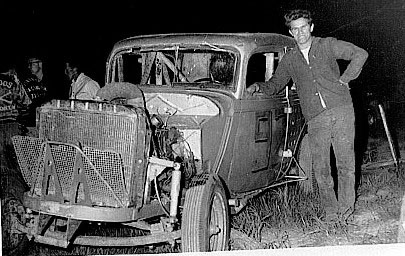
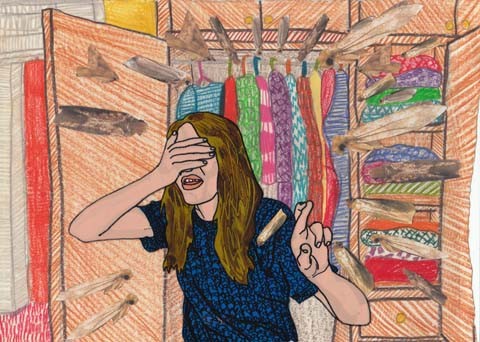

 “I wish I could have done more to save it,” he mused, feeling the blues as it oozed from the news.



 Kenneth Harper Finton