FAILURE

unknown


FAILURE

I thought we did but we don’t
I thought we would, but we won’t
I thought we could but we can’t
I thought we should but we shan’t

I thought we might but we fight
I thought we sailed, but we railed
I thought we’d bail but we failed
It came to naught and we’re shot

So what’s the truth, really?

One day, when I was little, I was with my father in the bathroom while he was doing his daily grooming. Being the didactic father that he was, he wanted to teach me about all the right things to do in the world. He told me that, after removing the accumulated hair from the hairbrush, it was very important that I should never put it in the waste bin. There, it could too easily catch on fire and he urged me always to flush it down the toilet.

On a separate occasion, when I was with my mother in the bathroom during the daily grooming, I was told by her (being the didactic mother that she was) that I should never put hair in the toilet because it clogged the pipes. She urged that I should always use the waste bin.

In later years, when I began doing household chores on a regular basis, my father told me always to vacuum before dusting because the vacuum kicked-up dust onto the furniture. Of course, mother told me that I should always wipe the dust before vacuuming, because dust fell to the floor when wiped. (This should give you some insight as to what went wrong with me, but I digress.)

Their truths were perfectly logical and reasonable to them, even though they were conflicting in practice when applied by another. Since that time, I have learned that the best truth evolves from oneself. Truth is too relative to circumstance to leave its cultivation to someone regarded as “authority”, uninspected. We don’t always have that luxury as children, to inspect our authorities for truth, but we’ve all put on enough years now that we can be our own authors of truth. Maybe it is time for a reinspection. It’s OK to dump in the round file, or flush down the porcelain convenience, things that you have been told in the past. Even everything, if you find that it is not in actual fact producing results for you in the present. Because the truth is, our truths are how we shape this world.

Robin Griggs Wood's avatarthe MUSINGS of robin griggs wood

One day, when I was little, I was with my father in the bathroom while he was doing his daily grooming. Being the didactic father that he was, he wanted to teach me about all the right things to do in the world. He told me that, after removing the accumulated hair from the hairbrush, it was very important that I should never put it in the waste bin. There, it could too easily catch on fire and he urged me always to flush it down the toilet.

On a separate occasion, when I was with my mother in the bathroom during the daily grooming, I was told by her (being the didactic mother that she was) that I should never put hair in the toilet because it clogged the pipes. She urged that I should always use the waste bin.

In later years, when I began doing household chores…

View original post 200 more words

William Whitley and Me

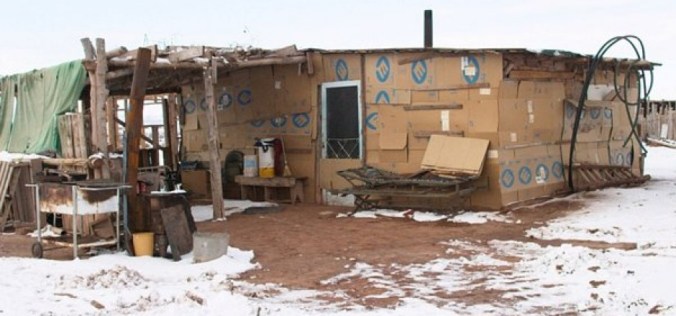
cardboard-house-940x440

It was a cool September sometime around 1962. I had been playing and singing in London, Ontario, and decided to take a look for my great-grandfather’s graves and place of death to the south in lower Ontario. The relative that I was looking for was Colonel William Whitley. He was one of the first Kentucky pioneers in the days of Daniel Boone. He founded modern horse racing in the United States and made some of the first Kentucky sour mash whiskey. His recipe is still used by Evan Williams and Jack Daniels. He built the first brick home west of the Allegheny mountains as well, but his fame was that of an Indian fighter. The evidence is not conclusive, but eye-witness accounts point to Whitley as being the man who killed Tecumseh at the Battle of the Thames in lower Ontario during the War of 1812.

The death of Tecumseh sealed the fate of the organized Indian resistance to the settlement of the Northwest Territories, as Tecumseh was the leader of this cause. The movement fell apart upon his death. Tecumseh had partnered with the British who were seeking revenge, retribution, and a reclamation of the lands they lost by the success of the American Revolution.

Obviously, Whitley was an important man and I felt that I should try to locate his grave if possible, as he died there in battle and was buried on the battle site. What I did not know was the site was on a Canadian Indian reservation.

Soon after turning onto the gravel roads that led to the battle site a dozen cars filled with young teenagers from the reservation began to follow my car. I sped up.  So did they. When I tried to outrun them, they cut me off and surrounded my vehicle. They were drinking beer and feeling their power.

“What are you doing here? What is your business,” they wanted to know. One of them said. “We are not subject to the laws of Canada here. If we decide to kill you, there is nothing anyone can do about it. We have our own laws.”  He opened his jacket to reveal a nasty-looking pistol.

I quickly told them I was simply looking for the place my Grandfather was buried way back in 1814. “He died here in battle,” I said.

“Was he Indian?” was the response.

As a rule, I like to be truthful at all times, but this was obviously a time when telling the truth would be a very bad idea.

“Yes, he was,” I lied. “Do you know where the graveyard is located?”

“There is no graveyard. You look like a honky to me.”

“It’s been a lot of years. My bloodlines have been mixed since then. I even have some Irish in me,” I said. “English too,” I added, suddenly remembering their British ties of the past and their current status in the United Kingdom. I remember wondering why they still called it a United “Kingdom” when they had only a Queen with little political control over a loose federation in distant countries.

The teenager with the gun took his last swig from the beer can and tossed it to the side of the road. “We’ll let you go, but you take your white ass off this reservation and don’t come back. Follow us.”

He returned to the car and led the way. I followed and behind me was a parade of hostile teenagers.

Driving down the road, I had plenty of time to think about history and the present. Should I even be proud that my great grandfather helped take the lands from the natives? I asked myself. Should I be shocked that white men took native scalps as well in retaliation? How, I asked, is it possible to enjoy doing that?

Maybe they did not enjoy it, I told myself. Maybe they found it to be necessary. How much different was it than cutting off the chicken’s head for Sunday dinner or taking an ax to the cow or pig. Somebody has to do it. Yes, I knew there was a difference. We are talking about what people do to people—but when land gets scarce and populations grow, the natural laws take over and the population disperses.

“If someone else occupies the land, we can share it. There was plenty of land for the white man’s expansions, I thought.” The problem was, that the natives were there and they did not want to change their ways. They had no great architecture, only a few written works, and no literary or artistic record like the European invaders had. Watching the miles roll and the open country reveal itself, there seemed to be plenty of land for everyone even now. I could see how those pioneers who wanted the freedom to own their own land and harvest the fruits of their own sweat would feel about another group that tried to prevent them from doing just that. Tecumseh himself, and then the natives to the West, would all soon learn that the white men would come like swarms of locusts and eat up all the lands that sustained them. Both sides felt themselves to be morally right, as is the case in most disputes.

It was a crossroad in history. My grandfather lived it and I witnessed its effects, Even those who won did not win, as rural life would practically be wiped out within a few centuries and the land would be privately held by the richer and more productive among them.

I was at a loss as to what to do next. “Niagara Falls,” I thought to myself. I’ll go there instead.”

That decision turned out to be another story in itself.


COLONEL WILIAM WHITLEY
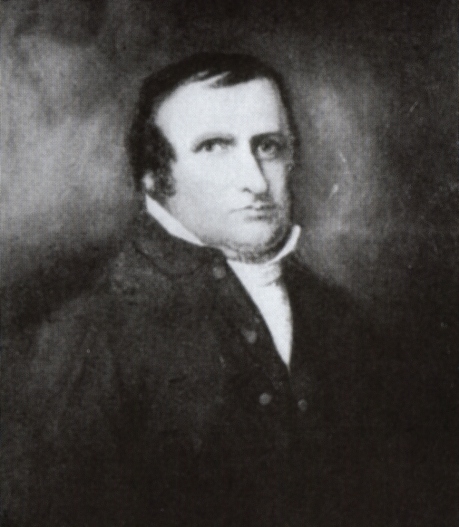
wmwhitley

Colonel William Whitley, born August 14, 1749, Augusta County, Virginia; died 5 October 1813 at the Battle of the Thames, Ontario, Canada.

William Whitley was a pioneer in Kentucky in the days of Daniel Boone. He was a tall man with light eyes, sandy hair, and a prominent aquiline nose. In the spring of 1775, accompanied by his brother-in-law, George Clark, Whitley made an expedition into the bowels of the Kentucky wilderness, selected a location on the banks of Dick’s River, and returned to Virginia for his family. He had married Esther Fullen sometime around 1770. She was born May 19, 1755, and was six years younger than he. After scouting the location near a branch of the Dix River called Cedar Creek, they returned to Virginia to prepare their families for a permanent relocation. The families left Virginia in November 1775.

At that time they had two small children, three-year-old Elizabeth (1772), and one-year-old Isabella (1774). Esther and the children rode the same horse, Elizabeth being strapped behind and Isabella carried in Esther’s arms. More than once Esther’s horse stumbled on the rugged terrain and the Whitley girls tumbled in a heap to the ground.

Upon their arrival, Whitley planted 10 acres of corn to establish his claim to the land. After the planting, Whitley and his family moved to the safety of the fort of St. Asaph’s (the present-day town of  Stanford, Kentucky), as Kentucky was still the native American’s hunting ground and attacks upon settlers were both frequent and violent.

Most of the trip was made in November of 1775. Rain and snow were encountered often. The trip was quite difficult and took thirty-one days to accomplish. Whitley was one of early Kentucky’s most prominent leaders, taking the lead in subduing the Indians and mapping the frontier. He built the first brick house west of the Allegheny Mountains, a veritable mansion with glass painstakingly hauled by pack horses from Virginia. This feat is all the more remarkable considering it was a time when rude cabins and forts were the norms.

It is curious as to what motivated William to go to Kentucky in 1775. Winds of war were flaming fires in Virginia. The American Revolution was about to begin. Whitley, with his anti-British views, would certainly have fought in the Revolution. Perhaps he feared that the colonists would not win and Kentucky would be a safe haven to raise his family without British interference. Certainly, his courageous exploits as a soldier in Kentucky proved he had no fear of—nor moral objection to—war. Whitley was best known for being an Indian fighter. Politics he left to others. Perhaps he, the son of an Irish immigrant, had no use for the revolutionary politics.

By 1779, Whitley returned had for his family and permanently settled on the land he had claimed years earlier.

Whitley’s home was well-appointed and professionally designed. A handmade hardwood staircase had thirteen steps to symbolize the original colonies. An escape tunnel was dug in the case of Indian attacks. The windows were all set high enough to deter an attacker from climbing inside.

Whitley would scalp many natives during his career as a militia leader and frontiersman. He volunteered for service in George Rogers Clark‘s expedition against Indians in the Northwest Territory when the Ohio Territory was yet a wilderness settled by Native Americans.
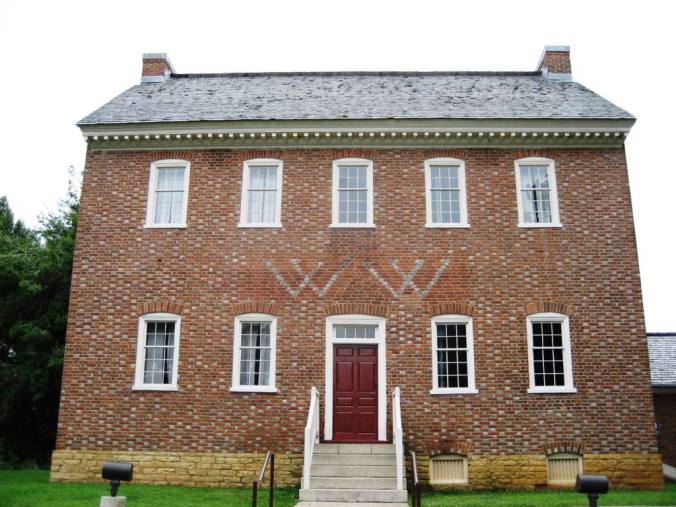
4bwilliamwhitleyhouses-h-s-4housesiler

THE BATTLE OF THE THAMES

Whitley’s last battle was fought when he was sixty-four, during the War of 1812. The Indian confederation, under the leadership of Tecumseh, had joined with the British in a last-ditch effort to stop the ever-expanding white hordes. Whitley, despite his advanced age, answered Governor Shelby’s calls for volunteers, enlisting as a private in Richard Mentor Johnson’s Kentucky Volunteers.

While the main force was deployed to fight the British in lower Ontario, Johnson’s orders were to contain the Indians. Fearing an ambush, he sent out a small unit of twenty men ahead of the main force. This group was called “The Forlorn Hope”. At the head rode Colonel William Whitley. At the first volley, fifteen of the twenty were unhorsed. When the smoke had cleared, both Tecumseh and William Whitley were numbered among the slain.

It is possible, and perhaps it is so, that William Whitley killed Tecumseh at the exact moment that Tecumseh shot him. Some eyewitnesses to the battle claimed that was what happened. However, Richard M. Johnson rode to political fame on the claim that he was the slayer of the great Indian leader. Historians are uncertain, and the deed will be forever muddied in the waters of time. In his 1929 autobiography, Single Handed, James A Drain, Sr. gives a detailed account by Col. Whitley’s granddaughter in which Whitley and Tecumseh killed each other simultaneously.

Whitley was buried near the battleground, in Chatham, Ontario. His horse, Emperor, had one eye and two teeth shot out during the charge. Whitley’s powder horn and rifle were returned to his wife in Kentucky. The rifle is currently on display at the William Whitley House State Historic Site.
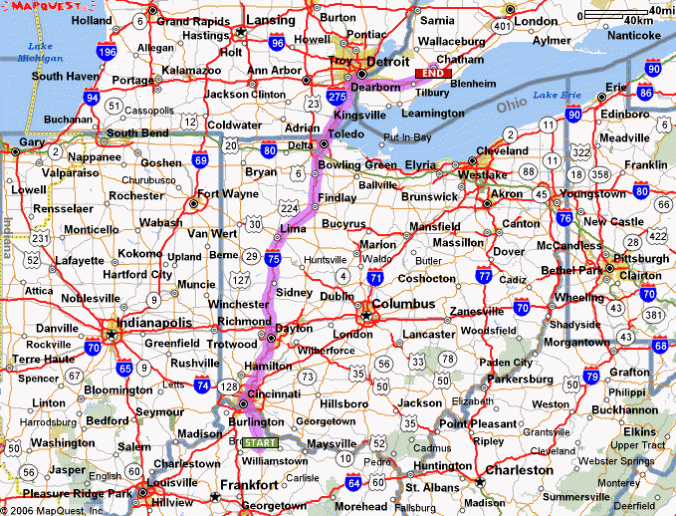
battle-thames-3

The route that was taken by the Kentucky Militia to the battle in Ontario.

Richard Mentor Johnson later became a Kentucky senator and Martin Van Buren’s vice president. He spent much of his career in debt, although he was able to mortgage properties and avoid prison. His constituents were not so lucky. The financial crisis of 1819 especially hurt farmers and many common people were sent to debtors’ prison. Senator Johnson was outraged, and on this day in 1821, he was responsible for outlawing debtors’ prisons in Kentucky, well ahead of the national curve. After Johnson’s 10-year crusade to end debtors’ prison on the national level, Congress enacted a federal statute in 1832. Johnson said in a speech on the Senate floor: “The principle is deemed too dangerous to be tolerated in a free government, to permit a man for any pecuniary consideration, to dispose of the liberty of his equal.” Bankruptcy protection replaced debtors’ prisons.
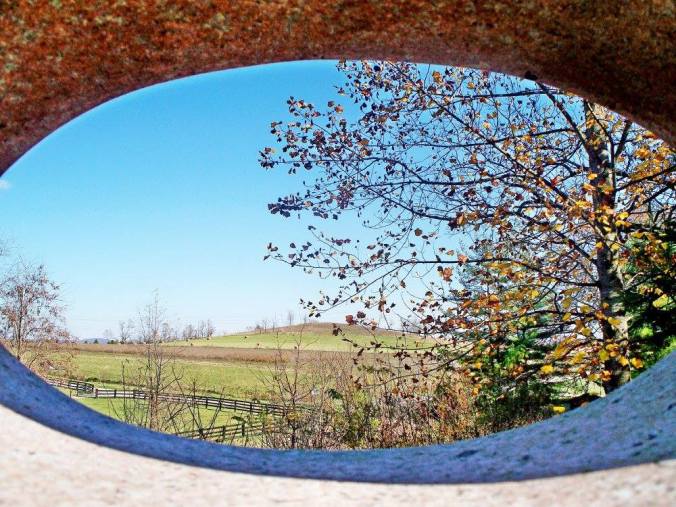
13641111_1179899395385394_2565236089948393403_o

Sportsman Hill, the first circular racetrack in the United States.

Whitley called his home Sportsman’s Hill. It was there that he built the first circular race track in the United States. He instituted several racing traditions that changed horse racing in the USA forever. He built the first clay track. Tracks had been turf before Whitley. Being solidly anti-British, he ran his races counterclockwise, as it was the British custom to run them clockwise. American race tracks still run counterclockwise.

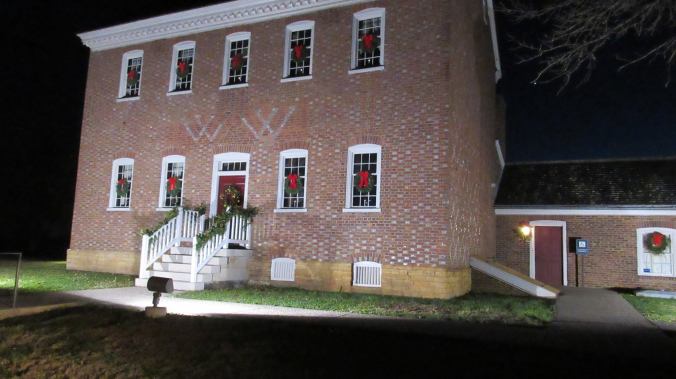
The William Whitley House still stands near Crab Orchard as a Kentucky State Monument and museum.
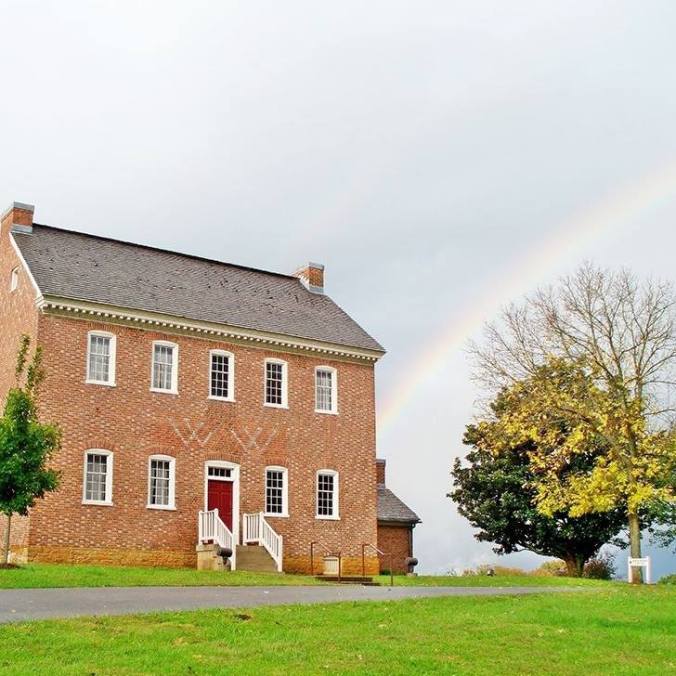
13615172_1179898435385490_3553319407914075969_n

William and Esther Whitley had eleven children, all of whom survived to maturity.

1. Elizabeth (Mrs. Robert Stevenson) b Virginia about 1830.

2. Isabella (Mrs. Phillip Sublette), b Virginia about 1774, d Kentucky 
about 1820.

Phillip and Isabella's first born son, William, was the famous mountain 
man and fur trader, Bill Sublette, who rose to fame in the far west and 
has vast sections of Wyoming named for him.

3. Levisa (Mrs. James McKinney), b Harrodsburg, KY Feb 24, 1777. Moved to Missouri.

4. Solomon, b Kentucky 1770, moved to Missouri.

5. William, b Kentucky, Apr 20. 1782, d Lincoln Co., KY Aug 23, 1849.

6. Andrew, b Kentucky 1784, d Lincoln Co. 1844.

7. Esther (Mrs. Samuel Lewis), b 1786, d Woodford County. 1815.

8. Mary (called Polly), (Mrs. James Gilmour), b Kentucky 1788, moved to 
Illinois, later to Colorado and Oregon

9. Nancy (Mrs. John Owlsey), b 1790, d prior to 1820 near Crab Orchard.

10. Sally (Mrs. Henley Middleton), b 1792, d 1845 near Crab Orchard.

11. Ann (Mrs. William Harper), b 1795, d Woodford Co., Ky after 1879.

William Whitley was the son of Solomon Whitley and Elizabeth Barnett, 
immigrants from Ireland, who settled in Augusta County, Virginia. He was the oldest of four sons and is thought to have had five sisters as well.
William Whitley was killed at the Battle of the Thames, Lower Ontario, 
Oct 5, 1813. His wife, Esther died at the home of her daughter, Ann Harper, in Woodford County, Kentucky, Nov 20, 1833

SOURCE: The Draper MS. 9 CC 5, 12-13, State Historical Society of Wisconsin. Family Bible of William Whitley, Jr. Filson Club, Louisville, KY.

[My personal connection to this family is through #8, Mary (called Polly).She married  James Gilmour, b Kentucky 1788, moved to Illinois, later to Colorado and Oregon. Polly’s son, William Whitley Gilmour was the father of Hedron Walker Gilmour, my grandfather on my mother’s side. The famed mountain man William Sublette was also a grandson of William Whitley.]


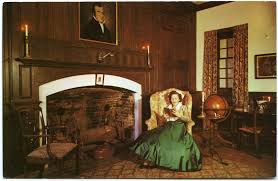
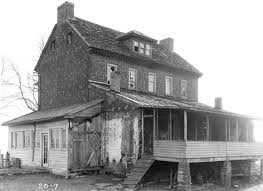
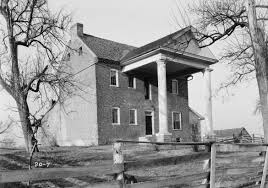
The home went through many changes over the years before the State of Kentucky took possession and restored it as a museum and historical park.
images-1    images-2

images

15403874_1362611730447492_1484140698399166217_o

O CHRISTMAS TREE


christmas-tree


O CHRISTMAS TREE, O CHRISTMAS TREE

YOU  SMELL SO  FRESH AND SCENTED.

YOUR LOVELY LIMBS AND BRANCHES GREW

AND  YOU SEEMED SO CONTENTED.


I TRULY WISH THEY’D  LET YOU STAY

AS  YOU WERE IN SEPTEMBER DAYS,

A SHADY GREEN AND LIVING TREE

THAT WE COULD ALL REMEMBER.


O CHRISTMAS TREE, O CHRISTMAS TREE

YOUR TIME IS IN DECEMBER

FOR AFTER THAT, O CHRISTMAS TREE

YOU’LL SURE TO BE DISMEMBERED.


YOU TAKE AWAY OUR CO2

OUR ATMOSPHERE YOU DID RENEW

O CHRISTMAS TREE, O CHRISTMAS TREE

I WISH YOU’D MISSED NOVEMBER


THE TRAGIC STORY OF NOWHERE MAN AND WHISKEY GIRL


[Several years ago I came upon this story of a married duo on Facebook. It seems that Amy had died from a blood infection and her partner, Derrick, killed himself a few days later. The entire drama of their demise took place in social media.

The story still haunts me. Their Facebook page still exists at  https://www.facebook.com/Nowhere-Man-and-a-Whiskey-Girl-32839047843/ -KHF]


It began with a post from Amy Ross on  FACEBOOK.

AMY: Hey kids! Bad news! I died this morning and Derrick didn’t know how to tell you. I love you all and hope you go out and be nice to someone. Funerals are a bore so hopefully I don’t have one. Give Derrick some space… He stinks at this stuff so leave him be for now. Thanks for all the kindness… Please spread it around. -Whiskey

Juliya Pogrebinsky Listening to you was one of my absolute favorite things about Bisbee. It’s been a great privilege and a joy to have known you even a little bit. Much love and condolences to Derrick and the family.
October 14 at 7:25pm · 3

  1. Sorry to bring more bad news but Derrick decided to join me at some point in the night last night. I thought it best you heard it from me. Enjoy every sandwich. We love and will miss you all. Go be nice to someone for us.
    1. Charlene Mitchell No! This cannot be true. Please stop!
      22 hours ago
    1. Juliette Beaumont Oh dear God. Although somehow I am not surprised by this. They were inseparable in both life and now death. Rock on lovers!
      22 hours ago · 4
    2. Bill Higgins This is not funny. Was the page hijacked?
      22 hours ago · 1
    1. Bill Higgins According to Joel Carp
    2. This is not a hoax or hijacking. The police and ambulance showed up at their place about 45 minutes ago.
      22 hours ago
  1. Olivia Herman What!!???? Who’s posting for Amy Ross on FB? There are going to be a lot of VERY relieved but VERY pissed off people, if it comes out that this is a terrible prank.
    1. Rebecca Higgins Oh my lord, this cannot be happening! So so sad.
      21 hours ago via mobile

Nowhere Man and Whiskey Girl had ceased to be. Amy had an ongoing battle with Lupus and had to undergo frequent dialysis. She died from a blood infection. Derrick took his own life later that night. She was 40, he was 39.


Amy and Derrick Ross

Amy and Derrick Ross, “Nowhere Man and Whiskey Girl” Amy and Derrick Ross, the Bisbee couple behind popular folk/Americana duo Nowhere Man and a Whiskey Girl, have died.

Amy Ross, 40, died Monday. According to the Arizona Daily Star, the vocalist and keyboard player, who performed as “Whiskey Girl,” passed away at Tuscon Medical Center from a “blood infection brought on by ongoing dialysis.” She also suffered from Lupus. Derrick Ross, 39, who was “Nowhere Man” in the act and played acoustic guitar, reportedly committed suicide sometime Monday.

News of both of their deaths came via social media, albeit in a peculiar fashion, wherein Amy Ross seemingly announced the couple’s deaths from beyond the grave.

An update to Amy’s Facebook page on Monday evening stated the following:

Hey kids! Bad news! I died this morning and Derrick didn’t know how to tell you. I love you all and hope you go out and be nice to someone. Funerals are a bore so hopefully I don’t have one. Give Derrick some space… He stinks at this stuff so leave him be for now. Thanks for all the kindness… Please spread it around.

Whiskey

Reaction to the post was a combination of shock, surprise, and disbelief from her nearest and dearest. One person claiming to be a family member stated it was a hoax and that she was alive.


See Also: Comedian Doug Stanhope on the Death of His Friends, Nowhere Man and a Whiskey Girl

Earlier today, a second update was made to Amy Ross’ page that suggested her husband had taken his own life.

Sorry to bring more bad news but Derrick decided to join me at some point in the night last night. I thought it best you heard it from me. Enjoy every sandwich. We love and will miss you all. Go be nice to someone for us.

Stand-up comic Doug Stanhope, who lived next door to the couple in Bisbee and was both their landlord and close friend (as well as featuring them at some of his gigs), confirmed via Twitter within minutes of the second Facebook post that Derrick Ross had taken his own life.

UPDATE: It’s been reported by Tucson media outlets that Stanhope had access to Amy’s page and was the one who made the updates.

Amy and Derrick Ross

Amy and Derrick Ross


World Class Thugs and Psycho Square Dance performed many gigs with “Nowhere Man and  Whiskey Girl”. Their guitarist and vocalist, Jim Dustan,  posted the following on Facebook:

I remember the early days and the Bisbee days. We shared some treasured moments growing up. I will always cherish the way your music made me smile and how it inspired me. RIP Amy (whiskey girl) and Derrick (nowhere man), may you both find peace. Until we meet again someday.

Without a doubt, they were one of Arizona’s best acts in the Americana vein, offering a sometimes joyful, sometimes poignant pastiche of down-home lonesome, rootsy touches, and indie quirk that was made even more emotional by Amy’s meanderingly dulcet vocals.

The husband-and-wife duo, who were married for more than a decade, were self-described as a “couple of wanderers” who previously resided in Oregon and Tennessee. They formed the act in 2003, drawing its name from the Gillian Welch country song “Whiskey Girl.”

Although based in Bisbee (where they were regulars at the Copper Queen Hotel’s lounge), Nowhere Man and a Whiskey Girl were musical vagabonds who exhaustively traveled throughout Arizona for performances in Tucson, Flagstaff, and Phoenix. In 2009, they even participated in an episode of our now-defunct Sun Session series.

Singer-songwriter Brodie Foster Hubbard, a former Valley resident who shared the bill with Nowhere Man and a Whiskey Girl on several occasions, says that he hopes that the couple’s fans will “honor the spirit of what Derrick and Amy shared and the joy they put into their music,” instead of just focusing on the weird circumstances involving their deaths.

“The whole situation is surreal. With Amy, it’s not so shocking, because she has had health issues for a long time. It’s still very saddening, of course. But with Derrick, that’s shocking,” Hubbard says. “You can follow the logic, anyone in a deeply committed relationship would probably say they couldn’t go on without their partner. And other folks who have experienced that loss, I’m sure that option has crossed their mind. So it’s not unthinkable. It’s no less horrible, though.”

He also hopes the couple’s friends and fans will able to cope with their loss.

“The best-case scenario in these situations is that we bond and listen to our favorite songs, and cry and laugh over our memories, and we make pacts to stay in better touch and be there for each other,” Hubbard says. I’d really like to see us all see that through.”


Here’s how the duo’s website, no longer active, describes how the name was derived:

When Derrick and Amy Ross began performing as Nowhere Man and a Whiskey Girl in early 2003, their intentions were simple enough: Select a name that hinted at their roots in the American West and established their identity as a determinedly two-person operation.

The name also cast them as a couple of wanderers, too intoxicated with the possibilities of someplace else to settle down. In that sense, the name would prove prophetic as it charted the course of the next five years of their lives.

Unable to locate a satisfactory permanent home, they accumulated more than their fair share of temporary addresses. When it wasnt the pony-trail towns of Bisbee, Tucson, and Willcox in the Arizona Territory, it was cooler locales like Corvallis and Nashville. Upon the release of their debut album, they hit the road for weeks at a time, bypassing the metropolitan centers in favor of the oft-neglected smaller towns in between.

Wherever they went, they brought a simple musical proposition: Her piano and voice, his acoustic guitar, a love of lifes little details, and a sense of humor. Although they traversed a landscape of bleached-husk desolation, they arrived none the worse for wear. Their longing for home unfulfilled, they found something of greater value along the way. They found a legion of like-minded hopeful searchers who believed in what they had to say and how they said it…

BACKSTREET


A music video Ken Finton made in 1998 that it still as appropriate today as it was then.


Sweet Carolina Lee was a lonely girl

Who could not wait to play in a grown-up world.

Then one day she ran away

from her Daddy’s mansion.

She couldn’t wait to get away

Looking for some action.

There is a back street in every city.

(What’s going down there sure ain’t pretty.)

With every stranger, there is a danger.

(Take your money and leave you lying there.)

You meet the user, you find the losers.

(People hurt by their past abusers.)

And as you wonder, it sweeps you under.

(Hell lies in wait for all who blunder there.)

Some say that all things come to those who wait.

Some the early bird is the one who ate.

Back-street folk, they have no views:

They grab whatever passes.

Carolina has no chance.

They found her broken glasses.

Sweet Carolina, don’t you hear it callin’!

Sweet Carolina, don’t you hear it callin’!

There is a back street in every city.

(What’s going down there sure ain’t pretty.)

With every stranger, there is a danger.

(Take your money and leave you lying there.)

You meet the user, you find the losers.

(People hurt by their past abusers.)

And as you wonder, it sweeps you under.

(Hell lies in wait for all who blunder there.)


AVAILABLE ON iTUNES AND OTHER SITES

https://itunes.apple.com/us/artist/the-fintons/id49618690

https://www.amazon.com/Back-Street/dp/B0015FPXH4

www.cdbaby.com › The Fintons

THE FINTONS ON SPOTIFY


ROOTS OF CONFLICT

images

The world has always been filled with mediocrity. Mediocrity lies in the middle––the median plane––so it is more plentiful than that which is above and below it. As individuals, we always find ourselves in the middle, for we are the center point of our unique worlds.

We all have conflicting opinions––sometimes even within ourselves. That is because our concerns and viewpoints differ. Each of these viewpoints is composed of observations from different levels and perspectives. These levels are dimensional. The tool for the understanding of these dimensions is awareness. In other words, dimensions themselves are levels of observations and awareness. As we learn and assimilate information, we change our dimensional viewpoints. We become more complex. There is more information to sort and balance to form judicious judgments. We are multi-dimensional beings.

The Roots of Conflict

Conflicts of opinion are caused by judgments. Without judgments, we would have no conflict of opinion. All judgments are made from a limited perspective. Since none of us know it all, we will make bad judgments as well as good ones. It becomes even more complicated. What is good judgment in one instance is bad judgment in another.

In many cases, it is best not to rush to judgment at all. Judgments can be modified with the acquisition of different observations and facts.

The judgments others have made have drastically affected us. The opinions others have formed about us have a profound effect on our personality and character. When we have too much respect for the opinions of others in this world, we can lose our personal bearings. We need to care about what others think, but not so much that we lose our inner voice.

What we are, primarily, are present beings. There is not a single one of us that does not live every moment in the now, this present time, no matter what occupies our minds and muscles. The present continuum, the now, occupies all time.

The present, after all, is but awareness. The now is that immeasurably small and timeless moment that is observing what is happening at this split second. As soon as we blink or think about it, it has joined the past. The now is where we constantly find ourselves.

The past is where the physical forms of existence dwell. The past is the artifacts of events that happened as the timeless now passed through history and left its tracks.

The Present is Awareness

It is good to remember that the present is awareness because we can change awareness at will. We need but turn our heads to see another scene. We need but expand ourselves to see a different viewpoint. We need but to change the radio station to hear a different song.

We are our dreams if we care to dream. We are our hopes if we care to hope. We are our past in so far as it has brought us to the present.

Kenneth Harper Finton


FURTHER READING: NOTHING COVER

Nothing Is Real: A metaphor for greater ideas, Kindle Edition

by Kenneth Finton (Author)

http://www.amazon.com/dp/B01AU3C3CY

Dimensions are the building blocks of material existence. This book explores in depth the dual meaning of the title. Beginning with the source in zero dimension to the infinite 1st dimension (the point), to the second dimension of the universal plane, to the third dimension that observes the height and shape of an object in space, to the fourth dimension of spacetime where we view our world … the perception of dimensions creates our material universe


http://www.amazon.com/dp/B01B3C4414

laborscoverrev

WHERE DO YOU FIND FUNK? NEBRASKA, OF COURSE

funk__ne


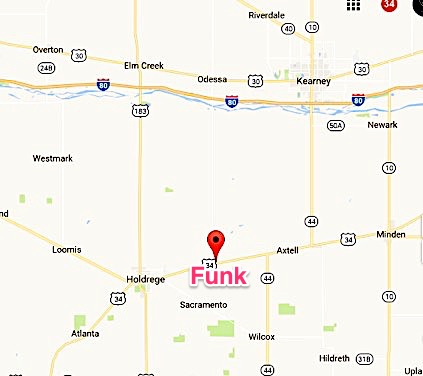
Those swishing through Nebraska on Interstate 80 will not see Funk. The only way I found it was coming up from Kansas on US 34. When the “Welcome to Funk” sign appeared before me, I had to stop and see what Funk was really like.

It is a town of less than 200 people surrounded by the corn industry. A huge concrete grain shipping and storage facility if the heart of the economy.

As expected, Funk was named for P.C. Funk, a Civil War veteran who bought some land to foster a townsite for a branch of the Nebraska-Colorado Railroad (now known as the Burlington Northern). The town lived on through three major fires, the  serious droughts during dust bowl problems in the 1930’s, and the Great Depression.

Today, some well-kept Victorian homes still grace the central park and a small downtown section keeps a few residents occupied.  It is a place where there is no rush and time moves slowly as in the decades that have passed since its founding.

Below is a short video of Funk today.


“ANNIE GET YOUR GUN” IN RETROSPECT

ao-photo1

The musical “Annie Get Your Gun” has a interesting and turbulent history. The idea for the musical occurred to Dorothy Fields, the daughter of a Polish immigrant named Lew Fields who worked in vaudeville and became a respected and successful Broadway producer.

Dorothy Fields was a lyricist who wrote the words to such songs as “I Can’t Give You Anything But Love” and “The Sunny Side of the Street” with composer Jimmy McHugh.

Her work with Jerome Kern produced the successful song “Lovely to Look At.” They worked together again on “The Way You Look Tonight: which earned an Academy Award for best original song in 1936.

In 1935, the movie “Annie Oakley” starring Barbara Stanwyck came out based on the story by Dorothy Fields’ brother, Joseph Fields. Soon Dorothy became interested in seeing Annie’s story become a musical that would star her friend Ethel Merman. Mike Todd turned her script down, so she approached Richard Rogers and Oscar Hammerstein II who were freshly invigorated with the success of their musical “Oklahoma” . Rogers and Hammerstein had decided to become producers of both their own works and the works of others. They agreed to produce the musical and asked Jerome Stern to create the music. Dorothy Fields would do the lyrics and she would write the book with her brother Joseph who would later write “Gentlemen Prefer Blondes” and “The Flower Drum Song”, among many other famous screenplays.

This selection began the rocky path that eventually led to “Annie Get Your Gun”. Kern collapsed from a stroke and died in 1945. Rogers and Hammerstein had to replace Kern, so they asked Irving Berlin to step in and take over the play. Knowing that Irving Berlin wrote both the music and words, Dorothy Fields stepped down as lyricist, but Berlin was not certain that he could write the songs that had to fit into a specific scene in the show. Oscar Hammerstein convinced him to try anyway, so Berlin came back with the songs “Doin’ What Comes Naturally”, “You Can’t Get a Man With a Gun” and “There’s No Business Like Show Business.”  Berlin mistakenly did not think that Richard Rogers liked the show business song and dropped it from the libretto. However, during the development of the show, the song was added back and has become a timeless classic.

Ethel Merman played Annie on Broadway and in three years missed only three performances.

The musical was a great hit, It started on Broadway in 1946 and ran for 1147 performances. It had more hits songs than any other Broadway play and was Irving Berlin’s greatest success.

When the time came to make a movie of “Annie Get Your Gun”, Dorothy’s friend Ethel Merman was not even considered for the movie by MGM. Though Doris Day and Judy Canova wanted the part, MGM wanted Judy Garland for the lead role. MGM producer Arthur Freed had paid $650,000 to Irving Berlin for the movie rights just to cast Garland into the title role. Garland shot some scenes as the lead actress, so MGM thought they could bring in an unknown to play Frank Butler. Both John Raitt and Howard Keel auditioned for the role, but Keen got the part. The director, Busby Berkeley insisted that Keel ride his horse on the set over a slick floor, and on the second day of shooting, Keel broke his leg while they were shooting by falling off his horse on the set. They had to shoot close-ups of Keel and Judy Garland was offended that the unknown actor was getting so much attention. Judy was having severe problems with drugs and alcohol addictions as well. Freed eventually fired Busby and brought in Charles Walters who had successfully directed Garland in “Easter Parade”. Judy Garland was convinced that she could not get the performance right after watching the rushes. She could not conquer her addictions nor get to the set on time. MGM felt they had no choice but to fire her. Since Garland was a superstar at the time, firing her was something no one expected. Garland went into a mental hospital and the movie was put on hold.

To add to the confusion, Frank Morgan (the Wizard in “The Wizard of Oz”) was playing Buffalo Bill. He suddenly died in the middle of the film. Only a few shots could be saved from the production. George Sydney suddenly replaced Charles Walters as the director by orders from MGM. They basically had to start all over again with the film, this time with Betty Hutton in the lead role.

The movie had good box office success, but Betty Hutton did not get the best of reviews when compared to the original Broadway role played by Ethel Merman. A dispute between the Irving Berlin estate and MGM kept the film out of circulation from 1973 to 2000. By that time. Merman’s performance was history and Hutton was accepted. A new production with Bernadette Peters and Reba McIntire brought Annie back to a new generation.

The hit songs generated by “Annie Get Your Gun” are quite staggering. Few musicals, have come close to the mass appeal of the songs in this production.

YOU CAN’T GET A MAN WITH A GUN

Written by Irving Berlin

Performed by Betty Hutton

DOIN’ WHAT COMES NATUR’LLY

Written by Irving Berlin

Performed by Betty Hutton

I’M AN INDIAN TOO

Written by Irving Berlin

Performed by Betty Hutton

I GOT THE SUN IN THE MORNING

Written by Irving Berlin

Performed by Betty Hutton

ANYTHING YOU CAN DO

Written by Irving Berlin

Performed by Betty Hutton and Howard Keel

THEY SAY IT’S WONDERFUL

Written by Irving Berlin

Performed by Betty Hutton and Howard Keel

THERE’S NO BUSINESS LIKE SHOW BUSINESS

Written by Irving Berlin

Performed by Ensemble

COLONEL BUFFALO BILL

Written by Irving Berlin

Performed by Chorus

MY DEFENSES ARE DOWN

Written by Irving Berlin

Performed by Howard Keel

THE GIRL THAT I MARRY

Written by Irving Berlin

Performed by Howard Keel

GRANDMA’S HEALTH

1453664626546-c15

Grandma had a headache, but she treated her brain well by drinking Coca-Cola, and then, as she would tell, she gave some to my father … and he …in turn … to me.  She had her own traditions and she kept them to a tee.

Coke elixir with her liquor. She drank it straight or mixed, ’cause she was the kind of person that liked to see things fixed. She did not total all her tees, she did not shirk her pleasures. She also felt that earthly pain should not become a treasure.

1453664534570-c11When great-grandma had a toothache, Grandma knew just what to do. She bought those cocaine toothache drops and placed them on her tooth. She liked those folky remedies, she liked her living fables that let live her life as clean and right as she was able.

1453664413049-c5