FUN FACTS ABOUT NURSERY RHYMES

TWINKLE, TWINKLE LITTLE STAR

Unknown

The joint authors of Twinkle twinkle little star were two sisters called Ann Taylor (1782-1866) and Jane Taylor (1783-1824). The first publication date was 1806. How many of us know all the words?

Twinkle twinkle little star, how I wonder what you are?
Up above the world so high , like a diamond in the sky
When the blazing sun is gone, when he nothing shines upon,
Then you show your little light, twinkle, twinkle all the night.

Then the traveller in the dark, thanks you for your tiny spark,
He could not see which way to go, if you did not twinkle so.
In the dark blue sky you keep, and often through my curtains peep,
For you never shut your eye, ’till the sun is in the sky.
As your bright and tiny spark lights the traveller in the dark,
Though I know not what you are — twinkle, twinkle little star.


WHO KILLED COCK ROBIN?

Unknown-2

The origin of the “Who killed cock robin” poem: ‘Who killed cock robin?’ Not really a nursery rhyme, this is best described as an English folk song or poem. The words of “Who killed cock robin” are said to refer to the death of the legendary figure of Robin Hood and not that of a bird.

The legend of Robin Hood encompasses the theme that he stole from the rich to give to the poor. The words of “Who killed cock robin” describe how help was offered from all quarters following the death of cock robin thus reflecting the high esteem in which Robin was held by the common folk.

“Who killed Cock Robin?” “I,” said the Sparrow,
“With my bow and arrow, I killed Cock Robin.”
“Who saw him die?” “I,” said the Fly,
“With my little eye, I saw him die.”
“Who caught his blood?” “I,” said the Fish,
“With my little dish, I caught his blood.”
“Who’ll make the shroud?” “I,” said the Beetle,
“With my thread and needle, I’ll make the shroud.”
“Who’ll dig his grave?” “I,” said the Owl,
“With my pick and shovel, I’ll dig his grave.”
“Who’ll be the parson?” “I,” said the Rook,
“With my little book, I’ll be the parson.”
“Who’ll be the clerk?” “I,” said the Lark,
“If it’s not in the dark, I’ll be the clerk.”
“Who’ll carry the link?” “I,” said the Linnet,
“I’ll fetch it in a minute, I’ll carry the link.”
“Who’ll be chief mourner?” “I,” said the Dove,
“I mourn for my love, I’ll be chief mourner.”
“Who’ll carry the coffin?” “I,” said the Kite,
“If it’s not through the night, I’ll carry the coffin.”
“Who’ll bear the pall? “We,” said the Wren,
“Both the cock and the hen, we’ll bear the pall.”
“Who’ll sing a psalm?” “I,” said the Thrush,
“As she sat on a bush, I’ll sing a psalm.”
“Who’ll toll the bell?” “I,” said the bull,
“Because I can pull, I’ll toll the bell.”
All the birds of the air fell a-sighing and a-sobbing,
When they heard the bell toll for poor Cock Robin.


RAIN. RAIN, GO AWAY

Unknown-1

The origin of the lyrics to “Rain rain go away” dates back to the reign of Queen Elizabeth I (1533-1603). During this period in English history there was constant rivalry between Spain and England eventually leading to the launch of the Spanish Armada in 1588.

Once again, most of us know only part of the older poem. When rhe Spanish Armada was sent to invade England.  The attempt failed, not only because of the swifter nature of the smaller English ships but also by the stormy weather which scattered the Armada fleet. Hence the origin of the “Rain rain go away” Nursery rhyme!

Rain rain go away,
Come again another day.
Little Johnny wants to play;
Rain, rain, go to Spain,
Never show your face again!


BANBURY CROSS (RIDE A COCK HORSE)
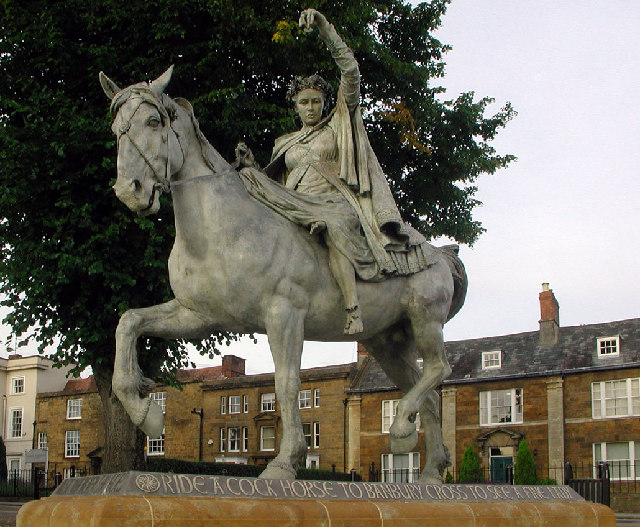
 

037187_73abfc8c

Ride a cock horse to Banbury Cross
To see a fine lady upon a white horse
With rings on her fingers and bells on her toes
She shall have music wherever she goes.


Stallions were called ‘cock’ horses in old England. The reason is obvious to horse people. They say this rhyme is about Elizabeth I who went to Banbury to see the newly erected stone cross. The rings on her fingers anb bells on her toes refer to the Plantagenet dynasty custom of attaching bells to their pointed shoes. Banbury Cross was located at the top of a steep hill. The Queen’s carriage broke a wheel. so Elizabeth chose to get on the white cock horse to make the trip. The people celebrated her arrival with ribbons and hired minstrels to accompany her on her visit, so she had music wherever she went.
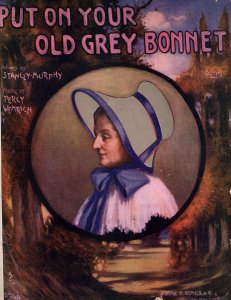

 

PUT ON YOUR OLD GRAY BONNET

ARCHIVAL RECORDING BY ARTHUR CLOUGH, 1909

Words by Stanley Murphy, Music by Percy Wenrich 1909


My grandfather used to sing this song back in the 1940s. It was old then as it was written in 1909. The words paint a world of stability where a couple married and spent their entire lives together a few miles from the very place they married and lived.

put_on_your_old_grey_bonnet

G                              A7

On the old farm house veranda sat old Silas and Miranda

D7               G

Thinking of the days gone by

A7

He said “Dearie, don’t be weary, you were always bright and cheery

D7                  G

but a tear dear dims your eyes”

D                  G         D                    G

She said “These are tears of gladness, they’re not tears of sadness,

A7                          D7

It was 50 years today that we were wed”

G                                      A7

And the old man’s eyes they brightened and his old stern heart it lightened

D7                G7

as he turned to her and said

[Chorus]

            C                         F

Put on your old grey bonnet, with the blue ribbon on it      

         C         D7            G7

and I’ll hitch old Dobbin to the shayhorsecarriageb

          C                         F

and we’ll ride to Dover through the fields of clover

       C      G7      C     (D7)

on our golden wedding day

G                              A7

It was in that same grey bonnet with the same blue ribbon on it

D7               G

in the same shay by his side

A7

that he drove her down to Dover through the same old fields of clover

D7         G

to be his happy bride

D                  G         D                    G

The birds were brightly singing, the old church bells were ringing

A7                          D7

as the passed by that old church where they were wed

G                                      A7

and at night while stars were gleaming the old couple lay there dreaming

D7                G7

dreaming of the words he said.

GERMANWINGS FLIGHT 9525

By Kenneth Harper Finton ©2015

An imaginary trip into the mind of Andreas Lubitz

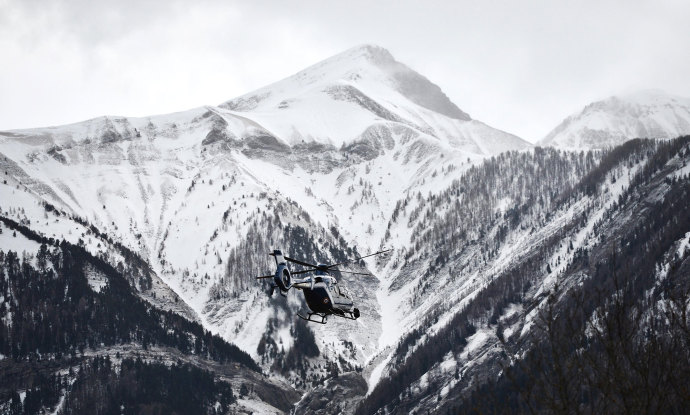
   A French helicopter departs for the site where Germanwings Flight 9525 crashed.                  CREDITPHOTOGRAPH BY MUSTAFA YALCIN/ANADOLU AGENCY/GETTY

A French helicopter departs for the site where Germanwings Flight 9525 crashed.              CREDITPHOTOGRAPH BY MUSTAFA YALCIN/ANADOLU AGENCY/GETTY

Tired of living, spurned in loving, deficit in compassion,

Andreas Lubitz and his crippled amygdala

Donned his smart uniform and climbed aboard the plane.

A pretty stewardess smiled at him,

Bid him a good morning as he passed.

She smelled of a musky perfume

That reminded him of the sex he often craved with her.

He found sex to be an animalistic and ludicrous practice.

Love had always been a dream that faded away to sorrow.

He returned to her a faceless smile without meaning.

He took his place in the cockpit beside Patrick, his pilot.

It was less that two hours to Dusseldorf from Barcelona.

Patrick was loquacious, almost collegiate in manner.

As they bantered back and forth, Patrick’s banal conversation

Bored Andreas to death. He could only fake a smile for reply.

Andreas thought about how he hated God for giving him life.

An aching desire for release from the prison of time

Had overcome him. A dull ache of depression swept over him

As he remembered all the hideous assaults he had endured.

It was as though he wore glasses that saw only

The evil of time and hid away the pleasant moments.

When Patrick left the cabin, Andreas pushed the button

To lock the door so that he would not have to bear him any longer.

Alone in the cabin, with only the sky in his eyes and the engine noise

In his ears, Andreas was at last alone with himself.

He hated his aloneness. “Everyone is suffering in their meaningless

Lives just like I am,” he thought. The future brings nothing

But more disappointment, times filled with melancholy,

Nights filled with helpless thoughts, days filled with foolish actions

That try to mitigate the absurdity of living a desperately miserable existence.

Dog eats dog, life eats life, panicked schools of fish swirling

In circles as the sharks attack the outer layers of their being.

The images consumed him. The irrelevance of his very being

And all those around him felt like the beating drum of a hated heartbeat.

Mushroom clouds raining death, pits with decapitated bodies killed

By fools who thought themselves righteous appeared in the gray sky

When he adjusted the course of the plane to fly at one hundred feet.

“It will soon be over,” he thought to himself. “I am finally on control.”

He heard a frantic knocking on the door as Patrick tried to gain the cabin

His gut tensed, his breath came hard and fast. He could hear

The hysterical screams of the passengers behind him.

No sympathy for their plight crossed Andreas mind.

“They are all going to die anyway,” he thought.

“Today is as good a day to die as any other. Today is better.

It will save them from through suffering their ignorant lives.”

Adrenaline rushed through Andreas veins as the mountain

Loomed before him. He felt like a soldier entering battle.

“It is a good day to die,” the voices around him exclaimed.

He remembered the stewardess with the sexy perfume

Who greeted him when he stepped onto the plane.

Her voice was among those screaming behind him.

“I will not fuck her,” he told himself. “She will not tempt

Anyone to fuck her now. I can make sure of that.”

There was power in the thought; power had always escaped him.

The remembered scent of her perfume hung in his nostrils.

His own breath came hard and deep as he thought about

Having sex with her. Death, he thought, would be like conception,

One timeless contracting orgasm would begin the journey

To another useless, meaningless and painful life.

Another contraction would snap the miserable body away from experience

And into the vast nothingness of the universe.

He could picture himself letting go after the shock of impact.

It would be his final orgasm, his final statement, his final action.

POSTMODERN MAN

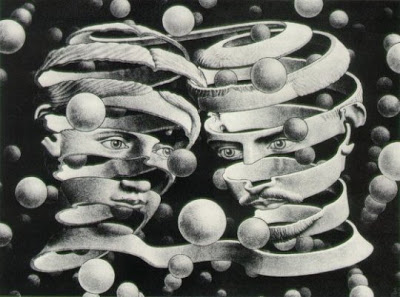
escher postmodern love relationship society free conversation

by KENNETH HARPER FINTON © 2015


While I was busy eating
My carrot spoke to me.
It said, “You simple, idle fool,
You cannot swallow me.”

“You grubby root,” I said to it,
“That’s not for you to say.
Your purpose, so they tell me.
Is to look the other way.”

 While I was busy reading
The author chastised me.
“These thoughts that you are thinking,”
He said, “are not of me.”

 While I was busy sleeping
The world went bust on me.
While I was busy drinking,
I snubbed reality.

 While I was  busy writing
My friends all disappeared.
When I was busy dreaming
Then some would reappear,

Half dead and resurrected
For allegiance can’t be bought.
Tortured and neglected,
They swam across my thoughts.

I realized the truth therein
And closed the book of dreams.
It seems that nothing ever was
Exactly what it seemed.
 

Postmodernism is a late-20th-century movement in the arts, architecture, and criticism that was a departure from modernism. Postmodernism includes skeptical interpretations of culture, literature, art, philosophy, history, economics, architecture, fiction, and literary criticism

TIME’S PASSING

by Kenneth Harper Finton ©2015

Science-Museum-Exhibition-2

Remember how your hair blew in the wind

that night we kissed and dreamed of sins.

I asked you why your large dark eyes

stared with wonder at the sky.

When we were young, two kids in love,

the world itself was not enough.

I dreamed that we’d forever lay

together at the end of day.

Now that time has flickered by,

I’m sure you still go watch the sky.

Oh, I remember well these things,

but now I have forgot your name.

CONGRATULATE YOURSELF


images-1


Congratulate yourself.

You made is through another year.

You lionized another birthday

And hoped for many more.


You dressed your transgressions in purple robes,

Tolerated the tolerable,

And dreamed another dream.


That person that you were last year

has passed on to become memory.

The person you are to be this year

is being contemplated as we speak.


I hope you made the proper number of mistakes

and hope to make a similar number this coming year.

Mistakes mean that we are doing something–

Perhaps something we have not done before.


Congratulate yourself.

You are known by your blunders,

Admired for your accuracy,

And vilified for your honesty,

As are we all.


Congratulate yourself.

Though time flew by, you persevered.

Though you did not do it all,

You chipped away at it.


Congratulate yourself.

Say, “Happy new year.”

Welcome to the land of beginning again.


Keep those thoughts positive,

Those acts causative,

The mind cognitive.


Do you like this thought?  Comment below.


SO MANY ARROWS UNAIMED

Will Tigs's avatarHomo est Machina

three-archers-1558.jpg!HalfHD

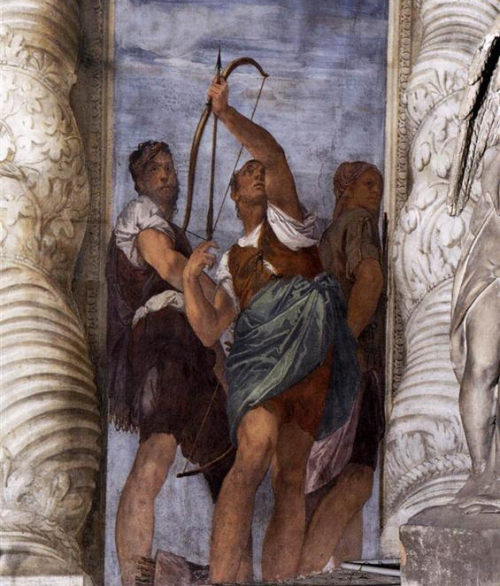
So many arrows unaimed.
So many mountains unmoved.
So many lights unlit.
So many deeds undone.
So many words unsaid.
So many stories untold.
So many voices unheard.
So many questions unasked.
So many places unknown.
So many books unread.
So many sentences unwritten.
So many theories unproven.
So many minds unsettled.
So many paths untaken.
So many roads untraveled.
So many passions unruled.
So many emotions untamed.
So many ills uncured.
So many needs unmet.
So many hopes unchained.
So many souls unrested.
So many dreams unborn.
So many faces uncared.
So many heroes unnamed.
So many hearts unloved.

View original post

THE WORLD CAME ROARING IN

by Kenneth Harper Finton ©2014


tumblr_n6cd90nHds1rb4mtjo1_1280

When I was very young, I did not know the world.

The world made itself known to me quite gradually,

in small steps that I can now only imagine.

I cannot remember these steps.

They happened before memory was born.

I felt these steps.

Discomfort was a feeling that I learned quickly to correct.

My first feelings were those untenable positions

which caused me to turn away from irritation

into a position of familiarity and contentment.

I kicked and moved to find my snugness

not knowing or caring that my attempt to find relief caused pain to another.

The experience of the world of the womb was lost to me.

The world was making itself known, but I knew nothing of the world.

I knew nothing about myself for I was not a self.

I was as close to bring nothing as I have ever been.

Yet in this nothing there was feeling.

There was touch. There were senses.

I could hear the world making music

and the sounds of the body in which I was immersed.

Because I did not breath, I could not smell.

Because I had no smell, I could not taste.

Because I had no eyes I could not see.

But there was touch and there was sound and there was feeling.

The rest would come later.

The world makes itself known to us slowly.

The distress that I felt at the moment of my birth was sudden and momentous.

I left the familiar world of water and warmth,

felt the pressure of extreme movement that I had never felt before.

The world made me know of constriction and limits.

I felt movement and the pressures of my movement,

then release to an alien place that made me feel misery

I longed briefly to return to what I had forever known

and felt the strange coldness that I had never felt before.

Air replaced water.

I opened my mouth and tasted of the air.

The air forced its way into me and I smelled the horrid stench of it for the first time.

I became so agonizingly uncomfortable that I cried.

Since that first forlorn cry that expressed both my surprise and extreme distress,

the world has continued to make itself known to me.

That process has not changed much.

The instinct to recoil from aggravation and hurt

and return to a known luxury has been retained,

but the added senses produced a curiosity

to know more about that which caused me displeasure.

In giant strides of courage, I accepted some irritation

and began to realize that there was more to everything than I had learned.

Some learning produced not only pleasure,

but sensations that I welcomed with bright smiles.

I knew nothing of time and little of space.

I was immersed fully in the now.

Then I opened my eyes

and the world came roaring in.

STORIES FOR GRANDKIDS #1


446px-Doris_Ulmann_-_Southern_mountaineer


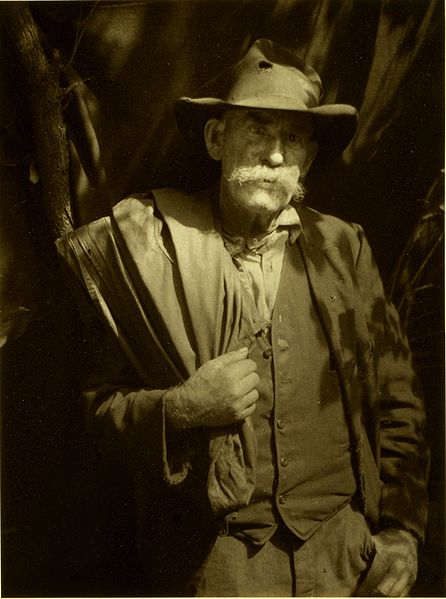
Grandpa chewed on the butt end of his cigar as I read him my poem. His eyes rolled a bit beneath the thick wire rimmed glasses and the smoke from the cigar chaffed my nose.

“It’s a good one, son,” he told me, “but it ain’t much to my liking.”

“What do you mean?” I asked.

“Poems were good in my day,” he replied. “You heared a lot of poems back then, The folks who wrote them did not indulge in themselves the way they do now. They didn’t cry over their spilt feelings so much. Your little story is about what you lost out on. Everybody loses out on something or someone. You can’t get through your term on earth less’n you do.”

He placed his cigar on the ashtray that stood on a pedestal near his chair. It raised waves of smoke, then went out.

“They told stories back then,” he continued. “Sometimes they dressed their words up in fancy duds … least wise, they did if they went on for further schoolin’. They learn you to use big words at universities.”

“So you didn’t think it was good?” I asked. I felt disappointed. I thought it was good enough to show him. Becky had just told me she wanted to go steady with Fred. I wrote about it, telling how Fred was a homely bastard who has too many pimples. I could not understand what she saw in him and I wrote about it my poem.

“Love poems are fair to middling,” he said. “Everybody falls in love. It drives you crazy for a while … wanting this and wanting that. Get to your age and it’s passion and infatuation. It feels strong, but it ain’t a lasting thing. A good story is a lasting thing.”

“What makes a good story?” I asked.

“It ain’t so much what you say, but the way you say it,” he replied. “If you say it good, then people will understand it.”

He took a book from the table beside the ashtray.  “Now here’s one I always liked,” he said. He began to read.


images

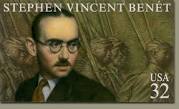
The Ballad of William Sycamore’ was originally published by Stephen Vincent Benét in 1922.

THE BALLAD OF WILLIAM SYCAMORE 

by: Stephen Vincent Benét 

My father he was a mountaineer,

His fist was a knotty hammer;

He was quick on his feet as a running deer,

And he spoke with a Yankee stammer.

My mother, she was merry and brave,

And so she came to her labor,

With a tall green fir for her doctor grave

And a stream for her comforting neighbor.

And some are wrapped in the linen fine,

And some like a godling’s scion;

But I was cradled on twigs of pine

In the skin of a mountain lion.

And some remember a white, starched lap

And a ewer with silver handles;

But I remember a coonskin cap

And the smell of bayberry candles.

The cabin logs, with the bark still rough,

And my mother who laughed at trifles,

And the tall, lank visitors, brown as snuff,

With their long, straight squirrel-rifles.

I can hear them dance, like a foggy song,

Through the deepest one of my slumbers,

The fiddle squeaking the boots along

And my father calling the numbers.

The quick feet shaking the puncheon-floor,

And the fiddle squealing and squealing,

Till the dried herbs rattled above the door

And the dust went up to the ceiling.

There are children lucky from dawn till dusk,

But never a child so lucky!

For I cut my teeth on “Money Musk”

In the Bloody Ground of Kentucky!

When I grew as tall as the Indian corn,

My father had little to lend me,

But he gave me his great, old powder-horn

And his woodsman’s skill to befriend me.

With a leather shirt to cover my back,

And a redskin nose to unravel

Each forest sign, I carried my pack

As far as a scout could travel.

Till I lost my boyhood and found my wife,

A girl like a Salem clipper!

A woman straight as a hunting-knife

With eyes as bright as the Dipper!

We cleared our camp where the buffalo feed,

Unheard-of streams were our flagons;

And I sowed my sons like the apple-seed

On the trail of the Western wagons.

They were right, tight boys, never sulky or slow,

A fruitful, a goodly muster.

The eldest died at the Alamo.

The youngest fell with Custer.

The letter that told it burned my hand.

Yet we smiled and said, “So be it!”

But I could not live when they fenced the land,

For it broke my heart to see it.

I saddled a red, unbroken colt

And rode him into the day there;

And he threw me down like a thunderbolt

And rolled on me as I lay there.

The hunter’s whistle hummed in my ear

As the city-men tried to move me,

And I died in my boots like a pioneer

With the whole wide sky above me.

Now I lie in the heart of the fat, black soil,

Like the seed of the prairie-thistle;

It has washed my bones with honey and oil

And picked them clean as a whistle.

And my youth returns, like the rains of Spring,

And my sons, like the wild-geese flying;

And I lie and hear the meadow-lark sing

And have much content in my dying.

Go play with the towns you have built of blocks,

The towns where you would have bound me!

I sleep in my earth like a tired fox,

And my buffalo have found me.


Stephen Vincent Benét

From Wikipedia, the free encyclopedia

Stephen Vincent Benét (July 22, 1898 – March 13, 1943) was an American author, poet, short story writer and novelist. He is best known for his book-length narrative poem of the American Civil War, John Brown’s Body (1928), for which he won a Pulitzer Prize in 1929, and for two short stories, “The Devil and Daniel Webster” and “By the Waters of Babylon”.

Benet’s fantasy short story The Devil and Daniel Webster won an O. Henry Award, and he furnished the material for a one-act opera by Douglas Moore. The story was filmed in 1941 and shown originally under the title All That Money Can Buy.

Benét was born into an Army family in Fountain Hill, Pennsylvania, near Bethlehem in Pennsylvania’s Lehigh Valley. He spent most of his boyhood in Benicia, California. At the age of about ten, Benét was sent to the Hitchcock Military Academy. A graduate of The Albany Academy in Albany, New York and Yale University, where he was a member of Wolf’s Head Society and the power behind the Yale Lit, according to Thornton Wilder. He was awarded a posthumous Pulitzer Prize in 1944 for “Western Star”, an unfinished narrative poem on the settling of America.

It was a line of Benet’s poetry that gave the title to Dee Brown’s famous history of the destruction of Native American tribes by the United States: Bury My Heart at Wounded Knee.

He also adapted the Roman myth of the rape of the Sabine Women into the story The Sobbin’ Women, which in turn was adapted into the movie musical Seven Brides for Seven Brothers.

John Brown’s Body was staged on Broadway in 1953, in a three-person dramatic reading featuring Tyrone Power, Judith Anderson and Raymond Massey, and directed by Charles Laughton.

Benet’s brother, William Rose Benét (1886–1950), was a poet, anthologist and critic who is largely remembered for his desk reference, The Reader’s Cyclopedia (1948).

IN THIS I CAN FIND SOLACE


SUNSET


As sunset burns pink and red and orange

across a floating sky of sheepish clouds,

It heralds the darkness of the night itself.

The brilliance of the day has given me a joy of being

that slips away now with the setting sun.

Night comes and dimness falls upon the spirit.

Yet for a moment in that sunset,

the light becomes pure and magenta, so lovely.

It seems testimony enough that the day had value.

The Night gives birth to the blues.

The Night reminds us that all is changing,

How useless it seems to mourn this passing.

The bloom of youth fades.

The boundless energy of childhood play

becomes productive adult work.

So it is with autumn.

As the days grow shorter,

the winds blow colder.

The brilliant light of summer fades

and kindles the flames of burning colors

in the very leaves of time.

I cannot help but be struck by its beauty.

I leave until tomorrow that which is yet undone.

I gladly leave the planting to the Spring.

For Winter is now coming fast,

And Winter wants to kill us.

If Winter cannot kill us, it will slow us down.

We take the thrift of our days

And spend it getting through the night …

Getting through the Winter.

They are much the same, the Night and the Winter.

That same natural pattern of building and destruction

Is the theme of both.

It comes together in the Fall.

It comes together before the Night

To see it, I have only to look.

There is a balance in those autumn days.

There is a signal in those twilight moments.

Forget about the past and let the future be.

Let the now be incredible and lovely,

A laughing child is a bell to an undistracted mind,

I hear the music. I hear the bell. I feel the balance.

Tomorrow will carry joy for some and grief for others.

I know that well. The Winter will take us into Spring.

It is forever that way. In this I can find solace.

 FALL ASPENS

Photos by the author


Thanks for reading.  Follow me at:

          http://www.kennethharperfinton.com

Go back

Your message has been sent

Warning
Warning
Warning
Warning

Warning.