THE SCUNTHORPE PROBLEM: UNINTENDED CONSEQUENCES

by Kenneth Harper Finton ©2015 elk-jumping-fence

 “Give me land, lots of land with the sunny skies above, Don’t fence me in.”

 – Cole Porter

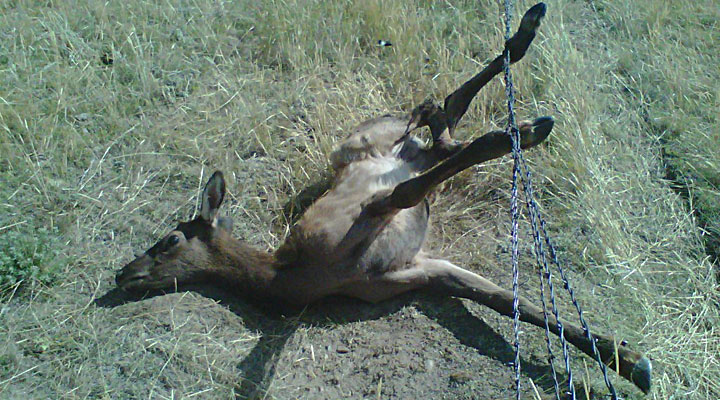
   Riding in the car on Route 287, the lead elk jumped a fence leaving the others struggling alone on the other side. Fences isolate and entrap while they pretend to protect and defend.

   “Good fences make good neighbors,” Robert Frost has said, as though building a wall around yourself is desirable and morally essential.

   It brought to mind the day I returned to the country from New York City and took my old dog for a walk in the woods. We came to a fence and I lifted  Lassie up over the fence, but she had gained weight and was heavier than I remembered. She struggled free, caught her back leg in the wire and hung there upside down and yelping. I ran off to the nearest neighbor to borrow some wire cutters, but while I was cutting the leg free, the frightened old girl bit me several times. They were painful punctures on the hand that later swelled and ached like a bad tooth.

   Until the last one hundred and years life ran free upon the Earth. Then we built the fences and the roads and divided the herds as though we had the inalienable right to do so. After all, are we not the cream of living things, the tamers of nature, the universe itself come to intelligence and great power. Does not ancient and misguided scripture give us power and dominion over all the living things? “Be fruitful and multiply, and fill the earth, and subdue it; and rule over the fish of the sea and over the birds of the sky and over every living thing that moves on the earth.” Genesis 1:27.
slide-elk-calf-caught

   Our freeways have separated the species. They are giant fences that imprison and subdue the beasts of the wild and halt their natural evolution. Our fences are created to provide us with a food supply and keep the victims we choose safe for tomorrow’s meals.

700x467xwildlife-corridor.png.pagespeed.ic.uAXffYWNV0xVRQ3Sees-.jpg

Unintended Consequences

Our world is full of unintended consequences. The Scunthorpe problem is named from an attempt to protect people from exposure to the obscene by filtering out strings of letters that spelled what the censors considered to be key strings of letters. As a result, people on Scunthorpe, England could not use the web of look up a local business because the word cunt was in the town’s name. We can solve our Scunthorpe problems, but it costs money that people would rather use for other things.

   Little can be done on the lonely byways where fencing is mandatory and the animals are left to their own devices. Not even Vegan ideas can solve such problems, as wild herds are not used for our primary food supplies. Outdated, obsolete moral codes are responsible for many problems that could easily be solved if only people used reason instead of faith and knowledge instead of dogma.

   The prohibition era in the United States was intended to control the liquor traffic and protect the public against alcoholism, but it drove the trade underground and the profits into the hands of mobsters. The same has occurred with the war on drugs.

   Abstinence-only sex education has been shown to increase teenage pregnancy rates, rather than reduce them. Compared to either comprehensive sex education or no sex education at all, it has been shown to be ineffective. [Kohler, Pamela; Manhart, Lisa; Lafferty, William (April 2008). “Abstinence-Only and Comprehensive Sex Education and the Initiation of Sexual Activity and Teen Pregnancy”, Journal of Adolescent Health.]

   It seems reasonable to require that children be constrained by car seats to prevent injury in case of accidents, but air bags killed many kids. So we decide that moving children to the back seats in rear-facing seats was a solution, but there was a great increase in children being forgotten and left to suffer in overheated cars as a result. Robert K. Merton listed five possible causes of unanticipated consequences in 1996. [Merton, Robert K (1996). “On Social Structure and Science”. The University of Chicago Press.]

  1. Ignorance, making it impossible to anticipate everything, thereby leading to incomplete analysis
  2. Errors in analysis of the problem or following habits that worked in the past but may not apply to the current situation
  3. Immediate interests overriding long-term interests
  4. Basic values which may require or prohibit certain actions even if the long-term result might be unfavorable (these long-term consequences may eventually cause changes in basic values)
  5. Self-defeating prophecy, or, the fear of some consequence which drives people to find solutions before the problem occurs, thus the non-occurrence of the problem is not anticipated.

Unintended consequences write the stories of our lives. The world about us is immensely complex. Solving problems create other problems that take their place. The best we can do is be willing to change the basic values that prevent us from creating and maintaining a better world for all.
POSTMODERN MAN

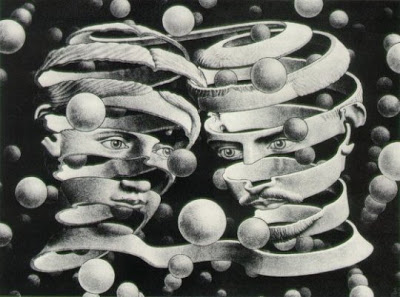
escher postmodern love relationship society free conversation

by KENNETH HARPER FINTON © 2015


While I was busy eating
My carrot spoke to me.
It said, “You simple, idle fool,
You cannot swallow me.”

“You grubby root,” I said to it,
“That’s not for you to say.
Your purpose, so they tell me.
Is to look the other way.”

 While I was busy reading
The author chastised me.
“These thoughts that you are thinking,”
He said, “are not of me.”

 While I was busy sleeping
The world went bust on me.
While I was busy drinking,
I snubbed reality.

 While I was  busy writing
My friends all disappeared.
When I was busy dreaming
Then some would reappear,

Half dead and resurrected
For allegiance can’t be bought.
Tortured and neglected,
They swam across my thoughts.

I realized the truth therein
And closed the book of dreams.
It seems that nothing ever was
Exactly what it seemed.
 

Postmodernism is a late-20th-century movement in the arts, architecture, and criticism that was a departure from modernism. Postmodernism includes skeptical interpretations of culture, literature, art, philosophy, history, economics, architecture, fiction, and literary criticism

The Menopause and Sex Benefits

SEX DRIVE

Unknown-1

Sex Drive

© 2014-2017 Ken Finton

Do men have a greater desire for sex than women?

Many studies have been done to compare the sexual appetites of men and women. How many of them have any value for us as individuals?

Probably none, because as individuals we vary greatly. Not one of us is a typical cross sample because typical samples do not exist. Statistics are mathematical averages like the average temperature in a given month.

I can only tell you of my appetites. I know nothing of yours.

I can bear witness to the fact that sex is a driving force in adolescent years and reduces in importance with time and age. They say this is partially caused by a decrease in testosterone output as men age. Obviously, nature has not objected to this decrease. It seems to be a natural and inherited process that leads some to a more focused use of their time and effort.

Scientists will tell you that is due to a hormone they call ‘testosterone’. The blood level of this hormone is seven to eight time higher than in a woman.

When given this hormone, “At the higher dose, the percentages of women who had sexual fantasies, masturbated, or engaged in sexual intercourse at least once a week increased two to three times from baseline.” [The New England Journal of Medicine, September 7, 2000.]

This then shows that a high sex drive is a product of male hormonal levels?

Maybe not. The tests were conducted on women who had hysterectomies and hormonal disorders.

I can tell you this. I have desired thousands more women than women have desired me. That is the primary difference between male and female appetites.

It does not take that much to set a man off on the road to desire. It is a path he has followed all his life.

Women Are More Selective

It is likely an ancient biological trait that enabled the choice of stronger, more dependable mates for the procreation of the family group,

That is why there is a battle of the sexes. That is why many men feel rejected, lose self-confidence, then settle for less desirable women. This balance populates the world.

Though men may exercise their sexual desire every day—even every few hours—that does not mean that they act upon it.

Affairs are complicated. They can be quite frightening. Affairs have as many implications as there are individuals involved. Affairs are uncertain and can often be time-consuming. Consenting individuals that have not been truthful in their motives to either themselves or their partners make the grist for the massive amounts of pulp fiction that washes over our social oceans.

Woman are only fertile for a short time each month. In order for the human race to persist, the man needs to be ready for sex when this occurs. What better way could nature devise than for a man to be ready than to give the males a bigger dose of carnal longing?

Who Leads the Seduction? 

The woman must be willing—unless physically forced. Inhibitions can also affect willingness. The fact that so many of us walk the earth is a clear sign that most women are not that inhibited at least some of the time. By responding to a man’s advances, the woman is not the victim of carnal desire, but a willing participant and the primary instigator of the sexual contact.

Do I hear a nay-not-so in the distance?

Then think about it. Without an agreement, conjugal acts are deemed vile. The agreement for conjugal relations is sealed by the woman.

Do Men Tire of Their Partners?

There is the story of the farmer whose spouse was starving for sexual attention. She reminded him of the prize bull that they kept penned. “Old Ben” has no trouble satisfying the cows whenever he is called upon for service,” she says.

“But not with the same cow,” was her husband’s reply.

Although sexual familiarity becomes routine, most men do not use that as an excuse for frequent affairs. These affairs require work. Many men are too lazy to have an affair. These affairs may require change. Comfortable people generally like to keep things the way they are. These affairs require much energy, and the body has only so much of that to give.

On the whole, one would think that a man and a woman’s sex drive should be about equal. Once procreation is removed from the picture, the woman might even have a stronger drive than the man. The big difference is the woman’s ability to say “Yes.”

Men cannot sexually perform repeatedly as women can. This difference in biology can be used to show that women can have an even greater sexual appetite than men. Visions and tales of profligate women abound. These stories put the braggadocio of the world’s playboys to shame.

The Roman Empress Theodora would take on thirty slaves at a time to make certain that she was properly served. According to Procopius, she used all three of her body openings and lamented not having a fourth of a fifth that could be filled.

messalina2

Pliny the Elder told us of Messalina, wife of Claudius, cousin to Nero and Caligula. She was one of the most promiscuous women in Rome. She competed with a prostitute to see who could have sex with the most men in a single night. Messalina won the contest.

Women generally bear the burden of conception as long as they live. This does not have to be so for men. They can hop on their horses and ride off into the sunset.  So can women, but it does not happen nearly as often.

Women develop an ability to please and be of service that few men can ever possess. So we have cultures where woman are born and raised to please and men are born and raised to be pleased.

None of us made this world. We were born into it. We have to deal with it as we can. We learn to change what we can—provided we have the will to do so. Comfort decreases the will for change. Discomfort increases it.

Sexual appetites are as important to us as food itself—men and woman alike—provided they are healthy both mentally and physically. For some, it seems a shame that society perverts these ancient longings for the sake of social perpetuity and family structure, yet nature has many species that have the same sexual preference and mate for life.

We use sex as a tool in many ways. We learn at an early age to exploit sexual energy.

Advertisements flood us with promises of sexual gratification. Movies and books fill us up with fantasies and stories that we might have never known, had we not been semi-literate moviegoers and seekers of the mysterious unknown.

Pornography is a depression-proof business. Prostitutes, they say, are practitioners of the world’s oldest profession. Where prostitution is legal, sex crimes are much rarer.

So it seems that whether men have a stronger sex drive than women is not an important question at all. Every woman is different. Every man has his own private longings and dreams.

All of which brings us back to where we began, as does any cycle of life.

We should be thankful that this is so.

WHY I AM A WRITER

images


Try though we might, we cannot stop change from taking place. It is a natural process. Nature changes as part of life’s process because of the essential nature of change. Change is renewal and growth. It is people that pervert and oppose change for self-centered reasons.

Albert Einstein said, “The world as we have created it is a process of our thinking. It cannot be changed without changing our thinking.”

This is not a new revelation. La Tzu recognized that institutions and societies must change thousand of years ago. He said, “Life is a series of natural and spontaneous changes. Don’t resist them; that only creates sorrow. Let reality be reality. Let things flow naturally forward in whatever way they like.”

So you wake up in the morning in a bad mood, somewhat depressed. It is easy to be depressed. Even your dreams can depress you. You can be feeling triumphant one minute and wake up the next morning in a most sombre, unsatisfied state of mind.

Trying to control your emotions and your mind and your thoughts are often extremely useless endeavors. Thoughts pop in and out of our minds all the time.  They change the chemicals in our bodies that regulate our emotions and our feelings of well being for the better and for the worse.

Thoughts Are Not Real

Do you think your thoughts and ideas are real? They are not. They are no more real than the dreams that come into your mind and the nightmares that frightfully awaken you in the night.

There is no reason to allow negative thoughts to have power over you. Recognize that they are unreal and do not give them any value. A thought can be made real through action, but in its inception it is as wispy as a fantasy.

We might not be able to control our thoughts, but we CAN evaluate them. We can learn to recognize the judgmental thoughts that make us miserable.

Thoughts are neither right not wrong. They simply are. We are the ones that assign the value to them.  Some thoughts are going to be positive and some are going to be negative. Anyone who tells you to always think positively does not know much about thinking.

It is simply a fact that you are going to have thoughts that are negative. The real trick is to catch these thoughts before they depress you, recognize that they are not real and do not let them distress you. In time and with rest, they will pass.

There are times when we are thinking about things we need to evaluate. We think about our choices and our course of action. These are the times when we need to moderate our thoughts and evaluations and make certain that they are capable of leading us to a place we wish to go.

They very act of evaluating your thoughts is a kind of mediation. It will stop the chemical changes that lead to emotional distress. It does take some practice, I suppose. It is not something I am good at.

That is why I am a writer. I write my thoughts down and evaluate them later, throwing out those expressions that do not lead me to a clear place in which I prefer to dwell. That is what is great about being a writer. You are able to learn from yourself, your research, and your evaluations. It is cathartic in nature and always makes you feel that you have accomplished something worthwhile, produced something from nothing that has value.

TIME’S PASSING

by Kenneth Harper Finton ©2015

Science-Museum-Exhibition-2

Remember how your hair blew in the wind

that night we kissed and dreamed of sins.

I asked you why your large dark eyes

stared with wonder at the sky.

When we were young, two kids in love,

the world itself was not enough.

I dreamed that we’d forever lay

together at the end of day.

Now that time has flickered by,

I’m sure you still go watch the sky.

Oh, I remember well these things,

but now I have forgot your name.

THE WRITER’S DILEMMA

by Kenneth Harper Finton ©2015

a2351c22-19ff-40c4-8852-cbf36ff8bda3 It is said that writers “write to be read.” Then painters paint to be seen, actors act to impress and singers sing to be heard. If this is the case–and most often it is–the newer writers of the world are setting themselves up for great disappointment. They will not find the audience that they did on the past. They will not achieve the fame that others did in the past. They will quite likely not enjoy the riches that others have had In the past. Technology and world Internet communications have obviously changed the world.


Though it has democratized the ability to be read and seen and heard, by doing so it has practically eliminated the institutions that originally supported and brought culture to the world. Some vestiges of the old system remain, but they are losing ground with each passing year. They have been replaced by myriads of smaller, more democratized platforms that do not pay, do not develop and do not guide.

Moguls still control what is printed and sold in local stores. They chose the music that is allowed to be bought at box stores, the movies that are shown and the art that is displayed in museums and fine art shows. The competition for such space is fierce. The rewards to the artists have been drastically reduced from that it was just thirty years ago. This leaves the would-be writer with a great dilemma. They feel that they have talent and should pursue an audience and readership, but the audience is slimmer and the finger of fate even more fickle than ever.

Only by applying a talent is the talent polished and sharpened. “Practice,” it is said, “makes perfect.”

Perfection, though, is a subjective judgment that should be left out of that axiom. Practice makes us more exceptional. It is a fact, though, that natural talents of all kinds need to be performed and utilized to get beyond the level of the commonplace. Writers now write blogs to keep their talents active and polished, but the readers of blogs are also a fickle lot. The individual blog does not really reach a substantial audience. Blogs and personal journals are worthy tools for a writer, as they can refer to them in the future, draw on them for ideas, and reference them for later promotion.

There are few, if any, works that cannot be made better by multiple rewrites. So coming back to what you did before is quite valuable for the future. Professional writing has not totally become extinct, but it is nearing that vanishing point. Professional writers are not free to write as their muse moves them, but are pressured to write what their superiors believe their readership wants to read. Even with access to statistics that determine what people are choosing to read, the writer is often no longer free to follow their muse and write from the heart if they want to increase their following.

Yet, writing from the heart and being true to your own voice is the only possible way to beat the odds. Only that will make you stand out in a crowd. Even if you write from the heart, your heart and voice must be very special, very unique and quite original. Your perceived persona must be likable, strong and quite different from the masses. The vast majority of us will never be that person. Chloe Thurlow recently spoke of  “the time before smart phones made the whole world a banal image and the photographer like the editor became a dinosaur.” https://www.facebook.com/chloe.thurlow.5?fref=ts

We have a changing dictum. As writers, we must write for ourselves to be original. We will probably never make any financial profit from these efforts. Few in history ever have. We may not even achieve any large readership no matter how hard we try. Everyone has an opinion to share, a broken heart to express, a love that they feel they must share with the world about. All lives are novels in the making. The only thing we can do is persist or quit.

Of course, if we quit, we never will have an audience. If we want an audience or a readership, our only alternative is to persist. To persist means to continue through depression and despair. It means we need to develop tools to combat and dispel our negative feelings. To persist means to struggle with the reality that we spend too much time doing things that we do not love in order to do what we do love. It is easier to be a baker or a cook or a carpenter. All such work is creative, but the requirement of pleasing more than a few is not essential in many occupations.

Artists always had to pay their dues. The fees are even higher these days. Inflation, you know.

CONGRATULATE YOURSELF


images-1


Congratulate yourself.

You made is through another year.

You lionized another birthday

And hoped for many more.


You dressed your transgressions in purple robes,

Tolerated the tolerable,

And dreamed another dream.


That person that you were last year

has passed on to become memory.

The person you are to be this year

is being contemplated as we speak.


I hope you made the proper number of mistakes

and hope to make a similar number this coming year.

Mistakes mean that we are doing something–

Perhaps something we have not done before.


Congratulate yourself.

You are known by your blunders,

Admired for your accuracy,

And vilified for your honesty,

As are we all.


Congratulate yourself.

Though time flew by, you persevered.

Though you did not do it all,

You chipped away at it.


Congratulate yourself.

Say, “Happy new year.”

Welcome to the land of beginning again.


Keep those thoughts positive,

Those acts causative,

The mind cognitive.


Do you like this thought?  Comment below.


HOLLY’S BAD DAY


by Kenneth harper Finton ©2014
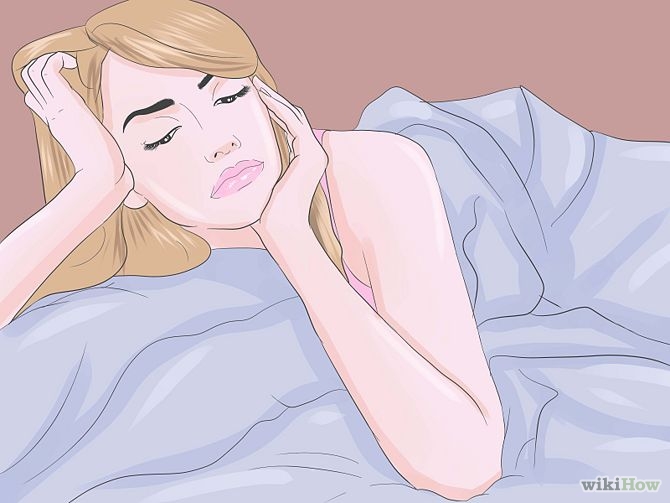
670px-Get-Over-a-Bad-Day-Step-1-Version-2

Her name is Holly.

Just because her name rhymes with jolly, does not mean that she was sunny and joyful on this fateful Sunday.

Most of the day, though, she was jolly.

It was Christmas Eve and Holly was at her best in that season, but she still managed to have a terrible day.

Her plans were innocent enough. She went to church on Sunday morning as was her custom, then picked up her kitten whom she had named Missy and went to the retirement home to visit her mother. The two went down to the cafeteria for lunch, leaving the kitten to play in her mother’s room.

It began to snow heavily. Holly smiled, as she was in full holiday spirit and the fresh snow made everyone smile. “We will have a white Christmas after all,” they laughed. Missy batted at the sock hanging on the Christmas tree and they spent a pleasant hour talking and watching the antics of the kitten.

Her mother gave Holly a Christmas present wrapped in red foil paper and she picked up the kitten to head for home. She could see her breath in the cold air. She placed the kitten in the old VW Beetle that she had restored, wiped the windows and carefully began the drive home.

Aha, you say … The roads were slick and she had an accident.

No, that is not the way it was.

She needed to fill up with gas, so she pulled into the convenience store and went inside to get a soft drink and potato chips. By the time she came back to the car, the snow had covered the windows again, so she took the brush and cleared away the snow. She stepped around the gas hose to clear the back window, then walked around the Beetle as she merrily brushed away.

Aha, you say. She slipped on the ice, fell and broke her hip. That is what caused her bad day.

No, that is not the way it was either.

She stamped her feet and got back in the car and pulled slowly away from the gas pump. She had not gone more than a few feet before she heard a metallic clunk from the rear of the car. “My God,” she thought, “I forgot to take the hose out of the tank and hang it on the pump.”

Aha, you say. The gas spilled out all over the ground and caught fire from a static spark she produced when she got out of the car. The entire pump threatened to explode.

No, that is not the way it was either. It was even worse.

The station was equipped with quick release safeties where the hose meets the pump. All that had happened was that the hose had come loose and dragged beside the car. There was not a dent in the Beetle not any damage to the hose. Not a drop of gas was released.

Holly arrived safely at home, placed the car in the garage and went into the house. She remembered that her mother had given her a present, but she had not taken it out of the car. She went to the garage to retrieve it, not aware that she was being followed.

Aha, you say. There was an intruder and he attacked her in the garage. She is about to become one of the twenty-five percent of the women that are molested sometime in their lifetime.

No, that is not what happened either. It was worse than that.

What can be worse than that, you ask?

She quickly got the present, shivered and shut the car door to hurry inside. The car door would not close. She opened it up to see what was keeping it open, but nothing was visible. She shut the door again and glanced down at the floor of the garage.

The kitten lay twisted in the floor, laying in her back, twitching a bit, but still purring.

Ouch, you say. I was not ready for that.

Neither was Holly. She ran to the house to get a towel, wrapped the kitten to keep it warm, called the emergency number at the pet hospital and rushed off to get help for the kitten.

The kitten did not make it to the hospital. It died purring on the seat beside her.

That is terrible, you say.

Yes, it is.

How do you think Holly felt? Self incriminated, a murderer of kittens.

Of course, she was sad. Of course, she wrung her hands and sighed.

Was it her negligence or the kitten’s curiosity? She had to think that it was a bit of both.

Is there a bright side to any of this?

There is a legend in a faraway country that every time a kitten dies a brand new human babe is born into the world. If this legend does not exist, it probably should. At times like this we need a little help from our imaginations. We dare not totally extinguish the spark of hope.

The kitten had short, but happy time while yet it lived.

This is a positive.

The kitten will not have to bear the pain of littering nor the shock of neutering. It will not have to spend countless hours on the window sill staring out the window and wishing to chase those birds on the grass.

This is a positive.

Let us leave it at that.


ALMOST FOREVER: a Christmas Story

by Kenneth Harper Finton ©2014

It was Christmas Eve.

Sarah was alone in her apartment.

Fred had left a week ago.

The holiday season had all the ingredients of a miserable experience.

Sarah has just turned forty-five.

She felt that her life has been spent giving a lot and not getting much back.

She wondered if that was her own fault.

“Am I deluding myself?” she asked. “Have I really given enough?”

Fred had told her she was arrogant just before he walked out the door. “You always think that you’re better than me,” he had said.

She had been accused of arrogance before Fred was around. Roger, her lover and dance director had complained of her air of superiority. She recognized there might be some truth to it.

However, the difference between arrogance and truth is often a fine line that depends on the delivery of the message.

Sarah had always known that she has much to relate and much to give. She had thoughts that ran deep–more than the average person wants to talk about. Most of her life she felt alone, even in a room filled with people.

She needs a real listener, but good listeners are all too few.

It has been a lifelong battle, this seeking for a real listener. It is a battle that she fought daily, yearly… almost forever.

Sarah was not the lovely young sexy thing that she used to be. Her youth had passed away, yet the essence of her still lived in spirit. Her maiden looks might have run away, but she was not truly bothered with this. What she now has–the experience and the wisdom–seems better to her than the ability to lead a young man around with the sexy sway of her hips as she could do in the past.

Would it not be for creaky joints and spots of aging on her thickened bark–would it not be for shortened breath and shorter days, she would feel but twenty.

Yet, for Sarah, twenty had been a horrid age where doubt and inexperience blended in a soupy pot of lust and indecision. It was a time of looking to others for direction, looking for companionship. Sarah was always looking to the outside for the answers, but now she realizes that answers most often lay within.

She had asked herself important questions for decades. She was beginning to realize that questions often have always had the answers written into them. The answers are simply the questions in reverse. By simply turning around the question, the answer became clear.

She had asked herself, “Who am I, really.”

The answer was, “Really, I am who.”

The question then became, then who is ‘who’?

It began to feel like an Abbot and Costello routine.

‘What’ is on first base, ‘when’ is on second and ‘who’ is on third.

She laughed at the thought.

She knew that to “I am who,” she must add “I am who… I want to be.”

If only she were what she wanted to be. She was not even certain what she wanted. The choice was too large and narrowing it down proved too difficult.

She had been a ballerina until she tore the cartilage in her knee.

Then she had teamed up with Fred and spent fifteen years waiting on his every whim and fancy.

At least it seemed that way.

Fred has been kind. He supported her writing and her reading habits.

But she was not what she wanted to be. She was used to having Fred around and his leaving had disrupted her life.

She wrote poetry and kept a journal of her thoughts and observations, but she had not done much to earn a living from wages in all her forty-five years.

It came back to bite her.

She regretted not moving on into a self-sufficient life. She regretted her dependencies, first upon her father, then upon her director lover, and then upon Fred after that terrible fall.

Sarah took to the Internet like Monarch to milkweed.

The people she knew locally, she knew only in passing—so she was prepared for the superficiality of the friends she could make online. They did not have to know all the details of her life. They were more interested in how she felt than her next door neighbor or even Fred.

She could pour out her life online and still omit the parts she did not want anyone to see. There was both communion and confession online while still presenting only the face she wanted to portray.

Technology made her feel more alone. It gave her voice, but the voice went out to strangers that she cannot see and feel.

Regardless, she persisted in this miasma.

Gradually, she grew used to the odors of indifference that surrounded her.

Sarah convinced herself that this is not her personal problem, but a sign of the times.

“People today are not as receptive and they used to be,” she thought.

Sarah knew that she really needed flesh and blood people in her life.

Someone to talk to on long drives to nowhere.

Someone to laugh with her when a comedian said something witty on television.

Someone to love beside herself.

Her emotional life had reached a dead-end.

She could not bear it for a moment longer.

The nature of matter is to unite after pressure—so, sure enough, the phone rang at that very moment.

It was Fred.

“I miss you, Sarah,” he said. “I took you for granted and I miss you very much.”

Sarah smiled to herself.

She could see a pass opening in the mental mountain that seemed impassable a moment before.

“I miss you too, Fred,” she whispered.

“It’s Christmas Eve,” Fred said. “Do you feel like I do tonight?”

She did not need to ask him how he felt. She could tell by the sound of his voice.

“Yes…  yes…  I do,” she stuttered.

“Can I come over?”

“I would love that,” she smiled, feeling twenty in her bones.

“Merry Christmas.”

“Merry Christmas.”

“See you soon.”

Christmas_Eve_by_violscraper