PURLOINED


Out of nowhere, that unknown place where thoughts breed and memories thicken, a song keeps running through my head.  It is not a new song, but a simple old melody with quaint lyrics. Nor is this tune one that would ingratiatingly ingrain itself on a normal brain.  Yet it did—and all because to the word ‘purloined’.

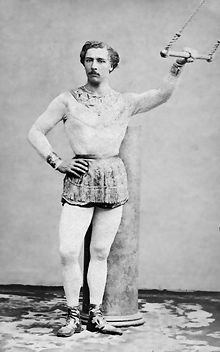
THE DARING YOUNG MAN ON THE FLYING TRAPEZE

CHORUS: He’d fly through the air with the greatest of ease, that daring young man on the flying Trapeze. His movements were graceful, all girls he could please, and my love he purloined away.”

‘Purloin’ is a word you do not here often in the modern world. It means to underhandedly steal away. Though the root of the word has nothing to do with ‘loin’ in the erotic sense, the lyrics in the chorus insinuate a sexual arousal.

Once I was happy but now I’m forlorn

Like an old coat that is tattered and town

Left on this wide world to fret and to mourn,

Betrayed by a maid in her teens

Ah, yes, the proverbial maid in her teens—when hormones run rampant, passions soar, and common sense often flies into the stratosphere.  The maiden’s  curves and appeal are often the most voluptuous when she is in estrus, giving off the primitive scent of ovulation.

The girl that I loved she was handsome

I tried all I knew her to please

But I could not please her one quarter so well

Like that man on the Flying Trapeze

CHORUS:

He’d fly through the air with the greatest of ease

A daring young man on the flying Trapeze

His movements were graceful, all girls he could please

And my love he purloined away.

According to The Tin Pan Alley Song Encyclopedia, the 1868 song “The Daring Young Man On The Flying Trapeze” is “arguably the most famous circus song in American popular music”.

JULES LEOTARDThe song has a known history. It was about the exploits—sexual and artistic—of Jules Léotard, who developed the trapeze into an art form in the 1860s. He invented and popularized the one-piece athletic wear now called for him. The suit clearly displayed his underlying physique, a look that charmed women and inspired the song about purloined love.  The song was first published in 1867, words written by the British lyricist and singer George Leybourne, music by Gaston Lyle. Thomas Hischak says the song was first heard in American Vaudeville in the 1870s, where it was popularized by Johnny Allen.

Léotard, of course, invented the leotard. This simple one-piece garment allowed for the unrestricted movement which was so vital in his death-defying act. Later,  it would become standard wear for ballet dancers.

Léotard was paid a hundred and eighty pounds a week for his act, the equivalent of five thousand today, but died at age twenty-eight from an infectious disease and not from a fall.

Purloined in a lovely description for stealthy stealing. The end result of “purloin,” is that the object is gone, stolen, lifted, pilfered, embezzled, or pilfered or swiped. “but the style or manner of the crime varies with the term. They terms all have shades of meanings. “Pilfering” or “filching” is a hidden crime. A “heist” is a major theft that often involves George Clooney or Frank Sinatra.

One famous use of the word “purloin” is found in Edgar Allan Poe’s short story written in 1845, “The Purloined Letter”. It was one of three works that were forerunners to the modern detective story.  The Origin and Etymology of the word seems to be from Middle English, to put away, misappropriate, derived from the Anglo-French purluigner.


OF CLAUDIA AND PUDENS


EDITORIAL NOTE:  I produced, published, wrote and edited a historical and genealogical journal called The Plantagenet Connection between 1993 and 2003. This is a selection from Volume One. The journal is still available online in PDF form at http://www.theplantagenetconnection.com

 

CLAUDIA AND PUDENS


I have been checking into what might be the first documented marriage of a British royal with a Roman. The basis for this information is found in the works of the Roman poet Marcus Valerius Martialis (called Martial), the father of the epigram, born in Bibilis, Spain between 38 and 42 A.D. His first book of Spectacles was published around 80 A.D. His books of epigrams were published toward the end of the first century as well. We may safely assume that the epigrams were published in the order in which they were written, as the same names crop up over and over again and the subjects get older as the books continue. Martial was an immensely popular poet in his day. He insulted, ridiculed, and satirized the leading figures in Roman society. Though many of these folk are now unknown to us, they live on in his bawdy and irreverent epigrams through the ages.

Epigram 7.97: Martial sends one of his books to a friend in Umbria, the “fellow countryman (municeps) of his Aulus Pudens.”

Epigram 11.53: The poet asks how Claudia Rufina, “sprung from the painted Britons,” could have such graces and thanks the gods she has borne children “to her sainted husband,” and that she is awaiting so many sons and daughters-in-law. May she long enjoy her one husband, and the privileges belonging to the parent of three children.10 [“Although Claudia Rufina was born of the painted Britons, she has a Latin heart. How beautiful her form! Italian women would take her for a Roman; those of Attica for their own. You gods who have blessed her in the children she has born her sainted husband, grant also her hopes for sons-in-law and daughters-in-law. May she enjoy but a single husband and enjoy, always, her three sons.” Martial’s Egirgams, 11. 53.]

The question I am trying to solve is who is this British Claudia and who is this Pudens? Is the Claudia mentioned in the two above verses the same person? Anything other than circumstantial evidence is almost impossible. Claudia, in order to be so well-versed in Latin and in order to have the name of the former Emperor, is likely the daughter of a British king, probably King Cogidubnus, who took the name of Claudius, and who, according to Tacitus (Agric. 14), was made governor of certain states in Britain during the reign of Claudius. This accounts for his taking the names of that emperor, viz. Tiberius Claudius, by referring to the Roman custom of allowing freedmen, clients, and foreigners to take the names of their respective patrons.

He is the same person named on the inscription found at Chichester in 1723, an inscribed slab which created great interest when it was found. It was mutilated, but the inscription was restored by Roger Gale (Phil. Trans., No. 379), and informed us that a guild of workmen and their priests “dedicated, under the authority of King Tiberius Claudius Cogidubnus, the Legate of Augustus in Britain, a temple to Neptune and Minerva, for the safety of the divine house (i. e., the imperial family), Pudens, son of Pudentius, giving the site.”

Pudens is also called Aulus Pudens and simply Aulus in the epigrams. The name of Aulus, which is here given to Pudens, may perhaps justify the suspicion that there was some kind of connection between Martial’s Pudens and Aulus Plautius, the conqueror of Britain, and it may have been his connection with this early friend of Cogidubnus that pointed him out as a suitable person to be sent to the court of a British prince. If Aulus Pudens were married to the daughter of Cogidubnus, there could not have been a more suitable appointment.

Few women were named Claudia in the first century. One had to have a right to the name. It was the emperor’s appellation and there were laws and traditions governing the use of the name. For the name to crop up as part of the Roman congregation in the early apostolic church is quite significant. For Claudia and Pudens to be mentioned by Martial as being married and Claudia being from Britain is quite significant. For Aulus Pudens to have the name of the conqueror of Britain, Aulus Plautius, is also significant. There is a likely connection here.

Claudia’s contact with Plautius and his Christian wife would be quite likely, as Plautius was not only a victorious general, but relation to the emperor. Claudius’ first wife was his cousin. Claudia the Briton, as a Christian convert, would have sought out and worked with the other Christians in Rome and thus would have known of Plautius’ wife conversion even if she arrived after Pomponia was tried and secluded. Being the daughter of a British king, she could have lived in the home of Plautius and thus known his wife even in her seclusion

The future emperor Vespasian was in Britain with Claudius and Plautius during the invasion in 43 A.D. His brother Sabinus had a son named Titus Flavius Clemens, who married the niece of the emperor Domitian. Clemens was later the most illustrious of the Christian martyrs, both by birth and station. It appears that Pudens and Claudia took Paul’s message to the highest levels of Roman society.


COMMENT:

Mr. Finton,

There is no need to resurrect a nineteenth-century chestnut like Guest when there are more recent studies which bring to bear a rigorous approach to Flavian prosopography. Both Brian Jones’ Domitian and the Senatorial Order (Philadelphia, 1979) and Pat Southern’s Domitian (Bloomington, 1997) examine in detail the claim that Titus Flavius Clemens and Domitilla were executed for Christian beliefs and conclude that there is no serious evidence for such a claim. The report of the execution of Tiberius Flavius Clem- ens is more consistent with his association with the circle around the Emperor Titus’ mistress Bernice and those who favored a more moderate policy toward Jews in the aftermath of the crushing of the Jewish revolt of 66-70 AD. Domitian repudiated Titus’ more conciliatory policy and vigorously persecuted Jews, especially Roman and Hellenistic converts. The deaths of Titus Flavius Clemens and his wife occur in this context, probably because of their connection to pro-Jewish sympathizers in Rome (the likelihood that they themselves were Jewish converts is rather less).

The only Christian connection present was the fact that a piece of property owned by Domitilla became a Christian cemetery approximately two hundred years after her death.

The study of Roman history, and particularly the history of Roman Britain, has advanced rather a lot since Guest’s death in 1880. As I have said before, the existence of a scholarly literature helps to avoid reinventing the proverbial wheel (and elevating discredited antiquarian scholarship above its proper place).

Greg Rose, University of Mississippi


COMMENT:

Greg,

I wouldn’t automatically discount the importance or the continued significance of the 19th-century research. I have recently been doing some Ptolemaic studies, where there has been an enormous amount of prosographical data and research published this century. Yet an important inscription in a highly visible place––the pylons of the Temple of Edfu––published in 1870 and at the centre of a major controversy ever since, was not re-examined till 1988. I myself have found a key issue related to my research which has not been addressed since 1899.

Chris Bennett


Editorial Reply:

I have examined these references and find little detail in their conclusions. They have simply dismissed the possibility that Clemens could have been a Christian.

As editor of The Plantagenet Connection, people send me this kind of material quite often. The belief that Clemens was a Christian martyr still prevails in the genealogical community which takes information found in old texts at face value. It is pleasant to finally be able to come to an understanding of these issues, one by one, and confidently refute or support the data by later research. Libraries hold far more older works than newer works and the public perceptions are often a hundred years off.

I am looking for one simple thing here:

Martial, a Roman contemporary poet, wrote verses to Pudens and referred to his wife Claudia as a painted Britain. Timothy 4:12 mentions both Pudens and Claudia as members of the early congregation of the church of Rome.

The only question for the moment is: “are these the same people?”

Guest’s suggestion (and my contribution) is that a British woman could not be named Claudia unless she was a client of the emperor and this identifies Claudia as the daughter of the British King Cogidnu- bus mentioned by Tacitus.

For us to believe that there were two people named Claudia, both married to a Pudens, both of British descent, and both friends of Martial certainly stretches the imagination. Thus, I believe that the Claudia and Pudens mentioned in Timothy were indeed the same people that Martial knew

Therefore, we seem to have documented evidence of the daughter of a British king marrying a Roman in the first century and becoming a Christian. Further, other epigrams addressed to Pudens place him in a northern territory (probably Britain) and identify him with Aulus Plautius (as he wears the name Aulus as well). Since Plautius’ wife was a Christian, we can assume that Claudia came to Rome and learned the Christian beliefs from her teachers. Further, the inscription of the temple to Cogidubnus says that Pudens gave the land, so we can safely assume that he originally obtained it in some manner.

Greg Rose wrote: “The deaths of Titus Flavius Clemens and his wife occur in this context, probably because of their connection to pro-Jewish sympathizers in Rome (the likelihood that they themselves were Jewish converts is rather less). The only Christian connection present was the fact that a piece of property owned by Domitil- la became a Christian cemetery approximately two hundred years after her death.”

This Christian cemetery was not only owned by Domitilla, it was named for her. Flavia Domitilla was the daughter of the Emperor Domitian’s sister and the wife of T. Flavius Clemens. That she owned and donated land for a Christian cemetery is a clue of their Christian leanings. It still exists and is called the cemetery of Domitilla to this day! “Already in the end of the first century, we can see in the gallery of the Flavians in the cemetery of Domitilla, Daniel in the den of lions.”  (1)

The Christians of this era, though distinct from the Jews, were regarded by the Romans (and possibly even themselves) as a Jewish sect. When the Romans spoke of banishing the Jews or persecuting Jew- ish converts, they were speaking of this sect of chrestiani. (2)

Besides the documentation of the British marriage to a Roman, we have evidence of Christian conversions within high levels of the Roman aristocracy in the first century. Another pagan witness named Thallus confirms the penetration of Christian ideas into high Roman circles as early as 40 AD.  (3)

When Claudius expelled the Jews, he was expelling the Christians. They were not yet differentiated from the Jews. The exact phrasing of Suetonius was: “He [Claudius] expelled from Rome the Jews who, led by Christ, were the cause of continual agitations.”


COMMENT:

Chris,

I was not rejecting all nineteenth-century scholarship (which is the reason I characterized the Guest work as a “chestnut” and referred explicitly to discredited nineteenth-century scholarship), but rather Guest’s work. Clearly, there is nineteenth- century scholarship which can and should be read

with profit by scholars today ––almost anything written by Kemble or Sievers comes immediately to mind as examples. However, in the field of Roman British studies, Guest has long been ren- dered unimportant by methodological and source advances––Guest did not have the treasure-trove of the RIB to mine for prosopographical evidence, nor could he benefit from modern, scientific ar- chaeology’s contributions.

Greg Rose


COMMENT:

Mr. Finton,

There are good reasons for rejecting Guest’s contentions out of hand, as examination of his own arguments suggest. There is no evidence whatsoever that Cogidnubus had a daughter. This is purely speculation by Guest. Note the use of “if”, “may”, “would” –– this is indicative of just how uncertain Guest’s speculations are.

Guest’s contention here is simply a confession of his ignorance. Prosopographical and epigraphical studies have enormously advanced our understanding of first-century onomastic practices. The name “Claudia” is seen in inscriptions of imperial freed women as well as woman granted citizenship during the reign of Claudius. The name is not rare at all in the first century as epigraphic evidence made available by archaeology in the twentieth century demonstrates. The suggestion that the shared nomen “Aulus” is significant ignores the fact that the cognomen “Pudens” (meaning literally shaming) is associated with servile origin. Aulus Pudens was almost certainly a freedman––possibly associated with Aulus Plautius, but by no means necessarily so. Martial’s Claudia is likely of freedman origin as well on the basis of epigraphic evidence.

There is no evidence that the wife of Aulus Plautius was a Christian. This is purely a speculation. BTW, have you left something out of the quotation from Guest? Is he seriously suggesting that the Emperor Claudius was a Christian convert? That would be absurd.


Editorial Reply:

This question has been studied and argued since 1650 when James Ussher—archbishop in Ireland and a prolific theologian, whose rare books are scattered still across the world––began to argue this connection. Yet, these epigrams were written over a lifetime and the poet Martial’s writing days must have begun around age 30 or so––with some of the bawdy content, perhaps even an earlier age. He was an immensely popular poet, the Don Rickles of his day, insulting and pointing out the foibles in the cream of Roman society with poems long before committing them to book form. Perhaps he started writing these around 50 to 60 A.D. The fact that they were not published in book form until around 80 to 100 A.D. is not significant. This observation has not been argued in this century.

So far as prosopographical evidence is concerned, I have checked the Prosopographia Imperii Romani, which covers first-century Rome. (4)  The work stops at the letter “O”. Seventy-three women named Claudia are listed, only one of them a foreigner from Britain.

The two most important epigrams are these: Epigram 4.13: Martial, in an epigram addressed to Rufus, celebrates the marriage of his Pudens’ to the “foreigner Claudia.”

Book IV, XIII:

CLAUDIA, Rufe, meo nubit Peregrina Pudenti: macte esto taedis, O Hyrnenaee, tuis. tam bene rara suo miscentur cinnama nardo, Massica Theseis tam bene vina favis;nee melius teneris iunguntur vitibus ulmi, nec plus lotos aquas, litora myrtus amat. candida perpetuo reside, Concordia, lecto, tamque pari semper sit Venus acqua iugo: diligat illa senem quondam, sed et ipsa marito tum quoque, cum fuerit, non videatur anus.

XIII: “Claudia Perigrina [foreigner], Rufus, weds my Pudens: O Hymenaeus, bless the torches! Such a union precious cinnamon makes with nard; such, Massic wine with honey from the land of Theseus. The elms do not join the vines in closer love, not the lotus its water, not the myrtle its banks. O Concord! be the perpetual guardian of that bed; and may Venus be generous in equal bounty. May the wife cherish her husband, even when he becomes gray, and she when she is old, appear still young.” Epigrams 4.13.]

Not anyone can wear the emperor’s name. Claudia was not the common name that it is today. One must assume she is a client of the emperor and wonder if she is a foreigner where she is from. 11:53 answers that question:

Book I, LIII:

Claudia caeruleis cum sit Rufina Britannis edita, quam Latiae pectora gentis habet! quale decus formae! Romanam credere matres Italides possunt, Atthides esse suam. Di bene quod sancto peperit fecunda marito, quod sperat generos quodque puella nurus. Sic placeat superis ut coniuge gaudeat uno et semper natis gaudeat illa tribus.

LIII: translation

“Although Claudia Rufina was born of the blue-eyed Britons, she has a Latin heart. How beautiful her form! Italian women would take her for a Roman; those of Attica for their own. You gods who have blessed her in the children she has born her sainted husband, grant also her hopesfor sons-in-law and daughters-in-law. May she enjoy but a single husband and enjoy, always, her three sons.”

In order for Claudia to be born of the painted Britons and be in Rome, well- versed in Latin and Greek and the graces of culture, she had to come from a very high  station, which explains her name. The British King Cogidubnus took the name Tiberius Claudius Cogidubnus and, according to tradition, his daughter would be named Claudia. In my view, this is why Claudia was in Rome and she WAS his daughter.

How did Pudens meet Martial? He is referred to early in the books at a much younger age as being in line for a promo- tion:

Book I, XXXI:

Hos tibi, Phoebe, vovet totos a vertice crines Encolpos, domini centurionis amor, grata Pudens meriti tulerit cum praemia pili. quam primum longas, Phoebe, recide comas, dum nulla teneri sordent lanugine voltus dumque decent fusae lactea colla iubae; utque tuis longum dominnsque puerque fruantur- muneribus, tonsum fac cite, sero virum.

XXXI

THESE, all the tresses from his head, Encolpus, the darling of his master the cen- turion, vows, Phoebus, to thee, when Pudens shall bring home the glad guerdon of his merit, a chief centurion’s rank. Sever, Phoebus, with all speed these long locks while his soft cheeks are darkened not with any down, and while tumbled curls grace iris milk-white neck; and, so that; both master and boy may long enjoy thy gifts, make him soon shorn, but a man late!

Encolpus vows to shave his locks when Pudens is promoted. In Book 5.48, this pact is fulfilled:“What does love compel? Encolpos has shorn his locks against his master’s will, yet not forbidden. Pudens allowed it and wept: [E. had dedicated his long hair to Phoebus if his master Pudens became first centurion (primi pali) and now proceeds to fulfill that vow] in such a wise did his sire yield the reins, sighing at Pantheon’s boldness [helios, the sun, allowed Pantheon to drive his chariot]; so fair was ravished Hylas [a beautiful youth drawn under the water by the enamored Nymphus], so fair discovered Achilles [who had been hidden by Thetis in wom-en’s clothes to prevent him from going to the  Trojan  War,  an  early  incident  of pacifism], when amid his mother’s tears and joy he laid aside his locks. Yet haste not thou, O beard [he is not yet a man]––trust  not  those  shortened  tresses––and spring slow in return for sacrifice so great!”

Epigram 4.29 is addressed to Pudens: “Dear Pudens, their very number hampers my poems, and volume after volume wearies and sates the reader. Rare things please one; so greater charm belongs to early apples, so winter roses win value; so her pride commends a mistress who pillages you, and a door, always open holds no fast lover. Oftener Persius wins credit in a single book than trivial Marsus [another epigrammatic poet who wrote an epic on the Amazons] in his whole Amaxonid. Do you think, too, whatever of my books you read again, think that it is the only one: so ’twill be to you of fuller worth.”

In Book 6.58, Pudens wears the first name of Aulus, the same as Aulus Plautius, conqueror or Britain who had the Christian wife. Pudens was stationed in a far northern post that seems to have been Britain, so the tie can be made to the Chichester tablet where Pudens’ name was impressed.

Book 6, LVIII:

CERNERE Parrhasios dum te iuvat, Aule, triones comminus et Getici sidera pigra poli, o quam pacne tibi Stygias ego raptus ad undas Elysiae vidi nubila fusca plagae! quamvis lassa tuos quaerebant lumina vultus atque erat in gelido plurimus ore Pudens. si mihi lanificae ducunt non pulla sorores stamina nec surdos vox habet ista deos, sospite me sospes Latias reveheris ad urbes et referes pili praemia clarus eques.

LVIII:

“WHILE it pleased you, Aulus, to survey anear the Northern Bears and the slow- wheeling stars of Getic heavens, oh, how nearly was I snatched away from you to the waves of Styx, and viewed the gloomy clouds of the Elysian plain! Weary as they were, my eyes searched for your face, and on my chill lips oft was Pudens’ name. If the wool-working Sisters draw not my threads of sable hue [i.e., grant me longer life], and this my prayer find not the gods deaf, I shall be safe, and you shall safe return to Latin cities and bring back a chief centurion’s honour, an illustrious knight withal.”

Epigram 7.11: “You compell me to correct my poems with my own hands and pen, Pudens. Oh, how overmuch you approve and love my work who wish to have my trifles in autograph.”

Epigram 7.97 is addressed to Aulus Pu- dens:

Book VII, XCVII:

Nosti si bene Caesium, libelle, montanae decus Umbriae Sabinum, Auli municipem mei Pudentis, illi tu dabis haec vel occupato. instent mille licet premantque curae, nostris carminibus tamen vacabit. nzm me diligit ille proximumque Turni nobilibus legit libellis. o quantum tibi norrlinis paratur! o quae gloria! quanl frequens amator; te convivia, te forum sonabit aedes compita porticus tabernae. uni mitteris, omnibus legeris.

XCVII: translation

“If you know well, little book, Caesius Sabinus, the pride of hilly Umbria, fel- low-townsman of my Aulus Pudens, you will give him these, though he be engaged. Though a thousand duties press on and distract him, yet he will be at leisure for my poems. For he loves me, and, next to Turnus’ famous satires, reads me. Oh, what a reputation is being stored up for you! Oh, what glory! How many an admirer! With you banquets, with you the forum will echo, houses, by-ways, colonnades, bookshops! You are being sent to one, by all will you be read.”

The other epigrams are these:

Epigram. 13.69: The poet never gets any cattae from Umbria; Pudens prefers sending them to his Lord.

Besides these epigrams, there are seven addressed by Martial to one Aulus, who is likely the same person as Aulus Pudens:

Epigram 5.28: Never Aulus, whatever your conduct be, can you make Mamercus speak well of you, even though you surpassed the whole world in piety, peacefulness, courtesy, probity, justice, flow of language, and facetiousness––no one can please him.

Epigram 6.78: The physician, Aulus, told Phryx, the noble toper, he would lose his eyesight if he drank. Eye, fare well (farewell), said Phryx; he drank and lost his sight.

Epigram 7.14: A coarse epigram on a woman––one of Martial’s acquaintances.

Epigram 11.38: Aulus! Do you wonder why a certain slave was sold for so large a sum? The man was deaf––that is, could not play the eaves-dropper on his master.

Epigram 12.51: Aulus, why do you wonder that “our Fabullinus” is so often deceived? A good man is always a tiro.

Martial also wrote nine epigrams ad- dressed to Fabullus. He seems to have been one of the Martial’s intimate friends, but was ill-regarded with no great respect or affection.

Greg Rose wrote: “There is no evidence whatsoever that Cogidnubus had a daugh- ter. This is purely speculation by Guest. Note the use of “if”, “may”, “would”––this is indicative of just how uncertain Guest’s speculations are.”

The only mention of Cogidnubus was in Tacitus, so there is no evidence of any children, yet kings had children with regularity. The evidence is in the existence of Claudia the painted Briton in Martial’s epigram. For those remote times it is as good as a birth certificate. If we are open about this, the answer is evident. Who else could it possibly be? What other British woman who spoke Latin and Greek like a native and had the manners of a queen could Claudia be? How else would this Briton wear the proud name of Claudia? How many of the women named Claudia in Rome were born of the “blue-eyed Britons” and spoke fluent Latin and Greek. Remember that Cogidnubus was made king right after the Roman invasion. Before that time, his daughter would not have known Latin and Greek, nor had Roman manners. Nor would have anyone else the island. It would take until 60-65 AD for such learning to occur. Reason tells me there was only one Briton named Claudia. Who else could she be other than Tiberius Claudius Cogidubnus’ daughter? Who can name one more candidate?

Greg Rose wrote: “Aulus Pudens was almost certainly a freedman––possibly as- sociated with Aulus Plautius, but by no means necessarily so. Martial’s Claudia is likely of freedman origin as well on the basis of epigraphic evidence.”

What epigraphic evidence? And I agree that Aulus Pudens was associated with Aulus Plautius, but I would eliminate the “not necessarily so.”

Greg Rose wrote: There is no evidence that the wife of Aulus Plautius was a Christian. This is purely a speculation. By the way, have you left something out of the quotation from Guest? Is he seriously suggesting that the Emperor Claudius was a Christian  convert? That  would  be absurd.”

No, he was not arguing that Claudius was a Christian convert, but Aulus Plautius had a cousin who was one of the wives of Claudius. Plautius and Claudius had a family relationship. Claudius’ first wife was Plautia Urguanilla, who bore him a daughter named Claudia Antonia, born 27 A.D., died 66 A.D., and a son named Drusus. Plautia was a cousin of Plautius. Young Drusus choked to death when he threw a pear in the air and tried to catch it with his mouth. Claudius later divorced Plautia for adultery and supposedly for murder as well, but no one knows whom she was supposed to have murdered. [Suetonius, Claudius.26.]

The conqueror of Britain, Plautius, had a Christian wife. Her name was Pomponia Graecina. She was charged with “some foreign superstition when Plautius returned to Rome. The trial was recorded by Tacitus and took place in 57 A.D. She was handed over to her husband for judicial decision. He found that she was “innocent,” but she remained in seclusion the rest of her life. [The Annals, Tacitus 13:32.]

What other “foreign superstition” would she be charged witch if not Christianity? We must be open about this. Only when we recognize the truth in the pieces does the puzzle fit together.

There are Christian inscriptions of a Pomponius Graecinus at the end of the second or the beginning of the third cen- tury and several of Pomponii Bassi. (5} Plautius, a consul whose cousin espoused the Emperor Claudius, had become suspect because she led a life which was too austere in the eyes of those in her circle and has been accused of ‘foreign superstition.’” (6)

Mr. Finton,

The problem is one of interpretation of the evidence and distinguishing between evidence and speculation.

You wrote: “Remember, not anyone can wear the emperor’s name. Claudia was not the common name that it is today. One must assume she is a patron of the emperor and wonder if she is a foreigner where she is from. 11:33 answers that question.”

This completely misrepresents the onomastic situation. Every imperial freedman freed during the reign of Claudius could take the Claudian nomen (and every freed woman the Claudian praenomen), as could their descendants, as well as any person granted citizenship during the reign of Claudius (which is the only way Cogidubnus could hold the Claudian nomen), and their descendants. The same is true for every freedman and freed woman of any member of the Gens Claudia and their descendants. For the rules of Roman name formation, look at Bruno Doer’s Der Ro- mische Namengebung: ein Historischer Versuch (Hildesheim, 1974). For the onomastic practices and social and political roles of imperial freedmen (and their numbers), see Gerard Boulert’s Esclaves et affranchis imperiaux sous Haut-Empire (Naples, 1970), P.R.C. Weaver’s Familia Cae- saris: a Social Study of the Emperor’s Freedmen and Slaves (Cambridge, 1972), and W. Eck’s and

J. Heinrichs’ Sklaven und Freiglassene in der Ge- sellschaft der Romischer Kaiserzeit (Darmstadt, 1993).

You wrote: “In order for Claudia to be born of the painted Britons and be in Rome, well-versed in Latin and Greek and the graces of culture, she had to come from a high station, which explains her name. The British King Cogidubnus took the name Tiberius Claudius Cogidubnus and, according to tradition, his daughter would be named Claudia. In my view, this is why Claudia was in Rome and she WAS his daughter.”

I defy you to show a single piece of evidence which suggests that Cogidubnus fathered any daughters, much less one who was spirited off to Rome. Why is it not equally possible for Claudia to have been an imperial slave from Britannia lat- er freed, or the daughter of a Claudian imperial freedman? High levels of literacy and cultural at- tainment are certainly not unknown among Julio- Claudian and Flavian imperial slaves and freedmen/women. Why does Claudia have to be the daughter of a British king? Just because you want it to be?

You wrote: “How did Pudens meet Martial? He is referred to early in the books at a much younger age as being in line for a promotion.”

A primus pilus––the first centurion of a legion––was of no more than Equestrian rank (if that, since promotion was from the ranks). This is attested by virtually all of the first century AD epigraphic evidence. This makes it unlikely that the Aulus Pudens of Martial was a close relative of Aulus Plautius (he would have been, then, Senatorial or Equestrian by birth and would have entered legionary service as a military tribune, not as a ranker). Pudens and its related forms is not quite so rare a name as you appear to think––there are at least six inscriptions with this cognomen prior to 114 AD and the wife of Lucius Apuleius was styled Aemilia (the feminine diminutive form of Pudens, entis). The supposed link between Aulus Pudens and Aulus Plautius is weakened by the fact that the senatorial Aulus family was of Picentine origin (there was an Aulus among the clientes of Pompey Strabo, the father of Pompey the Great), while Martial clearly indicates that Aulus Pudens was Umbrian (Epigram 7.97). This increases the probability that Aulus Pudens was the descendant of an Aulan client (probably a freedman) rather than a relative of Aulus Plautius.

You wrote: “In Book 6.58, Pudens wears the first name of Aulus, the same as Aulus Plautius, conqueror or Britain who had the Christian wife. Pudens was stationed in a far northern post that seems to have been Britain, so the tie can be made to the Chichester tablet where Pudens’ name was impressed.”

What is your evidence that the wife of Aulus Plautius was a Christian? What makes you think that Chichester (or more precisely the Romano- British town of Regni) was a legionary fortress or headquarters suitable for the presence of an inscription from a legionary primus pilus in the Flavian period? The archaeology of the site does not sustain such an identification. Only four legions were stationed in Britannia (II Augusta, IX Hispana, XIV Gemina Martia Victrix, and XX Valeria Victrix) from the Claudian invasion to the end of the Flavian period (Legio XIV was re- moved in 67 from Britannia and dispatched to Syria). Does epigraphic evidence of the fasti of any of these legions identify an Aulus Pudens as primus pilus? Your supposition that the Chichester inscription is related to the Aulus Pudens of Martial is mere idle, unsubstantiated speculation.

Finally, what is your evidence that the Pudens and Claudia of II Timothy 4:21 are the Aulus Pudens and Claudia Rufina of Martial’s Epigramma- ta? Don’t tell me who has speculated that the identification is sound. Don’t tell me “because the names are rare.” The epigraphic evidence and the prevalence of the Claudian nomen among imperial freedmen say that is an unfounded claim. This identification is more idle, unsubstantiated speculation––just the same as when Ussher opined it.

You have only indicated what you believe––not what evidence convinces you. The Epigrammata of Martial––no matter whether quoted in Latin or in English––are not evidence. Everyone concedes that the names Aulus Pudens and Claudia Rufina appear there. What is at question is whether they are the same people as in the Chichester epigraph and II Timothy 4:21, and whether Claudia Rufina is the daughter of a British king. And on those points you have cited no evidence whatsoever.

Greg Rose


Editorial Reply:

Greg Rose wrote: “Why, does Claudia have to be the daughter of a British king? Just because you want it to be?”

That is a good question that can also be reversed. If you do not want her to be so, you can argue from the other direction.

Greg Rose wrote: “I defy you to show a single piece of evidence which suggests that Cogidubnus fathered any daughters, much less one who was spirited off to Rome.”

The only reference I know of about Cogidubnus is the passage in Tacitus. That does not mention his children. If there are any more references I would like to know of them. If this is the only one, then there is no written evidence either way. That being so, we can assume he That being so, we can assume h had children. It was a common thing among kings in those days to have an heir. If one wife did not bear, another wife or mistress was taken. Other legends point toward Claudia and being a daughter of Caractacus.

Greg Rose wrote: “Why is it not equally possible for Claudia to have been an imperial slave from Britannia later freed, or the daughter of a Claudian imperial freedman? High levels of literacy and cultural attainment are certainly not unknown among Julio-Claudian and Flavian imperial slaves and freedmen/women.”

This is a good question, perhaps the root question. Since she probably married Pudens in Rome, how did she get to Rome. Where did she learn her manners? Is high literacy and cultural attainment in both Greek and Latin really that likely among freed women? Probably not. And a freed woman would not be born a Briton, as is documented.

Greg Rose wrote: “This makes it unlikely that the Aulus Pudens of Martial was a close relative of Aulus Plautius (he would have been, then, Senatorial or Equestrian by birth and would have entered legionary service as a military tribune, not as a ranker).”

No, I did not say Pudens was a relative of Plautius. He rose from the ranks. The reference was to the family relationship between Plautius and Claudius through Claudius’ first wife. How Pudens knew Plautius is the mystery.

Greg Rose wrote: “Pudens and its related forms is not quite so rare a name as you appear to think––there are at least sixwith this cognomen prior to 114 AD and the wife of Lucius Apuleiuswas styled Aemilia Pudentilla (the feminine diminutive form of Pudens, ___entis).”

I would like to see a reference to all six, as I have only found three. There were few named Pudens in Roman history. The three other known Pudens are: 1) Arrius Pudens, a consul in 165 AD. 2) Maevius Pudens, employed by Otho to corrupt the soldiers of Galba (Tacitus 1.24) 3) Q. Servilius Pudens, a counsul in 166 AD.7 With Lucius Apuleius as husband of Aemilia Pudentilla, we have the Pudens name associated with Lucius. That brings in another can of worms into the picture, as the legends show that Lucius the Great is the ancestor of Helen of the Cross. Perhaps the very name of Lucius came from an association with the descendants of Pudens and Claudia. Would it not be strange if this all did fit together and that the name of Lucius the Great did come from Roman relatives as the legends indicated?

Greg Rose wrote: “What is your evidence that the wife of Aulus Plautius was a Christian?”

The Tacitus description when she was on trial for “foreign superstition” with her husband as judge. There was no name for Christianity at that time. What else is a candidate for “foreign superstition” in such a high social office? Witchcraft? I think not. Nor is Judaism likely.
You wrote: “Your supposition that the Chichester inscription is related to the Aulus Pudens of Martial is mere idle, unsubstantiated speculation.”

This site was the palace of King Cogidubnus. The name Pudens was on the inscription. More recent excavations have found that it was a huge palace, truly fit for a king. It size and layout suggests how far the Roman authorities were prepared to go in rewarding loyal cooperation. This in turn hints to the high value they set upon their newly acquired province of Britannia. (8)

This site was the palace of Cogidnubus––his name is on the slab with Pudens at the right time–– and the inscription had been reinterpreted to show that he was called “the great king.” There is more than idle speculation involved here, considering the rest of the story.

Greg Rose wrote: “Finally, what is your evidence that the Pudens and Claudia of II Timothy 4:21 are the Aulus Pudens and Claudia Rufina of Martial’s Epigrammata?”

If one accepts that Plautius’ wife learned the teaching of Christ from someone like Timothy or Paul––the magnificently convincing founders of the early church in Rome––while Plautius was away on campaign like Tacitus suggests, then the puzzle begins to take form. Pudens was promoted and seems to have been in Britain from the epigrammatic evidence. Pud


ens’ name appears on an inscription with the name of Cogidnubus, so it makes great sense to identify these people with the Claudia with Pudens of Timothy. Pudenswould have obviously been converted by Claudia’s influence, and Claudia by the influence of Plautius’ wife or her children. They would have first-hand information that could be passed down to their grandchildren for generations––and thus the historical origin of the ancient legends.

Another interesting but unsubstantiated (as of now) bit of information was alluded  to by Guest. “The legendaries tell us that this royal missionary was himself converted by a certain Timotheus who visited Britain, and who, in one or two accounts, is described as St. Paul’s disciple. This is an obvious blunder, but there was another member of the early church who figures under the same name, and he, no doubt, was the Timotheus alluded to. The Timotheus in question is represented by certain legendaries as the brother of the sainted virgins Pudentiana and Praxedes, who, according to some, were the daughters, or, according to others, the granddaughters of Pudens. The reader need hardly be reminded that two of the oldest churches in Rome are dedicate to the saints Pudentiana and Praxedes.” I know nothing else of these legendaries.

Greg Rose wrote: “What is at question is whether they are the same people as in the Chichester epigraph and II Timothy 4:21, and whether Claudia Rufina is the daughter of a British king. And on those points you have cited no evidence whatsoever.”

Yes, that is the question. Is this true? Is there really no evidence? Is the slab, the names, the words of Tacitus and the descriptions by Martial all unrelated? I doubt it. I think they are connected. The problem is that if this is so, some other ideas about this time will also crumble. My world will not crumble regardless of the outcome of this matter. I view it as an unsolved mystery that can stand to be brought out of the closet and viewed in the breaking light of the 21st century. The resolution can go either way. The important thing is that it be resolved.


 COMMENT:

Ken,

Even if it turns out that there is no case for Claudia daughter of Cogidubnus, this is an interesting discussion. There is a strong, and totally  bogus, medieval tradition of a descent of British kings through a daughter of the emperor Claudius in Geoffrey of Monmouth. It would be interesting to know how this tradition arose. The type of argument being made here may be closely related to the way medieval genealogists made this deduction.

– Chris Bennett


Editorial Reply:

The bogus connection was through Arviragus’ marriage to Genuissa, daughter of Claudius. Arviragus was an historical person (mentioned in Juvenal) who rebelledagainst the Romans, but Caractacus stole the fire of history by being captured and taken off to Rome. Another legendary source has Caractacus converted to Christianity and having a daughter named Claudia Britannicus. If true, this would beanother British Claudia, but I am not certain about the source of this legend andfeel that the names and identities may have been confused. The origin of the legend ofClaudia Britannica is not with Geoffrey of Monmouth. At first, this confused me as I thought this Claudia might be the Claudiaof Martial.

Greg Rose wrote: “The Epigrammata of Martial––no matter whether quoted in Latin or in English––are not evidence.”

Brian Jones in The Emperor Domitian has this to say about Martial’s epigrams. “… everyone was terrified of the emperor [Domitian]. The evidence provided by the court poets Statius and Martial is consistent with this.”

Jones’ very first end note about Domitian converting his family home into a temple of the gens Flavia was attributed to Martial 9.20 as the source material. (9)  It is clear that Jones believes that Martial’s poetry can be used as evidence and that Martial was a court poet writing about the upper classes.

This issue of Pudens and Claudia has not been examined for a hundred years and the arguments have been forgotten. That is why it is necessary to reexamine them.

Similarly, until Brian Jones came out with his biography of Domitian in 1992, there had not been a book on this emperor for a hundred years. Jones says: “By the time of Domitian’s birth, the Flavians were less influential at court. Once Messallina had been replaced by Agrippina, the [Flavian] group centered on Antonia and became disunited; when Claudius sought advice about a suitable replacement for his third wife, some (e.g. Vitellius) favored Agrippina and others (e.g. Narcissus) favored Aelia Paetina. The victor showed little mercy to the vanquished –– the Plautia [gens] suffered the most, with Aulus Plautius’ wife Pomponia Graecina being charged with practicing a foreign religion (Ann.13.32) and two other Plautii forced to commit suicide (Nero 35.4) … for the Flavians, it meant that Vespasian was no longer welcome at court.” (10)  However, their fortunes recovered by 59 AD when Agrippina was murdered by Nero [her son]. The relationship between the Flavian and the Julii gens remained close. Domitian’s niece, Julia, about 11 years older than he, was born in the early 60’s, daughter of his brother Titus and his wife Arrecinna Tertulla who had close relatives named Julius.

Of Titus Flauvius Clemens, not much is known, in comparison to his brother Sabinus. Clemens married Flavia Domitilla, daughter of Domitian’s sister. They had seven children, two of whom were openly designated as Domitian’s successor. (Dom 15.1)

In 95 A.D. Clemens was appointed ordinary counsel with Domitian, no doubt to groom his sons for succession, but not long afterwards he was charged with atheism. According to Dio, he was executed and his wife banished. The fate of the children is unknown. Jones says: “Finally, the precise nature of Clemens’s ’atheism’ is disputed. Some have argued that they were both Christians or Christian sympathizers, others that they favored Judaism. In neither case is the evidence convincing.” [Ibid, p 48} Now, “atheism” is a strange charge for Romans to make. In those days when the mad emperors declared themselves gods, any sane person should have been an an atheist. It is similar to the strange charge made against Plautius’ wife of “foreign superstition.”


COMMENT:

Ken, I have a few reactions to the Edwin Guest paper you sent me.

1) Victorian sanctimony in full flood is really repulsive. Parts of this just made me cringe.

2) “Rufina” probably has nothing to do with gens affiliation––it means “red-head”––a very likely epithet for a Briton (cf William Rufus). At best its a convenient pun!

3) If the theory is correct, and Pudens was granting land to Cogidubnus during Aulus Plautius’ governorship then he was considerably older than Claudia. To be in a position of such power and trust during the 40s he must have been in at least his late 20s or early 30s at that time; i.e., 15-20 years older than her putatitive age. So you can factor that into reconstructing his career, to see if it fits with the likely age at which he becomes a centurion etc.

4) A “Claudia” in late Flavian Rome was, I think, much more likely to be born with the name than to have been granted it on receiving free status. Here a survey of PIR and whatever other first century prosopographies you can lay your hands on is essential––how many Claudians of any stripe can be traced after the death of Nero? If you can establish this point, then the plausibility of her being the daughter of a British king goes up considerably.

5) The internal evidence on Claudia alone might be sufficient to show that Martial’s epigrams were collected over a period of years before publication (from marriage to three sons in the blink of an eyelid!)––unless the sons were by a previous marriage of Pudens.

Anyway, keep me posted, this is an interesting investigation.

-Chris Bennett


Editorial Reply: To me, it looks as though the age is correct. Pudens could have held the land for quite a while before donating it for the temple, but if he were later a Christian, perhaps he would have done it earlier––before he was converted. It was a pagan temple. That aspect has confused scholars for a while. The fact of the donation presupposes a relationship with Cogidubnus that could have led to a marriage to his alleged daughter.

COMMENT:

Ken,

If the reconstruction on Martial is right, most of the epigrams were written during the period 70- 95––or can they be shown to have been composed under Nero? Pudens became a centurion during that time, lets say c70. But Aulus Plautius was governor of Britain 41-47. So, suppose Pudens was c25 in 45 (quite young), in order to make the grant––birth c20 AD. That means he became a centurion in his late 40’s to early 50’s. Possible, for a blighted career, but I think this is beginning to stretch plausibility a little far––a detailed review of the lower ranking officer corps in the first century Roman army is required. I don’t know of any, though I’m sure one exists.

-Chris Bennett

Editorial Reply:

Martial died no later than 101 AD. He was in Rome for 35 years. For another eight years he took a hiatus from Rome, so Book One of his Epigrams likely were written around 60-70 AD at the earliest. That leaves a problem with the Plautius connection. The first book of Martial’s epigrams has Pudens out of Rome awaiting his promotion to master centurion. Pudens, being the son of Pudentius, could have also received the land from his father,especially if his father was a Roman merchant who traded or held goods for land.

Also, Plautius’ alleged Christian wife, Pomponia, was tried around 47-50 A.D. and went into seclusion thereafter. It seems difficult to prove that she could have been Claudia’s Christian contact if she were truly in seclusion. That her family, especially her children, could have been allowed contact is likely. That would help to explain the legendary Christian strain in her descendants. I find it unlikely that her husband would let her personally attend meetings with Christians after the trial. His position was not that secure. That would leave out any direct contact with other converts for her, but she may have proxied through her family, especially her children. Also, if Claudia was a guest in their home because she was Cogidnubus’ daughter, she could have had personal contact with Pomponia. Pomponia’s teacher could have been either Timothy or Paul. Around 60-70 A.D., Paul back in Rome. Claudia could have met him at this time.

Claudia, as the daughter of Cogidnubus, would have been welcome in Aulus Plautius’ home and in the Roman courts. Martial was not only a court poet, but a frequenter of the royal baths, whose bathers were the subjects of his verses.

So far as Pudens is concerned, a birth date of Around 30 A.D. seems likely. That would make him around fifteen when Britain was being subjugated. He was awaiting promotion as a head centurion around 65 A.D. For Claudia to have been around 25 around 80 A.D., when she was noted as having three children, her birth date would have been circa 55 A.D. She would have been 15 when Pudens was awaiting his promotion and possibly his land grant. Cogidnubus, being described as “long faithful,” would still be around in70 A.D. I would like to think that a romance bloomed between the personable and handsome centurion and the British princess–– that Pudens received his promotion and his land grant, donated the land and carried the British lass away and back to Rome, but that is the imaginative storyteller in me speaking. If he returned with a Greek and Latin-speaking prize of a British princess, he would have achieved court status.

What we could have here are two divergent and separate Christian conversions, the one of Pomponia (carried on through her children and their children), and theone of Claudia the Britain, be she free woman or princess. However, Pomponia’s family (the children) would have been the right age to know Claudia and Pudens at the court. If the Christian strain  in the descendants of Pomponia is assumed, then secretive contacts with other Christians must be likely.

COMMENT:

Ken,

The following contain information on the in- scription: J.E. Bogaers “King Cogidubnus in Chichester: Another Reading of RIB 91” in Bri- tannia 10 (1979) pp.243-254 and plate IX, R.G. Collingwood and R.P. Wright The Roman In- scriptions of Britain, Vol I, Inscriptions on Stone, (Oxford 1965) pp. 25-6, RIB 91.

The original reading was as follows:

[N]eptuno et Minervae / templum / [pr]o sa- lute do[mos] divinae / [ex] auctoritat[e Ti(beri)] Claud(i) / [Co]gidubni r(egis) lega[ti] Aug(usti) in Brit(annia) / [colle]gium fabor(um) et qui in eo / [sun]t d(e) s(uo) d(ederunt) donante aream / … ]ente Pudentini fil(io)

“To Neptune and Minerva, for the welfare of the Divine House by the authority of Tiberius Claudius Cogidubnus, king, imperial legate in Britain, the guild of smiths and those therein gave this temple from their own resources, […]ens, son of Pudentius, presenting the site.”

The new reading is basically the same as the above except line 5 now is shown to read: [CO]GIDVBNI RE[G(is) M]AGNI BRIT

(anniae or annorum?) …

Which makes the inscription read:  “… by the authority   of   Tiberius   Claudius   Cogidubnus, great king in Britain, the guild of smiths …”

More relevant to your present project is the following from Bogaers’s article. When referring to a card from Chichester Museum that reads: “ST. PAUL AND BRITAIN: Notes on the DedIcation Stone of the Temple of Neptune and Minerva, at Chichester, which connects the Roman Senator Pudens, the British Princess Claudia, and St. Paul with the city of Chichester,” he says: “All this has clear reference to the ’hallucinations’ of those who have supposed a close connection of the [Pu?]dens of the Chichester inscription which [sic] the Pudens and Claudia mentioned by St. Paul at the end of his second letter from Rome to Timothy, bishop of Ephesus (4, 21), and with the British lady Claudia Rufina, Claudia peregrina and Pudens known from Martial, Epigr. xi, 53 and iv, 13. Against any such ideas Hubner was strongly and rightly opposed.” (pp. 251-2).

Bogaers gives the following references for the above: A. Hubner, Corpus Inscriptionum Latinar- um, vii, no. 11, p.19, with further references: (Berlin 1873) W. Stukely, Intinerarium Curio- summ (1776), 200; C. Roach Smith “Roman Chichester” in Journal of the British Archaeologi- cal Association, XLIII, 1887, p.17

-Thomas Green, Exeter College, Oxford

Editorial Reply:

I do not understand the passionate displays that critics have about this subject. Tom  referred  to  a  1873  criticism  as “hallucinations”  about  this  connection. That the museum note about the plaque refers to Pudens as a senator shows me that the writer has him confused with a later  Pudens,  perhaps  Arrius  Pudens,  a consul  in  165  AD.  Though  the  data  is sketchy, I believe there is much more to it. The basic evidence in Martial’s poems remains unaltered. That a Pudens did mar- ry a British Claudia is beyond debate. Prosopographia Imperii Romani data showed no other foreign Claudia and only 73 women with that name.

The term “sancto marito” to describe Pudens translates at the least to “sanctified husband” if not “sainted husband.” Therefore, Martial was aware of Pudens’ religi- ous life. Pudens and Claudia are found in the biblical reference with Linus, who also became one of the very first pontiffs of the Roman church (from 67-79 AD), imme- diately after St. Peter. The Roman church became the leader in the Christian com- munity shortly after 50 AD. Martial began to write his poems under the reign of Nero. He was born around 40 AD and was 24 when he went to Rome in 64 AD. Christianity had much room to flourish at this time, even though Peter and Paul were executed and imprisoned. It would only be with the backing of aristocratic and influential Romans that this could happen.

The stone inscription was broken and it is hard to make Pudens out of dens, but the portion that says “son of Pudentius” is intact. No other letters but PV make a match.

A stemma that I picked up from the pro- sopography data shows clearly the family connections between the Julians, the Fla- vians, the Claudians, the Agrippinas, the Platonis, and the Clemens.

Now the crux of this is Guest’s theory that T. Flavius Clemens was the Saint Clemens and the pontiff of the early Christian church. This seems to be on some solid ground. The book Dictionary of Greek and Roman Biography and Mythology [edited by William Smith, Pub. John Murray, London, 1880], has much information on this:

“Clemens, T. Flavius, was cousin to the emperor Domitian, and his colleague in the consulship, AD 95, and married Domitilla, also a relation of Domitian.

His father was Flavius Sabinus, the elder brother of the emperor Vespasian, [remember it was in Vespasian’s reign that Christians had it much easier. Vespasian built many temples to Jupiter and Minerva and poured money into the provinces] and his brother Flavius Sabinus who was put to death by Domitian (Suet. Domit 10). Domitian had destined the sons of Clemens to succeed him in the empire, and, changing their original names, had called one Vespatian and the other Domitian, but he subsequently put Clemens to death during the consulship of the latter. (Seut Dom. 15). Dio Cassius says (lxvii.14) that Clemens  was put to death on a charge of aetheism, for which, he adds, many others who went over to the Jewish opinions were executed. This must imply that he had become a Christian, and for that same reason, his wife was banished to Pandataria by Domitian. (Comp. Phillostr, Apoll. viii 15; Euseb, HE iii.14; Hieronym Ep.27.) To this Clemens in all probability is dedicated the church of St. Clement at Rome on the Caelian Hill, which is believed to have been built originally in the fifth century, although the site is now occupied by a more recent, though very ancient structure. In the year 1725 Cardinal Annibal Albani found under this church an inscription in honor of Flavius Clemens, martyr, which is described in a work called T. Flavii Clementis Viri Consularis et Martyris Tumulus illustatus, Urbino, 1727. Some connect him with the au- thor of the Epistle to the Corinthians, Clemens Romanus.

COMMENT:

Ken,

Bogaers cannot be taken as ’the last word’, particularly as it appears to be a very short piece that cannot surely have considered all the evidence in detail.

-Thomas Green, Exeter College, Oxford


COMMENT:

You may already know this but I just ran across the reference while looking at something else.

In the account of the crucifixion in the Gospel of Mark (KJV), the person who is “compelled” to carry the cross is one “Simon a Cyrenian, the father of Alexander and Rufus.” Now my impression is that Alexander and Rufus are mentioned because the original audience of the Gospel would have known who these people were. That makes it quite possible that they were connected with the Christian church, and thus the Rufus mentioned may well be the same as Claudia’s husband mentioned by the Apostle Paul. However, Simon’s status as one who can be forced to carry the cross of a condemned man argues against the high status of his sons in the Roman Court.

Sarah Love

Editorial Reply:

Sarah,

This cross-carrying legend leads us directly to the origins of the legends of Helen of the Cross and is thus important. I doubt seriously that this biblical Rufus is the same as Pudens (Rufus Pudens) as his name was Aulus Pudens.

There is question as to whether the biblical Rufus was the half brother of the apostle Paul. Rufus was an early Christian, mentioned in the Bible several times. “And when they had mocked him [Christ], they took off the purple from him, and put his own clothes on him, and led him out to crucify him. And they compel one Simon a Cyrenian, who passed by, the father of Alexander and Rufus, to bear his cross.” (St. Mark 15: 20-21).

Here we have Rufus’ father carrying the cross of Jesus. The author, Mark, obviously knew Rufus, but did not seem to know that Rufus was a half-brother of both Paul and Alexander. Pudens’ father was the Roman, Pudentius, as confirmed by the inscription on the British temple, a man of probable high standing in the governing circles, possibly a land owner and dealer in diverse Roman provinces. His mother, probably a Roman as well, remarried the Hebrew, Simon of Cyrene, when her Roman husband either died or divorced her.

Some have interpreted that Paul wrote about his half-brother and their mother in his Epistle to the Romans 16:13, “Salute Rufus, chosen in the Lord, and his mother and mine.” Others see just two women and not the same mother. Claudia’s husband Pudens knew Rufus, if Rufus is the same man to whom Martial addressed his epigram. Pudens would have known him from the congregation. The biblical Rufus is likely the same man referred to by Martial when he wrote: “Claudia Perigrina, Rufus, weds my Pudens.”

Claudia was likely called “Claudia Rufi-na” from the color of her hair, but she could also have lived with a member of the related Rufi Gens. If Rufus and Paul were half-brothers, having the same mother, but different fathers, this would go a long way in explaining the Helen of the Cross mysteries.

One of the families of the Pomponian gens was called the Rufi. If we assume that Pomponia belonged to this family, we can account for Martial’s addressing the first of the two epigrams to a Rufus. Also, it may be the source of the name of Rufina given to Claudia in the second epigram. Rufina was certainly a name borne by female members of the Pomponian gens, as we do find a Pomponia Rufina mentioned in Roman History (Dio. Cass. 77.16).

The letter which St. Paul sent from Rome to Timothy shortly before his death, in the year 68, contained greetings from “Eubulus, and Pudens, and Linus, and Claudia.” (2 Tim. 4. 21). In an epigram addressed to Rufus, Martial mentions the marriage of ‘the foreigner Claudia’ with ‘his Pudens’ (Epigram 4. 13), and in another (Epigram 11. 53) extols the graces of a Claudia Rufina, who though ‘sprung thanks the gods that she had borne children to her ‘sainted husband’ (sancto mari- to).

The Latin sancto translates “sacred” and later “sainted”. This shows me that Martial knew of the Christian leanings of these people. I believe that the Rufus he addressed in the epigram could quite well have been the biblical Rufus. Rufus is a Roman name and the biblical had great associations. Rufus, Eubulus,  Pudens, Linus and Claudia were undoubtedly very important people in the church for them to be mentioned by Paul. They were the real leaders of the early Roman church. Linus went on to become the first Pope, immediately after Peter.

“The name Linus appears as the immediate successor to Peter in all the ancient lists of the bishops of Rome. Irenaeous (11) identifies him with the Linus mentioned by Paul in 2 Timothy 4.21. According to the LiberPontificalis, Linus suffered martyrdom and was buried in the Vatican.” (12)

When Plautius finally left Britain in AD 47, he set up Cogidubnus to reign. Before this time all Britons were Celts, isolated in their island fortress, wearing blue paint to battle. For a woman born in Britain to have the time to learn Latin, Greek and Roman manners––as we have evidence that Claudia did––she would need to have been reared in constant contact with Roman teachers. There was not enough time for anyone else to achieve this learning but the daughter of the great king Cogidnubus. Whether she was taken as an infant to Rome, or was whisked away by Pudens is unclear, but I think it is clear that one way or another, the Pudens of the Bible is the same Pudens whose name is found on the Chichester inscription near the newly excavated palace of Cogidnubus.


END NOTES:

1 The History of the Primitive Church, Lebreton and Zeillor, Macmillan, 1942. Vol 1, p 528.

2 Ibid, Vol. I, p. 296.

3 Transmitted in a fragment of Julius Africanus, conserved by the Byzantine chronicler George Syncellus (Framgmenta historicum graecorum, ed. by Carl Muller, Vol. III, p. 529.

4 2nd editon, ed. E. Groag, A. Stein & L. Peterson, 3 Vols 1933-1987.

5  De Rossi, Roma sotterranea,  Vol. II. p 282,362.

6 The History of the Primitive Church,  Vol. 1, p 383.

7 Dictionary of Greek and Roman Biography and Mythology, edited by William Smith, Pub. John Murray, London, 1880.

8 B. Cunliffe Excavations at Fishbourne 1961-69, (Research Report of the Society of Antiquaries 26, London 1971.

9 The Emperor Domitian, Brian Jones, Routledge, 1992, pp. 1 and 30.

10  Ibid., pp. 8-9.

11 Adv. Haer, iii, 3.3.

12 Encyclopedia Britannica, ‘LINUS’.


THE OSPREY


IMG_3705

Osprey nest at Barr Lake Nature Preserve, Brighton, Colorado (6/4/2017)


This platform has been constructed for the pair to nest and reproduce in the safety of a world famous wildlife habitat at Barr Lake, Colorado. This year (2017), two chicks are in the nest.

Osprey nests are built of sticks and lined with bark, sod, grasses, vines, algae, or flotsam and jetsam. The male usually fetches most of the nesting material—sometimes breaking dead sticks off nearby trees as he flies past—and the female arranges it. Nests on artificial platforms, especially in a pair’s first season, are relatively small—less than 2.5 feet in diameter and 3–6 inches deep. After generations of adding to the nest year after year, Ospreys can end up with nests 10–13 feet deep and 3–6 feet in diameter—easily big enough for a human to sit in.

IMG_3709

Ospreys are superb fishers and eat little else. Fish make up 99 percent of their diet. These birds are nearly always near ponds, rivers, lakes, and coastal waterways around the entire world, except for Antarctica.

The osprey is one of the most widespread birds of prey and can be found on every continent except Antarctica. Because of its raptor look and eagle-like appearance, they are also called sea eagles, river hawks, fish hawks, sea hawks.

osprey

Cool Facts from ALL ABOUT BIRDS

https://www.allaboutbirds.org/guide/Osprey/lifehistory

  • An Osprey may log more than 160,000 migration miles during its 15-to-20-year lifetime. Scientists track Ospreys by strapping lightweight satellite transmitters to the birds’ backs. The devices pinpoint an Osprey’s location to within a few hundred yards and last for 2-3 years. During 13 days in 2008, one Osprey flew 2,700 miles—from Martha’s Vineyard, Massachusetts, to French Guiana, South America.
  • Ospreys are unusual among hawks in possessing a reversible outer toe that allows them to grasp with two toes in front and two behind. Barbed pads on the soles of the birds’ feet help them grip slippery fish. When flying with prey, an Osprey lines up its catch head first for less wind resistance.
  • Ospreys are excellent anglers. Over several studies, Ospreys caught fish on at least 1 in every 4 dives, with success rates sometimes as high as 70 percent. The average time they spent hunting before making a catch was about 12 minutes—something to think about next time you throw your line in the water.
  • The Osprey readily builds its nest on manmade structures, such as telephone poles, channel markers, duck blinds, and nest platforms designed especially for it. Such platforms have become an important tool in reestablishing Ospreys in areas where they had disappeared. In some areas nests are placed almost exclusively on artificial structures.
  • Osprey eggs do not hatch all at once. Rather, the first chick emerges up to five days before the last one. The older hatchling dominates its younger siblings, and can monopolize the food brought by the parents. If food is abundant, chicks share meals in relative harmony; in times of scarcity, younger ones may starve to death.
  • The name “Osprey” made its first appearance around 1460, via the Medieval Latin phrase for “bird of prey” (avis prede). Some wordsmiths trace the name even further back, to the Latin for “bone-breaker”—ossifragus.
  • The oldest known Osprey was at least 25 years, 2 months old, and lived in Virginia. It was banded in 1973, and found in 1998.

CATAGORIES OF BIRD STATUS FOR CONSERVATION

bird status

Extinct (EX) – No known individuals remaining

Extinct in the wild (EW) – Known only to survive in captivity, or as a naturalized population outside its historic range

Critically endangered (CR) – Extremely high risk of extinction in the wild

Endangered (EN) – High risk of extinction in the wild

Vulnerable (VU) – High risk of endangerment in the wild

Near threatened (NT) – Likely to become endangered in the near future

Least concern (LC) – Lowest risk; does not qualify for a higher risk category. Widespread and abundant taxa are included in this category.

Data deficient (DD) – Not enough data to make an assessment of its risk of extinction

Not evaluated (NE) – Has not yet been evaluated against the criteria.


SHAKESPEARE ON THE OSPREY

Shakespeare in Act 4 Scene 5 of Coriolanus:

“I think he’ll be to Rome
As is the osprey to the fish, who takes it
By sovereignty of nature.”

THE ROLE OF THE NON-DIMENSIONAL IN THE UNIVERSE


Exploration on the Dimensional Universe & Non-dimensional Realm

ABSTRACT

Assuming that negative dimensions are as real as positive dimensions, the non-dimensional would serve as the realm in which the positive dimensions are balanced by the negative dimensions. Both are parts of the whole universe and not two separate universes. They are commingled and entangled, while the non-dimensional knows no boundary and is infinite.

Keywords: Universe, positive dimension, negative dimension, non-dimensional, God.

EINSTEIN What-we-have-called

“A human being is part of the whole called by us universe, a part limited in time and space. We experience ourselves, our thoughts and feelings as something separate from the rest. A kind of optical delusion of consciousness. This delusion is a kind of prison for us, restricting us to our personal desires and to affection for a few persons nearest to us. Our task must be to free ourselves from the prison by widening our circle of compassion to embrace all living creatures and the whole of nature in its beauty…We shall require a substantially new manner of thinking if mankind is to survive.” – Albert Einstein

The Concept of a Universal God

When contemplating infinity and the universe, there is no way to escape the concept of God. That which existed before anything and after anything, even though it be nothing at all, is still another concept of God. Nothing is not a thing. Traditionally, for most advanced religious dogmas, God is not a thing as well. An empty void has no existence without a universe in which to place it. Even a spirit in a world outside of time and space would need a materialized world for any material form of reality to exist. God and the world not only co-exist, but they ARE one another. How?

Both atheists and theists are correct. God does not exist because God is not a thing in space and time. Existence occurs within space and time. The theist is correct in so far that the dimensionless place that precedes the universe—what they call God—must be infinite and the finite exists within it.

But what is the infinite? Who can possibly comprehend that which is not there—not within the plane of existence that begins with a two-dimensional universe? The one-dimensional point, being a singularity, is also infinite, being everywhere at once. Modern physicists envision a singular point of infinitely dense particles with indescribable temperatures as the beginning of the universe. It was a place where all particles at once congregated in an unfathomable density before exploding in the Big Bang. What caused these particles to come together is unknown. What packed them so closely is unknown. The singularity, they say, was a micro-momentary event that was unstable and had to expand explosively with the Big Bang.

Where did the Big Bang happen? It happened everywhere because it was and is the entire universe. Having no medium over which to travel, the newly-birthed universe had to carve space, time, and motion as it expanded, moving at incredible speeds. It is said that the result of this constant expansion—that still exists to this day—will re likely reach a point of no return where all movement will cease to exist universally. Whether the bang really occurred in this manner is beyond the scope of this inquiry. I am addressing the unthinkable realm of the non-dimensional.

As the positive numbers in the visible world continue endlessly, the negative numbers continue endlessly as well. The sum of all these numbers negative and positive, adds up to zero. That it the total mathematical value of the universe—zero. It has no numerical value, as it is not a thing and needs no value. [Example: the sum of 1+2+3+4 subtracted from the sum of -1-2-3-4 equals zero.] It has no value because it comes from its source in zero dimension. All the universe must add up to zero as well. In order for that to occur physically—to add up to zero—negative values must be paired with positive values.

I think it is logical to suspect that beyond our visible dimensions there is a corresponding system of non-dimensions. Negative dimensions balance the visible dimensions. [Negative dimensions do not suggest a darker value, but a negative mathematical solution to the balancing of the universe.] Everything in the living universe and most primary atomic particles have both positive and negative aspects. Dimensions are measurements from observation points. We can perform both negative and positive measurements. Non-dimensional attributes of existence could also include that which has not yet existed or that which has already existed but has been torn away or removed from dimensional time and space.

The Non-Dimensional Aspect

250px-mobius_strip   A  negative dimension could be like the other side of a Möbius Strip. If, for example, the physical universe is formed like a Möbius Strip—and the current thinking of physicists accept that the universe is actually a two-dimensional plane—then a thin membrane of a spacial boundary with a simple twist could produce a situation where  the observation point on one side of the boundary would be duplicated as an observation point on the other side of the boundary, yet neither point would be aware of the other because of the forward movement of time. In a Möbius Strip, the inside and outside are merged and co-mingled. Viewpoints from the outside see only the exterior, while those on the inside see only the interior.

Assuming that negative dimensions are as real as positive dimensions, the non-dimensional would serve as the realm in which the positive dimensions are balanced by the negative dimensions. Both are parts of the whole universe and not two separate universes—they are commingled and entangled, while the non-dimensional knows no boundary and is infinite. We can assume that there is only one infinity or assume that there are as many localized infinities as there are positive and negative numbers. Infinity takes up no space nor has duration. An infinite number of local infinities could fit in the one infinity as their numeric value is zero.

Infinity and Information Storage

When change occurs in the dimensional universe, that change is recorded physically by changes in the physical matter of the universe. The non-dimensional is both opposed and complementary to the physical universe. It is the realm of mathematics and ideas. Data from the physical world may be simultaneously coded and stored as data in the non-dimensional realm.

Matter behaves like both a particle and a wave. Matter is the temporal recording media of physical experience. In our physical dimension, events are coded chemically and stored to form our mental experience. The non-dimensional process of thought and electrical stimulus constantly creates our consciousness in the present moment. This is one example as to how the non-dimensional entangles with the dimensional. It has done so throughout the process of evolution. Non-dimensional data is present in instincts and the workings of the unconscious mind.  This activity is unfurled into finite chemical and electrical activities that evolve further and, in turn, record their changes back into the non-dimensional.

It seems likely that in the non-dimensional realm, records of events are coded into wave frequencies that hold mathematical descriptions of their counterparts in the dimensional universe. The equations and formulas in the non-dimensional realm come to being in the physical world and guide the unfolding of the physical universe. Our physical changes may be coded in mathematical forms and also simultaneously recorded in the non-dimensional realm from which the physical universe is projected since the Big Bang. The dimensional universe created a boundary that limited the infinity to localized viewpoints.

Awareness and Essence

The other essential aspect of the non-dimensional is mental awareness. Even if this awareness had nothing of which to be aware for what we consider an era in time, it is still primal awareness. Awareness is a mental state. It is not only the in the physical world, but the non-dimensional world as well. Awareness must of necessity precede observation and interaction or no events would occur at all. Something needs to be aware of any interaction, and that awareness happens by necessity in the non-dimensional realm. It was there before any interactions took place in order to record and perceive them.

Our perception of the dimensional universe is limited and our lives have beginnings and endings. The question is: Are we preserved in the infinite non-dimensional realm?

Three-dimensional objects can be mapped out on a piece of two-dimensional paper and the paper can be folded to create that object in three dimensions. This is the case with origami techniques known for generations. The diagram of the object on the two-dimensional plane is folded again and again until it becomes a three-dimensional object. Nature constantly uses origami techniques to unfold—from the unfolding of a bird’s wings, an insect’s metamorphosis, and even the DNA of genetic codes. Because the final product is inherent in the coded structures—similar to the entire image being in every part of a hologram, the spider knows the geometry of its web, the cell knows the sequence of division. The universe itself is in the process of unfolding.

That which is physical and temporal in the dimensional universe is mathematical and infinite in the non-dimensional. I suspect that information is never lost, but—like matter and energy—changes forms and states. There would be no loss of important information if a duplicate eternal copy of all mathematical realities is encoded beyond time and space in a non-dimensional plane. It would be as though the universe has a backup copy.

We can surmise that awareness—through unconsciousness, consciousness, and thought turned into action—creates the world and all the experience held within that world. Awareness is within us—as well as outside us—because it is the foundation of being and the source of all things present, past and future.

We can describe the world as not only a work-in-progress, but a record of historical events and experiences where unconscious thoughts were made manifest and tangible by actions, recorded by the bricks and mortar of matter, and re-interpreted by the mind to formulate experience from contiguous and entangled events.

Primal awareness could be called God, but the danger in doing so is mixing up the mythology with the reality. This God is not the God-king or God-the-Father who in his divinity imposes his will and plans upon the world. This God is not a noun, but a verb. God is not a thing, but the process of creating and experiencing a completely free and random universe of conceptions and experiences of unlimited potentiality.

If it is correct to say that the world is awareness, then it is correct to say that awareness is the world. If it is correct to say that awareness is God, then it is correct to say that God is awareness. If it is correct to say that the world is God, then it is correct to say that God is the world. If it is correct to say that we are the world, then it is correct to say that the world is us. If it is correct to say God is in us, then it is correct to say that we are in God.

There is only ‘One-thing’ where there is only one dimension. This ‘One-thing’ is an infinite point—a singularity. It is everywhere at once because that is all that there is.

Beyond that point is zero dimension.

“I want to know how God created this world. I am not interested in this or that phenomenon, in the spectrum of this or that element. I want to know His thoughts; the rest are details.” – Albert Einstein

Einstein also said: “Reality is merely an illusion, albeit a very persistent one.”

Exploration on the Dimensional Universe & Non-dimensional Realm

ABSTRACT

Assuming that negative dimensions are as real as positive dimensions, the non-dimensional would serve as the realm in which the positive dimensions are balanced by the negative dimensions. Both are parts of the whole universe and not two separate universes. They are commingled and entangled, while the non-dimensional knows no boundary and is infinite.

Keywords: Universe, positive dimension, negative dimension, non-dimensional, God.

EINSTEIN What-we-have-called

“A human being is part of the whole called by us universe, a part limited in time and space. We experience ourselves, our thoughts and feelings as something separate from the rest. A kind of optical delusion of consciousness. This delusion is a kind of prison for us, restricting us to our personal desires and to affection for a few persons nearest to us. Our task must be to free ourselves from the prison by widening our circle of compassion to embrace all living creatures and the whole of nature in its beauty…We shall require a substantially new manner of thinking if mankind is to survive.” – Albert Einstein

The Concept of a Universal God

When contemplating infinity and the universe, there is no way to escape the concept of God. That which existed before anything and after anything, even though it be nothing at all, is still another concept of God. Nothing is not a thing. Traditionally, for most advanced religious dogmas, God is not a thing as well. An empty void has no existence without a universe in which to place it. Even a spirit in a world outside of time and space would need a materialized world for any material form of reality to exist. God and the world not only co-exist, but they ARE one another. How?

Both atheists and theists are correct. God does not exist because God is not a thing in space and time. Existence occurs within space and time. The theist is correct in so far that the dimensionless place that precedes the universe—what they call God—must be infinite and the finite exists within it.

But what is the infinite? Who can possibly comprehend that which is not there—not within the plane of existence that begins with a two-dimensional universe? The one-dimensional point, being a singularity, is also infinite, being everywhere at once. Modern physicists envision a singular point of infinitely dense particles with indescribable temperatures as the beginning of the universe. It was a place where all particles at once congregated in an unfathomable density before exploding in the Big Bang. What caused these particles to come together is unknown. What packed them so closely is unknown. The singularity, they say, was a micro-momentary event that was unstable and had to expand explosively with the Big Bang.

Where did the Big Bang happen? It happened everywhere because it was and is the entire universe. Having no medium over which to travel, the newly-birthed universe had to carve space, time, and motion as it expanded, moving at incredible speeds. It is said that the result of this constant expansion—that still exists to this day—will likely reach a point of no return where all movement will cease to exist universally. Whether the bang really occurred in this manner is beyond the scope of this inquiry. I am addressing the unthinkable realm of the non-dimensional.

As the positive numbers in the visible world continue endlessly, the negative numbers continue endlessly as well. The sum of all these numbers negative and positive, adds up to zero. That it the total mathematical value of the universe—zero. It has no numerical value, as it is not a thing and needs no value. [Example: the sum of 1+2+3+4 subtracted from the sum of -1-2-3-4 equals zero.] It has no value because it comes from its source in zero dimension. All the universe must add up to zero as well. In order for that to occur physically—to add up to zero—negative values must be paired with positive values.

I think it is logical to suspect that beyond our visible dimensions there is a corresponding system of non-dimensions. Negative dimensions balance the visible dimensions. [Negative dimensions do not suggest a darker value, but a negative mathematical solution to the balancing of the universe.] Everything in the living universe and most primary atomic particles have both positive and negative aspects. Dimensions are measurements from observation points. We can perform both negative and positive measurements. Non-dimensional attributes of existence could also include that which has not yet existed or that which has already existed but has been torn away or removed from dimensional time and space.

The Non-Dimensional Aspect

250px-mobius_strip   A  negative dimension could be like the other side of a Möbius Strip. If, for example, the physical universe is formed like a Möbius Strip—and the current thinking of physicists accept that the universe is actually a two-dimensional plane—then a thin membrane of a spacial boundary with a simple twist could produce a situation where  the observation point on one side of the boundary would be duplicated as an observation point on the other side of the boundary, yet neither point would be aware of the other because of the forward movement of time. In a Möbius Strip, the inside and outside are merged and co-mingled. Viewpoints from the outside see only the exterior, while those on the inside see only the interior.

Assuming that negative dimensions are as real as positive dimensions, the non-dimensional would serve as the realm in which the positive dimensions are balanced by the negative dimensions. Both are parts of the whole universe and not two separate universes—they are commingled and entangled, while the non-dimensional knows no boundary and is infinite. We can assume that there is only one infinity or assume that there are as many localized infinities as there are positive and negative numbers. Infinity takes up no space nor has duration. An infinite number of local infinities could fit in the one infinity as their numeric value is zero.

Infinity and Information Storage

When change occurs in the dimensional universe, that change is recorded physically by changes in the physical matter of the universe. The non-dimensional is both opposed and complementary to the physical universe. It is the realm of mathematics and ideas. Data from the physical world may be simultaneously coded and stored as data in the non-dimensional realm.

Matter behaves like both a particle and a wave. Matter is the temporal recording media of physical experience. In our physical dimension, events are coded chemically and stored to form our mental experience. The non-dimensional process of thought and electrical stimulus constantly creates our consciousness in the present moment. This is one example as to how the non-dimensional entangles with the dimensional. It has done so throughout the process of evolution. Non-dimensional data is present in instincts and the workings of the unconscious mind.  This activity is unfurled into finite chemical and electrical activities that evolve further and, in turn, record their changes back into the non-dimensional.

It seems likely that in the non-dimensional realm, records of events are coded into wave frequencies that hold mathematical descriptions of their counterparts in the dimensional universe. The equations and formulas in the non-dimensional realm come to being in the physical world and guide the unfolding of the physical universe. Our physical changes may be coded in mathematical forms and also simultaneously recorded in the non-dimensional realm from which the physical universe is projected since the Big Bang. The dimensional universe created a boundary that limited the infinity to localized viewpoints.

Awareness and Essence

The other essential aspect of the non-dimensional is mental awareness. Even if this awareness had nothing of which to be aware for what we consider an era in time, it is still primal awareness. Awareness is a mental state. It is not only the in the physical world, but the non-dimensional world as well. Awareness must of necessity precede observation and interaction or no events would occur at all. Something needs to be aware of any interaction, and that awareness happens by necessity in the non-dimensional realm. It was there before any interactions took place in order to record and perceive them.

Our perception of the dimensional universe is limited and our lives have beginnings and endings. The question is: Are we preserved in the infinite non-dimensional realm?

Three-dimensional objects can be mapped out on a piece of two-dimensional paper and the paper can be folded to create that object in three dimensions. This is the case with origami techniques known for generations. The diagram of the object on the two-dimensional plane is folded again and again until it becomes a three-dimensional object. Nature constantly uses origami techniques to unfold—from the unfolding of a bird’s wings, an insect’s metamorphosis, and even the DNA of genetic codes. Because the final product is inherent in the coded structures—similar to the entire image being in every part of a hologram, the spider knows the geometry of its web, the cell knows the sequence of division. The universe itself is in the process of unfolding.

That which is physical and temporal in the dimensional universe is mathematical and infinite in the non-dimensional. I suspect that information is never lost, but—like matter and energy—changes forms and states. There would be no loss of important information if a duplicate eternal copy of all mathematical realities is encoded beyond time and space in a non-dimensional plane. It would be as though the universe has a backup copy.

We can surmise that awareness—through unconsciousness, consciousness, and thought turned into action—creates the world and all the experience held within that world. Awareness is within us—as well as outside us—because it is the foundation of being and the source of all things present, past and future.

We can describe the world as not only a work-in-progress, but a record of historical events and experiences where unconscious thoughts were made manifest and tangible by actions, recorded by the bricks and mortar of matter, and re-interpreted by the mind to formulate experience from contiguous and entangled events.

Primal awareness could be called God, but the danger in doing so is mixing up the mythology with the reality. This God is not the God-king or God-the-Father who in his divinity imposes his will and plans upon the world. This God is not a noun, but a verb. God is not a thing, but the process of creating and experiencing a completely free and random universe of conceptions and experiences of unlimited potentiality.

If it is correct to say that the world is awareness, then it is correct to say that awareness is the world. If it is correct to say that awareness is God, then it is correct to say that God is awareness. If it is correct to say that the world is God, then it is correct to say that God is the world. If it is correct to say that we are the world, then it is correct to say that the world is us. If it is correct to say God is in us, then it is correct to say that we are in God.

There is only ‘One-thing’ where there is only one dimension. This ‘One-thing’ is an infinite point—a singularity. It is everywhere at once because that is all that there is.

Beyond that point is zero dimension.

“I want to know how God created this world. I am not interested in this or that phenomenon, in the spectrum of this or that element. I want to know His thoughts; the rest are details.” – Albert Einstein

Einstein also said: “Reality is merely an illusion, albeit a very persistent one.”

ANNE BOLEYN’S LETTER TO HENRY VIII

TRIBES

Anne Boleyn Letters

This is the letter that Anne Boleyn wrote to Henry VIII from the Tower of London, after her arrest. It is said to have been found in Thomas Cromwell’s belongings which probably means that it never made it into the hands of the King:-

Anne Boleyn in the Tower” Sir, your Grace’s displeasure, and my Imprisonment are Things so strange unto me, as what to Write, or what to Excuse, I am altogether ignorant; whereas you sent unto me (willing me to confess a Truth, and so obtain your Favour) by such a one, whom you know to be my ancient and professed Enemy; I no sooner received the Message by him, than I rightly conceived your Meaning; and if, as you say, confessing Truth indeed may procure my safety, I shall with all Willingness and Duty perform your Command.

But let not your Grace ever imagine that your poor Wife will ever be brought to acknowledge a Fault, where not so much as Thought thereof proceeded. And to speak a truth, never Prince had Wife more Loyal in all Duty, and in all true Affection, than you have found in Anne Boleyn, with which Name and Place could willingly have contented my self, as if God, and your Grace’s Pleasure had been so pleased. Neither did I at any time so far force my self in my Exaltation, or received Queenship, but that I always looked for such an Alteration as now I find; for the ground of my preferment being on no surer Foundation than your Grace’s Fancy, the least Alteration, I knew, was fit and sufficient to draw that Fancy to some other subject.

You have chosen me, from a low Estate, to be your Queen and Companion, far beyond my Desert or Desire. If then you found me worthy of such Honour, Good your Grace, let not any light Fancy, or bad Counsel of mine Enemies, withdraw your Princely Favour from me; neither let that Stain, that unworthy Stain of a Disloyal Heart towards your good Grace, ever cast so foul a Blot on your most Dutiful Wife, and the Infant Princess your Daughter:

Try me, good King, but let me have a Lawful Trial, and let not my sworn Enemies sit as my Accusers and Judges; yes, let me receive an open Trial, for my Truth shall fear no open shame; then shall you see, either mine Innocency cleared, your Suspicion and Conscience satisfied, the Ignominy and Slander of the World stopped, or my Guilt openly declared. So that whatsoever God or you may determine of me, your Grace may be freed from an open Censure; and mine Offence being so lawfully proved, your Grace is at liberty, both before God and Man, not only to execute worthy Punishment on me as an unlawful Wife, but to follow your Affection already settled on that party, for whose sake I am now as I am, whose Name I could some good while since have pointed unto: Your Grace being not ignorant of my Suspicion therein.

But if you have already determined of me, and that not only my Death, but an Infamous Slander must bring you the enjoying of your desired Happiness; then I desire of God, that he will pardon your great Sin therein, and likewise mine Enemies, the Instruments thereof; that he will not call you to a strict Account for your unprincely and cruel usage of me, at his General Judgement-Seat, where both you and my self must shortly appear, and in whose Judgement, I doubt not, (whatsover the World may think of me) mine Innocence shall be openly known, and sufficiently cleared.

My last and only Request shall be, That my self may only bear the Burthen of your Grace’s Displeasure, and that it may not touch the Innocent Souls of those poor Gentlemen, who (as I understand) are likewise in strait Imprisonment for my sake. If ever I have found favour in your Sight; if ever the Name of Anne Boleyn hath been pleasing to your Ears, then let me obtain this Request; and I will so leave to trouble your Grace any further, with mine earnest Prayers to the Trinity to have your Grace in his good keeping, and to direct you in all your Actions.

Your most Loyal and ever Faithful Wife, Anne Boleyn
From my doleful Prison the Tower, this 6th of May.


John West is one of my ancestors. John’s brother, Lord Thomas West, 3rd Lord De La Warr [Delaware], was the first Colonial Governor of Virginia from 1610 to 1611. John and brother Thomas were grandsons of William West, 1st Baron Delaware. Their grandmother, Catherine Carey, was a niece of Queen Ann Boleyn and first cousin to Queen Elizabeth.

On this May 2, 1536, Anne Boleyn, the second wife of England’s King Henry VIII, was arrested for high treason, adultery, and incest. She was intelligent and outspoken, and had educated opinions about politics and religious reform and came to the court of Henry VIII when she was 20 years old, to serve as lady-in-waiting to Queen Catherine of Aragon. She soon caught the eye of the king. For seven years he wooed her, and for seven years she put him off. He managed to get his first marriage annulled by breaking with the pope and declaring himself head of the Church of England and then Anne Boleyn consented to marry him.

Their early months of marriage were happy ones, and their first child, Elizabeth, was born in 1533. Anne had several miscarriages after that, and she never gave Henry the son he so desperately wanted, so he accused her of every capital offense he could think of: numerous affairs, incest with her brother, plotting his murder, and witchcraft. She was convicted and sentenced to death. The only mercy he showed her was in ordering that she be beheaded by a sword, rather than a common axe.


John West

********************************

Lord Thomas West m 19 Nov 1571 Ann Knollys

b 9 Jul 1557 Wherewell, Hampshire, England d 1601/02

[See addendum Lord Thomas West, Chapter 15, page 99]

Ann Knollys

********************************

Sir Francis Knollys Catherine Carey

b 1514

d 1601 d 1569

[See addendum Sir Francis Knollys, Chapter 16, page 101]

Catherine Carey

*********************************

Sir William Carey 1 m 4 Feb 1520 Mary Boleyn

Mary was sister to Anne Boleyn and cousin to Queen Elizabeth. Before her marriage to Sir William Carey, Mary was briefly mistress to King Henry VIII. After William Carey’s death, his sister-in-law, Anne Boleyn was appointed administrator of his estate by Henry VIII. She was given charge of his children as well, despite the fact that Mary was still alive and a grandfather and an uncle still lived who were quite capable of the task.2

Mary Boleyn Henry VIII

1 The descendants of Mary Boleyn, the sister of Queen Anne Boleyn, are now regarded as most likely the descendants of Henry VIII, not of William Cary, Mary’s husband. It was considered very bad form for a man to have sexual relations with his wife while he was being cuckolded by the King, so Catherine was likely the daughter of Henry VIII.

2   Encyclopedia Britannica

Mary Boleyn

**********************************

Sir Thomas Boleyn Elizabeth Howard

Thomas Boleyn, through his mother, Margaret Butler, had some claim to the Butler titles, one English and one Irish, but because of the Civil War between the Lancasters and the Yorks, these were the subject of dispute.

Mary’s sister Anne Boleyn was not a beautiful woman, but her charms led her to Henry. Her intention was to be Queen of England, but Henry’s marriage to Catherine stood in the way. Henry finally divorced his first wife and married Anne in January of 1533. The exact date is not known. Anne was a weak, petty woman with little in the way of stable character. In September of 1533 she gave birth to Elizabeth, later to become queen.

Anne fell into disfavor and was accused of having many court lovers. Her reputed lovers were executed one by one, and Anne was finally confined to the tower. On her way to the chopping block she protested her innocence. The case against her has never been proved. She regarded the prospect of her own death with levity, laughing heartily as she put her hands about her own neck and praised the skills of the executioner. The day after Anne was beheaded, Henry married Jane Seymour.


THE DOG POO BLUES

img_1721

Only about 60% of dog owners pick up after their pets, The 83 million dogs in the US generate more than 11 million tons of waste each year.

The real problem is that we view at the poop as waste rather that a resource that can be used and recycled for both compost and energy. Dog waste can be anaerobically digested to produce useful products.

The same biological process that makes compost of dog poo in used in Toronto, Ontario to produce a biogas that can be burned for energy. The residue can be used for compost for gardens, plants, and greenhouses. Toronto actually collects dog poop through a curbside bin program and makes a profit.

The dogs in the Denali National Park kennels produce around 50 pounds of poo each day. Alaska has had to deal with the problem for hundreds of years, as the natives have always had dog teams and the attendant problem of dog waste. Denali established a four-bin composting system where the nitrogen-rich waste is mixed with sawdust and/or leaves to provide the necessary carbon. This method—mixed with water, and rotated when it naturally heats up to 145 degrees—transforms the waste into a sweet smelling, earthy soil that is packed with nutrients. They use the soil to compost gardens and flowerbeds in the park.

When the microorganisms have broken down all the organic material, the compost pile is done “cooking”. This process can take anywhere from 4-8 weeks. The nutrient-rich material that is produced is called humus. It increases the nutrient content of soils and helps retain moisture.

San Francisco, with its 120,000 dogs produces 32 million pounds of poop per year. They began a program t divert dog waste into compost with biodegradable poop bags. The leader in that market is BioBags, who not only partnered with San Francisco but sells more than 19 million bags a year.

New York boasts the only dog park in the nation in which dog waste is processed right on the site. “This is the only one in the state and the city and possibly North America which has dog waste composting onsite completely handled by the people here at the park,” said Leslie Wright, the New York City regional director for the State Office of Parks, Recreation and Historic Preservation.

The park provides poop scoops and paper bags for people to pick up the waste and deposit into designated compost bins. Park staff takes it from there, mixing the waste with sawdust and transferring it to larger composting bins.

“The recipe for composting is to have a carbon source, a nitrogen source and mix them together,” Wright said. “The waste is then cooked and cured to kill microbes and pathogens. Eventually, it will be used as fertilizer for nearby gardens on Kent Avenue. But more importantly, it will keep waste and those ubiquitous plastic bags out of landfills.”

In Boulder, Colorado, Rose Seeman started up EnviroWagg and now process more than three tons of poop a year to make her product called “Doggone Good Compost”. They are planning to expand even further and partner with collectors such as Pet Scoop and Duty Calls.

There is also a booming market in biodegradable poop bags. BioBags sell more than 19 million bars each year. Regardless of the type of bag used, when dog poop degrades in a landfill, it produces the potent greenhouse gas methane that rises into the atmosphere and contributed to the problem of global warming.

Dog parks, doggie daycares, veterinarians, and shelters can recycle their dog waste for beneficial purposes. Doing the right thing always has its own reward.


ADDED BONUS:  AN UNRECORDED SONG LYRICS ABOUT THE SUBJECT. I WROTE IT LAST YEAR.  MAYBE I WILL TRY TO RECORD IT. -KHF


DOG POO BLUES ©2017 Kenneth Harper Finton

(TO THE MELODY OF “OLD SOFT SHOE”

G                                       A

Stepped in that old dog poo and got it on my shoe

C         D           C                               D

A one, a two, a dogetty-doodlely dew.

G                                         E          E7

Stepped in that old dog poo and got it on my shoe

C                                           D                          G

A  a dogetty-doodlely dew-dew-dew.


( LOOSELY BASED ON ‘DARKTOWN STRUTTER’S BALL” TUNE]

G

First you take your left foot and set it down.

A

Then you find your foot’s not touching the ground.

D                               D7

It has landed in a pile of poo …

G

Do-wha , do wha, do do de do.

G

Then you wipe your left foot in the grass

A

Twist it to the right, then to the left.

D D7

Shuffle all around and wipe it clean

G                   C               D

It’s so easy, see what I mean.

G                                      A

Stepped in that old dog poo and got it on my shoe

C         D           C                           D

A one, a two, a dogetty-doodlelly do.

G                                  E                       E7

Stepped in that old dog poo and got it on my shoe

C                       D                                 G

A  a dogetty-doodlely dew-dew-dew.

MUSINGS OF A LYRICIST


It is said that writers “write to be read.”

Then painters paint to be seen, actors act to impress and singers sing to be heard.

If this is the case—and most often it is—the newer writers of the world are setting themselves up for great disappointment. They will not find the audience that they did in the past. They will not achieve the fame that others did in the past. They will quite likely not enjoy the riches that others have had In the past.

Technology and world Internet communications have obviously changed the world. Though it has democratized the ability to be read and seen and heard, by doing so it has practically eliminated the institutions that originally supported and brought culture to the world. Some vestiges of the old system remain, but they are losing ground with each passing year. They have been replaced by myriads of smaller, more democratized platforms that do not pay, do not develop and do not guide.

Moguls still control what is printed and sold in local stores. They chose the music that is allowed to be bought at box stores, the movies that are shown and the art that is displayed in museums and fine art shows. The competition for such space is fierce. The rewards to the artists have been drastically reduced from that it was just thirty years ago.

This leaves the would-be writer with a great dilemma. They feel that they have talent and should pursue an audience and readership, but the audience is slimmer and the finger of fate even more fickle than ever.

Only by applying a talent is the talent polished and sharpened. “Practice,” it is said, “makes perfect.” Perfection, though, is a subjective judgment that should be left out of that axiom. Practice makes us more exceptional. It is a fact, though, that natural talents of all kinds need to be performed and utilized to get beyond the level of the commonplace.

Writers now write blogs to keep their talents active and polished, but the readers of blogs are also a fickle lot. The individual blog does not really reach a substantial audience. Blogs and personal journals are worthy tools for a writer, as they can refer to them in the future, draw on them for ideas, and reference them for later promotion. There are few, if any, works that cannot be made better by multiple rewrites. So coming back to what you did before it quite valuable for the future.

Professional writing has not totally become extinct, but it is nearing that vanishing point. Professional writers are not free to write as their muse moves them, but are pressured to write what their superiors believe their readership wants to read.

Even with access to statistics that determine what people are choosing to read, the writer is often no longer free to follow their muse and write from the heart if they want to increase their following. Yet, writing from the heart and being true to your own voice is the only possible way to beat the odds. Only that will make you stand out in a crowd.

Even if you write from the heart, your heart and voice must be very special, very unique and quite original. Your perceived persona must be likable, strong and quite different from the masses. The vast majority of us will never be that person.

Chloe Thurlow recently spoke of  “the time before smartphones made the whole world a banal image and the photographer like the editor became a dinosaur.” https://www.facebook.com/chloe.thurlow.5?fref=ts

We have a changing dictum.

As writers, we must write for ourselves to be original. We will probably never make any financial profit from these efforts. Few in history ever have. We may not even achieve any large readership no matter how hard we try. Everyone has an opinion to share, a broken heart to express, a love that they feel they must share with the world about.

All lives are novels in the making.

The only thing we can do is persist or quit. Of course, if we quit, we never will have an audience. If we want an audience or a readership, our only alternative is to persist. To persist means to continue through depression and despair. It means we need to develop tools to combat and dispel our negative feelings. To persist means to struggle with the reality that we spend too much time doing things that we do not love in order to do what we do love.

It is easier to be a baker or a cook or a carpenter. All such work is creative, but the requirement of pleasing more than a few is not essential in many occupations.

Artists always had to pay their dues. The fees are even higher these days.

Inflation, you know.

THE PROBLEM WITH ENLIGHTENMENT

by Kenneth Harper Finton ©2017

meditating-dog

There is a problem with what people like to call ‘enlightenment’. No matter how much you think you might know the answers, you return to the familiar spot where you started. The world appears just as it did before. If you had a timeless experience through meditation or drugs or intellectual inquiry, then you begin to think that your timeless experience had no meaning at all and is perhaps just a function of your overtaxed nervous system. The universe and all its existential problems seem unchanged.

If you are like me with an abiding interest in cosmology and metaphysics, you check the TV shows and books about the newest particle colliders and listen closely to the latest theories that explain how the universe came into being. You check the Internet and find the links to The Standard Model [standard_model.html] You try to comprehend what physicist are saying. You realize that they are talking about theories that are backed up with mathematical equations that are difficult to understand and almost impossible to express. The essence of the world itself remains unknowable.

Scientists look for material reasons for the world’s existence and often ignore the non-material basis of being. Until non-material awareness is recognized as the primary building block of material existence, we will not understand how our world comes into being. We see evidence of this in quantum mechanics when we find that observation is interaction and produces changes the positioning of primary particles.

We are used to equating awareness and consciousness to what we term as living things.We are not used to it being a property of elemental reactions as well. Yet, it takes awareness to even make a point. Without an awareness that is processed through interactions, there is no point at all. A primal awareness without form or mass is essential to the very birthing of the world, just as it was in our personal beginnings. Gravity, weak forces, strong forces, and magnetism are essentially—like the sense of touch—that are brought into being by interactions that are perceived by awareness.

Nothingness does not exist in time and space. Even a void cannot be known without awareness. This awareness is not material, but it is eternally present and is especially evident everywhere that time and space have been formed. It dwells in an unknowable dimension of zero time and zero space.

If we are fortunate enough to be healthy, well-adjusted people, then we love our lives and the identities we have chiseled out of the elements. We feel sympathy and love. We desire to bask in understanding. We feel disgust and pain and rejection and either strike out against it or want to sleep through it. We are human and that is our lot. We live in a local universe of beginnings and endings. We muddle through change and aging, love and regret, sickness and health, joy and sorrow.

We find that there are many myths designed to help us cope with our lot in life. All of them are illusions created by others—sometimes out of real concern, sometimes for profit and power over us. All of them are fabricated answers.

We can only take reason and logic so far. We can probe our minds and find that something is conscious. That is quite evident. We cannot be sure that this conscious and aware entity is even ourselves. We spin around the vortex in the whirlpool of time. We discover that we will never have the real answer because there is no real answer.

There is a reason for that. Logic has not really abandoned us. If our own logic and observations cannot solve the problems of existence, then nothing can.

Our only and best recourse is to trust in the logical powers of our wisdom and minds. We know there appears to be an inside and an outside to everything. If we are the inside, then the world is the outside and we have to take that necessary leap of faith to believe in its actuality. We perceive the world around us with the same tools that we perceive ourselves.

When we delve deep inside we come to realize that there is a spirit in us that is beyond time and space. It does not matter what we call it. We can call it God, Soul, Void, or any other name we might devise. When we realize that time is truly relative and the now is an instant that always exists, we begin to get an idea of what our universe is about.

There is a way to wrap up the dichotomy of being and to solve the problem of why we exist. There is a real world about us. When we come to the realization that we are here for the experience of being and this experience is formed by interactions, we should get the bigger picture.

We know experience within ourselves. We need no outside proof of the fact that we are experiencing the world. That is our greatest gift and the way to a more peaceful life without nearly so much angst and sorrow. We can reach this understanding any time we wish to do so. When we sleep or enter into an unconscious state, the ultimate nature of the universe is revealed to us.

We are all made of the same stuff. That is obvious enough. Science tells us we are shaped from elements created by the explosions of ancient stars. We achieve uniqueness and variety by being in a place where we perceive space and time. It is a dimensional experience. It is all appearance. It appears to appear, so it exists. It is that simple.

Giant centrifuges are built to recreate conditions at the birth of the universe. This is not a useless thing. We might learn to harness physical forces and profit by this kind of research. After all, we profit from harnessing the energy released by converting matter to energy, not only in atomic energy but simple things like making fires, breathing and moving about. All life consumes and utilizes energy. Higher sciences are quite useful and can have many positive values that create warmth and comfort and ease of living.

In one sense, this understanding makes gods of us all. Not the father-mother-holy-and-divine God that almost all religions profess to believe, but an eternal—without beginning, without ending—awareness that brings experience into the world. Each one of us is a part of that experience. It is even possible that experience repeats itself in the infinity that we devise when we take our place in time and space. Information, some physicists tell  us, is stored digitally on the boundaries between the universe and that nothingness that is on the outside.  Consciousness of our persona can forget itself and beget itself again and again. We do this every night when we sleep. Awareness can perhaps take a symbolic breather and not be aware. When time and space itself is a product of dimensional viewpoints, there is no need to become emotionally upset with what is just an appearance. There is no need to take ourselves seriously if we are but bits of information like actors in a cosmic play.

We are now back where we started. Our lives are the same. The experience that we now experience continues and the problems we had yesterday continue today. The only good such understanding can do is help is to make better decisions, be more tolerant and less judgmental. It can change our hormonal balance and make us feel better in the now.

We the people of the world are the ones that place value and judgment on the valueless facts that appear in nature. We create a communal mind and a social structure that feeds and nourishes us. Perfecting that structure is what we do with our time. The universe leaves us with a billion unanswered questions. It gives us something useful to do with our limited time. Be kind. It is better than being cruel. We deem this to be so. Be proud of your spiritual awareness. Perfect the social aspect of your existence. Our time in this sector of space is short. Cherish it.

Be kind. It is better than being cruel. We deem this to be so. Be proud of your spiritual awareness. Perfect the social aspect of your existence. Our time in this sector of space is short. Cherish it.


FOR FURTHER READING:

https://heliosliterature.com/2014/12/10/whoarewe/

https://heliosliterature.com/2015/02/26/does-the-universe-have-a-brain/

https://heliosliterature.com/2015/11/13/channeling-our-world/

https://heliosliterature.com/2014/12/21/much-ado-about-nothing/

https://heliosliterature.com/2014/12/26/the-perpetua-lsearcyh-for-truth/

https://heliosliterature.com/2015/01/03/of-god-man-nature-and-zero-dimension/

https://heliosliterature.com/2015/01/05/metaphysics/

https://heliosliterature.com/2014/12/21/much-ado-about-nothing/

https://heliosliterature.com/2015/02/12/thought/

https://heliosliterature.com/2015/03/20/god-infinity-and-the-mobius-universe/

Ken Finton's avatarHELIOS

by Kenneth Harper Finton ©2017

meditating-dog

There is a problem with what people like to call ‘enlightenment’. No matter how much you think you might know the answers, you return to the familiar spot where you started. The world appears just as it did before. If you had a timeless experience through meditation or drugs or intellectual inquiry, then you begin to think that your timeless experience had no meaning at all and is perhaps just a function of your overtaxed nervous system. The universe and all its existential problems seem unchanged.

If you are like me with an abiding interest in cosmology and metaphysics, you check the TV shows and books about the newest particle colliders and listen closely to the latest theories that explain how the universe came into being. You check the Internet and find the links to The Standard Model [standard_model.html] You try to comprehend…

View original post 1,266 more words

HOW DOES THE UNIVERSE BEGIN?


sleep-paralysis-lucid-dream-e1297199806299


The hosting of awareness is something inherent in all things existent. This awareness of which I speak is the same awareness that you are using at this very moment. All awareness comes from and shares the same origin in the zero dimension. Awareness is the source of things, but awareness is not a thing. Neither is it nothing. It is what we might term the soul of the universe, not a material substance.

Awareness is invisible. It is not something that we can touch or measure, yet it is ever present even when we are not consciously aware of anything. Awareness is the observer that is awakened by reactions to objects from within and outside ourselves. These reactions to our inner and outer worlds create information that eventually organizes itself and becomes experience.

Awareness does not need the concept of time and space. It creates time and space when it awakens to stimulus from another. Awareness is all that is necessary for the building of a universe. Nature is the child of awareness.

I am aware of the existence of a universe around me. Other things that are not my being validly exist but I can never prove it unless the world outside me and my own conscious awareness are one and the same. If the universe outside me and my being are ultimately connected and the fundamental awareness that is present in both is one and the same, then both are logically substantiated. The per­ceptions I use to perceive my being are the same as those used to perceive the universe.

What we call the Now—this fleeting moment that seems to move through time and space—is the very embodiment of our human personal awareness. It is always present—a universal phenomenon that can be viewed from many points of reference.

Awareness is non-material. It is not a product of a nervous system any more than it is the product of the evolution of elemental interactions. That thing which makes you aware of yourself and the world around you is not unique to you personally, but the basic property that creates the geometry and form of all things existent. Awareness has evolved an unconscious network of differentiated components that build and project an actualized world into our locally personalized world and the universe about us. The business of physical sciences is showing how this happens in a physical manner.

When we examine the material world for evidence of its history, we discover things that are both previously unknown and surprising. These things exist independently of our perception, just as the world exists independently of our perception. Why is this so if we are all of the same elemental awareness?

Each of us has our own constantly changing version of that which we are aware. It is composed of what we have been taught and what we have learned both consciously and unconsciously.

Primal awareness is the precursor of consciousness. Interactions are observations and they create the world through interaction, which is the same as observation, materializing matter from a field of primal energy, forcing time into existence by slowing the speed of light.

(See https://en.wikipedia.org/wiki/Virtual_state /react-text )

In quantum physics, a virtual state is a very short-lived, unobservable quantum state. In many quantum processes a virtual state is an intermediate state, sometimes described as “imaginary” in a multi-step process that mediates otherwise forbidden transitions. Such is the state of the universe before the actualization of dimensional realities.

Whywecannotseegod0.png

The first step in actualizing an outside world is the creation of dimensional awareness. The first dimension has no time and space. It is simply a point that exists everywhere and nowhere simultaneously, as there is no time nor space nor observer with which to measure and define it. It cannot react until it is duplicated and reacts to movement and touch,

The second dimension records the point in motion. Movement creates spacetime, which until that movement took place, never existed. A line is composed of many clones of that individual point. All points are the same point. The prototype line also exists everywhere and nowhere simultaneously.  Space is defined by the measurement of duration. The entanglements of electrons are possible because they exist in the second dimension, everywhere at once without time’s duration. They materialize when observed and remain in a physical timeline,

It is through the ‘observation’ of itself, perhaps by touch, that a point becomes a line. This second dimension is the birth of the finite. It creates a process of a beginning and an ending. It creates an observed, closed system.

The only way a point can be influenced by itself is to clone itself into many points, all of which are the same point, and then move in a curved line that comes back to its beginning location. This creates a closed, circular system or orbit. Only at this moment is there an inside and an outside. What is inside is virtual energy and empty, unused fields of possibility. What is outside is the undifferentiated awareness of the zero dimension.

With the third dimension, we have the birth of the unconscious mind from the formless, undifferentiated primal awareness. This awareness unconsciously observes the two-dimensional closed circle from above and adds the dimension of height to the width and length of the two-dimensional circle, creating what appears to be a sphere by the act of awareness observing a circle from above in three dimensions.

Light itself, the photon, is one-dimensional and has no experience of time and duration. Light gets to its destination as soon as it leaves. We are in the 4th dimension. This dimension gives duration and time to light and we perceive light as traveling for many light years to reach us, but the photon does not experience time and duration. This is relativity. By the same process, electrons, being in the primary dimensions, can be many places at once and are not fixed until they interact and are observed. This is quantum mechanics.

The fourth dimension emerges as the duration of time is observed and merges with space as duration—and spacetime is added to the primordial soup. As we live in the 3rd and 4th dimensions, our awareness seems to be locked into these dimensions, though more elementary existences—such as waves and particles— exist in the many dimensions.

In 1993, the physicist Gerard ‘t Hooft put forward the holographic principle, which explains that the information about an extra dimension is visible as a curvature in a spacetime with one fewer dimension. For example, holograms are three-dimensional pictures placed on a two-dimensional surface, which gives the image a curvature when the observer moves. Similarly, in general relativity, the fourth dimension is manifested in observable three dimensions as the curvature path of a moving infinitesimal (test) particle. Hooft has speculated that the fifth dimension is really the spacetime fabric.

If this is so, then we may live in the 5th dimension as well, but we cannot perceive it with our senses, as we cannot perceive any of the larger dimensions by virtue of our physical senses.


penteract_projected

A perspective projection of a five-dimensional penteract


What Is Entanglement Anyway? Chris Fields


Entanglement or non-separability is the core idea of quantum theory. It is a simple idea: the universe is not a bunch of independent parts, but is rather one entity that evolves through time as one entity. That’s it. The problem is that this means there’s no such thing as causation. This is very hard to wrap your head around. Quantum theory is extraordinarily accurate, and our knowing quantum theory is why we have things like cell phones and computers. But what is quantum theory, really? Why is entanglement its primary prediction? This talk will explain what quantum theory is. It will show that quantum theory has nothing to do with tiny particles, wave-function collapse, or Schroedinger’s cat. Quantum theory is about how observers obtain information about the world. It is, in particular, about how observers who have memories and use language obtain information about the world. It is, in other words, about how you and I interact with perfectly ordinary things like tables and chairs and each other. You will leave this talk with a new understanding of quantum theory, and a new appreciation for entanglement. Chris Fields is an interdisciplinary information scientist interested in both the physics and the cognitive neuroscience underlying the human perception of objects as spatially and temporally bounded entities. His current research focuses on deriving quantum theory from classical information theory; he also works on cell-cell communication and cellular information processing, the role of the “unconscious mind” in creative problem solving, and early childhood development, particularly the etiology of autism-spectrum conditions. He and his wife, author and yoga teacher Alison Tinsley, recently published Meditation: If You’re Doing It, You’re Doing It Right, in which they explore the experience of meditation with meditators from many walks of life. Dr. Fields has also been a volunteer firefighter, a visual artist, and a travel writer. He currently divides his time between Sonoma, CA and Caunes Minervois, a village in southwestern France.

The Four Levels of Cognition in Plato

15270271-plato-the-famous-classical-greek-philosopher-bust-kept-in-louvre-museum-by-unidentified-author-publi

Plato’s bust in the Louvre by an unknown artist in Paris in 1842

The Four Levels of Cognition in Plato (From a paper written 
by Ken Finton in January 1967)

There has been much controversy in the interpretation of Plato’s allegory of the cave and the four systems or levels of cognition symbolized within this parable. This passage and the thoughts relating to it have done more than any other of Plato’s writings to establish him as working within a mystical understanding of the world process and have given rise to the transcendentalists and neo-platonists.

However, such controversy is only controversial to the non­-mystical minds that find that they themselves are caught in one or more of the under levels of cognition to which Plato refers and have to bring the highest level down to their own level of understanding in order to comprehend the whole, thus lowering the entire scale of Plato’s thought.

The mystic will implicitly understand Plato’s implications and will in­terpret them according to the prevailing understanding of his own time.

Plato first established that the Sun can be understood and symbolized as the Good. One will notice that there is no corresponding state of mind for this understanding. “You will agree,” Plato said, “that the Sun not only makes the things we see visible but also brings them into existence and gives them growth and nourishment; yet, he is not the same thing as existence.” (Chapter 23, p. 220, The Republic)

What reaches us from the sun is but light itself in its varying and dif­ferent forms? Elementary science shows us that the sun is responsible for all of the life energy processes on earth, directly and indirectly, from photosynthesis in plants to the completion of the life cycle in the animal kingdom. How then are we to understand that the Sun is, as Plato said, light, yet is not the same thing as existence?

A scientific understanding of this basic mystical intuition was not possible until Einstein made his tremendous discoveries about light and relativity. If we understand existence to be made of a material body and having a place in space and time, then we can understand how light itself hovers on the edge of existence, encompassing infinity, yet not being quite the same as existence itself because it has no place in space and time. A ray of light leaving the sun requires sixteen minutes to reach the earth from our observations; yet, would that ray of light have a conceptual mind it would have no consciousness that any time had elapsed but would think that it arrived at the moment it left. With Einstein the speed of light is absolute. [See, for example, a book on rel­ativity such as, “The ABC of Relativity” by Bertrand Russell.]

No material body can ever be pushed with the speed of light for as the speed increases the mass increases proportionately and could the speed of light be reached the mass would then become infinite.

Light itself, one can see, hovers on the edge of mystical unity and the mystical mind by directly experiencing light has understood what Plato meant by establishing the sun as a divinity. The ancients were more prone to give worship and credit to the basic energies than a modern man who takes their being for granted. The very term enlightenment signifies that one has directly experienced and understood the sacred power and qualities of light.

Light itself is a common denominator of all religious and mystical experiences. Christ said, “I am the light of the world!” By identifying himself with the light he said that he was the firstborn, the first cause, the original creation, and all things came into existence through him. Literary and religious symbolism throughout the world plays with the obvious connotations of light against darkness. Notice also that painters in representing spiritual transcendence play with the subtleties of light in its infinite variety of expressions. Plato identified light with The Good and in his levels of cognition noesis or intelligence appeals only after the understanding of the Sun and The Good.

Noesis is a Greek word referring to the perception of the mind, what the nous does. Dianoia (Greek: διάνοια) is a term used by Plato for a type of thinking, specifically about mathematical and technical subjects. It is the capacity for the process of, or the result of discursive thinking, in contrast with the immediate apprehension that is characteristic of noesis.]

Noesis is not “thought” but that understanding which is higher than thought, spontaneous rational intuition, an immediate act of vision that can only be grasped by the enlightened mind and is not to be confused with reasoning from premise to conclusion. The unenlightened attempt at this form of know­ledge is called rationalization, the sticky trap into which the majority of men fall. Rationalization is not so much in noesis as it is in the lowest state of cognition, eikasia, which we will refer to in a moment. The term eikasía (Ancient Greek: εἰκασία), meaning imagination in Greek, was used by Plato to refer to a human way of dealing with appearances. It is the inability to perceive whether a perception is an image of something else.

Below noesis, the spontaneous reaction to the vision of God is the level of dianoia or thinking. Dianoia is the conceptual mind within the subject-object relationship, aware of isolation, division, paradox, and seeming contradic­tion. This includes reasoning from premise to conclusion which always falls short of perfect knowledge and understanding.

Perfect knowledge cannot be communicated for to communicate is to bring it to another level of cognition. Dianoia or thinking recoils upon itself in a closed circle that can ap­proximate truth but never envelope or join it. A thought is countered by its opposing value or negative interpretation. A synthesis is formed between the two which is countered by another negative thought, thesis, and antithesis, until one looks up and finds that one synthesis puts him right back at his starting point and finds that thought has only brought him back to his beginnings once again. However, by going through the revolving circles of thought one comes nearer to the closer truth. A quick example would be in the abstract: A is +A. This is countered by +A is -A. This is synthesized by +A is both +A and -A. We ask then if +A is -A why talk about A? This is synthesized by the thought that this is so because +A is also -A.

The Greek word dianoia shows implicitly in its roots what happens with thought and why it is lower than enlightened intuition. Di– is a root word meaning “two” and ‘anoia’ is from a root word meaning mind. Dianoia is the process of viewing dually, the process of treating one’s own mind as though it is separate and distinct from the Divine Mind recognized by the mystic, the mind which is existence itself in all its past, present, and future possibilities, infinite and eternal in nature.

In Greek mythology, Pistis (Πίστις) was the personification of good faith, trust, and reliability. She is mentioned together with such other personifications as Elpis (Hope), Sophrosyne (Prudence), and the Charites, who were all associated with honesty and harmony among people.

Below the state of dianoia is the state of pistis which is similar to noesis in that it obtains the correct intuition, but the reason for that intuition and the understanding of it is not known. This is the state that assigns reality and existence blindly without attempting to define by thought (dianoia) the basic natures and reasons for actions and existence. Pistis is translated as belief, and as such, belief is insecure, destines to vacillate between its positive and negative state (doubt and belief) until the state of dianoia falls before noesis and liberation and mind control are brought about.

Plato calls the lower form of cognition eikasia. The difference between imagining and belief is one of degree. The lines between all states and levels are freely drawn and the human mind is free to pass through any or all at any given moment. The states themselves should not be viewed as constant, but shifting as man revolves around the circumstance of his being.

Imagining is an unsatisfactory translation of the Greek word eikasia. The root word is con­nected with eikon, image or likeness, reminding one of the English word ‘icon’, which has associations of blind, unquestioning acceptance of images, a worshipful idolatry that reveres the thing as it appears instead of the thing-in-itself that can be sought and clarified on the higher levels of cognition.

The historical unfolding of religious ideas I think best illustrates Plato’s objective ideas of knowledge. In the state of eikasia man’s worship is turned toward images and idols, not knowing that they are merely images and idols. In the state of pistis or belief man gives birth to definitions and concepts of a God and his faith swings back and forth between doubt and belief because he has made his concept so anthropomorphic that as his belief in himself ebbs, his belief in the mercy of a God goes through corresponding changes.

In the state of dianoia or thinking, man becomes aware of his isolation and the unfeeling process of the universe and the world-ground. Finally, denuding himself of conceptions, expanding his mind through thought, then vomiting the thought and standing naked in the presence of himself, man reached a state of enlightenment in which there is no mind-activity, a unity with light, and descending from this state into awareness of the outside world ho no longer marks off the world into rigid and separate categories and he is aware that he flows within the world-mind and is capable of entering into the highest state of human cognition, that of direct intuitive reason.

1.15.1967 Kenneth Harper Finton